Power Banks & Chargers
Anker 25,000mAh vs 27,000mAh Power Bank: Which Portable Charger Suits Your Needs
A detailed comparison of two Anker power banks with built-in cables, fast charging, and laptop support. Learn which model works best for your travel and work setup.
Introduction
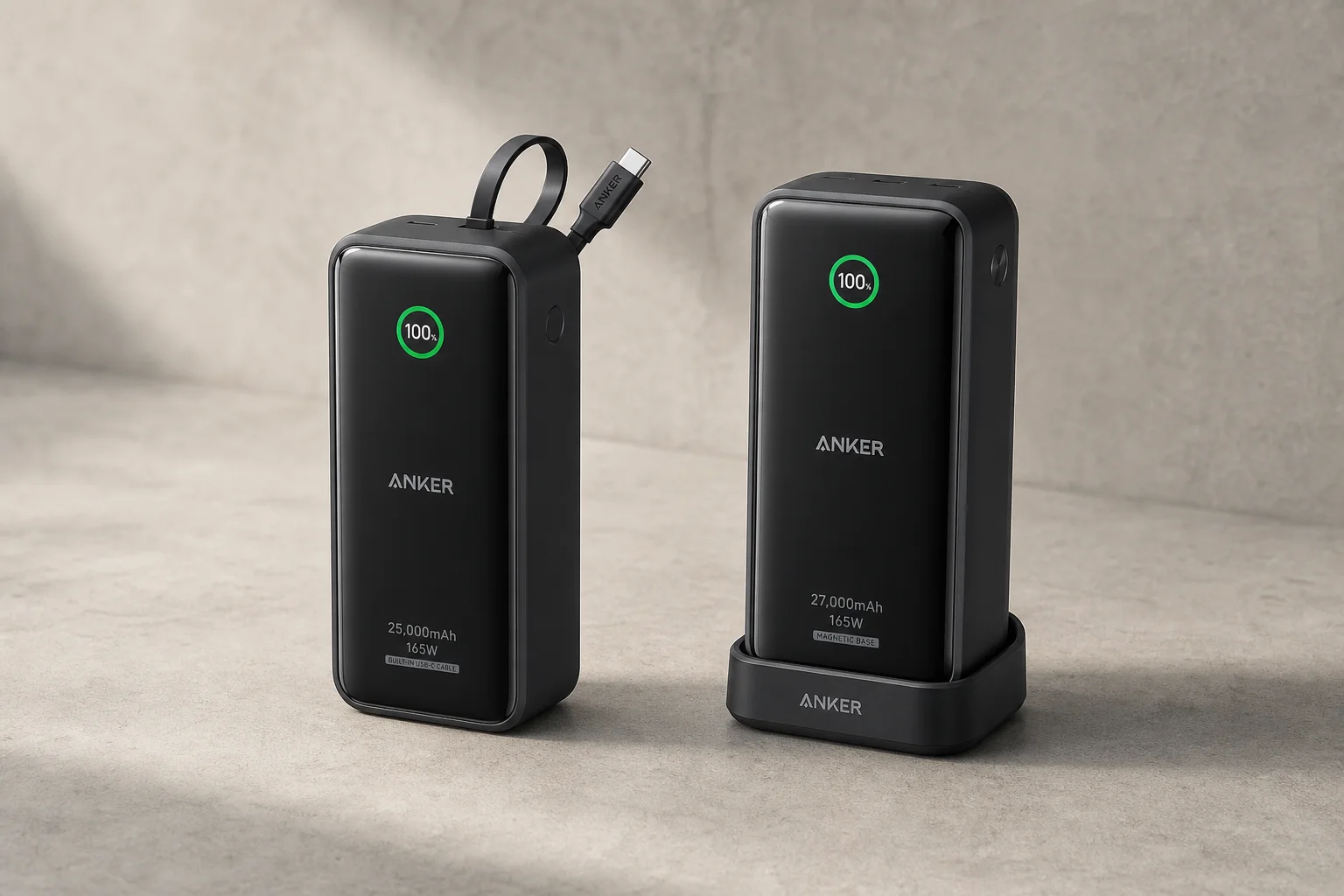
Anker has established itself as a leader in portable power solutions, and their latest offerings demonstrate why. The 25,000mAh and 27,000mAh power banks represent two distinct approaches to mobile charging: one optimized for everyday versatility with built-in cables, and one designed for maximum capacity and laptop support. Both deliver impressive real-world performance, but they serve different travel and work scenarios.
Key Features of the Anker 25,000mAh
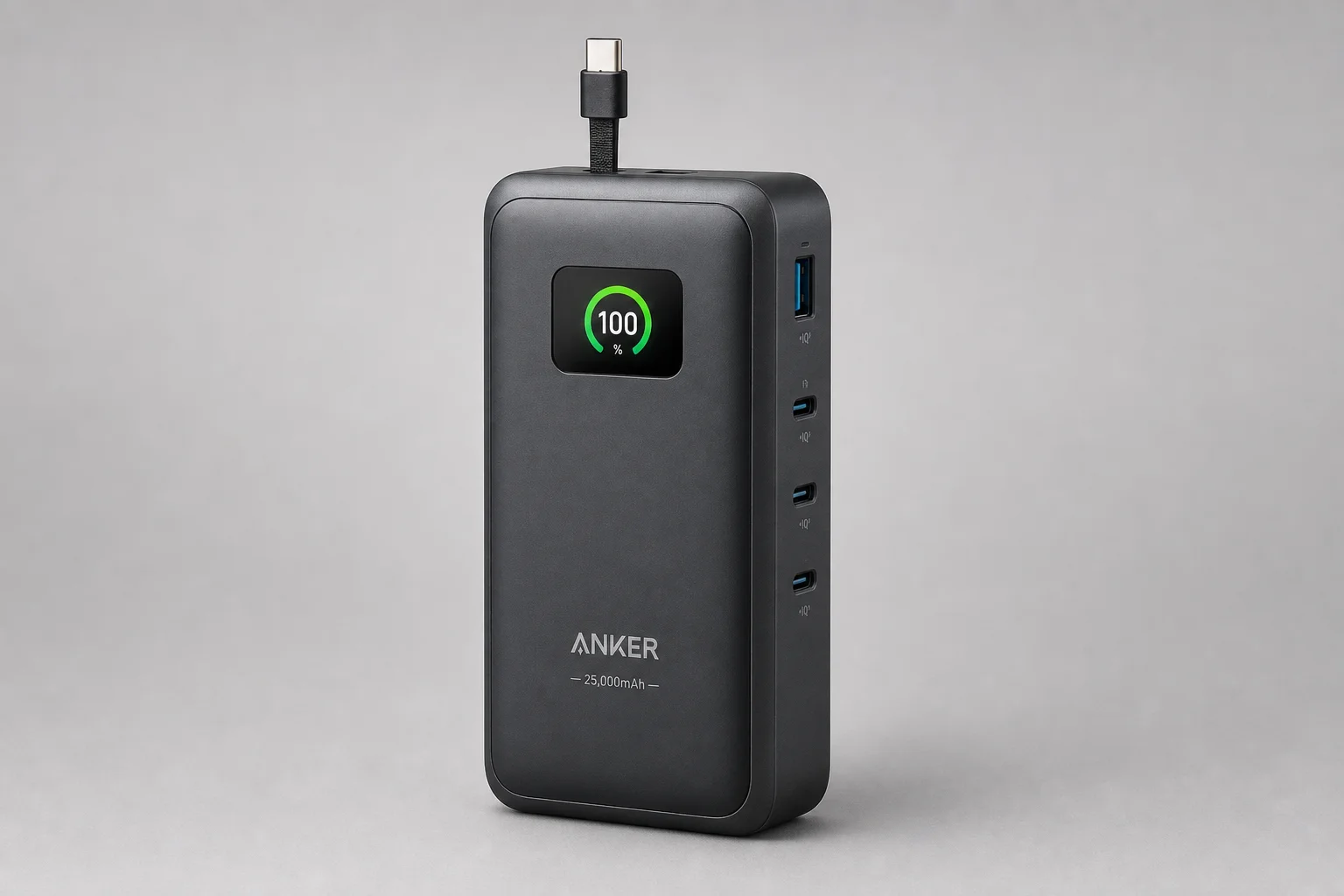
The 25,000mAh model introduces a standout innovation: a magnetic retractable USB-C charging cable built directly into the top of the unit. This cable retracts and magnetizes back into place when not in use, eliminating the need to carry separate charging cables for most situations. The design includes a nylon-wrapped lanyard cable as well, giving you two integrated charging options.
The power bank features three USB-C ports (C1, C2, and C3) plus one USB-A port, enabling simultaneous charging of multiple devices. The C1 port is the retractable cable, C2 is the lanyard connection, and C3 serves as both input and output on the side of the unit. This flexibility means you can charge your smartphone, tablet, and smartwatch all at once without hunting for additional cables.
Charging Performance and Laptop Support
The 25,000mAh model delivers 165 watts of total output power, sufficient to charge a MacBook Pro M3 to 50 percent in approximately 30 minutes. While it cannot fully charge a 14-inch MacBook Pro from zero to 100 percent in a single cycle, it provides meaningful top-ups during work sessions. The power bank charges an iPhone 16 approximately 4.5 times, an iPad Pro M4 about 1.4 times, and a MacBook Air M3 roughly 1.3 times on a full charge.
Charging speed depends on your power adapter. Using a 40-watt charger, the power bank reaches full capacity in approximately 2 to 3 hours. With a 100-watt charger, it reaches 30 percent in about 20 minutes. The unit displays real-time charging speed for each connected port, showing watts per device so you understand exactly how power is being distributed.
Display and Monitoring Features
A small front-facing display provides critical information at a glance. Pressing the side button cycles through battery percentage, temperature reading, battery health status, charge cycle count, and estimated time to full charge. This eliminates the guesswork of older power banks with simple LED indicators. The display shows which port is delivering power and at what wattage, helping you optimize your charging setup.
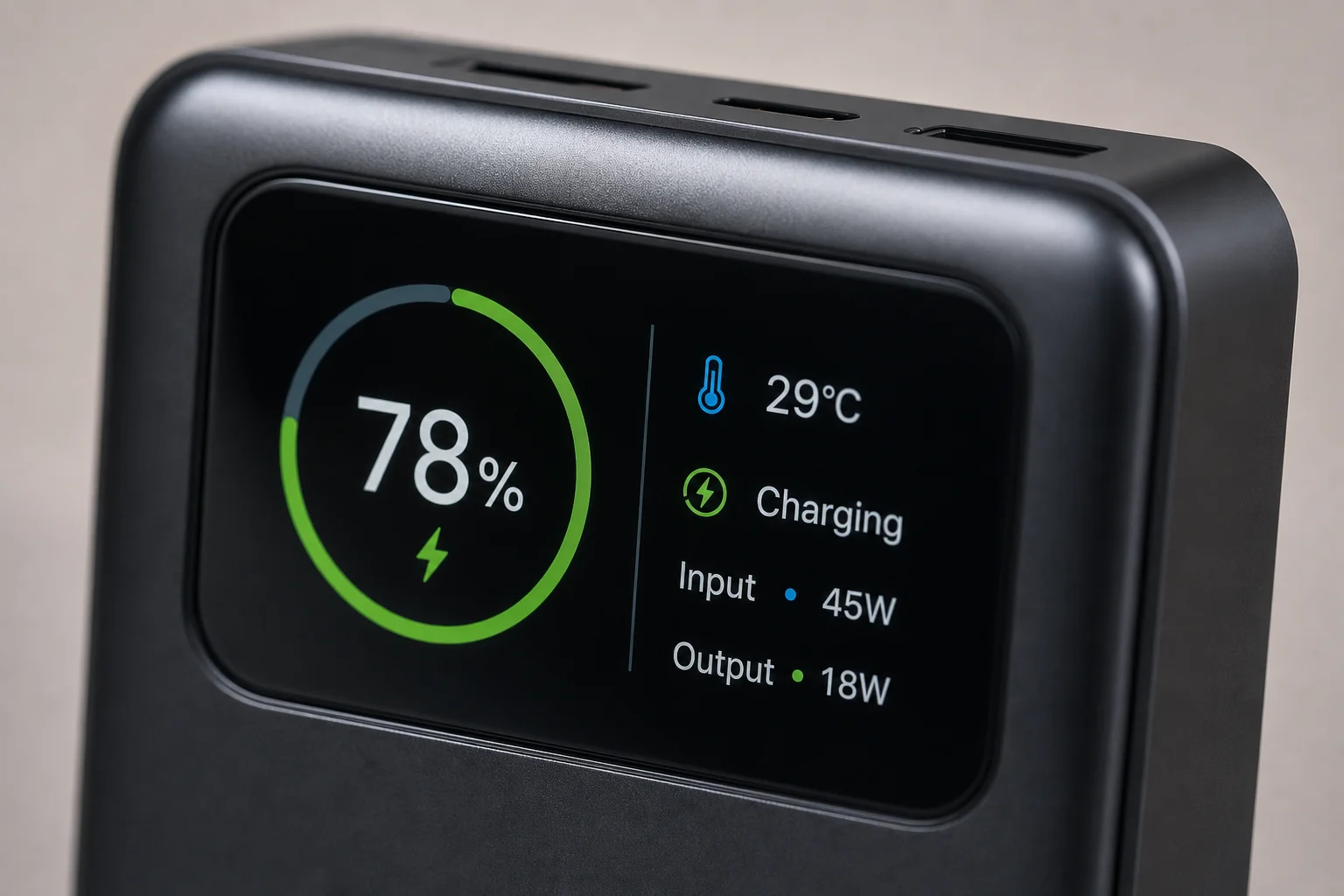
The unit also indicates battery temperature in Fahrenheit, confirming safe operating conditions. Battery health remains at 100 percent out of the box, and the display tracks total charge cycles for long-term monitoring.
Multi-Device Charging Capability
Real-world testing confirms the power bank’s ability to charge multiple devices simultaneously. When charging two iPhones, power distribution adjusts dynamically: one device may receive 27 watts while the other gets 7 watts, depending on battery capacity and charge level. Adding a smartwatch and wireless earbuds further distributes power, with the watch receiving approximately 1 watt and earbuds drawing minimal current.
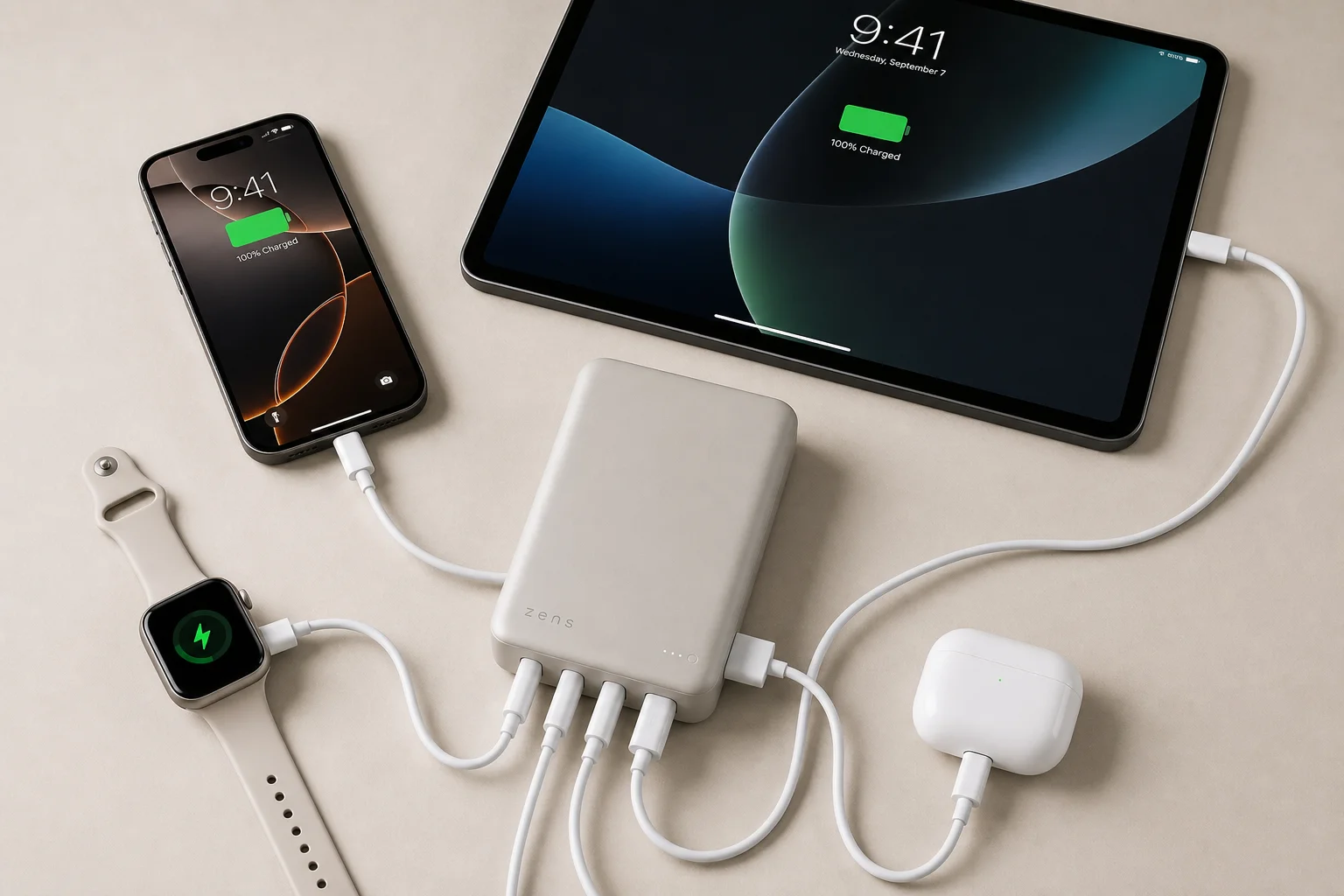
The retractable cable and lanyard cable are rated for up to 20,000 retractions and extensions, ensuring durability through years of daily use. An 18-month warranty backs the product, reflecting Anker’s confidence in build quality.
The Anker 27,000mAh Alternative
The 27,000mAh model represents Anker’s previous generation and offers higher capacity at the cost of built-in cables. It includes Bluetooth connectivity, dual USB-C input and output ports, and a USB-A port. A magnetic base allows wireless charging without plugging in a cable. This model suits users who prioritize maximum capacity for extended trips or those charging larger devices like a 16-inch MacBook Pro Max.
The 27,000mAh fully charges a 14-inch MacBook Pro from zero to 100 percent, making it the better choice for all-day remote work scenarios where you cannot access wall power for several hours. However, it lacks the convenience of integrated cables and the detailed display information found on the newer 25,000mAh model.
Portability and Included Accessories
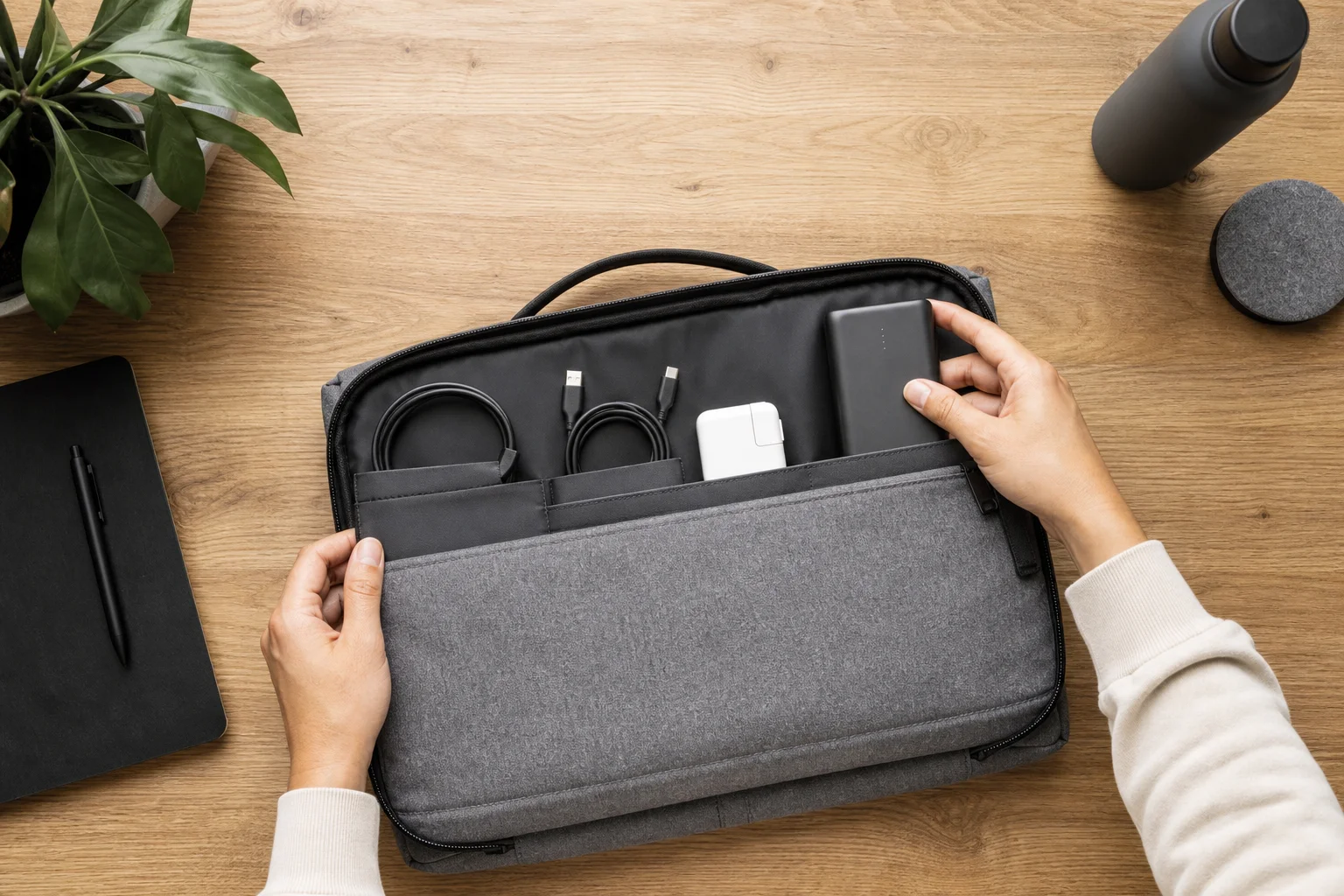
Both models ship with a premium carrying case made from durable nylon material that resembles a raincoat in texture. The case protects the power bank from scratches and fits easily into a laptop bag or backpack. The 25,000mAh model’s integrated cables mean you can travel with just the power bank and case, eliminating the need for a separate cable pouch.
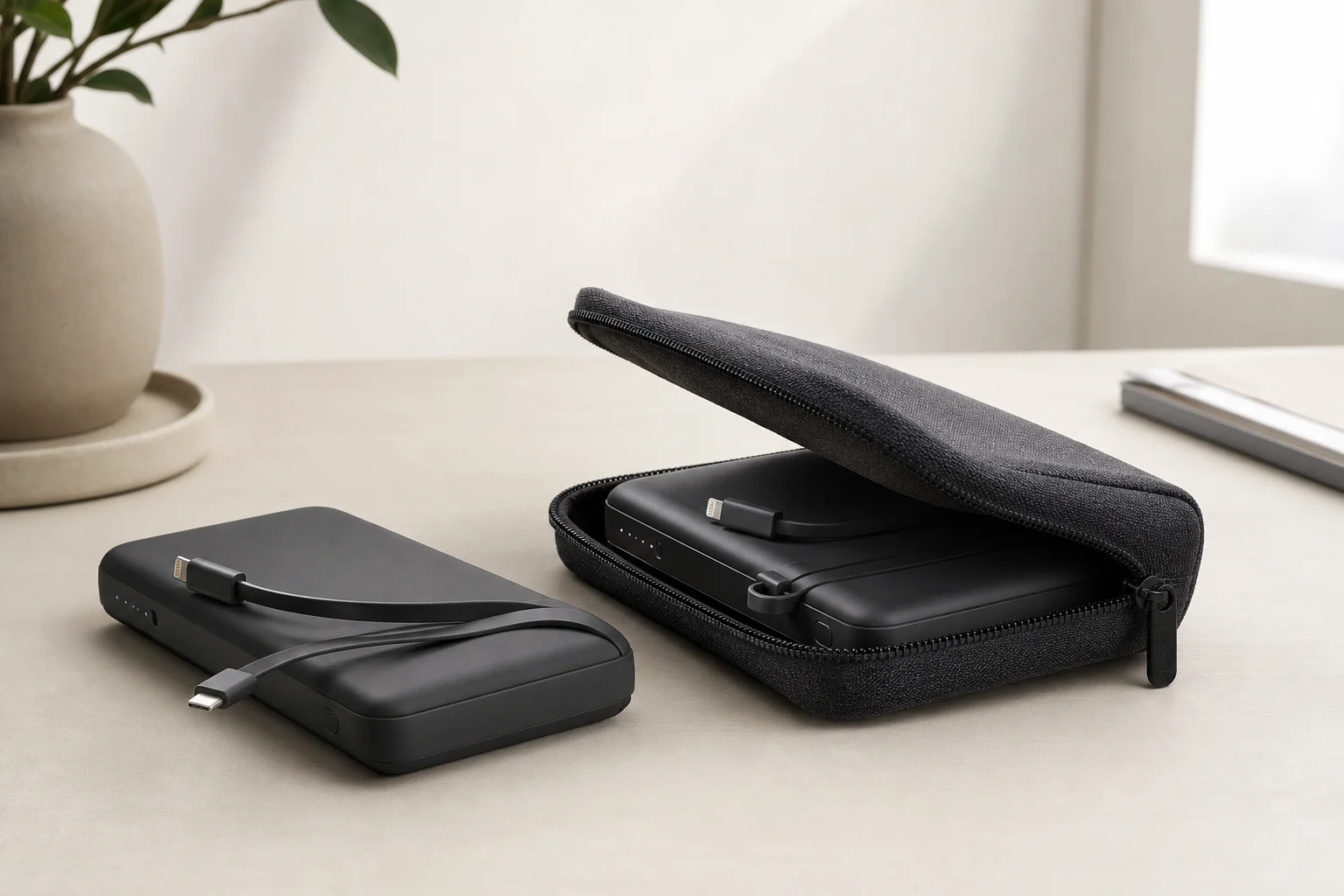
Pairing either power bank with Anker’s 65-watt or higher power brick creates a complete portable charging ecosystem. The newer 140-watt power brick (available exclusively on Apple’s website) provides dedicated 140-watt output for MacBooks, ensuring fast recharge times for the power bank itself.
Conclusion
Choose the Anker 25,000mAh if you value convenience, integrated cables, and detailed charging information for everyday travel and mixed-device charging. Its retractable cable and lanyard eliminate cable clutter, and the front display provides transparency about power distribution and battery health.
Choose the Anker 27,000mAh if you need maximum capacity for extended remote work, particularly with larger laptops, and don’t mind carrying separate cables in exchange for higher total energy storage.
Both models are TSA-approved for air travel and represent a significant step forward in power bank design and functionality.
Further reading
Related Reviews
Power Banks & Chargers
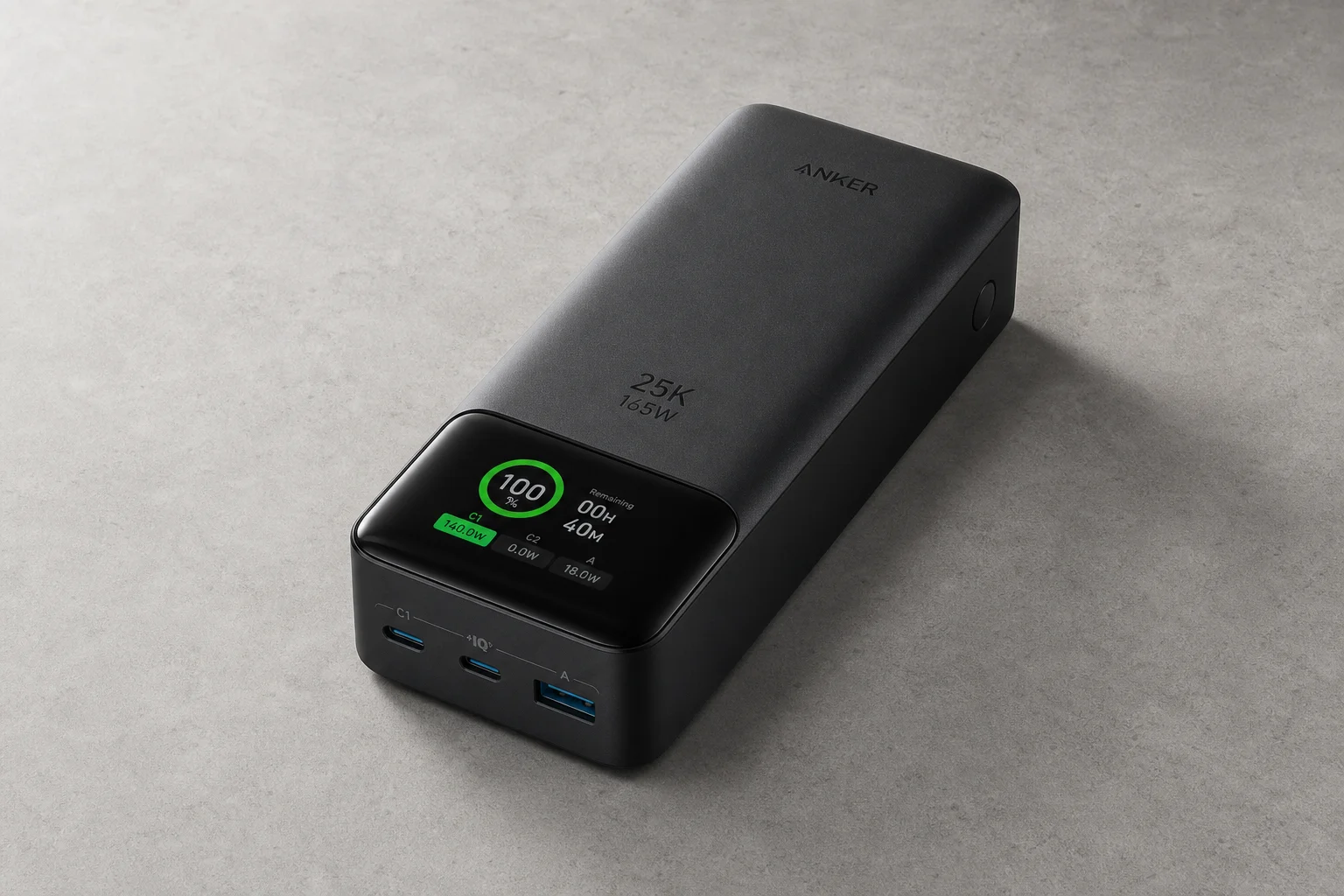
Anker 25K Laptop Power Bank Review: A Portable Charger That Keeps Your Devices Running
The Anker 25K offers 25,000mAh capacity with 165W output, built-in cables, and fast charging speeds. A practical choice for professionals and travelers who need reliable multi-device power.
Travel Gear
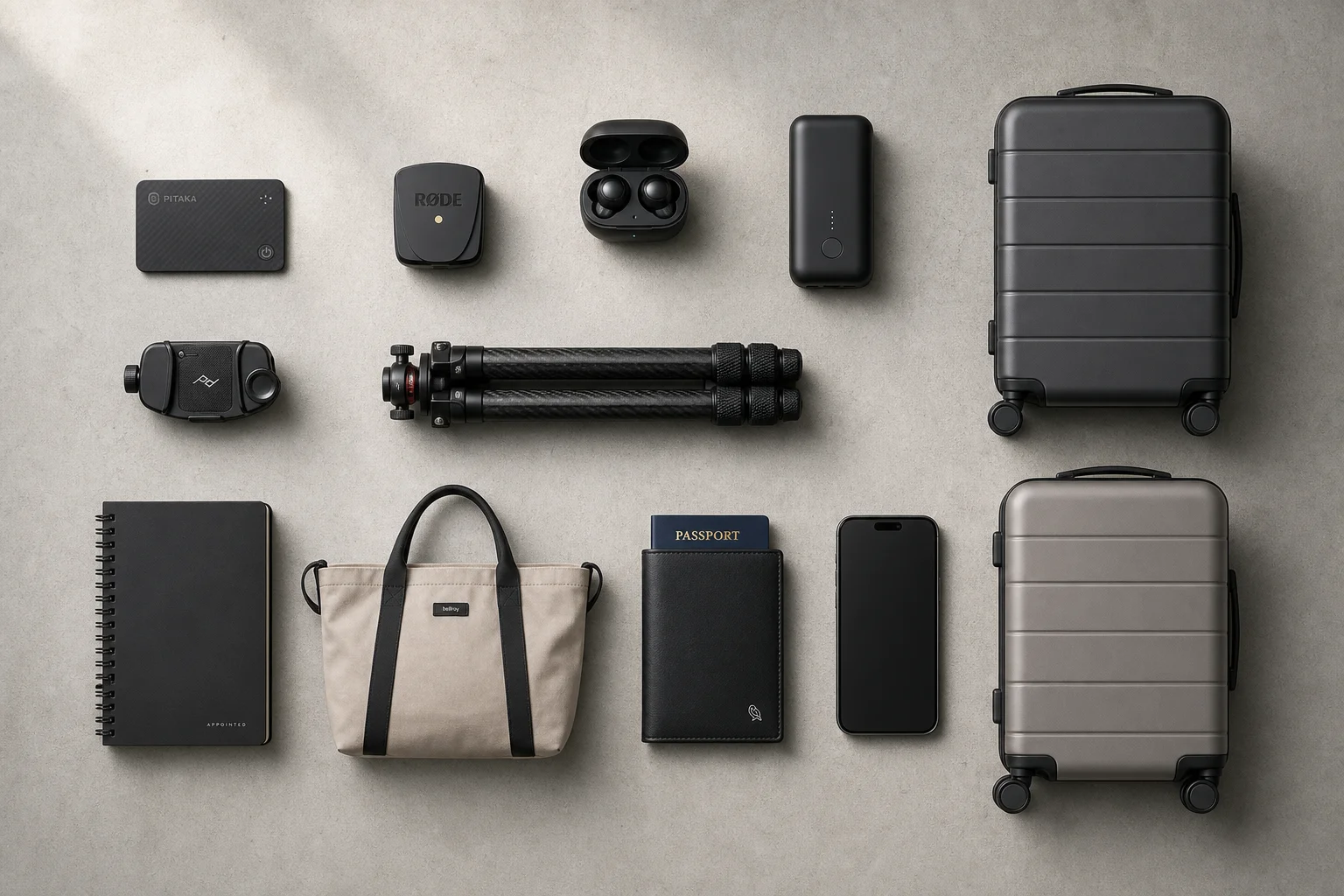
12 Essential Travel Items That Make Every Trip Better
After traveling to over 150 cities worldwide, here are the practical items that have become indispensable for modern travel.
Power Banks
Best Anker Power Banks 2026: Six Models Tested and Ranked
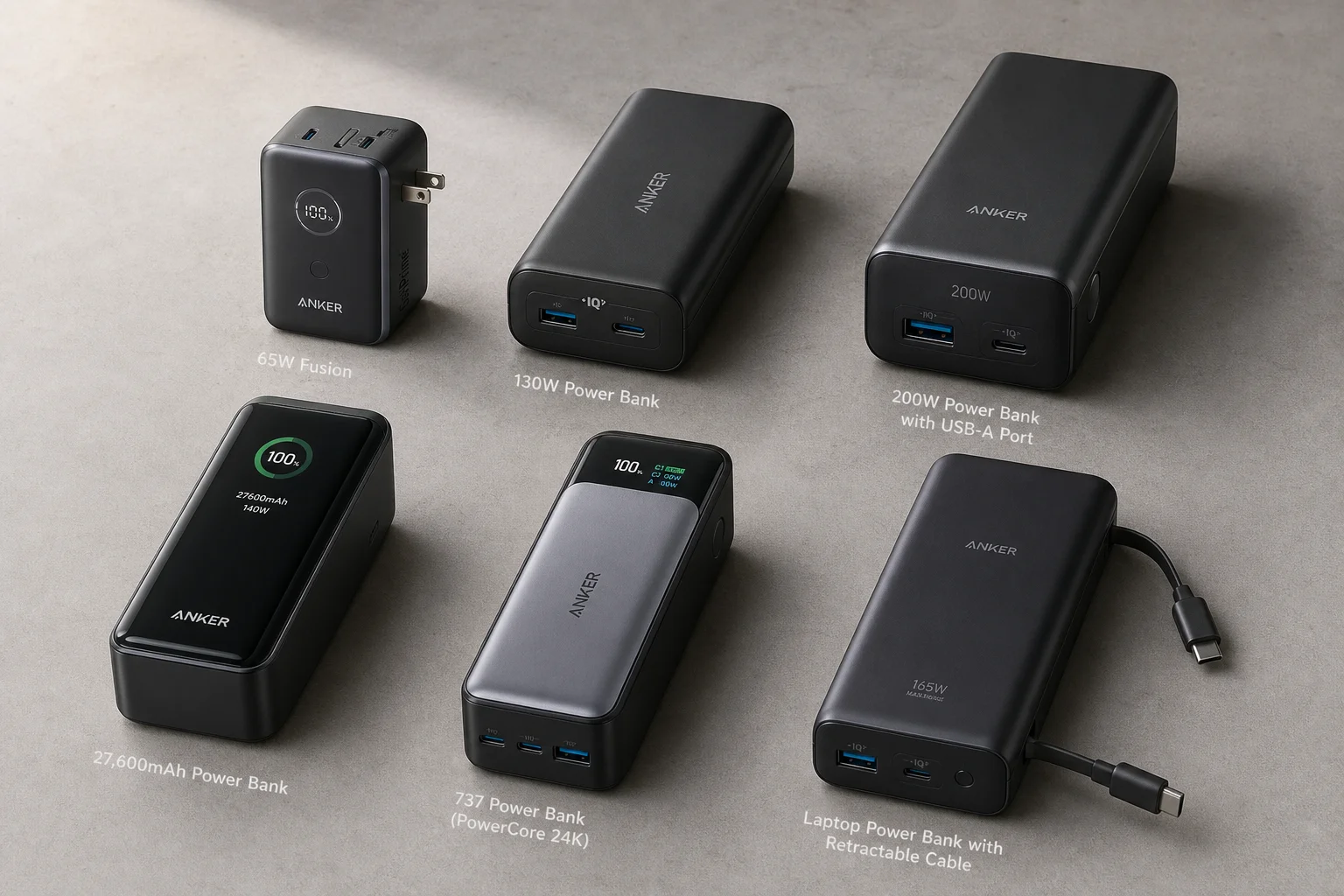
A comprehensive guide to six Anker power banks, from compact 65W chargers to high-capacity 250W models. Find the right fit for your charging needs.