Action Cameras
Best Action Cameras for Skiing and Snowboarding: Five Tested Options
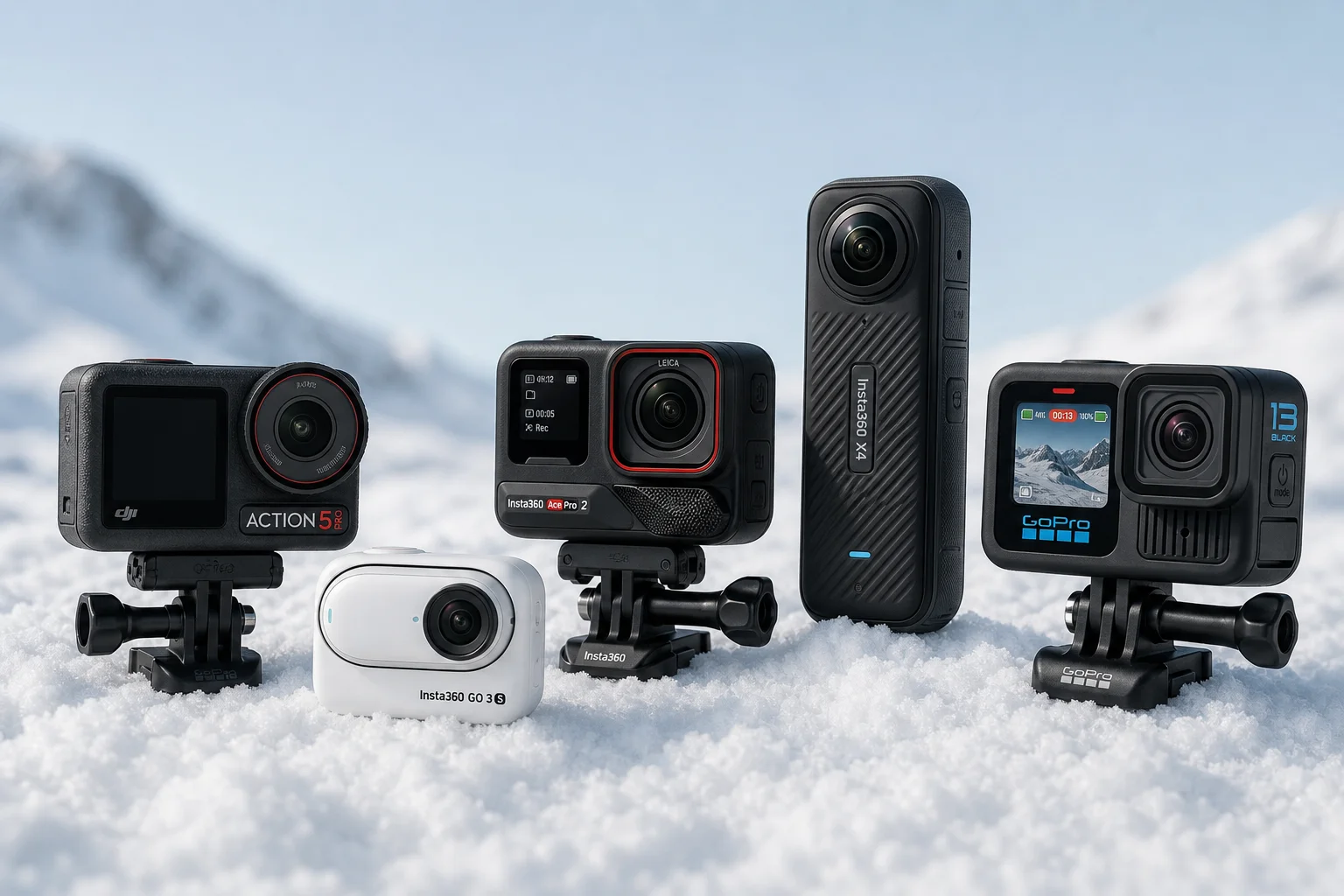
Five action cameras tested on the slopes: DJI Action 5 Pro, Insta360 GO 3S, Insta360 Ace Pro 2, Insta360 X4, and GoPro Hero 13. Each excels in different ways.
Introduction
Testing action cameras on the slopes reveals clear strengths and trade-offs. Five cameras stand out for skiing and snowboarding: the DJI Action 5 Pro, Insta360 GO 3S, Insta360 Ace Pro 2, Insta360 X4, and GoPro Hero 13. Each delivers solid footage in good snow conditions, but each excels in different scenarios. The choice depends on what matters most to you: slow-motion capability, portability, image quality, creative framing, or overall versatility.
GoPro Hero 13
The GoPro Hero 13 has faced criticism for being an incremental update to the Hero 12, but it remains excellent for skiing. In bright snow conditions, where most skiing happens, its smaller sensor matters less than you might expect.
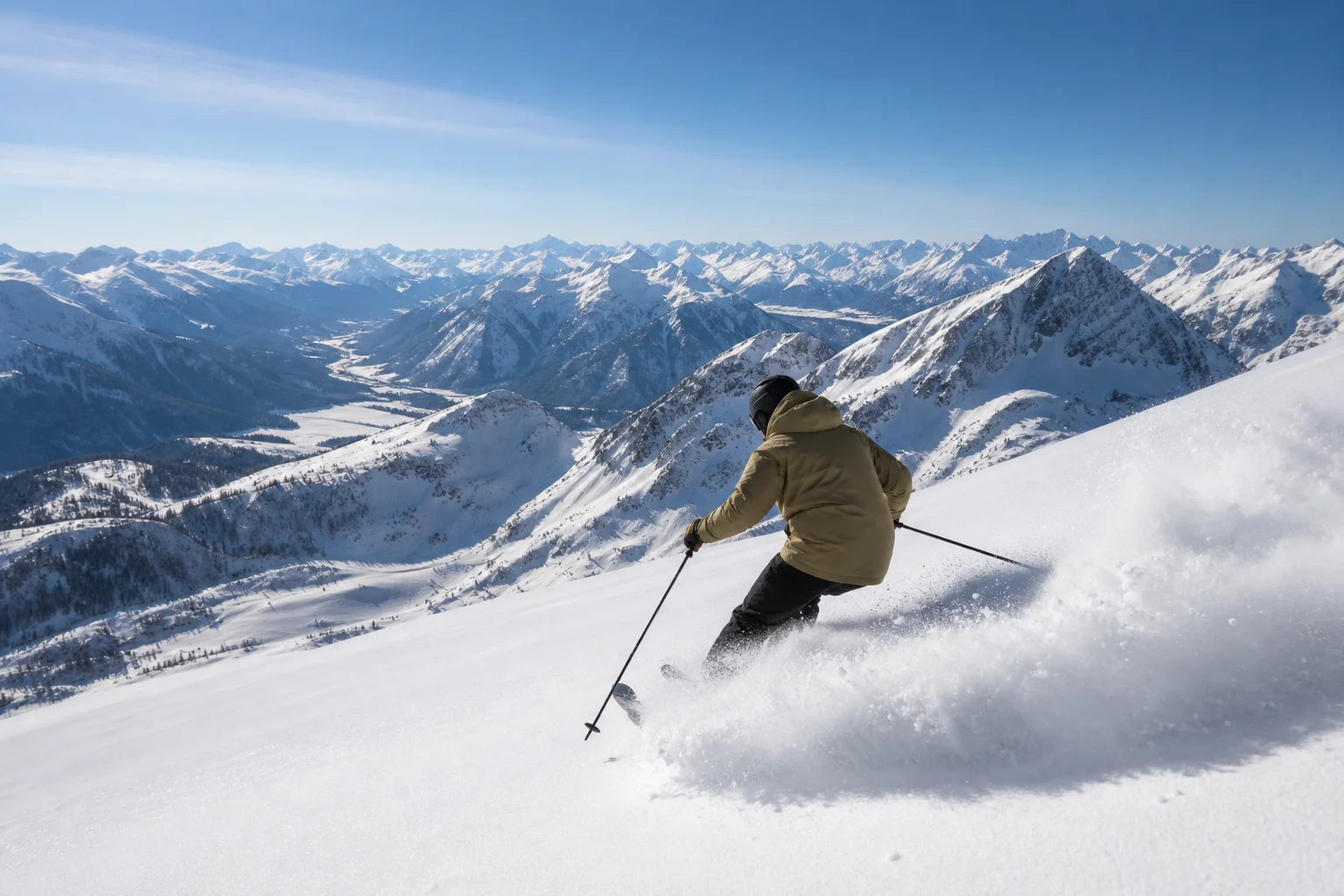
The Hero 13 shines in slow-motion recording. It can shoot 4K at 120 frames per second in Superview, the widest field of view available at that frame rate. No other camera in this comparison offers 4K120 in such a wide perspective. It also captures 2.7K at 240 frames per second and includes a new Burst Slo-Mo mode for extreme slow-motion, though at reduced quality. The Hero 13 is the only camera here that records GPS data internally, useful for displaying speed and altitude overlays.
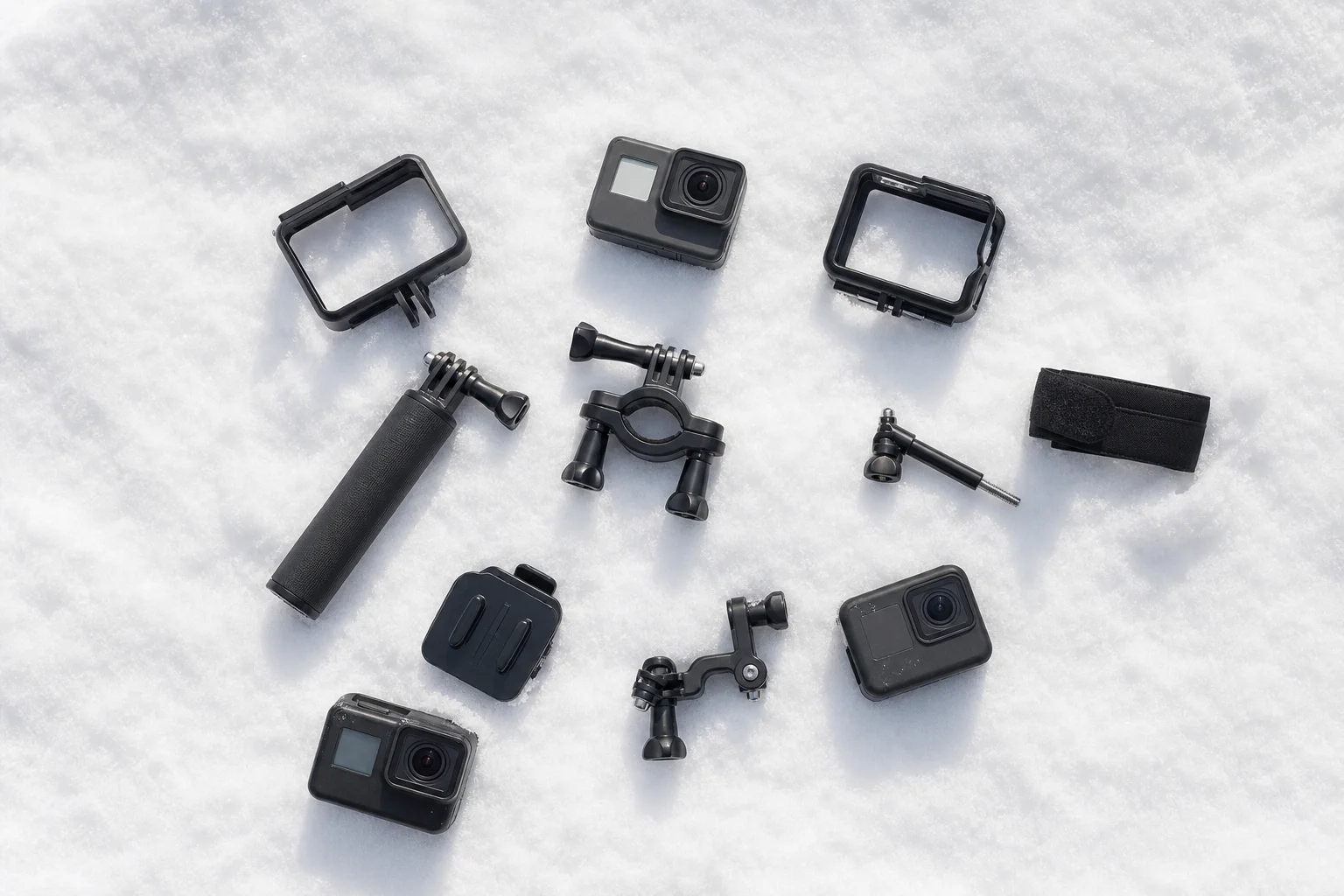
The Hero 13’s colour profile is neutral and natural, though it can appear slightly dull. Its main weaknesses are a narrower standard field of view compared to competitors, weak low-light performance, and a less responsive display in cold conditions. The standard package lacks a magnetic mount, which is convenient for quick removal in freezing temperatures. An ultra-wide lens accessory exists but adds cost and reduces resolution or frame rate options.
Insta360 GO 3S
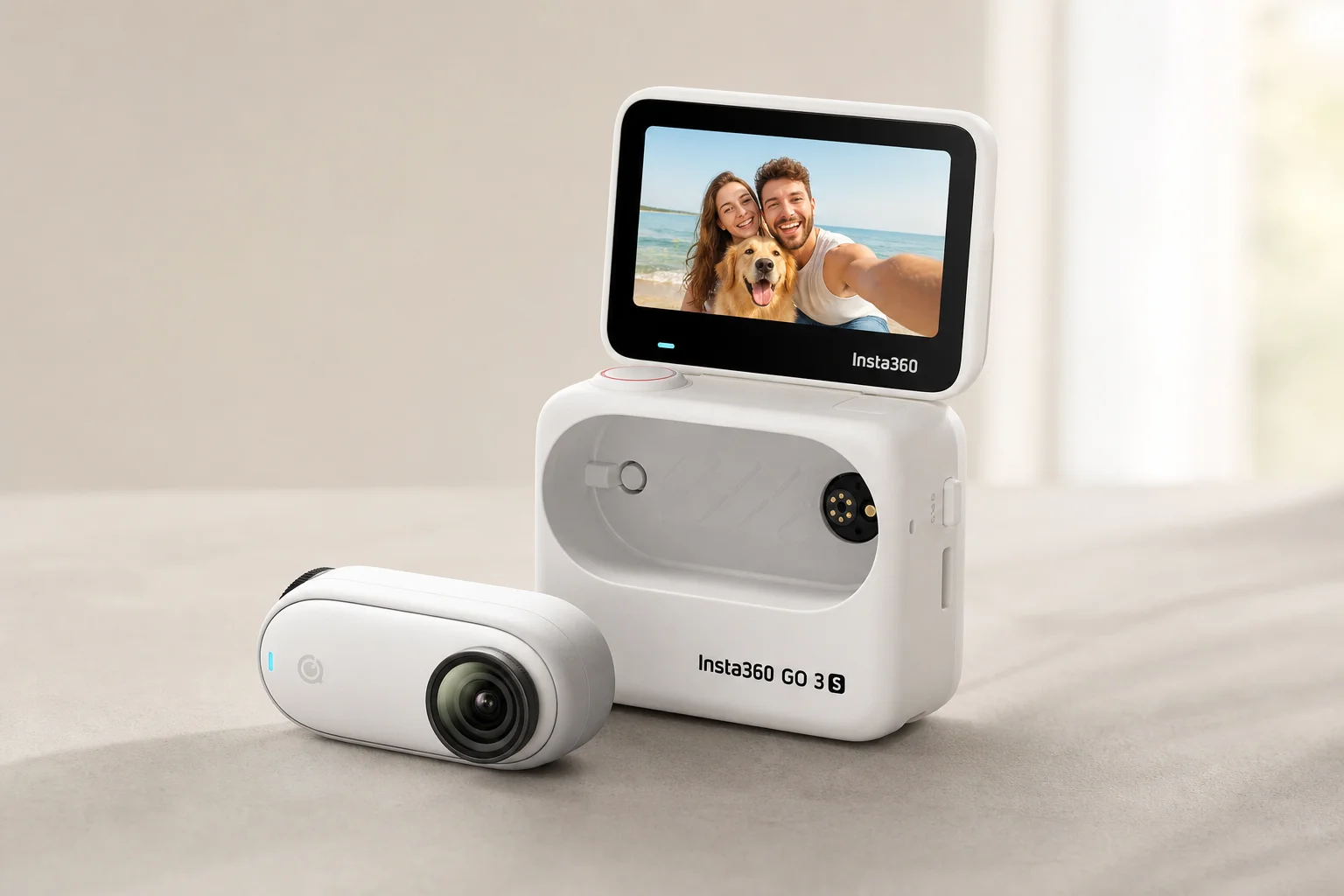
The Insta360 GO 3S is the most compact camera in this group. Its tiny form factor makes it ideal for helmet mounting, where weight and visibility matter. It is the lightest option and least noticeable when mounted.
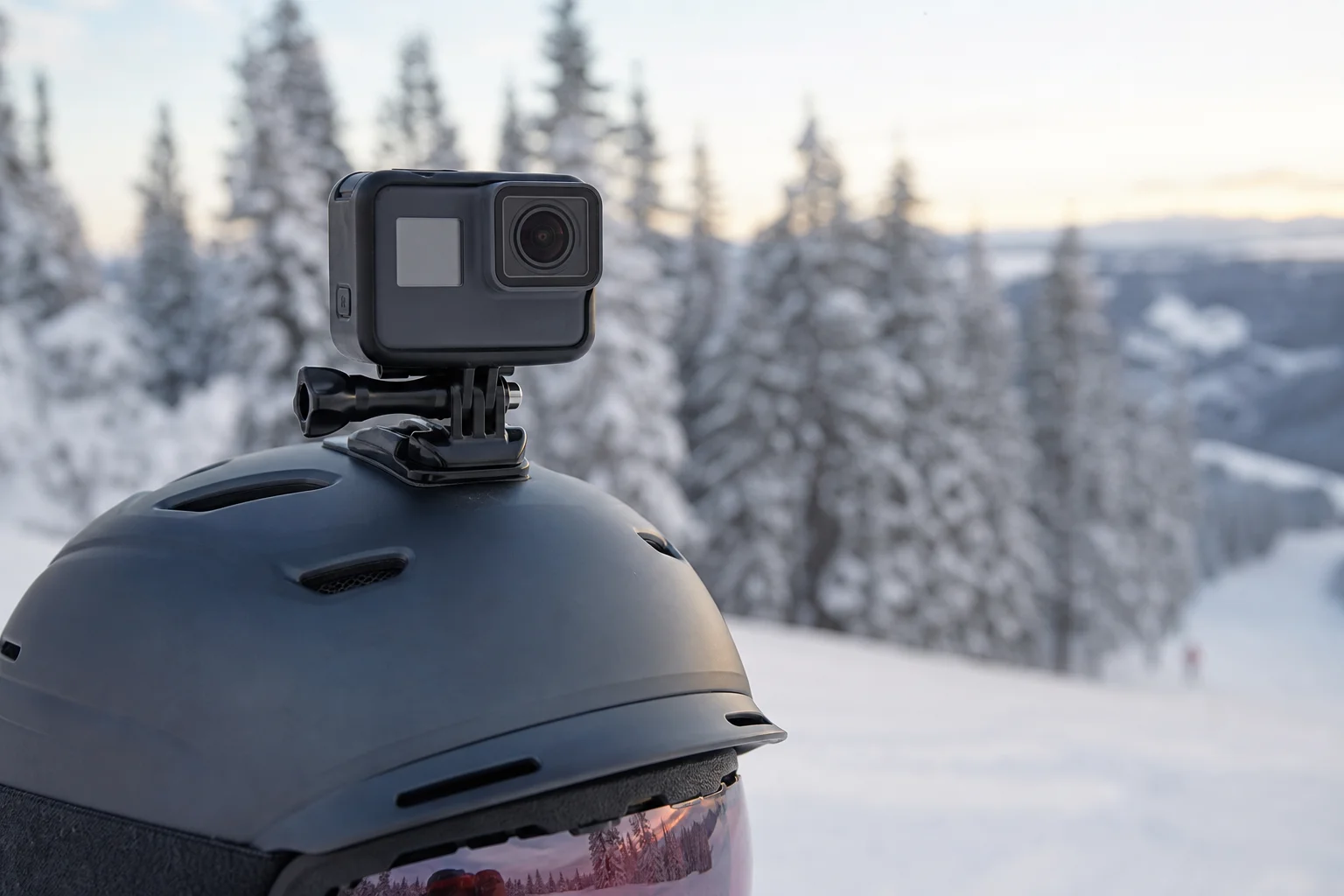
The GO 3S can shoot 4K at 30 frames per second, which delivers comparable image quality to larger cameras in good lighting. The Action Pod accessory allows you to check framing without a smartphone, and its flip-up display works well when filming yourself on a pole. The main limitation is frame rate: 60 frames per second requires dropping to 2.7K resolution, making it unsuitable for high-speed slow-motion work.
If you can accept 30 frames per second and do not need slow-motion capability, the GO 3S is a compelling alternative to larger cameras. Its portability and ease of mounting in unconventional positions open creative possibilities that standard action cameras cannot match.
Insta360 Ace Pro 2
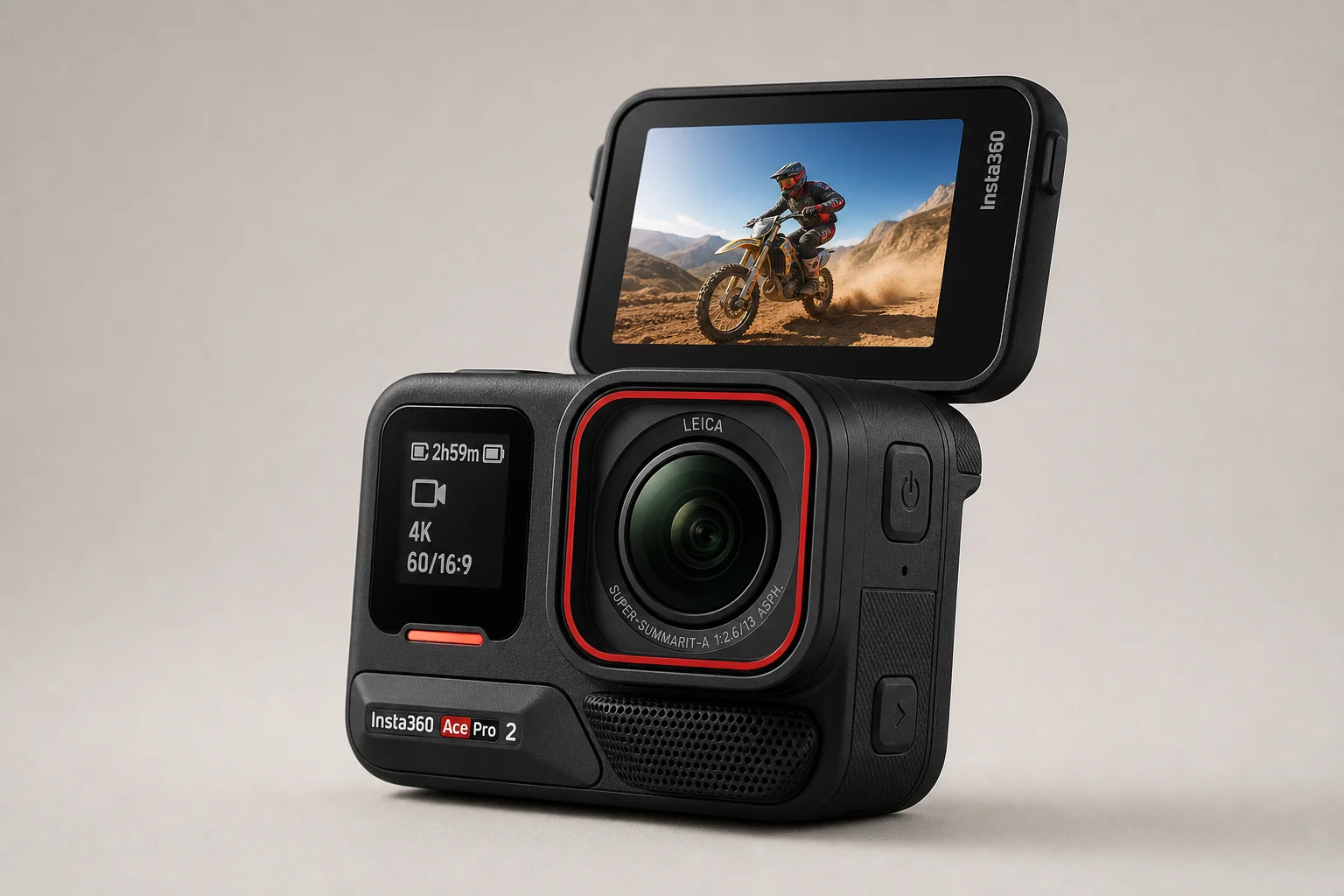
The Insta360 Ace Pro 2 delivers outstanding image quality, beautiful colour rendering, and exceptional dynamic range. It is the only camera here capable of 8K recording at up to 30 frames per second, though this is rarely essential for skiing.
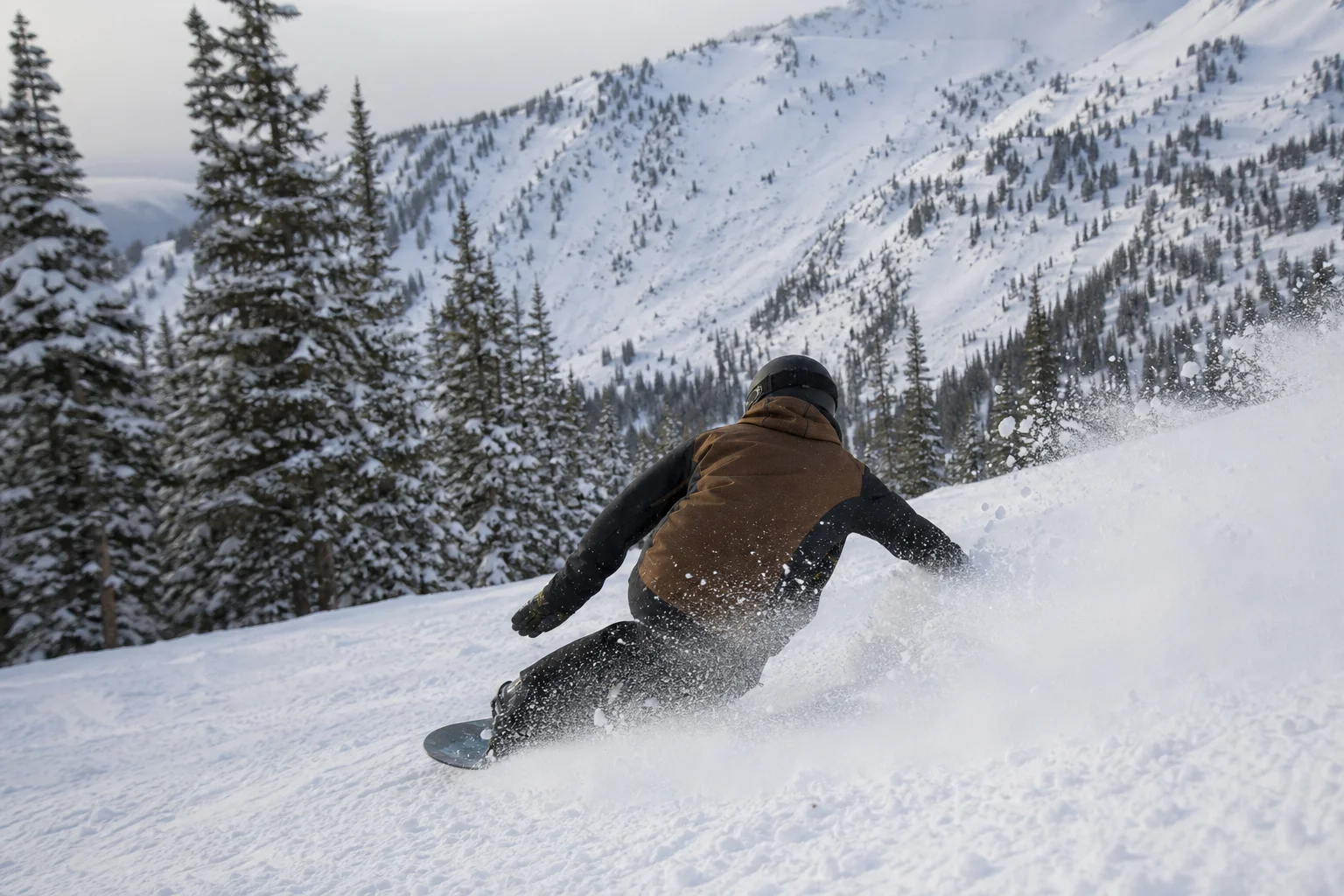
What sets the Ace Pro 2 apart for skiing is its wide field of view, noticeably wider than the Hero 13 and slightly wider than the Action 5. The flip-up display is a major advantage for assessing framing when filming yourself. The Windguard feature is the best in this group at reducing wind noise, a significant problem when skiing at speed.
The trade-off is size and weight. The Ace Pro 2 is larger and heavier than both the Hero 13 and Action 5, which becomes noticeable on a helmet mount. On a chest mount or pole, the extra weight is less of a concern. For detailed comparisons with other cameras, dedicated reviews provide deeper analysis.
DJI Action 5 Pro
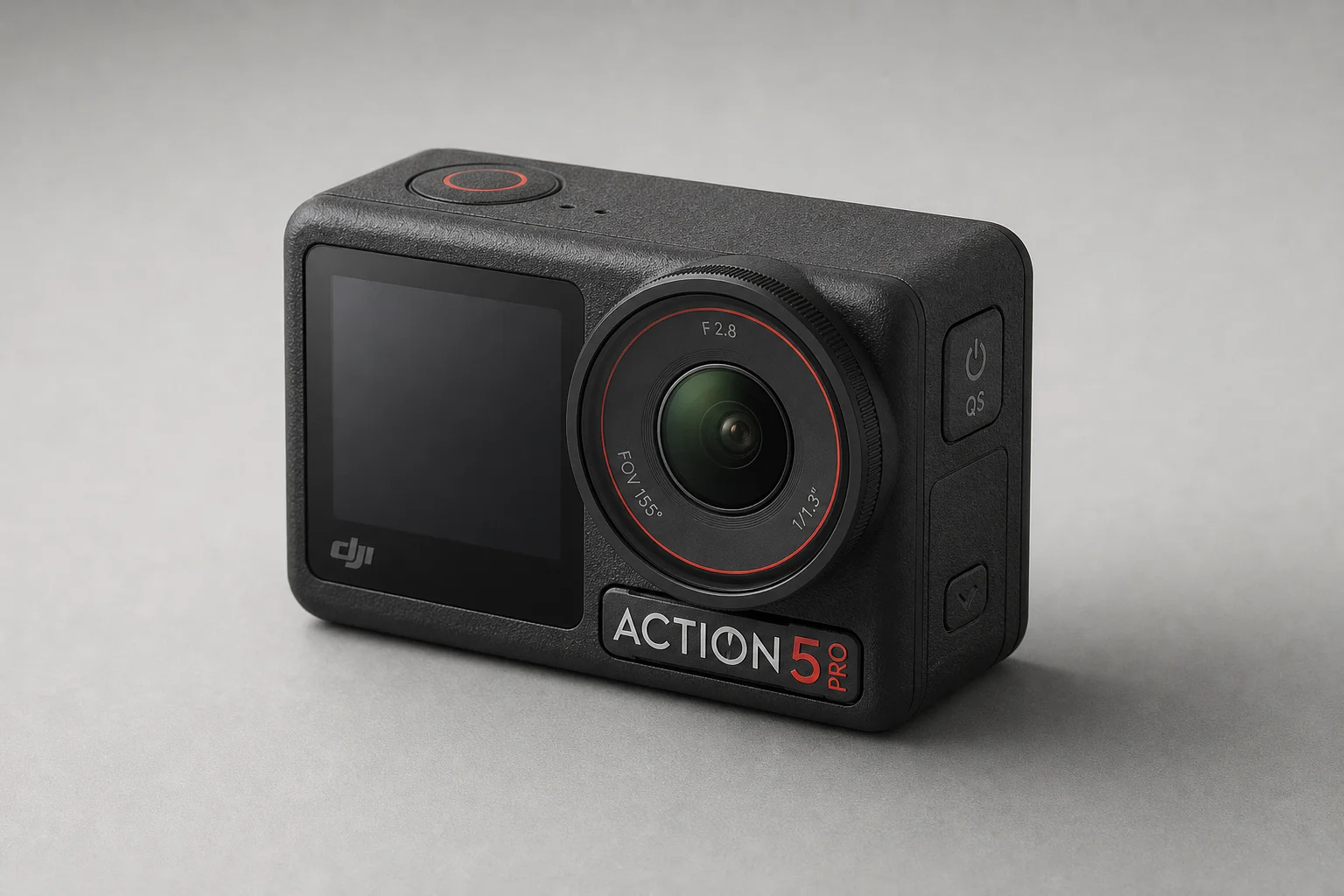
The DJI Action 5 Pro has generated considerable enthusiasm. It offers excellent image quality, exceptional battery life, produces small file sizes, and has a compact body when used without the frame.
The Action 5 Pro delivers a high-contrast, cinematic look and can shoot in D-Log with 10-bit colour, though this is not essential for skiing. Its main weaknesses are pronounced lens flares when the sun is in frame, which happens frequently in winter. The high-contrast cinematic style, while visually striking, sometimes appears unnatural. Shaded shots can look too dark, and the bluish colour cast means white snow does not always appear completely white. Other cameras, including the GoPro, handle white balance more naturally in snow conditions.
These are matters of taste, but they are worth considering if natural-looking skiing footage is your priority. The Action 5 Pro remains an excellent action camera for skiing despite these characteristics.
Insta360 X4
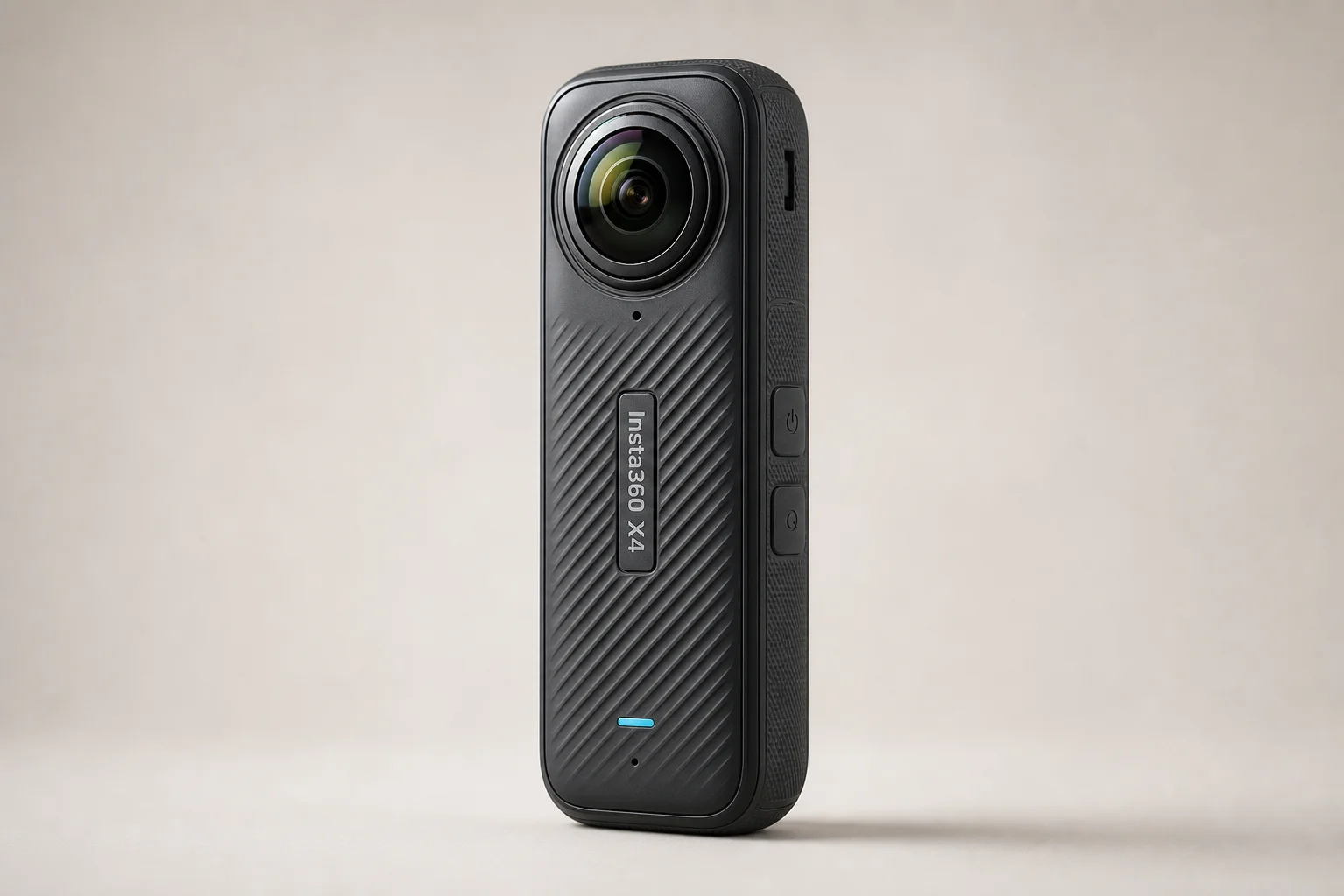
The Insta360 X4 is a 360-degree camera, fundamentally different from the others. Its 360 capture allows you to choose framing in post-production, and the invisible selfie stick effect enables shots impossible with standard action cameras. The X4 has the widest field of view, best stabilisation, and unique creative possibilities for filming yourself skiing.
The X4’s smaller sensors compared to the Action 5 Pro and Ace Pro 2 are a disadvantage in low light, but skiing rarely occurs in poor lighting. Slow-motion is limited: 100 frames per second requires very low resolution, and 60 frames per second requires 5.7K, which reframes to 1080p. At 30 frames per second, image quality is comparable to other action cameras. The X4 is also slightly larger and heavier than other cameras, which matters more on a helmet mount than on a pole.
Conclusion
For skiing and snowboarding, the Insta360 X4 stands out as the top choice if creative, immersive 360 footage is your priority. The invisible selfie stick effect and post-production framing freedom deliver shots that standard action cameras cannot match, especially when filming yourself.
If you prefer simplicity and easy mounting without 360 reframing, the Insta360 GO 3S offers unmatched portability and versatility. For those prioritising image quality and low-light performance beyond skiing, the Insta360 Ace Pro 2 or DJI Action 5 Pro are stronger choices. All five cameras produce good footage in snow conditions; your decision should reflect your filming style, preferred mounting method, and whether slow-motion or creative framing matters most to you.
Further reading
Related Reviews
Action Cameras
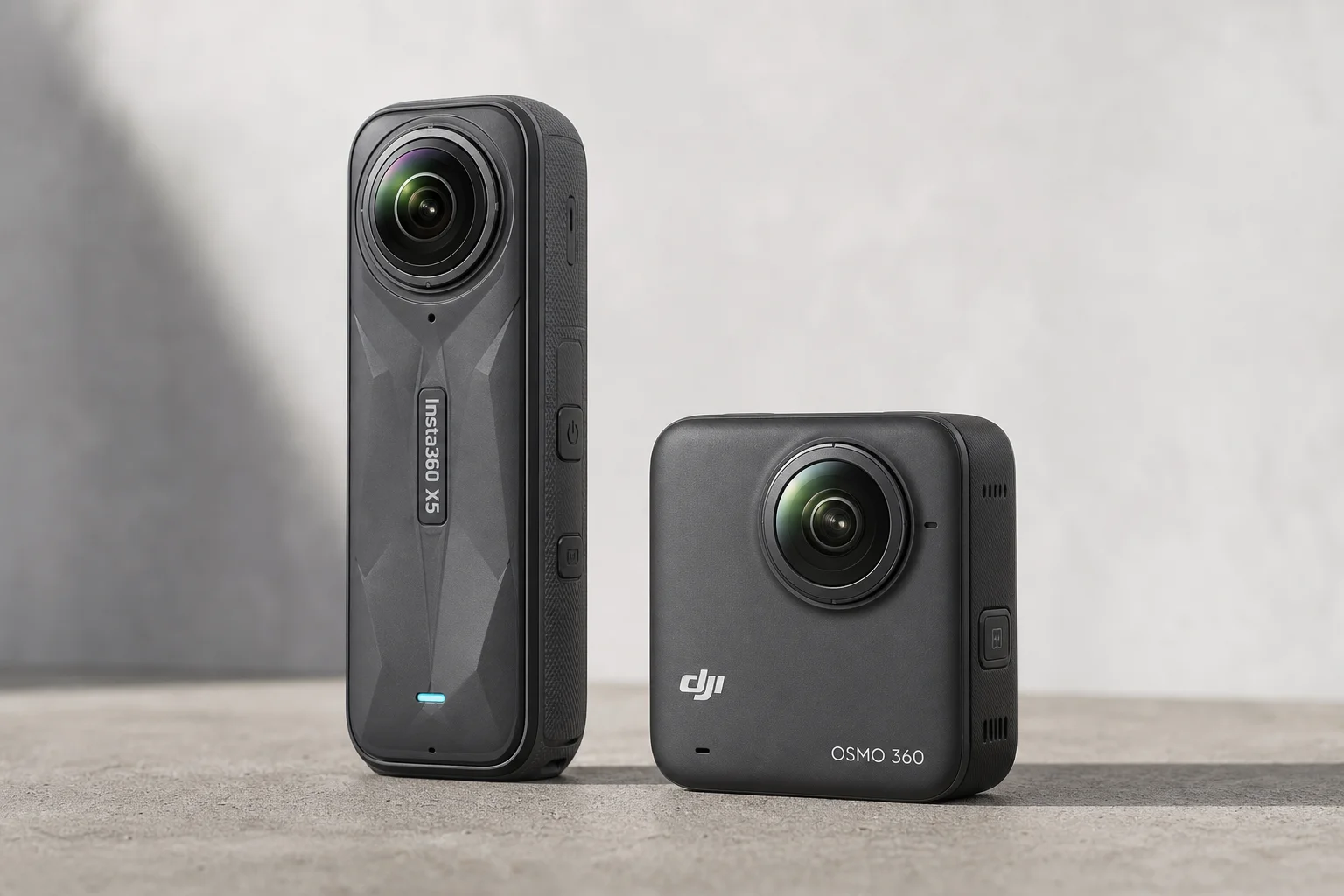
360 Cameras for Adventure Motorcycling: Insta360 X5 vs DJI Osmo 360
Two 360-degree action cameras designed for off-road and adventure riding. A detailed comparison of features, stabilization, and real-world performance for motorcycle touring.
Action Cameras
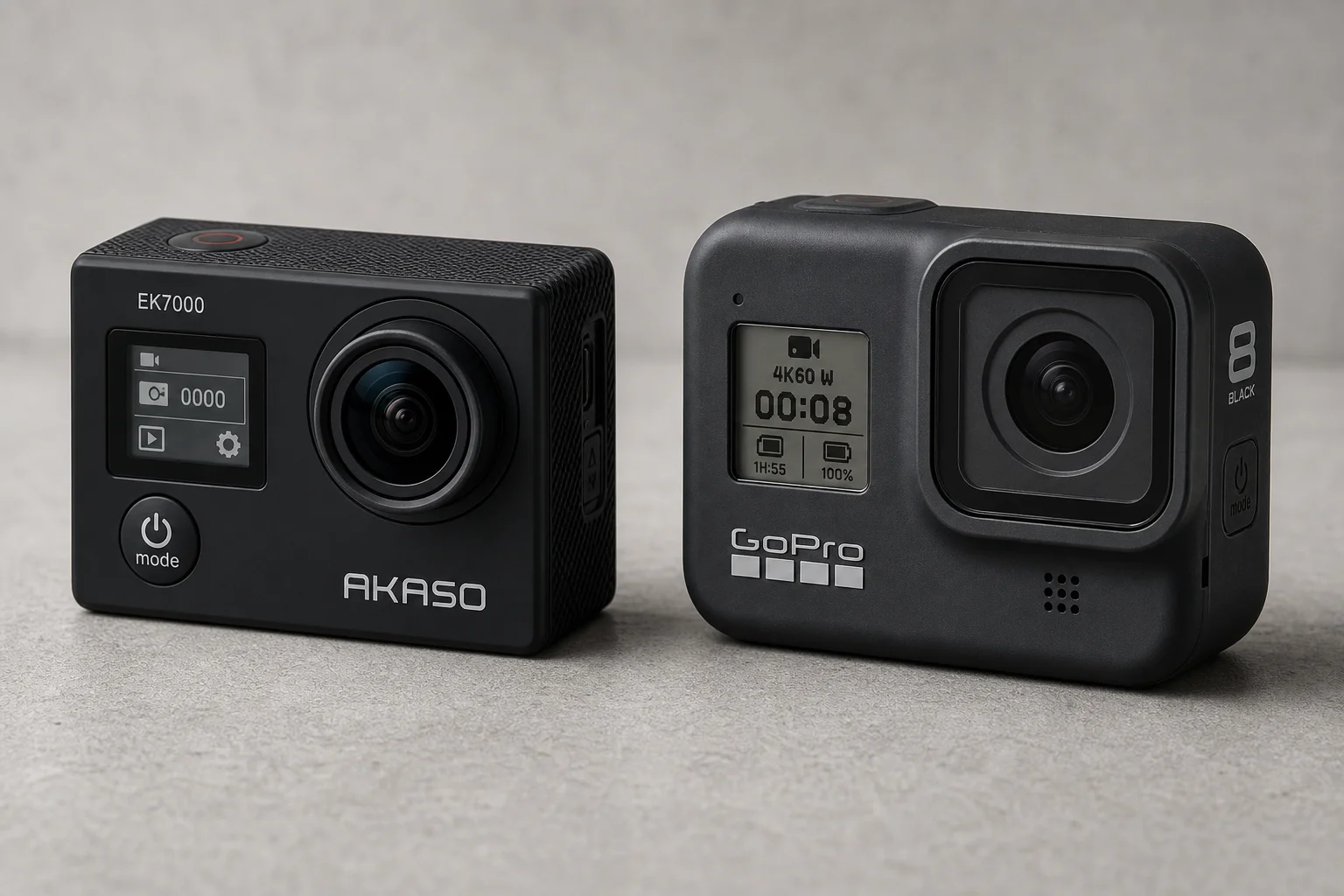
Akaso EK7000 vs GoPro Hero 8 Black: Budget Action Camera Tested
A $50 budget action camera faces off against the GoPro Hero 8 Black. Here's how the Akaso EK7000 really performs in video, audio, and photo quality.
Action Cameras
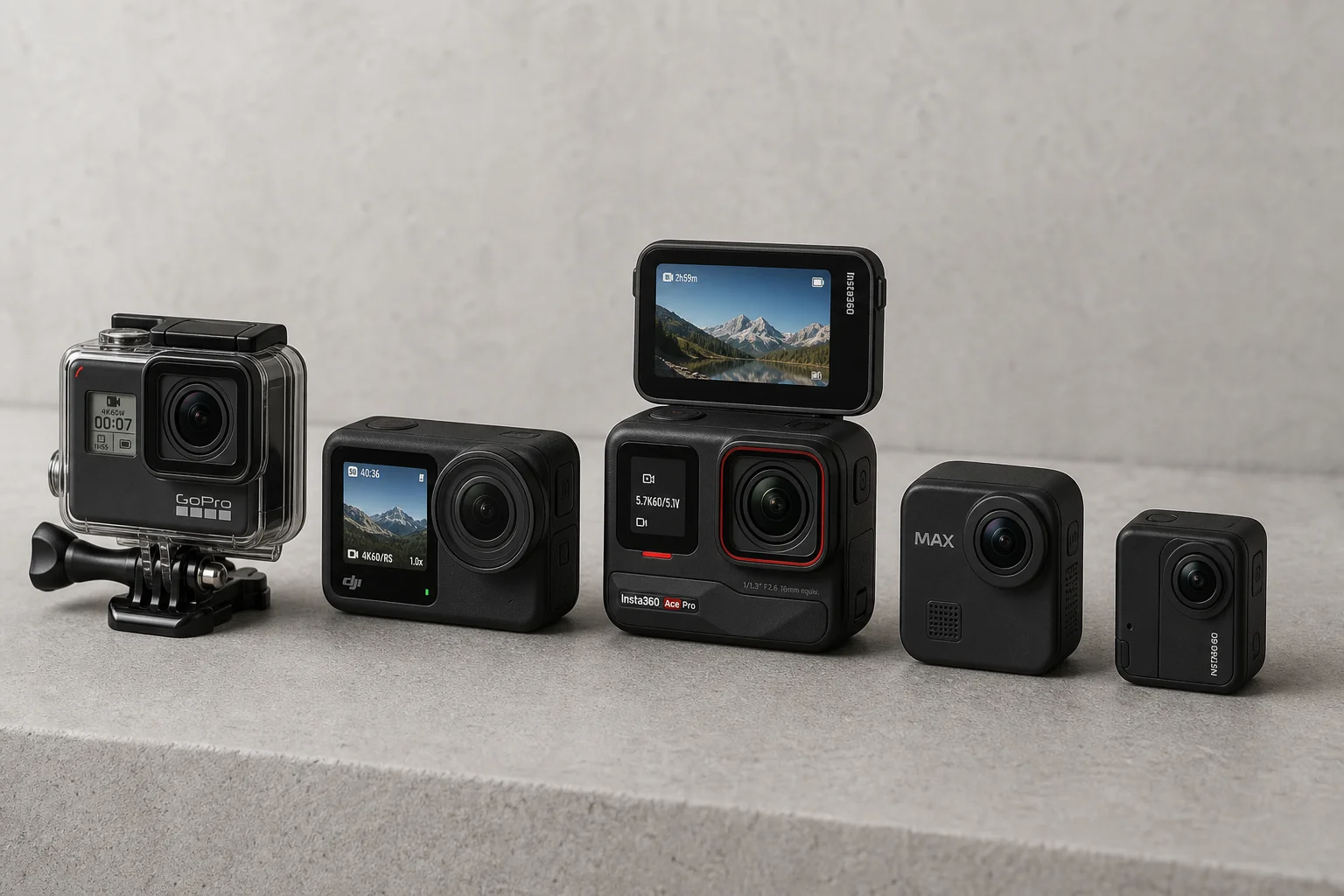
Best Action Cameras 2026: Five Top Picks Ranked
A comprehensive ranking of five action cameras from budget-friendly to premium, covering durability, video quality, stabilization, and low-light performance.