Aquarium Equipment
Best Aquarium Heaters for Saltwater Tanks: Glass, Titanium, and Plastic Options Compared
A practical guide to choosing, installing, and maintaining aquarium heaters with redundancy strategies to protect your tank from temperature failure.
Introduction
Aquarium heaters are essential equipment for maintaining stable water temperature in saltwater tanks, but they will eventually fail. Understanding the different heater types, how to use controllers for redundancy, and proper installation techniques can mean the difference between a thriving reef and a catastrophic loss. This guide covers the main heater options available and the best strategies for protecting your tank.
Understanding Heater Types
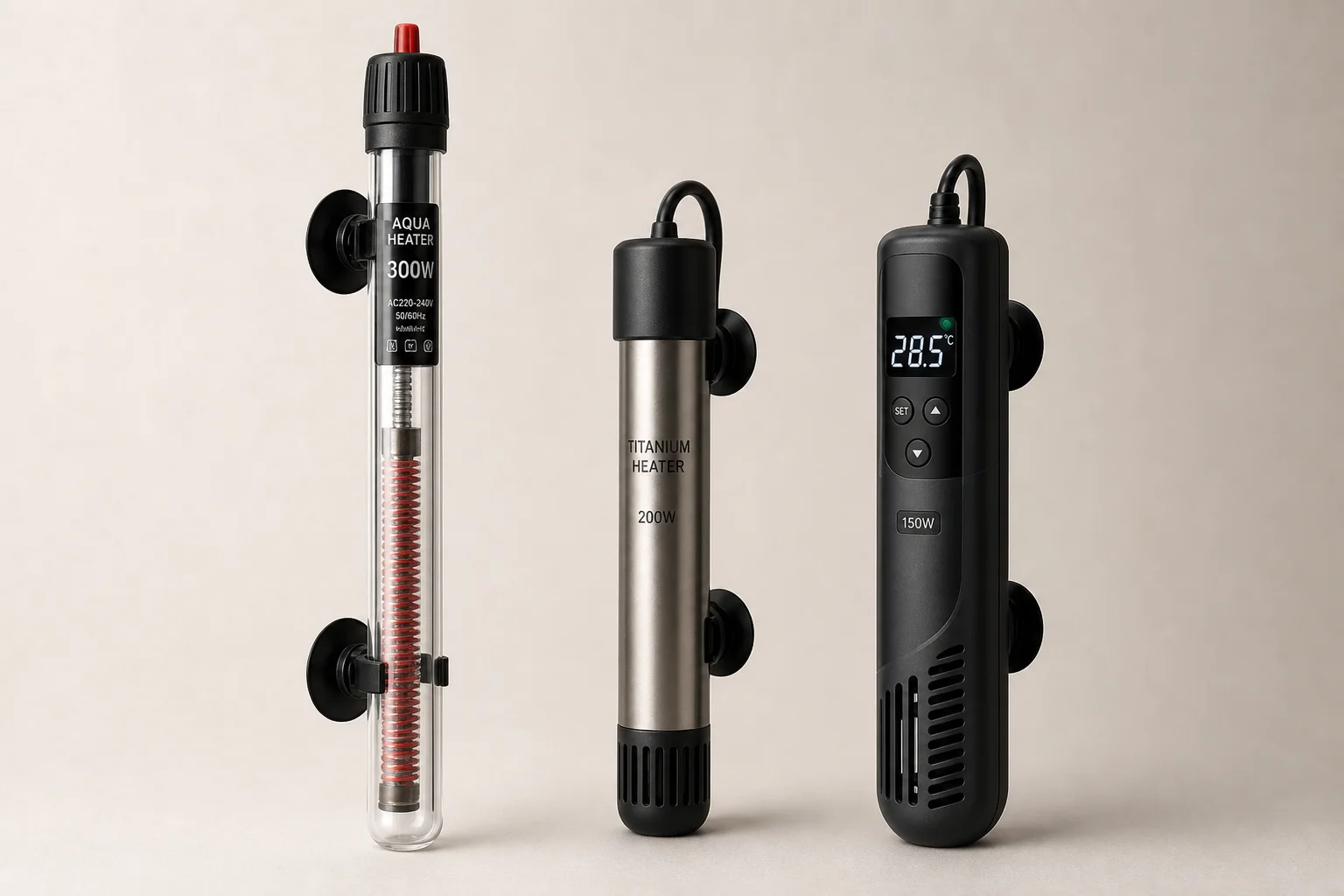
In saltwater aquariums, you will encounter three main heater types: glass, titanium, and plastic-housed models.
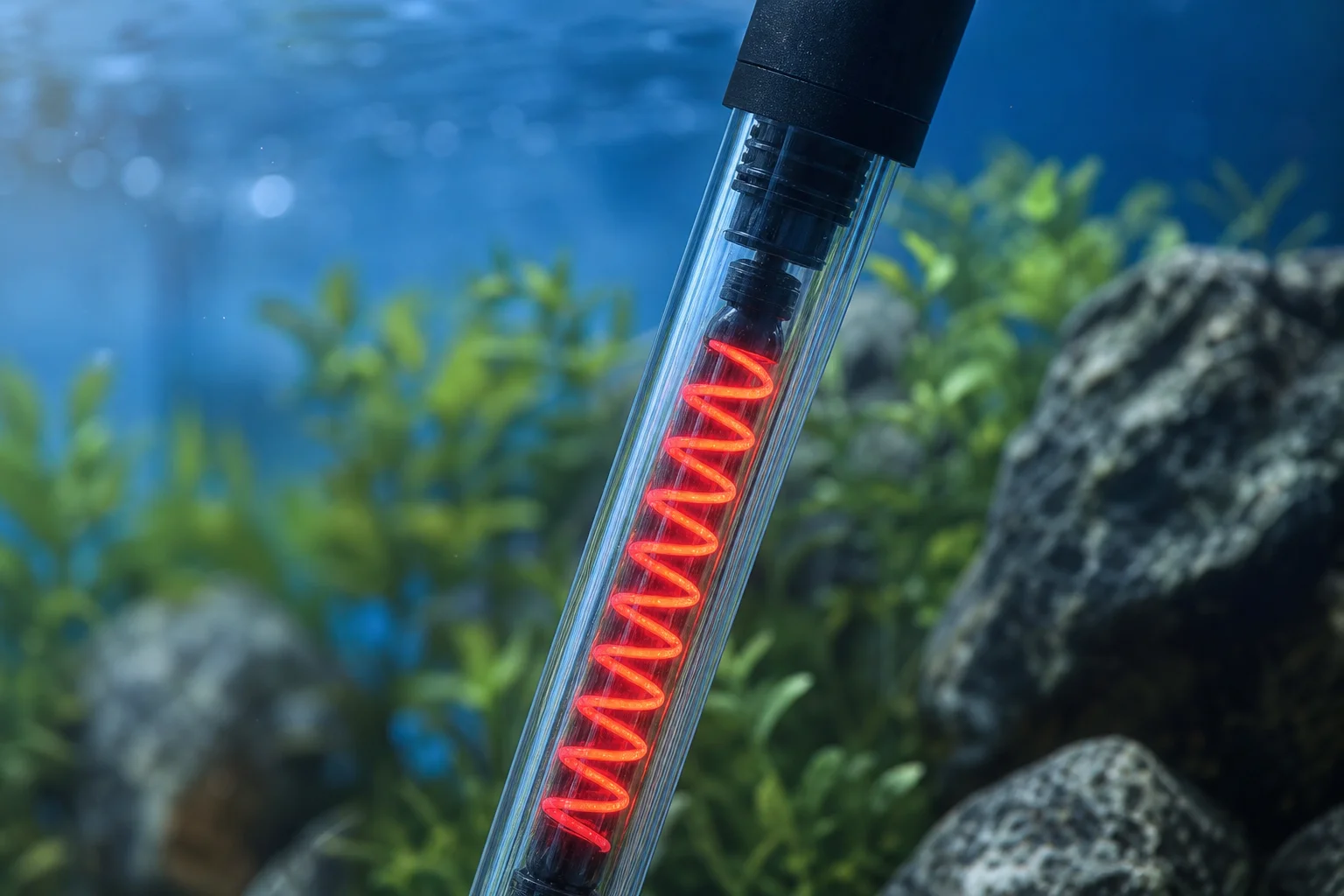
Glass heaters are the most common and affordable option. A typical 200-watt glass heater measures almost 16 inches long and contains internal heating coils that glow red when active. They use a mechanical bimetallic thermostat that opens and closes to maintain your set temperature automatically. Once you dial in your desired temperature, the heater handles the rest without external control. The downside is their length and fragility, making them prone to breakage if struck or handled roughly.
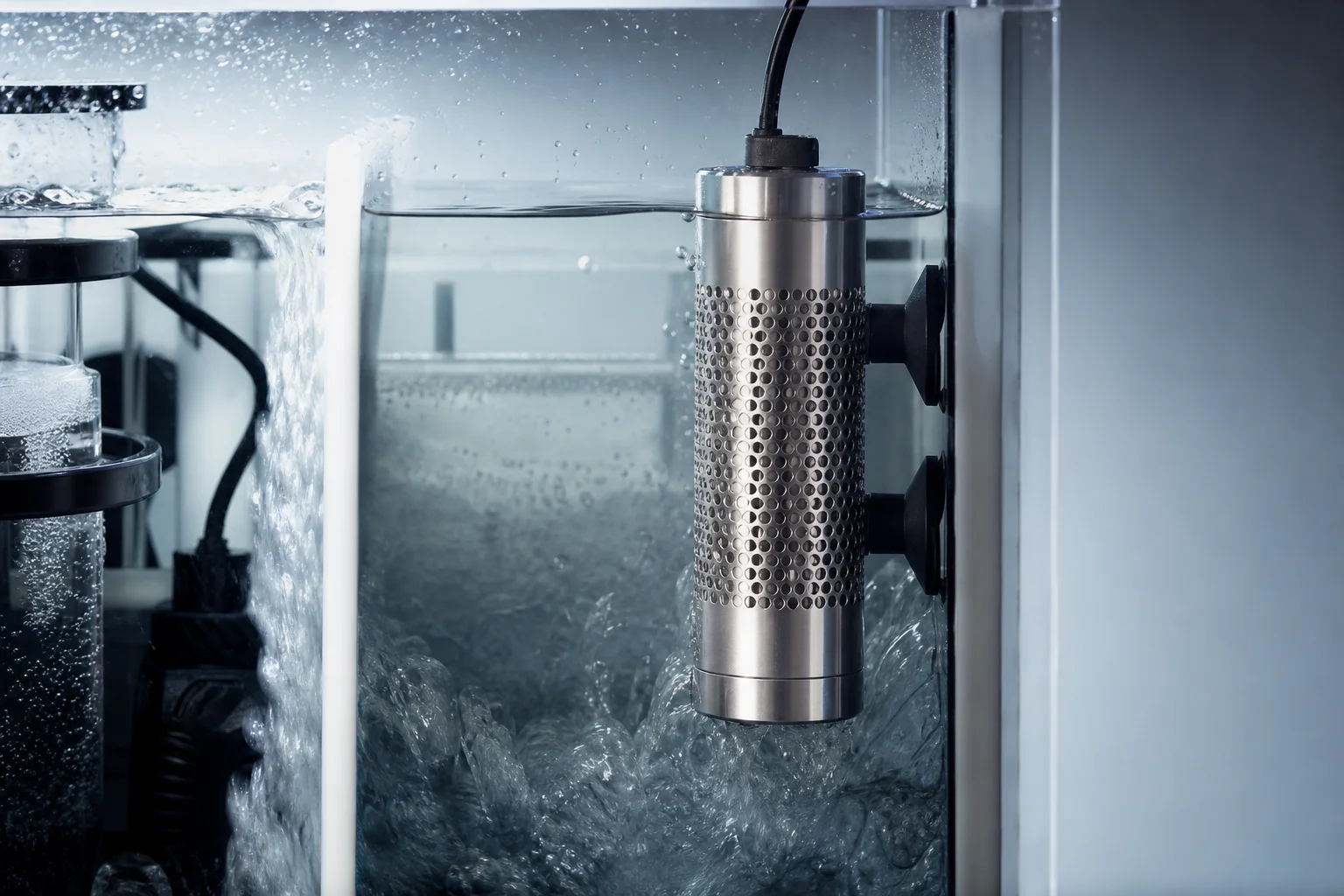
Titanium heaters have become increasingly popular because of their compact size and durability. A 200-watt titanium heater is just over 10 inches long, making it far easier to fit into tight spaces. Titanium is virtually unbreakable and transfers heat more efficiently to the water column than glass. However, titanium heaters contain no internal thermostat, meaning they are simply on or off. They require an external temperature controller to turn them on and off automatically, otherwise they would run continuously and overheat your tank.
Plastic-housed heaters like the Aqua L Ultra represent a newer category that combines the ease of glass heaters with a more compact form factor. These units have digital controls and a slim profile, making them ideal for fitting into tight spaces while still offering automatic temperature management. While they do not strictly require a controller, using one is still recommended for the added benefits and redundancy.
Why Use a Temperature Controller
Using a temperature controller with your heater is considered best practice in the hobby and offers multiple significant benefits.
First, a controller extends your heater’s lifespan. Think of a heater like a light bulb and switch. Constantly flipping a switch on and off wears out both components quickly. Similarly, every time a heater cycles on and off, it experiences mechanical wear. By setting a wider temperature variation on your controller, such as plus or minus two degrees instead of one, you can potentially double your heater’s lifespan.
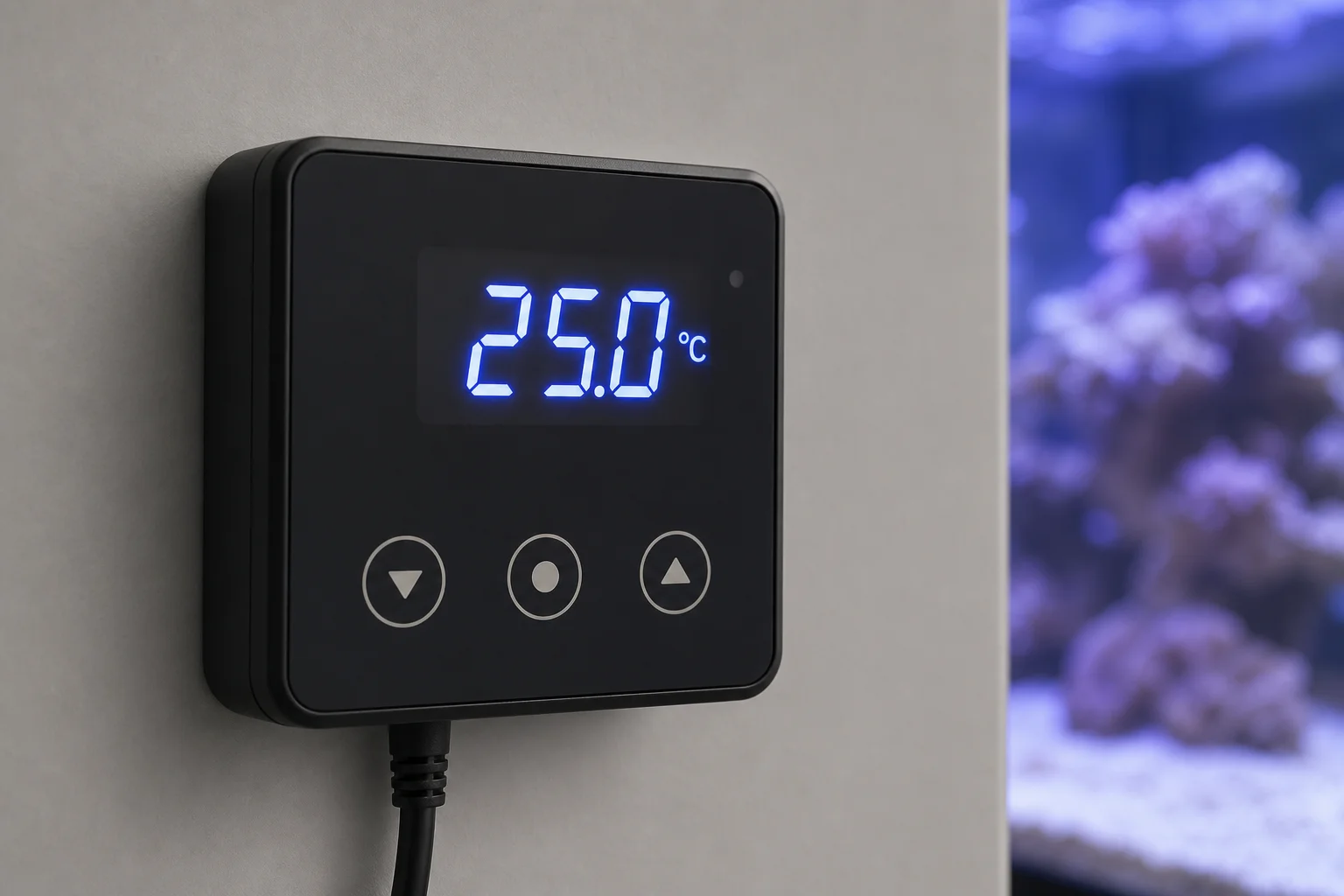
Second, controllers provide real-time temperature monitoring. Instead of relying on handheld thermometers and occasional spot checks, you can glance at a digital readout whenever you walk past your tank for instant feedback on water temperature.
Third, external temperature probes give you more accurate readings. Standard glass and plastic heaters measure temperature at their internal location, which may not reflect actual tank temperature if water flow over the heater is poor. A controller with an external probe can be placed upstream of the heater or directly in your display tank for a true tank temperature reading.
Fourth, audible alarms provide critical safety alerts. If your heater fails or something else goes wrong with temperature, an obnoxious alarm will alert you immediately. Most false alarms occur when you forget to turn on the return pump after a water change or accidentally pull the temperature probe out of the water.
Key Factors When Choosing a Heater
Several factors should guide your heater selection.
Tank volume is the starting point. How many gallons of water are you heating? Manufacturer recommendations provide a baseline wattage for your tank size.
Ambient room temperature matters significantly. A 100-gallon tank in a 75-degree room needs far less heating power than the same tank in a 65-degree room. If your room runs cool, you may need to choose a heater one size larger than the standard recommendation.
Durability depends on placement. If your heater sits in a sump surrounded by nothing, a standard glass heater works fine. If it will be exposed to potential impact or breakage, titanium or plastic-housed options are safer choices.
Redundancy is critical because heaters fail. You have two main strategies: purchase two identical heaters set at different temperatures, or choose a system with built-in redundancy like the Innovative Marine Helio or a titanium heater paired with a controller.
Length is a practical consideration. Glass heaters can be very long, so verify that your chosen model will fit in your intended location.
Wattage should follow manufacturer guidelines, adjusted for your room temperature as noted above.
Heater Failure and Redundancy Strategy
All heaters eventually fail. This is an unavoidable reality in the hobby that you must accept and plan for.
If a heater fails in the on position and is oversized for your system, your tank will rapidly overheat and become lethal to fish and invertebrates. If it fails in the off position, you may survive if your room temperature is 75 degrees or warmer, but if your room runs 65 degrees or cooler, your tank will cool dangerously.
The solution is redundancy. If your primary heater fails in the on position, you need a way to detect the high temperature, either through a simple stick-on temperature gauge or a sophisticated controller that sends alerts to your phone. If your primary heater fails in the off position, you need a secondary heater set to activate at a lower temperature before the tank becomes too cold.
For example, set your primary heater to 78 degrees. If it fails, set your secondary heater to activate at 74 or 75 degrees, ensuring your tank never drops dangerously low.
Installation and Setup
Start by choosing a location that is always submerged with zero chance of air exposure. For all-in-one systems, this means either the display tank itself or a rear filtration chamber, but never in the compartment containing the return pump as it can run dry. For sumps, ensure strong water movement around the heaters.
Next, calibrate your heater if possible. Glass heaters like the Eheim Jager are notorious for arriving uncalibrated, sometimes off by three to five degrees. Check your heater against a reliable thermometer to establish a baseline.
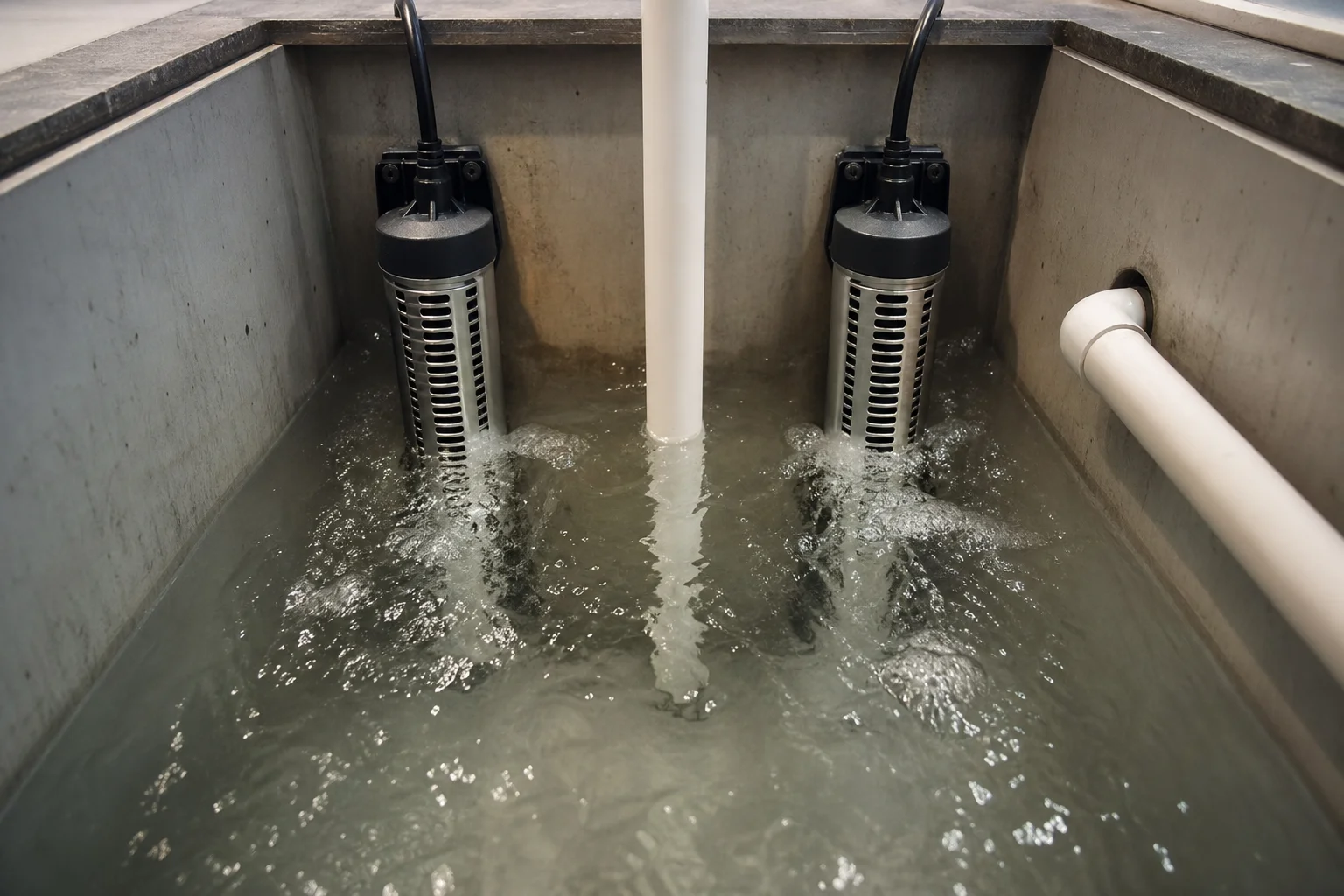
Install your primary heater and set it to 78 degrees, following the manufacturer’s orientation instructions, which may specify horizontal, vertical, or angled placement. If your heater includes a temperature probe, place it upstream of the heater for the most accurate reading.
Install your secondary heater and plug it into a temperature controller. Set the controller to activate at 75 degrees with a 0.5-degree variation. Set the alarm to trigger at 74.9 degrees. This configuration ensures that if your primary heater fails, an audible alarm alerts you when the tank reaches 74.9 degrees, and the controller automatically activates the secondary heater at 74.5 degrees, protecting your tank.
Recommended Heater Combinations
The good choice is two Eheim Jager heaters of the same wattage. Set the first to 78 degrees and the second to 74 or 75 degrees for backup redundancy.
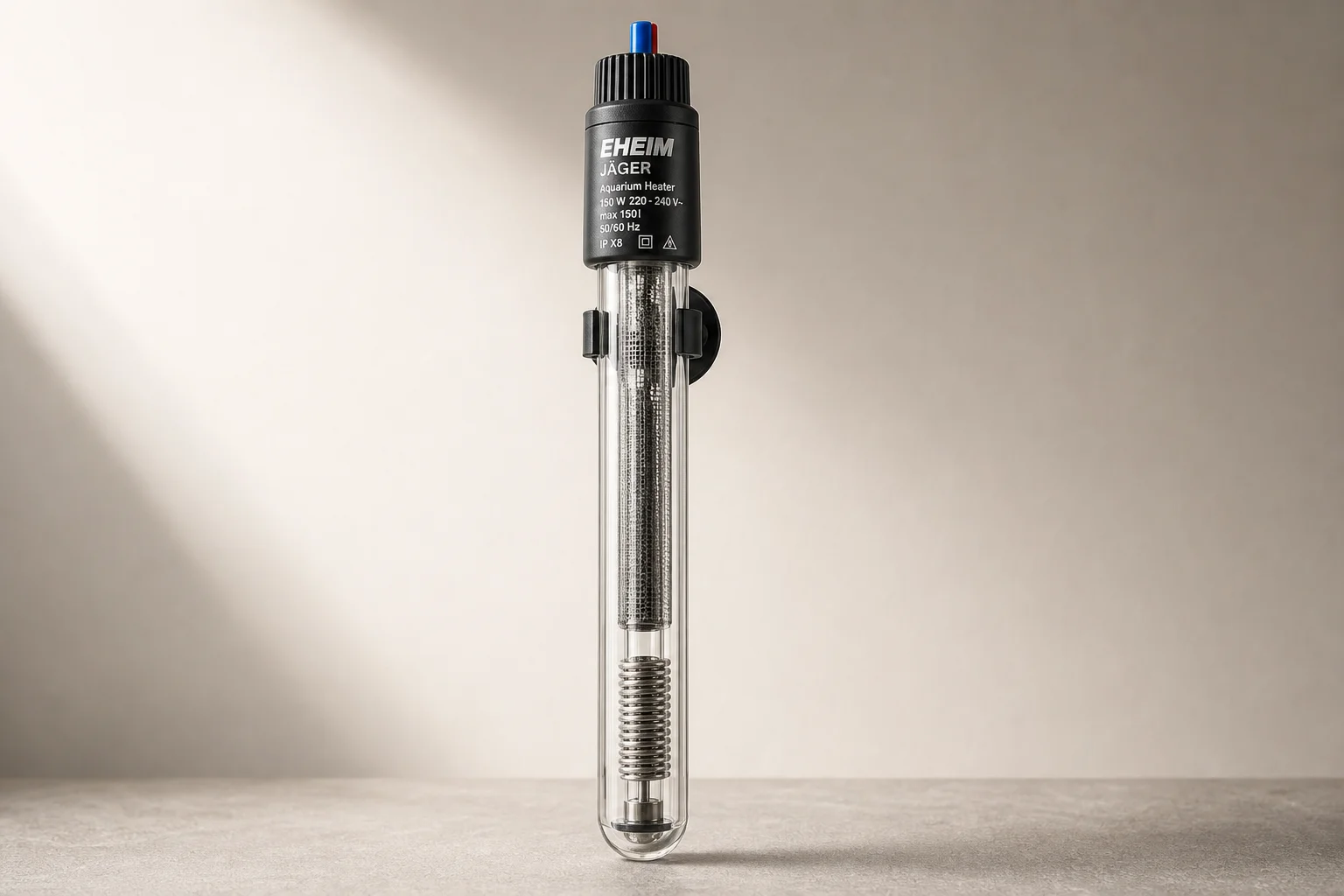
The better option is one Aqua L Ultra heater and one Eheim Jager glass heater of matching wattage. Set the Ultra to 78 degrees and the Jager to 74 or 75 degrees as backup.
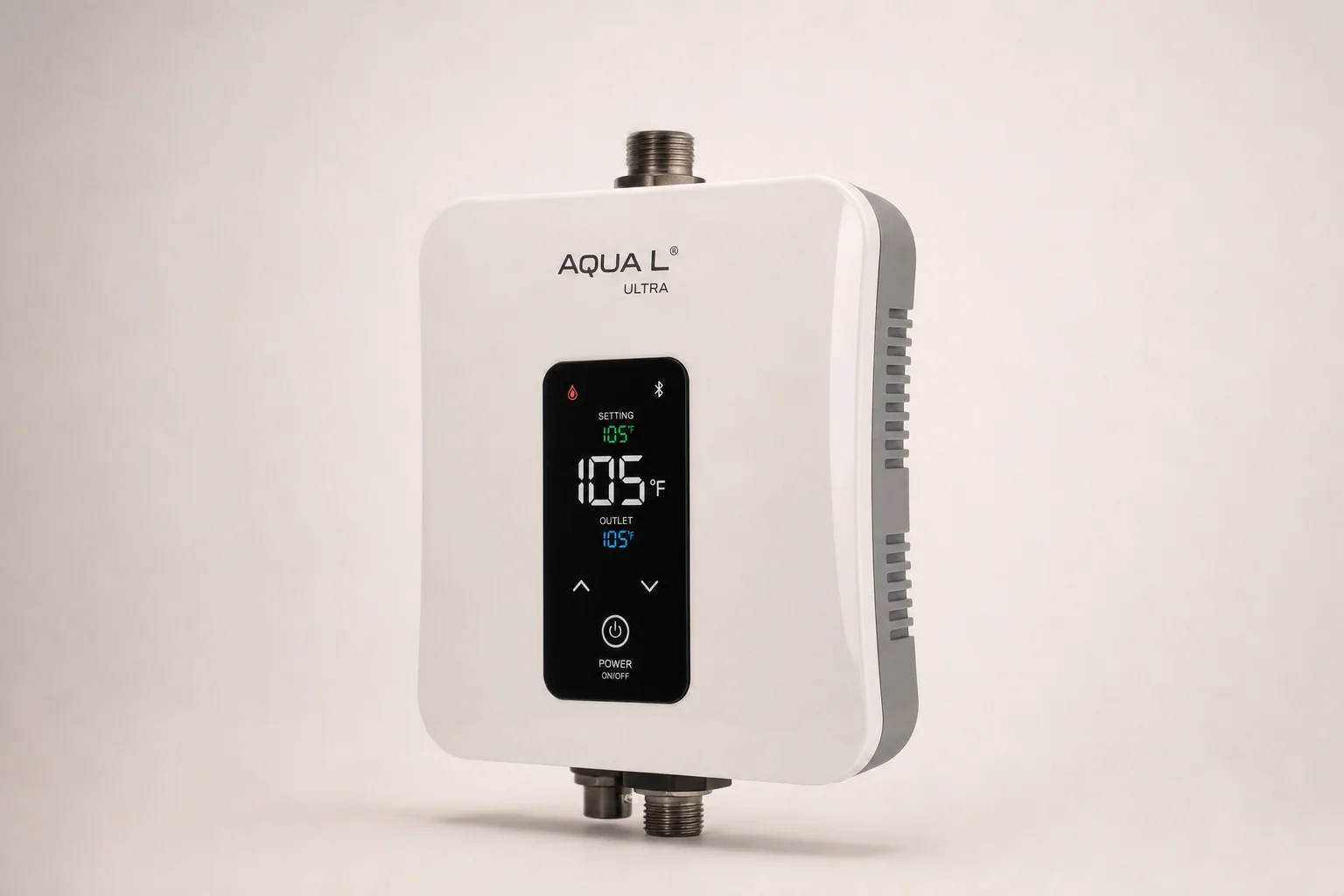
The best option is one Aqua L Ultra heater paired with one Eheim Jager glass heater and an Inkbird temperature controller for ultimate redundancy and monitoring.
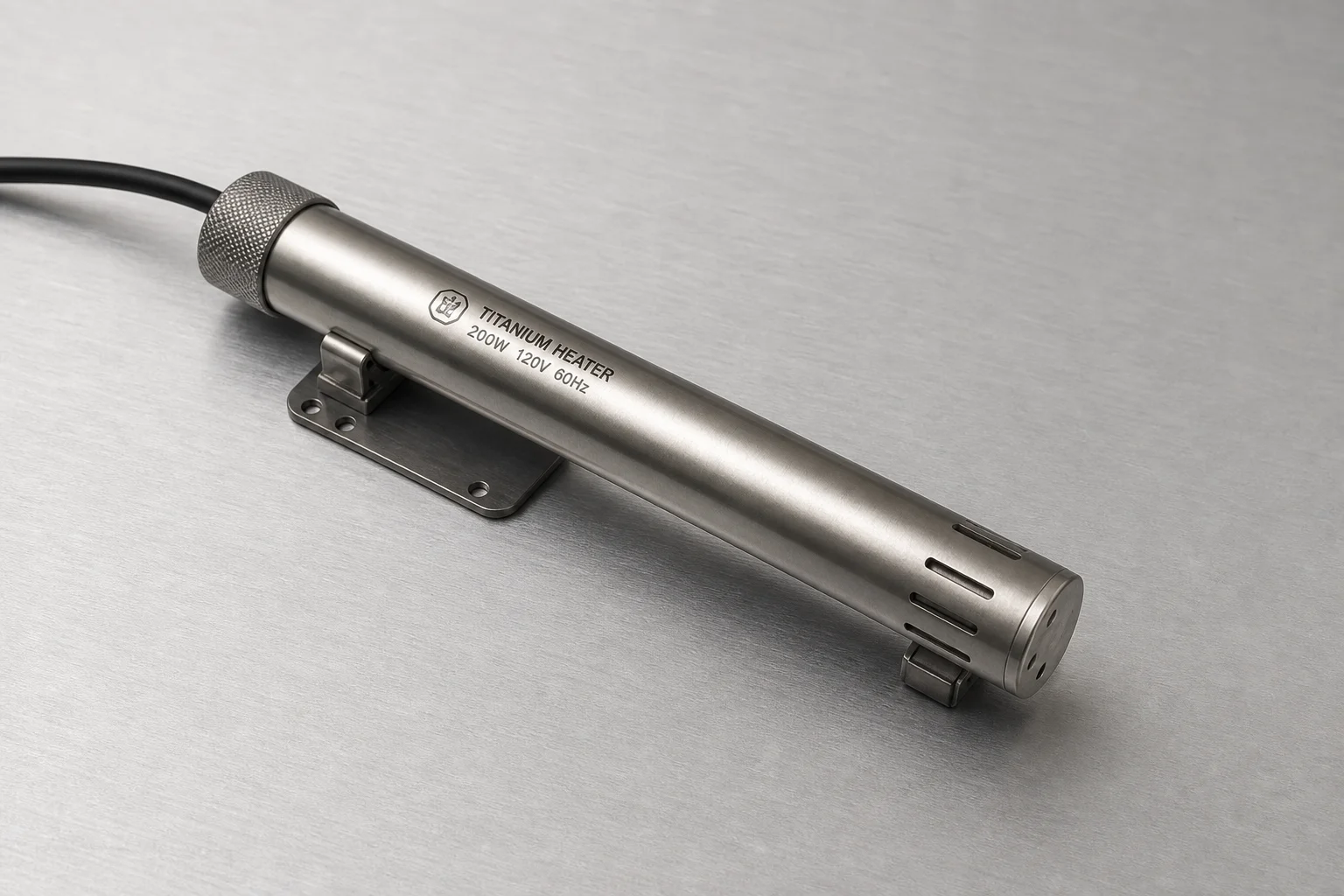
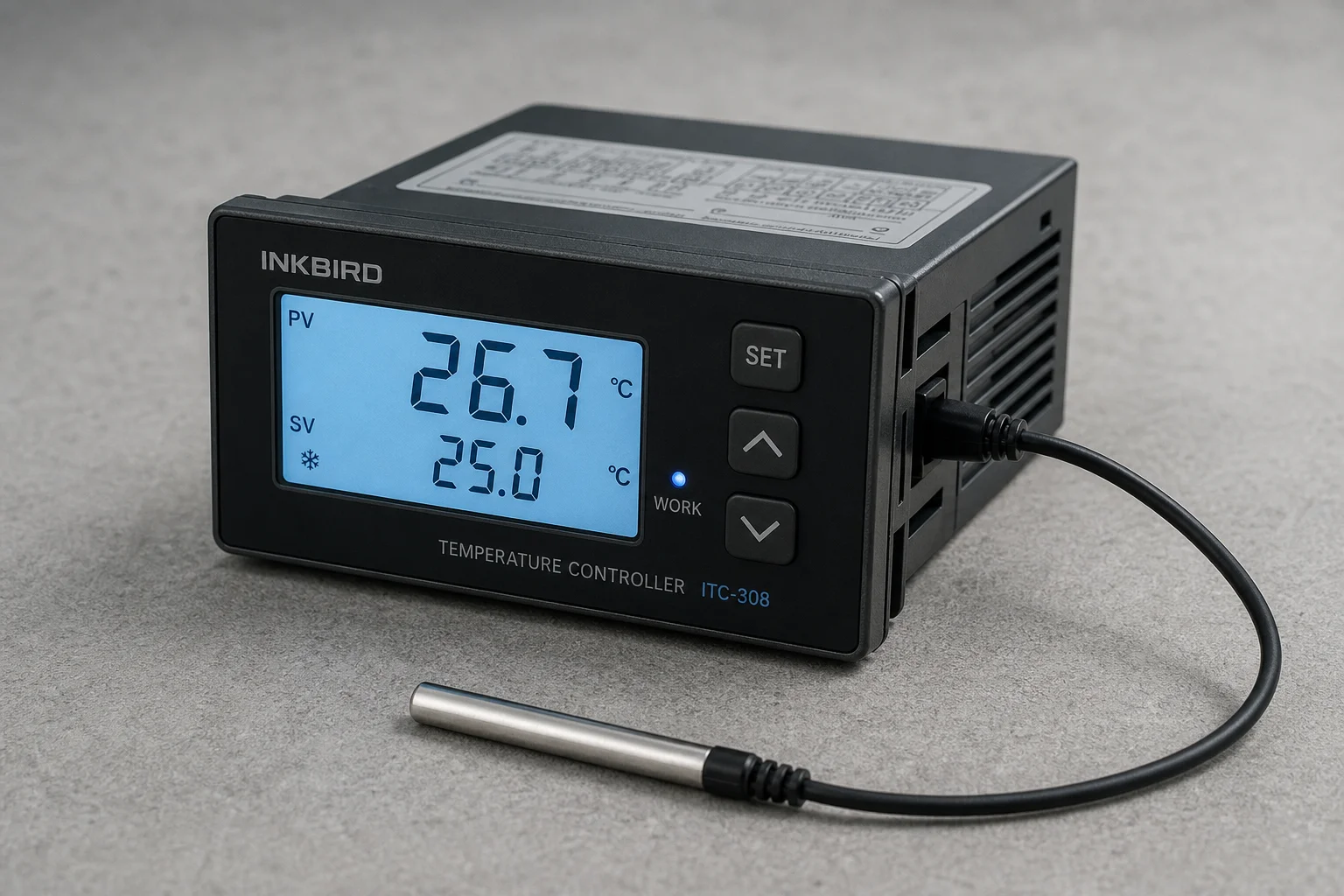
Alternatively, if budget allows, use two Aqua L Ultra heaters for maximum reliability and ease of use.
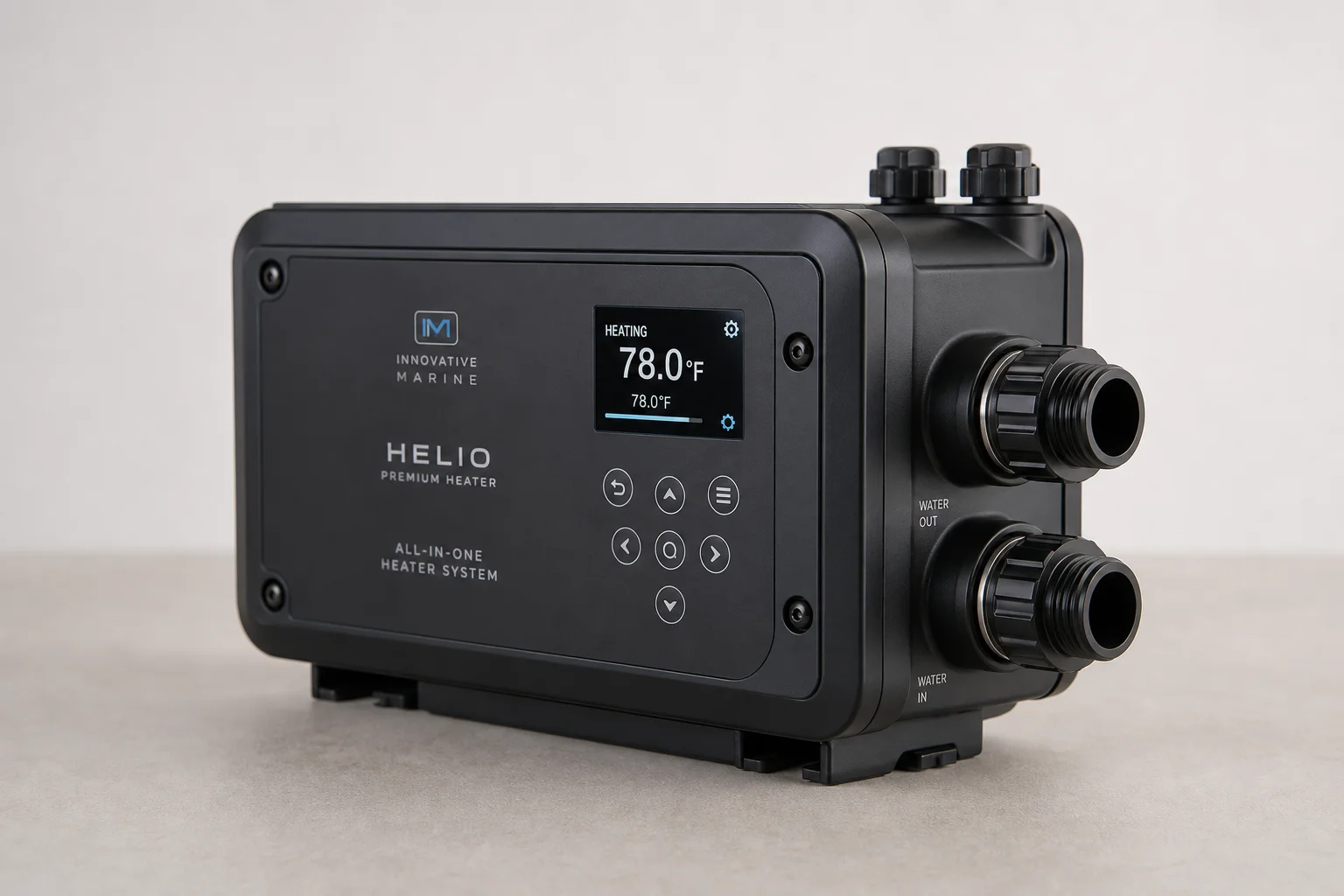
For those seeking a premium all-in-one solution with built-in redundancy, the Innovative Marine Helio system offers an integrated approach.
Safety Considerations
A broken or mishandled electric heater poses serious risks. Faulty heaters can electrocute fish and people, burn through acrylic sumps causing flooding, or in worst cases, cause house fires. Always follow manufacturer instructions carefully and ensure proper installation and maintenance to avoid these hazards.
Conclusion
Choosing the right heater and implementing redundancy through a secondary heater and temperature controller is the most reliable way to protect your saltwater aquarium from temperature-related disasters. Whether you opt for traditional glass heaters, modern titanium units, or compact plastic-housed models, the key is planning for failure before it happens and maintaining consistent monitoring of your tank’s temperature.
Further reading
Related Reviews
Aquarium Equipment
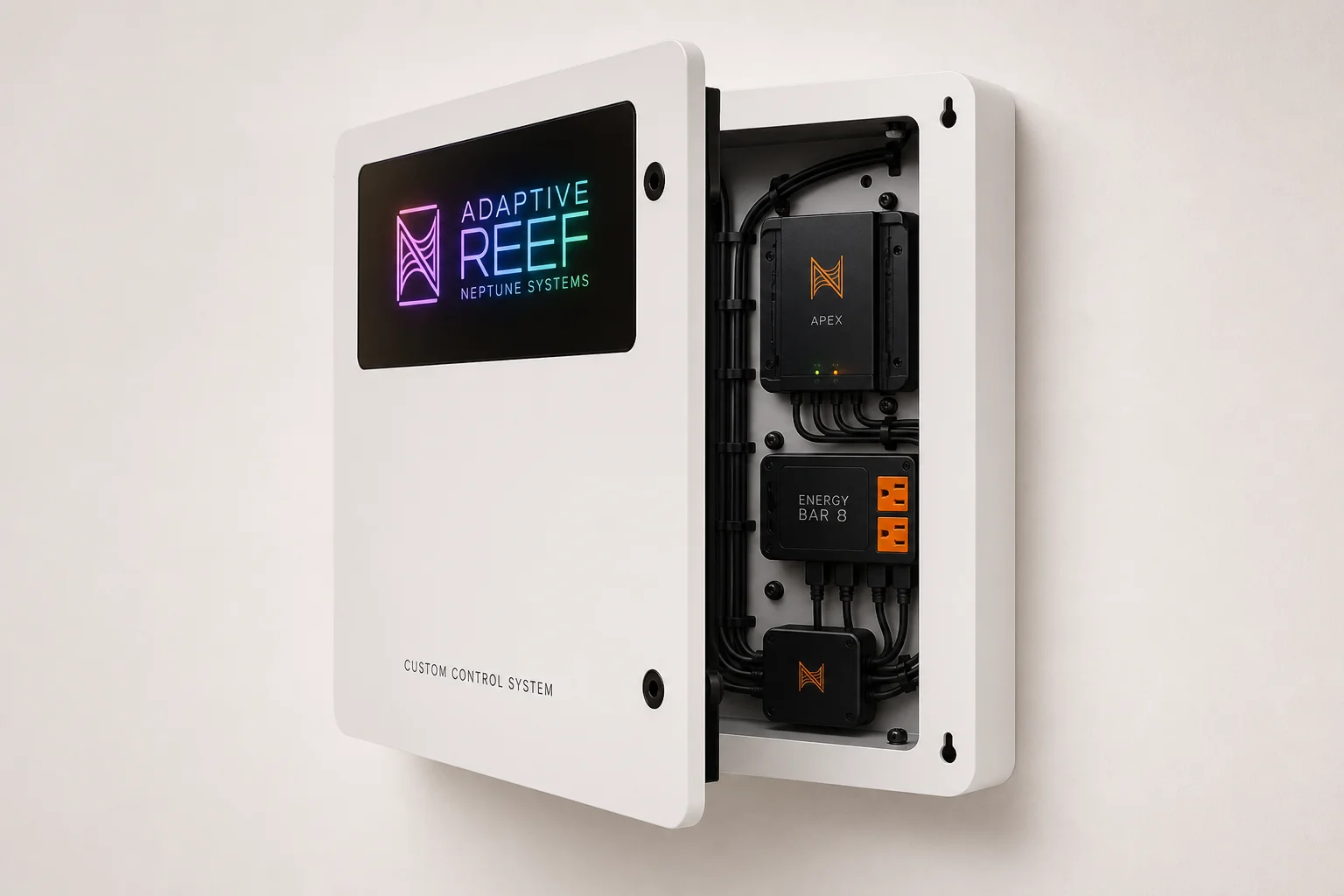
Adaptive Reef Neptune Systems Custom Control Board Review: Purpose-Built Organization for Apex Systems
A pre-configured controller board designed specifically for Neptune Systems Apex setups, offering integrated cable management, tablet mounting, and RGB lighting in a ready-to-use package.
Aquarium Equipment
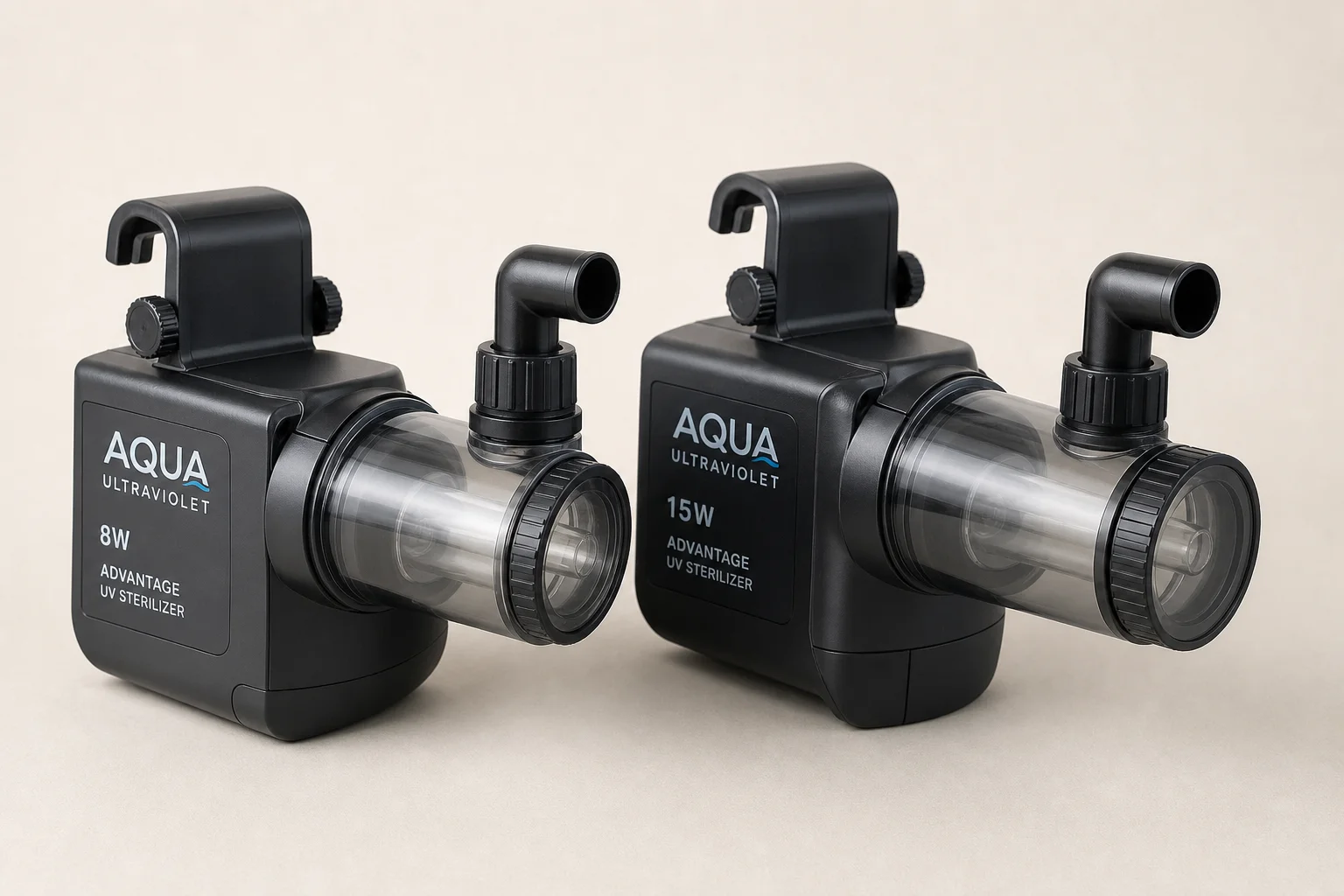
Aqua Ultraviolet Advantage Hang-On UV Sterilizer: 8-Watt vs 15-Watt Guide
Two compact UV sterilizers designed for aquarium owners seeking parasite and algae control without complex plumbing or large footprints.
Aquarium Equipment
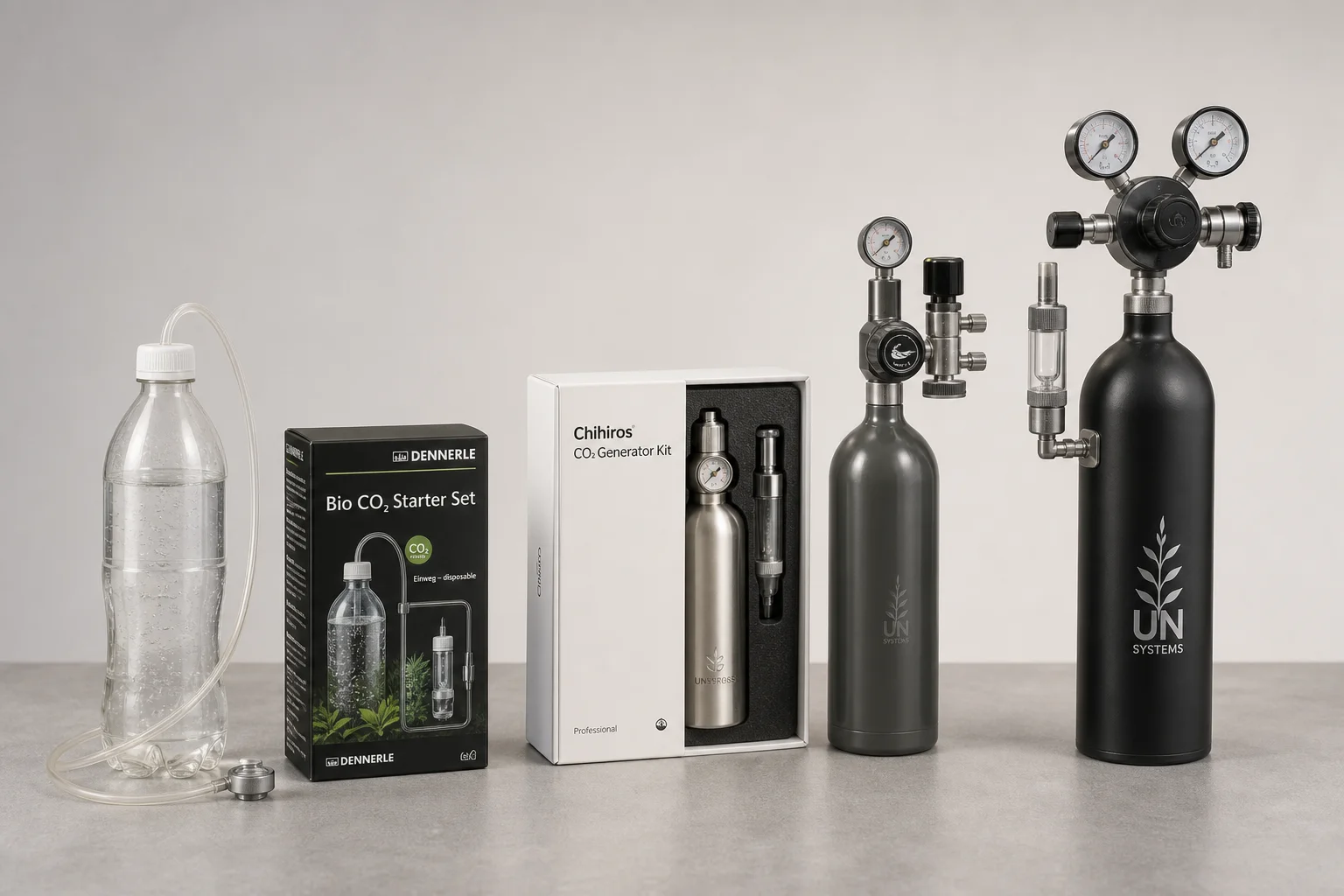
Best Aquarium CO2 Systems: Five Options From Budget DIY to Multi-Tank Setups
A practical guide to five aquarium CO2 systems, from homemade fermentation kits to pressurized cylinders with multi-tank regulators. Find the right setup for your tank size and budget.