Cookware
Best Dutch Ovens Tested: Premium vs Budget Brands Compared
We tested nine top Dutch oven brands with controlled durability, heat retention, and moisture-locking tests to find which ones deliver real value and which premium options justify their price.
Introduction
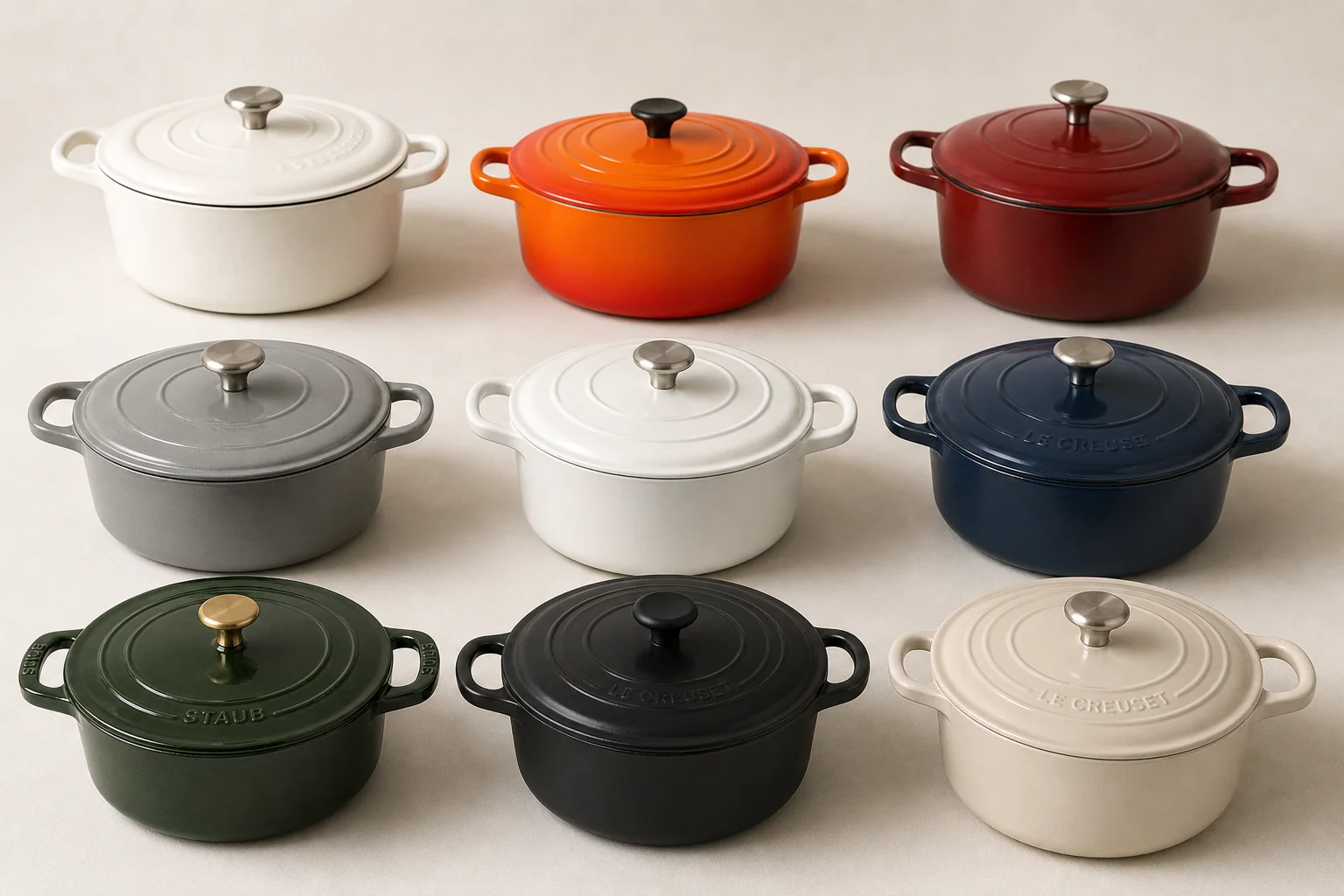
Dutch ovens are a kitchen staple, but the price range is enormous. A basic model costs under $100, while premium brands exceed $400. The question is whether the expensive options truly perform better, or if budget-friendly alternatives deliver the same results.
To answer this, we tested nine of the highest-rated Dutch oven brands on the market. Over months of cooking and controlled testing, we measured durability by dropping a metal spatula from 12 inches onto both interior and exterior surfaces. We tested heat retention by heating each pot to 400°F and measuring surface temperature after 5 minutes. We evaluated moisture retention by boiling 32 ounces of water for 10 minutes, letting it sit for 30 minutes, and recording weight loss. We also assessed how well lids redistribute evaporated moisture back over the pot and measured knob temperatures after boiling water for 10 minutes.
Testing Methodology
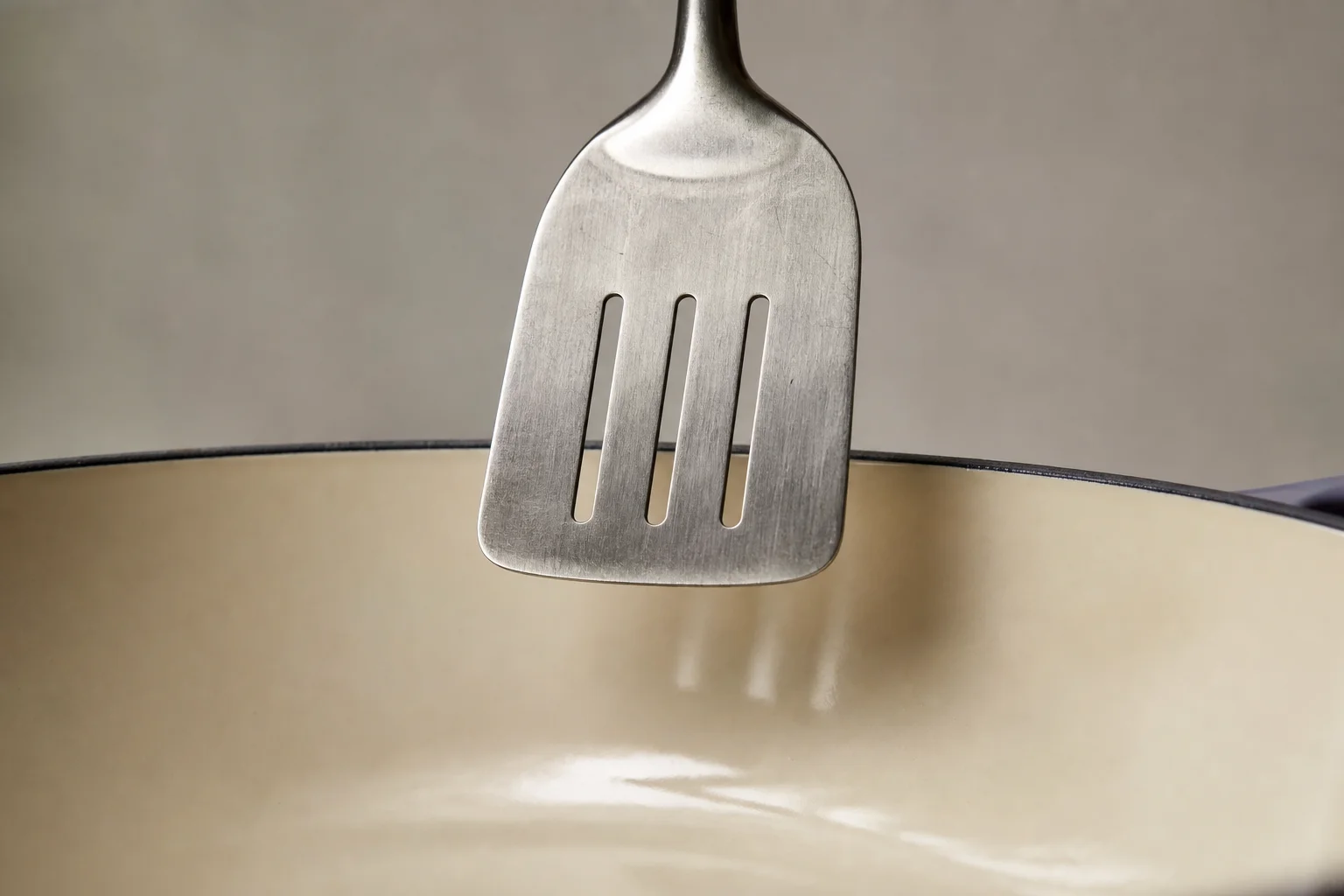
Our testing approach combined real-world cooking experience with controlled laboratory-style measurements. Each Dutch oven was evaluated on the same criteria to ensure fair comparison across all price points and brands.
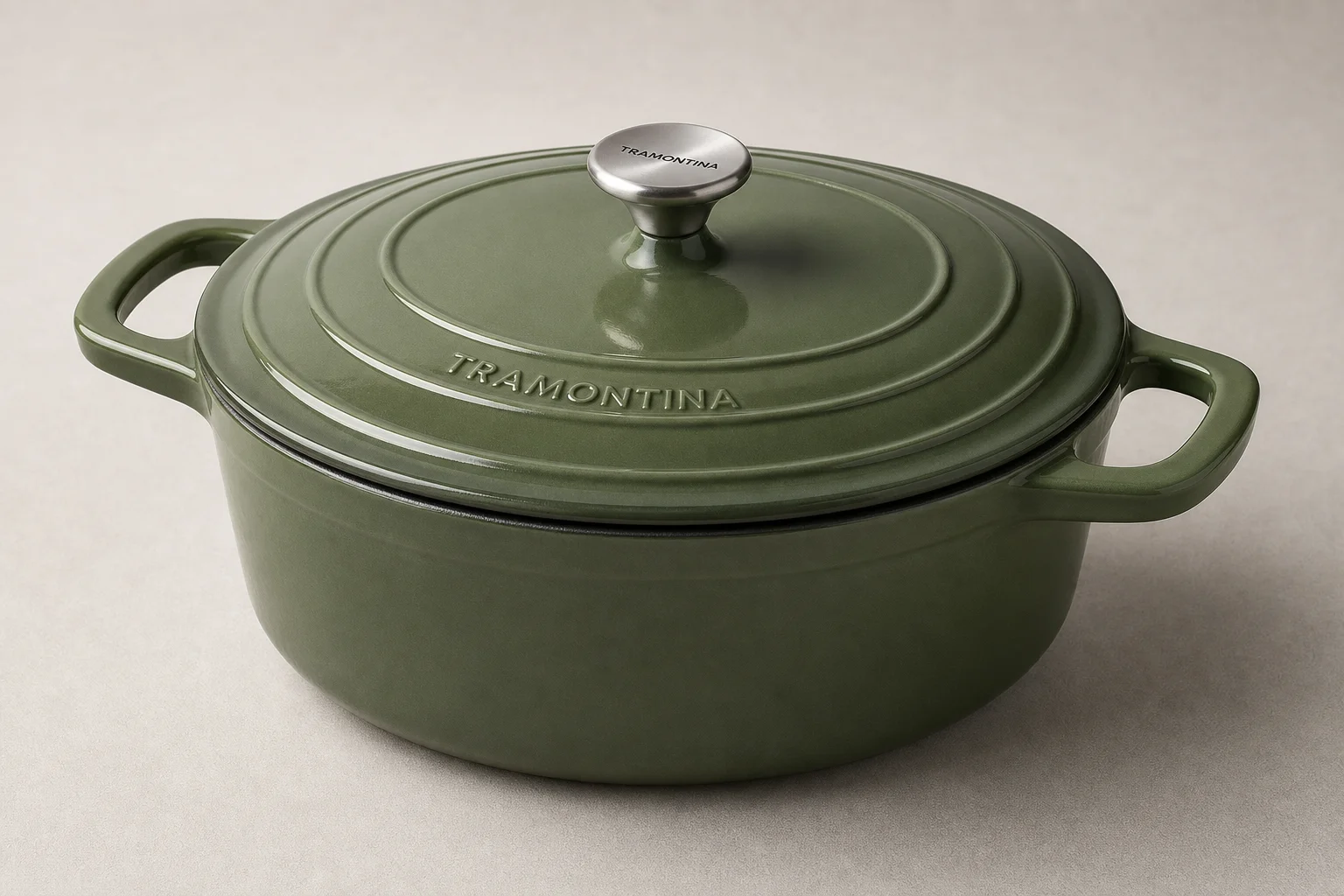
Tramontina 5.5 Qt Dutch Oven
The Tramontina is the least expensive option tested. Its enamel survived the spatula drop test without chipping, and the heavy lid ranked third in moisture retention. However, the unit arrived with a chip already present on the rim of its lid, raising quality control concerns.
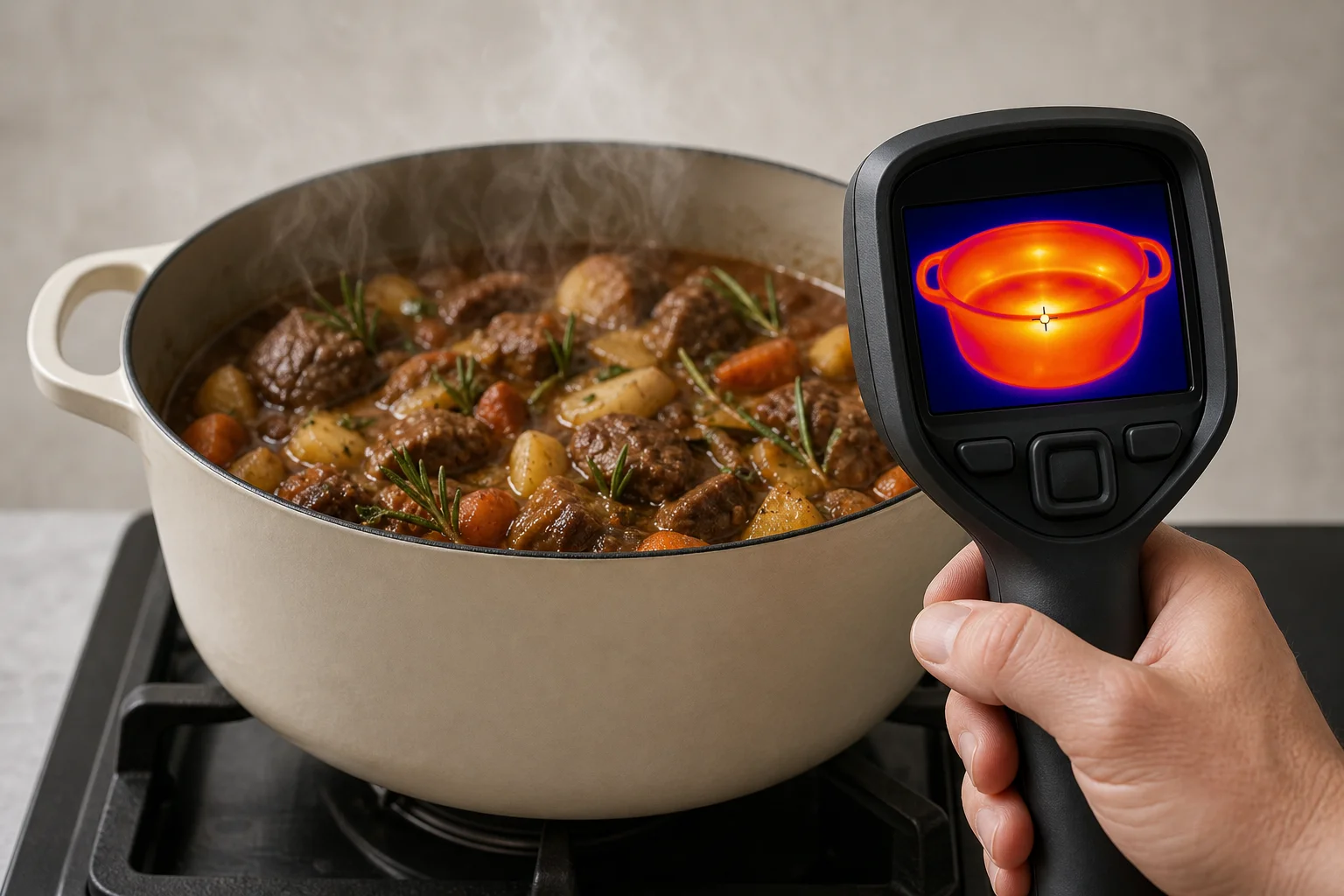
Performance issues emerged across other tests. Heat retention was the worst of all nine brands, and the knob became hotter than all but one competitor. The ridges under the lid designed to redistribute moisture evenly failed to perform their intended function. The handles are also too small to comfortably fit four fingers. While the price is fair, the basic design and handling limitations make this a poor choice unless affordability is the absolute priority.
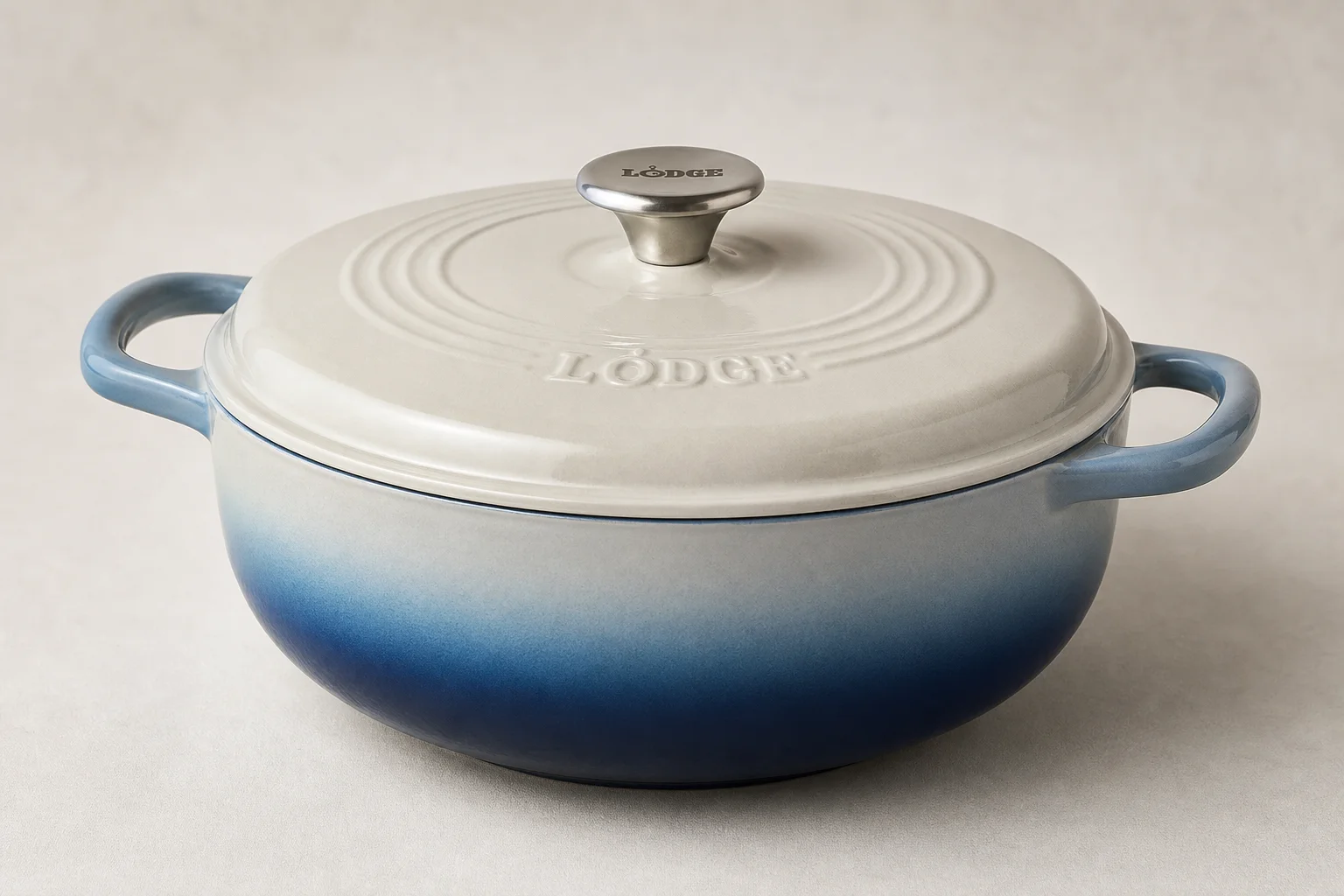
Lodge Essential Enamel 6 Qt Dutch Oven
Lodge offers two enameled cast iron collections. The Essential Enamel line is made in China and priced around $80, while the USA Enamel collection is made domestically at a higher price point. The Essential Enamel model features large handles, a substantial lid knob, and an attractive gradient exterior finish.
In heat retention testing, this Dutch oven performed well, and the knobs stayed cooler than most competitors. The main drawback is that it was the only model to chip slightly when the spatula was dropped on it, though the chip was minor. Some inconsistencies and imperfections are visible in the enamel inside the lid.
The shape differs from most competitors, with a more rounded bottom and curved sides rather than flat bottoms and straight sides. This rounded design makes it easier to reach corners and stir, but reduces the flat cooking surface available for browning meats.
A standout feature is Lodge’s warranty. They are the only brand tested that will replace or repair a Dutch oven for free if the enamel chips or cracks under normal use. Other brands offer standard warranties covering manufacturing defects, but those warranties do not cover damage that occurs during cooking. This commitment is backed by real customer experience, with many owners successfully claiming repairs.
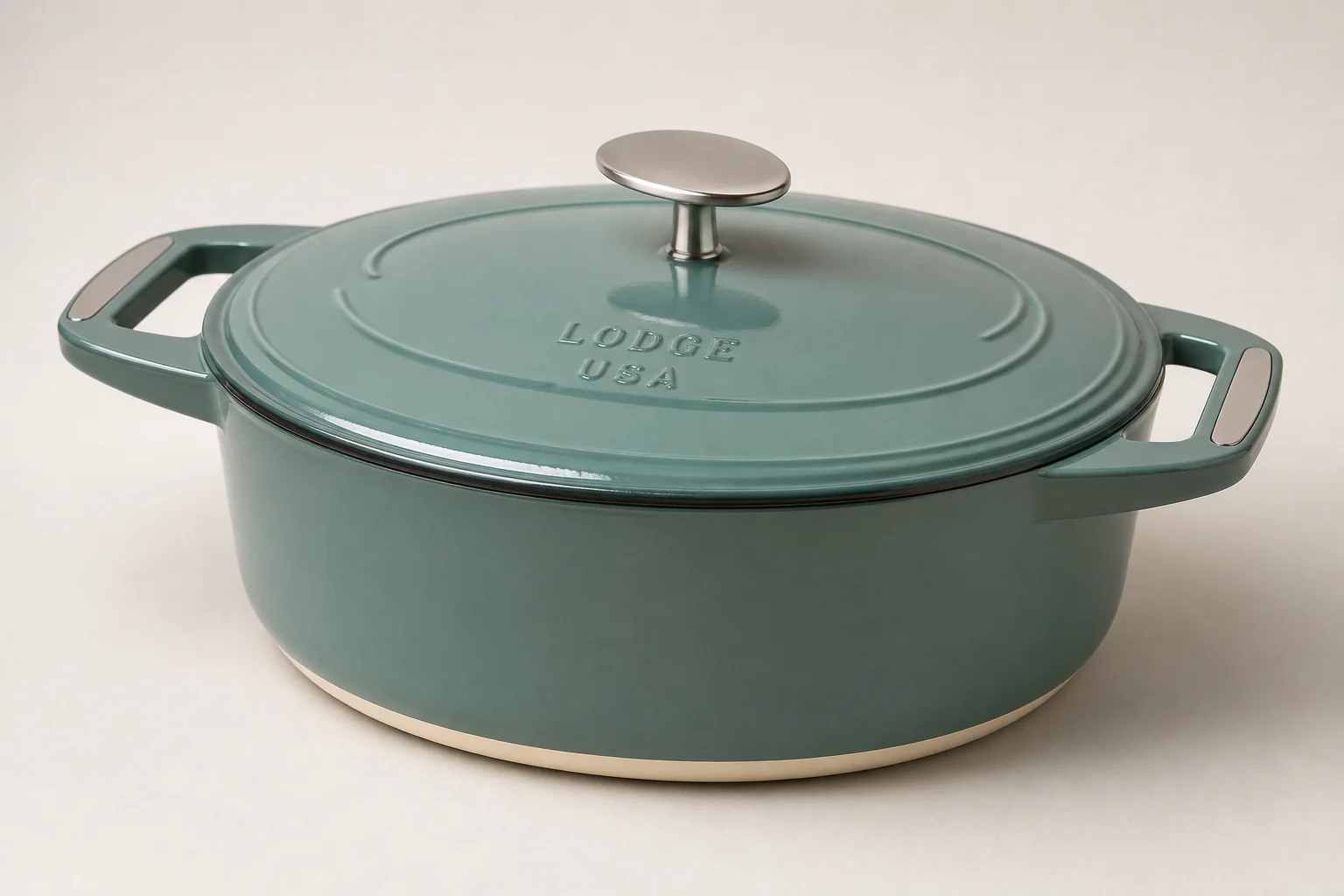
Lodge USA Enamel 6 Qt Dutch Oven
The Lodge USA Enamel model costs more than twice as much as the Essential Enamel version, but it is made in America and features a unique retro design inspired by mid-century American aesthetics. Compared to the cheaper Lodge option, this model has even larger handles, a much wider cooking surface, and a lighter interior color that makes it easier to monitor food and prevent sticking or overcooking.
This Dutch oven is approximately 1.5 pounds heavier and features a thin oval knob aligned with its retro design. While visually appealing, the oval knob offers less to grip than a rounded knob, making it slightly less convenient to lift and tilt the lid.
Performance in cooking tests was solid, with average results in heat and moisture retention. The enamel survived the durability test without damage. One design flaw is the metal accents on the handles, which are not completely flush with the cast iron. Food can become trapped in these gaps, creating a cleaning inconvenience. The metal pieces can be unscrewed for cleaning, but this adds an unnecessary extra step.
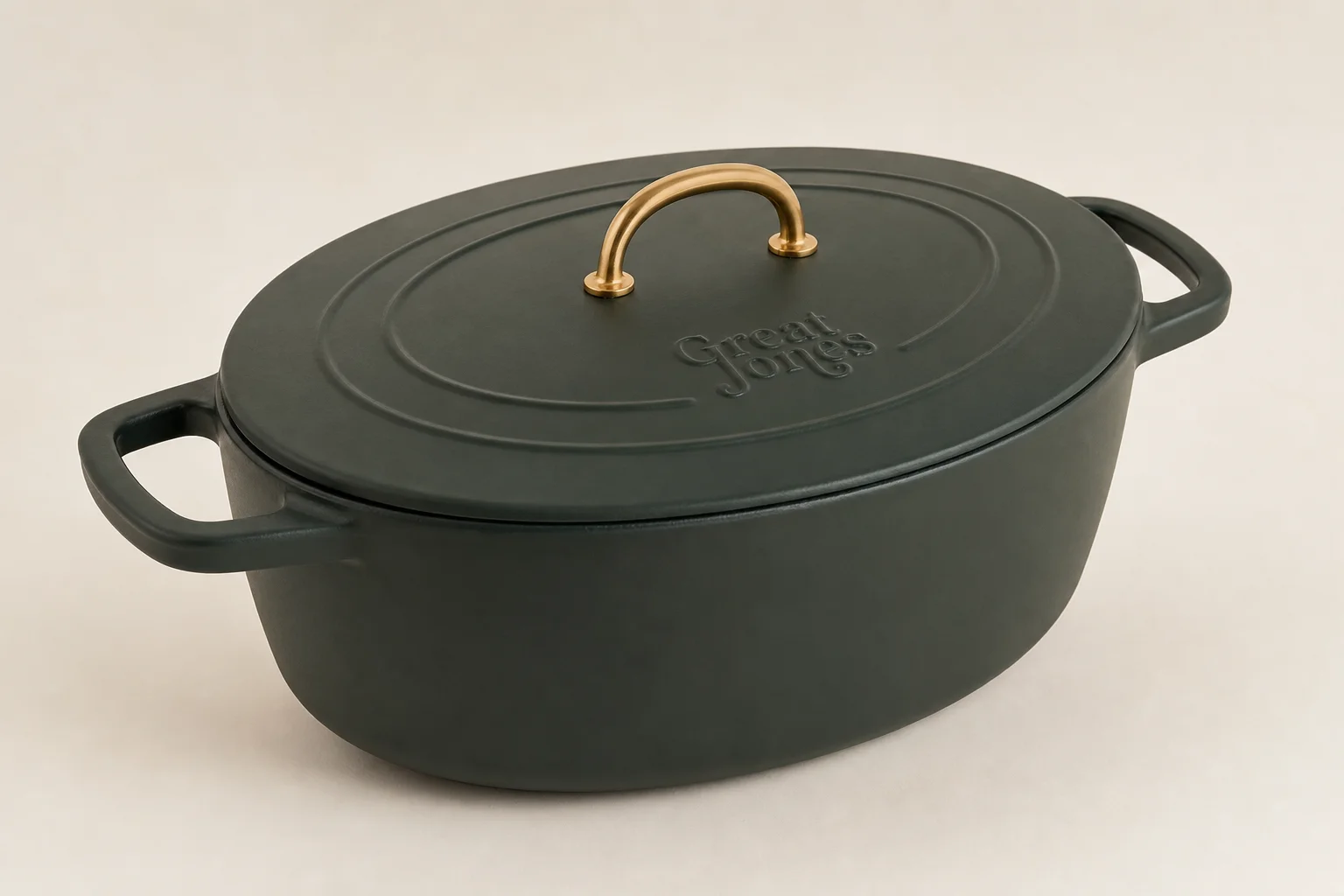
Great Jones Dutch Oven
Great Jones offers a single configuration: an oval 6.75-quart Dutch oven. It is the only model tested with a matte exterior finish instead of a polished shine. The interior is gray, chosen to hide stains better than white while allowing better browning visibility than black. While functional, the matte gray aesthetic appears somewhat dull compared to competitors.
Performance in controlled tests was solid, but two design choices limit its appeal. The lid handle is a brass-colored metal loop shaped like an upside-down U rather than a traditional circular knob. While visually interesting, it only accommodates two fingers, making it difficult to lift and control the heavy lid. The looped side handles are also basic in design and too short to comfortably fit four fingers, similar to the Tramontina.
Made In 5.5 Qt Dutch Oven
Made In produces a 5.5-quart Dutch oven in France, priced at $250. The handles extend further than any competitor, providing excellent grip room. The lid knob has the widest diameter of all tested models. The flat cooking surface measures 9 inches, the largest among the 5.5 and 6-quart options evaluated.
In controlled testing, Made In achieved the second-best heat retention and second-best moisture retention, with the lowest knob temperature of all brands. The enamel survived the durability test without chipping. Real-world cooking performance is excellent.
Downsides include weight: at 13.6 pounds, it is the heaviest 5.5-quart model tested. The lid top is completely smooth with no ridges or design, so a spoon will slide off if rested on it. Despite self-basting dimples on the lid interior, moisture still collects around the edges and does not drip back over the pot evenly.
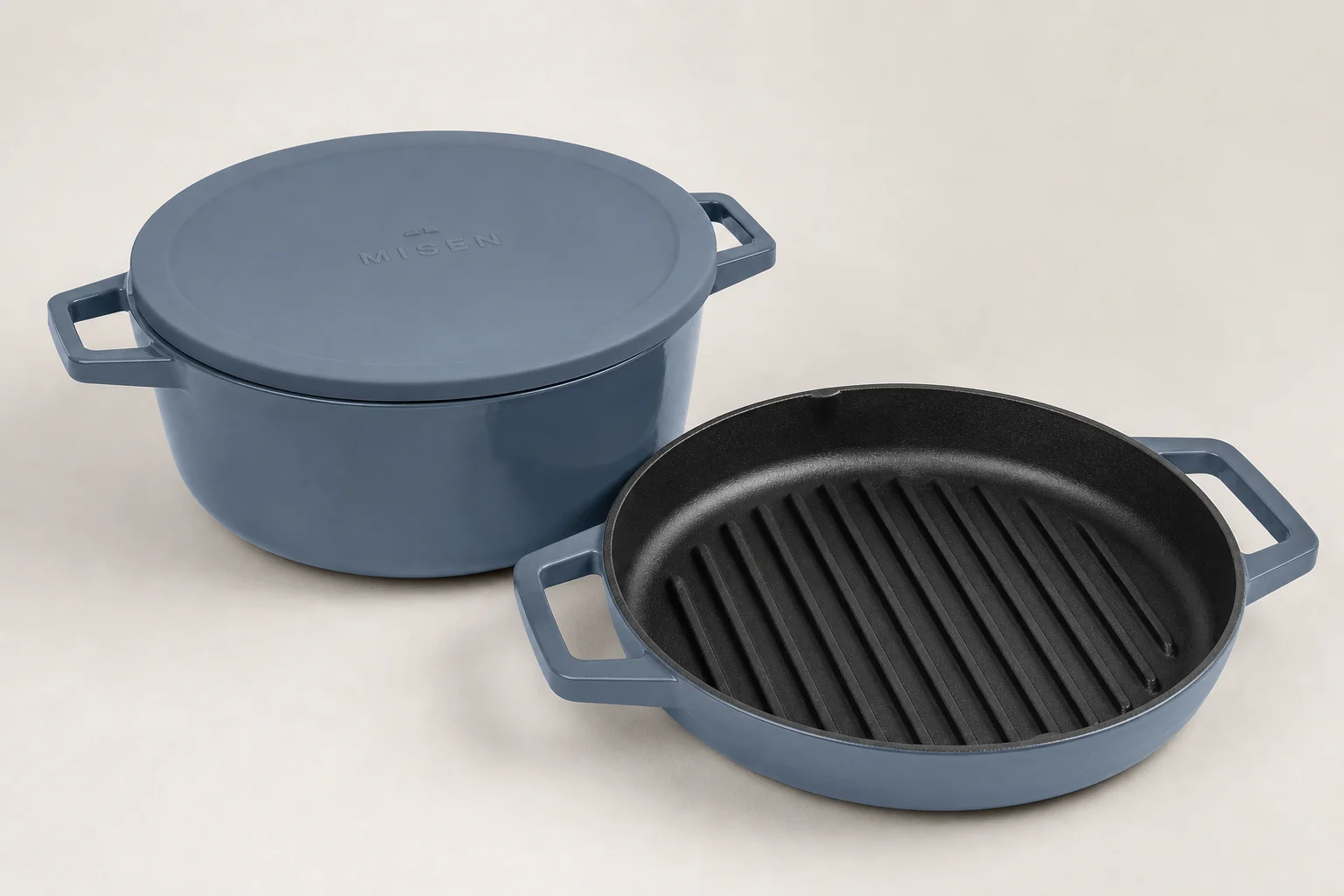
Misen 7 Qt Dutch Oven
Misen offers a 7-quart Dutch oven at $250 in two versions: a traditional model with a standard lid, and a version with a cast iron lid that flips to function as a grill pan. The grill pan version includes a lightweight silicone lid as an alternative.
Large handles with wide openings are a strength. The grill pan lid retained the most liquid of all nine models tested, and its ridges effectively collect and redistribute moisture evenly over the pot. The downside is weight: with the grill pan lid, the entire assembly weighs close to 17 pounds, making it the heaviest by far. The grill pan lacks a knob, making it tricky to lift. Additionally, the grill pan bottom will stain and discolor over time like any cookware, so visible stains will appear on the lid surface if not thoroughly scrubbed.
Caraway Dutch Oven
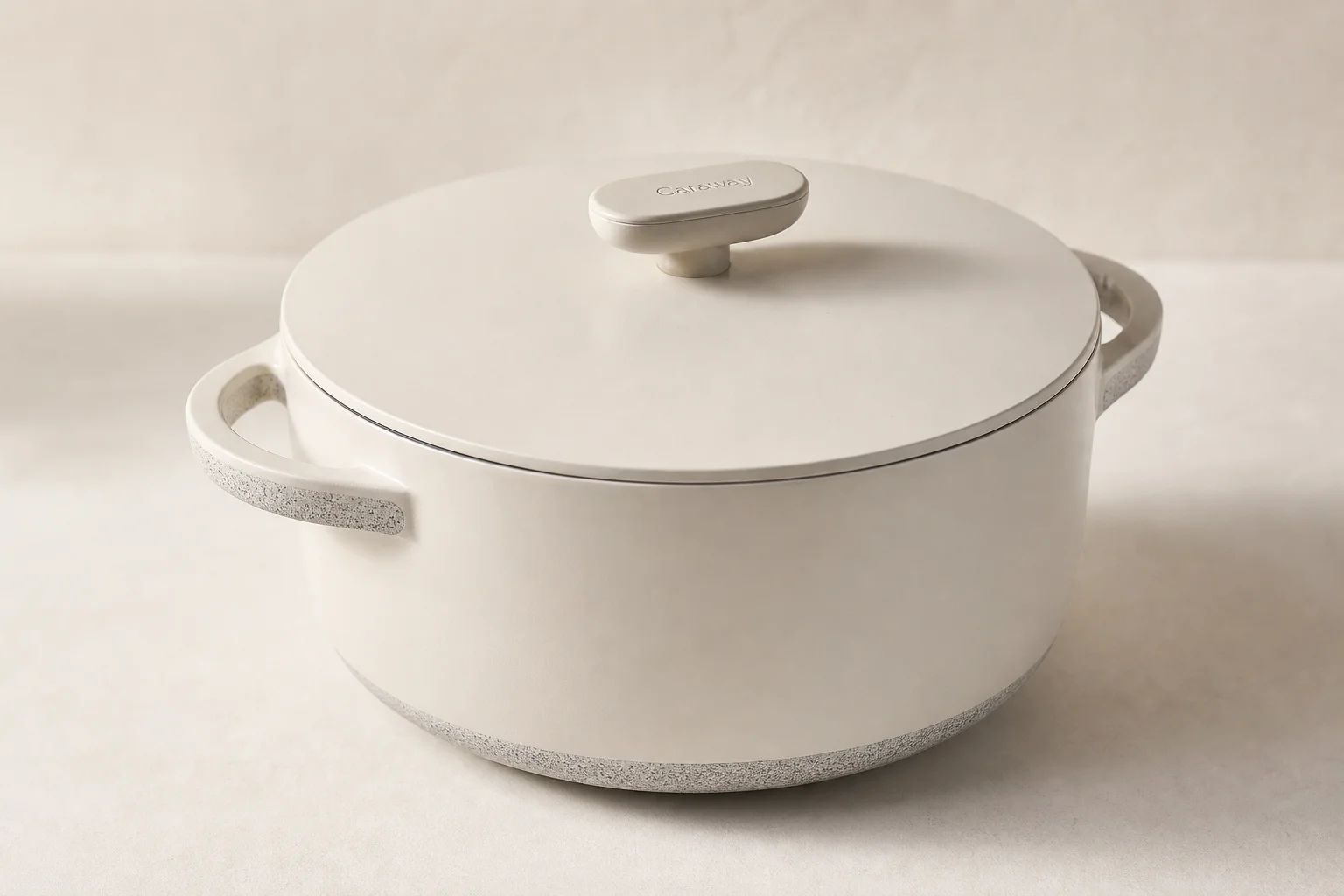
Caraway is known for ceramic non-stick cookware and recently entered the enameled cast iron market with a $265 6.5-quart Dutch oven. The design is sleek and modern, with smooth rounded side handles and a pill-shaped lid knob. The walls are taller than competitors, which limits splatter but reduces the flat cooking surface due to the narrower design.
Most of the pot has a shiny smooth finish, but the top of the handles, knob, and pot bottom have a rough texture that appears unenameled. This texture provides slightly better grip but is problematic on the bottom, as it can scuff delicate surfaces like wood when the pot is slid.
Cooking performance is adequate, but controlled testing revealed significant weaknesses. Heat retention was the second-worst of all brands, and moisture retention was the worst. Despite the flat lid and self-basting dimples, evaporation runs to the edges without dripping over the middle of the pot. The modern aesthetic is appealing, but the small handle openings do not provide sufficient room to wrap fingers comfortably.
Staub 5.5 Qt Dutch Oven
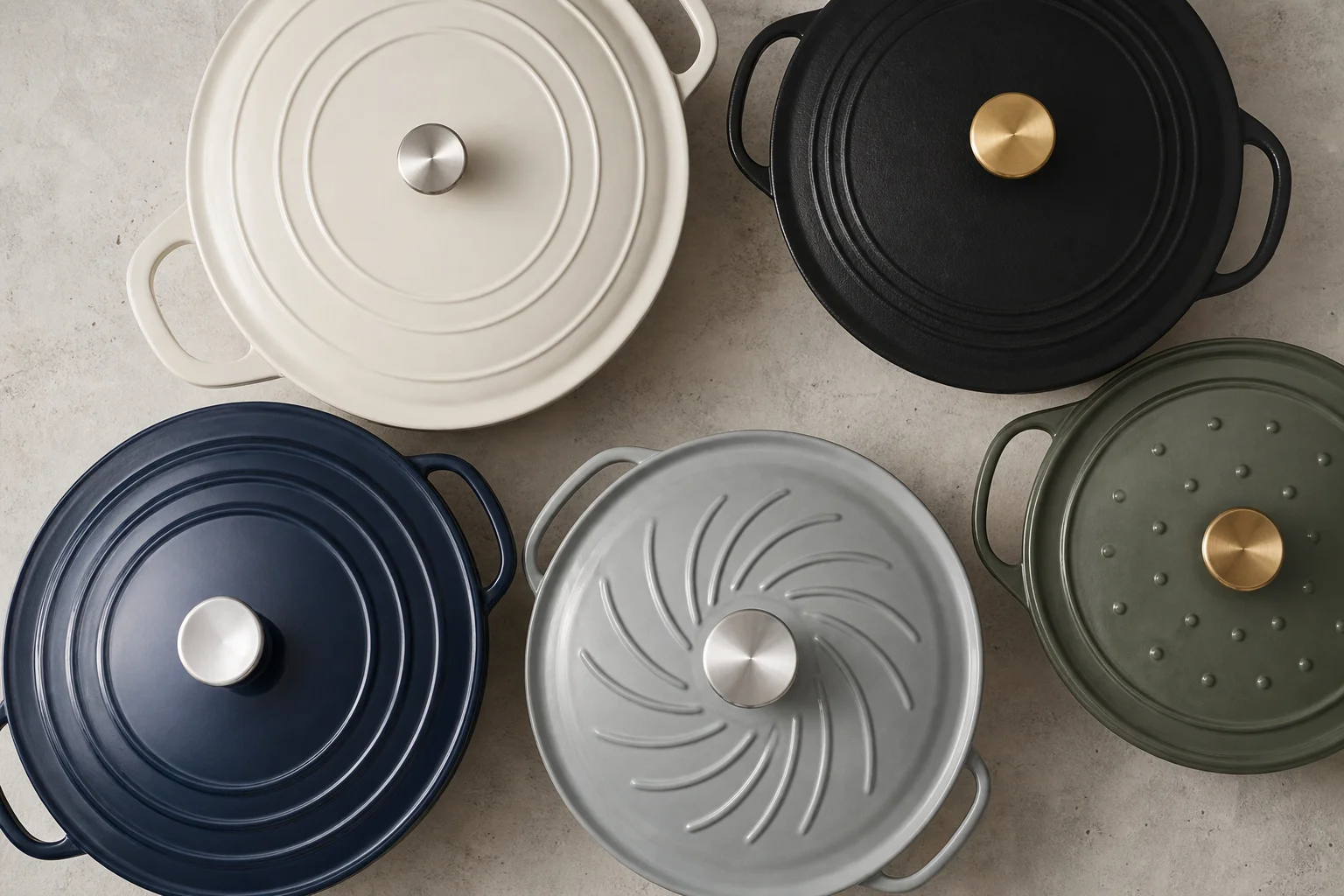
Staub is made in France and carries a premium price tag of $400, making it the second most expensive brand tested. Handle openings are larger than Caraway but have the smallest overall depth and length of all models. The knob diameter is also the smallest in the group.
In controlled testing, Staub achieved the best heat retention score of all brands. The flat lid and self-basting dimples resulted in excellent moisture distribution. A significant downside is that the lid knob became extremely hot during testing, with the second-highest temperature of all brands.
Construction quality is outstanding. The enamel finish is flawless, and the entire pot has a high-end look and feel befitting its price point. The flat lid design allows resting a spoon on top or adding ice to quickly turn steam back into liquid before it escapes. Staub offers 10 different sizes and 15 color options, providing substantial customization.
Le Creuset Signature 5.5 Qt Dutch Oven
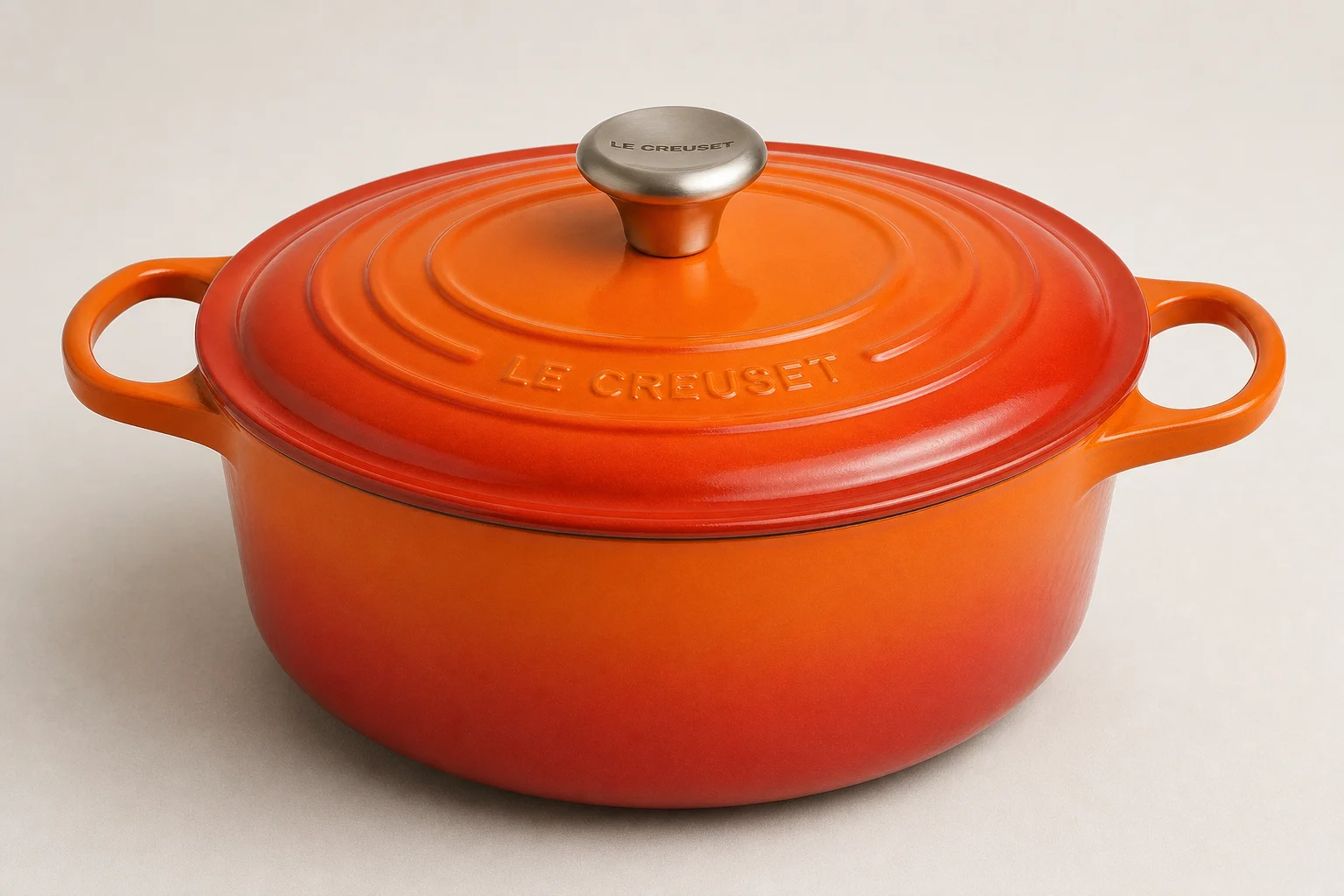
Le Creuset is made in France and at $420 is the most expensive brand tested. This Dutch oven has thinner walls and is notably lighter than competitors, weighing just 11.4 pounds. Along with Misen, Le Creuset handles have the widest openings, making it by far the easiest to pick up, wash, and store.
The lid features ridges that prevent a spoon from slipping off. The knob has a wide top and thick stem, making it easy to grip and control. Two knob options are available: a steel knob oven-safe to 500°F or a plastic knob oven-safe to 480°F. Both stayed cooler than most competitors during testing, with the plastic knob barely heating up at all.
Controlled testing produced mixed results. Heat retention was the third-worst, likely due to thinner walls, but moisture retention was better than most. Le Creuset has manufactured Dutch ovens since 1925. While the price is steep, the flawless enamel quality matches Staub, but with over 20 color options and a signature two-toned gradient finish the brand is known for.
Which Dutch Ovens Are Worth Buying
If budget is not a concern, Le Creuset, Staub, or Made In are the top choices. Le Creuset excels with color options, lightweight design, and large handles. Staub’s flat self-basting lid is exceptional, and Made In offers a large knob, big handles, and a wide cooking surface.
For the best value, the Lodge Essential Enamel Dutch oven stands out. It features a large knob and handles, a warranty covering chips and cracks, and a reasonable price. While the Lodge USA Enamel collection is appealing, Made In offers better functionality and test performance in the $200 to $300 price range.
Tramontina and Great Jones rank at the bottom. Tramontina’s small handles and quality control issues (arriving with a chip) raise concerns. Great Jones’s lid handle design is a significant functional drawback.
The reality is that all these brands use the same materials and cook excellently. Minor differences in design and performance will not make or break a recipe. Choose the design you prefer that fits your budget, and you will have a reliable Dutch oven for years of cooking.
Conclusion
Dutch oven quality has improved across all price points, making it possible to find a capable pot at nearly any budget. The premium brands justify their cost through superior heat retention, better moisture management, and refined design details, but budget options like Lodge Essential Enamel deliver solid performance at a fraction of the price. Your choice should balance your cooking needs, aesthetic preferences, and budget constraints.
Further reading
Related Reviews
Cookware
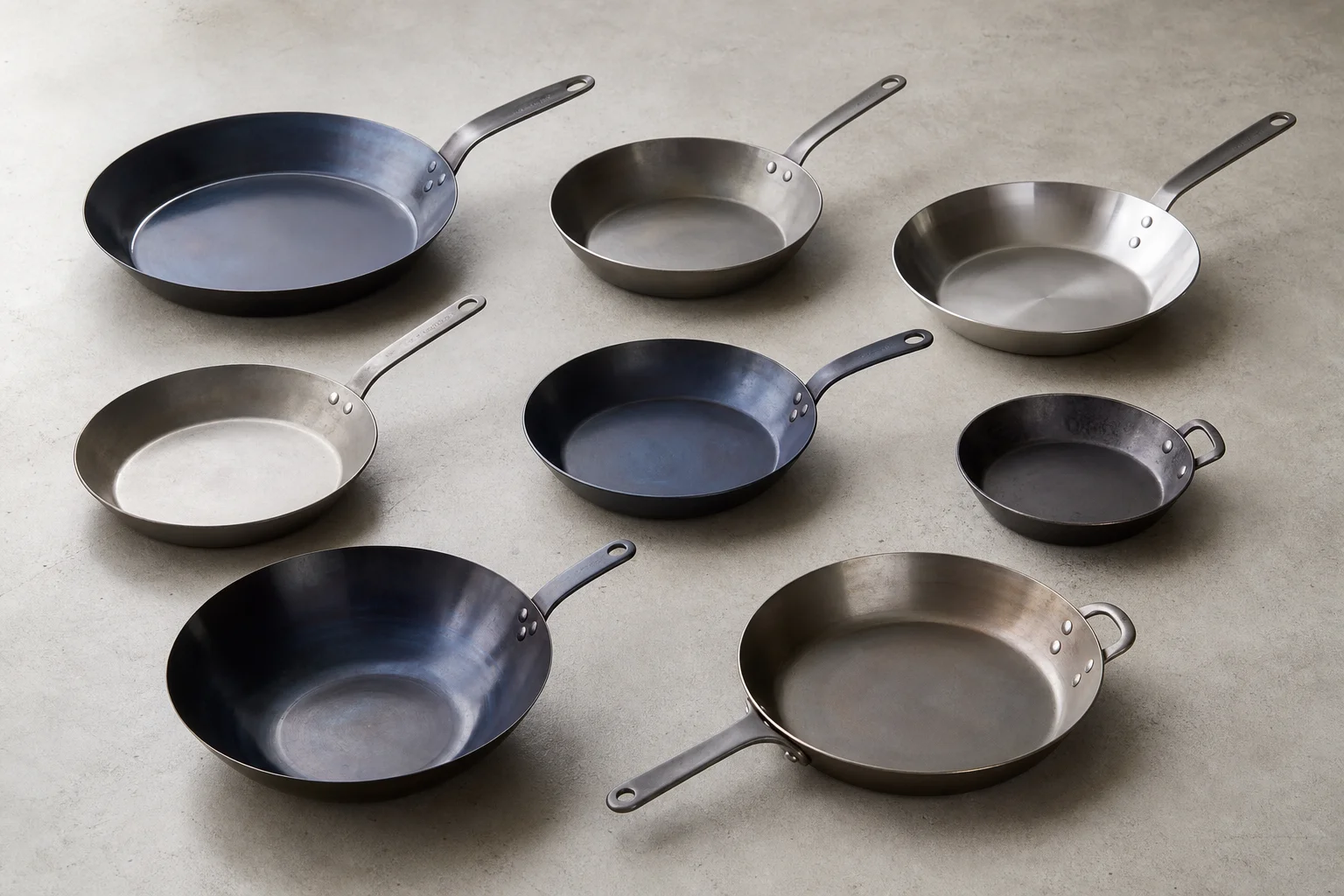
Best Carbon Steel Pans Tested: Which Brands Deliver Real Value
We tested eight popular carbon steel pans with controlled durability, heat, and cooking tests. Here's which ones perform best and which to avoid.
Cookware
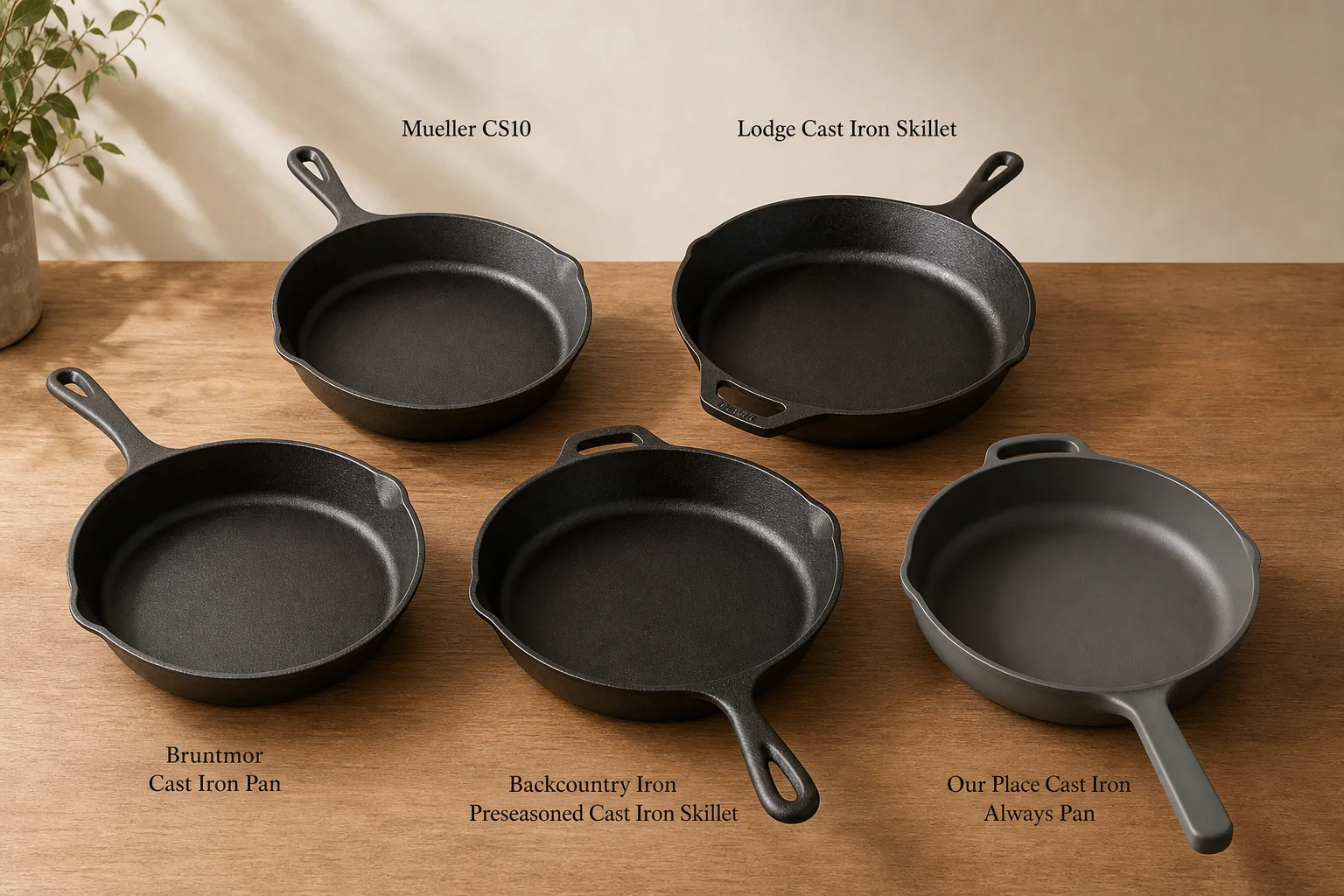
Best Cast Iron Pans 2026: Five Options from Budget to Premium
A practical breakdown of five cast iron skillets, from affordable Mueller to premium Our Place, with clear strengths and trade-offs for different cooking needs.
Cookware
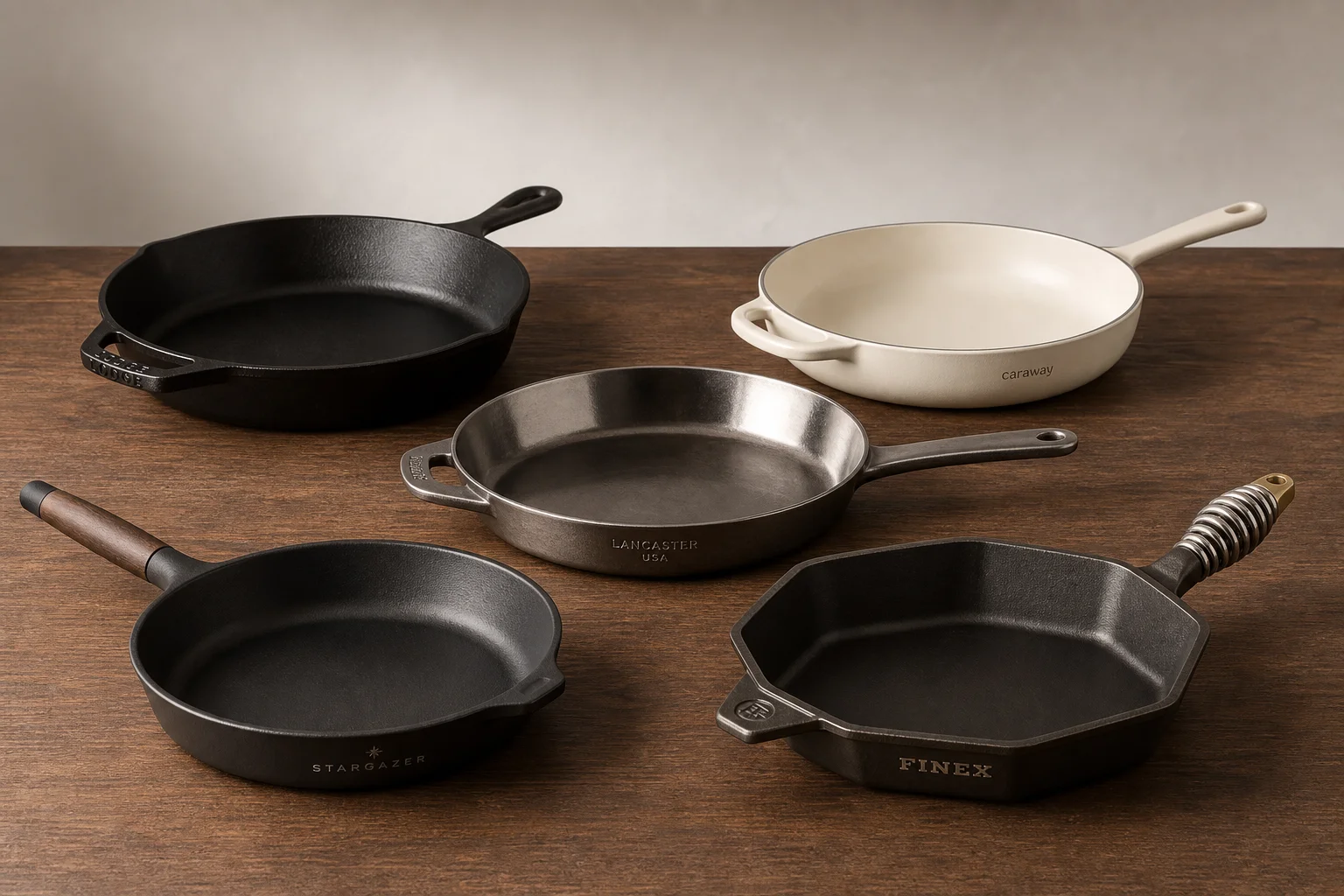
Best Cast Iron Skillets: Five Options for Every Kitchen
A comprehensive guide to five cast iron skillets, from budget-friendly classics to premium handcrafted options, each with distinct strengths and use cases.