Cookware
Best Frying Pans: How Metal Type, Thickness, and Burner Size Actually Affect Cooking
A detailed comparison of stainless steel, carbon steel, cast iron, aluminum, copper, and silver frying pans reveals which metals perform best for even heating and searing, plus the critical mistake that undermines any pan.
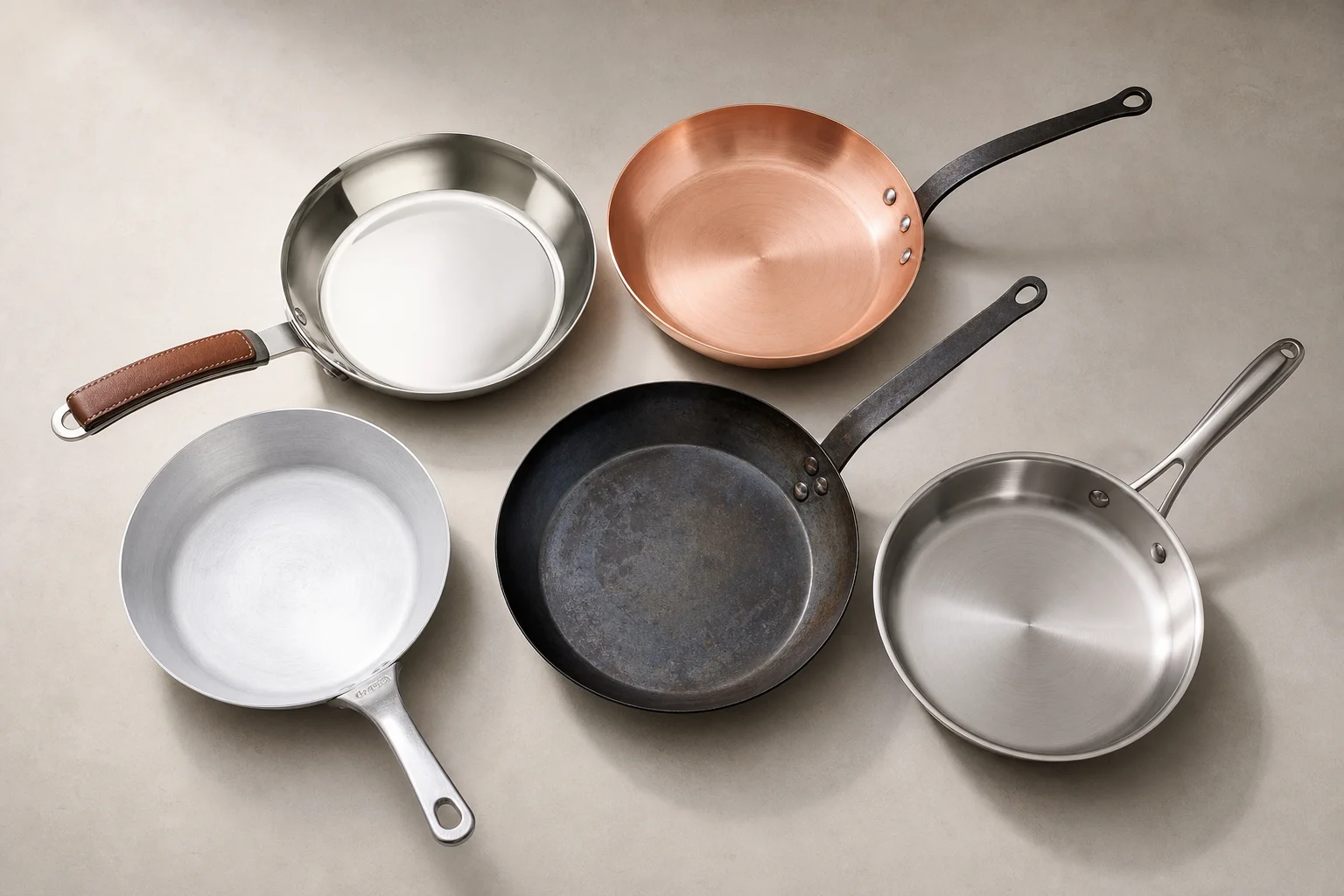
Introduction
Choosing the right frying pan involves more than picking a material. The metal’s ability to conduct and hold heat, the pan’s thickness, and how it matches your burner all determine whether you get even browning or hot spots that ruin your food. Testing pans made from stainless steel, carbon steel, cast iron, aluminum, copper, and silver reveals which metals actually perform best and exposes a simple mistake that makes every pan cook worse than it should.
Understanding Pan Performance: Diffusivity and Heat Capacity
Two properties determine how well a pan cooks: diffusivity and heat capacity. Diffusivity measures how quickly heat spreads across the pan’s surface, combining conductivity (how easily heat moves through the metal) with heat capacity (how much heat the metal holds). This ratio predicts a pan’s potential for even heating and powerful searing.
Stainless steel ranks lowest at about 6 units of diffusivity, making it terrible at moving heat despite being tough and non-reactive. Carbon steel and cast iron both sit around 10 units, better than stainless but still sluggish. Aluminum jumps to about 62 units, roughly six times better than cast iron at spreading heat. Copper reaches about 97 units, which is why traditional French cookware favored copper. Silver leads all practical metals at 147 units, approximately 25 times better than stainless steel at distributing heat evenly. Only diamond surpasses silver naturally, sitting at about 700 units.
Heat capacity tells a different story. Cast iron holds the most stored energy at roughly 135,000 joules, followed by carbon steel at 117,000 joules. Aluminum trails at 100,000 joules, copper at 88,000 joules, and silver at only 62,000 joules, about half that of iron and steel. These rankings reverse the diffusivity order, creating a fundamental trade-off in pan design.
Heat Distribution: Diffusivity and Pancake Tests
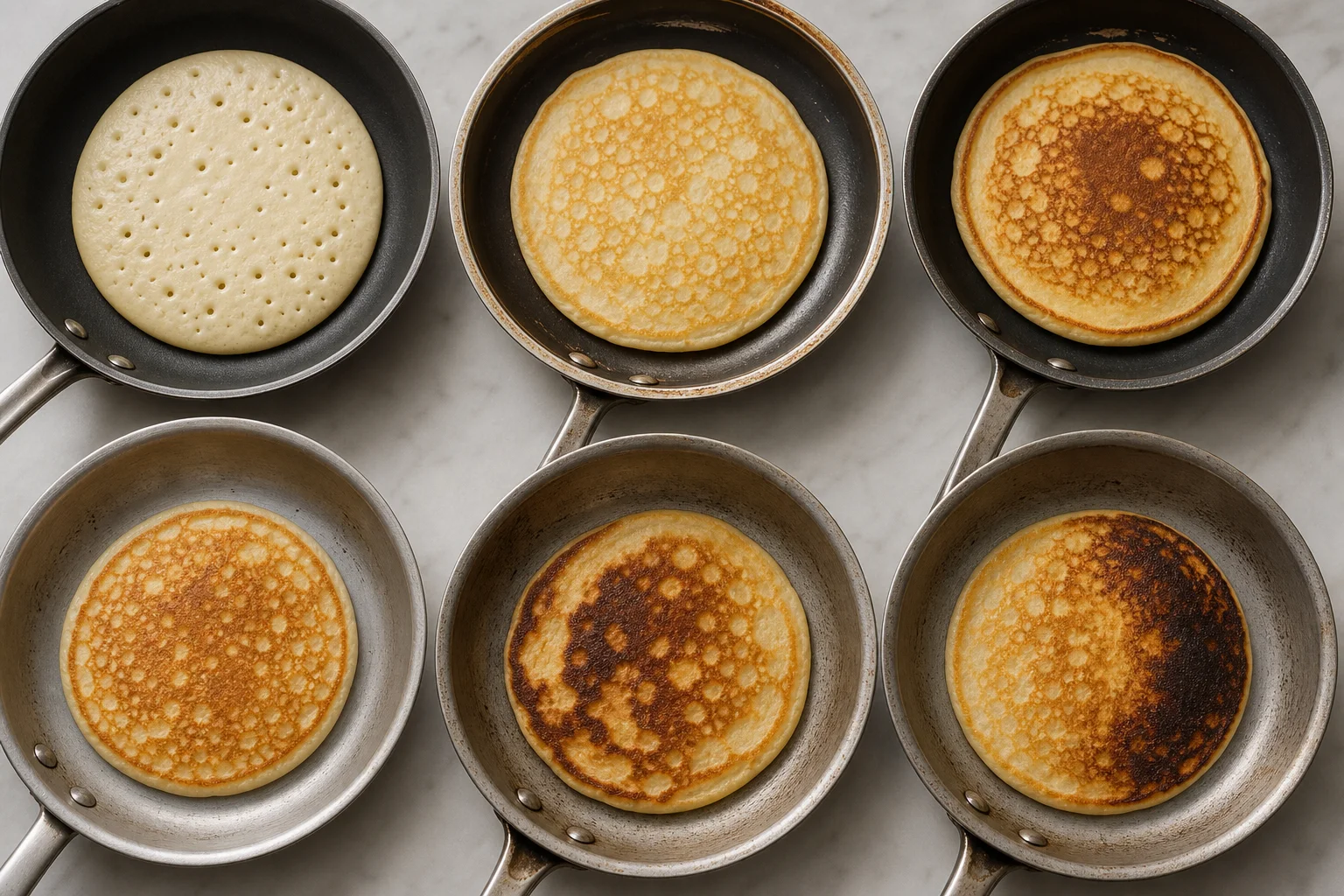
Pancakes reveal a pan’s heat distribution because even small temperature variations change how the batter cooks. Testing identical batter in different pans, each preheated to the same center temperature, shows how heat spreads across the cooking surface.
Cast iron and carbon steel produce nearly identical results: a burned bullseye in the middle fading toward the edges, with surface temperatures swinging over 100 degrees from edge to center. The first pancake sacrifices itself to knock down these hot spots, but even later pancakes retain rustic, uneven browning.
Aluminum performs noticeably better, with mostly even browning and just a hint of darker color in the middle. Copper improves further with more uniform browning throughout. Silver produces nearly flawless pancakes from the first one, with consistent golden color across the entire surface.
Interestingly, aluminum performs nearly as well as copper despite being half as diffusive. The reason: this aluminum pan is twice as thick (4 millimeters instead of 2), giving heat more pathways to spread, like adding lanes to a highway. Thickening carbon steel or cast iron to match this advantage would require 70 millimeters of metal, making the pan weigh over 40 pounds.
Searing Performance: Heat Capacity in Action
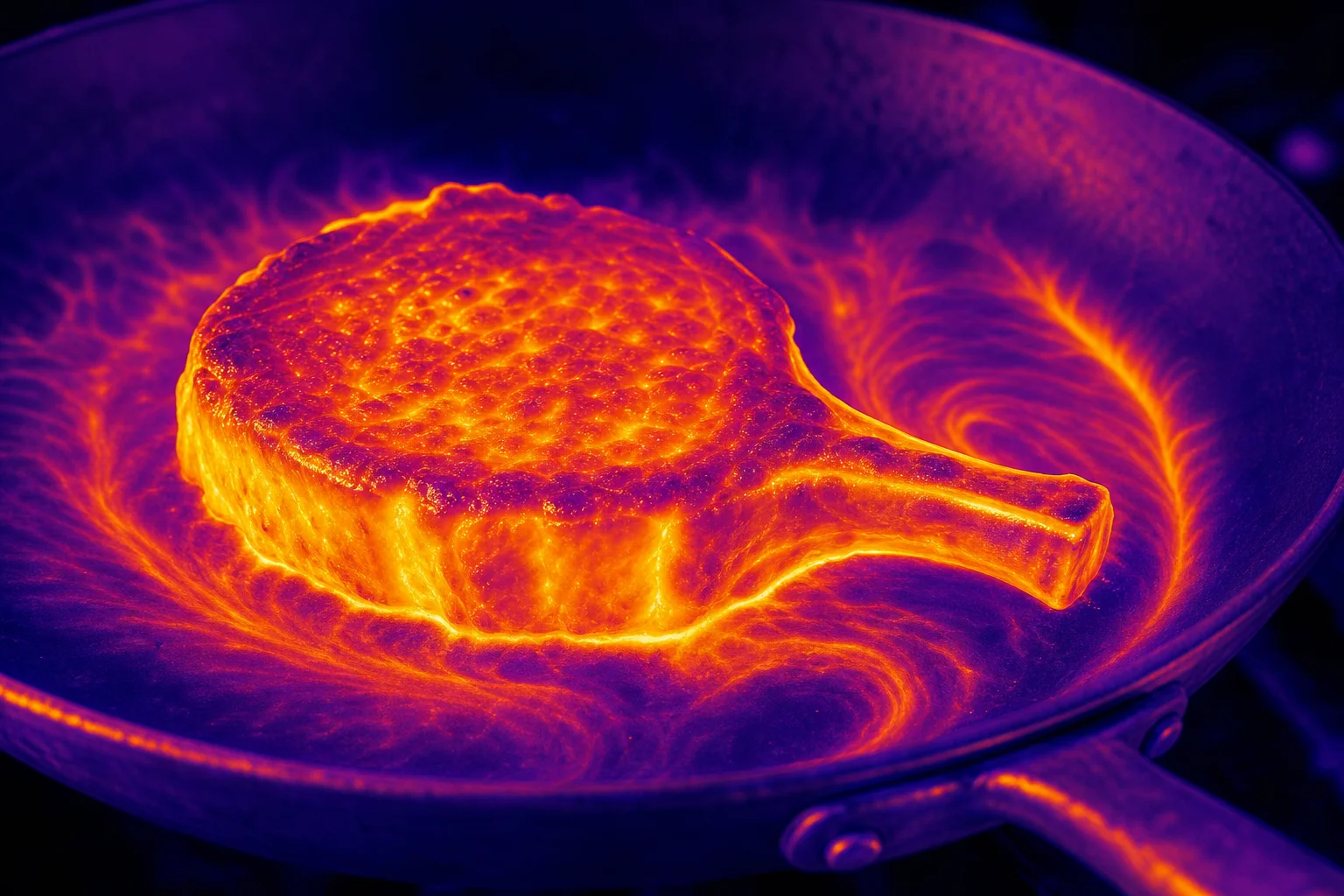
Searing requires a different evaluation. Starting every pan at 600 degrees Fahrenheit with the burner off, a single pork chop is placed in the center. Only the energy stored in the pan matters. Recording both the sizzle sound and infrared imaging shows how heat flows to the food.
Silver’s high diffusivity delivers heat quickly from every direction, cooling evenly as the sear consumes the stored energy. Copper performs nearly as well with steady, even temperature drop across most of the surface. Aluminum’s thicker base gives heat multiple pathways, so its surface also cools evenly while maintaining the sear.
Carbon steel and cast iron show wasted heat around the pan’s edges that never reaches the food. Cast iron maintains sizzle longer than all other pans at over 8 minutes, compared to silver’s quick 2.5 minutes. However, this stored heat cannot flow through the sluggish metal fast enough to keep the sear going effectively.
In the end, aluminum held nearly as much heat as carbon steel and only 26 percent less than cast iron, yet its high diffusivity allowed it to maintain searing for over 6 minutes, besting all but the cast iron pan. Despite its lightweight, aluminum proved to be the practical middle ground: good diffusivity, plenty of heat capacity, and easy to handle. This explains why aluminum dominates professional kitchens.
The Critical Mistake: Burner Size Mismatch
Despite significant differences in heat capacity and diffusivity, all pans produced surprisingly similar-looking pork chops when starting at 600 degrees. This reveals that what sits beneath the pan matters as much as the pan itself.
Professional stoves use large, powerful burners or enormous French tops that act as one massive even heat source. Domestic gas burners are smaller with reduced flame area. The most common US stove is an electric coil, typically 6 to 8 inches wide. A 12-inch cast iron skillet on a 6-inch coil burner shows a 200-degree temperature variation from hottest to coldest spot. The same skillet on an 8-inch coil burner reduces this variation to less than 50 degrees.
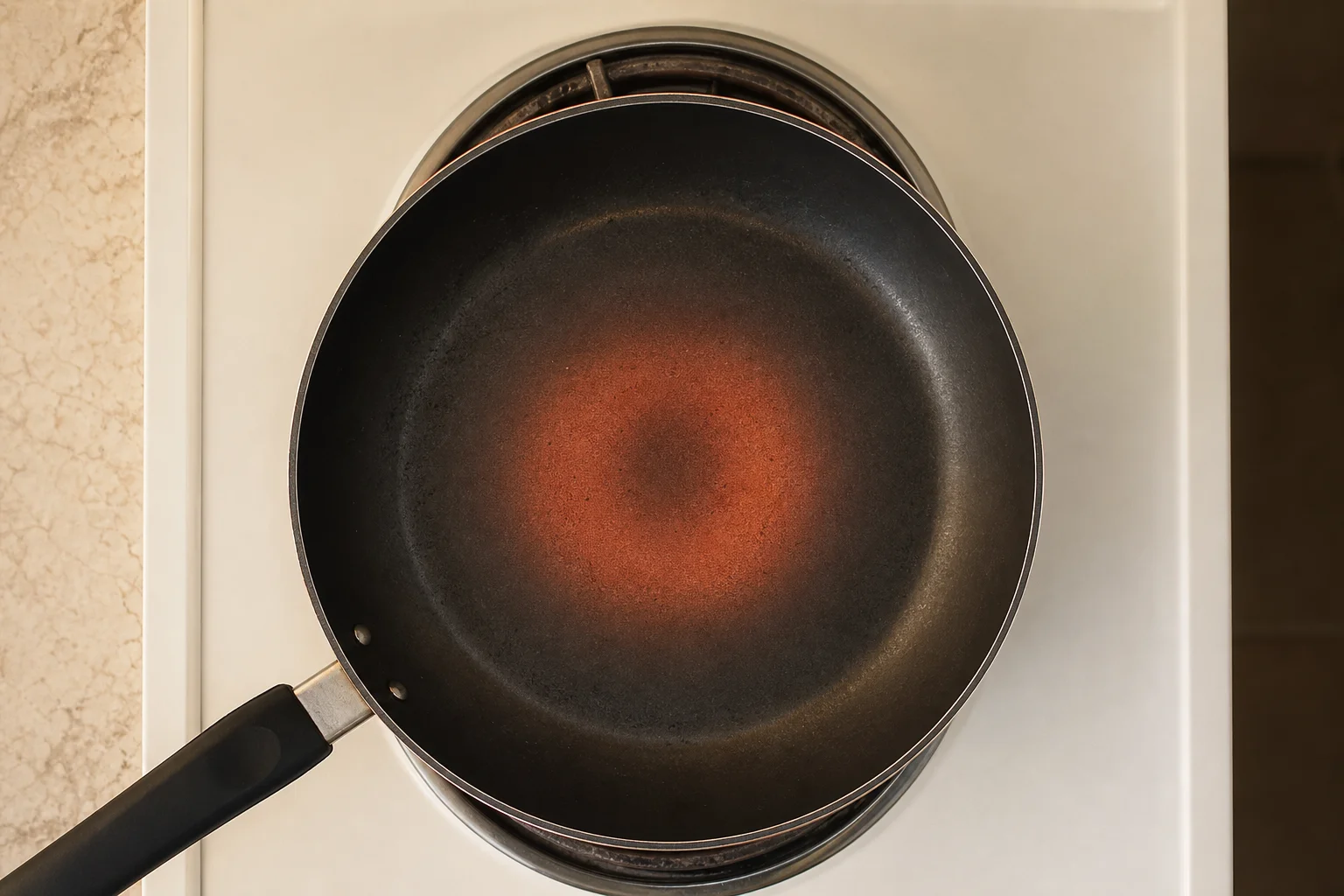
When a burner is smaller than the pan, heat must spread sideways through the metal before reaching the food, limited by the pan’s diffusivity. A pancake cooked in an 8-inch carbon steel pan on an 8-inch burner shows noticeably more even browning than the same pan on a 6-inch burner.
For low-diffusivity metals like carbon steel or cast iron, having a burner that is at least 90 percent of the pan’s diameter makes a significant difference. When heat only needs to travel straight up from the burner through the pan to the food, diffusivity matters far less. Matching the burner to the pan feels like upgrading to a better pan, even without changing cookware.
Stainless Steel: The Laminated Solution
Pure stainless steel pans are nearly nonexistent because stainless is an absolutely terrible metal for moving heat, performing twice as poorly as cast iron or carbon steel. However, stainless excels at durability, strength, non-reactivity, induction compatibility, and requiring no maintenance.
Cookware engineers solve this by laminating stainless with high-diffusivity metals like aluminum or copper, or brazing a thick aluminum plate to the bottom. Nearly every stainless steel pan is actually a combination of stainless and aluminum. The aluminum core heats quickly and spreads heat to the edges, buffering small burner mismatches so the surface stays evenly hot. The stainless exterior provides induction compatibility and durability, allowing aggressive scouring.
This combination creates a forgiving daily driver that is lighter than carbon steel or cast iron. The main trade-off is that stainless steel never develops the self-healing semi-nonstick patina that seasoned surfaces provide, making it less ideal for dishes like a classic French omelette where a seasoned surface is unbeatable.
Tri-Ply Construction: The Practical Daily Driver
An 8 and 12-inch frying pan with tri-ply construction combines the best of multiple materials: a stainless steel exterior, a diffusive aluminum core, and a carbon steel interior. This design delivers the performance benefits of aluminum with the seasoning capability of carbon steel.
The carbon steel interior builds a nice non-stick patina from regular cooking, allowing you to prepare dishes like French omelettes with practice. The aluminum core ensures even heat distribution, while the stainless exterior provides durability and induction compatibility. The pan is lighter than pure carbon steel or cast iron, making it easier to handle during extended cooking sessions.
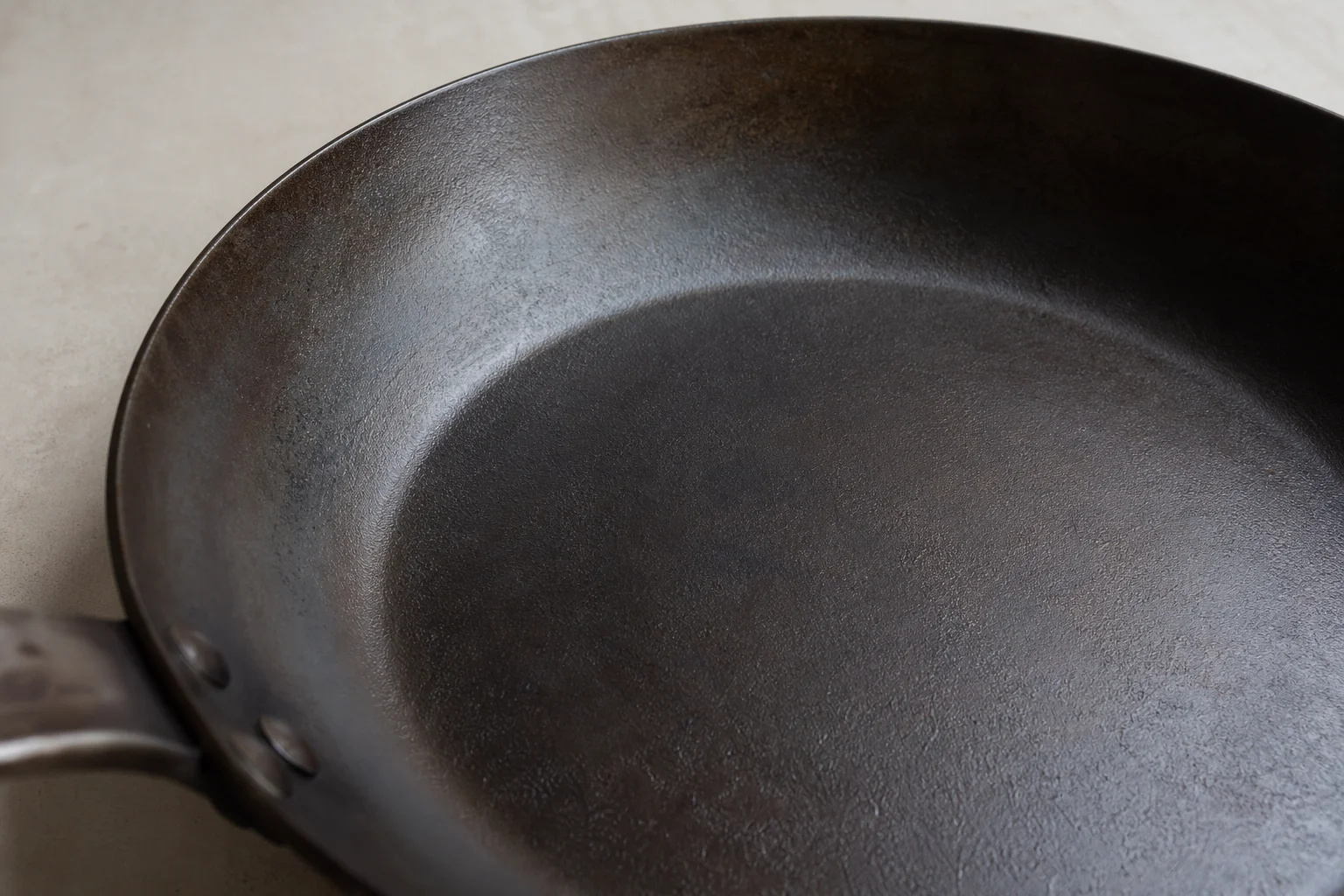
The main compromise is that the handle can feel slightly heavy, throwing the balance off slightly. However, this trade-off is worth accepting to gain the benefits of carbon steel’s seasoning capability combined with aluminum’s superior heat distribution. With regular use and proper care, this type of pan becomes increasingly non-stick and develops character over time.
The Silver Pan: Impressive But Impractical
A solid silver frying pan represents the extreme end of pan performance. With over 1,600 dollars of actual silver content, it functions as an investment that holds material value. The craftsmanship is undeniable: gentle curves, polished mirror finish, stout silver rivets bonded to a hand-stitched leather handle, and perfect balance that is neither too heavy nor too light.
On paper, silver should be the ultimate pan because it spreads heat faster than any other practical metal. In testing, it delivers flawless results with perfectly even browning and efficient searing. However, the $4,000 price tag makes it impractical for most cooks. Its low heat capacity means it cannot maintain a sear as long as heavier metals, and the maintenance required to keep the polished finish pristine is substantial.
As a work of craftsmanship and unrivaled performance, it is impressive. For those with the means and a genuine appreciation for exceptional tools, it is worth considering. For everyday cooking, however, the practical advantages do not justify the cost.
Conclusion
The best frying pan depends on your priorities and cooking style. For even heating and versatility, a tri-ply pan with an aluminum core and stainless steel exterior offers excellent performance at a reasonable price. For those who value seasoning and traditional cooking methods, carbon steel remains a strong choice when paired with a properly sized burner. Cast iron excels for long-duration searing and heat retention, though it requires more maintenance and careful burner matching.
The most important discovery is that burner size matters as much as pan material. Matching your pan diameter to your burner eliminates hot spots that no amount of expensive cookware can overcome. Fix this simple mistake, and almost any quality pan will perform well. Invest in the right combination of pan and burner, and you will notice a dramatic improvement in cooking results.
Product link
View more details for Made In Stainless Steel Pan
This product is mentioned in the review. Check the specifications, options, and compatibility before buying.
View more details for Made In Stainless Steel PanFurther reading
Related Reviews
Cookware
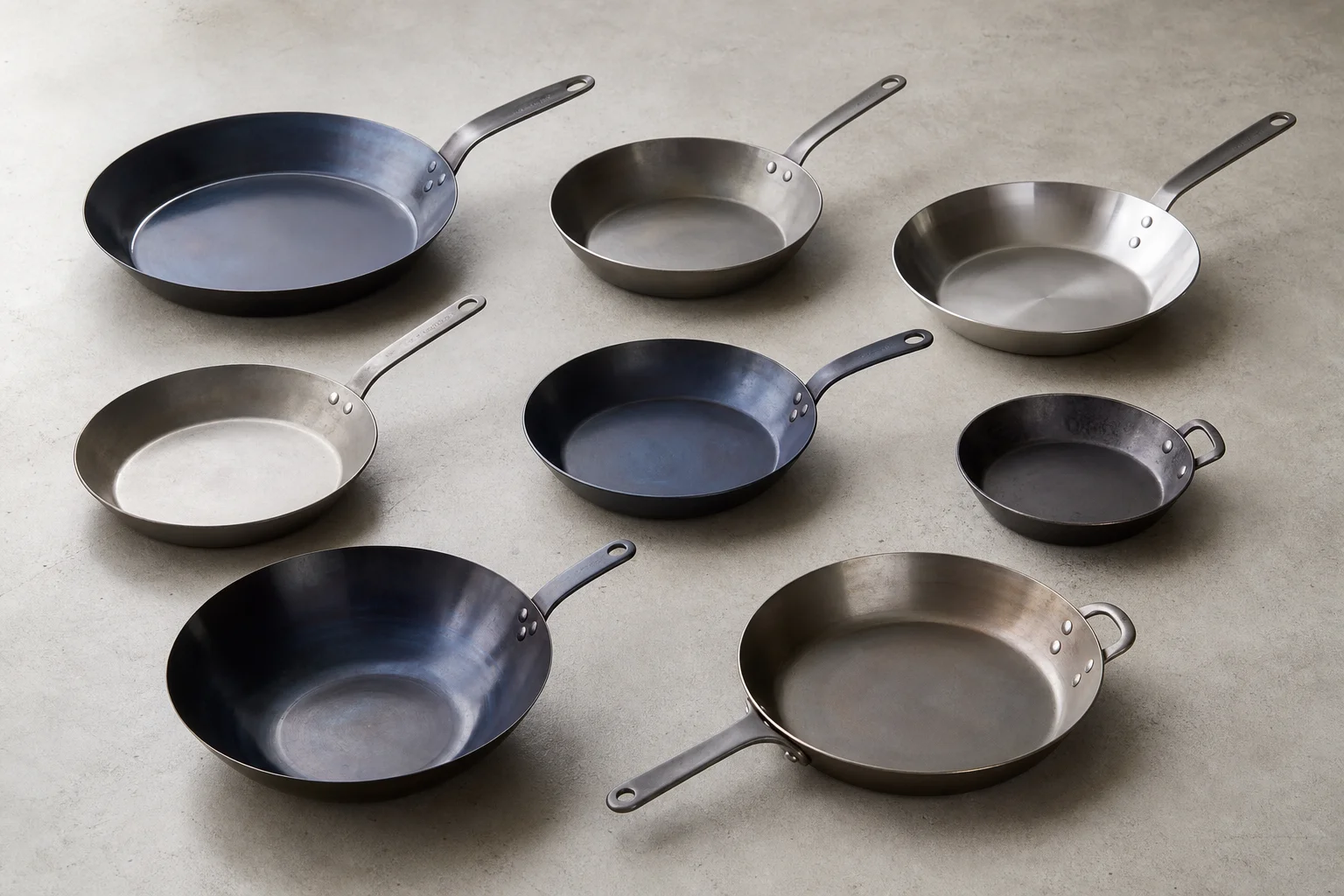
Best Carbon Steel Pans Tested: Which Brands Deliver Real Value
We tested eight popular carbon steel pans with controlled durability, heat, and cooking tests. Here's which ones perform best and which to avoid.
Cookware
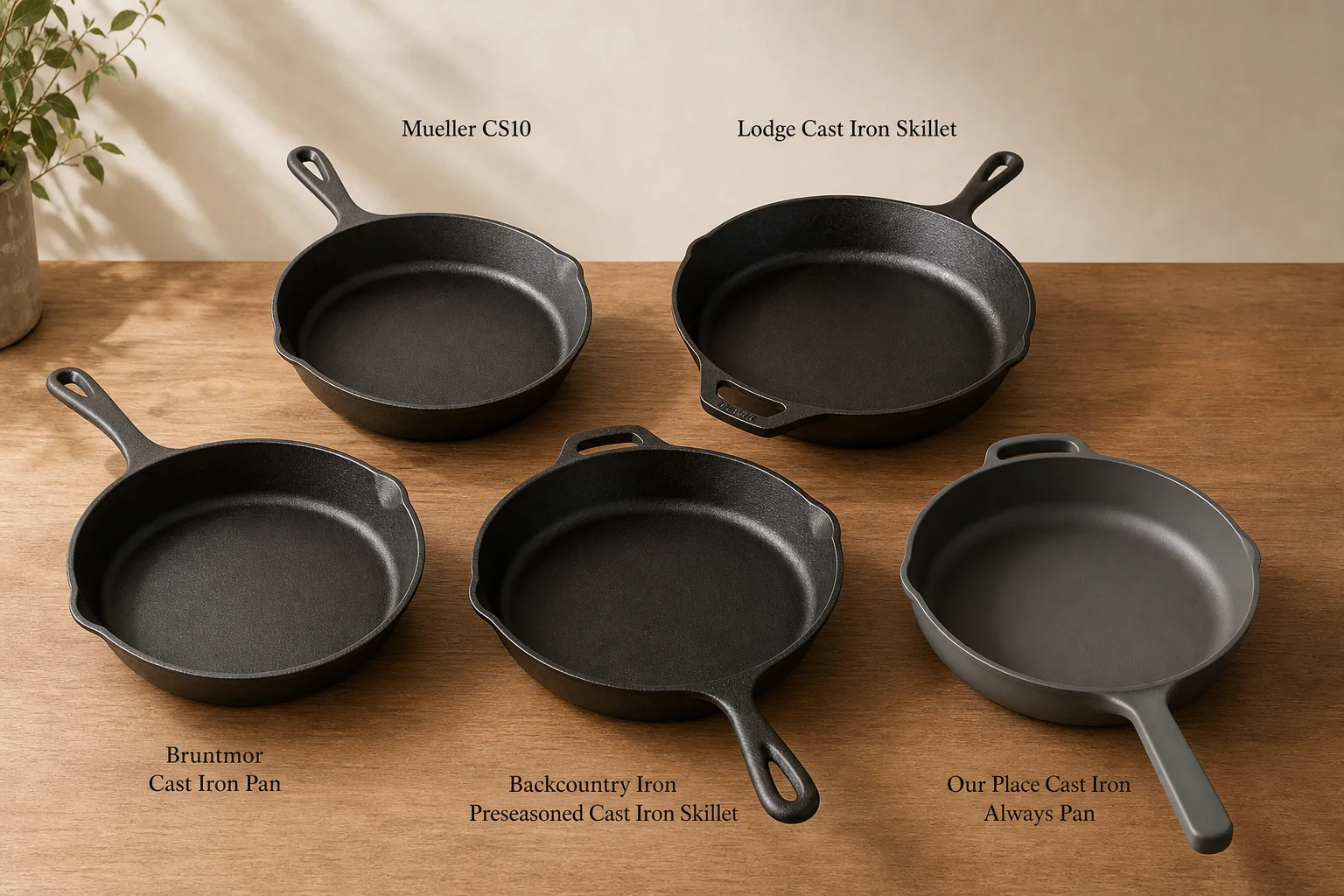
Best Cast Iron Pans 2026: Five Options from Budget to Premium
A practical breakdown of five cast iron skillets, from affordable Mueller to premium Our Place, with clear strengths and trade-offs for different cooking needs.
Cookware
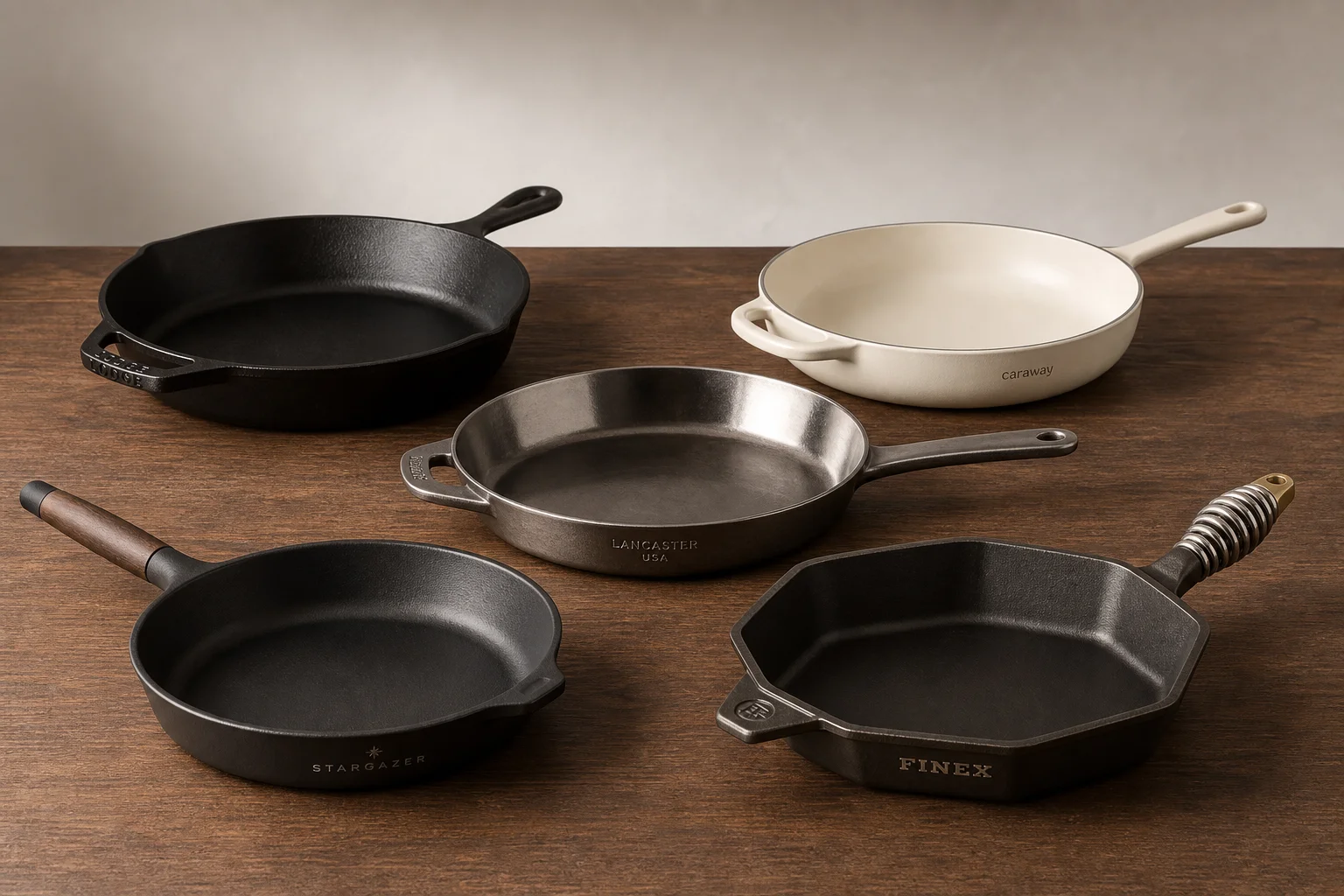
Best Cast Iron Skillets: Five Options for Every Kitchen
A comprehensive guide to five cast iron skillets, from budget-friendly classics to premium handcrafted options, each with distinct strengths and use cases.