Saltwater Aquarium Lighting
Best Reef Tank Lighting Setup: Choosing and Configuring LED Solutions
A practical guide to selecting and configuring reef tank lighting for optimal coral health, appearance, and ease of setup.
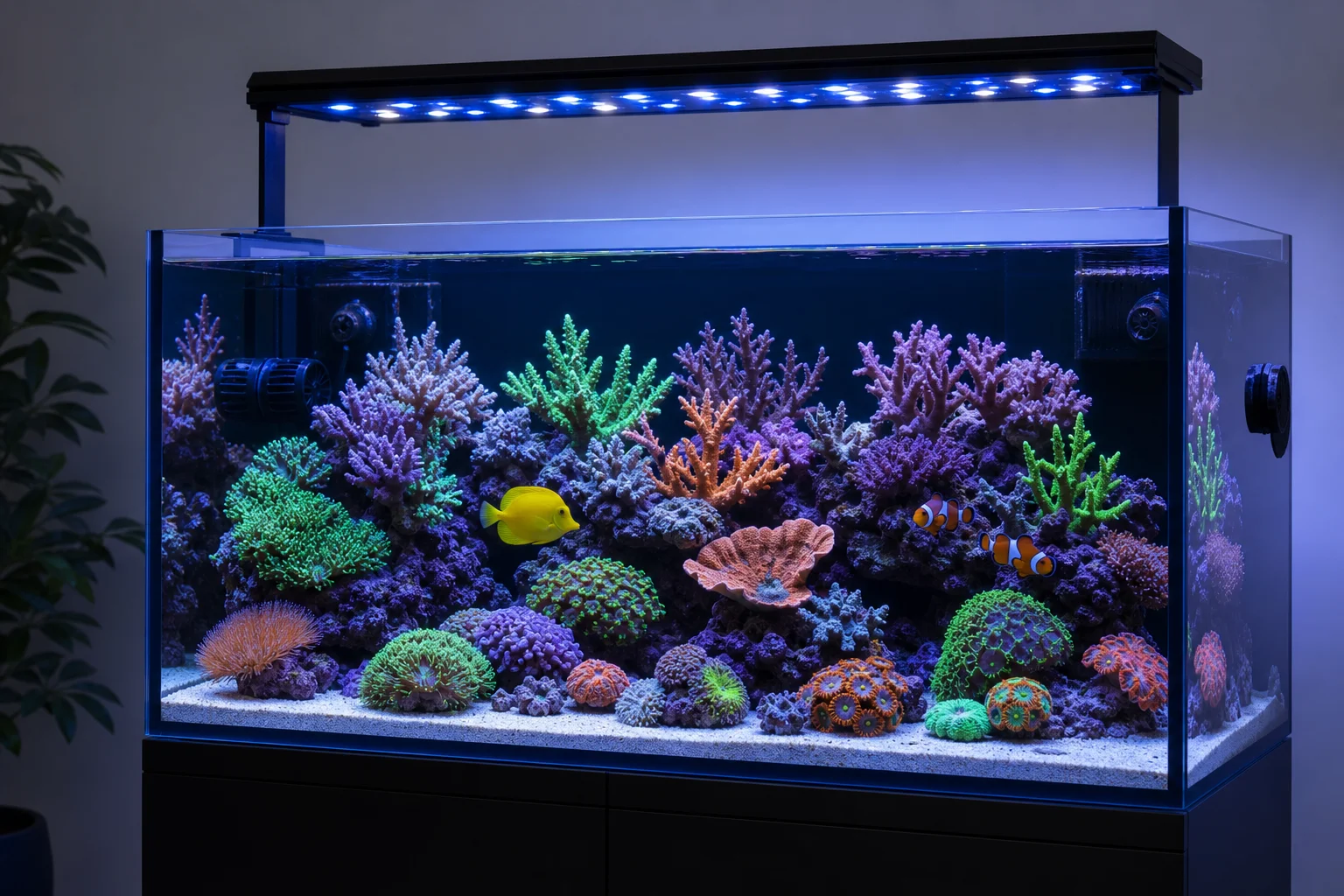
Understanding Reef Lighting Fundamentals
Reef tank lighting serves four critical purposes that must be balanced together. First and foremost, light provides the energy that corals need for nutrition and growth. Without proper lighting, corals cannot thrive regardless of other tank conditions. Second, the light must make your tank and corals look visually appealing with natural coloration and high contrast. Third, the installation should look clean and professional, enhancing rather than detracting from the overall aquarium aesthetic. Fourth, you need reliable lighting at a reasonable price that does not require a second mortgage.
The most important step is identifying your own goals and managing your setup to meet them. Different tank sizes, coral types, and personal preferences all influence which lighting solution makes the most sense.
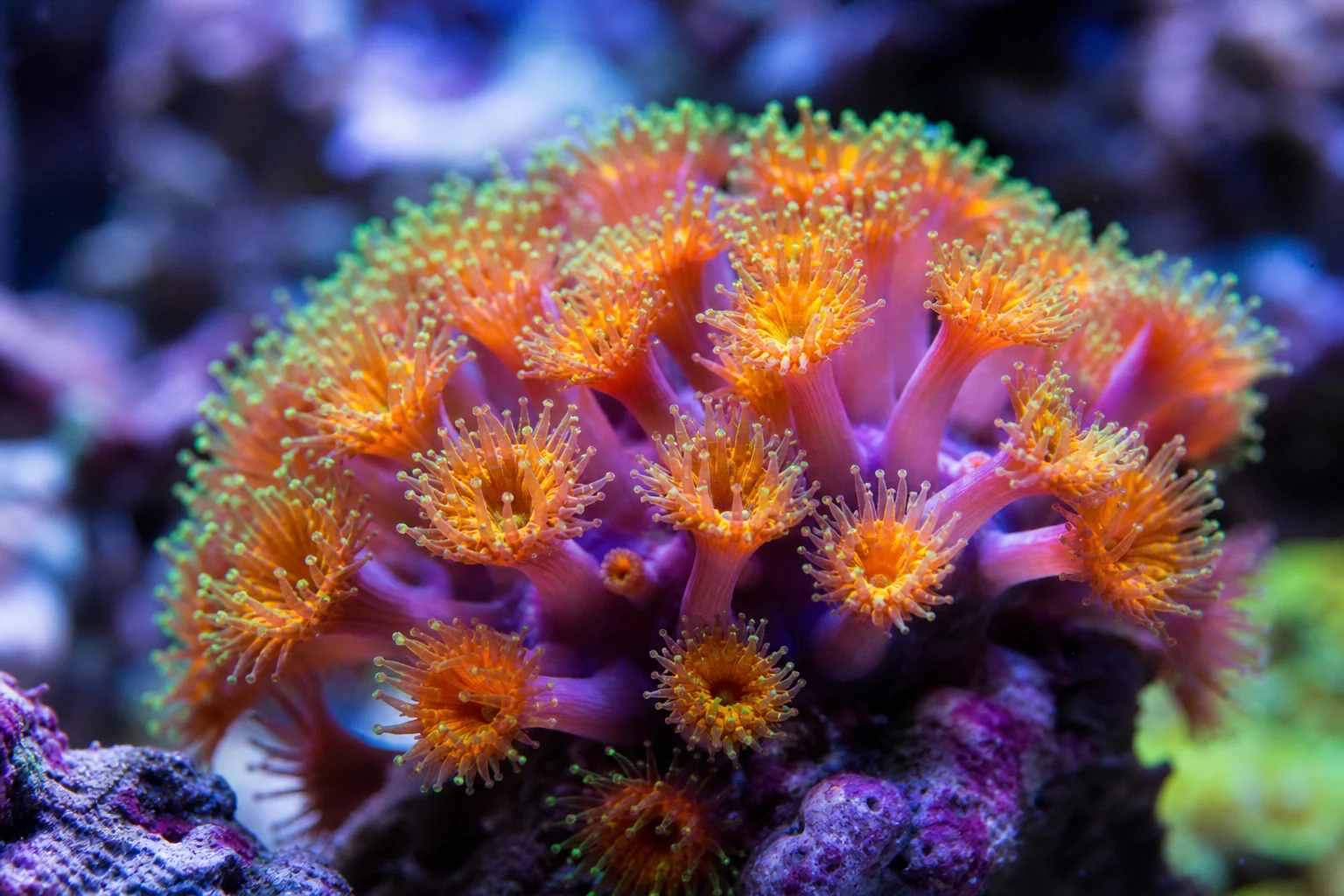
AI Prime 16 HD: Balanced Performance for Standard Tanks
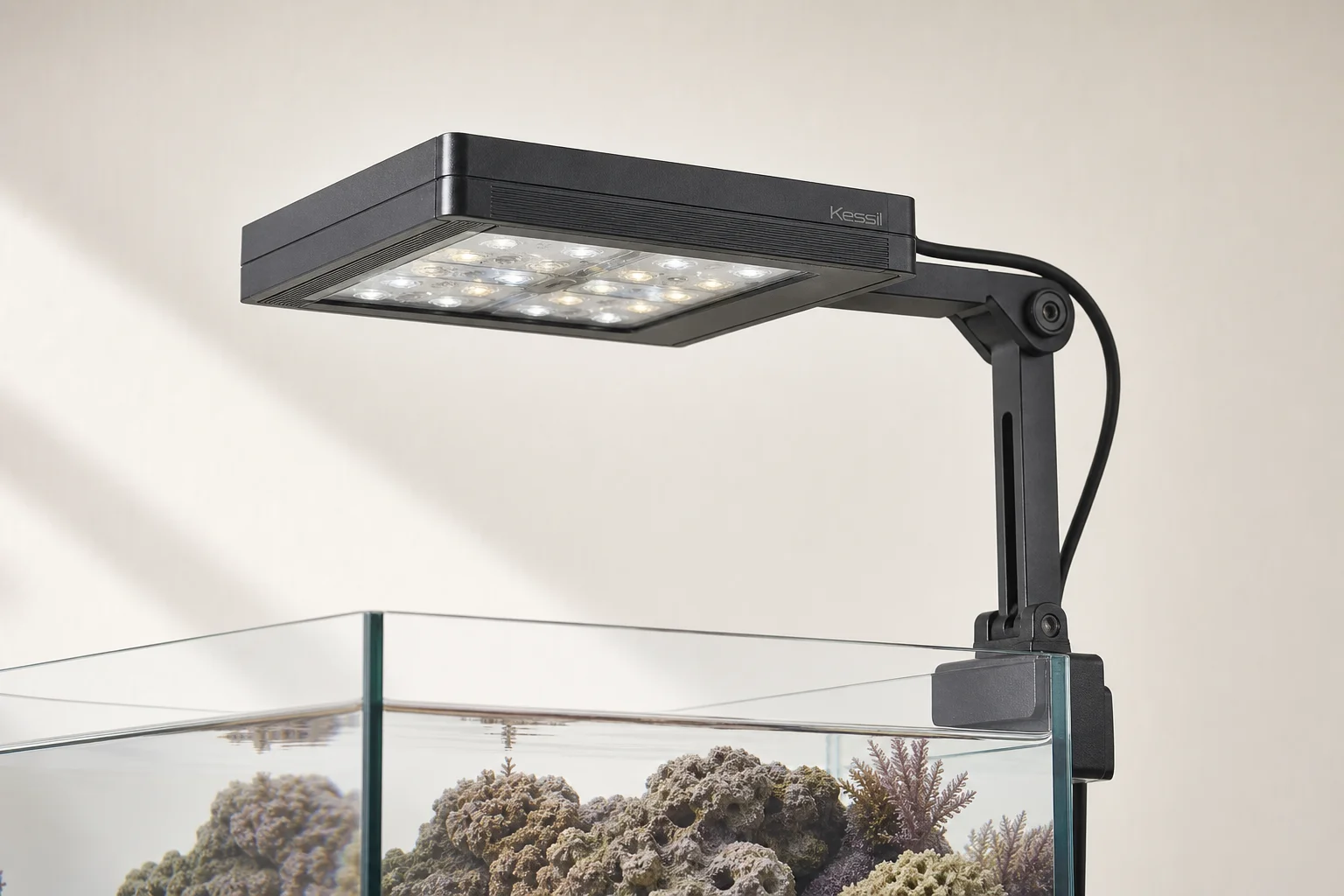
For a 40-gallon breeder tank, two AI Prime 16 HD units represent an excellent balance of all four lighting goals. Aqua Illuminations is one of the most established reef lighting manufacturers, with proven spectrums that support coral growth. The wattage and size are balanced for the tank dimensions, providing adequate power without overdoing it. Two units will adequately cover a 36-inch tank, and the system is upgradable if you later want to add more fixtures for advanced corals.
The spectrum produced by the AI Prime highlights coral natural fluorescence exceptionally well, creating a high-contrast, visually interesting display. The light comes with two mounting options: a flex arm and a fixed mount. The fixed mount creates a low-profile, sharp appearance that accents rather than dominates the tank exterior. At approximately 200 dollars per module, these lights are not inexpensive but cost significantly less than many competing premium options.
Red Sea ReefLED: Integrated Lighting for All-in-One Tanks
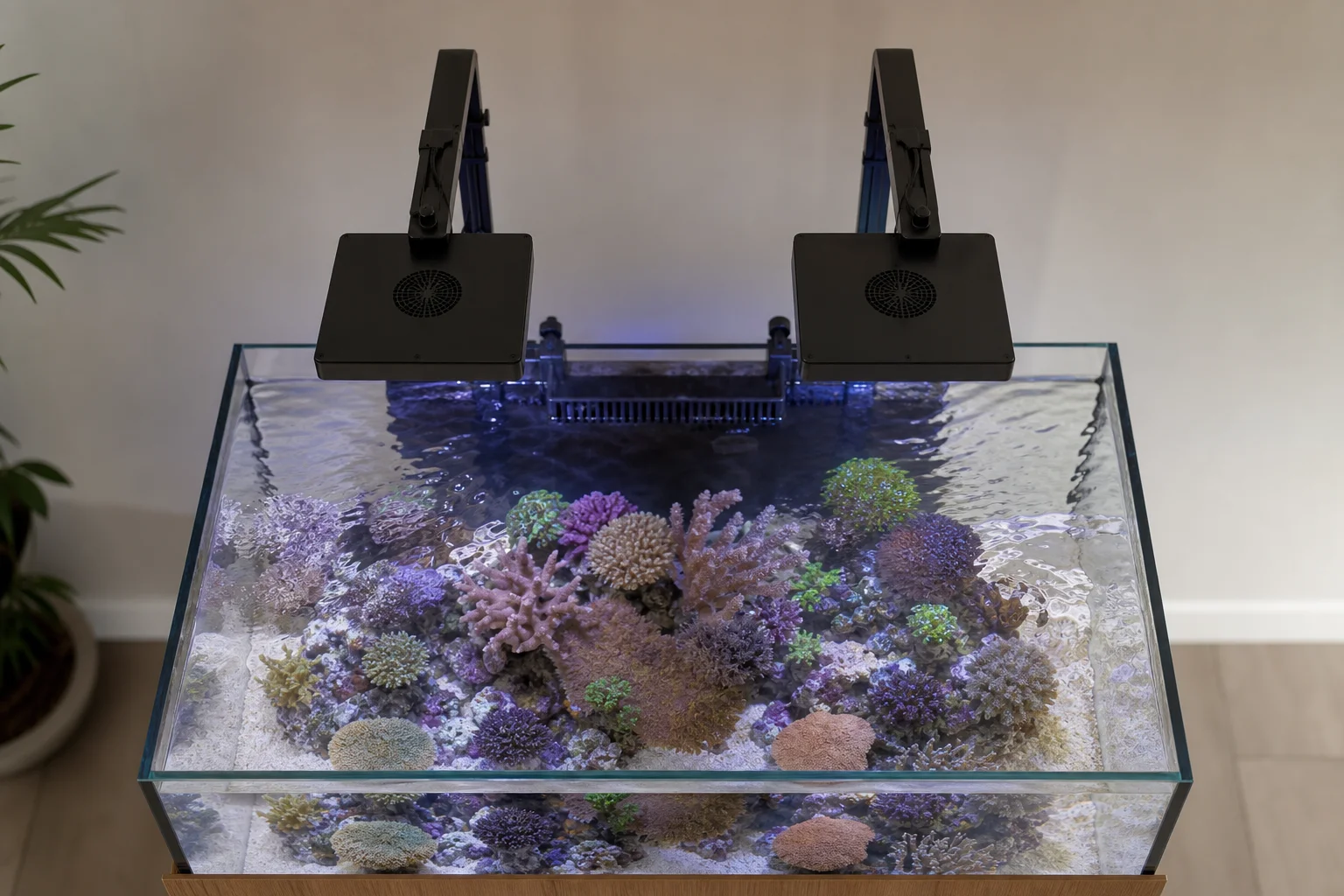
The Red Sea E-170 all-in-one tank comes with its own integrated Red Sea ReefLED and mounting kit included. Because the E-170 tank shape is closer to a square, a single higher-powered light can effectively illuminate the entire system. This integrated approach is one reason why all-in-one tanks often cost only slightly more than standard tanks with separate lighting components.
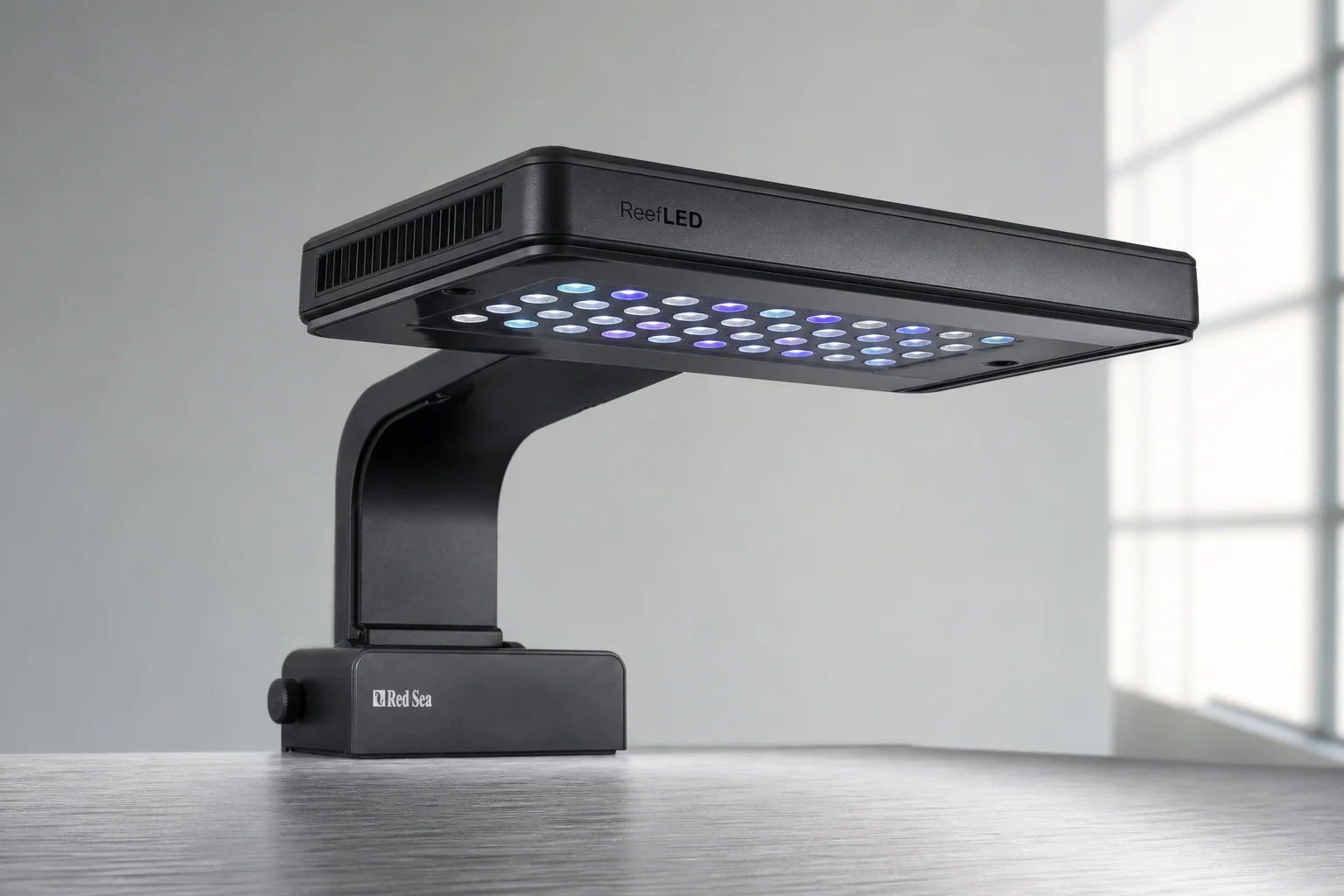
Red Sea E-170: Complete System with Integrated Lighting
The Red Sea E-170 simplifies the lighting decision entirely by including a reef LED and mounting kit as part of the complete system. This all-in-one approach eliminates the need to shop separately for compatible lighting and mounting hardware. The integrated design ensures that the lighting is properly sized and positioned for the tank dimensions from the start.
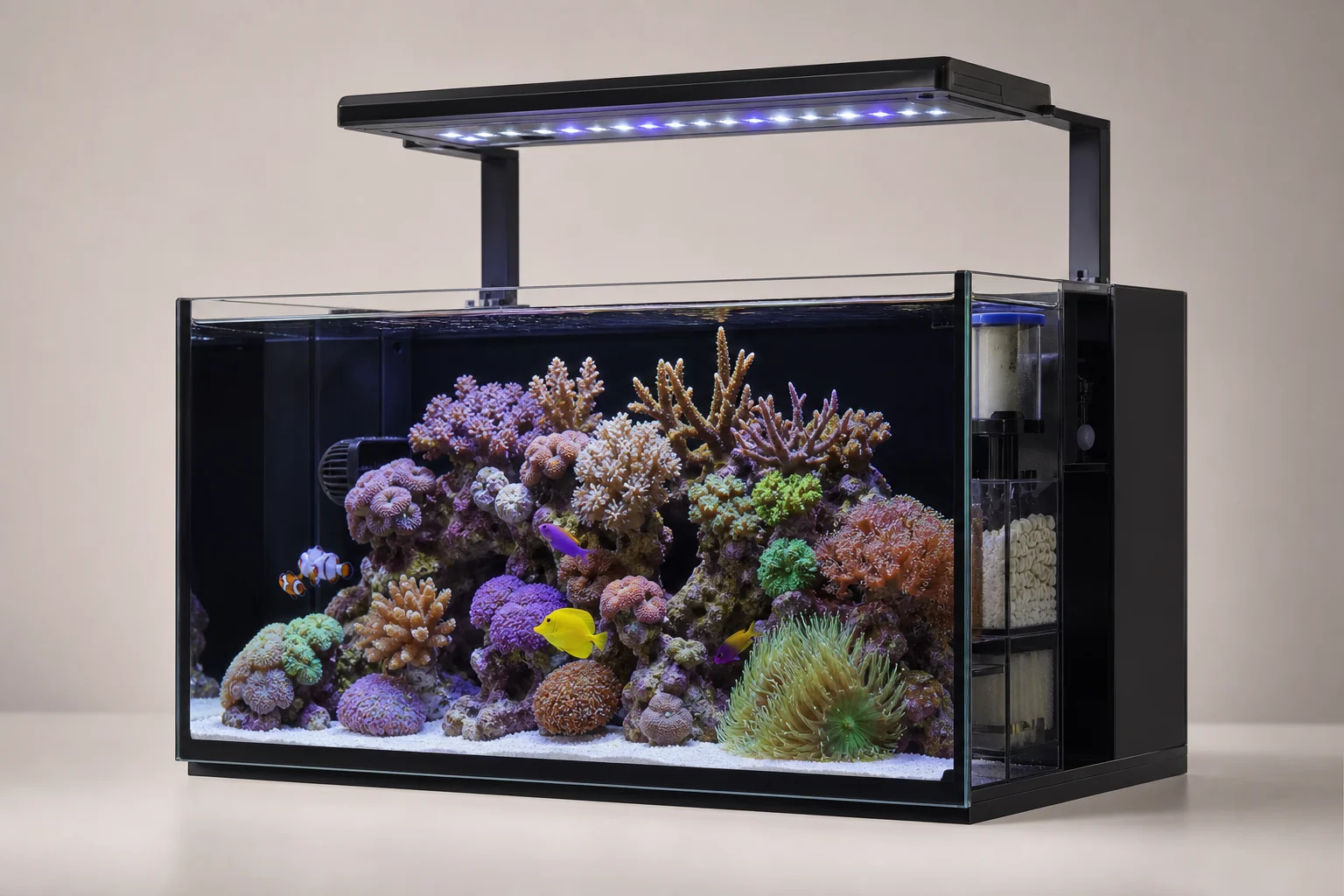
Configuring Your Lights Correctly
The easiest way to configure reef lights is to follow settings that have already been proven successful by experienced reefers. For both the Red Sea ReefLED and AI Prime systems in a 40-gallon breeder or similar tank stocked with LPS corals, consistent settings will prevent lighting from becoming a challenge.
Blues should be one of the dominant colors in your spectrum, as blue light is the spectrum peak that matters most for coral growth. Add white light until the tank looks good to your eye. Be cautious with reds and greens, as they can easily become unnaturally high; in most cases, keep them at no more than 20 percent. A 10-hour photoperiod works well for these coral types.
Consider ramping the light down at both ends of the photoperiod. This is not because corals require the gradual change, but because it allows you to view the tank at lower intensities and even create cool visual effects like dusk or moonlight modes.
Critical Lighting Tips Every Reefer Should Know
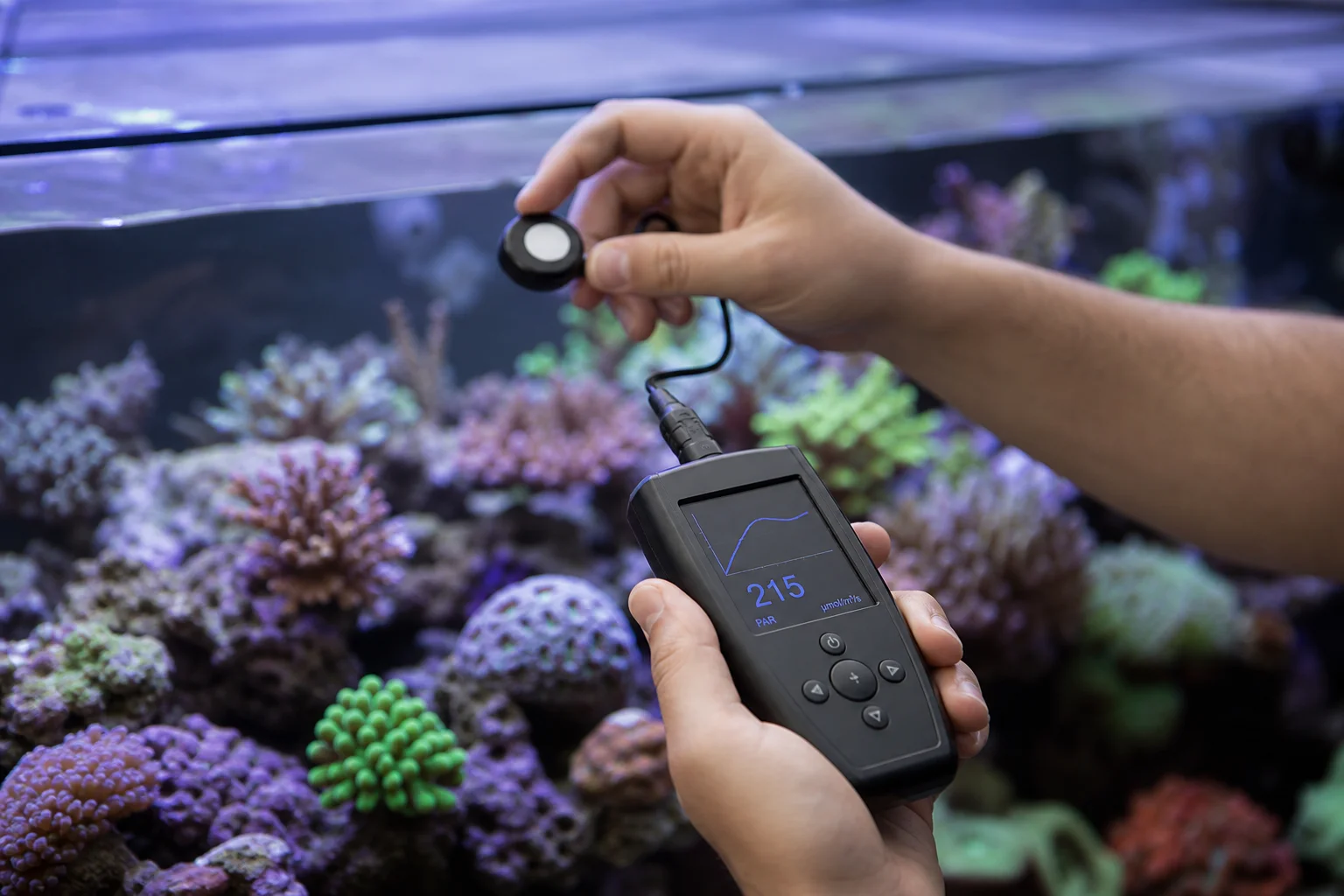
If you are setting up a different tank shape, using different lights, or stocking different coral types on your first attempt, rent a PAR meter for approximately 50 dollars. A PAR meter measures light strength and allows you to tune your lights intelligently rather than guess. The success rate of tuning with a measurement tool is dramatically higher than guessing.
For LPS corals, polyps, and similar species, aim for 75 to 150 PAR across as much of the tank as possible. When you are ready for more advanced SPS corals, the sweet spot is typically between 250 and 350 PAR across as much of the tank as possible.
One of the most important principles is that PAR is not horsepower. More light is not always better. You are far more likely to damage corals with too much light than with too little. Resist the temptation to push the edge, as the edge leads nowhere good.
PAR also cannot be measured accurately with the human eye. The spectrum that your eye perceives as brightness and the usable PAR for corals are completely different. Your eye also auto-adjusts to brightness, making estimation extremely difficult for new reefers. Some experienced aquarists succeed through luck, intuition, or solid advice, but it is far from easy.
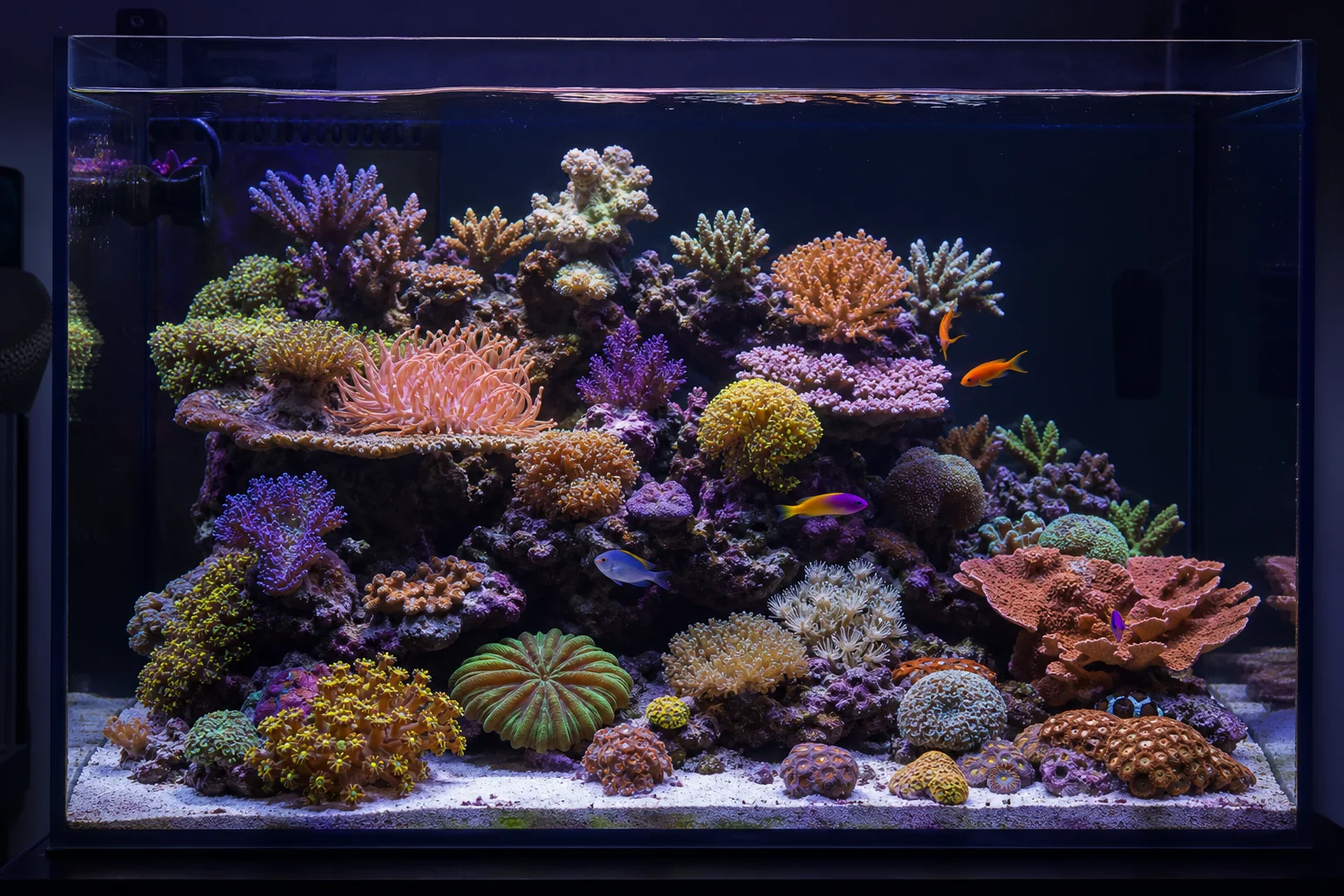
If light is too bright or PAR too strong, corals will shrink and retract tissue to protect themselves from intense light. The best approach is to start low and work your way up, not the other way around. If you do not have enough light, corals will become puffy, stretch out, reach, and expand to try to capture more light.
Corals are remarkably adaptive creatures that will adapt to almost any mistake if you simply let them be. This means you do not have to get everything perfect to be successful, but you do have to resist the temptation to constantly adjust your LED app settings. Manufacturers design these apps like games or toys, but they are actually life support for living organisms that thrive on stability. Success comes from leaving things alone, not from tweaking. Set your lights and forget them.
One major benefit of using the tanks and lights recommended here is that you can simply input the proven settings shown above and know that your lighting is covered without further thought. Save the exploration and experimentation for your next tank upgrade.
Conclusion
Proper reef tank lighting balances coral health, visual appeal, clean installation, and reasonable cost. By selecting an appropriate light for your tank size and coral type, configuring it with proven settings, and resisting the urge to constantly adjust, you can ensure that lighting will never be a limiting factor in your reef tank success.
Further reading
Related Reviews
Aquascaping
Aquascaping Beginners Guide: Essential Equipment and Shopping Tips
A practical walkthrough of the tanks, filters, lights, heaters, and CO2 systems you need to start aquascaping, with budget-friendly and high-tech options for every setup.
Aquarium Equipment
Best Aquarium CO2 Systems: Five Options From Budget DIY to Multi-Tank Setups
A practical guide to five aquarium CO2 systems, from homemade fermentation kits to pressurized cylinders with multi-tank regulators. Find the right setup for your tank size and budget.
Aquarium Lighting
Best LED Lights for Saltwater Aquariums: Two Proven Options for Reef Success
Two reliable LED lighting solutions that balance coral health, visual appeal, and cost for new reef tank setups.