Camera Reviews
Canon PowerShot V1 Review: A Serious Vlogging Camera with Real Trade-offs
The Canon PowerShot V1 brings a larger sensor and optical stabilization to compact vlogging, but size, battery life, and dynamic range limitations deserve careful consideration.
Introduction
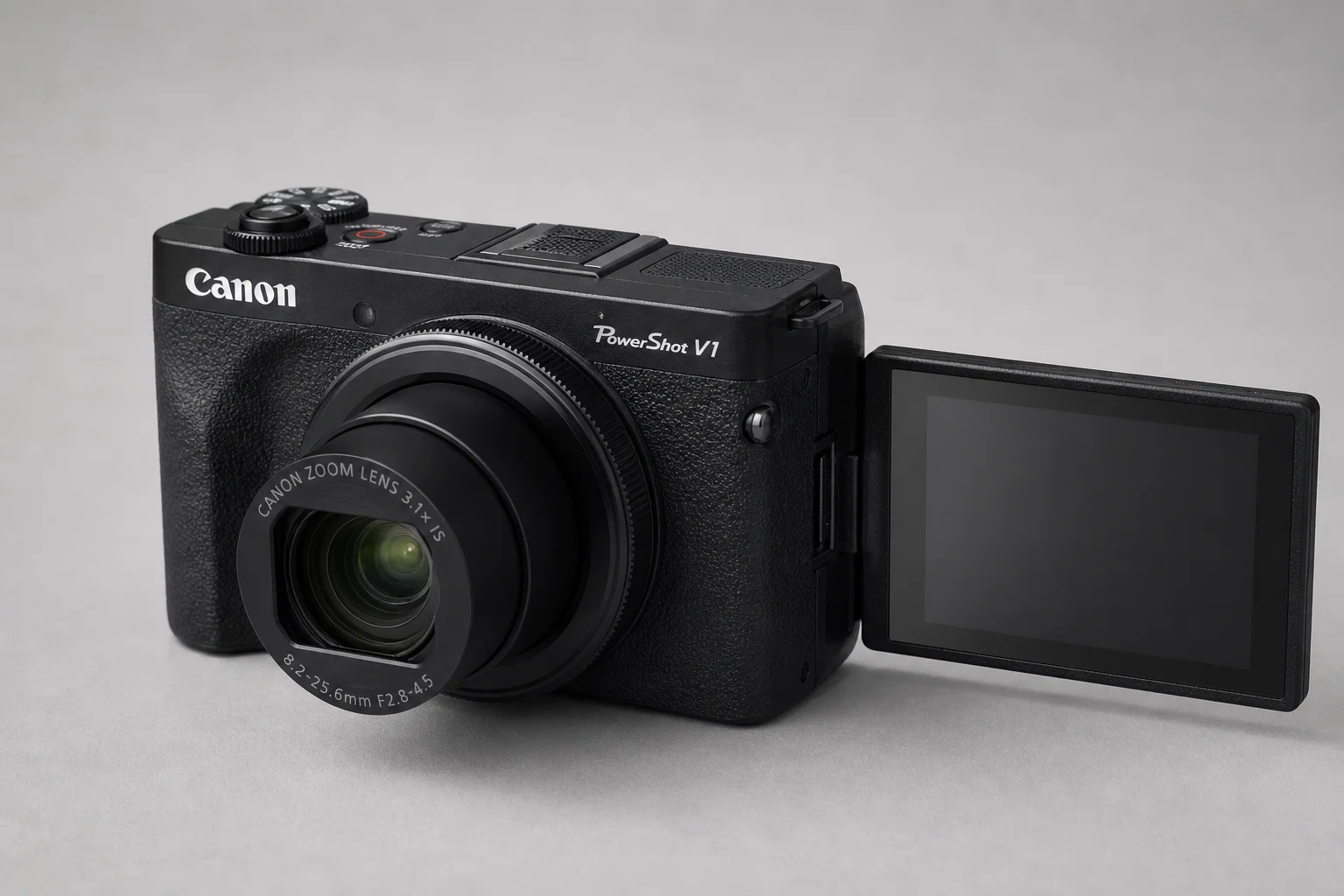
The Canon PowerShot V1 occupies an unusual position in the compact camera market. It is not trying to be a pocket-sized everyday camera. Instead, it is purpose-built for vlogging: an all-in-one solution that combines a larger sensor, optical image stabilization, a flip-out screen, and built-in cooling to handle extended video recording. Whether it delivers on that promise depends entirely on what you prioritize and what you are willing to compromise on.
Sensor and Image Quality
The PowerShot V1 uses a 1-inch sensor, roughly equivalent to Micro Four Thirds in size. This is noticeably larger than the Sony ZV-1 or RX100 series, which use smaller 1-inch sensors with less surface area. In real-world shooting, the difference is visible but not dramatic.
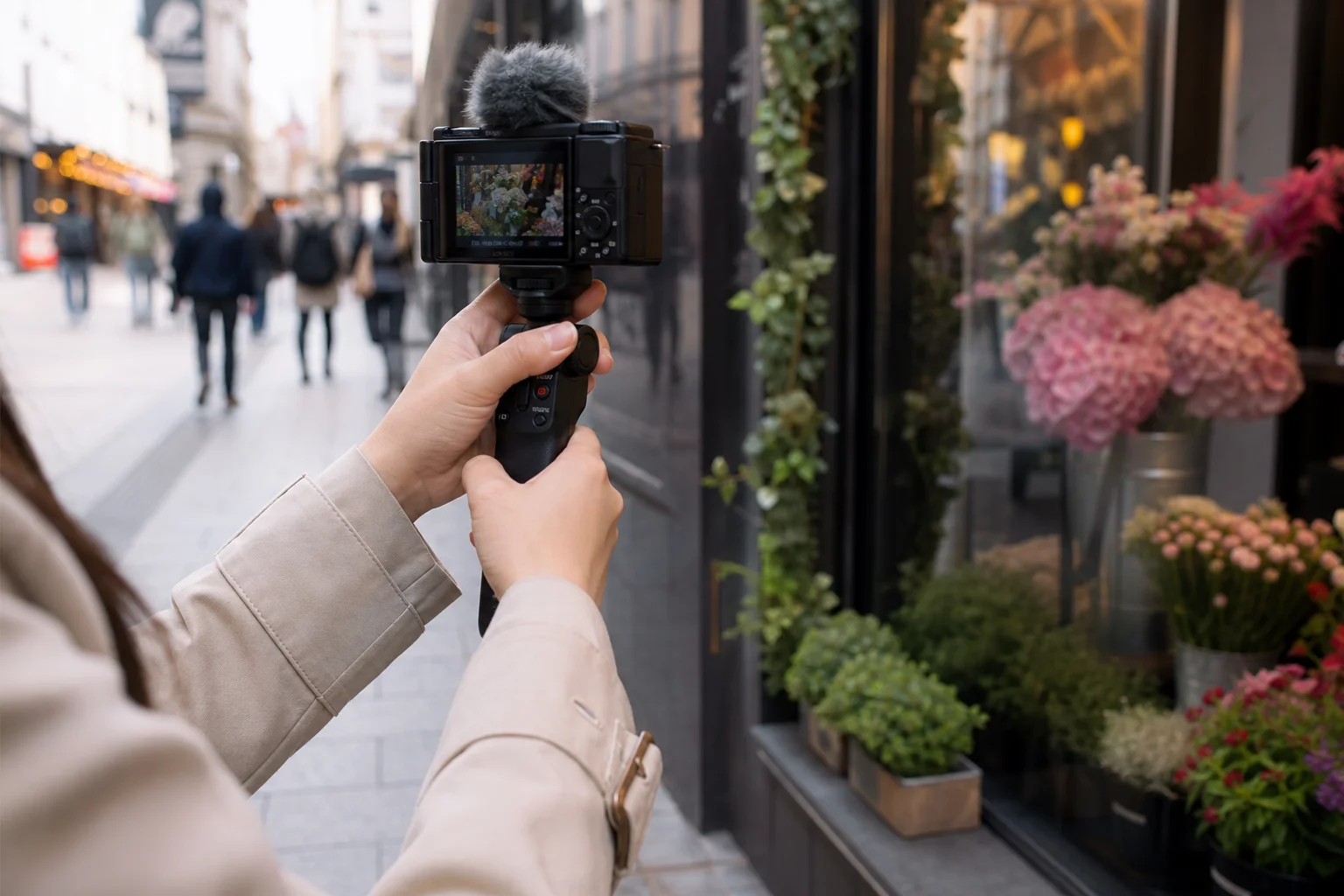
When shooting in standard colour mode with auto white balance, image quality is competent. The camera renders detail adequately and handles moderate lighting without excessive noise. However, to extract the best image quality, you need to shoot in C-Log 3, Canon’s colour-graded log profile. This requires colour correction during post-production editing, adding workflow complexity that casual vloggers may not want to manage.
Compared to a full-frame camera like the Canon R5, the PowerShot V1 shows its limitations most clearly in high-contrast situations. Backlighting reveals a narrower dynamic range: the sky clips more readily, and shadow detail is less forgiving. In low-light conditions, the gap widens further. The camera produces noticeably more noise than full-frame alternatives, a trade-off inherent to the smaller sensor size.
For typical daytime vlogging in moderate light, the image quality is sufficient. The larger sensor does deliver a visible improvement over the ZV-1 in most scenarios. But if you shoot frequently in challenging light or need maximum dynamic range flexibility, this camera will feel limiting.
Thermal Performance and Build
The PowerShot V1 is larger than typical compact cameras, and there is a reason: it houses an internal cooling fan. This is borrowed directly from Canon’s R5 cinema camera, which faced notorious overheating issues. The fan allows the PowerShot V1 to record 4K video continuously without thermal shutdown.
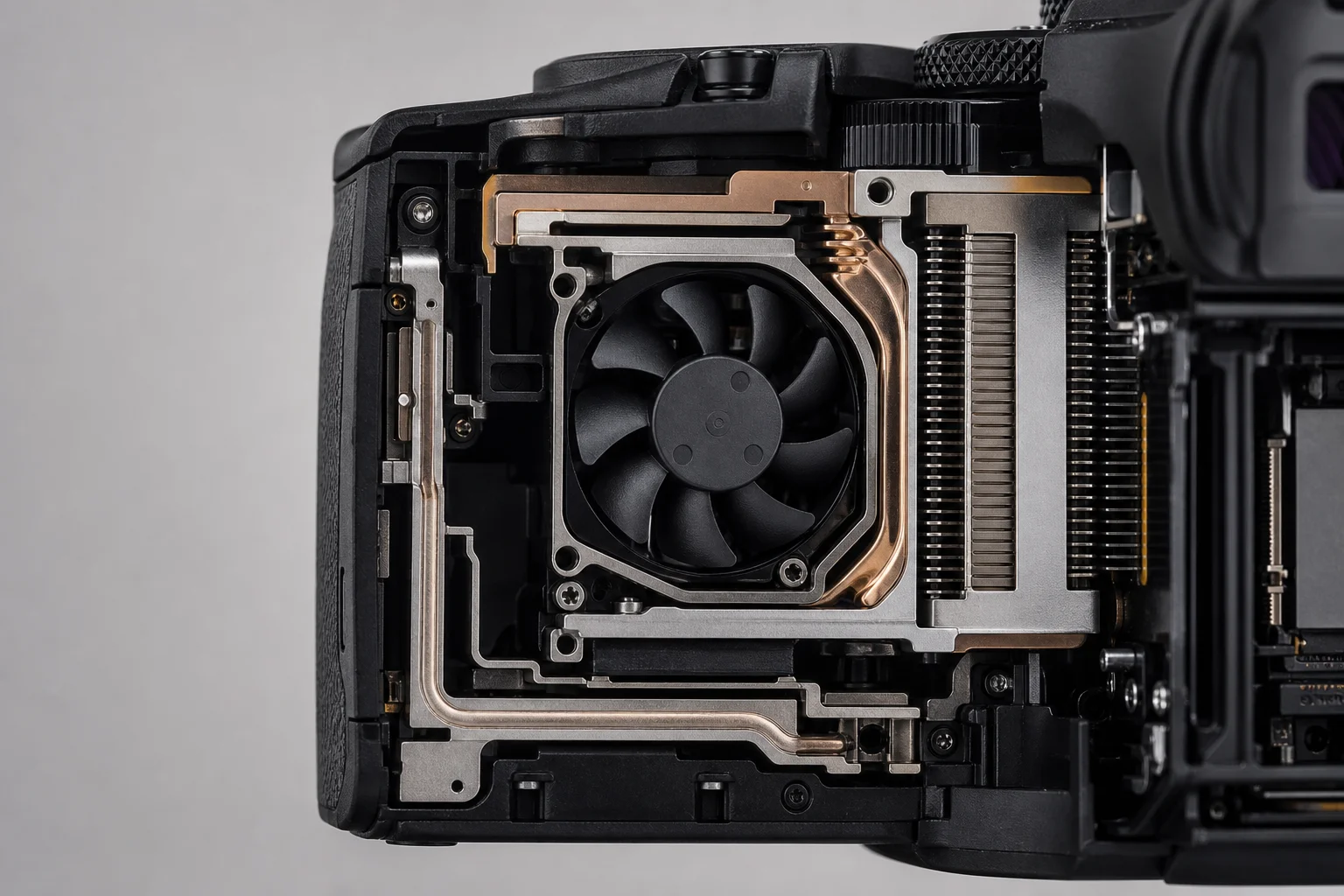
In controlled testing at 35 degrees Celsius with the camera pre-heated to simulate hot-climate use, the PowerShot V1 recorded for 1 hour and 18 minutes of continuous 4K 25p footage without overheating. This is genuinely impressive for a camera this size and represents a serious engineering commitment to solving a real problem.
However, real-world battery life is shorter. In typical shooting sessions, expect around 1 hour of continuous recording before the battery depletes. This means you will almost certainly need to carry spare batteries or rely on USB-C power during longer shoots. Canon does not include a dedicated charger in the box, expecting users to charge via USB-C in-camera. Third-party chargers like the Llano option can charge two batteries simultaneously in under 1.5 hours, which is faster than the original Canon charger.
The cooling fan adds bulk and weight compared to fanless competitors. If portability is your primary concern, this camera is a compromise. It is not pocketable in the way a GR compact camera is. But it is not intended to be. It is designed to be a dedicated vlogging tool that you carry intentionally, not a camera you slip into a jacket pocket.
Audio and Microphone Setup
The PowerShot V1 includes a built-in microphone, but it is merely adequate. Like all built-in mics, it picks up handling noise, wind, and ambient sound without discrimination. For any serious vlogging work, you should plan to use an external wireless microphone mounted on the hot shoe.
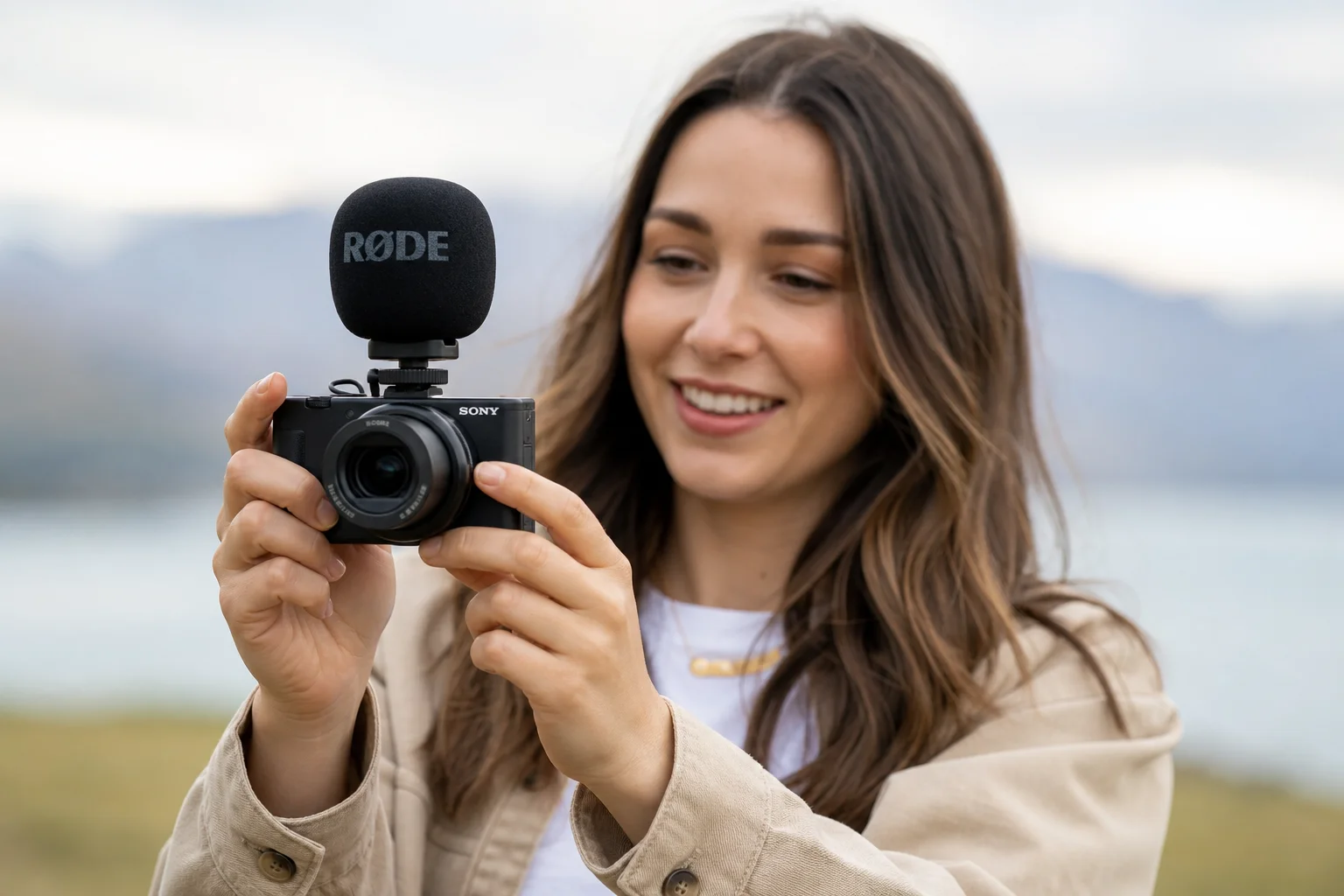
This is not a weakness specific to the PowerShot V1. It is a reality of modern vlogging: anyone serious about audio quality uses a dedicated wireless mic. The built-in mic is a fallback, not a feature to rely on. The camera does support external microphones, which is more than some compact cameras offer, so that is a genuine advantage over earlier Sony ZV-1 models.
Video Stabilization
The PowerShot V1 combines optical image stabilization (lens-based) with optional digital stabilization. The optical stabilization works by moving lens elements to counteract camera shake. This is effective but not as aggressive as modern smartphone stabilization, which many viewers have grown accustomed to.
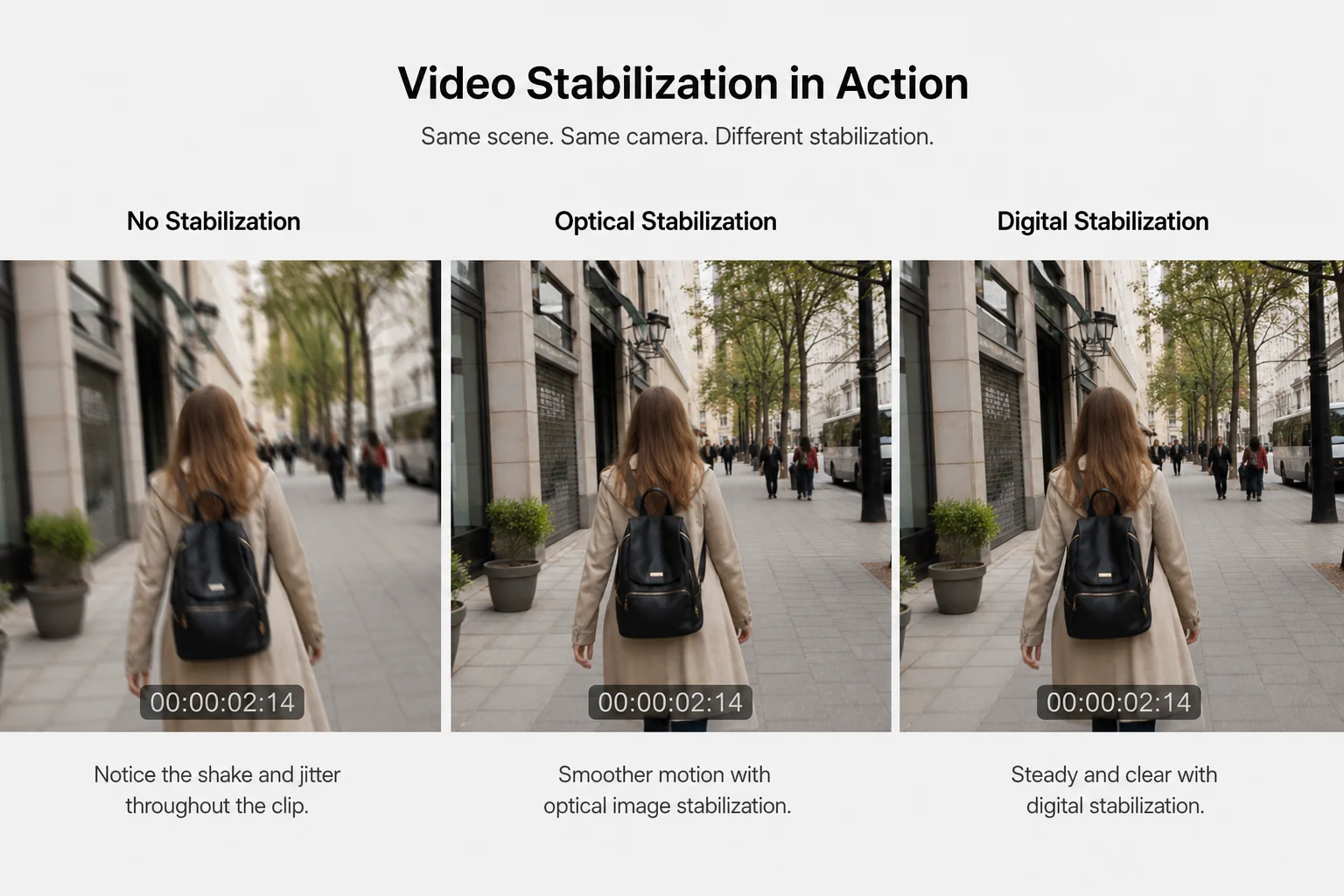
The digital stabilization option crops the image slightly and applies post-processing to reduce shake further. It produces noticeably smoother footage, but at a cost: the stabilization can appear robotic or unnatural, and strong digital stabilization introduces motion blur artifacts that do not occur with pure optical stabilization.
One quirk worth understanding: some users online have complained about “wobbling edges” in stabilized footage. This is not a defect. It is lens distortion becoming visible when the image is stabilized. With optical stabilization alone, the image hitting the sensor is already stabilized, so lens distortion is recorded proportionally to actual motion and looks natural. With digital stabilization, the image is stabilized after recording, which can make lens distortion appear as edge warping. Panasonic cameras avoid this by correcting lens distortion during digital stabilization, but most other manufacturers do not. This is physics, not a design flaw.
For vlogging, the combination of optical and optional digital stabilization is effective. The footage is smooth enough for most viewers, though it may feel less polished than smartphone video to those accustomed to aggressive digital stabilization.
Photo Capability
The PowerShot V1 also takes photographs, which is useful for hybrid content creators. Human detection autofocus works as expected in modern cameras. The AI Servo continuous autofocus (AF tracking) is responsive enough to track moving subjects without requiring pre-identification. There is no electronic viewfinder, so you compose entirely on the flip-out screen, which is fine for vlogging but less ideal for photography-focused work.
The camera is not intended as a primary photo tool, and it does not pretend to be one. For quick stills between video segments, it is capable and convenient.
Conclusion
The Canon PowerShot V1 is a genuinely useful vlogging camera that makes real engineering trade-offs to solve actual problems. The larger sensor improves image quality over the ZV-1. Optical stabilization avoids the motion-blur artifacts of pure digital stabilization. The internal cooling fan enables extended recording without thermal shutdown. The flip-out screen and external microphone support are practical for content creation.
But it is not perfect. The camera is larger and heavier than true compact cameras. Battery life demands spare batteries or external power. Dynamic range is narrower than full-frame alternatives. Image quality in low light lags behind larger sensors. And you will need to budget for an external microphone to achieve professional audio.
If you are a vlogger who values a self-contained, reliable all-in-one solution and can accept the size and battery trade-offs, the PowerShot V1 is worth serious consideration. If you prioritize maximum portability or shoot frequently in challenging light, a full-frame mirrorless camera with a compact lens may serve you better, despite the added complexity and cost.
Product link
View more details for Canon PowerShot V1
This product is mentioned in the review. Check the specifications, options, and compatibility before buying.
View more details for Canon PowerShot V1Further reading
Related Reviews
Camera Reviews
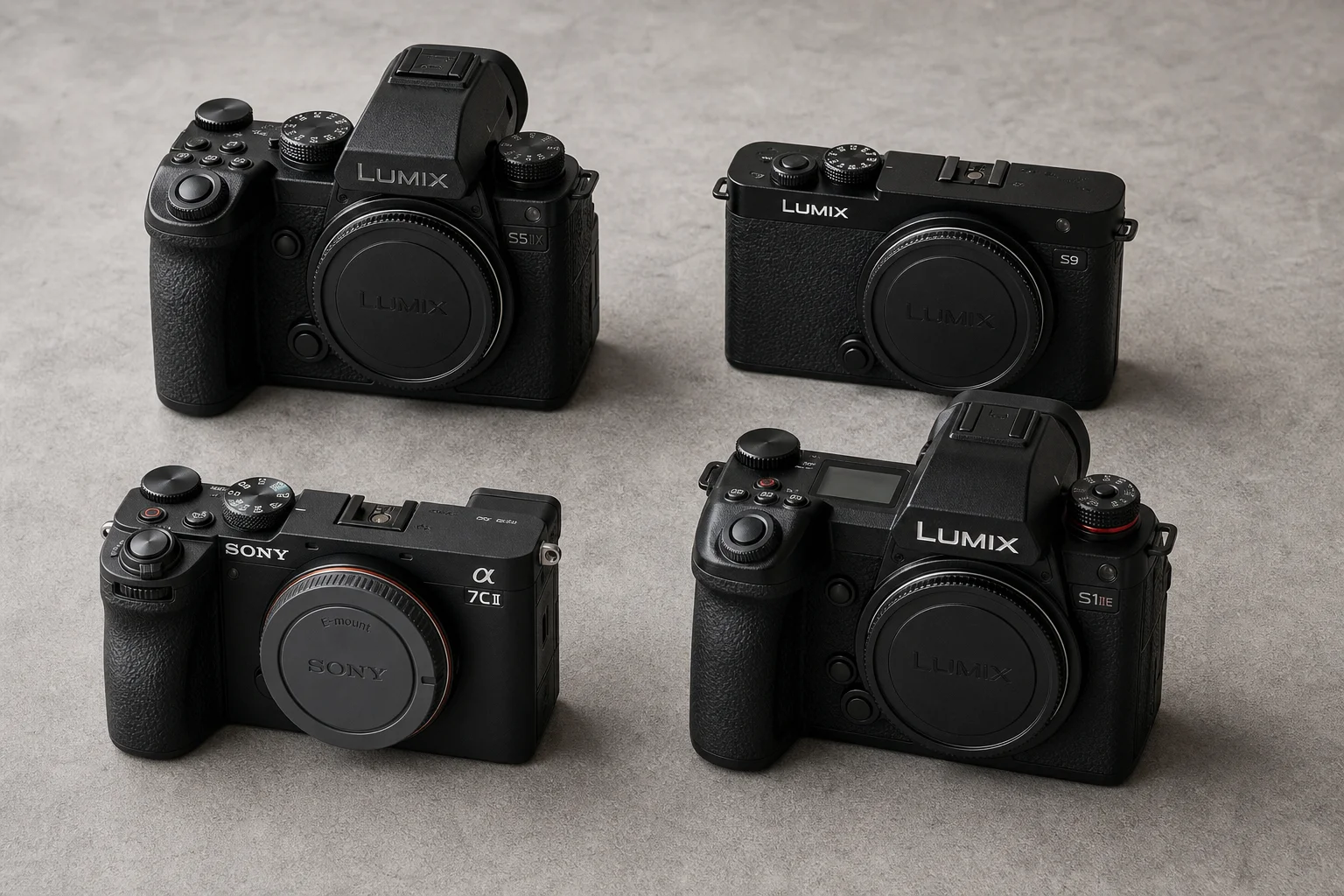
Best Budget Full-Frame Cameras for Video: Four Strong Options Compared
Four full-frame cameras that deliver excellent video capabilities without premium pricing. Lumix leads with unique features, while Sony offers strong autofocus for hybrid shooters.
Camera Reviews
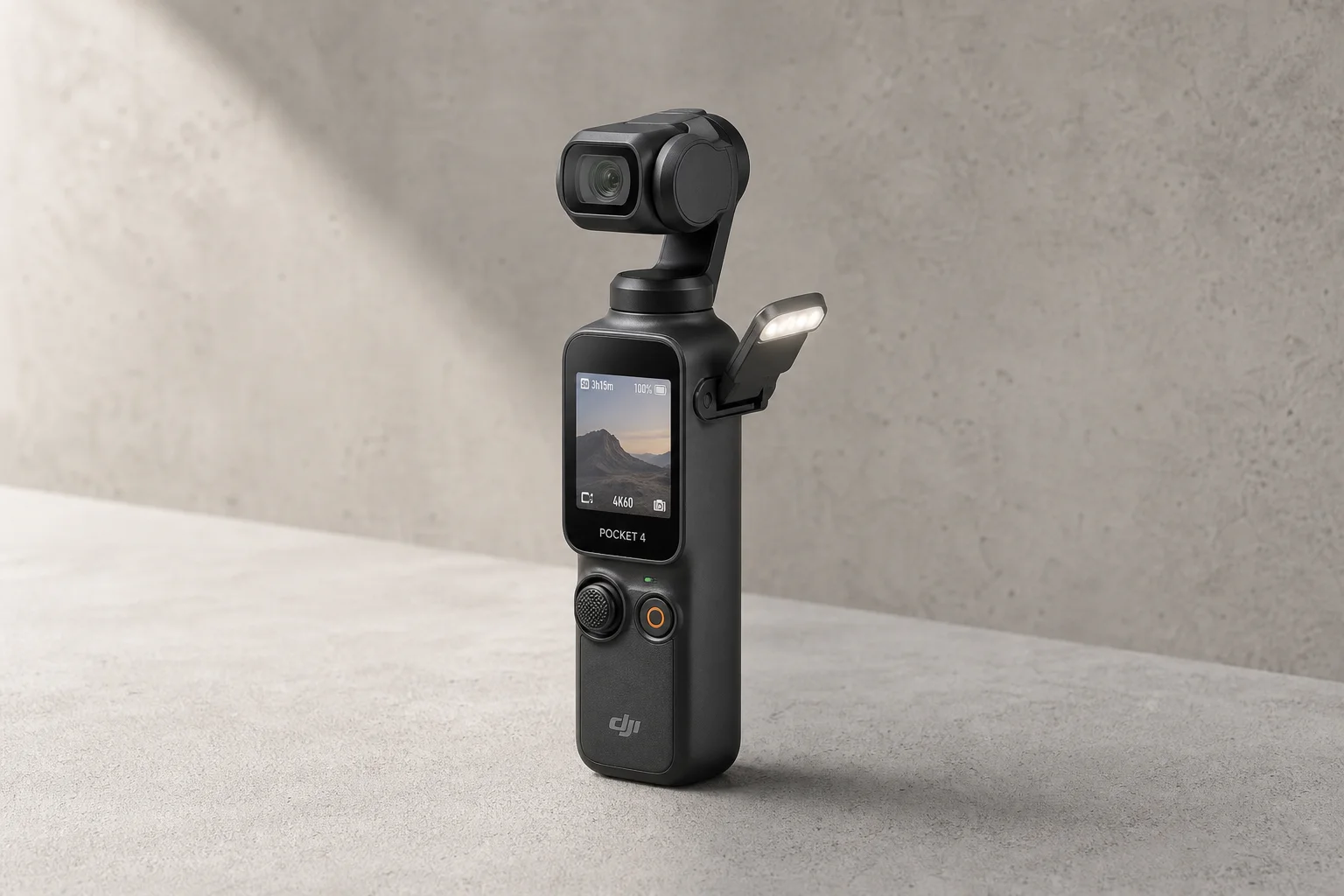
DJI Pocket 4 Review: Compact Gimbal Camera with 1-Inch Sensor and Fill Light
The DJI Pocket 4 brings a 37-megapixel 1-inch sensor, built-in fill light, 4K 240fps video, and 107GB internal storage to a single-handed stabilised camera. A detailed look at what's new and what remains unchanged.
Camera Reviews
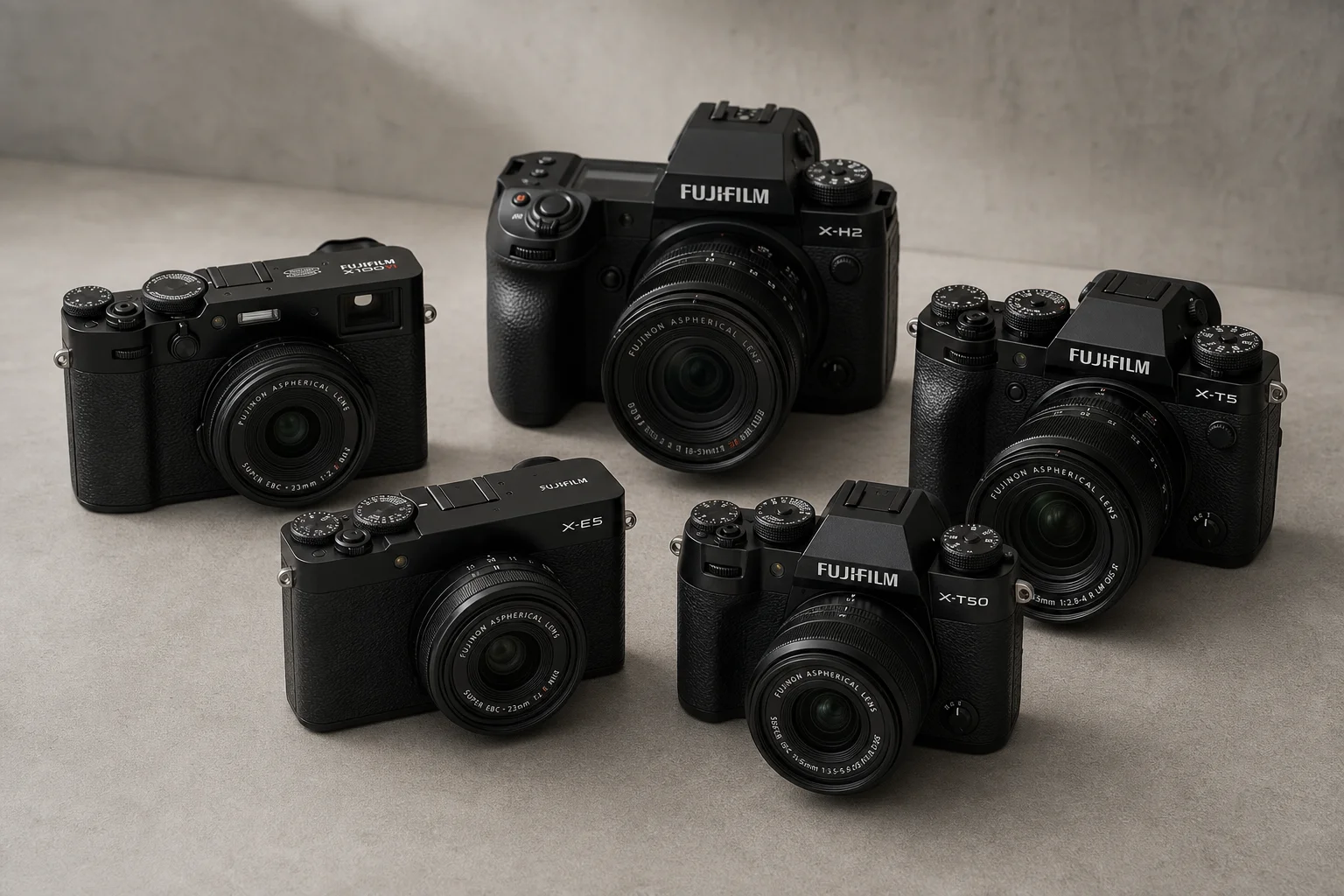
Fujifilm X-E5 vs Competitors: Five Cameras, One Sensor, Different Choices
The X-E5 shares Fujifilm's 40-megapixel sensor with four other models. Here's how to pick the right one for your needs.