Cookware
Carbon Steel Cookware: Separating Hype from Reality
Carbon steel pans promise the best of cast iron, stainless steel, and non-stick—but do they deliver? A practical guide to strengths, limitations, and how to use them well.
Introduction
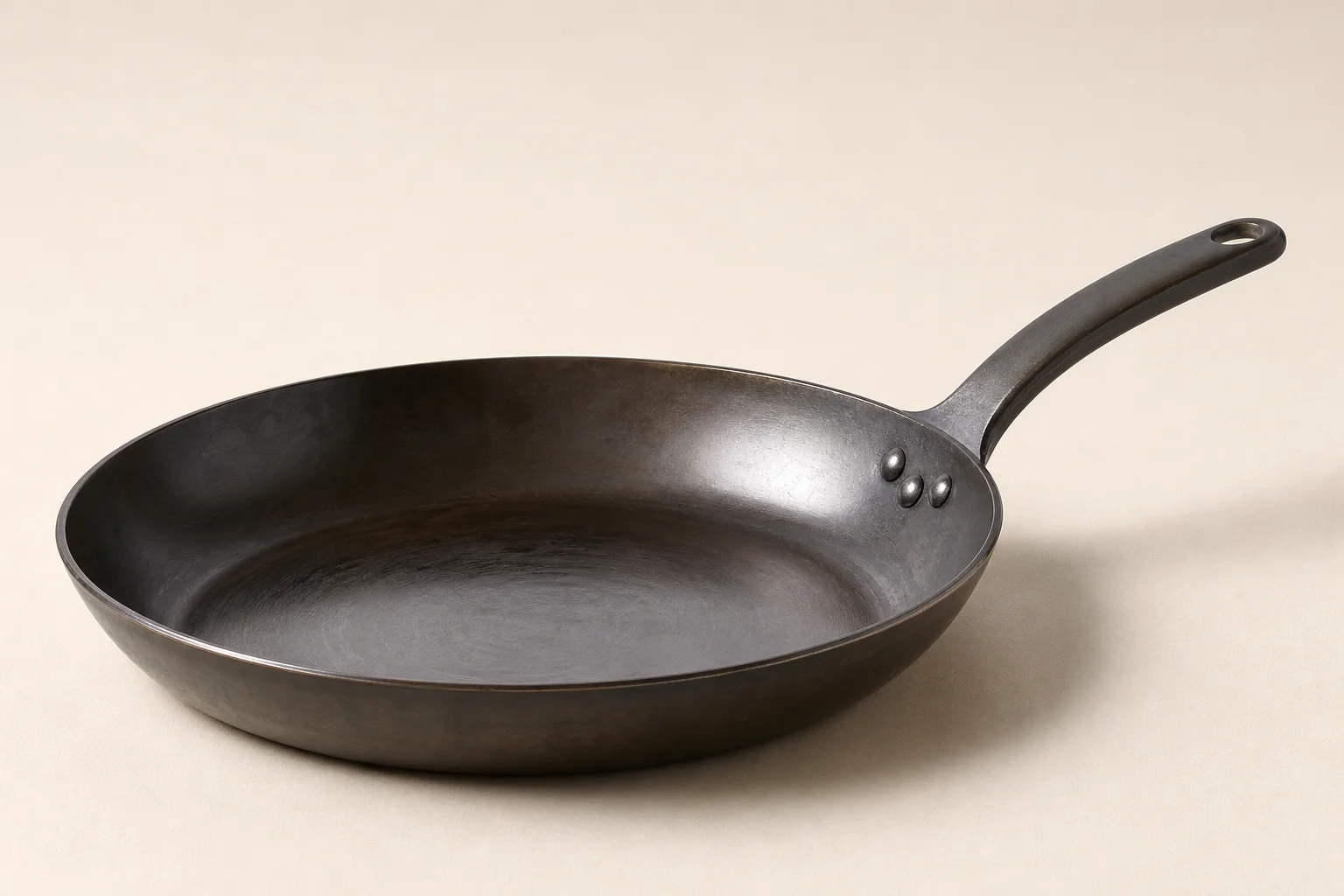
Carbon steel cookware promises the best of multiple worlds: the searing power of cast iron, the quick heating of stainless steel, and the food release of non-stick pans. But does it really deliver on all three fronts, or is the hype overblown?
The truth is more nuanced. Carbon steel excels in specific situations and has real limitations in others. Understanding what it does well—and what it doesn’t—helps you decide whether it belongs in your kitchen and how to use it effectively.
What Is Carbon Steel?
Carbon steel’s composition is deceptively simple: 99% iron and 1% carbon. Cast iron, by contrast, contains 97-98% iron and 2-3% carbon. This seemingly small difference has major consequences.
The higher carbon content in cast iron makes it harder but also more brittle, which is why cast iron pans have thick walls that resist cracking. Carbon steel’s lower carbon content makes it more pliable—it can be bent and shaped without breaking. This allows manufacturers to stamp or press carbon steel into shape rather than pour it into molds, resulting in pans that are significantly thinner and lighter than cast iron while remaining durable.
How Carbon Steel Heats
Both carbon steel and cast iron have low thermal conductivity compared to materials like aluminum and copper. However, because carbon steel pans are typically made thinner, they heat up much faster and respond to temperature changes more quickly than cast iron.
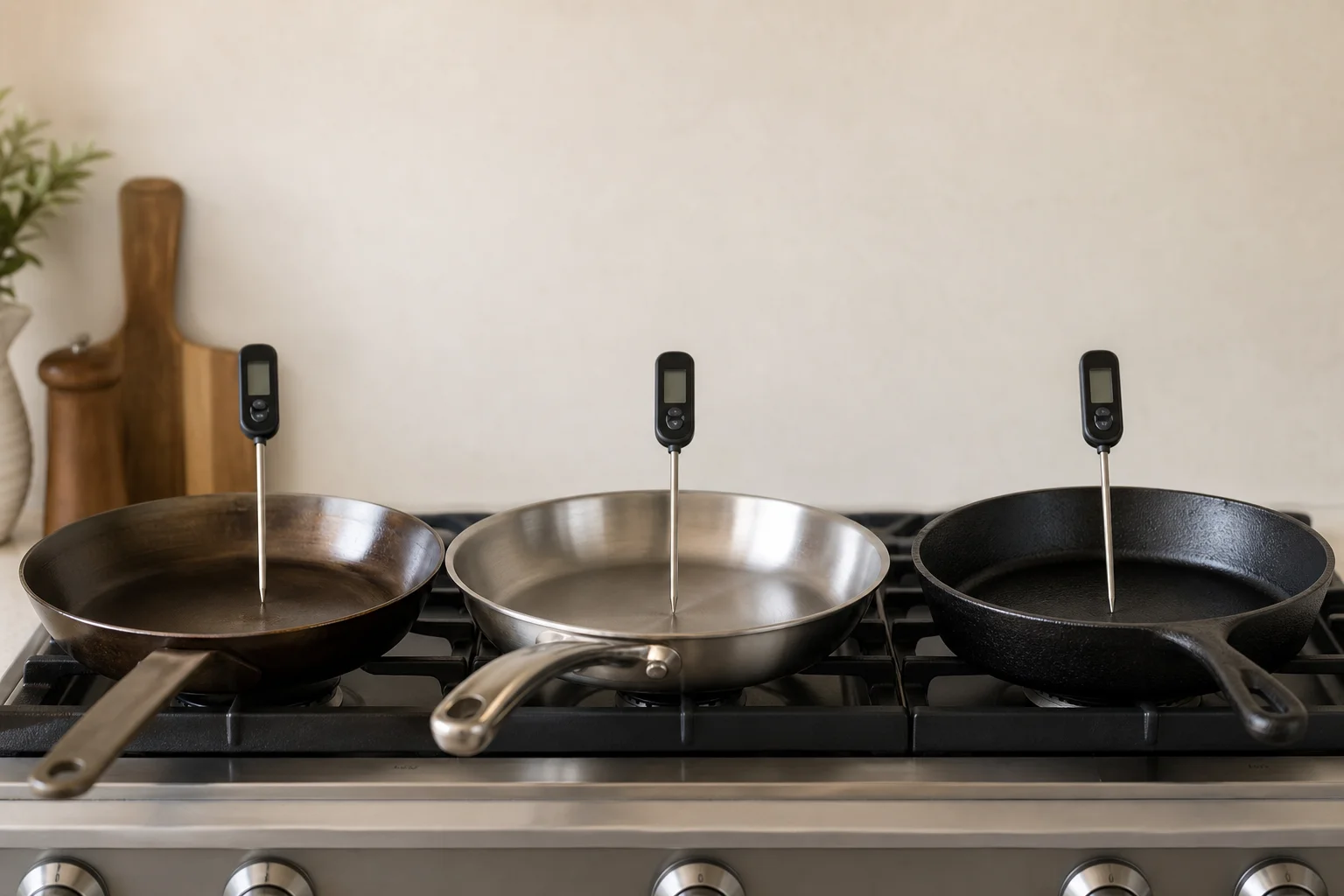
In a direct comparison, stainless steel heats fastest because its core layers are aluminum, which conducts heat efficiently. Carbon steel comes in a close second thanks to its thin construction. Cast iron, despite its thickness, heats the slowest.
The practical difference shows up in cooking. When you preheat a carbon steel pan on medium heat for 45 seconds and cook pancakes, the pan heats quickly but may cook one side more than the other due to uneven heat distribution. Stainless steel cooks more evenly and faster. Cast iron takes significantly longer to reach cooking temperature.
Cooking Performance and Responsiveness
Heat retention tells a different story. After heating a pan to 400°F and removing it from the burner, a carbon steel pan cools to 112°F after 5 minutes, while stainless steel holds 123°F and cast iron retains 178°F. This aligns with thickness: thicker pans retain heat longer.
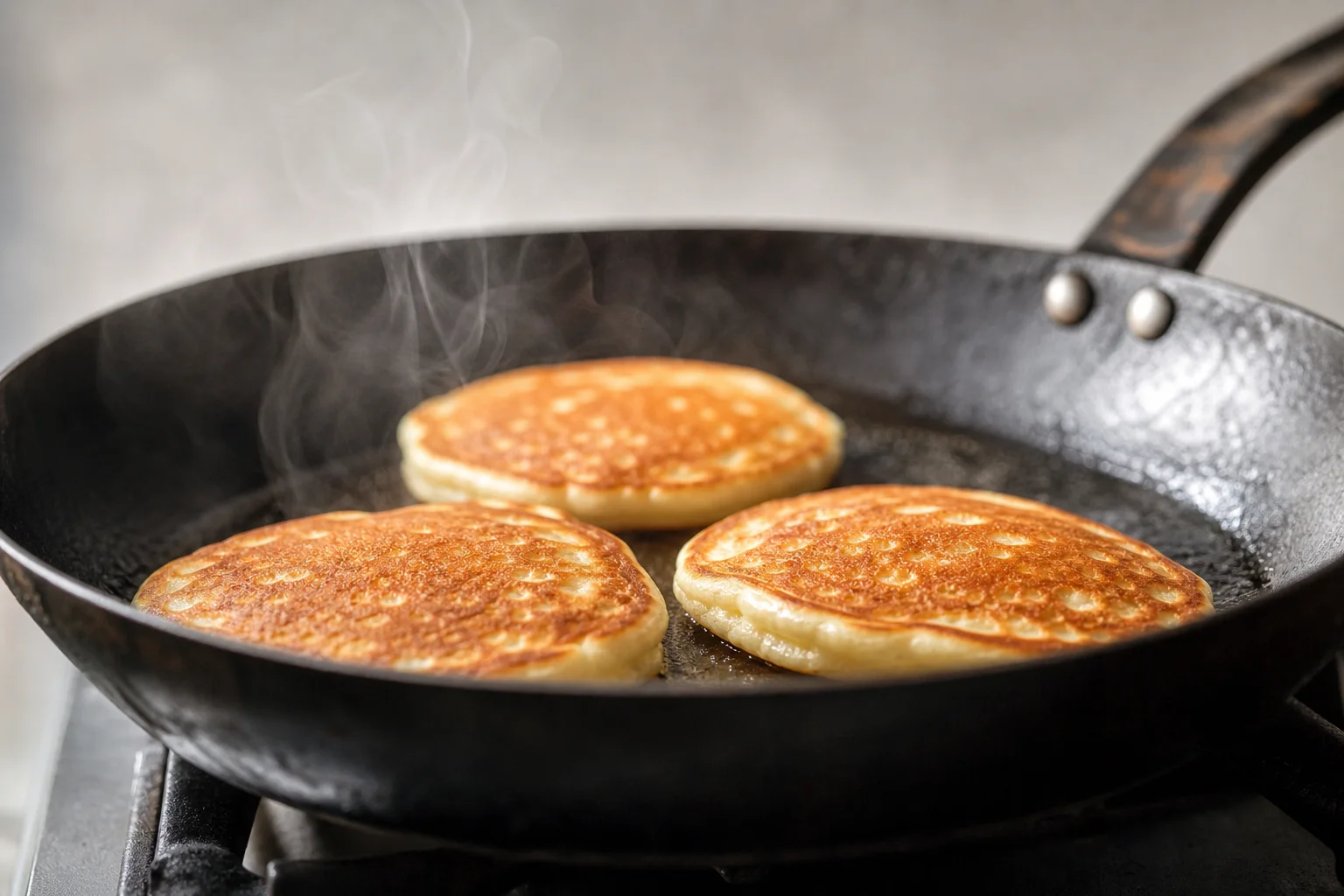
Where carbon steel truly shines is responsiveness. When you adjust the heat up or down, the pan’s temperature changes quickly, giving you more control. If oil is too hot while frying, you can correct it immediately. With cast iron, the pan takes time to cool, which can lead to burnt food if you’re not paying close attention.
This responsiveness is a double-edged sword. You gain control but must stay engaged while cooking. The pan can overheat quickly if neglected.
Versatility and Cooking Applications
Carbon steel’s high heat tolerance makes it exceptionally versatile. It works on all cooktops, including induction, and is safe in the oven, under the broiler, and on a grill. Some carbon steel pans are rated safe up to 1200°F, making them ideal for searing and browning.
Meat may stick slightly at first, but if you leave it for a minute to form a crust, it releases naturally. A well-seasoned carbon steel pan releases food similarly to non-stick cookware, though delicate foods like omelets can still stick if seasoning is worn.
The lightweight construction makes carbon steel excellent for sautéing vegetables, tossing food, and any task requiring you to lift and maneuver the pan. It’s also fantastic for one-pan meals that start on the stovetop and finish in the oven.
The main limitation is acidic foods. A squeeze of lemon or splash of wine is fine, but prolonged exposure to acidic foods like tomato sauce strips the seasoning layer. Stainless steel and enameled cast iron handle acids better since they have no seasoning to damage, though they’re more prone to sticking with delicate foods.
Seasoning and Maintenance
Carbon steel requires seasoning because iron rusts when exposed to water and air. Seasoning simply means baking a thin layer of oil into the pan through polymerization.
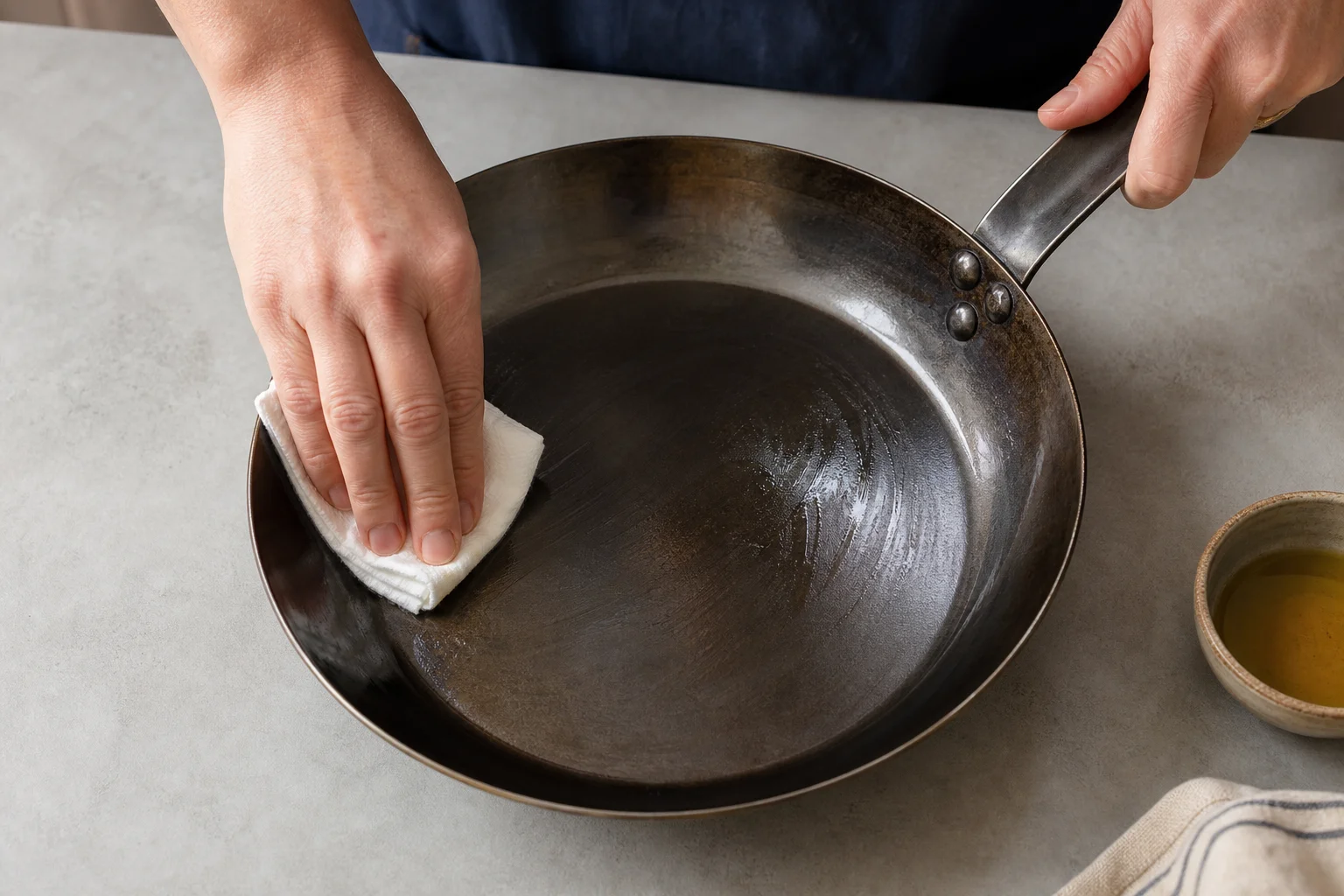
Many brands, including Made In, come pre-seasoned, so you can cook immediately. Over time, the seasoning wears down or rust may appear, requiring re-seasoning.
The process is straightforward: scrub the pan clean, coat it with a very thin layer of oil, and heat it until the oil hardens. The critical step is wiping the oil until the pan looks almost dry. Too much oil creates a sticky, uneven coating that requires starting over.
Don’t obsess over perfect seasoning. After the initial process, regular cooking builds and maintains the layer. Your pan may look splotchy after one or two seasonings, but it darkens over time. Pre-seasoned pans eliminate this initial concern.
Regarding cleaning, mild dish soap causes no harm to seasoning, contrary to popular belief. If you prefer to avoid soap, use a chainmail scrubber or deglaze the pan with water. Two rules are essential: never use a dishwasher (hot water, steam, and detergent ruin seasoning), and always dry the pan completely after washing. Even well-seasoned pans rust if moisture sits on them.
If you notice black bits on food or a paper towel turns black when wiping the pan, deep cleaning is needed. Those bits are flaking seasoning or burnt food. Scrub with steel wool until the paper towel stays clean, then apply a quick seasoning.
Durability and Long-Term Care
Carbon steel is remarkably durable. It won’t crack or break if dropped, unlike cast iron. There’s no coating or enamel to wear or chip. You can use metal utensils and even cut food in it, though scratching the seasoning is best avoided since you can always re-season.
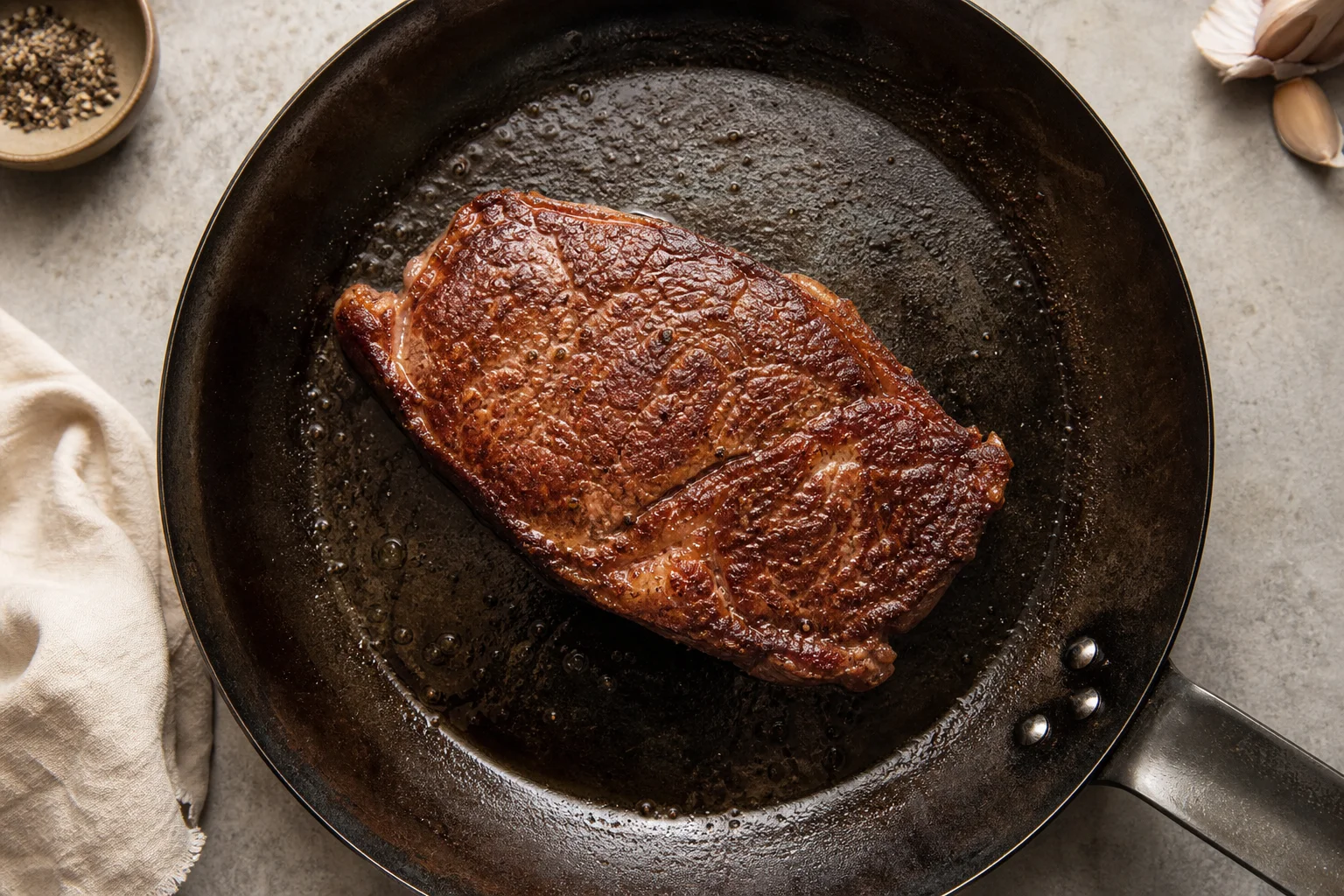
Carbon steel improves with age. The more you use it, the better the seasoning develops, creating a naturally non-stick surface that rivals commercial coatings.
One caution: avoid drastic temperature changes. Rinsing a hot pan under cold water causes uneven expansion and contraction, leading to warping and an unusable pan.
Conclusion
Carbon steel lives up to much of the hype, but it’s not a universal solution. It excels for searing, browning, and one-pan meals. It heats faster than cast iron and offers more control than stainless steel. However, it doesn’t retain heat as well as cast iron, handles acidic foods poorly, and requires seasoning maintenance.
If you’re ready to try carbon steel, look for pre-seasoned options that let you start cooking immediately. Brands offering a range of skillets, woks, and griddles provide flexibility for different cooking styles. With proper care and realistic expectations, carbon steel becomes a versatile, long-lasting addition to any kitchen.
Product link
View more details for Made In Carbon Steel Frying Pan
This product is mentioned in the review. Check the specifications, options, and compatibility before buying.
View more details for Made In Carbon Steel Frying PanFurther reading
Related Reviews
Cookware
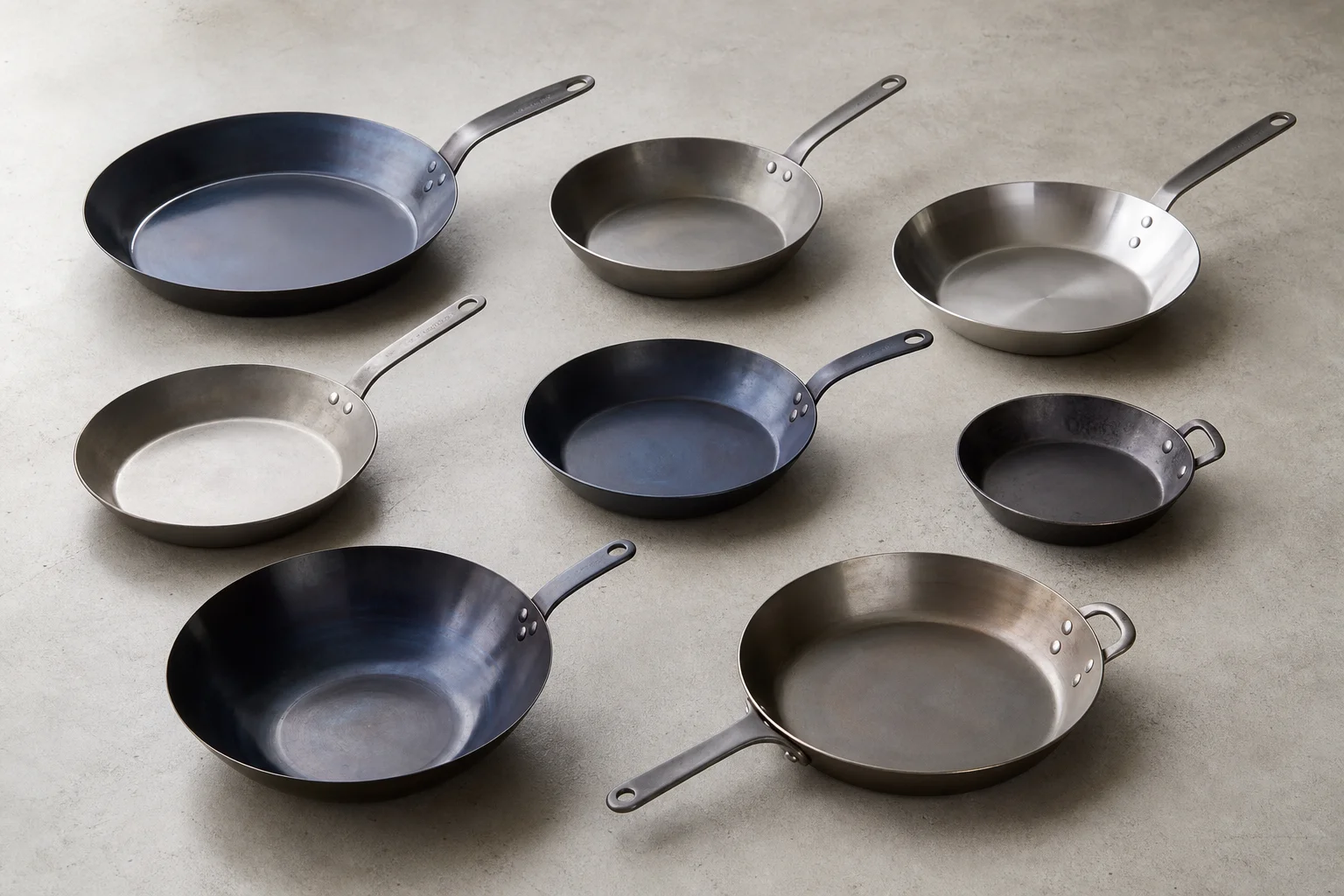
Best Carbon Steel Pans Tested: Which Brands Deliver Real Value
We tested eight popular carbon steel pans with controlled durability, heat, and cooking tests. Here's which ones perform best and which to avoid.
Cookware
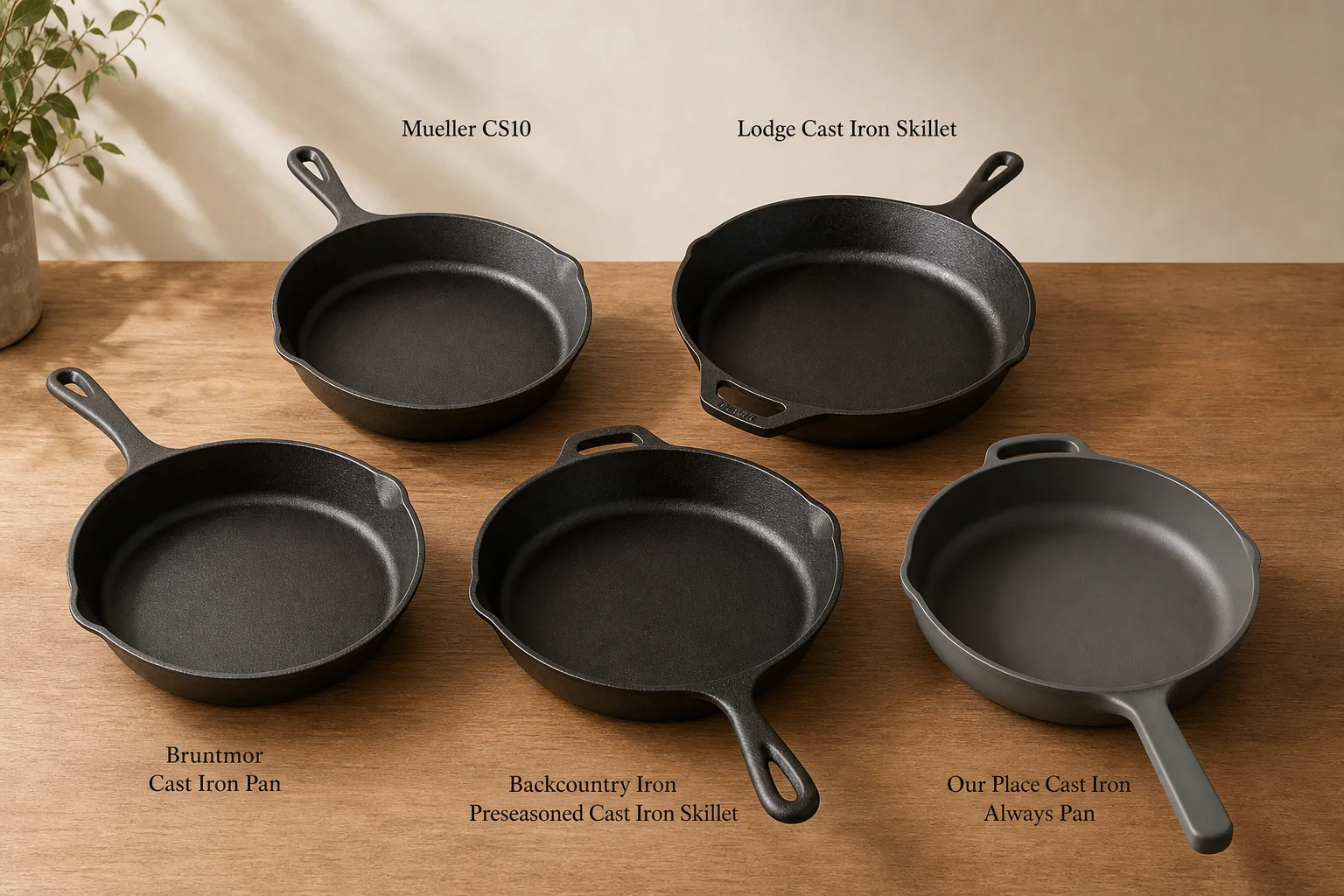
Best Cast Iron Pans 2026: Five Options from Budget to Premium
A practical breakdown of five cast iron skillets, from affordable Mueller to premium Our Place, with clear strengths and trade-offs for different cooking needs.
Cookware
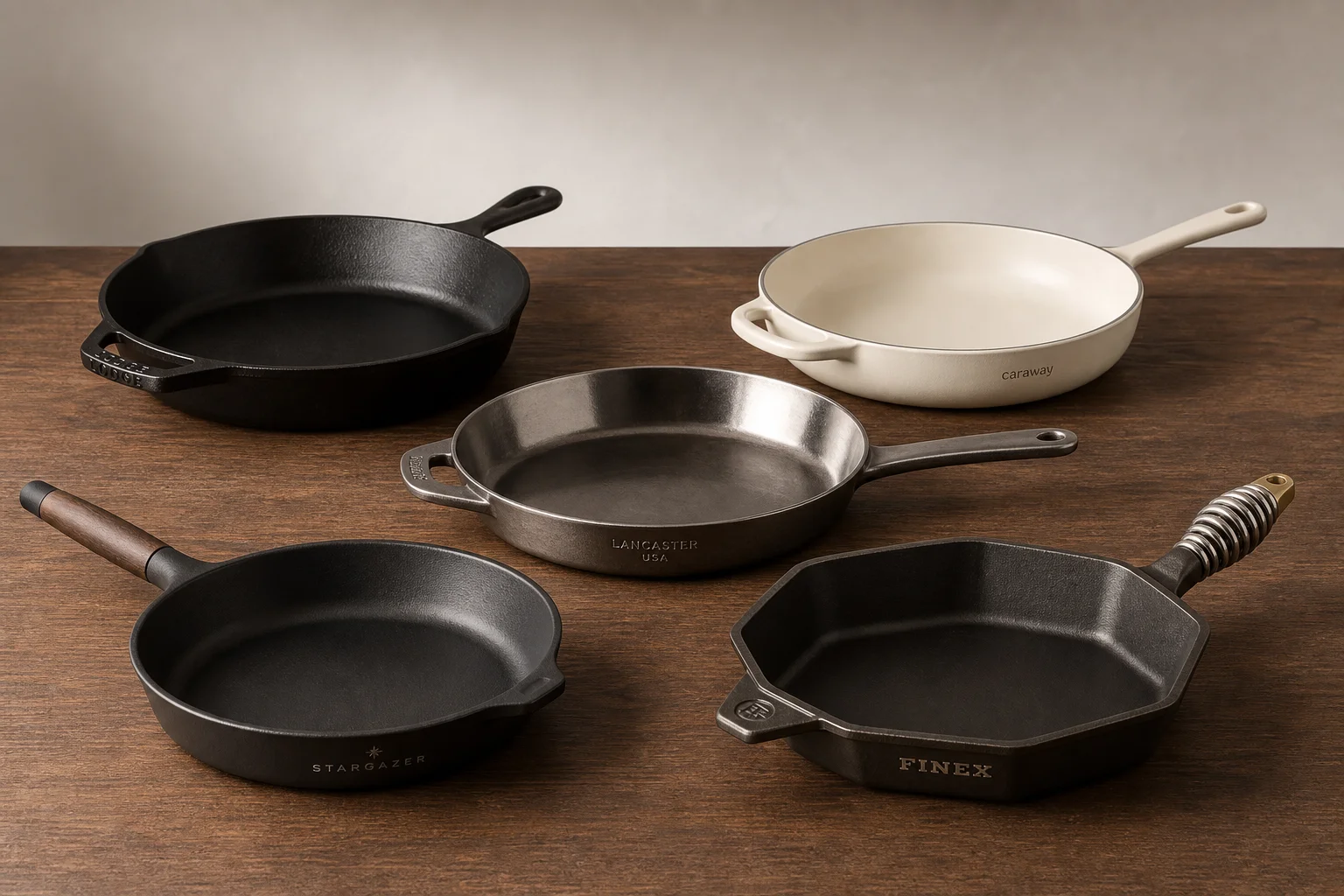
Best Cast Iron Skillets: Five Options for Every Kitchen
A comprehensive guide to five cast iron skillets, from budget-friendly classics to premium handcrafted options, each with distinct strengths and use cases.