Aquarium Filters
Eheim Filter Guide: Choosing the Right Canister for Your Aquarium
A complete breakdown of Eheim filter families, flow rates, media capacity, and sizing principles to help you select the best external filter for your tank.
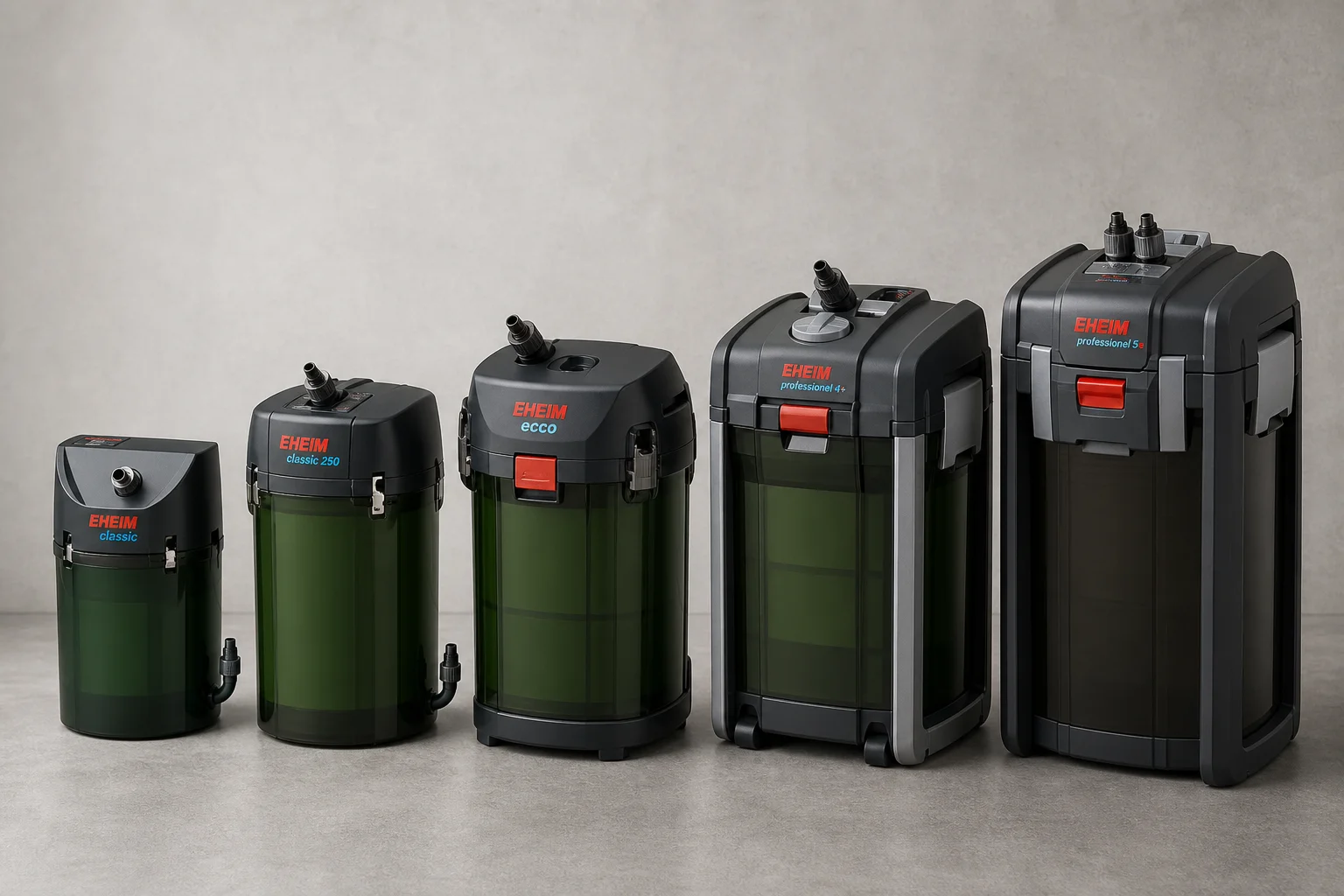
Understanding Flow Rates and Tank Volume
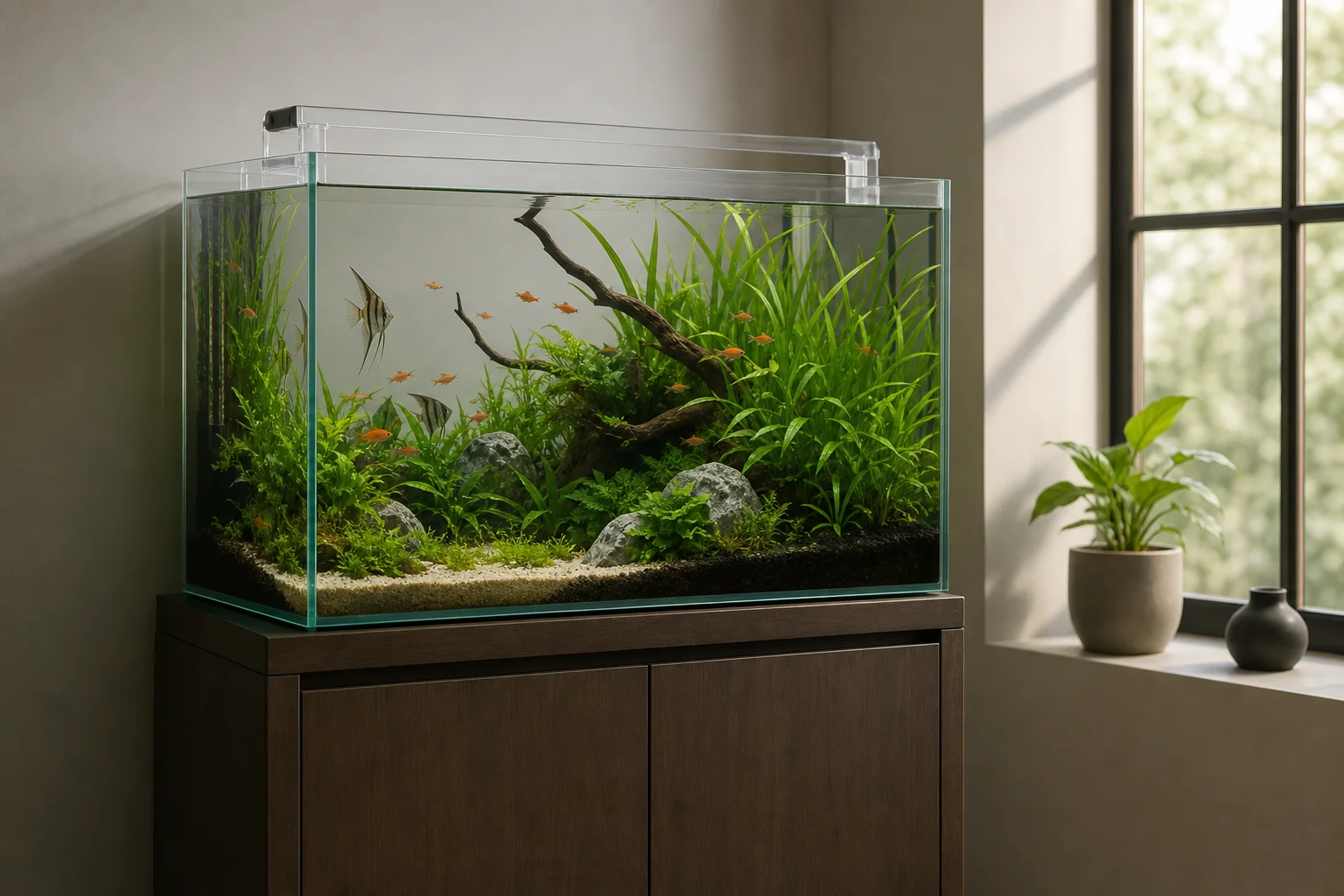
Choosing the right external filter starts with understanding the relationship between flow rate, tank volume, and rotation cycles. The fundamental principle is straightforward: your filter should rotate the complete volume of your tank water five to ten times per hour. For a 100-litre tank, this means aiming for 500 to 1,000 litres per hour of flow.
However, this range is not one-size-fits-all. Tank size significantly affects where you should position yourself within that range. Smaller tanks benefit from higher rotation rates, while larger tanks can operate effectively at the lower end. A 20 or 30-litre nano tank paired with an eXperience 150 running at 500 litres per hour performs perfectly despite the seemingly high ratio. Conversely, a 200-litre aquarium runs stably at five to six rotations per hour, requiring only 1,000 to 1,200 litres per hour.

It is important to understand that the litres per hour figure printed on a filter box represents the pump’s theoretical output, not the actual flow you will experience. Once installed, several factors reduce this number: the height the pump must lift water, resistance from filter media, and the pump’s internal position within the canister all contribute to real-world flow reduction. This is completely normal and expected. When selecting a filter, aim for the number on the box, knowing that actual performance will be somewhat lower.
Filter Media Capacity and Canister Volume
Filter media capacity is equally critical to flow rate when sizing a filter. Biological media should occupy approximately 3 to 4 percent of your tank’s total volume. For a 200-litre aquarium, this translates to roughly 6 litres of biological media.
If you do not know the exact media capacity but have the canister volume from manufacturer specifications, use a secondary calculation: aim for a canister that is 4 to 6 percent of your tank volume. This typically provides the 3 to 4 percent media space you need. The Professional 4+ 600, for example, has a 9.2-litre canister (4.6 percent of a 200-litre tank) and accommodates 6.5 litres of filter media (3.2 percent of tank volume), demonstrating this principle in practice.
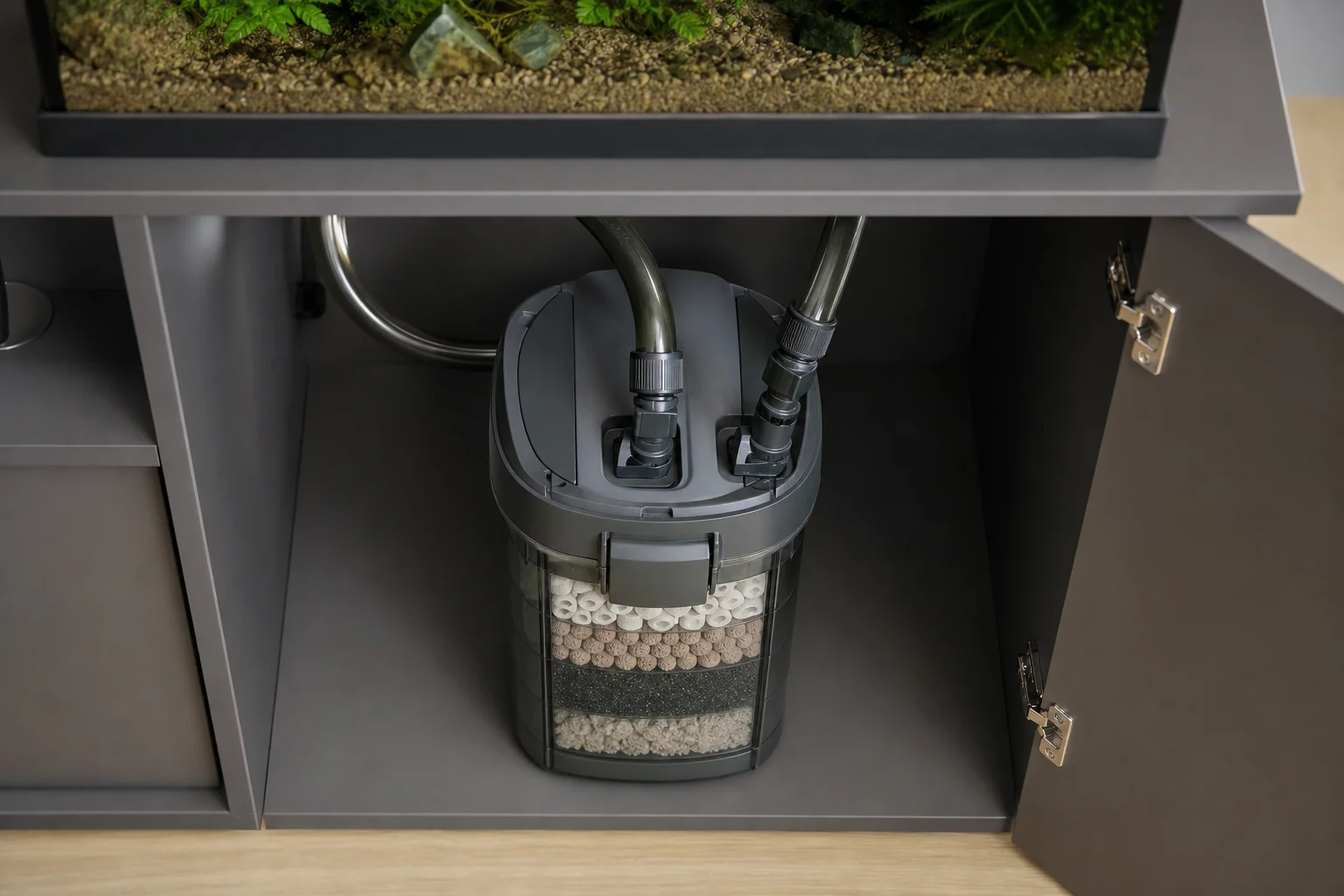
As with flow rates, these percentages shift based on tank size. Nano tanks often run with 2 to 3 litres of biological media despite the higher ratio, and this works perfectly well. Larger aquariums can operate with proportionally less media. The key is that you cannot truly overfilter an aquarium within normal operating parameters. While an extremely oversized filter on a tiny tank might create excessive flow, choosing a filter one or two sizes larger than the minimum calculations suggest provides valuable stability and error margin. In professional display settings, larger filters are deliberately chosen to maintain water clarity and stability even if maintenance schedules slip or unexpected bioload spikes occur.
The Classic Series: Simplicity and Longevity
The Eheim Classic represents the foundation of the external filter category. Introduced in 1963, it remains in production over 60 years later with the same core design philosophy. This longevity speaks to the appeal of simplicity: fewer components mean fewer potential failure points. The Classic’s strength lies in its straightforward operation and proven reliability.
Recently, Eheim introduced the Classic Vario+e 250, which adds modern conveniences like Wi-Fi connectivity and adjustable pump power while maintaining the Classic’s essential simplicity. This new variant bridges traditional design with contemporary features, offering users the choice between pure mechanical reliability or enhanced digital control.
The Ecco Pro Series: Overlooked Efficiency
The Ecco Pro family, introduced in the early 2000s, remains one of the most underrated Eheim filter lines. Like the Classic, it retains a round footprint, but adds several practical refinements. The inlet has been relocated to the top of the filter, and adjustable taps allow manual flow control. These filters feature a built-in hose adapter concept, though not the fully detachable design of newer models.
A clever priming mechanism uses a large latch on top of the filter. As you slowly open it, vacuum forms inside the canister and draws water in automatically. This was innovative technology at the time and remains effective today. The defining characteristic of the Ecco Pro series is power efficiency: these filters consume less electricity than comparable models with similar flow rates, making them an excellent choice for users prioritizing low operating costs.
The eXperience Family: Quiet Performance
Released in the mid-2000s, the eXperience family evolved from the original Professional series and introduced the fully detachable hose adapter system familiar to modern aquarists. These filters feature a square footprint, which maximizes cabinet space efficiency and increases filter media capacity compared to round designs.
The eXperience’s primary selling point is exceptional quiet operation. When customers prioritize noise reduction above all other factors, the eXperience is the recommended choice. This filter has earned a reputation for silent, reliable performance that makes it ideal for living spaces where filter noise might otherwise be noticeable.
The Professional 4+ and Professional 3 Series
The Professional 4+ and Professional 3 represent the most widely used Eheim filters in the aquascaping community. These models are functionally very similar, with one key difference: the Professional 4+ includes an extender function. This small rotary knob allows you to bypass the fine filter mesh during the week if the filter becomes clogged, letting water flow directly through coarser media until you have time for a full cleaning on the weekend. This feature prevents the need for emergency maintenance and reduces pump strain.
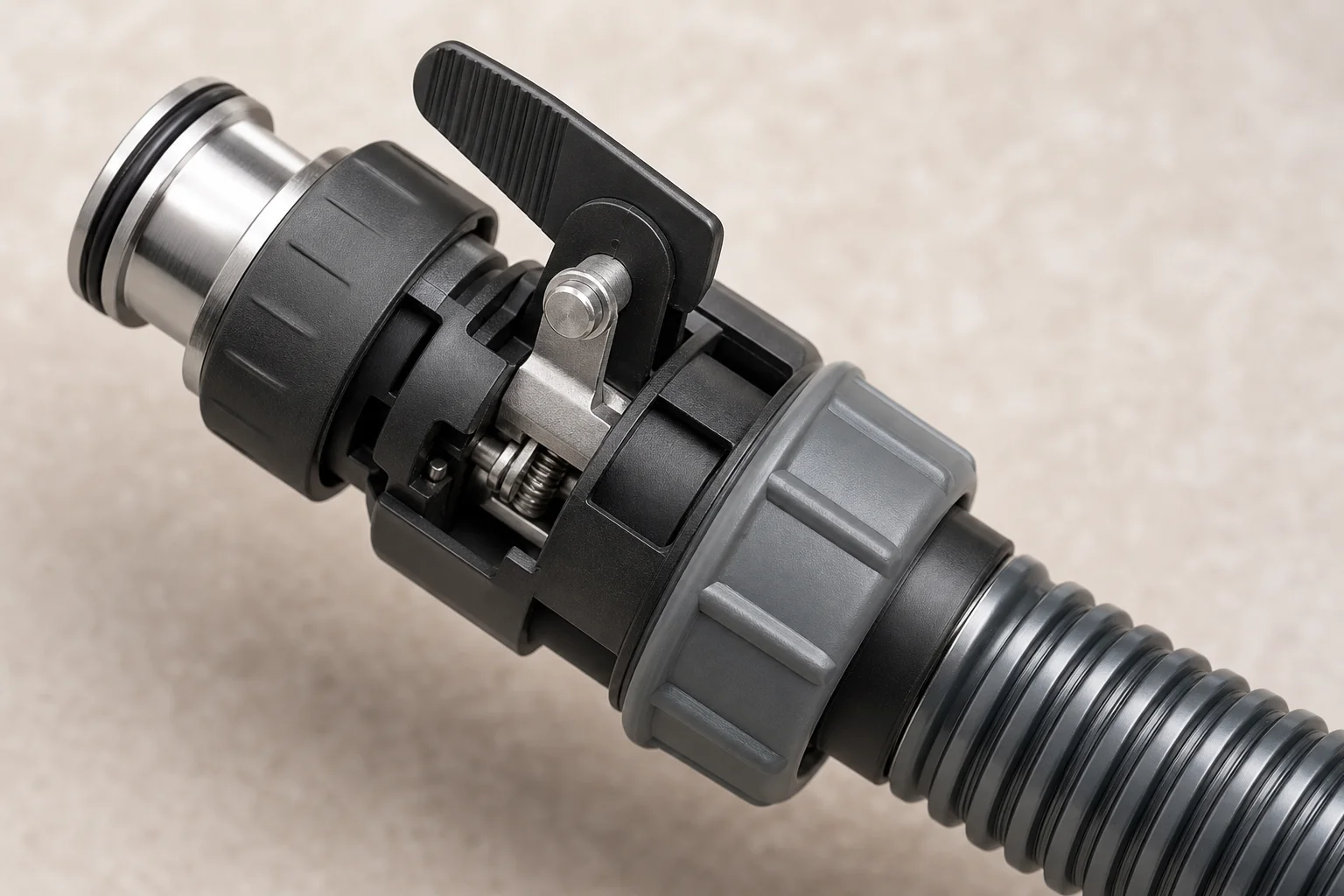
Both series feature a canister shape optimized for maximum filter media capacity, making them ideal for demanding aquascaping setups where biological stability is paramount. The hose adapter on these models uses a single lever to control both flow adjustment and adapter closure, preventing accidental inflow reduction that could damage the pump. You can safely reduce outflow to approximately 50 percent; beyond that, the filter will produce audible warnings.
The Professional series includes a reliable push-button priming system: a single press starts water flowing from your tank into the filter, and once filled, you simply plug it in. Both the Professional 3 and Professional 4+ are available in thermal versions with integrated heaters, eliminating the need for separate in-tank or in-line heating equipment.
The Professional 3 designation persists primarily in the 1200 XL and XLT models (standard and thermal versions). These large filters power most major display tanks at professional facilities, with some units operating continuously for over a decade. The availability of individual replacement parts means these filters can be serviced and restored rather than replaced, demonstrating Eheim’s commitment to long-term reliability.
The Professional 5e Series and Advanced Features
The Professional 5e series represents the current pinnacle of Eheim filter technology. The “e” designation indicates electronic control, distinguishing these models from their mechanical predecessors. These filters offer the most advanced features available in the Eheim lineup, including Wi-Fi connectivity and electronic pump speed adjustment.
Unlike mechanical flow control, which reduces the diameter of the outlet hose while the pump continues running at full speed, electronic adjustment actually modulates pump speed. This approach reduces both flow rate and power consumption simultaneously, providing genuine energy savings when flow is reduced. More importantly, it eliminates pressure on the pump that occurs with purely mechanical restriction.
The Professional 5e includes automatic priming, eliminating the manual button-press step, and provides maintenance notifications that alert you when the filter requires cleaning. These digital features make the Professional 5e ideal for users who value convenience and want real-time monitoring of their filtration system’s status.
Conclusion
Selecting an Eheim filter requires balancing flow rate, media capacity, tank size, and your priorities regarding noise, features, and maintenance convenience. Start by calculating your target flow rate based on tank volume and rotation cycles, then determine the media capacity you need. From there, choose the filter family that matches your preferences: Classic for simplicity, Ecco Pro for efficiency, eXperience for quiet operation, Professional 4+ or 3 for media capacity and reliability, or Professional 5e for advanced digital control. Eheim’s range ensures that regardless of your aquarium size or requirements, a suitable filter exists within the lineup.
Product link
View more details for Eheim Classic
This product is mentioned in the review. Check the specifications, options, and compatibility before buying.
View more details for Eheim ClassicFurther reading
Related Reviews
Aquarium Filters
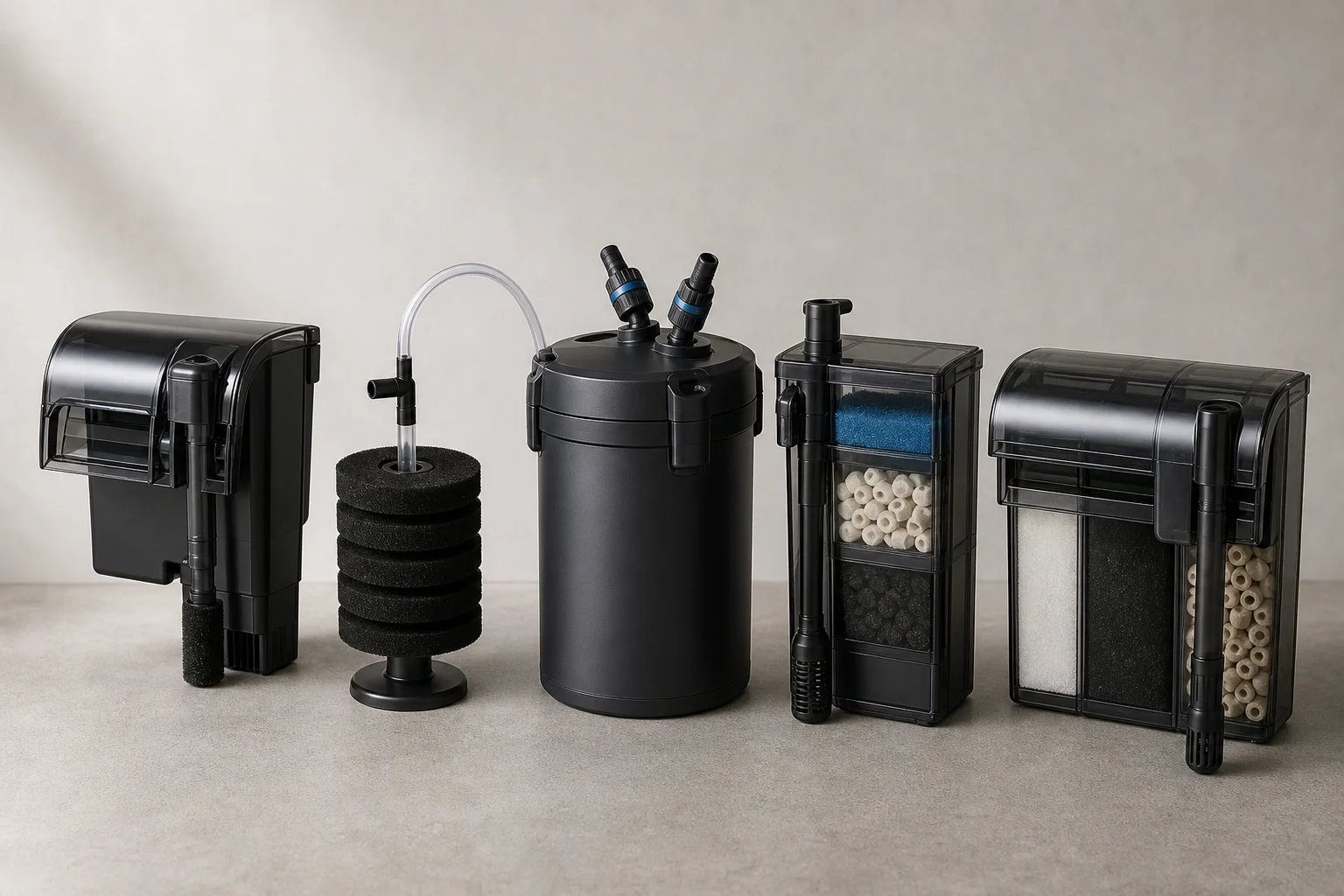
Best Aquarium Filters 2026: Five Options for Clear Water and Healthy Fish
Five aquarium filter options ranging from ultra-quiet models to multi-stage systems, each designed to maintain water clarity and support healthy aquatic environments.
Aquarium Filters
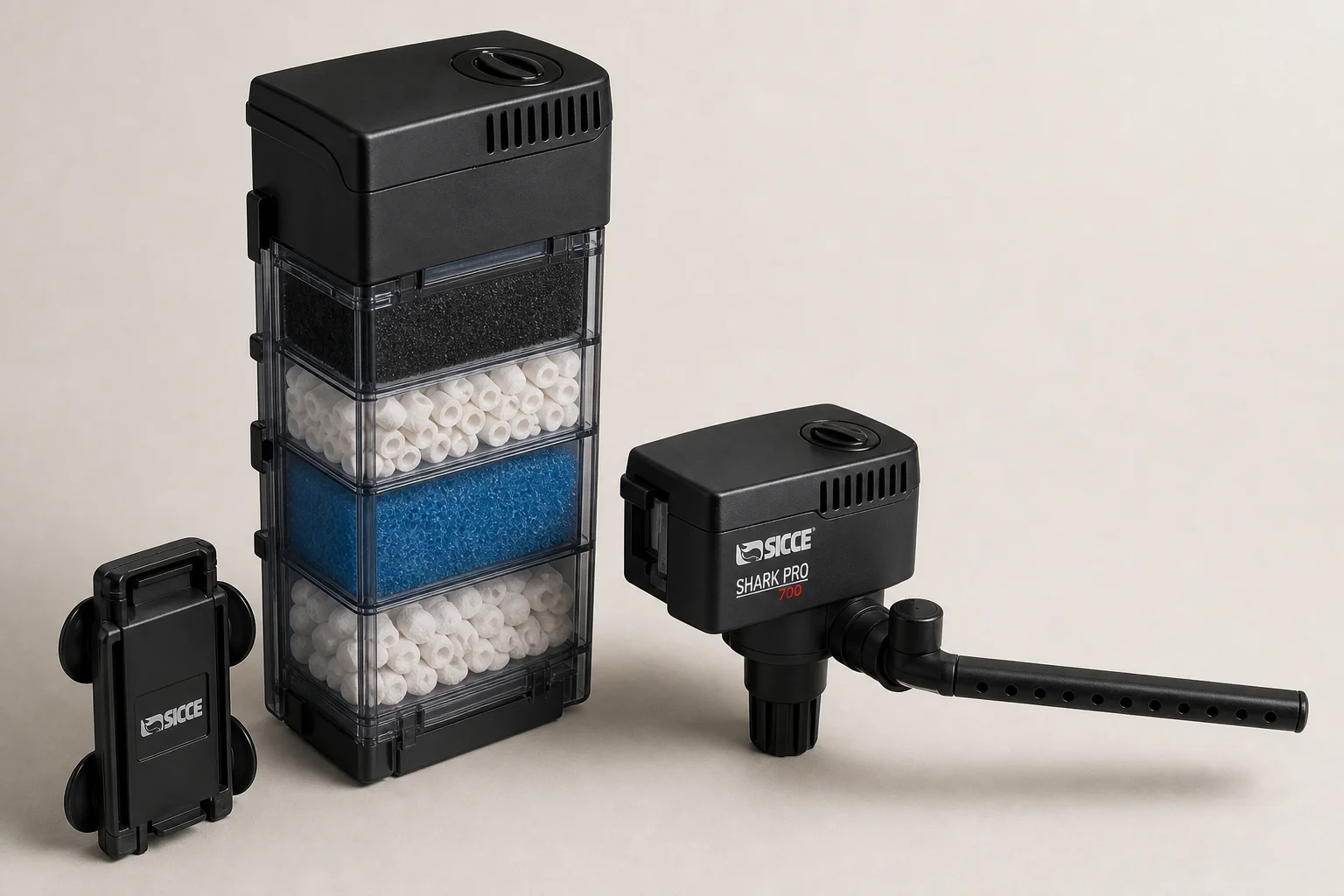
Sicce Shark Pro Internal Filter Review: A Practical Alternative to External Filters
The Sicce Shark Pro challenges the case for external-only setups with modular media options, flexible outflow, and magnetic mounting that most internal filters lack.
Aquarium Filters
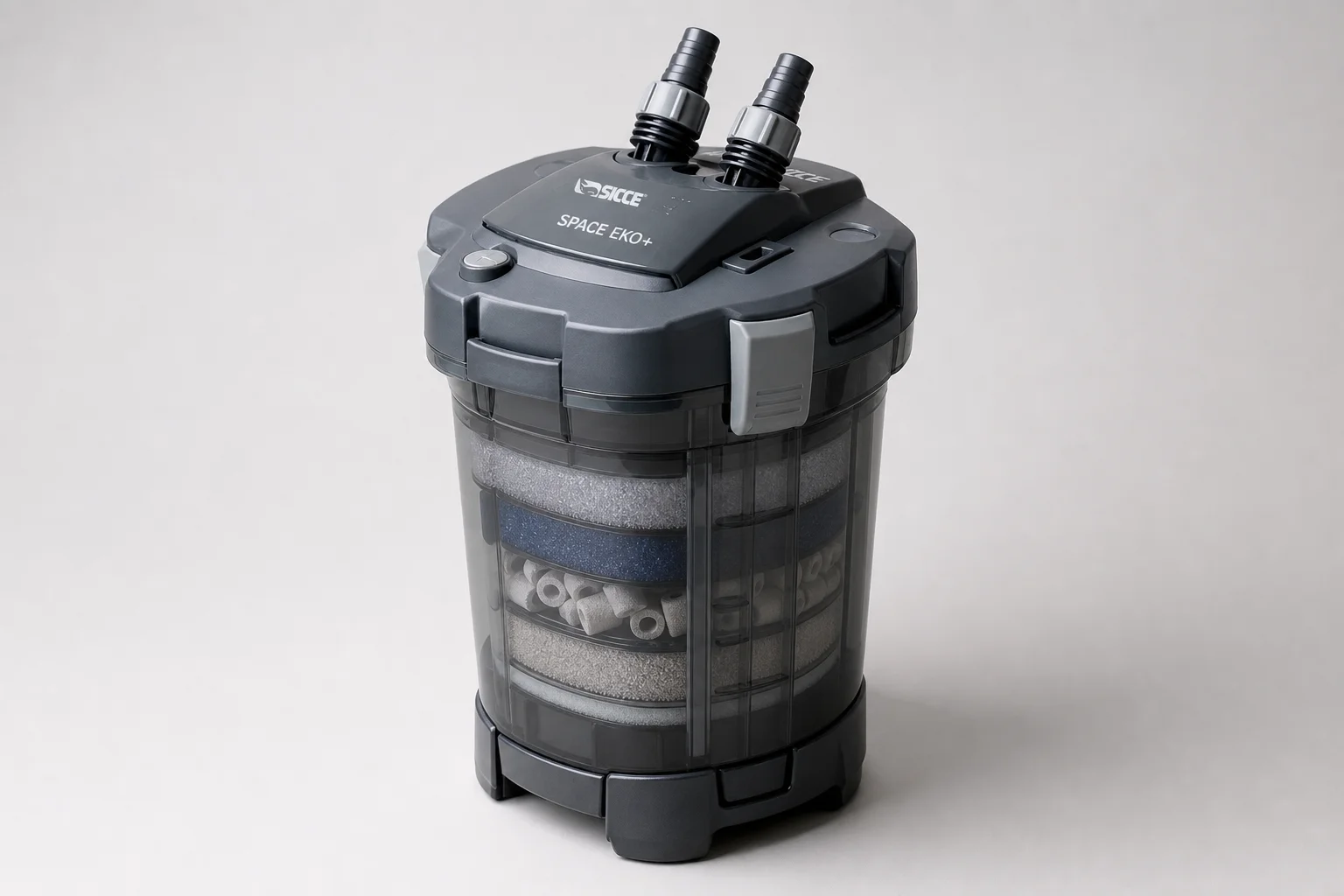
Sicce Space EKO+ Canister Filter Review: A Practical Tool for Reef Aquariums
The Sicce Space EKO+ offers saltwater aquarists a versatile canister filter solution for media reactors, water polishing, and supplemental filtration with built-in pump and user-friendly maintenance.