Cookware
HexClad vs Henckels HXagon Cookware: Head-to-Head Performance Test
We tested HexClad and Henckels HXagon hybrid pans side by side across cooking, heat retention, and induction performance to see if the price difference is justified.
Introduction
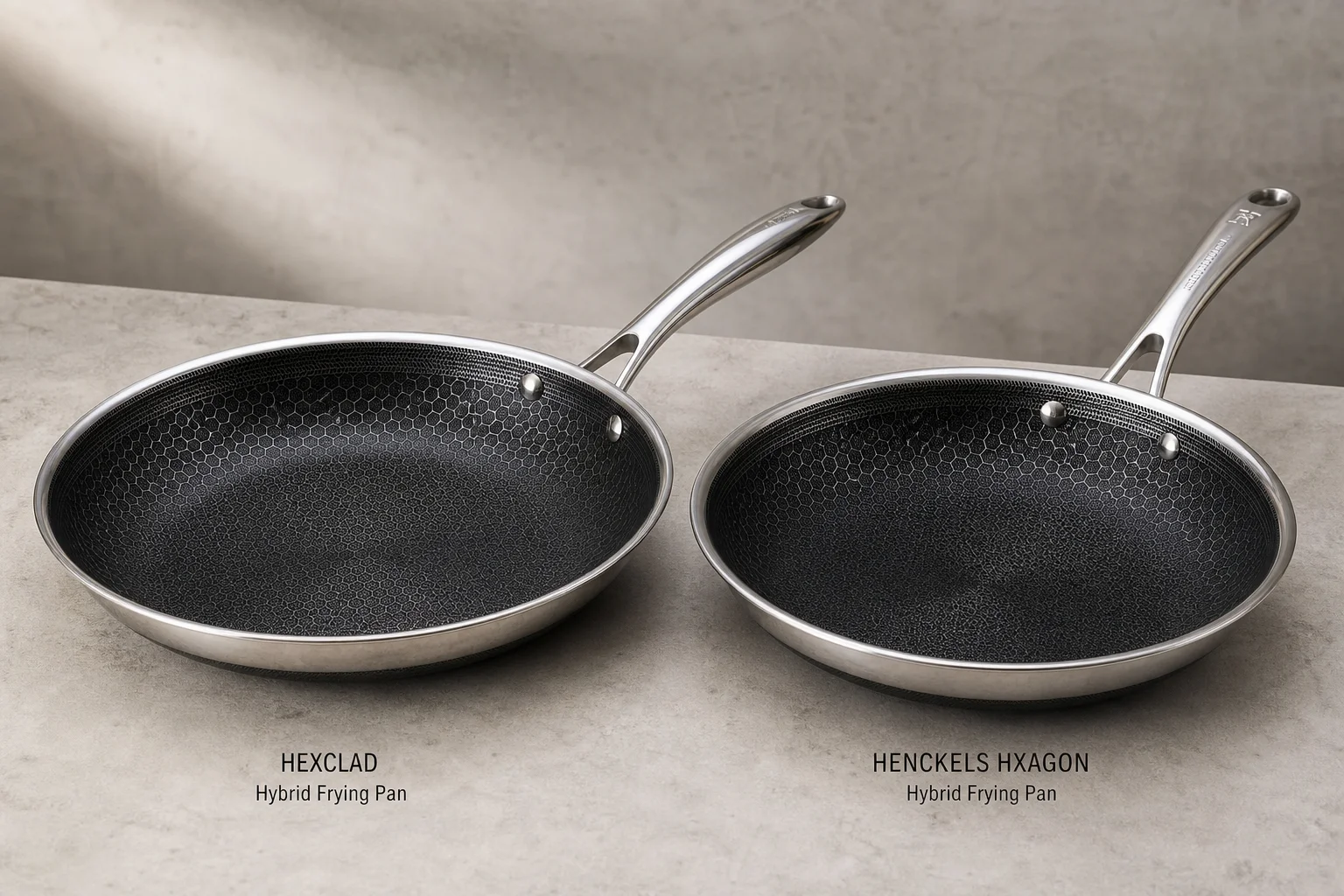
HexClad and Henckels HXagon are both hybrid cookware options that combine raised stainless steel hexagons with non-stick valleys on the cooking surface. The key question for shoppers is whether HexClad’s significantly higher price tag reflects genuinely better performance, or if Henckels HXagon delivers comparable results at a fraction of the cost. We tested both pans across cooking tasks, heat behavior, and practical design to find out.
Cooking Performance: Eggs and Pancakes
Both pans require a greased surface to cook delicate foods effectively. When we tested eggs without oil or butter, they stuck to both pans and fell apart when moved, because the raised hexagonal pattern interrupts the smoothness of traditional non-stick surfaces. Once we added oil and butter, the eggs released cleanly from both pans.
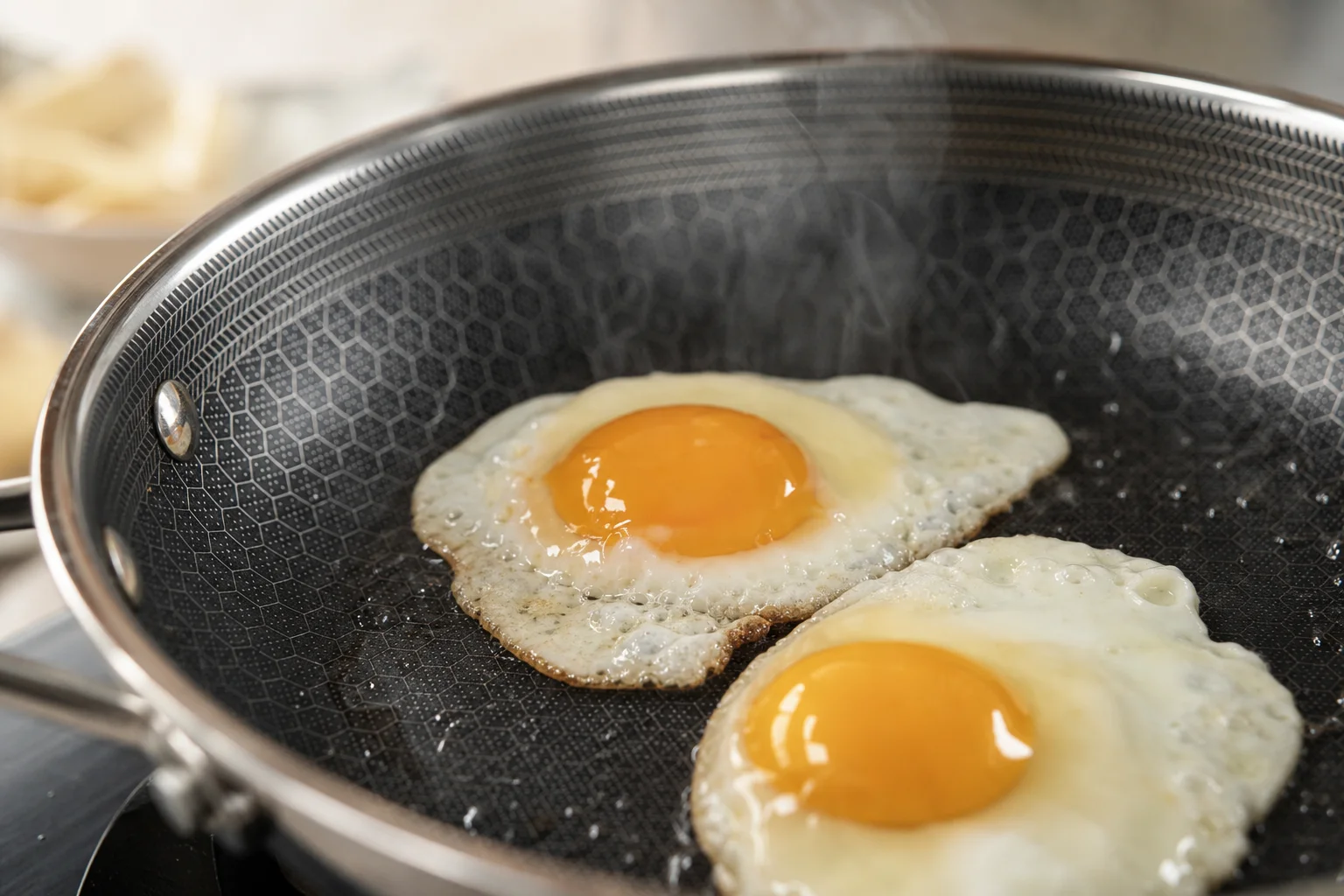
The Henckels HXagon pan heated noticeably faster than the HexClad. With both burners set to the same level, the egg in the Henckels pan cooked faster and developed a crispier exterior. This pattern continued with pancakes: the Henckels pan heated faster, and the pancakes showed more browning when flipped, while both pans distributed heat evenly and released the food without sticking.
Searing and Browning: Chicken and Burgers
When we cooked chicken thighs, the Henckels pan again showed faster initial heating. On the first flip, the chicken in the Henckels pan was significantly browner. However, the HexClad piece also developed good color and appeared to cook more evenly. After a second flip and finishing in the oven with barbecue sauce, both pans browned the meat evenly with no noticeable difference in the final result.
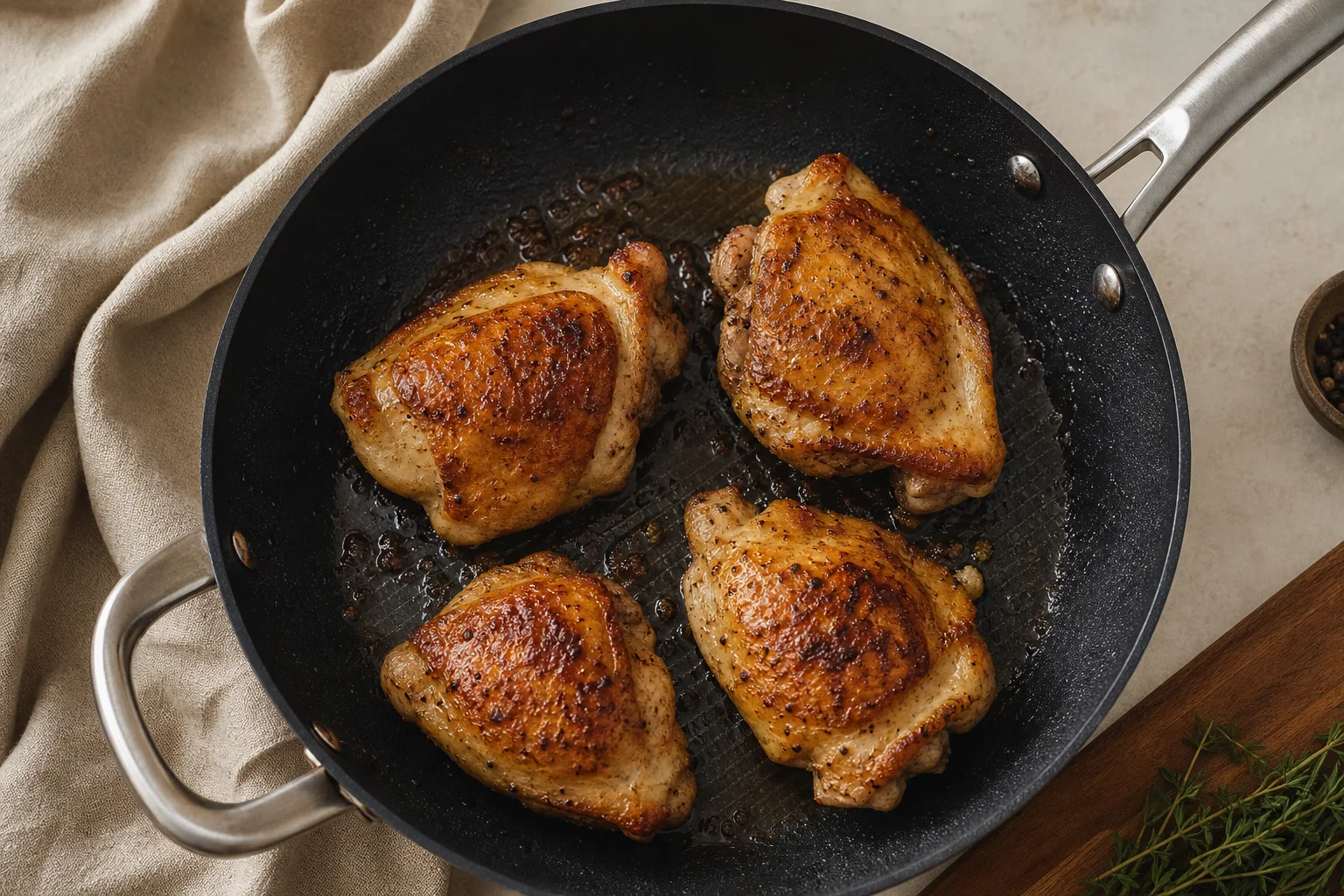
For burgers, the first sear was nearly identical on both pans, with both forming a good crust. After the second flip, the Henckels burger showed slightly lighter searing, though both burgers cooked evenly and browned nicely overall. The performance difference was minor.
Heat Conduction and Retention Tests
To measure how quickly these pans heat and how well they maintain temperature, we conducted controlled experiments. We poured two cups of cold water (starting at 55°F) into each pan and heated them on the highest electric burner setting.
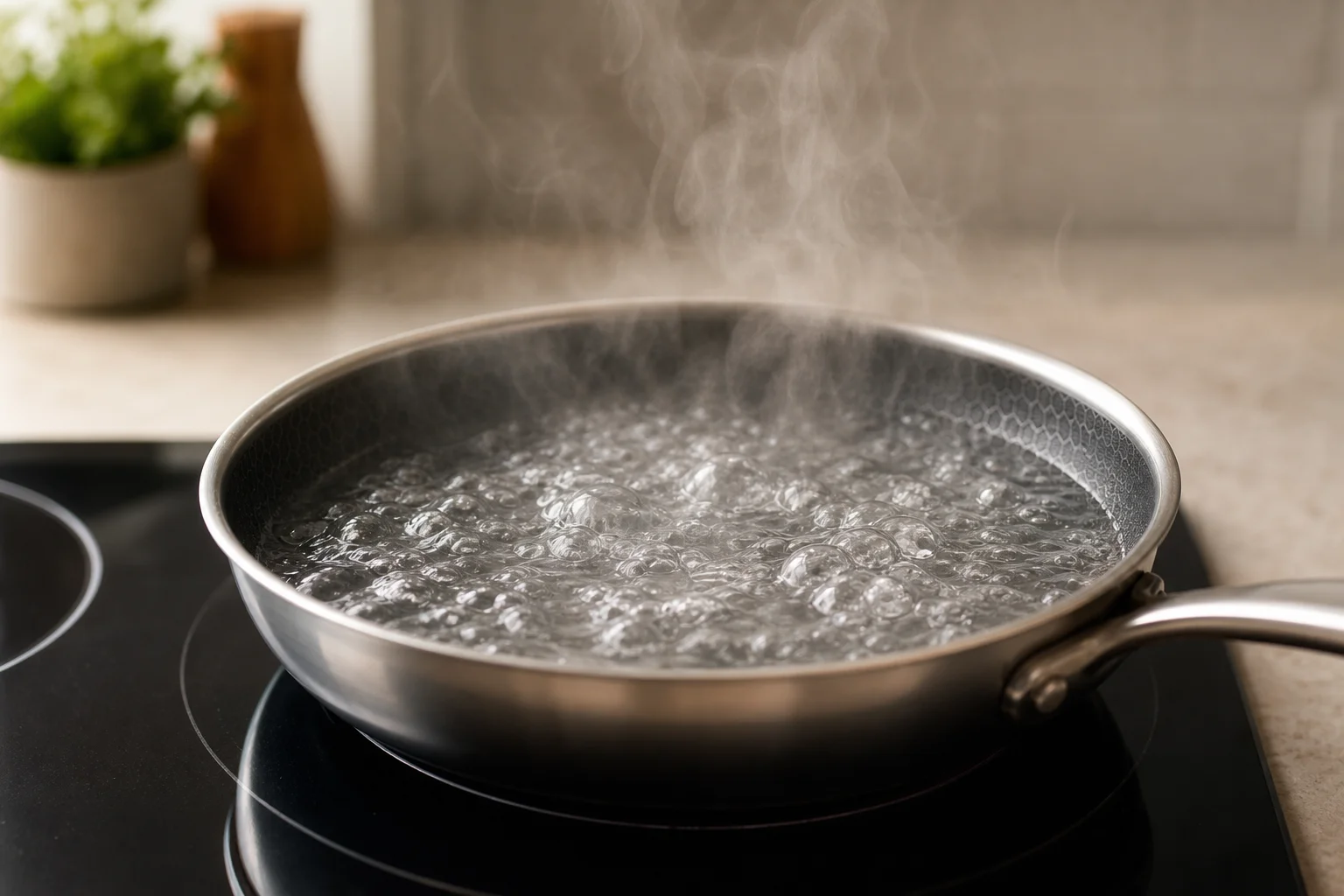
The Henckels water reached boiling at 2 minutes 19 seconds, while the HexClad water boiled at 2 minutes 30 seconds. After removing from heat, the temperature gap widened: at five minutes, Henckels was 113°F while HexClad was 120°F. At ten minutes, Henckels had cooled to 96°F and HexClad to 102°F. This difference reflects the construction: HexClad pans are 3 mm thick, while Henckels pans are 2.4 mm thick. Thicker pans heat more slowly but retain heat better.
On induction cooktops, the behavior reversed. Using 8-inch pans side by side at 248°F, the HexClad water began bubbling first at around 2 minutes 10 seconds. By 5 minutes 30 seconds, HexClad reached a full boil while Henckels was still simmering. The takeaway: Henckels pans heat faster on traditional electric and gas cooktops but cool faster, requiring closer attention to avoid overcooking. HexClad pans heat slower on conventional cooktops but maintain steadier temperatures and perform better on induction.
Design and Construction Differences
Both pans feature rounded handles that fork at the end to disperse heat, but Henckels handles angle higher and are half an inch longer, with a logo and thumb indentation. HexClad handles are smooth and level with the pan rim. The higher angle and extra length on Henckels handles keep your hand further from the heat, which many users prefer.
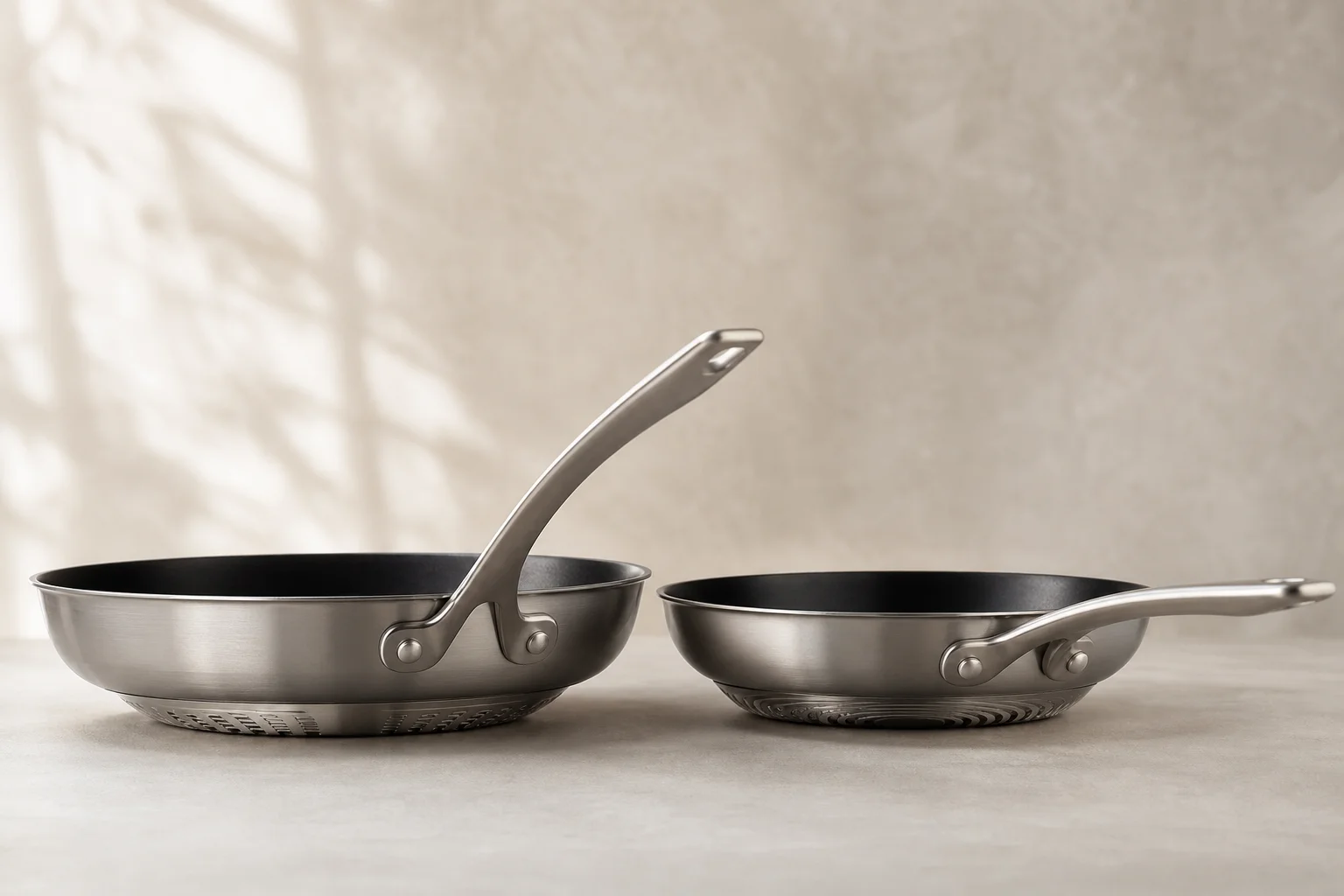
The cooking surfaces differ in steel-to-non-stick ratio: Henckels pans have more stainless steel coverage, though this did not noticeably affect stickiness during testing. HexClad rivets are flatter, while Henckels rivets protrude more and can trap oil and food, making them slightly harder to clean.
The pan bottoms show the most practical difference. HexClad extends the hexagonal pattern to the bottom, making cleanup easier. Henckels pans have polished steel bottoms, which are prone to staining and discoloration over time and may require occasional cleaning with products like Bar Keepers Friend. One user reported that HexClad’s raised hexagon pattern scratched their glass cooktop, though this appears rare based on broader review data.
Price and Value Consideration
HexClad’s 12-inch frying pan costs $179, while Henckels’ 3-piece set (8, 10, and 12-inch pans) costs $87 at Costco. Based on testing, the performance differences do not justify paying more than twice as much for HexClad. Both pans heat evenly, release food without sticking, and sear meat well. Henckels’ longer handles and smooth steel bottoms are practical advantages that reduce maintenance concerns.
HexClad does offer established market presence and proven durability from years of customer use, which some shoppers value. Henckels HXagon is newer, and while the hybrid design should extend its lifespan compared to traditional non-stick cookware, the thinner construction may be more prone to warping over time.
Conclusion
For most home cooks, Henckels HXagon cookware delivers comparable performance to HexClad at a significantly lower price. The faster heating on conventional cooktops requires slightly more attention, but the longer handles and easier-to-maintain steel bottoms offset this trade-off. If you have an induction cooktop or prefer maximum heat retention and temperature stability, HexClad’s advantages become more relevant. Otherwise, Henckels represents better value without meaningful compromises in everyday cooking results.
Product link
View more details for Henckels HXagon Cookware
This product is mentioned in the review. Check the specifications, options, and compatibility before buying.
View more details for Henckels HXagon CookwareFurther reading
Related Reviews
Cookware
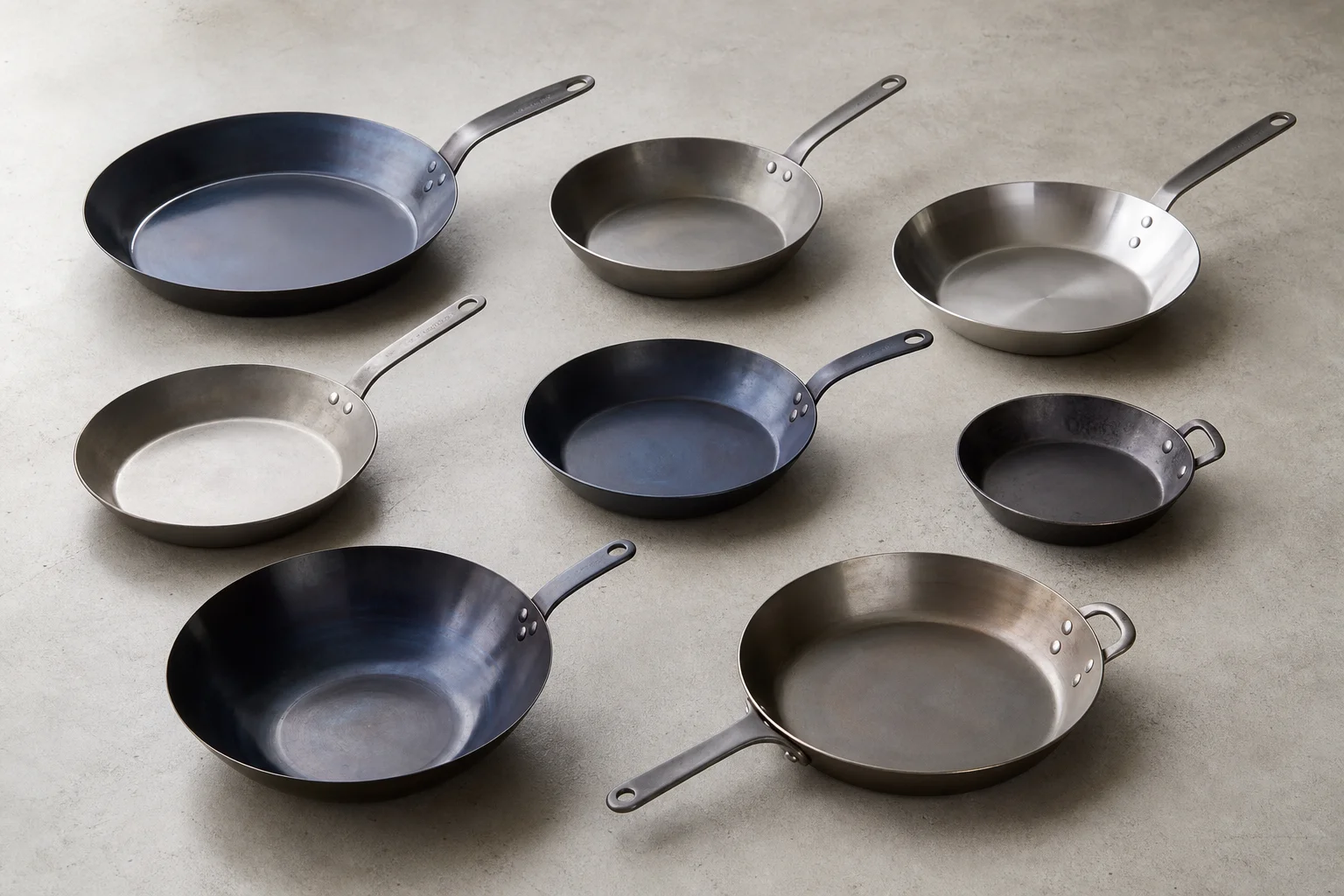
Best Carbon Steel Pans Tested: Which Brands Deliver Real Value
We tested eight popular carbon steel pans with controlled durability, heat, and cooking tests. Here's which ones perform best and which to avoid.
Cookware
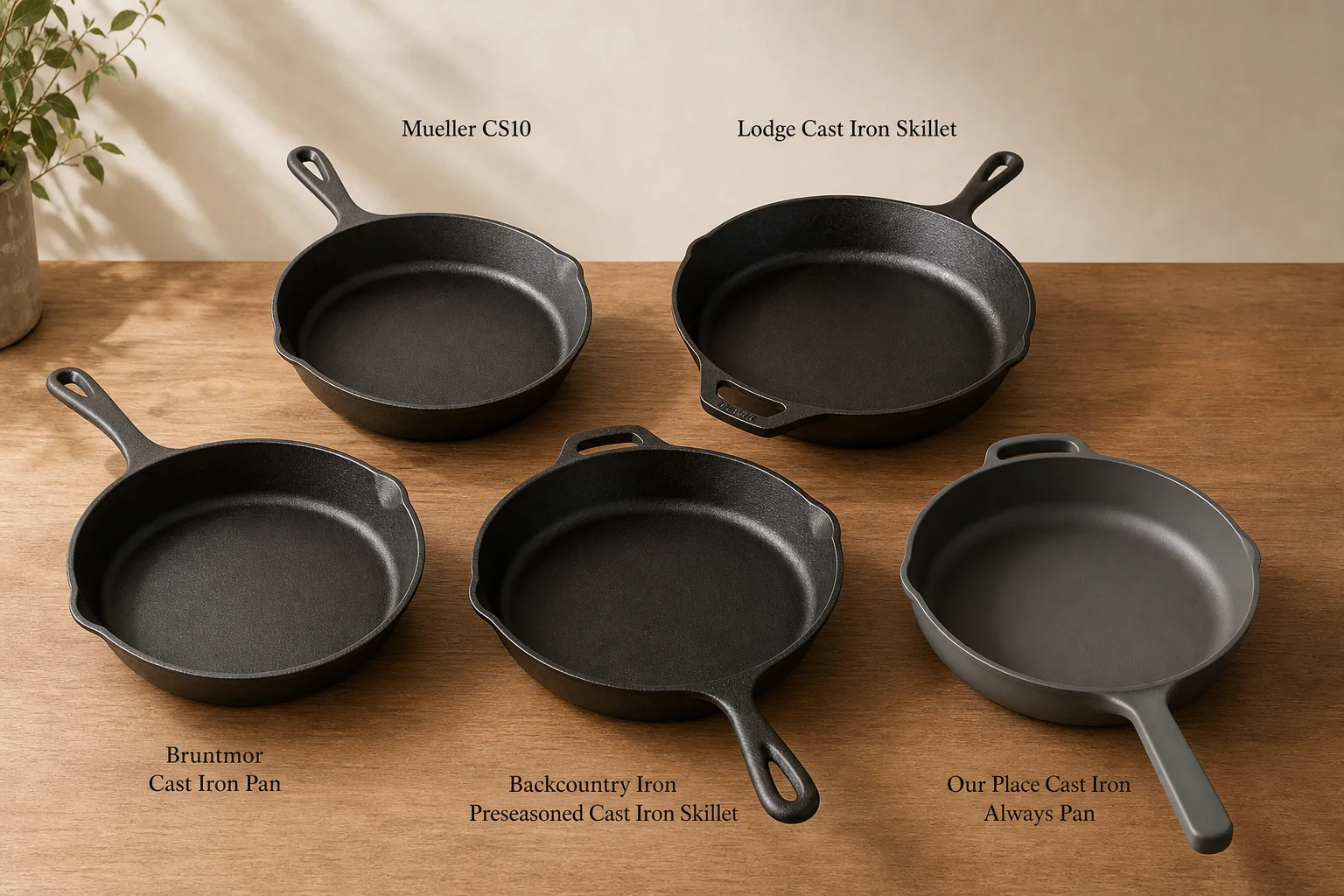
Best Cast Iron Pans 2026: Five Options from Budget to Premium
A practical breakdown of five cast iron skillets, from affordable Mueller to premium Our Place, with clear strengths and trade-offs for different cooking needs.
Cookware
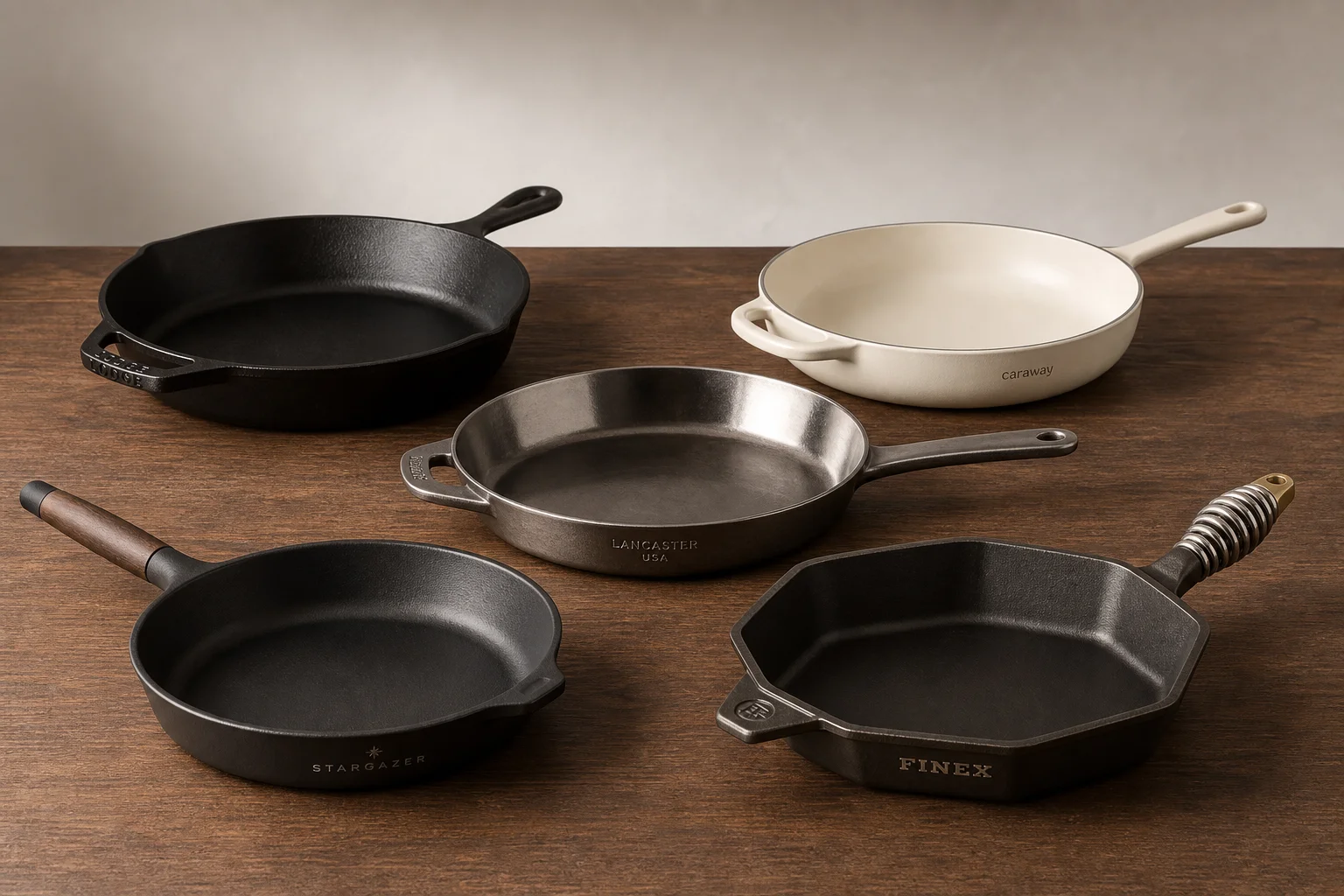
Best Cast Iron Skillets: Five Options for Every Kitchen
A comprehensive guide to five cast iron skillets, from budget-friendly classics to premium handcrafted options, each with distinct strengths and use cases.