Aircraft
Icon A5 Amphibious Aircraft Review: Adventure Aviation Redefined
The Icon A5 combines sleek design, accessible controls, and water-landing capability in a three-hundred-thousand-dollar light sport aircraft built for explorers and adventure seekers.
Introduction
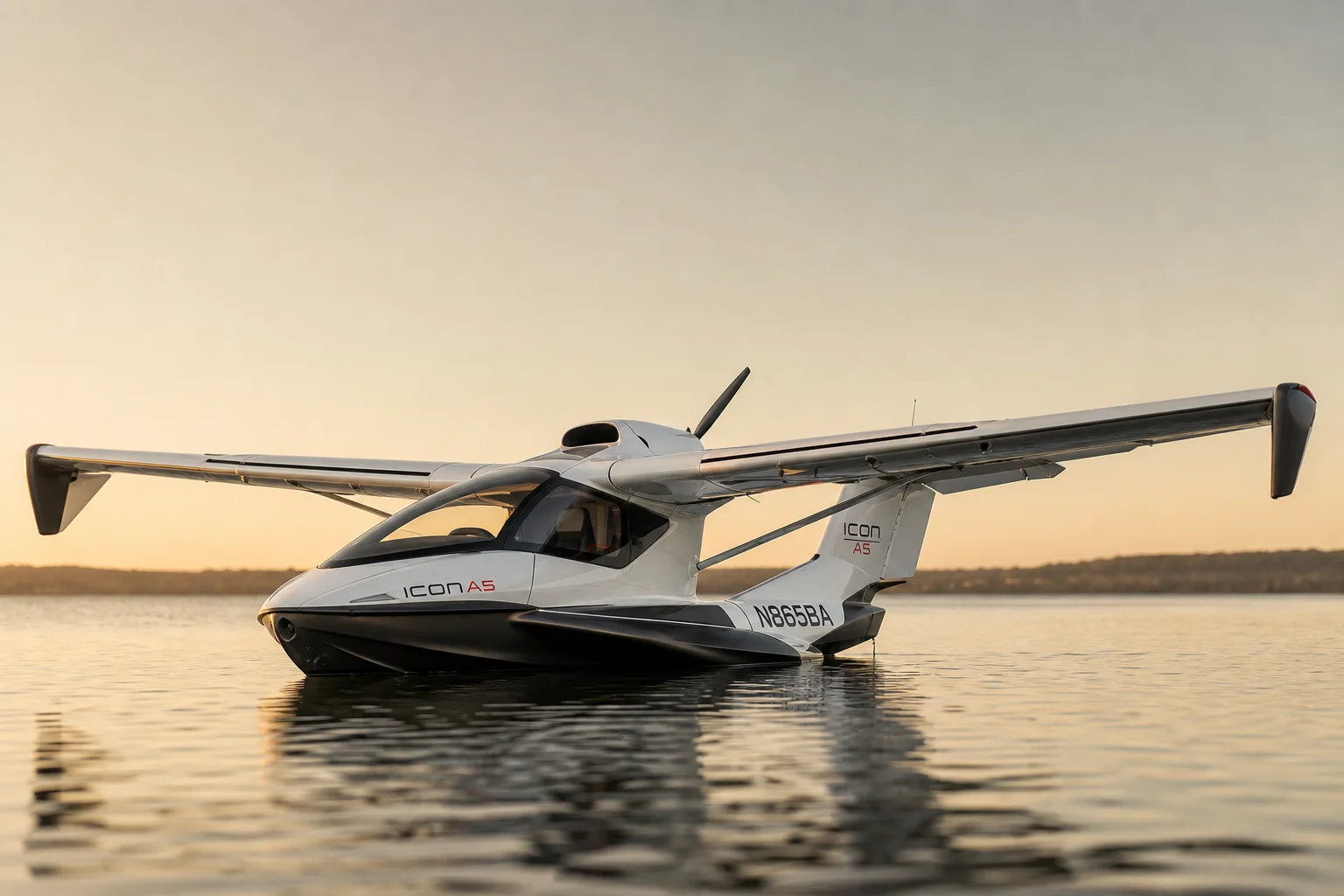
The Icon A5 represents a fundamental shift in personal aviation. At approximately three hundred thousand dollars, this amphibious light sport aircraft delivers a combination of accessibility, adventure capability, and thoughtful engineering that appeals to both seasoned pilots and newcomers to aviation. Rather than chasing raw speed or altitude records, the A5 prioritizes the experience of flight itself, enabling pilots to land on remote beaches, cruise low over lakes, and explore terrain that traditional aircraft cannot reach.
Design and Build Quality
The Icon A5’s exterior immediately signals its purpose. The aircraft measures twenty-three feet in length with a thirty-four-foot wingspan, yet every dimension serves a practical function. The fuselage and major structural components are constructed from carbon fiber, delivering exceptional strength-to-weight performance without the bulk of conventional aircraft materials.
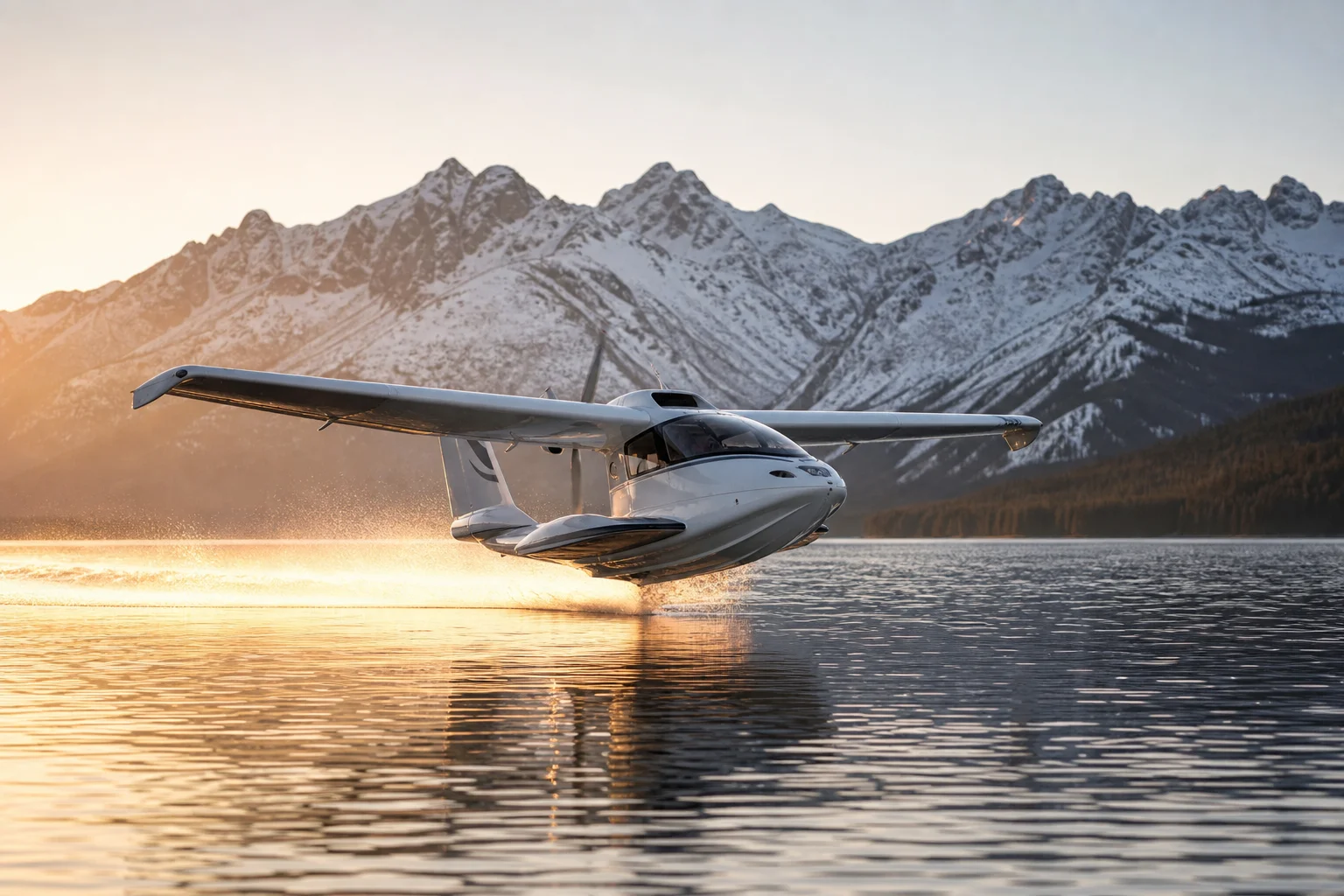
One of the A5’s most innovative features is its foldable wing design. Rather than requiring a dedicated hangar, owners can tow the aircraft on a standard trailer or store it in a garage-sized space. This accessibility fundamentally changes the ownership experience, eliminating one of the largest ongoing costs and logistical challenges of aircraft ownership. The twin-tipped winglets enhance stability during flight, particularly over water, while the retractable landing gear allows the A5 to operate from both solid ground and water surfaces. The V-shaped hull is engineered to cut through waves smoothly, enabling both takeoff and landing on water with minimal turbulence.
Cockpit and Interior
Inside, the Icon A5 prioritizes accessibility and enjoyment. The bubble canopy wraps around the cockpit, providing nearly 360-degree visibility that transforms the flying experience. The side-by-side seating arrangement accommodates two occupants and delivers a genuine co-pilot experience rather than a pilot-plus-passenger dynamic.

The seats feature high-quality, weather-resistant leather and substantial padding, reflecting the aircraft’s design philosophy of combining comfort with durability. Because the A5 is built for outdoor adventure, the cockpit components withstand exposure to the elements. At lower speeds, pilots can open the canopy to experience the open-air sensation of a convertible, adding another dimension to the flying experience.
Avionics and Technology
The Icon A5 is equipped with a seven-inch Garmin G3X touchscreen display that presents essential flight information including airspeed, altitude, and navigation data. The interface mimics smartphone design principles, making it intuitive for both experienced aviators and newcomers.
A standout safety feature is the Angle of Attack indicator, rarely included in light sport aircraft. This instrument displays the angle at which air flows over the wings, helping pilots maintain controlled flight and prevent stalls. The inclusion of this technology reflects Icon’s commitment to making flight safer and more accessible.
The Ballistic Recovery System provides an additional safety layer. In the event of a major emergency, pilots can deploy the aircraft’s parachute system with a single lever pull, allowing the entire aircraft to descend gently to the ground. This feature appeals particularly to pilots flying over unfamiliar or remote terrain where traditional emergency landing options may be limited.
Performance and Handling
The Icon A5 is powered by a one-hundred-horsepower Rotax 912 iS engine, capable of reaching speeds up to one hundred nine miles per hour. This performance envelope is deliberately modest, as the A5 prioritizes efficiency and experience over speed. The engine consumes only four gallons of fuel per hour, and with a twenty-gallon tank capacity, the aircraft achieves a range of approximately four hundred fifty miles.
Takeoff and landing distances are remarkably short. The A5 requires just six hundred seventy feet on land and approximately eight hundred feet on water to become airborne. This capability opens access to short runways and remote water bodies that larger aircraft cannot reach. Water landings are particularly engaging, with the V-shaped hull gliding smoothly onto the surface and bringing the aircraft to a gentle stop.
In flight, the A5 exhibits excellent stability and responsive controls. The high wing placement ensures unobstructed views, making it ideal for sightseeing and low-altitude exploration. Pilots consistently report that the aircraft feels intuitive and forgiving, characteristics that make it accessible to less experienced aviators.
Safety Features and Reliability
Safety is a defining characteristic of the Icon A5. Beyond the Angle of Attack indicator and ballistic parachute system, the airframe incorporates spin-resistant technology that makes uncontrolled spins nearly impossible. This design choice particularly benefits newer pilots or those operating at lower speeds, where accidental stalls present a genuine risk.

The Rotax engine includes Full Authority Digital Engine Control, a computer system that automates many engine functions and optimizes performance while reducing pilot workload. The aircraft also features strategically positioned emergency exits and easily accessible flotation devices, reflecting comprehensive attention to safety across both technology and physical design.
Maintenance is straightforward. The Rotax engine is renowned for reliability, and many owners report minimal maintenance issues. Icon designed the A5 with easily accessible components and a simple engine architecture that requires less upkeep than traditional aircraft powerplants. Because the A5 falls under the Light Sport Aircraft category, regulatory requirements are less stringent than for larger aircraft, and pilots need only a Sport Pilot license to operate it legally.
Operating Costs and Ownership
At three hundred thousand dollars, the Icon A5 sits within reach of aviation enthusiasts and serious hobbyists. Operating costs are notably lower than comparable aircraft, with fuel and maintenance expenses remaining affordable. This cost structure makes frequent flying practical for owners who want to maximize their investment.
The A5 is not typically available for charter or rental due to its specialized market position. Most owners view the aircraft as a lifestyle investment rather than a purely financial asset, valuing the experiences and freedom it provides over traditional return-on-investment metrics.
Conclusion
The Icon A5 redefines what personal aviation can be. Its combination of accessible controls, innovative design, water-landing capability, and thoughtful safety engineering creates an aircraft that appeals to explorers and adventure seekers rather than speed-focused aviators. For three hundred thousand dollars, the A5 delivers an experience that is genuinely difficult to replicate, enabling pilots to explore remote coastlines, pristine lakes, and landscapes that remain inaccessible to conventional aircraft. Whether you are an experienced pilot or considering your first aircraft purchase, the Icon A5 offers a unique and compelling entry point into the world of personal aviation.
Product link
View more details for Icon A5
This product is mentioned in the review. Check the specifications, options, and compatibility before buying.
View more details for Icon A5