Kitchen Appliances
Immersion Blender Comparison: Performance, Design, and Real-World Use
A detailed look at how the Vitamix immersion blender performs across hot soups, frozen smoothies, mayonnaise, almond milk, and egg whites, plus design and usability insights.
Introduction
Immersion blenders are kitchen workhorses, but performance varies significantly across different models and tasks. This review examines how the Vitamix immersion blender performs on real-world blending challenges, from hot soups to frozen smoothies, and compares its strengths and weaknesses against other popular options.
Hot Soup Purée Performance
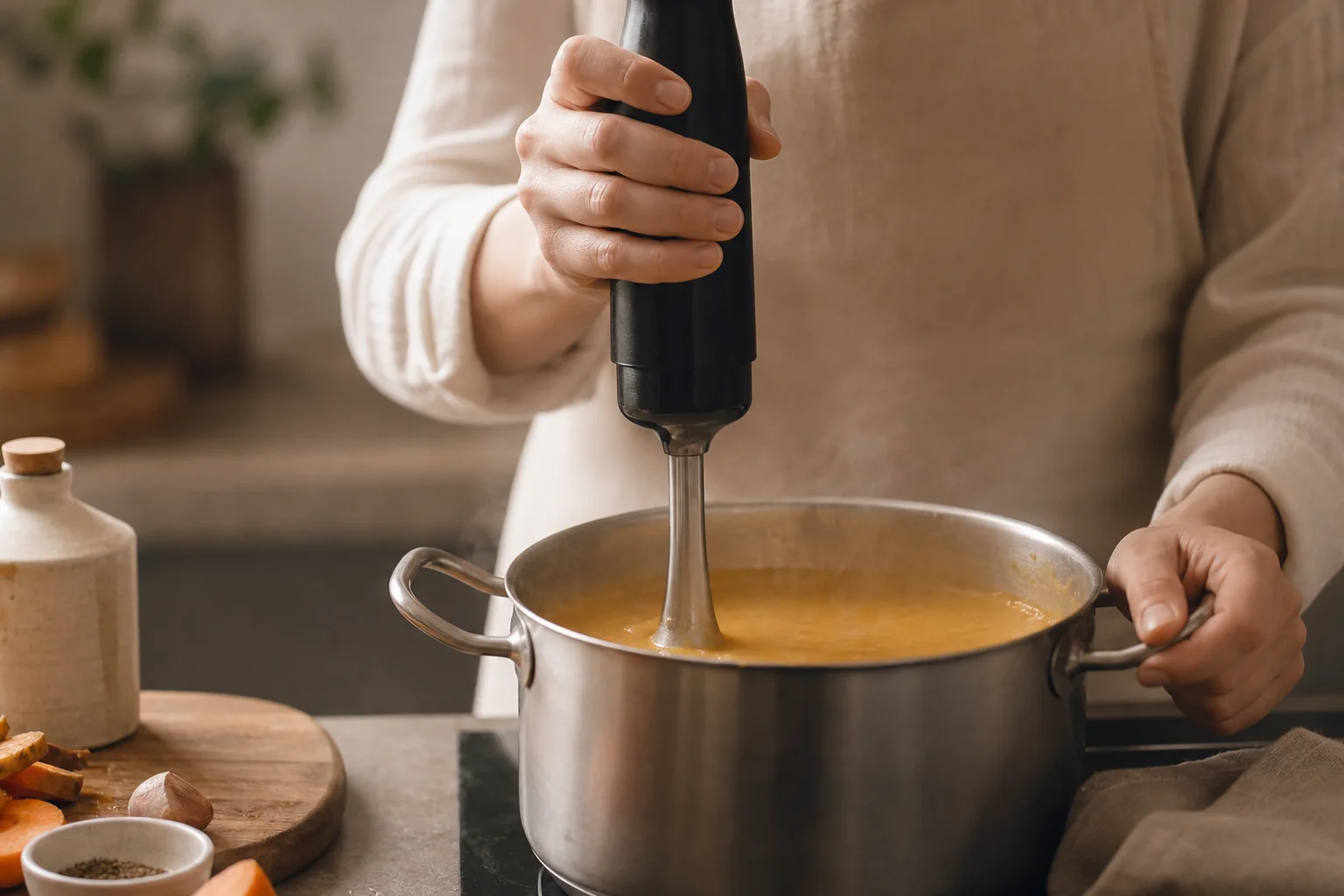
Pureeing hot soup is a fundamental test of immersion blender capability. The Vitamix handled this task with ease, thanks to its 625-watt motor and razor-sharp blades. While pureeing time matched competitors, the Vitamix delivered a noticeably silky smooth texture that stood out from the rest.
A key advantage was its non-suction performance, which kept splashing to a minimum during the blending process. This matters in practice because less splashing means safer operation and cleaner countertops. The blender earned a score of 9.5/10 for this test, reflecting strong all-around performance on a task most home cooks perform regularly.
Frozen Fruit Smoothie Results
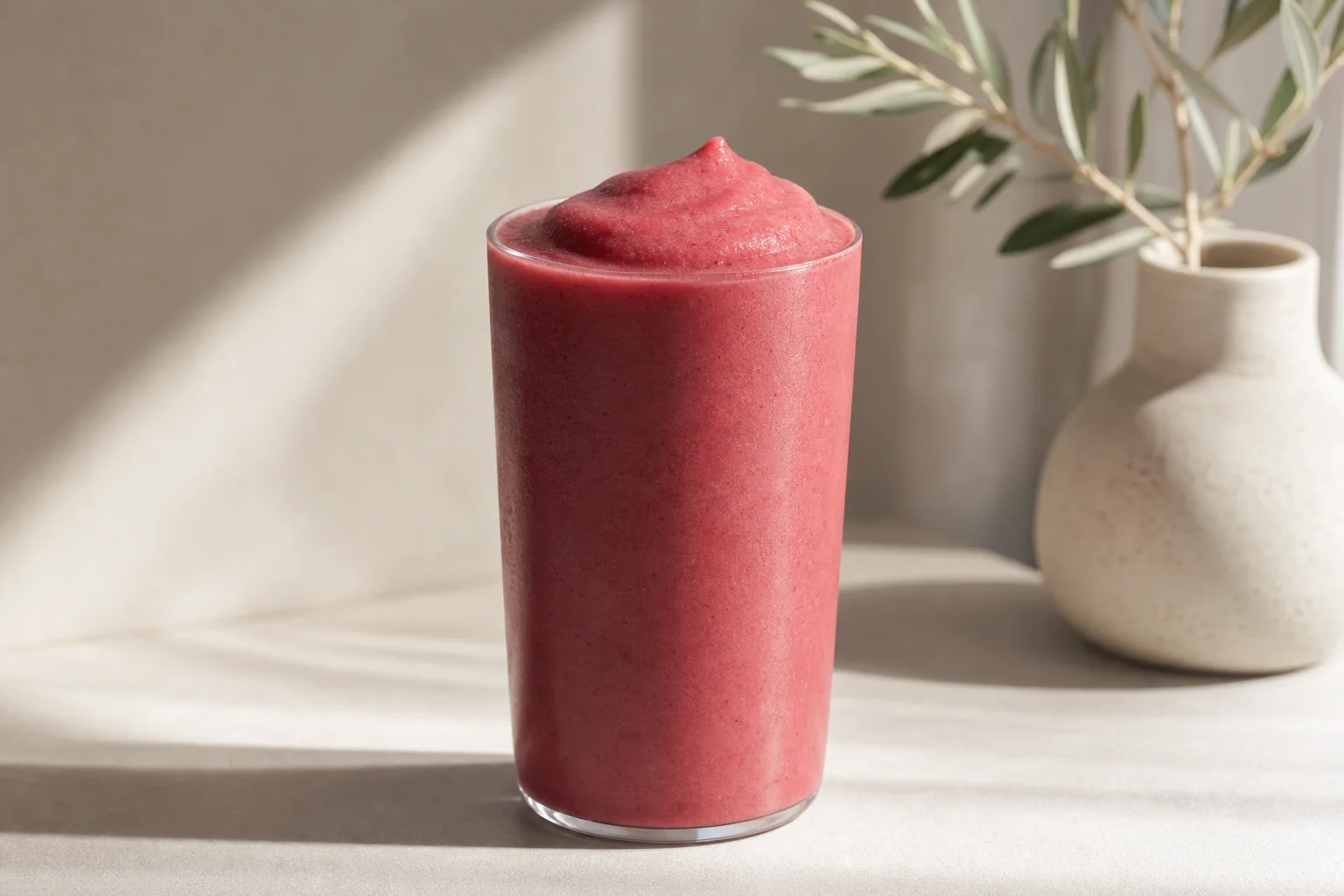
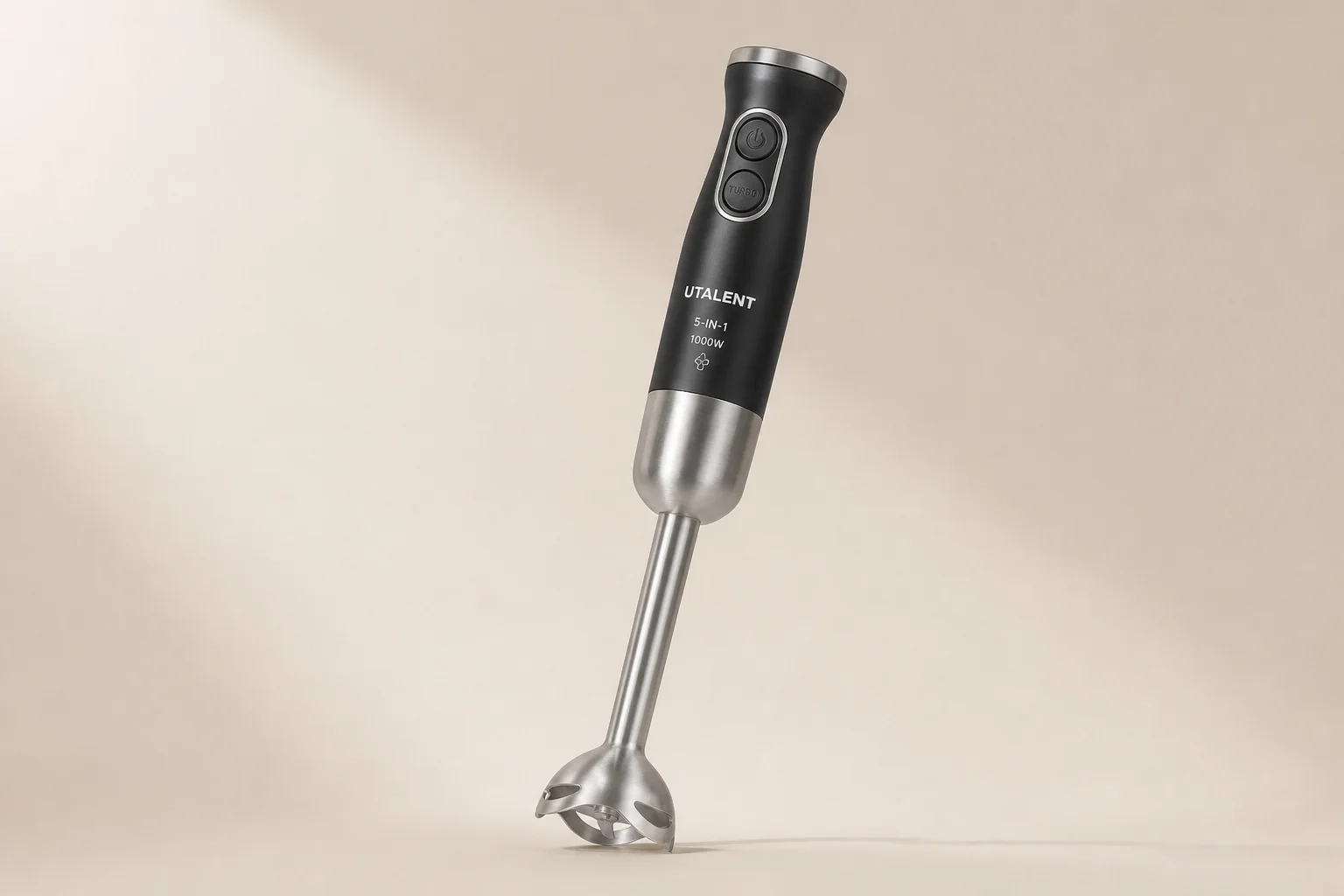
Speed and texture quality both matter when blending frozen fruit. The Vitamix completed this test in just 1 minute and 5 seconds, roughly half the time required by competitors like the UTALENT 5-in-1 and Hamilton Beach 2-speed, which needed nearly double the duration.
Texture quality was equally impressive. Among all tested blenders, only the Vitamix produced a thick, creamy smoothie with almost no solids left behind, earning an 8.8/10 score. The blender’s longer, heavier design worked well in a 24-ounce blending jar, and the BPA-free plastic bell guard prevented scratches on the jar’s surfaces during operation.
Mayonnaise and Emulsified Sauces
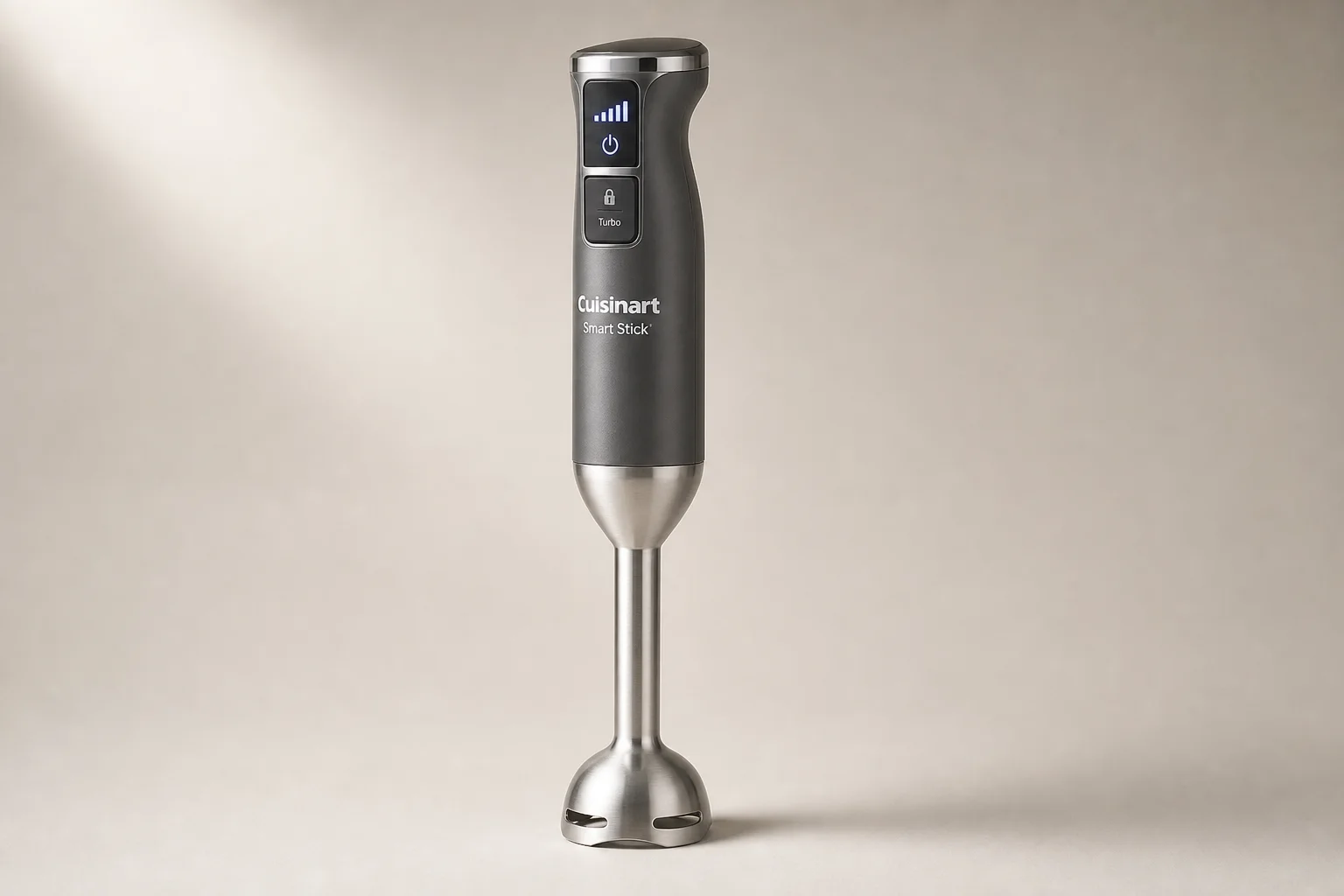
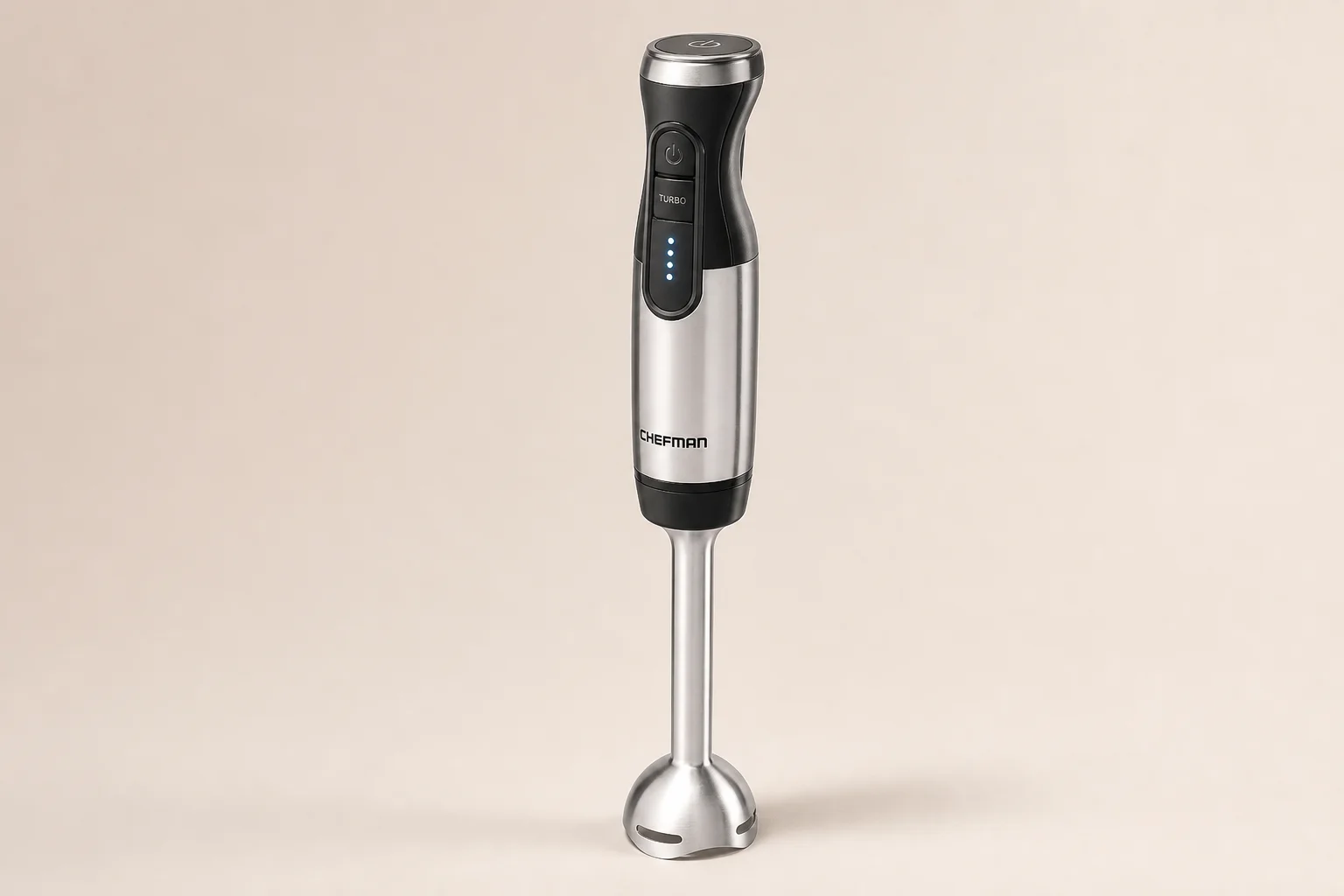
Mayonnaise preparation revealed a notable limitation. The Vitamix required approximately 1 minute and 40 seconds to incorporate all ingredients, about 30 seconds slower than faster competitors like the Cuisinart Smart Stick and Chefman Cordless. The delay occurred because as mayonnaise emulsified and thickened, the blending wand generated suction force, pulling itself against the container’s bottom and restricting movement.
This is not necessarily a deal-breaker, but it matters in practice. The blender’s relatively heavy weight means longer processing times increase hand fatigue. Despite this drawback, the Vitamix produced acceptable mayonnaise and earned a score of 8.3/10. It remains a viable alternative to a hand mixer for emulsified sauces, though extra effort may be required for ideal results.
Almond Milk Preparation
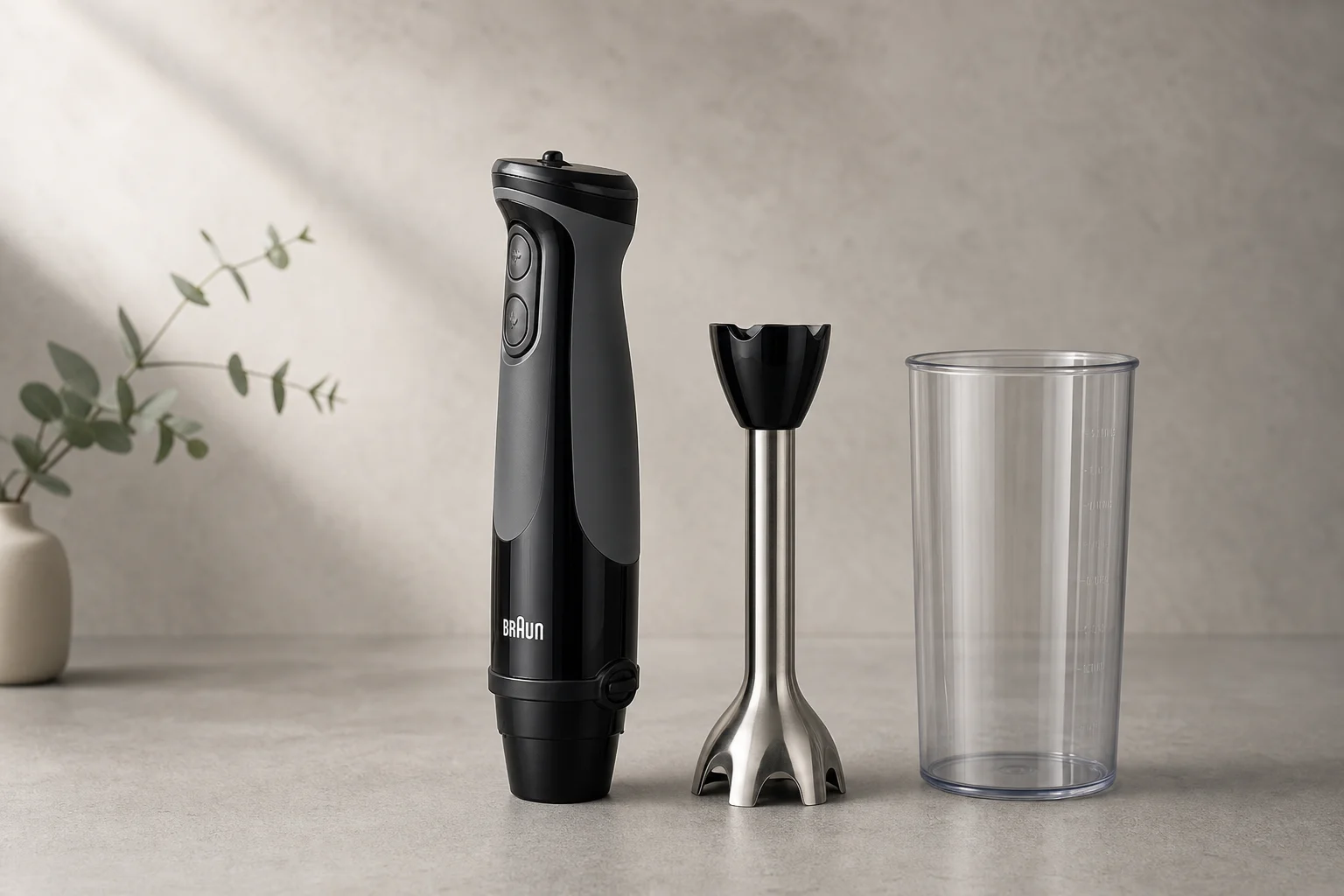
The Vitamix produced drinkable almond milk in just 40 seconds, earning a 9.3/10 score. However, the process revealed operational challenges. Almond skins and peeled chunks became lodged in the blade guard, requiring temporary stops to dislodge food with a spatula. Other models, such as the Braun MultiQuick-5, did not encounter this issue.
Additionally, the Vitamix struggled to create a consistent vortex, causing ingredients to approach overflow when speed increased. Suction problems also caused almond spatter when lifting the wand. Most of these issues could likely be avoided by using a taller or larger blending jar, suggesting that container choice significantly affects performance on this task.
Whipped Egg Whites Challenge
The Vitamix’s primary limitation emerged during egg-white whipping. Without a whisk attachment, the standard blending shaft cannot force air into egg whites effectively. Unlike a dedicated whisk, the blending shaft cannot create the even, bubbly foam that whipped egg whites require. The result was a cloudy liquid with two separate layers of bubble film and eggy water, earning no points for this test.
This limitation is significant for cooks who regularly prepare meringues, soufflés, or other egg-white-based dishes. The Vitamix is not the right tool for this task, and no amount of technique adjustment will overcome the fundamental design constraint.
Design and Build Quality
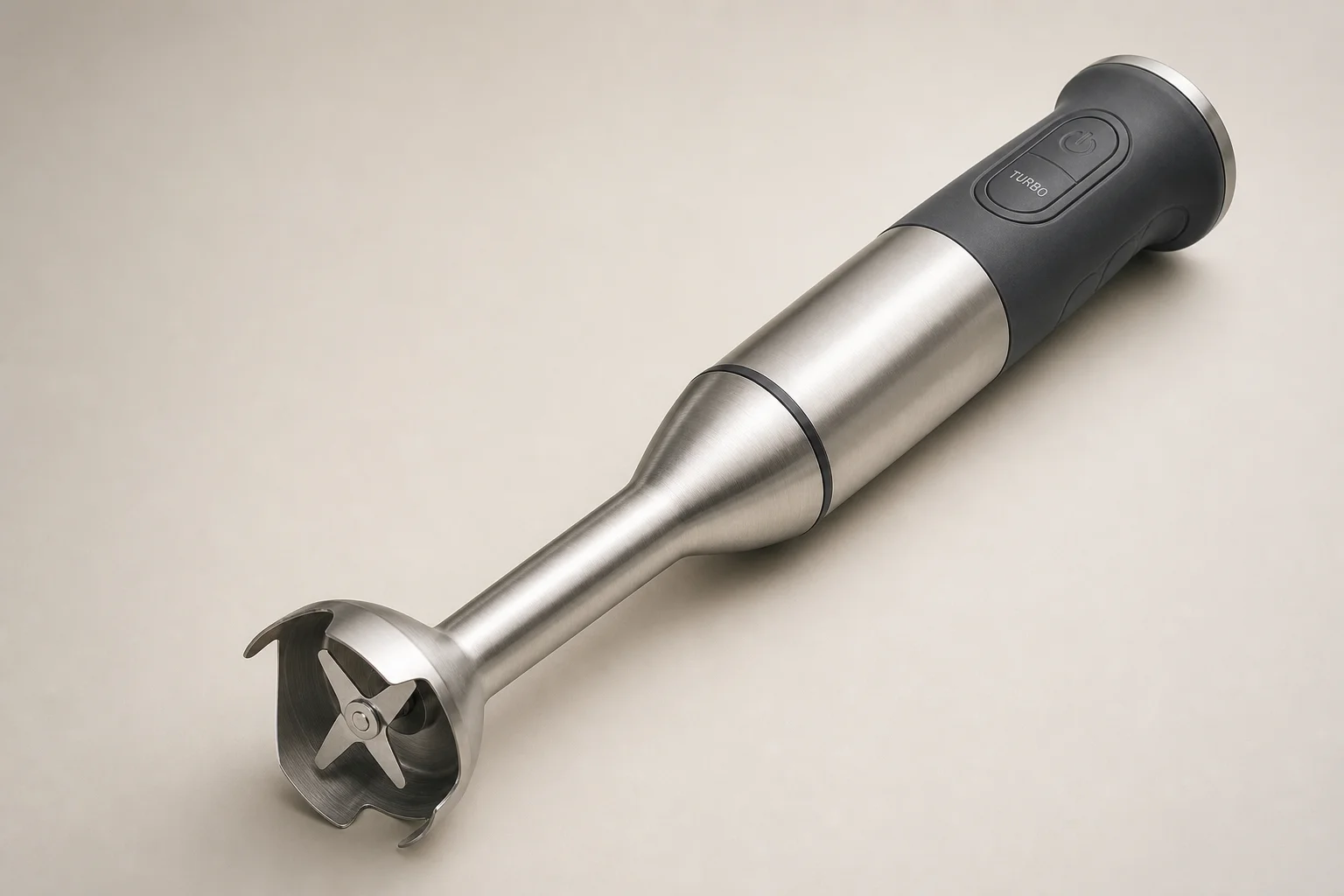
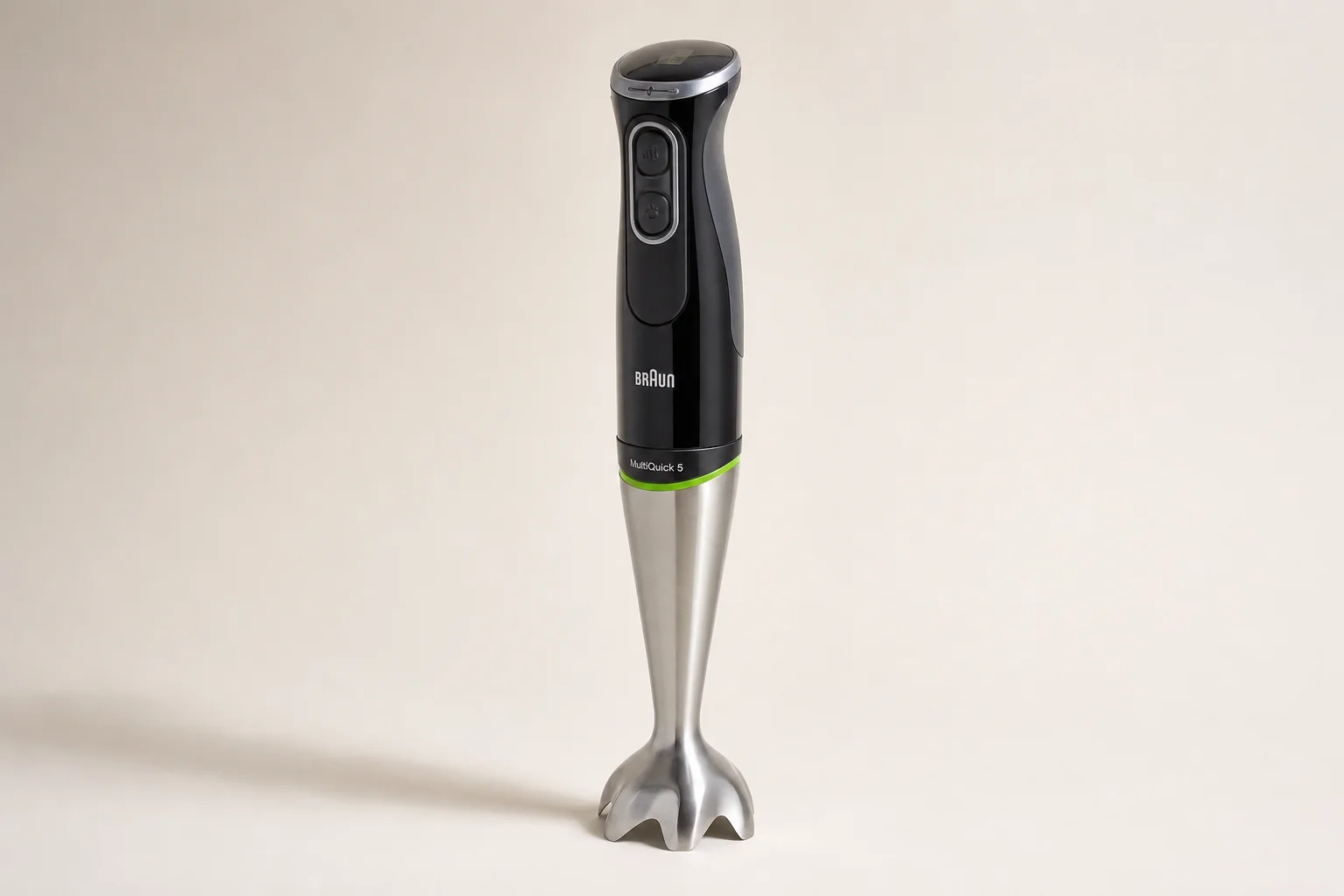
The Vitamix is constructed primarily from stainless steel, making it heavier than many competitors but more resistant to damage and wear over time. Its height allows it to reach the bottom of deep pots more easily than shorter models, a practical advantage for large-batch cooking.
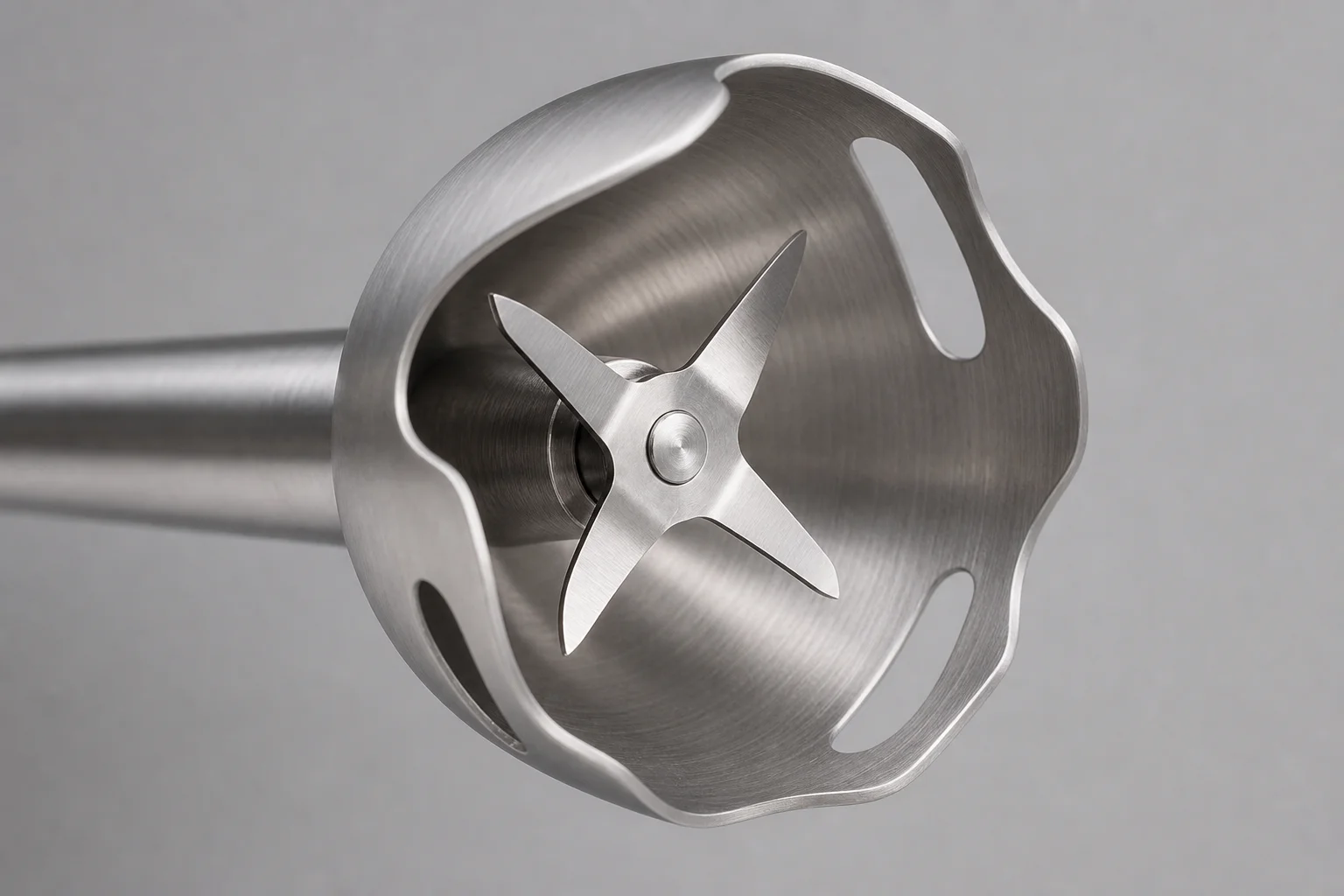
The unique 4-prong blade with a permanent bell-shaped guard efficiently reduces suction and protects cookware and container interiors. However, prolonged operation can cause blade friction to overload the motor, so continuous use should not exceed four minutes. The blender cannot prevent overheating but signals motor over-temperature through an LED pattern display.
The interface is intuitive. Five speed settings are accessible through only two buttons, requiring minimal learning curve. An LED display on top indicates current speed, and speed increases gradually rather than with the violent torque of some competitors, reducing splashing and potentially extending motor lifespan. The design earned a score of 9.1/10.
Usability and Comfort
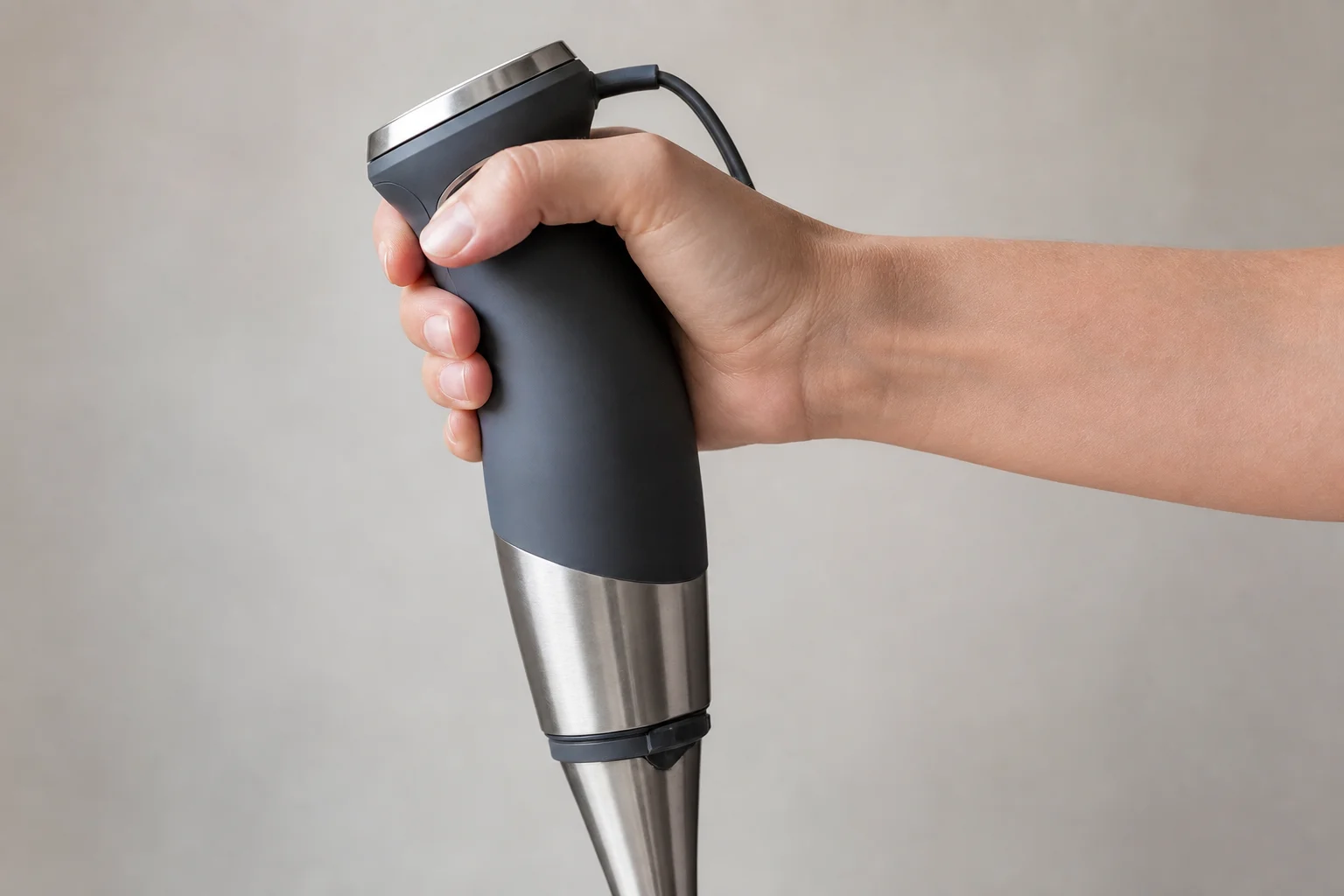
Despite its weight, the Vitamix is comfortable to hold. The ergonomically designed handle features a rubber coating that ensures a secure, comfortable grip, making it practical for processing large batches. The removable blending wand is not dishwasher-safe, but hand-cleaning is straightforward.
Blade cleaning presents the main usability challenge. The 4-pronged blade assembly is razor-sharp, requiring careful handling during cleaning, particularly on the blade backsides. This is a minor but real consideration for daily use. Overall usability scored 8.2/10.
Overall Performance Summary
Across five performance tests, the Vitamix achieved an overall score of 8.6/10. It excels at hot soup pureeing, frozen smoothie blending, and almond milk preparation. It performs acceptably on mayonnaise but is not ideal for this task. It cannot whip egg whites effectively without a whisk attachment.
The blender offers high blending performance and advanced features at an upscale price point. Its 3-year warranty is more than double what most competitors offer, reflecting confidence in durability. The Vitamix is not an all-arounder, but for cooks prioritizing performance on soups, smoothies, and nut milks, it delivers strong results.
Conclusion
The Vitamix immersion blender is a premium option that justifies its cost through superior performance on most common blending tasks. It is best suited for cooks who regularly prepare hot soups and frozen smoothies and value build quality and warranty coverage. Those who frequently whip egg whites or prioritize speed on mayonnaise should consider alternatives. For most other kitchen blending needs, the Vitamix is a reliable, long-lasting choice.
Further reading
Related Reviews
Kitchen Appliances
Arboleaf Smart Kitchen Scale Review: Connected Cooking Made Simple
A Bluetooth-enabled kitchen scale that syncs with a nutrition-tracking app, offering real-time weight monitoring and recipe guidance for home cooks.
Kitchen Appliances
Best Air Fryer Toaster Ovens: Three Top Picks for Multi-Function Cooking
Three high-performing air fryer toaster ovens tested for versatility, ease of use, and real-world cooking results. Find the right fit for your kitchen.
Kitchen Appliances
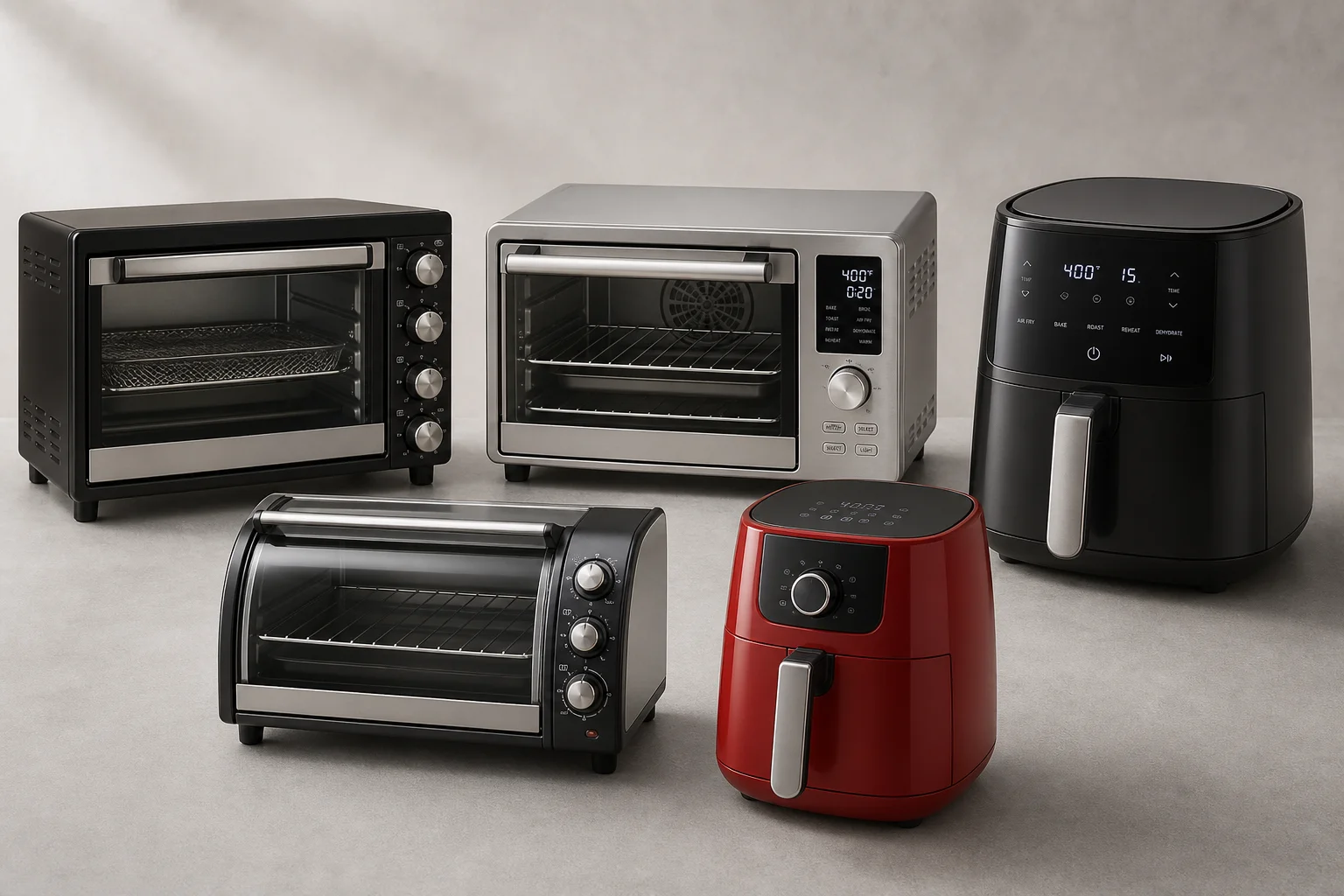
Best Air Fryer Toaster Ovens Under 100: Five Practical Options for Budget-Conscious Kitchens
Five air fryer and toaster oven combinations that deliver real cooking performance without breaking the bank, each with distinct strengths for different kitchen needs.