Coffee Gear
Outin Nano Portable Espresso Maker Review: Travel Coffee That Falls Short of Promise
The Outin Nano promises all-in-one espresso brewing with built-in heating, but temperature control issues and inconsistent extraction undermine its appeal as a travel companion.
Introduction
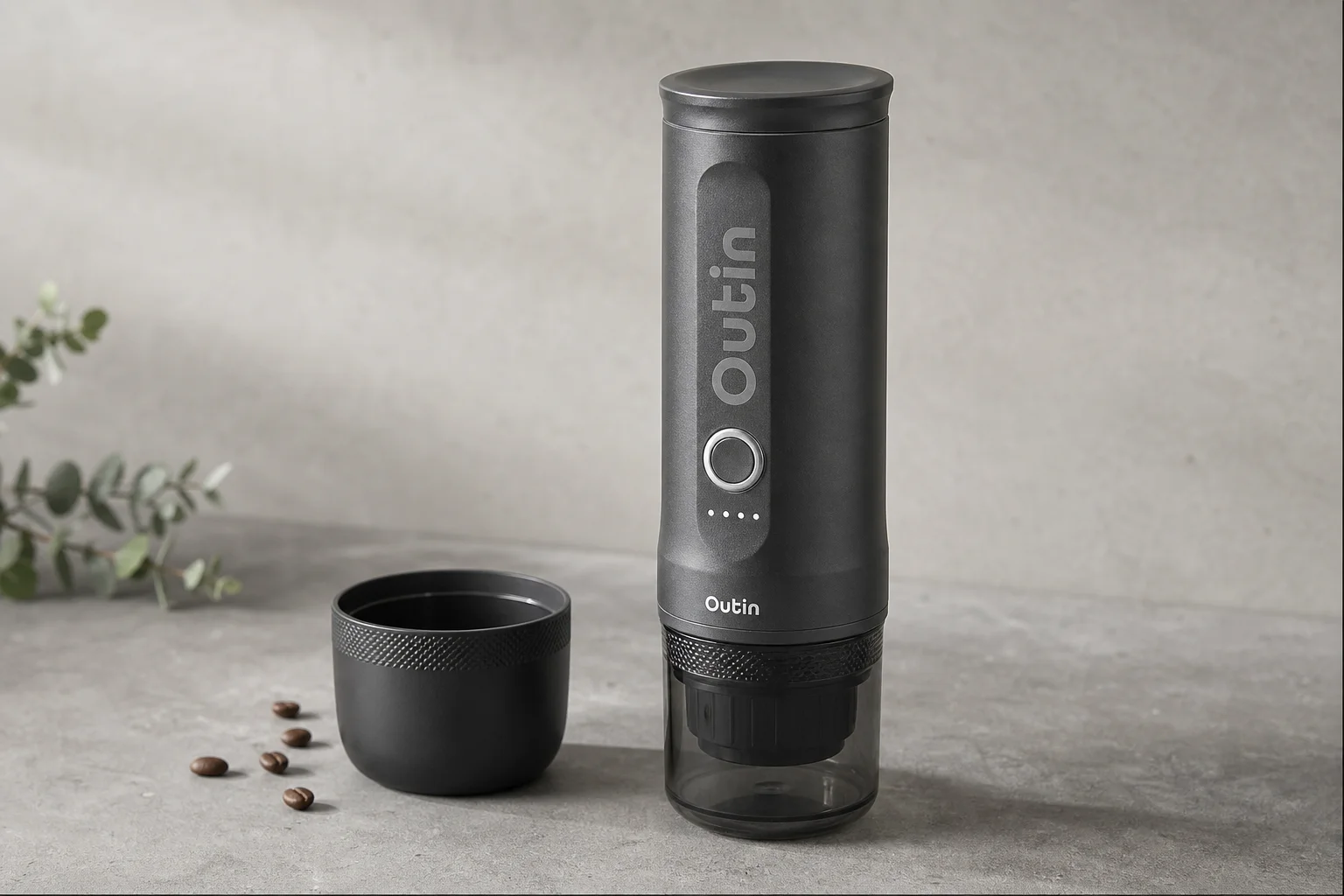
The Outin Nano promises something genuinely appealing: a portable espresso maker that heats its own water and brews in one compact unit. No need to carry a separate kettle or find hot water while travelling. The appeal is clear, especially for coffee enthusiasts who want espresso on the road. But after testing it across multiple brewing sessions, from a hotel room to a coffee festival in Ljubljana, the reality proves more complicated than the promise.
How the Outin Nano Works
The Outin Nano follows a familiar portable espresso design: a small brew basket at the bottom accepts roughly six to eight grams of finely ground coffee, topped with a shower screen and tamper. The key difference is the heating chamber at the top. Instead of requiring pre-boiled water, you fill the chamber with cold water, seal the lid, press and hold for two seconds, and the unit heats the water internally before automatically beginning the brew cycle.
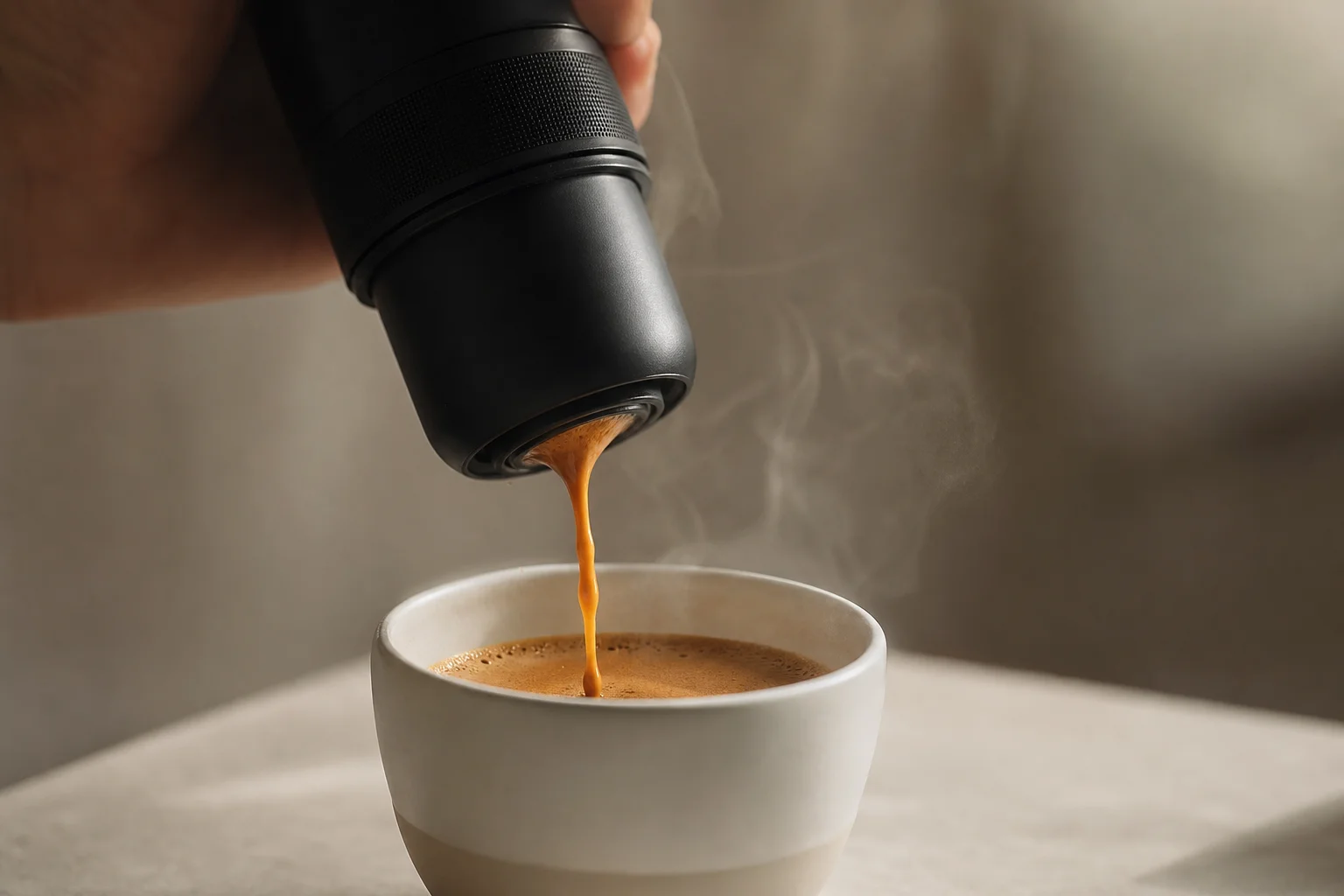
The process is straightforward in theory. Lights on the unit indicate heating progress, and once the water reaches temperature, the brewer automatically pumps the espresso through. A typical shot yields around 20 to 25 millilitres of liquid from an eight-gram dose, which is a reasonable ratio for espresso extraction.
The First Attempt: In-Flight Reality
The appeal of making espresso anywhere is strong enough that I attempted to brew at 35,000 feet on a commercial flight. After grinding coffee before boarding and preparing the dose, I filled the heating chamber with cold water and initiated the brew cycle. The result was immediate disappointment: nothing brewed. The unit simply failed to produce espresso at altitude, a sobering reminder that portable equipment operates within specific environmental constraints.
Testing in the Field
Over two days in Ljubljana, I brewed multiple shots to understand the Outin Nano’s actual performance. The first hotel room espresso tasted bland and under-extracted, with a texture that suggested the brew water never reached optimal temperature. The shot was technically well-extracted in terms of clarity, but lacked the sweetness and body expected from properly heated water.

At the Ljubljana Coffee Festival, I made espresso for two World Barista Champions. The results were inconsistent and, frankly, disappointing. One shot pulled longer than intended and tasted thin and sour. Another was described as malty and sour simultaneously. The feedback ranged from three to six out of ten, with the consensus that the brewer struggled to deliver balanced espresso. The small dose size also means each shot is modest, which some users may find limiting.

Key Concerns and Practical Limitations
Several issues emerged during extended testing:
Temperature Control: The most significant problem is that the unit appears to heat water to only around 90 degrees Celsius before beginning the brew cycle. Optimal espresso extraction typically requires 90 to 96 degrees Celsius at the group head, and the Outin Nano seems to lose considerable heat through the unit itself. This explains the persistent under-extraction and sour notes in lighter roasts. Darker roasts mask the problem somewhat, but the brewer is not reliably hitting the temperature needed for balanced extraction.
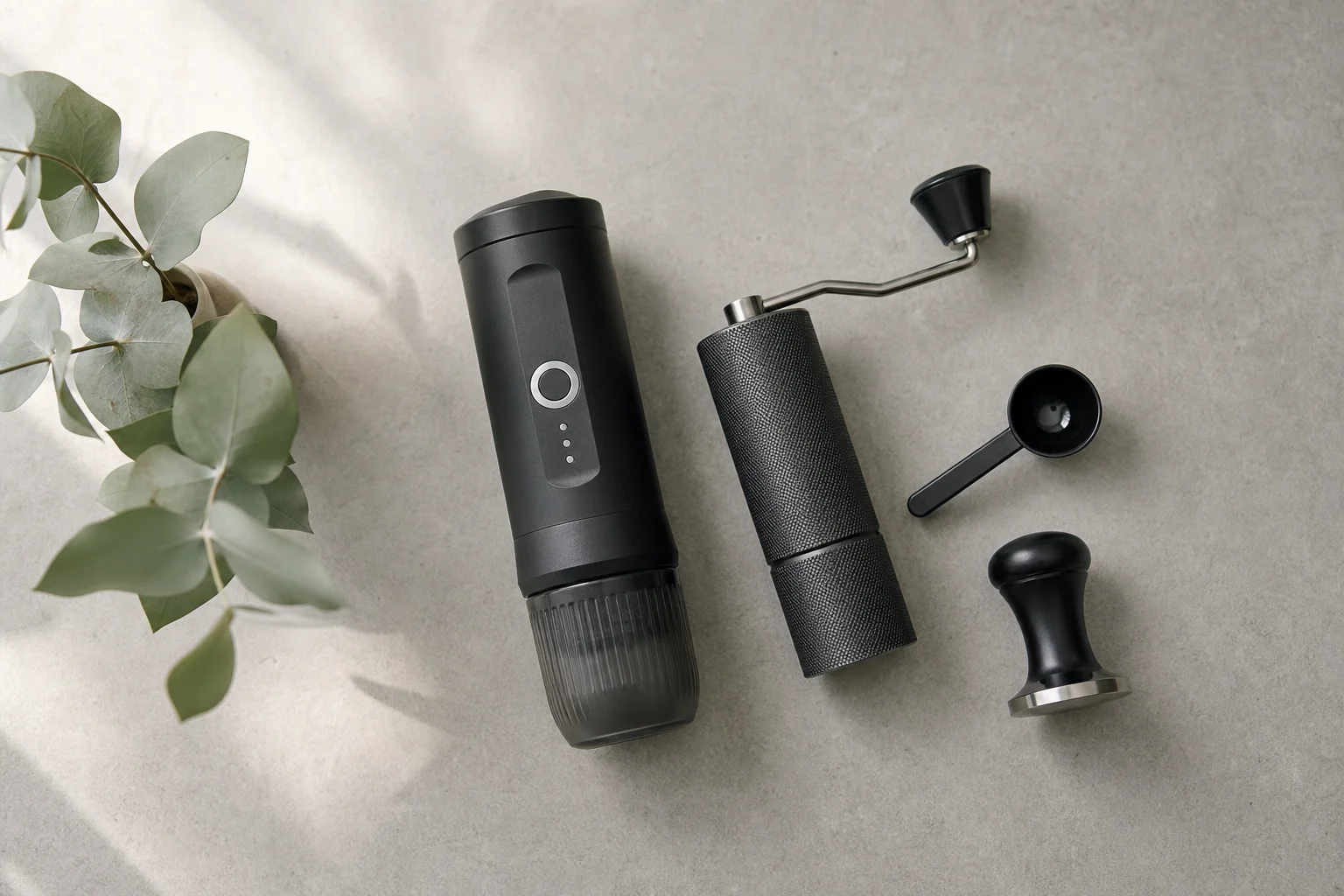
Build Quality: The paint finish is not durable. After minimal contact with other gear like a grinder, the coating rubs off easily. For a travel companion, this is disappointing. A more robust finish would be expected at this price point.
Power Efficiency: The power supply does not match the power consumption. Even when plugged in, the battery drains faster than it charges. This limits practical use if you rely on battery power between charging opportunities.
Dose Size: Six to eight grams is a small amount of coffee. Some users may find this limiting, especially if they prefer larger, more caffeinated shots.
Heating Practicality: While the built-in heating is the main selling point, preheating the unit is not particularly practical in real-world travel scenarios. Many users would likely just pour pre-boiled water in and skip the heating function entirely, which defeats the purpose of the design.
The Verdict
The Outin Nano comes closer to the ideal of all-in-one portable espresso than most competitors, and I have had some acceptable shots from it. However, the temperature control issues are fundamental and difficult to overlook. The brewer consistently under-extracts lighter roasts and produces sour, thin espresso unless you pull very long shots or use darker coffee. For a device marketed on its heating capability, failing to deliver adequately hot water is a significant miss.
The idea of a self-contained, cold-water-to-espresso portable brewer is appealing and worth pursuing. The Outin Nano demonstrates that the concept is possible, but the execution falls short of what serious coffee drinkers would expect. It is a device that works sometimes, disappoints other times, and introduces enough inconsistency that serving it to guests feels like a risk.
Conclusion
If you prioritize the novelty of making espresso anywhere and are willing to accept variable results, the Outin Nano is worth considering. If you expect reliable, balanced espresso from a portable device, you may be better served by a simpler manual brewer paired with a separate kettle. The promise of integrated heating is undermined by temperature control that does not quite deliver.
Product link
View more details for Outin Nano
This product is mentioned in the review. Check the specifications, options, and compatibility before buying.
View more details for Outin NanoFurther reading
Related Reviews
Coffee Gear
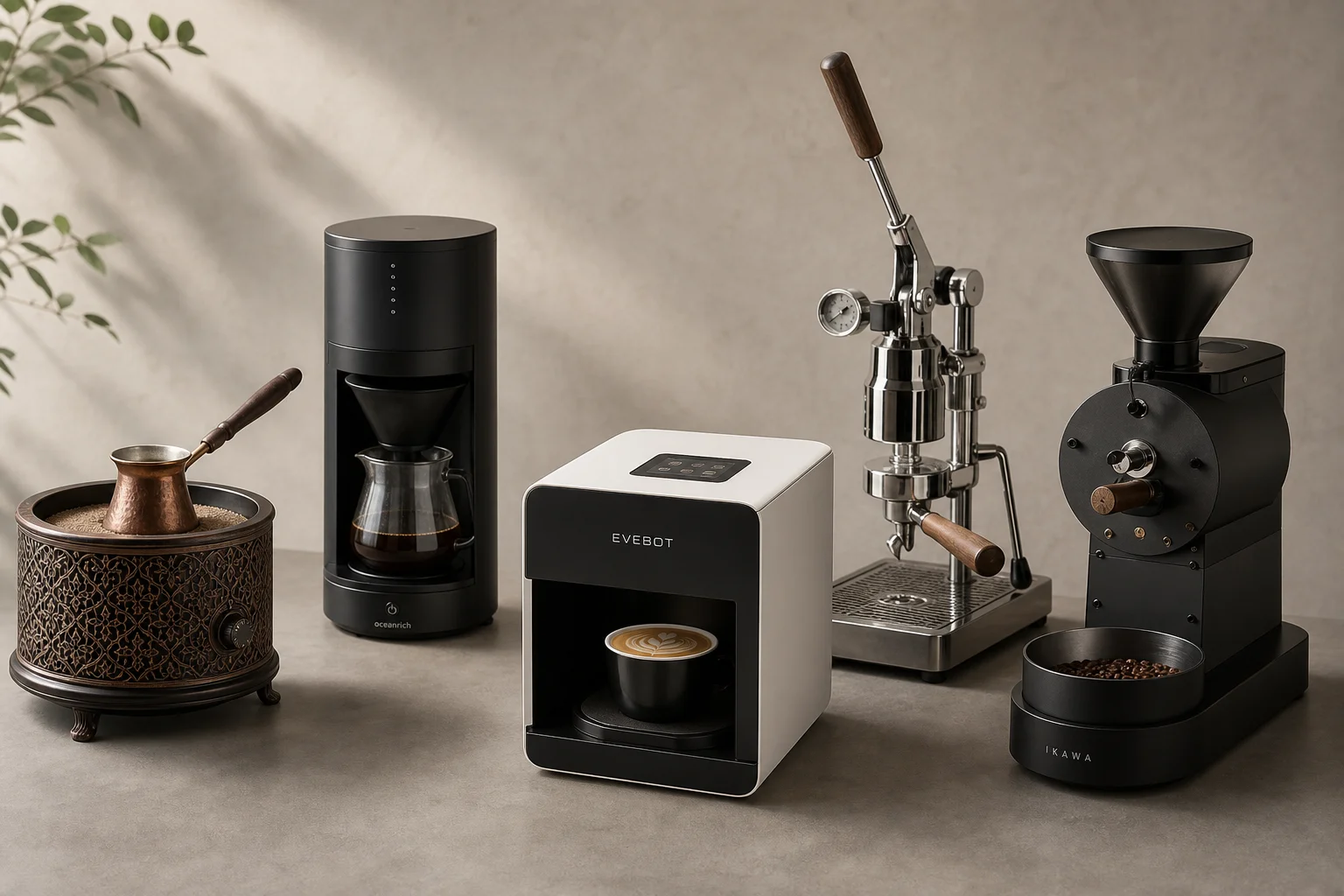
AliExpress Coffee Gear Review: Five Products Worth Testing
A practical look at five coffee tools from AliExpress, including a sand heater, automatic brewer, latte art printer, espresso machines, and home roaster.
Coffee Gear
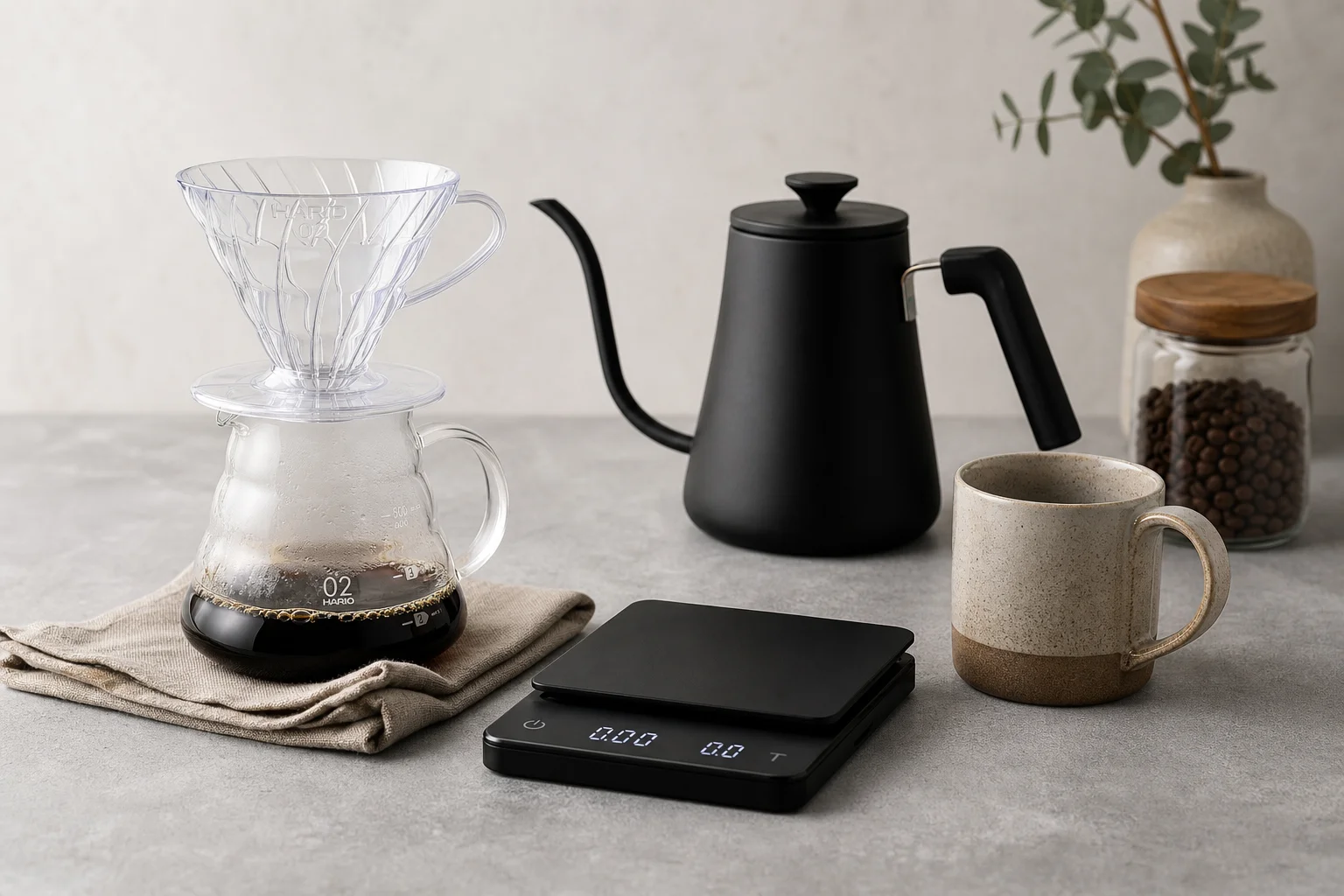
Coffee Gear Pourover Review: Three Budget Tiers for Every Brewer
A practical guide to building a pourover coffee setup at three price points: under $50 for beginners, under $200 for enthusiasts, and $500+ for serious home brewers.
Coffee Gear
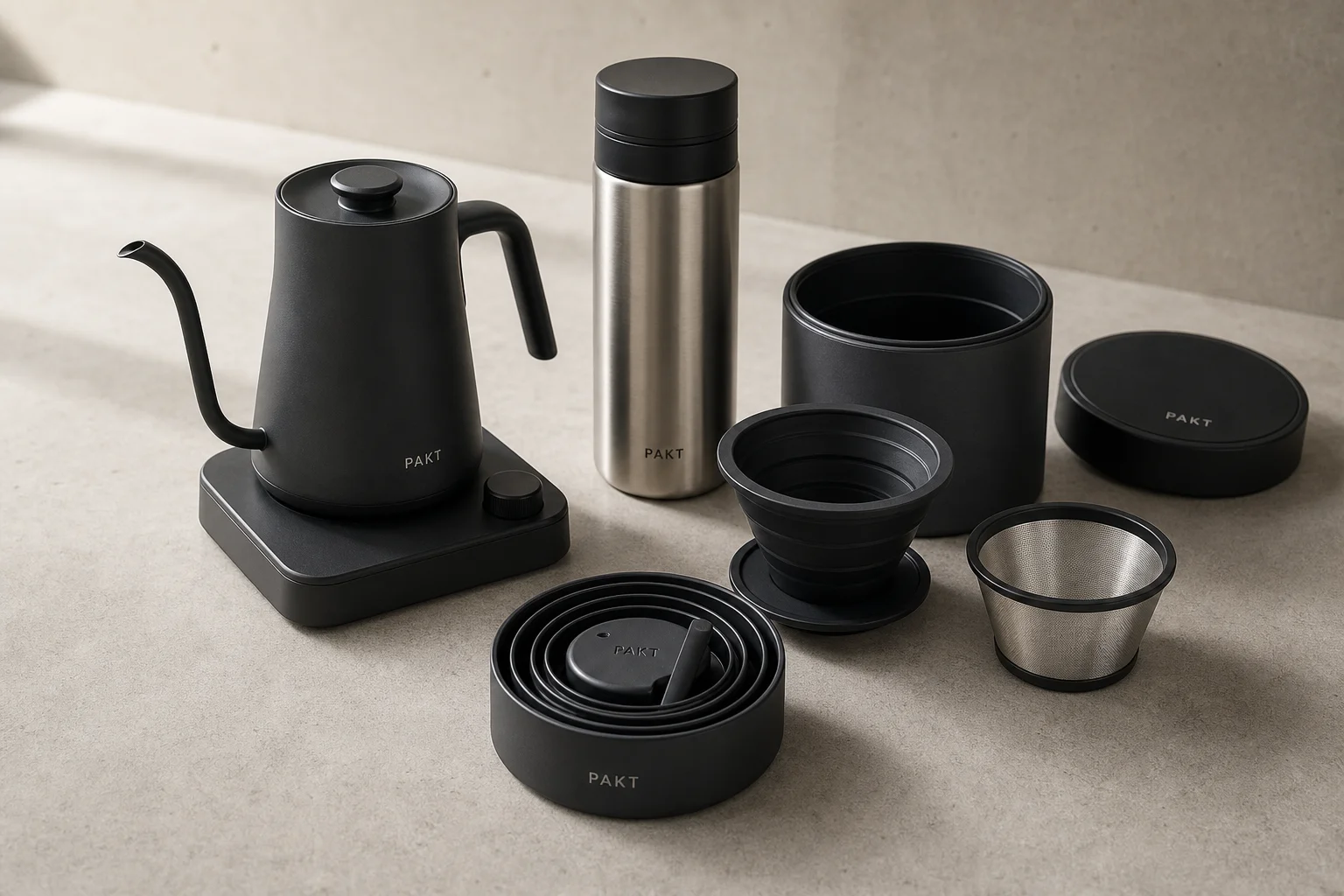
Pakt Coffee Kit Review: All-in-One Travel Brewing with Real Trade-offs
A compact, well-designed travel coffee system that combines a kettle, thermos, and brewer. Thoughtful engineering meets practical limitations and durability concerns.