3D Printing Materials
Prusament PLA vs PETG vs ASA: Detailed Material Comparison and Testing
A comprehensive side-by-side comparison of three popular 3D printing materials from Prusament, covering printability, mechanical strength, impact resistance, and thermal performance.
Introduction
PLA, PETG, and ASA remain the three most widely used 3D printing materials despite the growing range of available thermoplastics. Each offers distinct advantages and trade-offs. This comparison tests Prusament filaments across printability, mechanical properties, impact resistance, and thermal stability to help you choose the right material for your project.
Packaging and Pricing
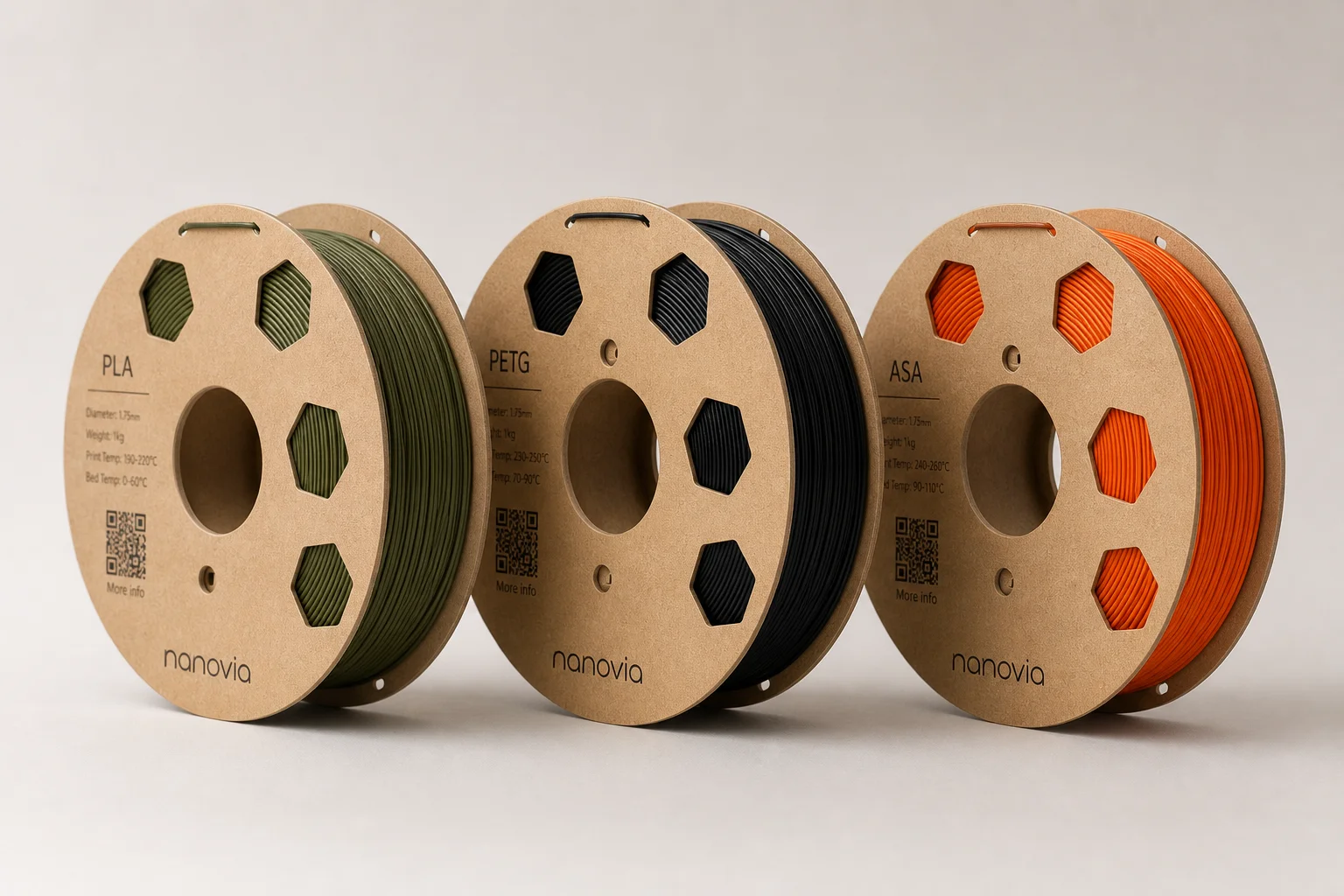
All three Prusament materials arrive in sealed cardboard boxes with resealable plastic bags and desiccant packs. The spools feature distinctive hexagon cutouts that reduce weight and shipping costs while providing anchor points for filament ends. Each spool includes a manufacturing date, print settings, and a QR code for tracking and quality control information.
Pricing varies by material. PLA costs €25 per kilogram, while PETG and ASA both sell for €30 per spool. However, the ASA spool contains only 850g rather than 1kg, because ASA has a 15% lower density. This results in a per-kilogram price of €35 for ASA. When calculated by length, PLA costs 7.5 cents per meter, while both PETG and ASA cost 9 cents per meter. In the US, Prusament is available on Amazon with free Prime shipping.
Print Quality and Appearance
All three materials printed successfully on an Original Prusa i3 Mk3s using stock settings without parameter adjustments. PLA was printed at 215°C with 100% part cooling fan, PETG at 250°C with 30-50% fan, and ASA at 260°C with 20% fan.
Overhangs performed well up to 55° across all materials, with degradation beginning at 65°. ASA notably maintained quality at steeper angles. Stringing and small details were similar across materials, with PETG showing slightly more stringing at fine tips. PLA excelled at bridging, PETG performed adequately, and ASA showed the most difficulty.
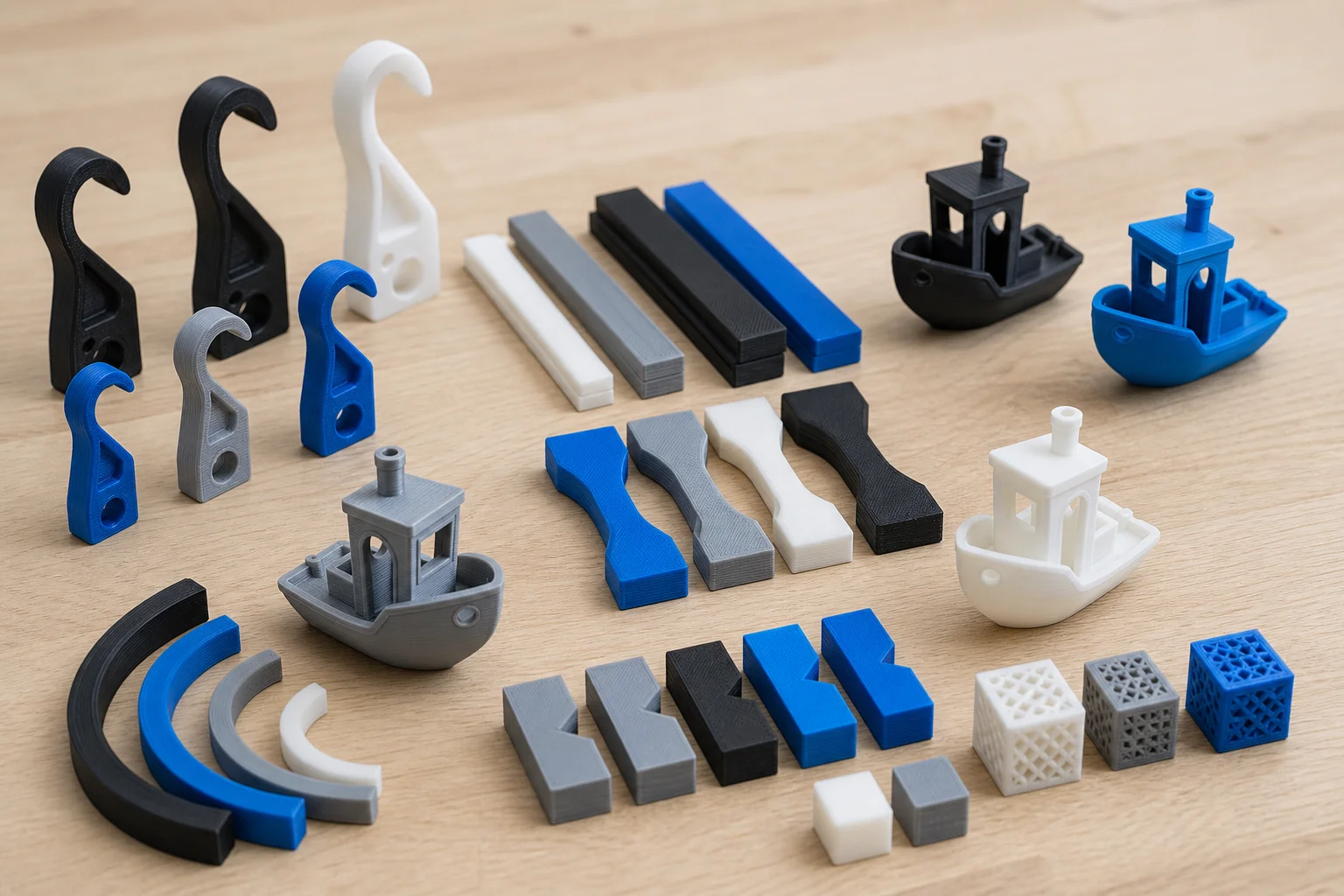
The 3D Benchy test models looked excellent across all three materials. The army-green PLA and jet-black PETG exhibited shiny finishes, while the orange ASA produced a matte appearance. PETG showed minor stringing, and ASA displayed a small step in the floor height, indicating greater contraction during cooling. The ASA chimney detail, typically challenging for this material group, printed cleanly due to the applied cooling fan.
Static Strength and Layer Adhesion
Mechanical testing used custom hook samples rather than standardized dog-bone specimens. Horizontal hooks (printed lying flat) tested static strength, while vertical hooks (printed standing) evaluated layer adhesion.
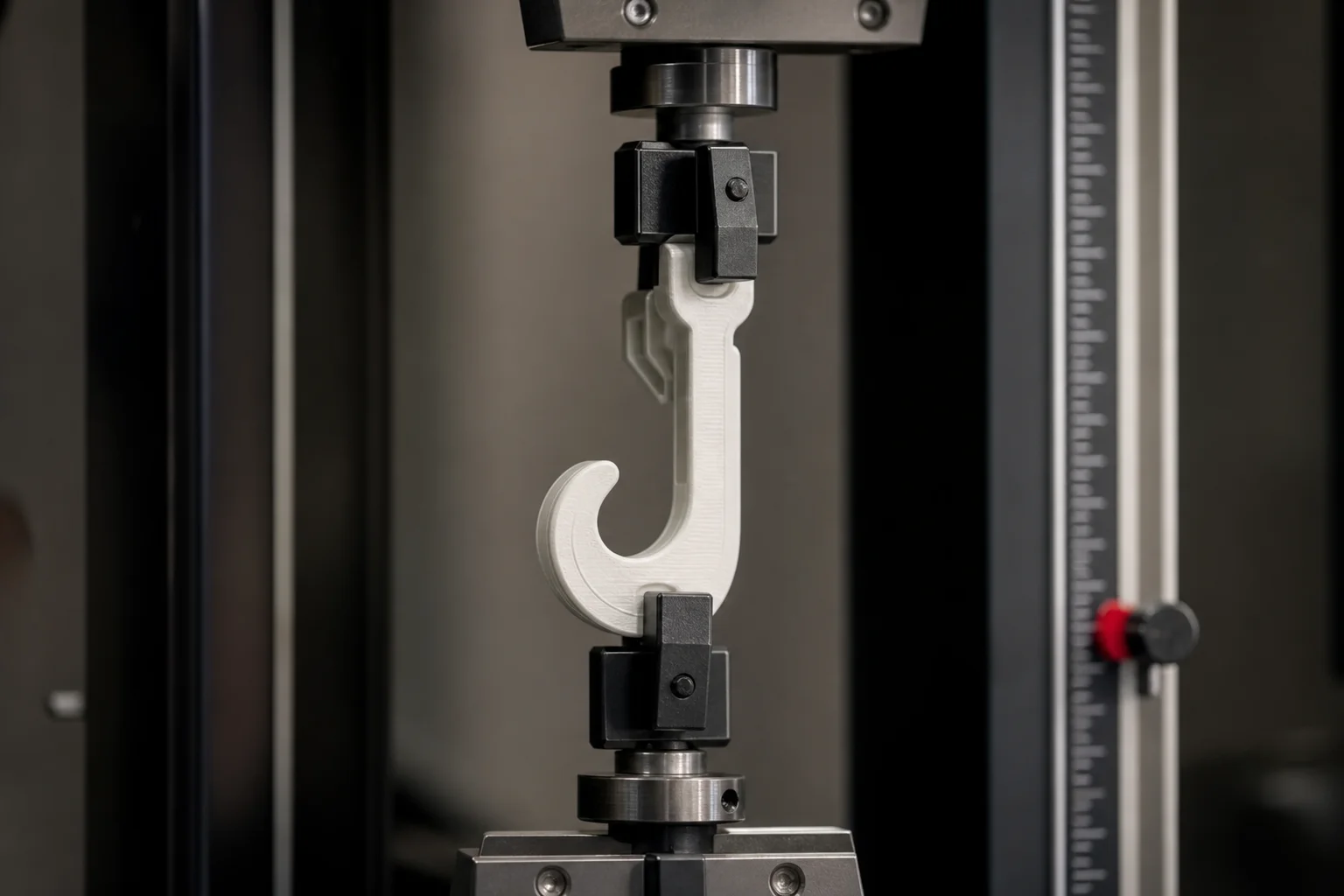
Horizontal hook results showed PLA failing at 73kg with sudden fracture after minimal yielding. ASA failed at 57kg with similar brittle behavior. PETG was weakest at 55kg but demonstrated significant ductility, stretching considerably before failure rather than snapping suddenly.
Vertical hook testing revealed layer adhesion differences. PLA hooks failed at an average of 40kg, representing 55% of horizontal strength. PETG hooks failed at 25kg, or 46% of horizontal strength. ASA hooks failed at only 17kg, just 29% of horizontal strength. This weakness reflects ASA’s preference for heated chamber printing without cooling. When ASA was tested in an enclosure at approximately 30°C, failure load increased to 20kg, a 20% improvement. Ideal results would require higher chamber temperatures.
Stiffness Comparison
Stiffness measures resistance to deformation, distinct from strength. A 3-point bending test with fully dense bars quantified the bending modulus of each material.
PLA demonstrated the highest stiffness at 3,300 MPa. ASA ranked second at 2,300 MPa. PETG was the most flexible at 1,900 MPa, achieving only 70% of PLA’s stiffness. This difference becomes relevant when designing parts requiring rigidity.
Impact Resistance Testing
Impact behavior differs from static strength due to strain-rate-dependent material properties. Notched IZOD impact specimens were struck by a calibrated hammer, with energy absorption measured by the reduction in hammer swing height.
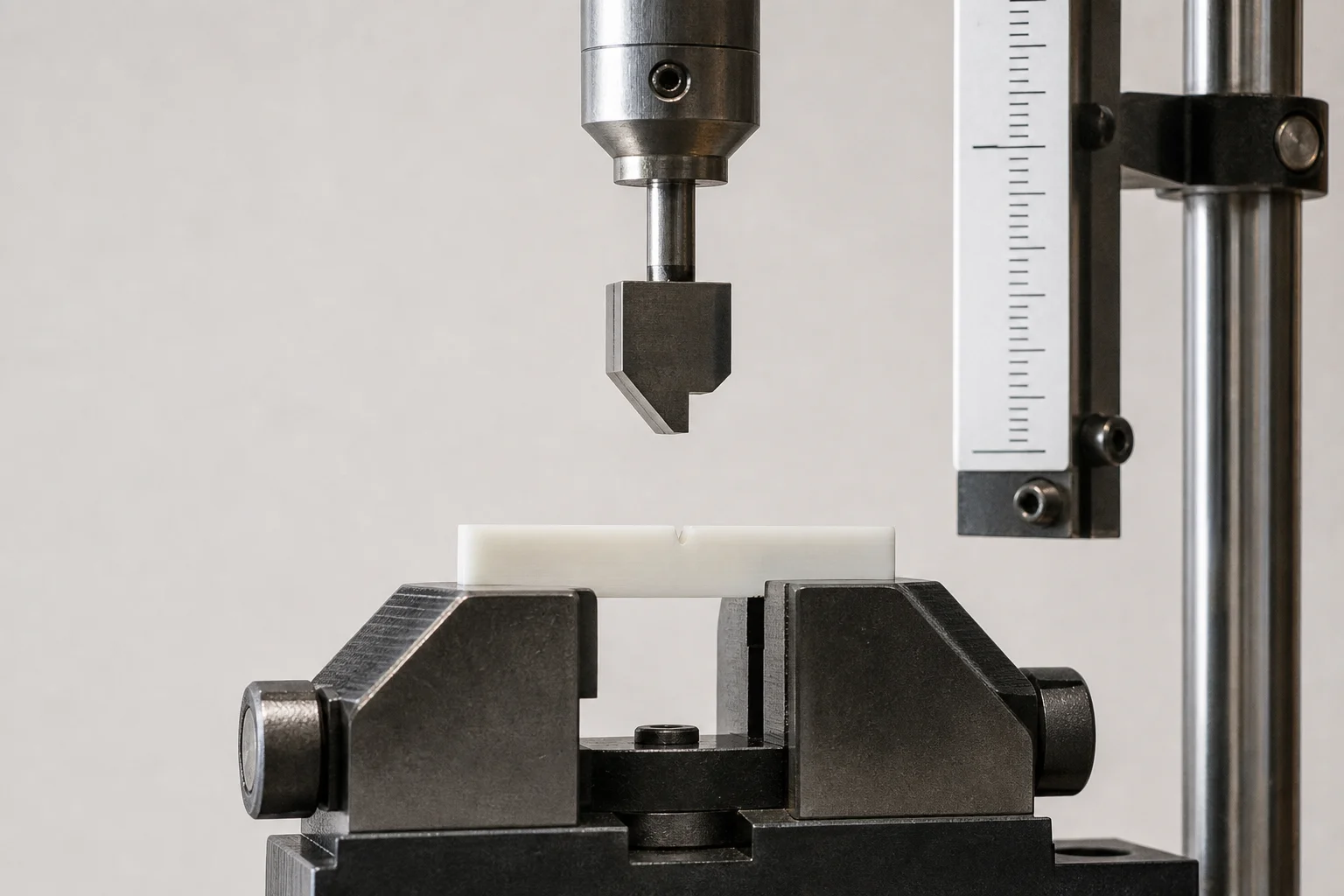
PLA absorbed approximately 8% of the hammer’s kinetic energy, yielding an impact strength of 5 kJ/m². PETG absorbed 14%, resulting in 8.6 kJ/m². ASA proved significantly tougher, absorbing nearly 30% of the hammer’s energy for an impact strength of 18 kJ/m². This represents more than three times PLA’s impact resistance and more than twice PETG’s. This superior impact performance makes ASA valuable for applications subject to shock loads, such as drone frames.
Thermal Resistance and Performance
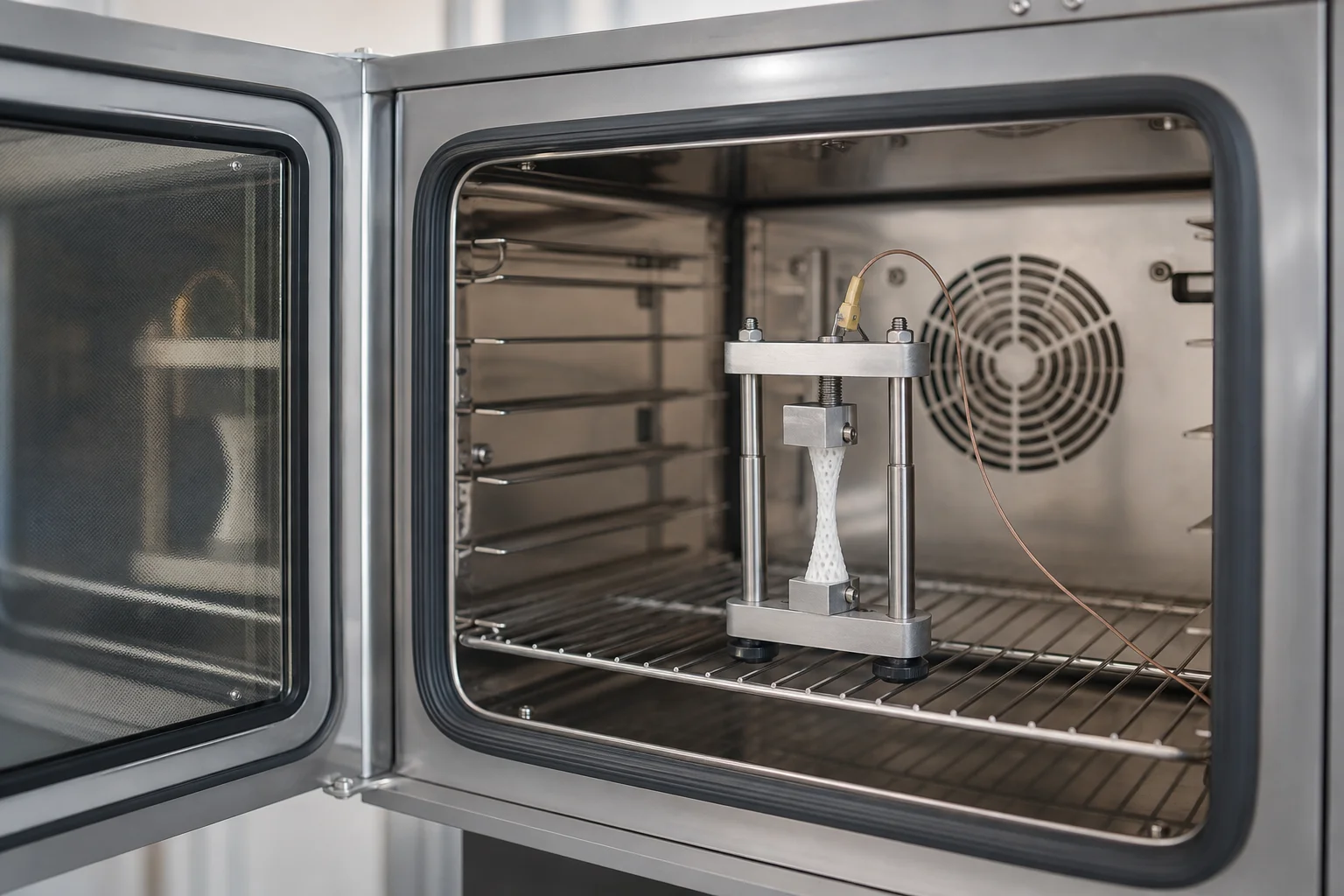
Temperature testing placed loaded samples in a convection oven with a thermocouple to measure softening and failure points.
PLA began softening at 60°C and completely failed at 65°C. PETG softened at 80°C and failed at 85°C. ASA proved most thermally stable, softening at 110°C and failing at 120°C, making it suitable for applications near boiling water temperatures.
Choosing the Right Material
No single material excels across all criteria. PLA remains the easiest to print with excellent strength and stiffness, making it suitable for most general applications. Its brittleness and low thermal resistance limit use in impact-prone or heated environments.
PETG offers improved ductility and toughness compared to PLA while maintaining reasonable printability. However, its lower stiffness and modest impact improvement over PLA make it less ideal for weight-critical applications. It performs adequately up to approximately 80°C.
ASA shines in demanding applications requiring thermal stability, impact resistance, and UV resistance. Its lower density provides weight advantages over PLA with comparable strength-to-weight ratios. The trade-off involves reduced layer adhesion without heated chamber printing and stronger odor during printing.
For a quadcopter frame, PLA offers sufficient strength and stiffness. ASA becomes attractive due to its impact resistance, thermal stability, and lower density, despite requiring more careful printing setup. PETG works if weight is not critical but additional toughness and thermal stability are needed.
Conclusion
Prusament filaments from all three material families printed reliably with excellent quality. Your choice depends on your specific requirements: ease of printing and stiffness favor PLA, improved toughness and thermal performance favor PETG, and demanding applications with impact and thermal demands favor ASA. Consider your application’s mechanical and environmental requirements when selecting between these three proven materials.
Product link
View more details for Prusament PLA
This product is mentioned in the review. Check the specifications, options, and compatibility before buying.
View more details for Prusament PLAFurther reading
Related Reviews
3D Printing Materials
9 Advanced 3D Printer Filaments: A Practical Guide to Engineering-Grade Materials
Explore nine advanced filament types for 3D printing, from Nylon and polycarbonate to carbon fiber composites. Learn their strengths, trade-offs, and best applications.
3D Printing Materials
Advanced 3D Printing Filaments: 15 Functional Materials Beyond PLA and PETG
Explore over 15 specialized 3D printing filaments with unique properties, from flexible PEBA Air to extreme-temperature PPS-CF. Learn what each material excels at and how to print it successfully.
3D Printing Materials
Best PLA Filament Brands 2026: Five Reliable Options for Clean, Consistent Prints
Five PLA filament brands that deliver reliable results, great color, and minimal printing headaches, from budget-friendly to premium options.