RC Aircraft
RC Planes Price Comparison: From $1 Paper Planes to $10,000 Professional Models
A comprehensive guide to RC planes across all price points, from budget foam flyers to high-end aerobatic machines. Real-world testing reveals what you get at each price tier.
Introduction
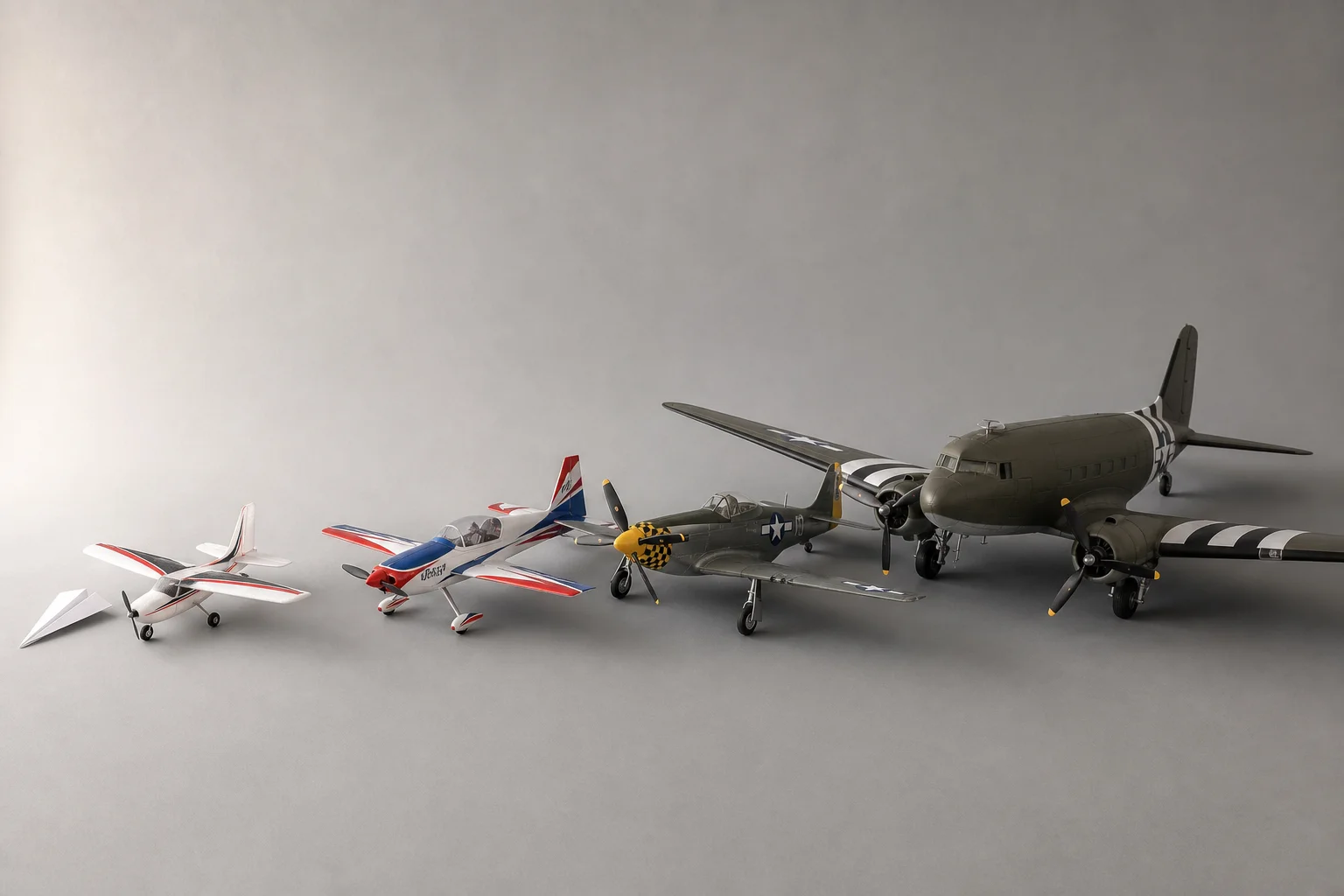
RC planes span an enormous range of capability and investment. From a dollar paper airplane to a ten-thousand-dollar military transport replica, each price tier offers distinct advantages and trade-offs. This guide walks through real-world testing across the full spectrum, showing what you actually get at each price point and who each category suits best.
Budget Entry Point: $1 Paper Airplane
The cheapest RC plane is literally a paper airplane controlled via smartphone. It’s made of lightweight paper with a small motor and receiver built in, making it genuinely controllable through a mobile app.

The appeal is obvious: minimal cost and zero financial risk if it crashes. The downside is equally clear. Wind control is nearly impossible, and the plane drifts unpredictably. The real value here is novelty and the ability to rebuild instantly if it breaks. For someone curious about RC flight with no budget, this is the only realistic entry point.
Indestructible Foam Flyer: $25
At $25, you get a foam-bodied plane with a rubber nose designed to absorb impact. The entire airframe is flexible and bendable, surviving crashes that would destroy traditional planes. Multiple impacts cause no visible damage, and if a wing snaps off, it simply snaps back on.
This tier suits absolute beginners and anyone flying in tight spaces where crashes are inevitable. The trade-off is durability over performance. These planes are slow, hard to control precisely, and lack the aerobatic capability of higher-priced models.
Amphibious Capability: $100
A $100 foam plane adds a unique feature: it can take off and land on both land and water. The lightweight foam construction keeps it afloat, and the design allows taxiing on water surfaces.
In practice, this plane handles water operations better than land operations. Takeoffs from grass are clumsy, but once airborne, it flies reasonably well. Landing on water is smoother than landing on rough terrain. This category appeals to pilots with access to lakes or ponds who want to explore unconventional flying environments.
Ornithopter Innovation: Metafly Bionic Bird
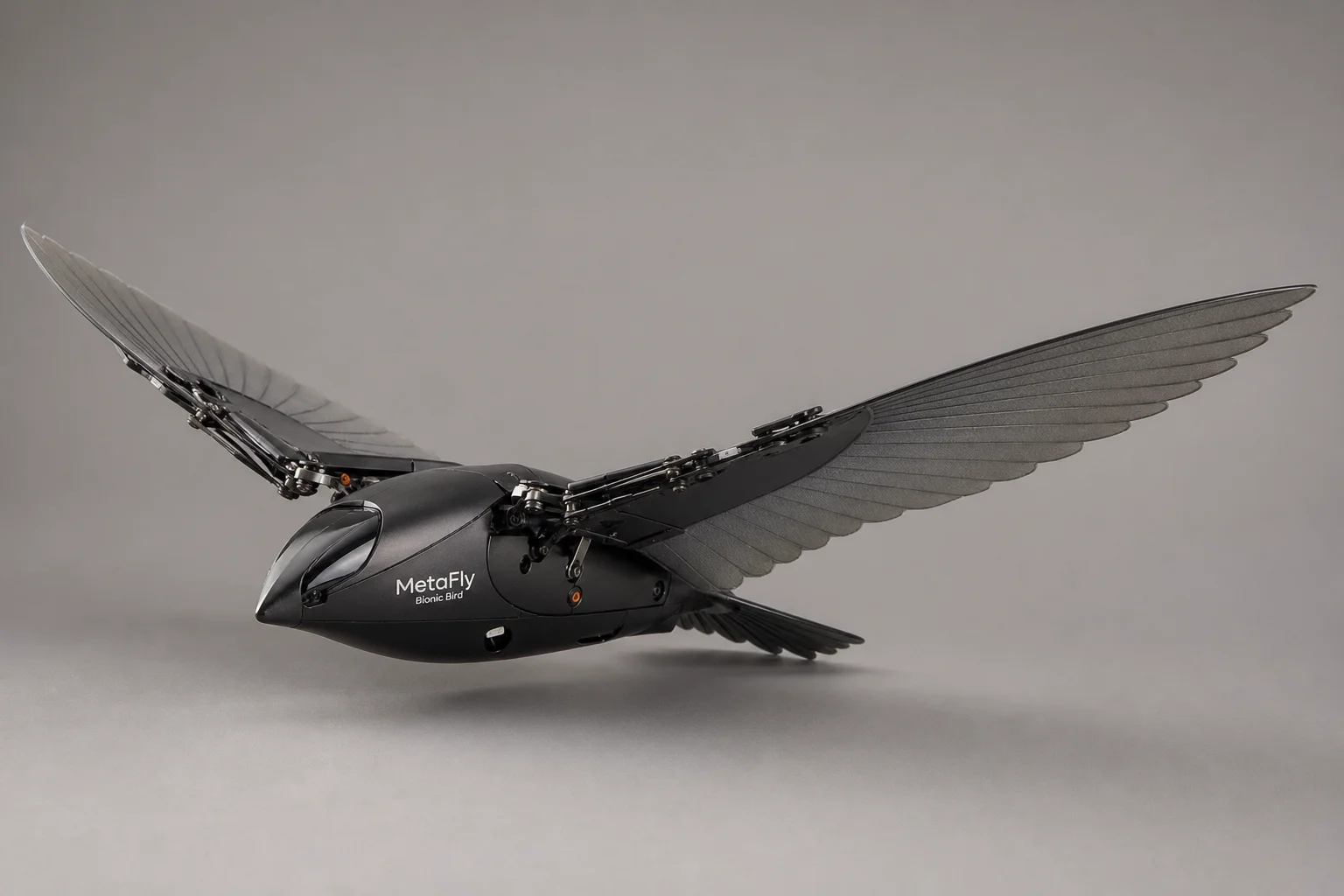
The Metafly Bionic bird is an ornithopter, a plane that flies by flapping wings rather than spinning propellers. Instead of traditional aerodynamic design, it mimics the flight of large birds or insects.
The visual effect is striking. The plane blends seamlessly with natural surroundings, and real birds show no alarm at its presence. This makes it useful for wildlife observation and photography where traditional RC planes would spook animals. The trade-off is speed and agility. Ornithopters are slower and less responsive than conventional planes, but the naturalistic flight pattern is genuinely unique.
Intermediate Trainer: $200 Aerobatic Plane
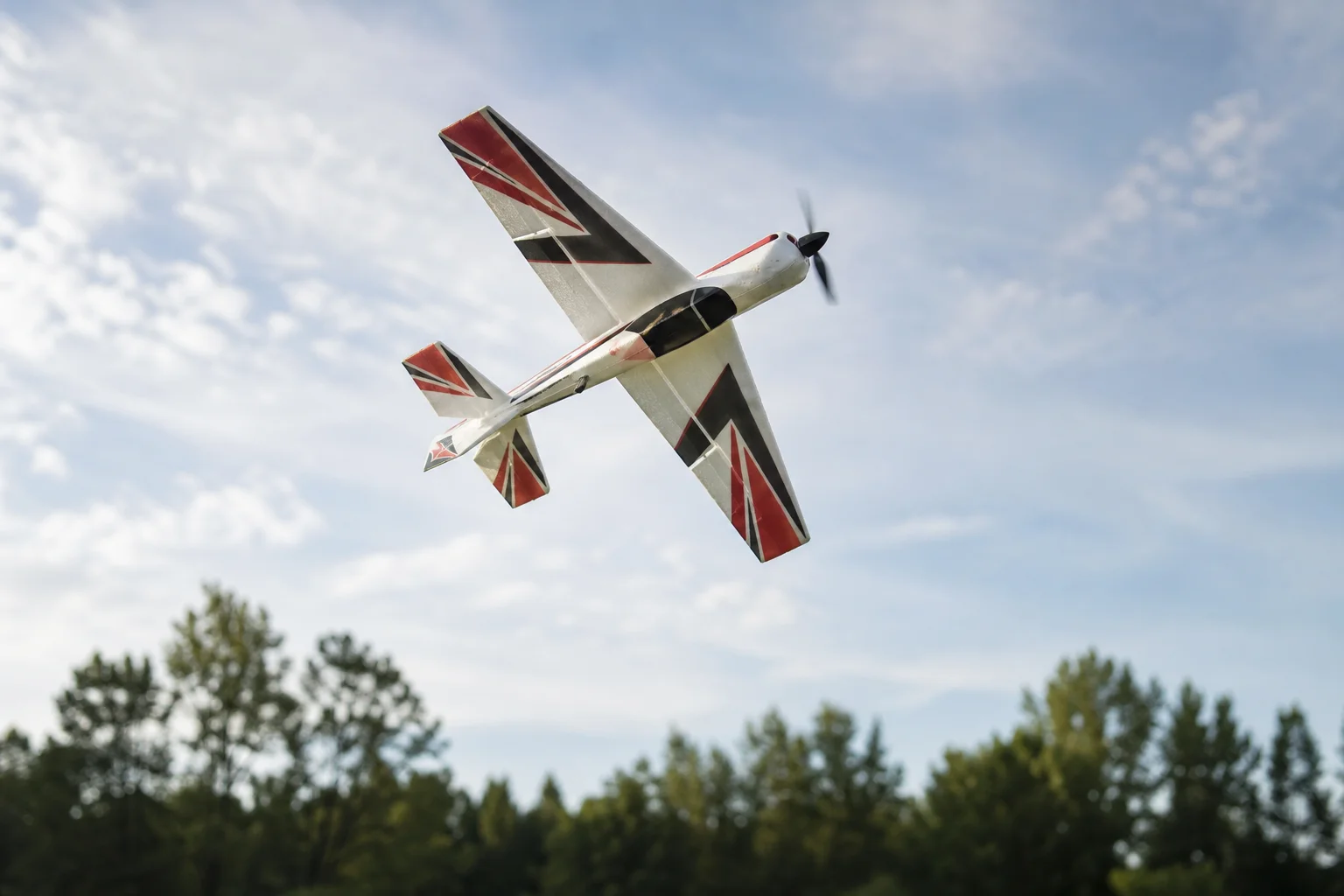
At $200, you get a plane with a significantly larger engine, proper control surfaces called ailerons, and the ability to perform aerobatic maneuvers. The plane can flip, roll, and fly inverted if the pilot has the skill.
This is where RC flying transitions from novelty to hobby. The plane responds to precise control inputs, and successful maneuvers feel genuinely rewarding. The downside is complexity. Crashes become more likely as pilots attempt tricks, and repairs become necessary. This tier suits pilots ready to invest time in learning proper technique.
Scale Warbird: $500-$1,000
At $500 to $1,000, you enter the realm of scale aircraft. These are detailed replicas of real planes, often vintage military trainers or racers. The $500 model tested was a 1950s-era rescue plane with authentic proportions and classic styling.
At this price point, planes are flown at dedicated airfields with experienced pilots. The investment justifies professional handling, and the planes are typically maintained in pristine condition. Flight characteristics are smooth and predictable, with excellent glide characteristics. This tier suits collectors and serious hobbyists who value authenticity and craftsmanship.
High-Performance Warbird: Grumman F6F Hellcat
The Grumman F6F Hellcat is a $1,000 RC replica of the legendary World War II fighter. The model features retractable landing gear, authentic proportions, and full aerobatic capability.
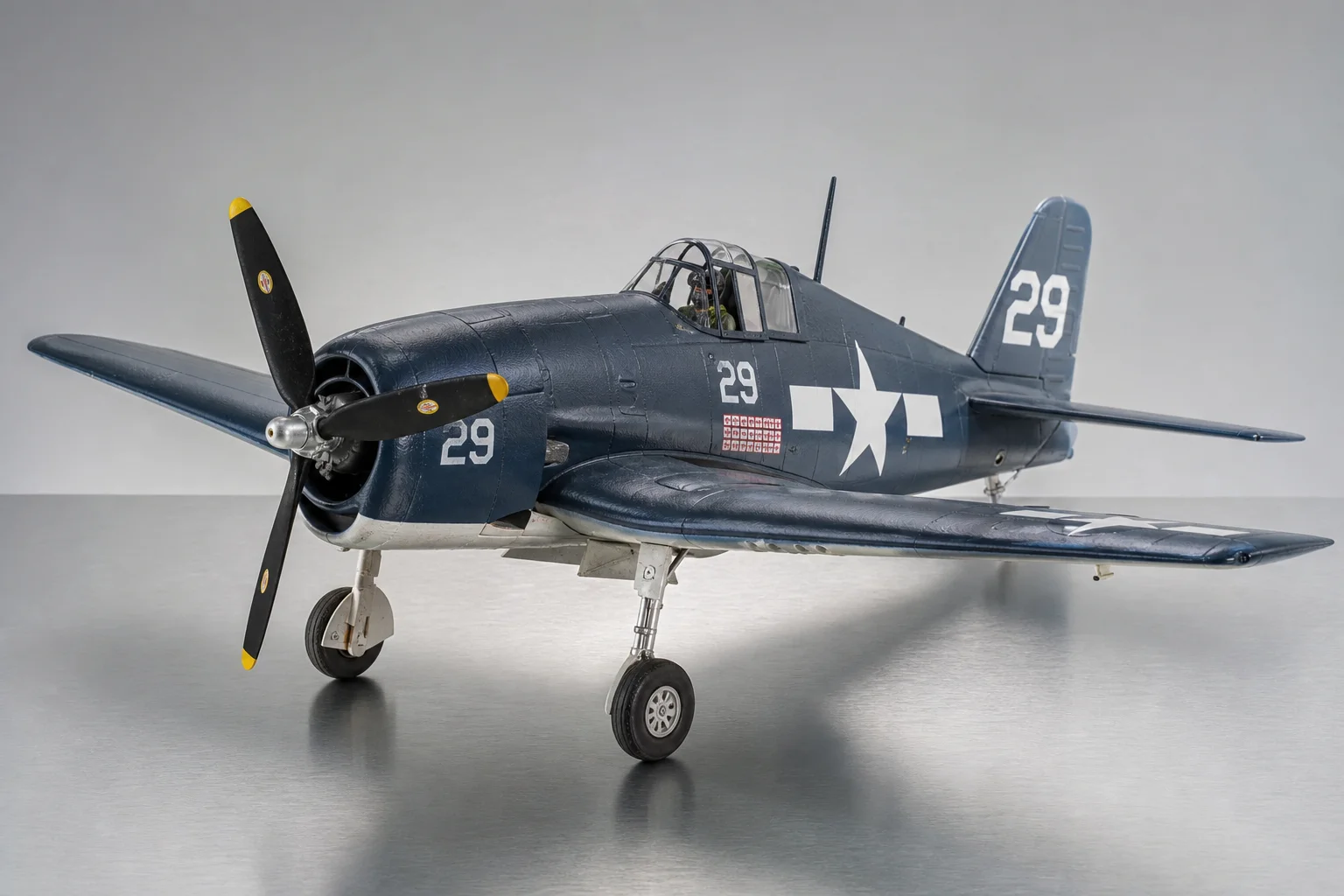
In the air, the Hellcat performs inverted flight, rolls, and complex maneuvers with precision. The plane feels responsive and stable, and experienced pilots can execute smooth aerobatic sequences. The retractable gear adds visual authenticity and mechanical complexity. This category appeals to serious RC pilots with 20+ years of experience who want historically accurate models with genuine performance.
Large-Scale Glider: $500 Motorized Glider
A 100-inch wingspan motorized glider represents a different category entirely. Traditional gliders have no motor and rely on thermal lift or tow launches. This model includes a motor for convenient takeoffs but demonstrates true gliding once airborne.
The glider is slower than powered planes, relying on air resistance and lift generation to stay aloft. Landing is the critical challenge, as the pilot gets only one approach. The plane includes spoilers that kill lift and allow controlled descent. This tier suits pilots interested in efficiency and the physics of flight rather than speed or tricks.
Professional Military Jet: $1,500 RC Jet
A $1,500 RC jet is a replica of a real military fighter, in this case a Chinese J10A. The model uses an electric turbine motor rather than a propeller, allowing high speed and unique flight characteristics.
Jets can fly at extreme angles of attack, nearly vertical, and maintain control at very low speeds. This capability is used for evasion in real military applications. The jet also accelerates to high speed for fast passes. The trade-off is cost and complexity. Jets require experienced pilots and careful maintenance. This tier suits advanced hobbyists with significant RC experience and budget.
Custom 3D-Printed Learjet: $2,000
A $2,000 custom 3D-printed Learjet represents the cutting edge of hobbyist manufacturing. This model took over 200 hours to print and required custom electronics integration.
The maiden flight revealed a critical flaw: the electronics overheat during flight with no internal airflow to cool components. The engine shut down mid-flight, nearly causing a crash. This demonstrates that cutting-edge manufacturing doesn’t guarantee reliable performance. This tier suits experimental builders willing to accept failures as part of the development process.
Advanced Aerobatic: Great Planes PT-17 Stearman
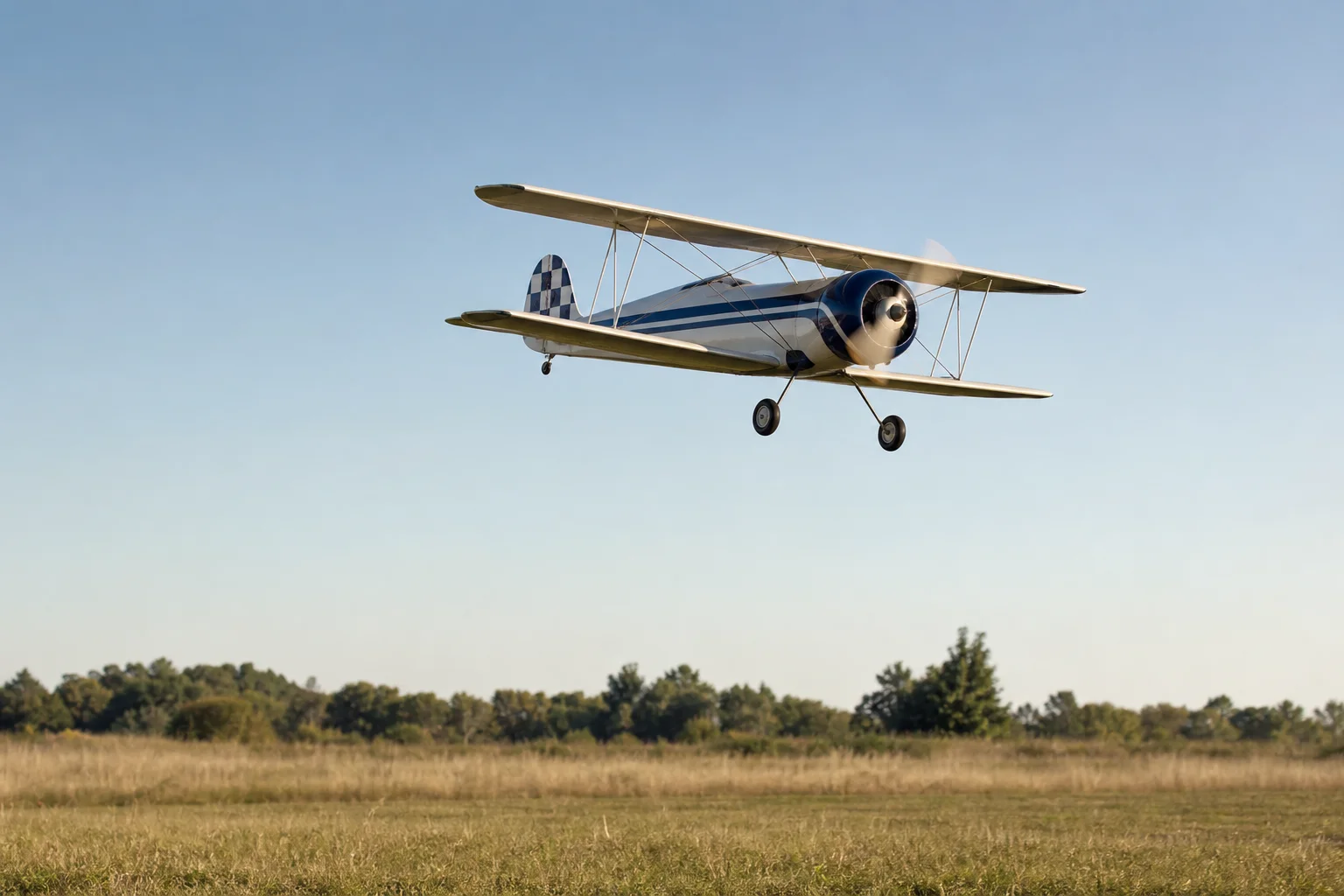
The Great Planes PT-17 Stearman is a $2,200 replica of the 1942 military trainer. The model is fully aerobatic, capable of flips, rolls, barrel rolls, and hammerheads.
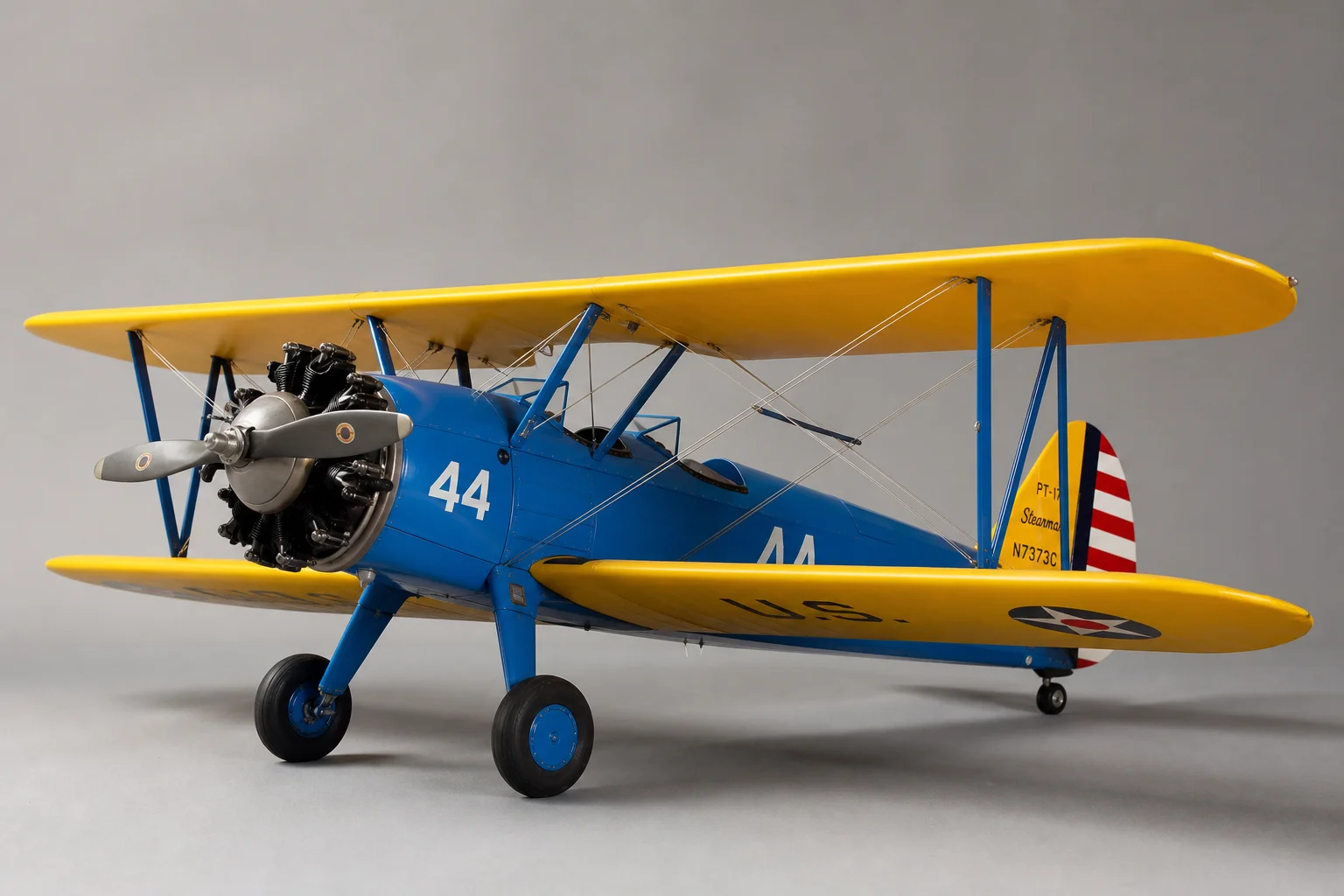
In flight, the Stearman is visually stunning. The proportions are perfect, and the sound is authentic. The plane executes a full vertical dive, transitions to a hammerhead stall, and performs a death spiral descent. The aerobatic envelope is extensive, and the plane lands on zero percent battery with precision. This is a complete package: authentic appearance, genuine performance, and reliable execution. This tier suits serious aerobatic pilots who want a plane that does everything well.
Professional Grade: OV-10 Bronco
The OV-10 Bronco is a $10,000 RC replica of the real military transport plane used by firefighters. The model has a 108-inch wingspan, weighs 50 pounds, and features retractable landing gear.
The cost breakdown reveals the investment: $2,400 for the airframe and retracts, $1,500 for motors and speed controls, $2,000 for the controller, and $500 for lights alone. The plane is fully aerobatic despite its size, capable of loops, rolls, and inverted flight.
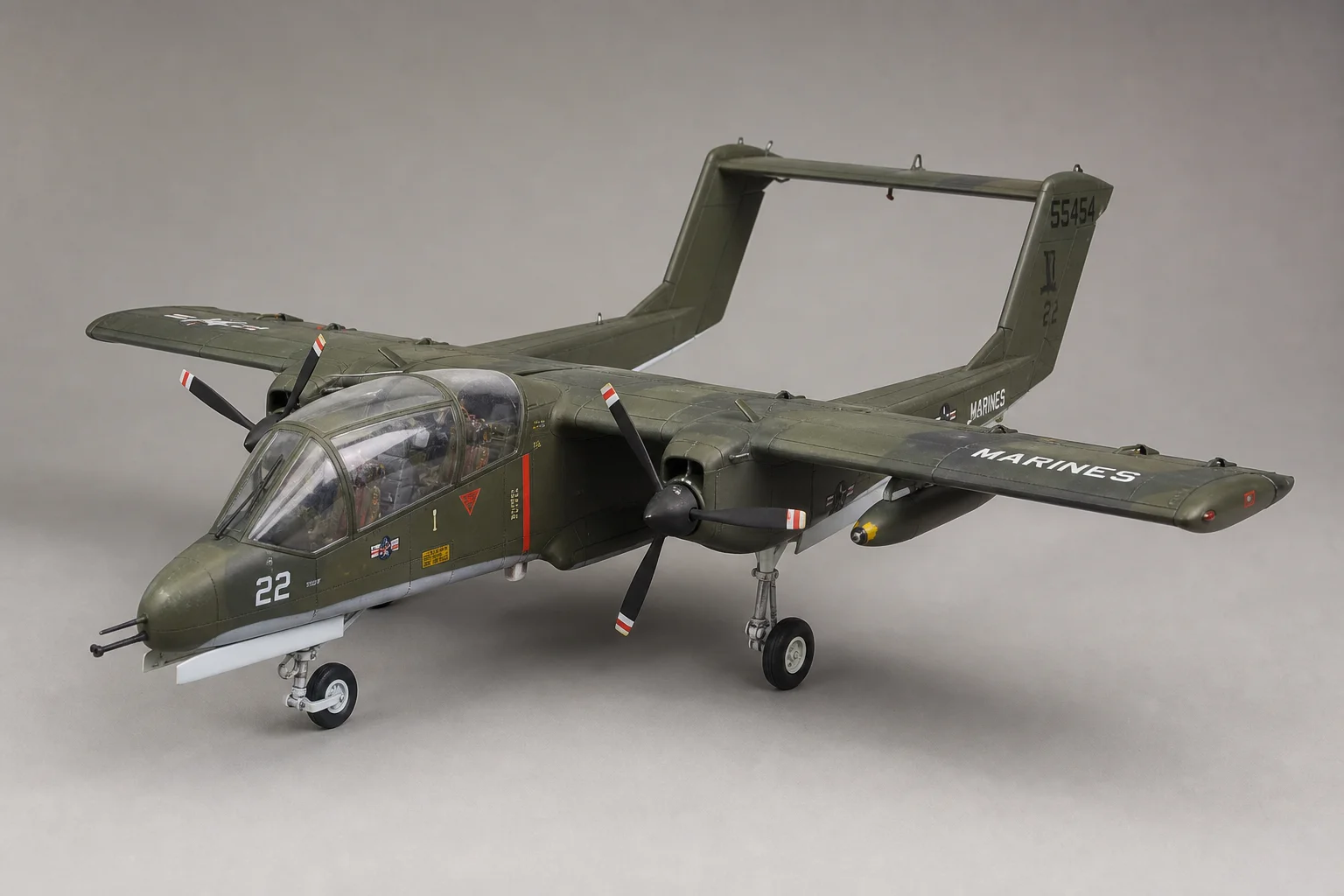
In the air, the Bronco is massive and impressive. The takeoff is smooth, and the plane responds precisely to control inputs. Aerobatic maneuvers are executed cleanly, and the landing is peaceful and controlled. This represents the pinnacle of RC aircraft: professional-grade construction, authentic appearance, genuine performance, and flawless execution. This tier suits collectors with significant budgets and pilots with decades of experience.
Conclusion
RC planes at every price point offer genuine value for their intended audience. A $1 paper airplane teaches the basics with zero risk. A $25 foam plane builds confidence through crash-resistant design. Mid-range planes ($100-$500) develop real piloting skills. Advanced models ($1,000-$2,200) deliver authentic appearance and full aerobatic performance. Professional-grade planes ($10,000) represent the ultimate investment in scale accuracy and reliability. Choose based on your budget, experience level, and flying environment.
Further reading
Related Reviews
RC Aircraft
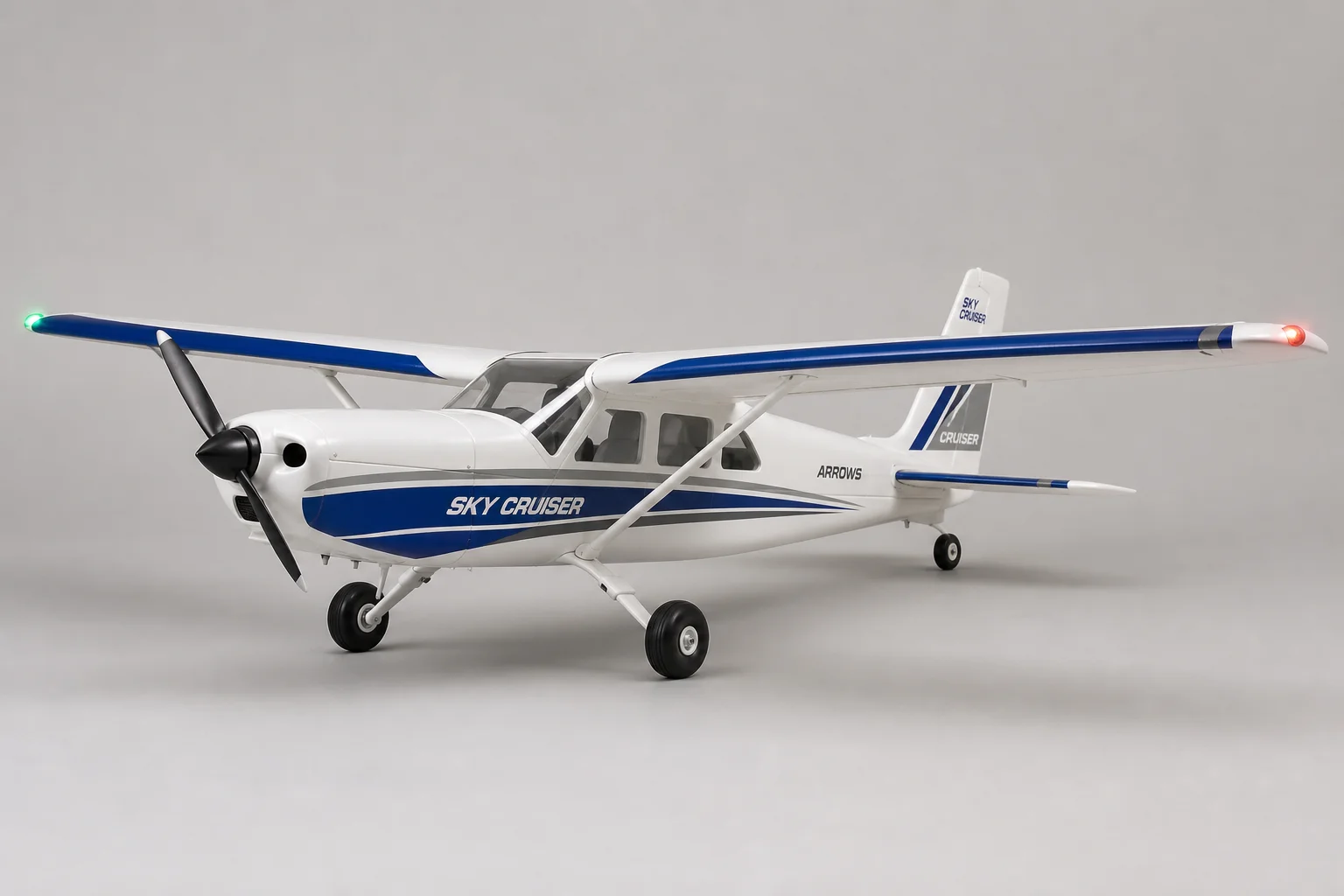
Arrows RC Sky Cruiser Review: A Capable Beginner-Friendly Scale Trainer
The Arrows RC Sky Cruiser delivers stable, predictable flying with useful features like flaps and lights, making it a solid choice for pilots stepping up to their first scale aircraft.
RC Aircraft
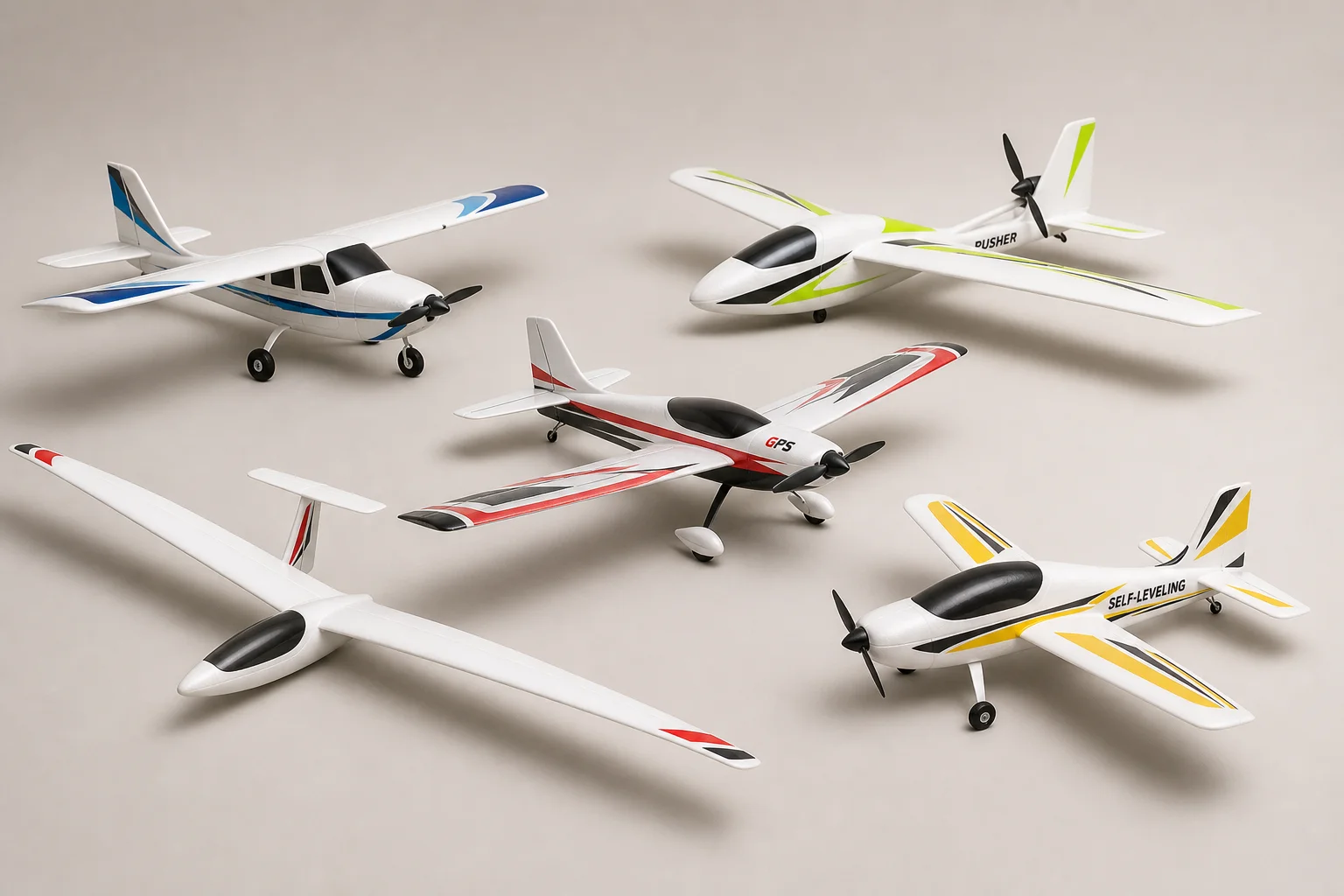
Best Beginner RC Planes: Five Reliable Models for Learning to Fly
Five beginner-friendly RC planes that combine stability, durability, and ease of control for new pilots learning the fundamentals of radio-controlled flight.
RC Aircraft
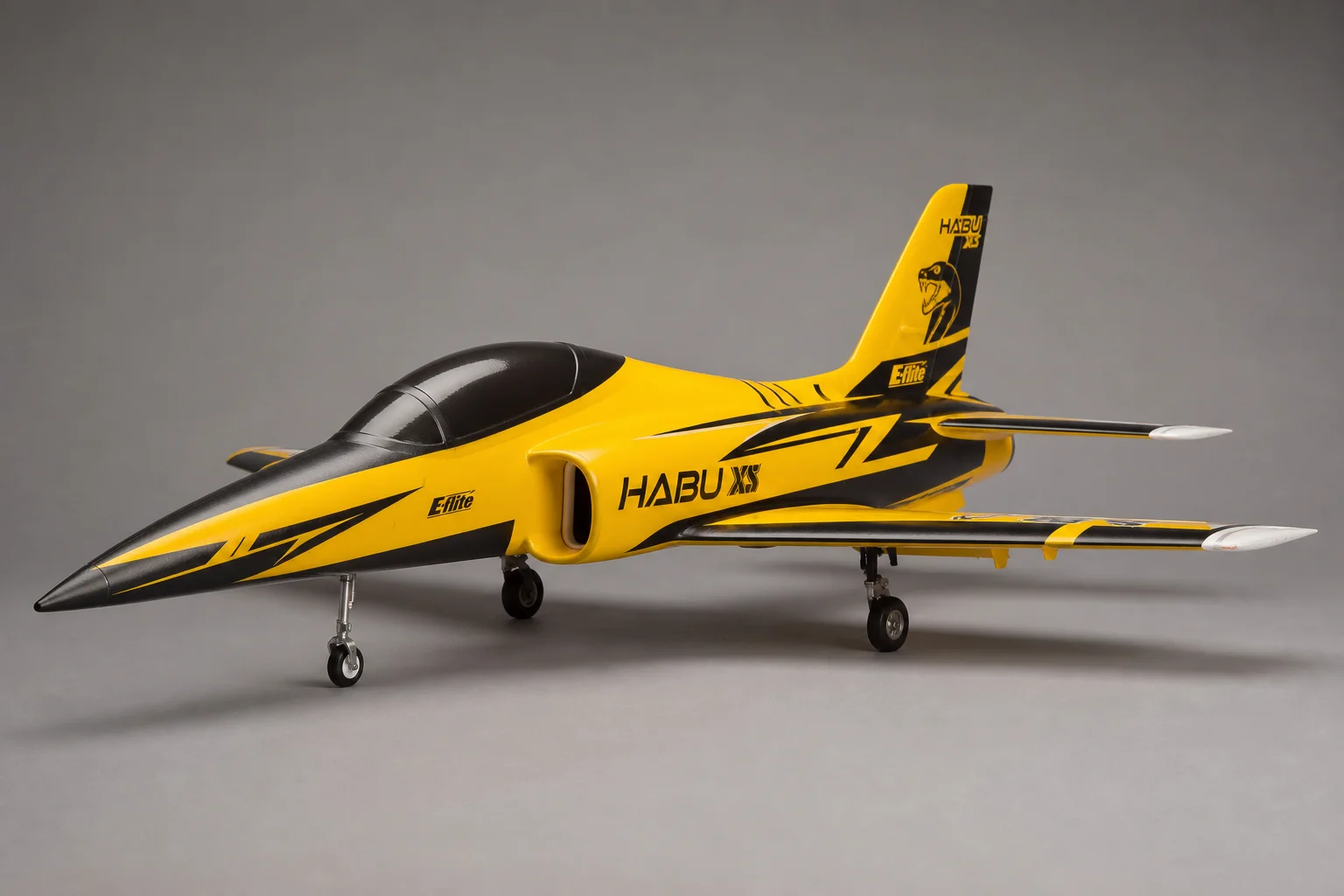
E-flite Habu XS 80mm EDF Review: A Capable Sport Jet for Intermediate Pilots
The E-flite Habu XS 80mm EDF combines smooth handling, impressive speed, and stable flight characteristics that make it accessible to pilots beyond pure beginners.