Smart Glasses & Wearables
Smart Glasses Guide 2026: Five Models Across Budget to Premium
A comprehensive look at five smart glasses options ranging from basic audio models to advanced AR glasses, with real-world performance insights and privacy considerations.
Introduction
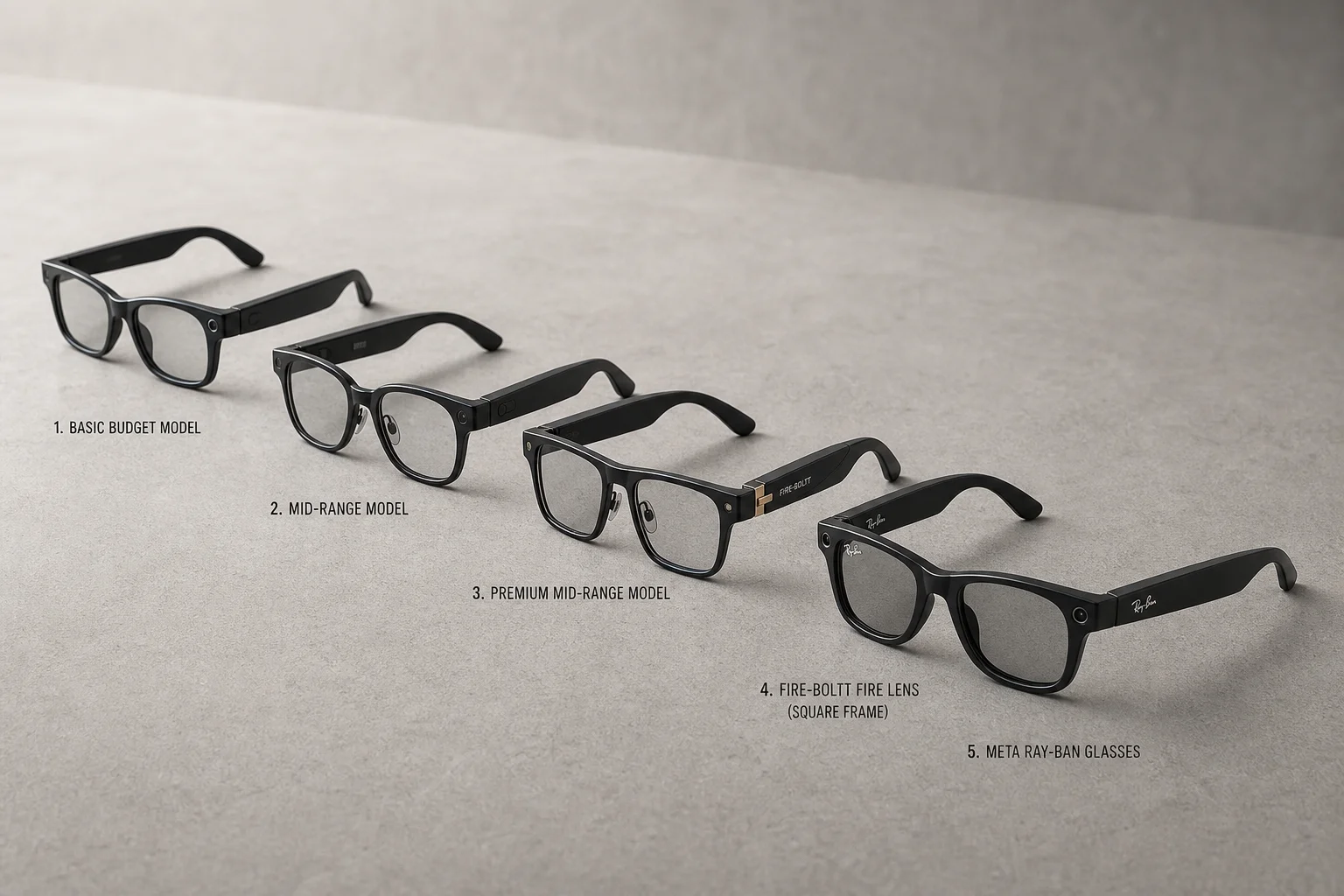
Smart glasses have evolved from niche gadgets into a diverse product category spanning multiple price points and use cases. From basic audio-enabled frames to advanced AR displays and AI-powered cameras, the market now offers options for different budgets and needs. This guide covers five distinct smart glasses models, examining their real-world performance, strengths, limitations, and the privacy considerations that come with wearable cameras and microphones.
Budget Smart Glasses: Basic Audio Model
The most affordable entry point is a basic smart glasses model available for approximately 1,600 rupees. These are straightforward plastic-frame glasses with integrated speaker and microphone components in the side arms, similar in build quality to inexpensive regular eyeglasses.
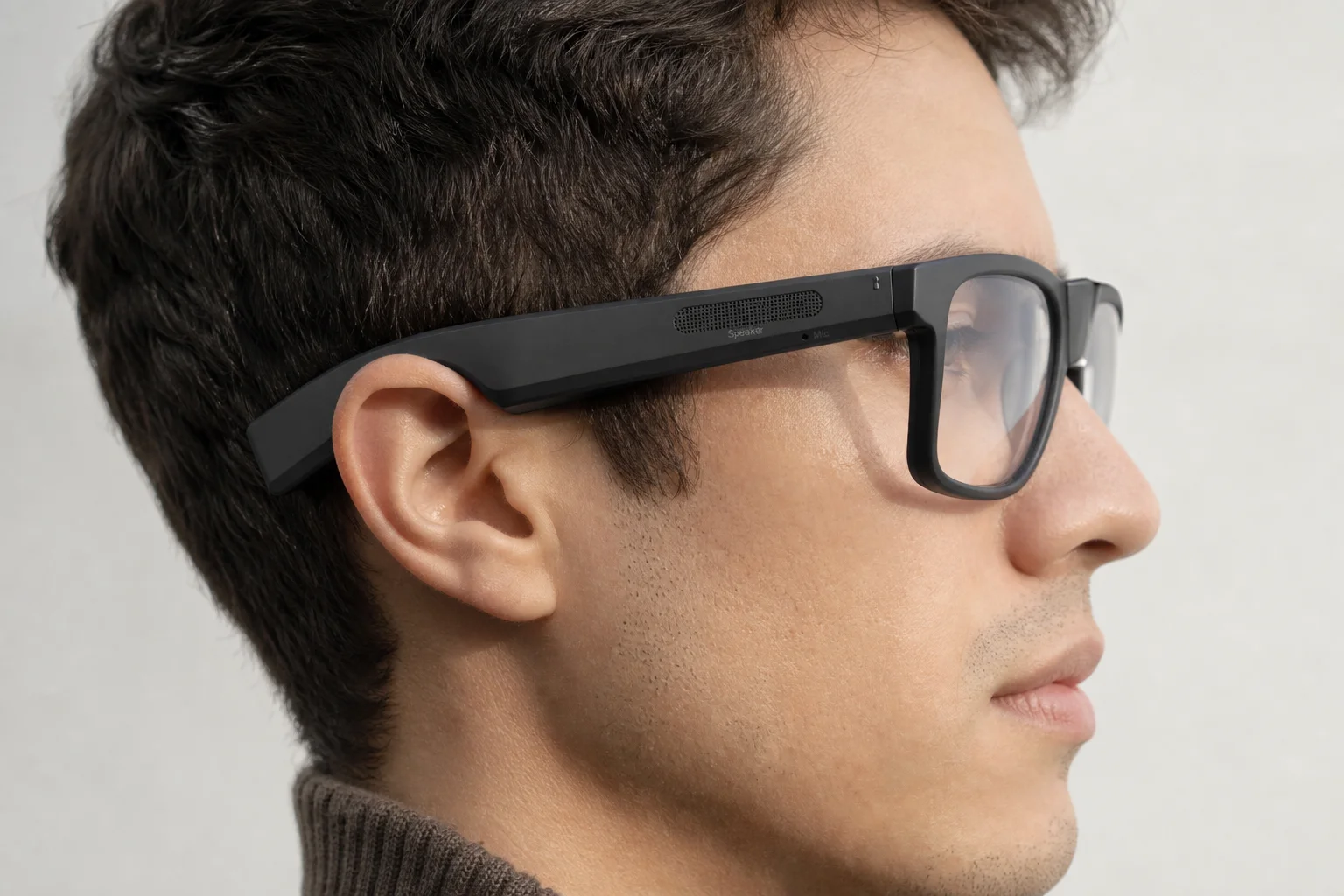
The frame design is unremarkable—standard plastic construction with slightly broader side arms to accommodate the electronics. Bluetooth 5.3 connectivity allows pairing with your phone like traditional wireless earbuds. The speaker placement fires sound toward your ears, though audio balance can be uneven between left and right channels. Speaker quality is decent but not exceptional.
The device includes touch sensors on the side arms for basic controls: double-tap for play/pause, tap-and-hold for track changes. However, it lacks voice assistant integration—there is no way to trigger a voice assistant by gesture, which undermines the “smart” designation. The microphone quality is poor, comparable to budget earbuds.
Battery capacity is limited at 160mAh, delivering approximately three hours of backup with mixed use (calling, music, and relay audio). For the price, this model feels more like a novelty than a practical upgrade over a standard pair of glasses plus a budget wireless earbud set.
Mid-Range Smart Glasses: Fire-Boltt Fire Lens
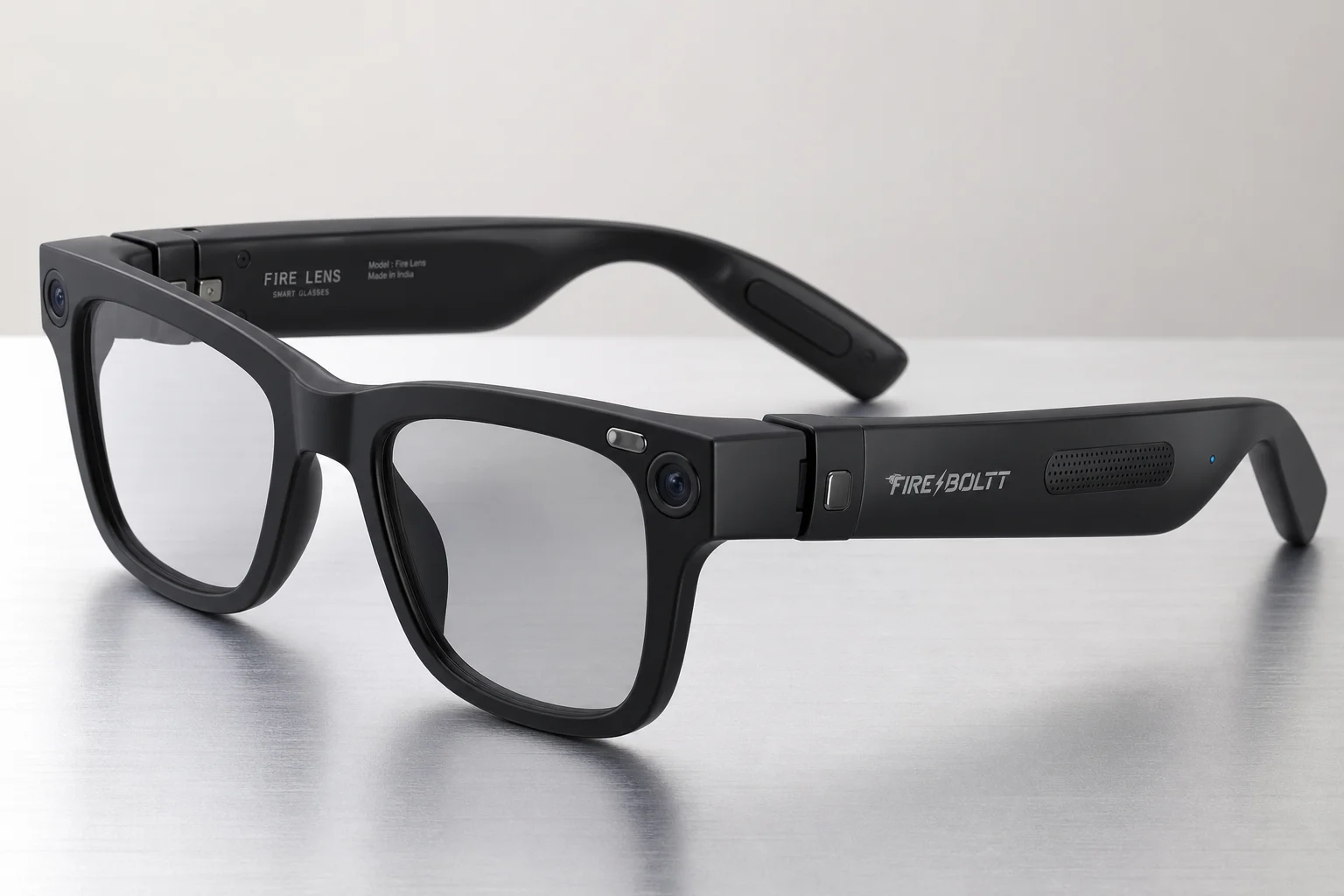
Fire-Boltt’s Fire Lens launched at approximately 12,000 rupees and represents a significant step up in capability. The design is heavily inspired by Meta’s glasses, featuring a square frame with an integrated camera, LED notification light, and visible hardware on the side arms.
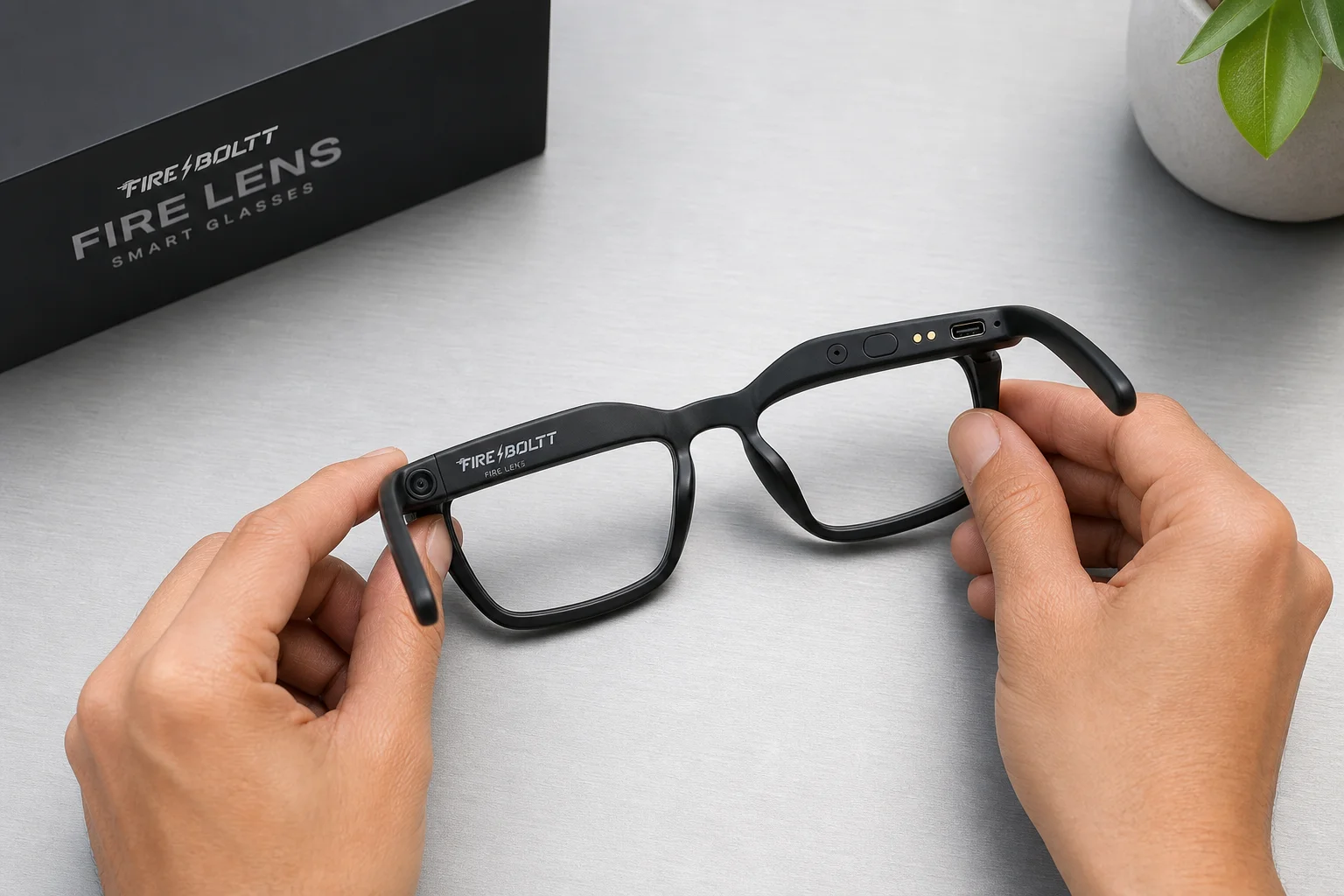
Build quality is noticeably better than budget models. The plastic is more refined, hinges are solid, and the overall feel is more premium. The device weighs 45-46 grams, which feels heavier when worn, though comfort improves with extended use. An 8-megapixel camera records 1080p video at 30fps, with significant post-processing applied to footage. Recording is limited to 12-minute segments per session, with a maximum of 30-40 minutes total per charge cycle before the device requires a restart.
The right-side arm includes a touch sensor for gesture controls, while the top-right features a capture button for photos and videos. A power button sits on the lower edge. The left-side arm has a customizable function button accessible through the companion app. A USB Type-C charging port is included.

The speaker quality is good with solid placement, delivering clear audio for casual use like relay calls and WhatsApp voice notes. The microphone quality is comparable to budget wireless earbuds. The device includes 32GB of internal storage for photos and videos, which can be transferred to your phone via the app.
The built-in AI can answer questions and analyze images when you ask “Hey Fire Lens, what is this?” by capturing a photo and providing context-based responses. However, accuracy is inconsistent. The AI supports 25 languages, though regional language support is absent. Translation features are available but work best with the app.
A critical privacy concern: the camera can record without the glasses being worn. If the device is in your pocket with the camera exposed, you can trigger recording via voice command or the physical button. The notification LED illuminates during recording, but covering it does not prevent recording. Unlike Meta glasses, there is no mandatory wear detection to prevent unauthorized recording. This represents a significant privacy risk, as audio can also be recorded without the microphone being explicitly muted—the device has only an on/off switch, not a dedicated mute button.
Battery performance varies by use case. Video recording drains 60-65% battery in 10-12 minutes. Audio playback is far more efficient, with music running for 30-40 minutes on minimal battery loss. Normal mixed use (photos, calling, multimedia) yields 1-2 hours of battery life. The side arms can become warm during extended video recording, raising durability concerns.
Premium Smart Glasses: Meta Ray-Ban
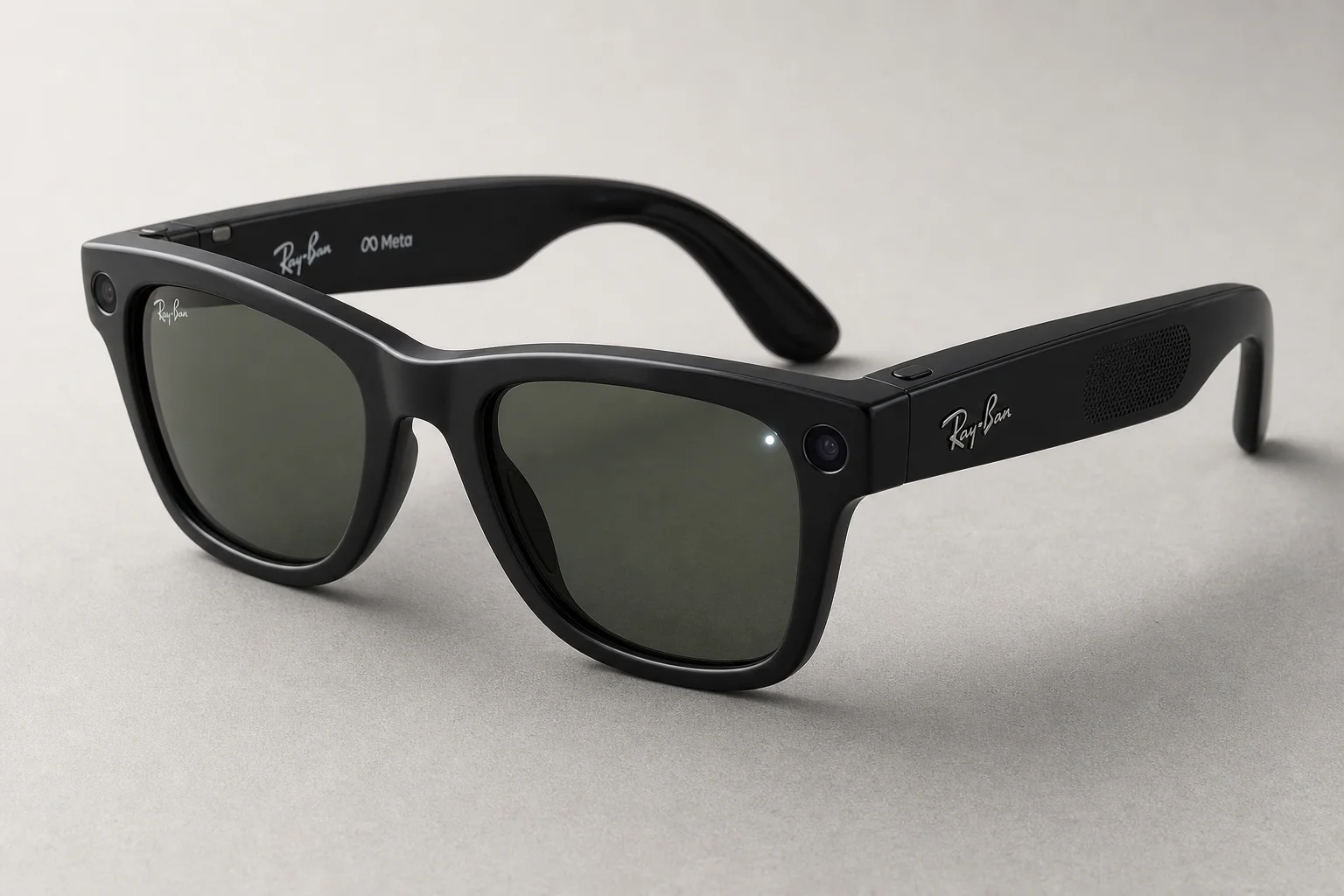
Meta Ray-Ban smart glasses launched at approximately 35,000 rupees and have since dropped to around 25,000 rupees. These represent the most polished smart glasses experience available, with superior build quality, better AI integration, and stronger privacy controls compared to Fire-Boltt.
The frame is square and refined, with thick side arms housing speakers and microphones. The device weighs approximately 50 grams, which feels noticeably heavier than regular glasses. Extended wear causes pressure behind the ears and marks on the nose. The frame is IPX4 water-resistant, offering some protection against rain and splashes.
The right-side arm includes a capture button for photos and videos, plus a physical microphone mute switch—a critical privacy feature absent from Fire-Boltt. The left-side arm has a power button. A notification LED on the front illuminates when the device is recording, and this LED is visible only to the wearer, not to others nearby. The front also houses a 12-megapixel ultra-wide camera.
Gesture controls include single-tap for play/pause, double-tap to answer calls, and triple-tap to reject calls. Swipe forward and backward adjust volume. Tap-and-hold triggers the voice assistant. Unlike Fire-Boltt, Meta glasses do not allow customization of these gestures—they are fixed.
The AI experience is more refined than Fire-Boltt. The device can identify objects, answer questions, and provide real-time information. Live translation supports five languages: English, French, Spanish, Italian, and German. However, the device cannot set alarms or reminders—only timers, and only in minute increments (not until a specific time). Meta app integration allows direct posting to WhatsApp, Facebook, Instagram, and Messenger. Sending photos to specific contacts requires multiple attempts for the AI to understand the instruction correctly.
Video recording is limited to 3-minute segments per session, with a maximum of approximately 30 minutes total per charge. Video quality in daylight is excellent, with good dynamic range and wide field of view. Stabilization is strong even during light running. The microphone is stable and clear. Photos are suitable for social media but not as a primary camera.
Battery life is approximately four hours with normal mixed use (photos, video, calling, multimedia). The included charging case acts as a power bank, providing up to 30 hours of total battery life (five to six full charges). The case charges via USB Type-C and can be charged with any standard charger. The device includes five microphones for noise cancellation.
Audio leakage is minimal compared to budget models—at 50-60% volume, audio is inaudible to others; at 100% volume, nearby people can hear what you are listening to. This is significantly better than cheaper alternatives.
A key limitation: the device uses only Meta’s AI and does not permit switching to other voice assistants like Google Assistant. This is a frustrating constraint given the premium price point. Additionally, the AI’s potential is underutilized—you cannot control smart home devices, set reminders, or perform many tasks available on standard voice assistants.
Privacy considerations exist but are better managed than Fire-Boltt. The physical microphone mute switch provides direct control over recording. The notification LED is visible to the wearer. However, like all wearable cameras and microphones, data collection and sharing policies apply. Meta’s privacy policy permits data storage, cloud transmission, and third-party sharing for marketing analysis.
AR Glasses: Lenovo Glasses
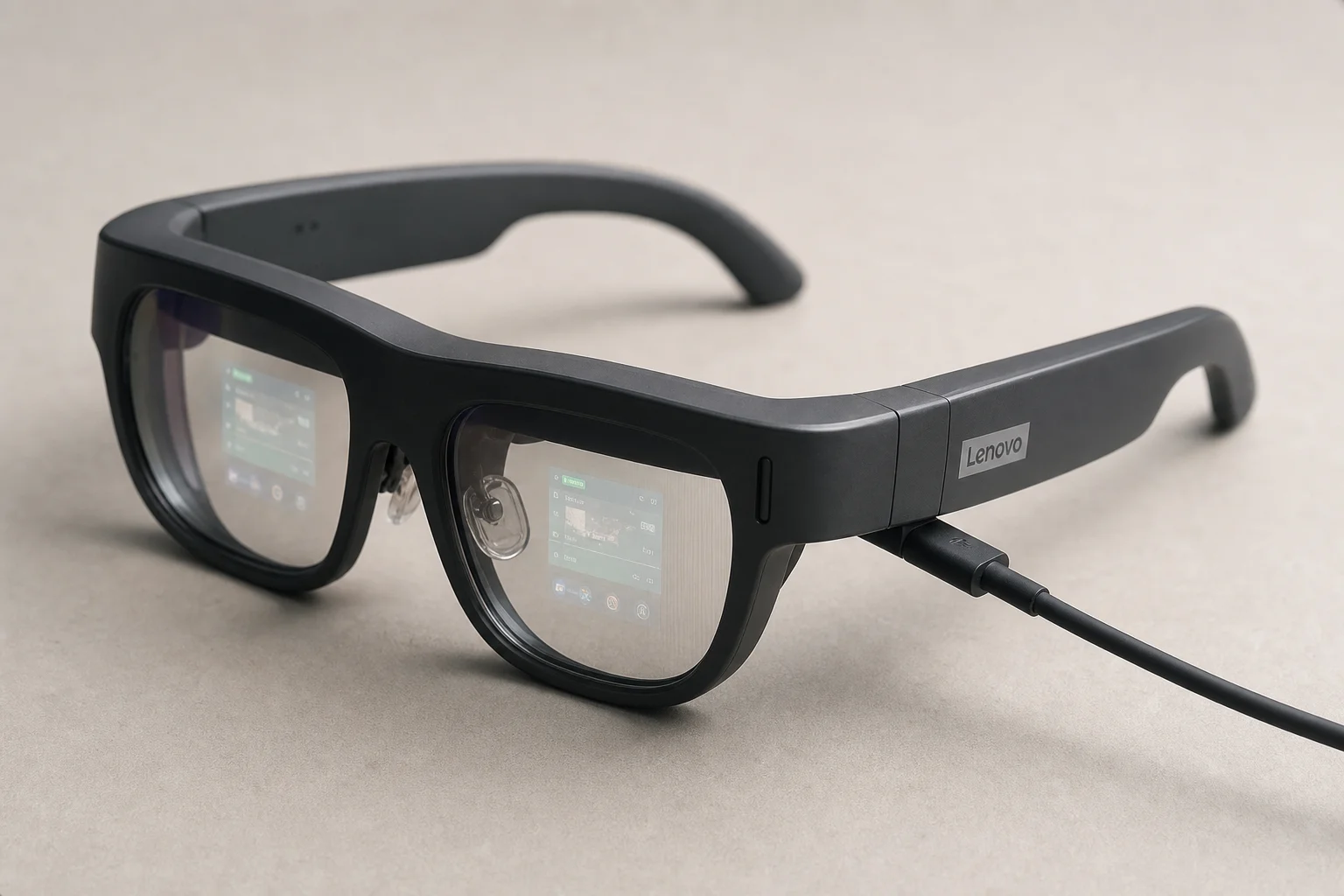
Lenovo’s AR glasses represent a different category entirely. These are not smart glasses for audio and calling but rather augmented reality displays for multimedia consumption. They feature a micro-OLED display with full HD resolution at 60Hz, allowing you to view movies, games, and other content on a large virtual screen.
The design is bulkier than smart glasses, with a visible tether (USB Type-C cable) connecting to a phone or laptop. The glasses are not suitable for casual wear or outdoor use—they are primarily for stationary viewing. The speaker quality is significantly better than smart glasses, delivering immersive audio for entertainment.
The display shows warm-toned images with blurred edges, which is acceptable for movies but not ideal for detailed work. The experience is best suited for travel (watching films on a flight) or entertainment in private settings. These glasses cost approximately 40,000-45,000 rupees.
AR glasses in general are not practical for everyday use because the thick display lenses block clear vision of the surrounding world. They are a niche product for specific entertainment scenarios, not a replacement for smart glasses.
Key Considerations Before Buying
Privacy and Recording Concerns
Smart glasses with cameras and microphones raise significant privacy issues. Fire-Boltt’s lack of mandatory wear detection means you can record people without their knowledge. Meta’s physical mute switch and notification LED provide better safeguards, but data sharing policies still apply. Any wearable camera and microphone device carries inherent privacy risks—data breaches affecting major tech companies have exposed billions of records, so no device is immune to compromise.
Comfort and Practicality
Budget models are light but feel cheap. Mid-range and premium models are noticeably heavier and can cause discomfort during extended wear. They are not suitable as all-day eyeglasses if you wear prescription lenses.
Battery Life
Video recording drains batteries quickly on all models. Audio-only use is far more efficient. Expect 1-4 hours of mixed use depending on the model.
AI Limitations
Current smart glasses AI is useful for basic tasks (calling, music control, translation, object recognition) but cannot replace a smartphone for complex operations. Meta’s restriction to its own AI is a significant limitation at the premium price point.
Multimedia Consumption
Smart glasses are not suitable for watching movies or consuming full-screen content. The audio is directional and limited, and the immersion is poor. AR glasses are better for this use case but are bulky and impractical for everyday wear.
Buying Advice
If you want a basic smart glasses experience without spending much, the budget model at 1,600 rupees is a novelty but not a practical upgrade over a regular pair of glasses plus budget earbuds.
For a genuine smart glasses experience with better build quality, microphone, and speaker performance, Fire-Boltt Fire Lens at 3,500 rupees offers good value. Be aware of the privacy risks around recording without wear detection.
If you prioritize privacy controls, better AI integration, and superior build quality, Meta Ray-Ban at 25,000 rupees is the most polished option, though the fixed gesture controls and AI-only assistant are limitations.
AR glasses are a separate category for entertainment and should only be considered if you specifically want a large virtual display for movies or games.
Smart glasses are ultimately accessories, not necessities. They are best purchased after you have covered essential tech needs (phone, laptop, gaming console). They will not significantly change your daily life, and you can comfortably skip them if your budget is limited.
Conclusion
The smart glasses market now spans a wide range of prices and capabilities. Budget models are novelties; mid-range options like Fire-Boltt offer practical features with privacy trade-offs; premium models like Meta provide the most refined experience but with limitations on AI customization. AR glasses serve a different purpose for entertainment. Before purchasing, consider your actual use case, privacy comfort level, and whether the device genuinely solves a problem in your daily routine. Smart glasses are an interesting technology, but they remain optional upgrades rather than essential devices.
Further reading
Related Reviews
Automotive Accessories
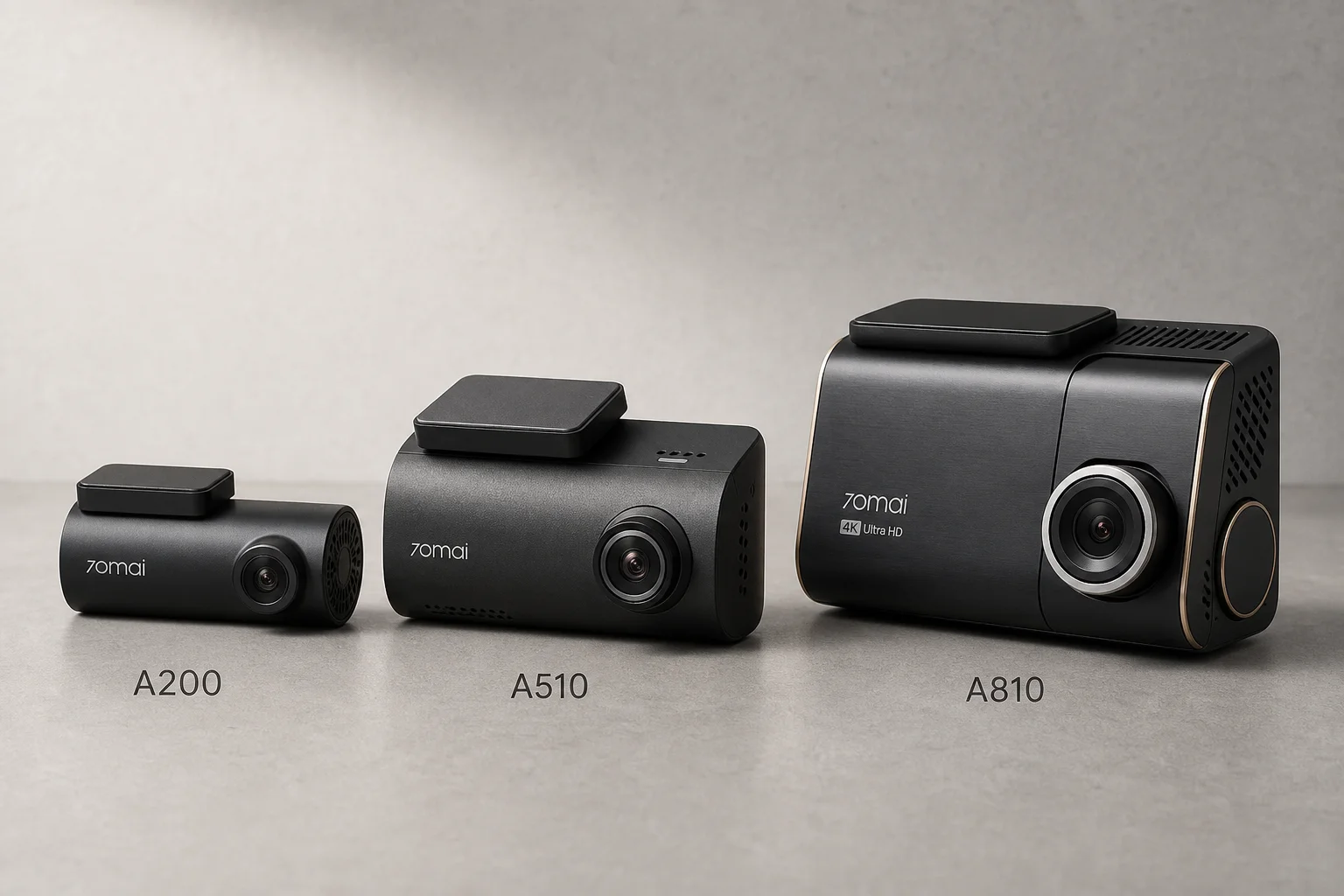
70mai Dash Cam Comparison: A200 vs A510 vs A810
Three dash cameras from 70mai across different price points reveal how resolution and sensor quality impact real-world footage clarity, especially for number plate visibility and low-light performance.
Cycling Power Meters
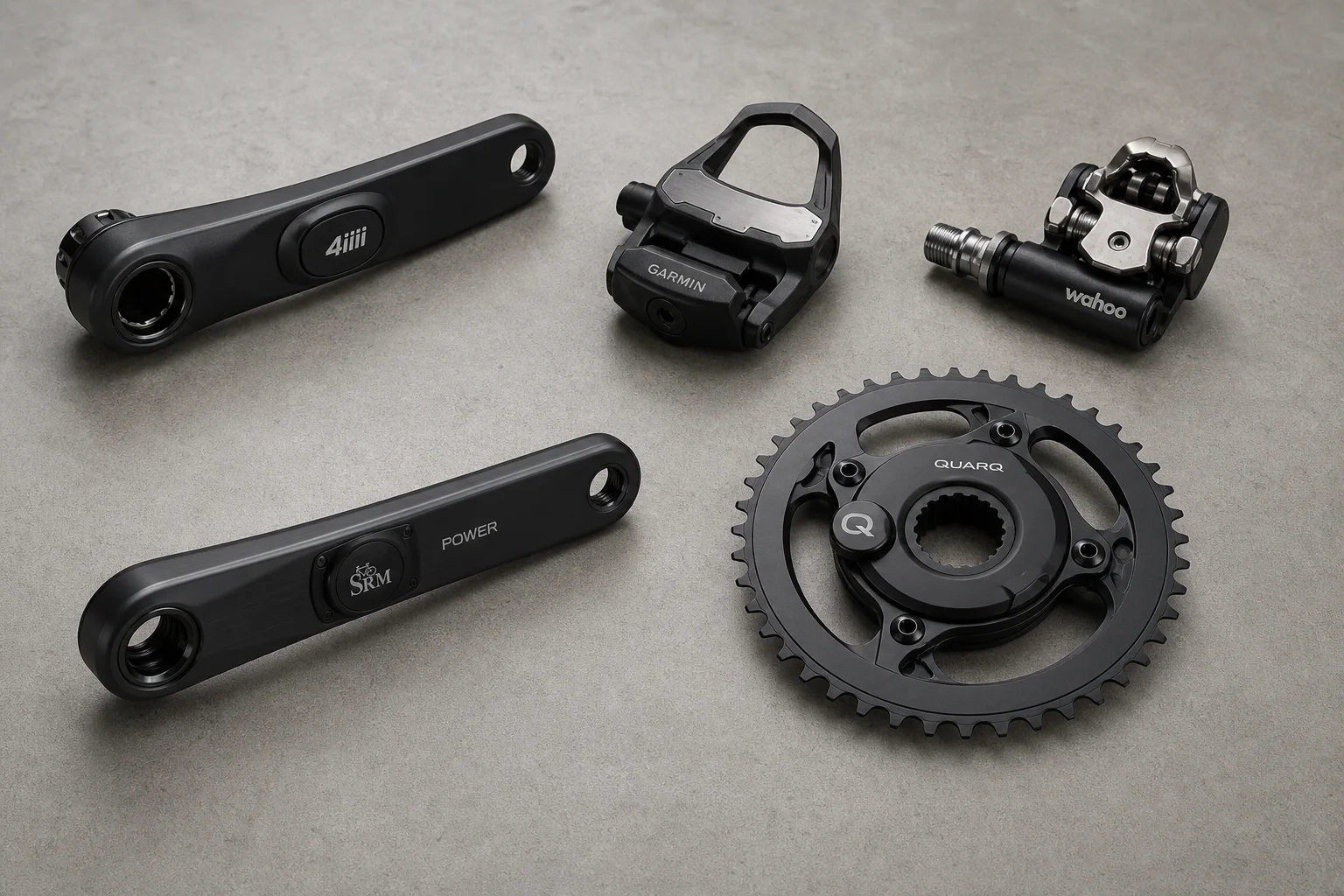
Five Affordable Power Meters for Road and Off-Road Cycling
Five practical power meter options under $500 that deliver reliable power measurement without breaking the budget.
Coffee Gear
AliExpress Coffee Gear Review: Five Products Worth Testing
A practical look at five coffee tools from AliExpress, including a sand heater, automatic brewer, latte art printer, espresso machines, and home roaster.