Tools & Equipment
Three Tools That Changed the Way I Work: A Builder's Honest Take
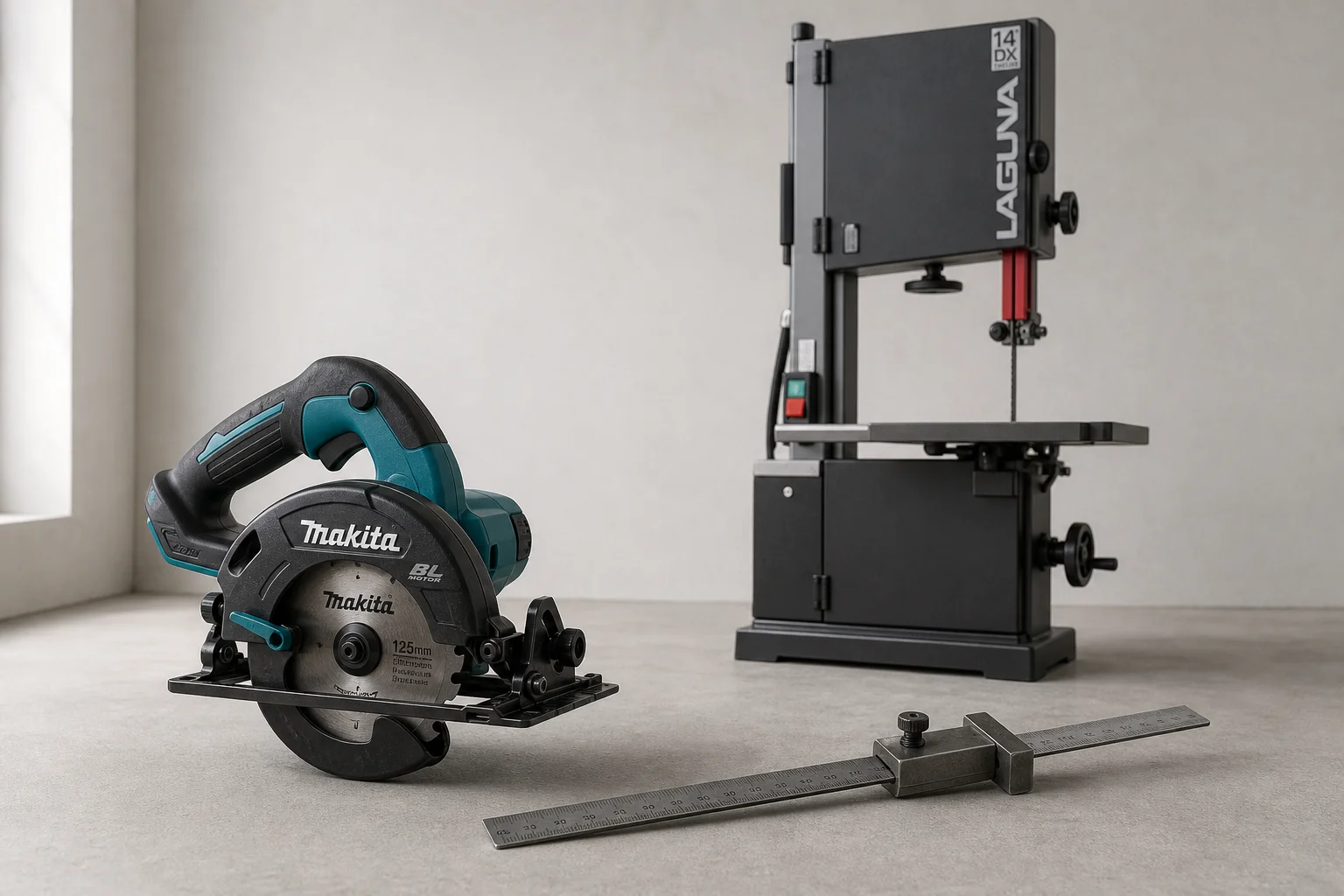
A circular saw with dual-tilt capability, a precision steel ruler, and a band saw that transformed how this builder approaches projects.
Introduction
Some tools enter your workshop and immediately feel essential. Others surprise you by becoming indispensable in ways you never anticipated. Three tools have genuinely changed how I approach building and renovation work: a compact circular saw with an unusual feature, a simple steel ruler that travels everywhere with me, and a band saw that opened up entirely new possibilities for project planning.
The Makita 40V 125mm Circular Saw: Dual-Tilt Innovation
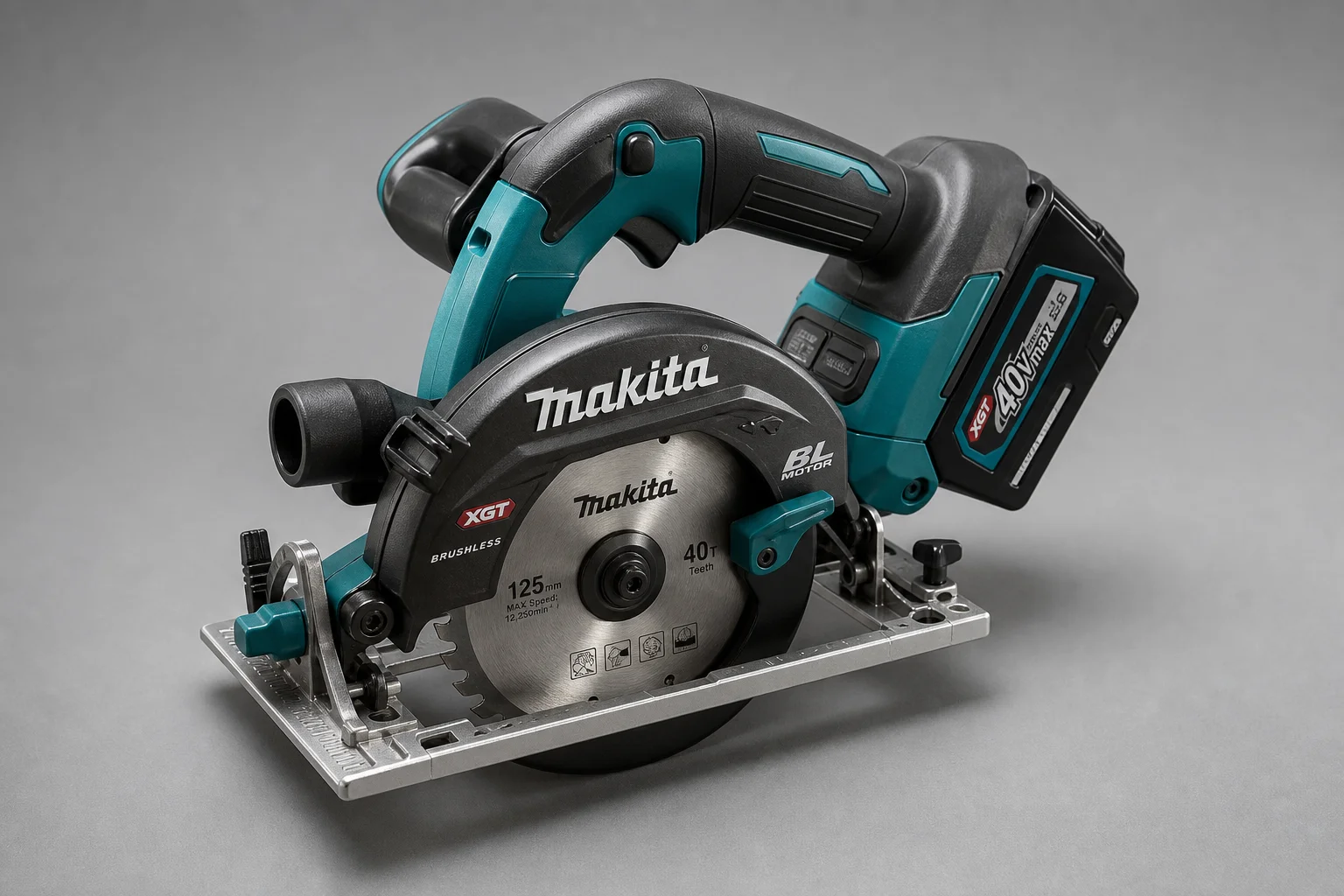
I bought the Makita 40V 125mm circular saw for one specific feature that no other circular saw I knew of could do. At first, it seemed like a novelty. Now it is my most-used circular saw, despite being significantly smaller than my other saws.
The standout feature is the ability to tilt both left and right. Most circular saws tilt only one direction, typically to the right. The base plate hangs off the edge when you try to tilt the other way. This Makita is different. A small lever on the front releases the gauge, allowing the saw to tilt left as well. The left-tilt angle is limited to about 15 degrees with a depth of roughly 30mm, but that constraint solves a real problem.
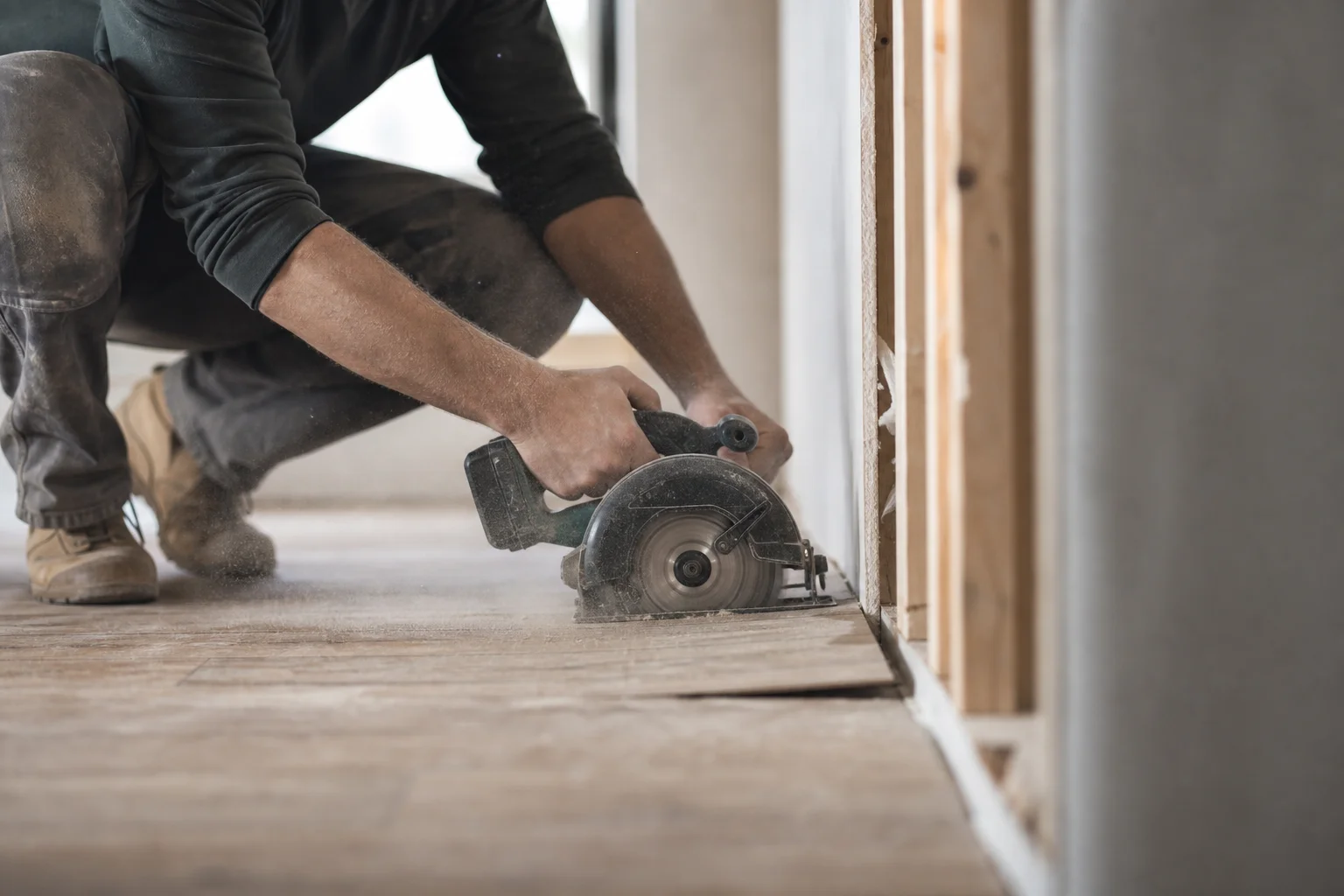
In older houses, walls are often built directly on top of flooring, trapping the floor underneath. When renovating, you frequently need to remove flooring in areas like bathrooms where rot has set in. Cutting out that trapped floor is normally difficult. You get as close as you can with a standard circular saw, then finish the job with a multi-tool, which is slow and exhausting.
The dual-tilt capability lets the saw sneak under the wall frame at an angle. Even better, the base plate can be loosened at two small knobs, transforming it completely so you can position the saw right up against the wall. The result is a clean, quick cut that would otherwise take much longer.
The saw handles 4x2 timber, which is what I cut 80 percent of the time. It is lightweight and uses the same batteries as my drills. The main drawback is that Makita does not distribute this model in my region, so replacement blades in the 125mm size are difficult to source. I had to purchase this saw through an international marketplace, and it arrived from Japan at a cost of approximately 600 New Zealand dollars.
Despite the limited availability and odd blade size, the novelty feature I bought it for turned out to be secondary to its everyday utility. I use it every single day.
The Precision Steel Ruler: Accuracy Through Simplicity
This ruler is far more accessible and affordable than the circular saw. I carry it with me every day in my tool bag because it solves a genuine problem with how measuring tools work.
Steel rulers are typically very thin, which makes them hard to pick up when they lie flat on a surface. This one has a small kickstand-like feature that lets you flip it up and grab it easily. It also came with a sliding stock that lets you set it to a measurement and draw parallel, precise lines.
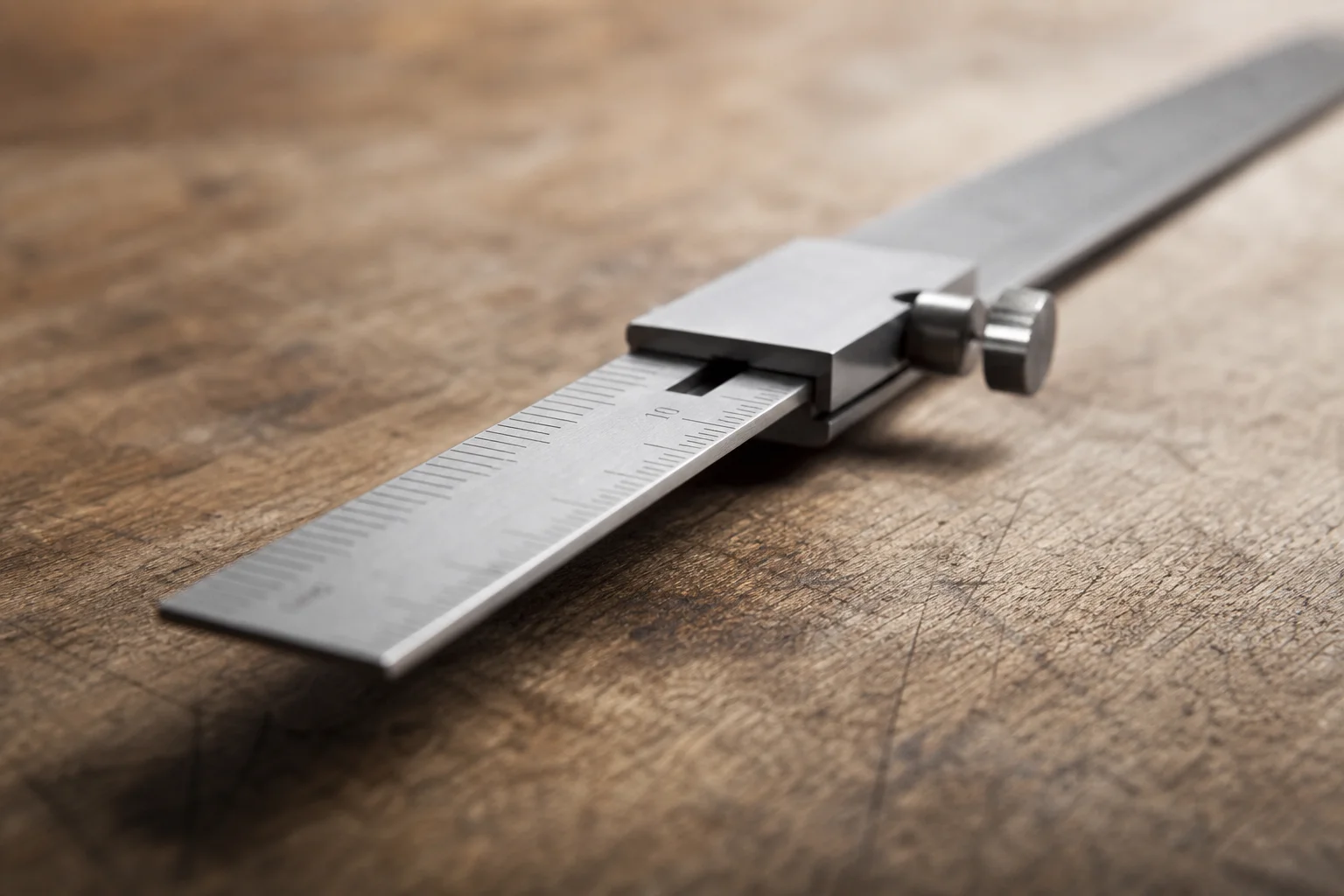
Measuring tools involve trade-offs. A measuring tape extends far but sits away from the surface you are measuring, introducing error over distance. A folding ruler gets you closer, typically to about 3 or 4 millimeters. A steel ruler, because it is so thin, lets you measure almost directly against the surface, eliminating the gap between the measuring device and the object.
When I need small, precise measurements for joinery or floor work, I pull out this ruler. The thinness means there is virtually no distance between my marking tool and the surface, resulting in much greater accuracy. It has become an essential part of my daily toolkit.
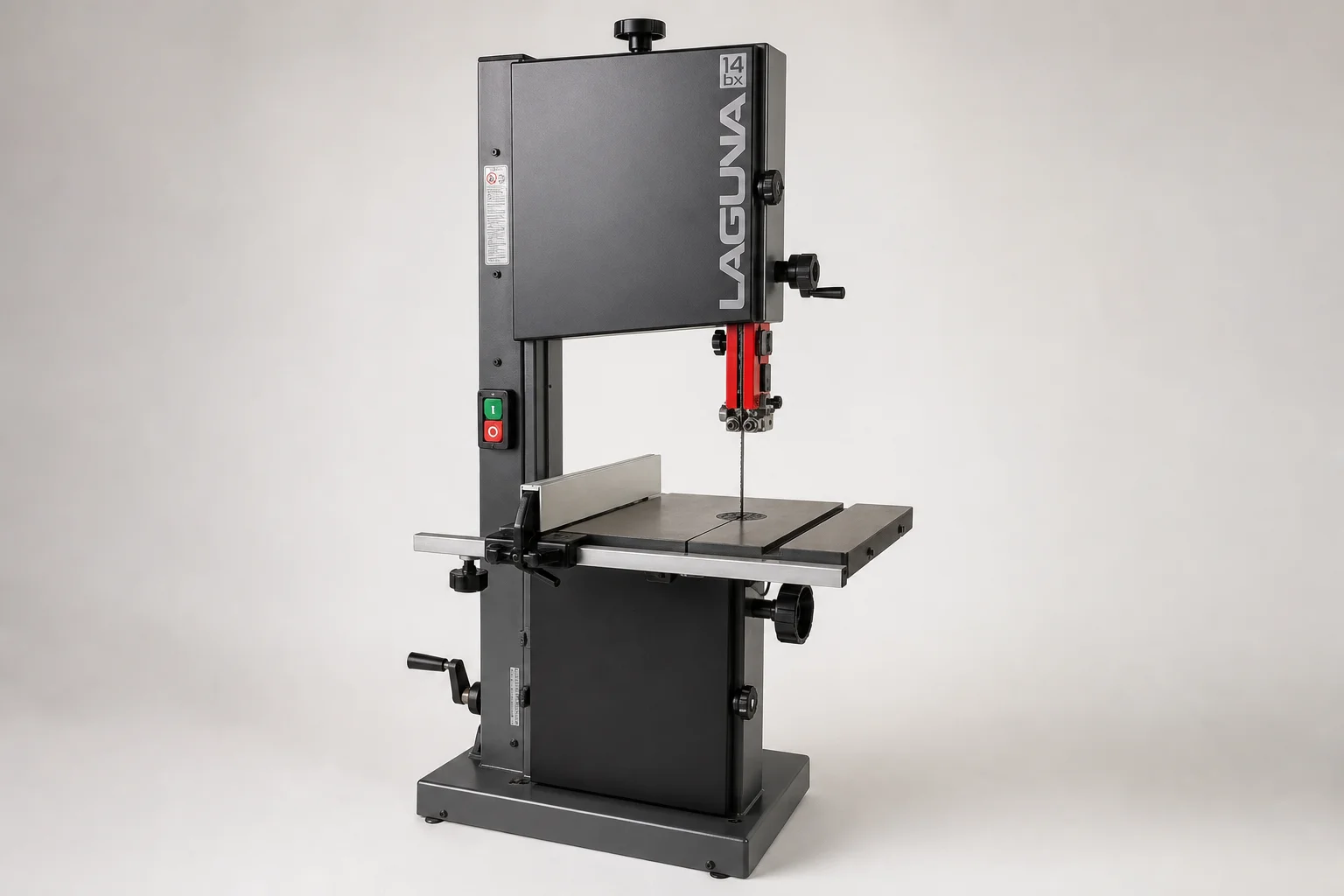
The Laguna 14-Inch Band Saw: Ripping and Shaping
I acquired this band saw for free, but the story of how I got it is less important than what it has enabled me to do.
Before taking a woodworking course, I thought the table saw was the center of the workshop. I learned that the band saw is actually more central to how woodworking gets done. It can rip large pieces of timber, which was the first thing I did when I got this saw, and the results were remarkable.
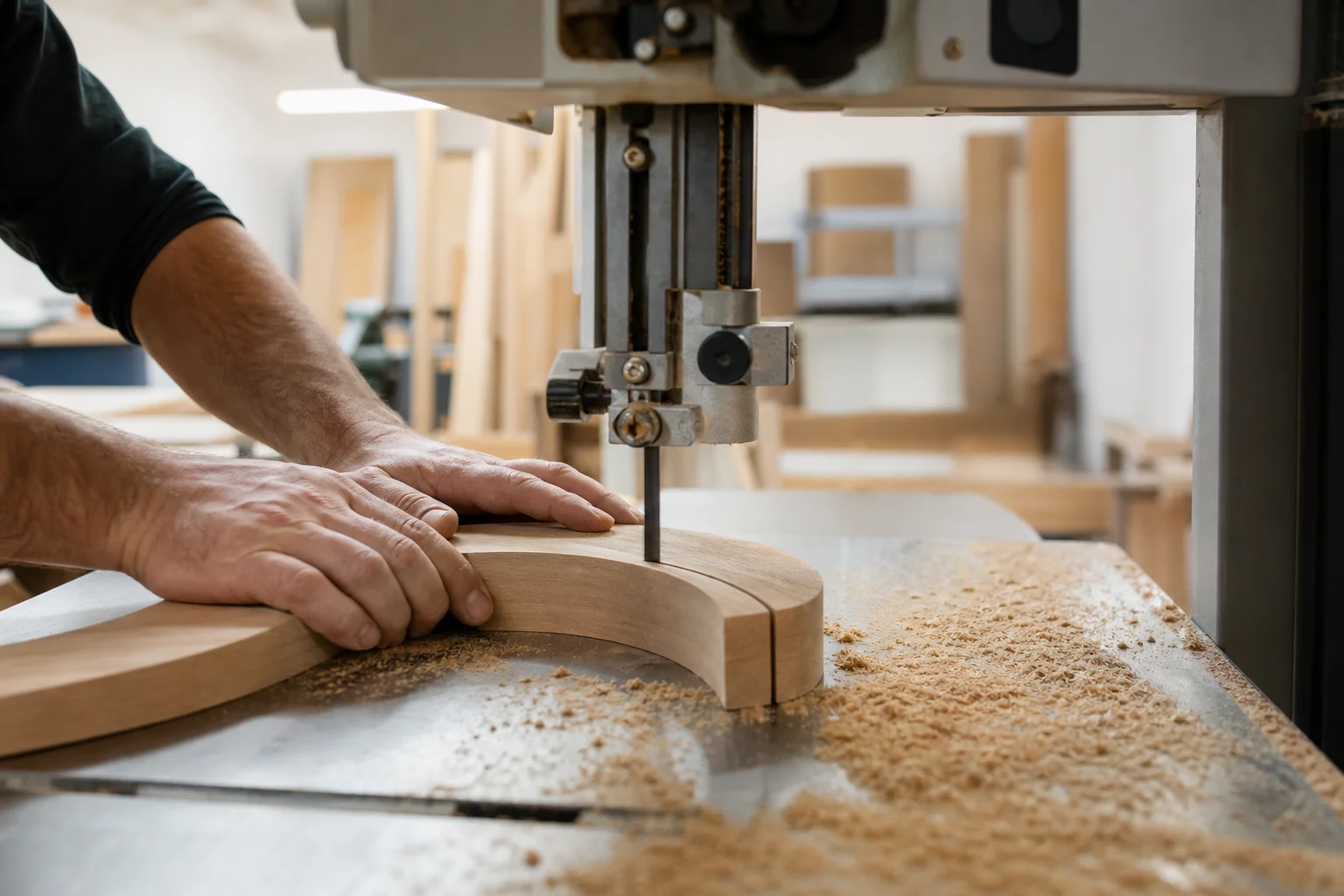
The band saw is safer than a table saw in important ways. A table saw can kick back violently. A band saw, with one continuous blade moving downward, does not have that same risk. You still need to respect the sharp blade, but you have to work harder to injure yourself.
The band saw also shapes wood in ways a table saw cannot. I can make curved cuts that would be impossible with a jigsaw if the wood is too thick, or with a table saw because it only cuts straight lines. I recently made a stool with a curved seat, and that curve was cut on the band saw.
The band saw has become an enabling tool for me. When planning projects, I now think about what I can do with it. I can buy larger pieces of timber and rip them down to sizes that suit my needs. I can incorporate curved cuts into furniture designs. It has fundamentally changed how I approach building projects.
Why These Tools Matter
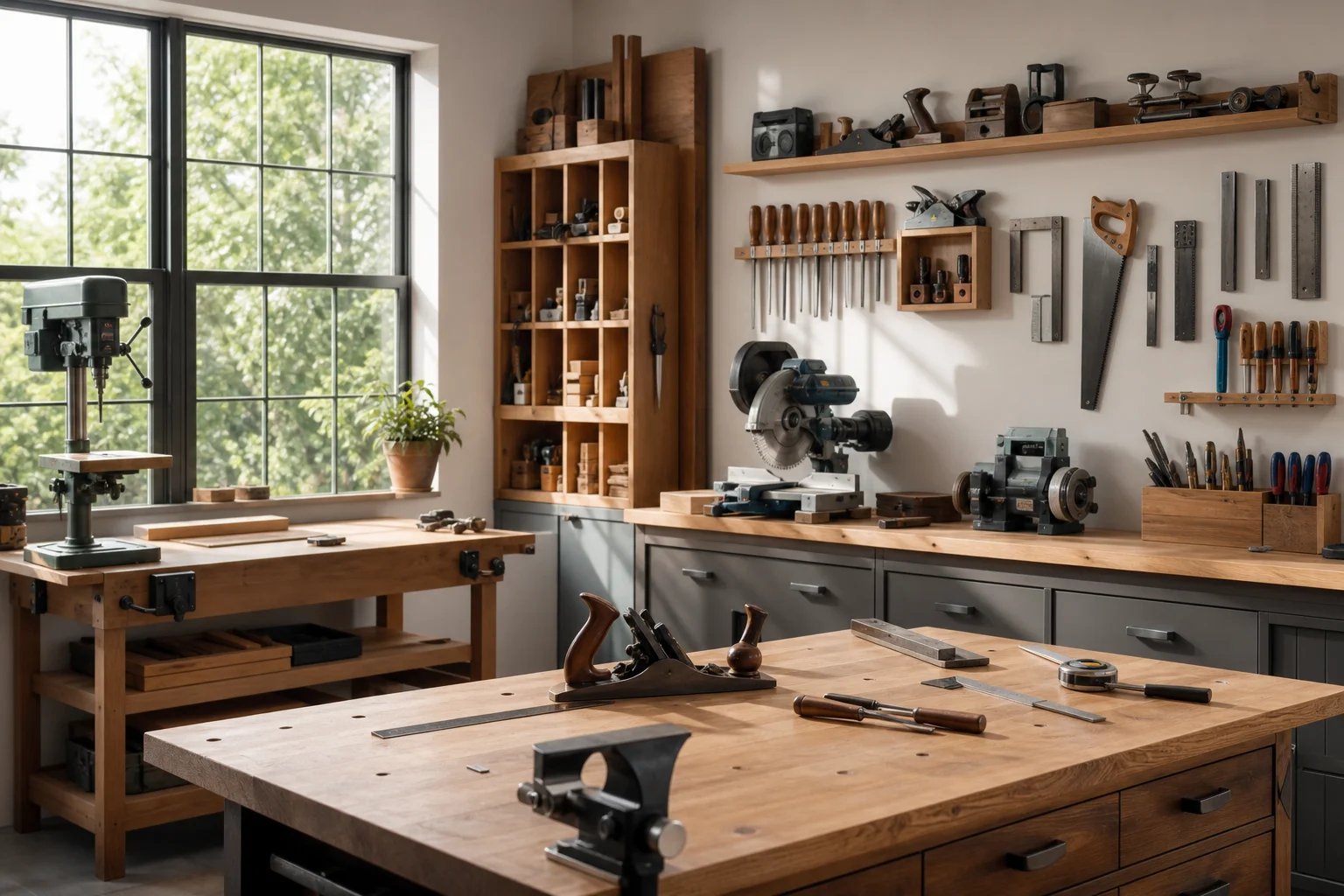
This list might seem absurd: a 4,000-dollar band saw, a 10-dollar ruler, and a circular saw you can only order from Japan. But these are not tools I am recommending everyone buy. These are tools that have genuinely changed the way I work.
The Makita circular saw solved a specific problem I faced repeatedly in renovation work. The steel ruler became essential because it delivers precision I could not get any other way. The band saw opened up possibilities I did not have before.
The common thread is that each tool addressed a real constraint in how I worked and made certain tasks faster, safer, or more accurate. That is what makes a tool worth having.
Conclusion
Tools that change the way you work are not always the most expensive or the most obvious choices. Sometimes they are small innovations that solve a specific problem. Sometimes they are enabling tools that let you do things you could not do before. The best tools are the ones that make you rethink how you approach your work and make you more capable at what you do.
What tools have changed the way you work? Have any of them surprised you with their usefulness? Share your thoughts in the comments.
Further reading
Related Reviews
Tools & Equipment
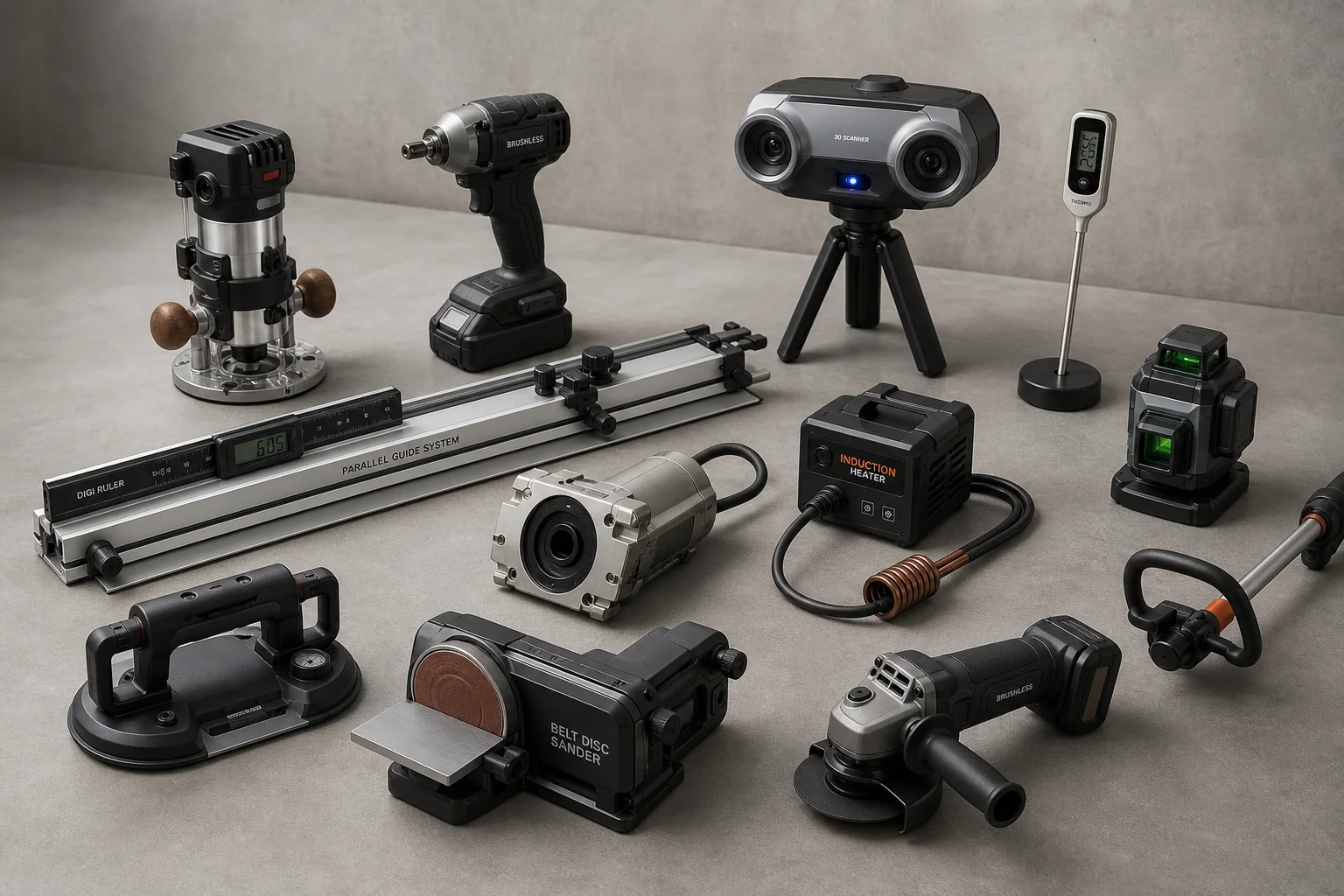
Next-Generation Tools 2026: 13 Innovations Rewriting the Workshop
A curated selection of 13 advanced tools and accessories that bring precision, power, and efficiency to professional and DIY workflows.
Power Tools
Best Laser Levels 2026: Five Tools Ranked by Accuracy and Versatility
A practical ranking of five laser levels from budget-friendly to premium, with real specs and clear use cases for each.
Power Tools
Best Oscillating Multi-Tools 2026: Five Models Tested Head-to-Head
We tested five cordless oscillating multi-tools across ergonomics, vibration control, cutting speed, and value. Here are the standouts.