Coffee Brewing
V60 Filter Papers: A Practical Comparison of Nine Options
We tested nine V60 filter papers to understand how they affect brew quality, grind requirements, and whether rinsing actually matters.
Introduction
Filter paper choice might seem like a minor detail in pour-over brewing, but our testing revealed that paper selection meaningfully affects brew quality, grind requirements, and brew time. We compared nine different V60 filter papers to understand what actually matters and what is marketing noise.
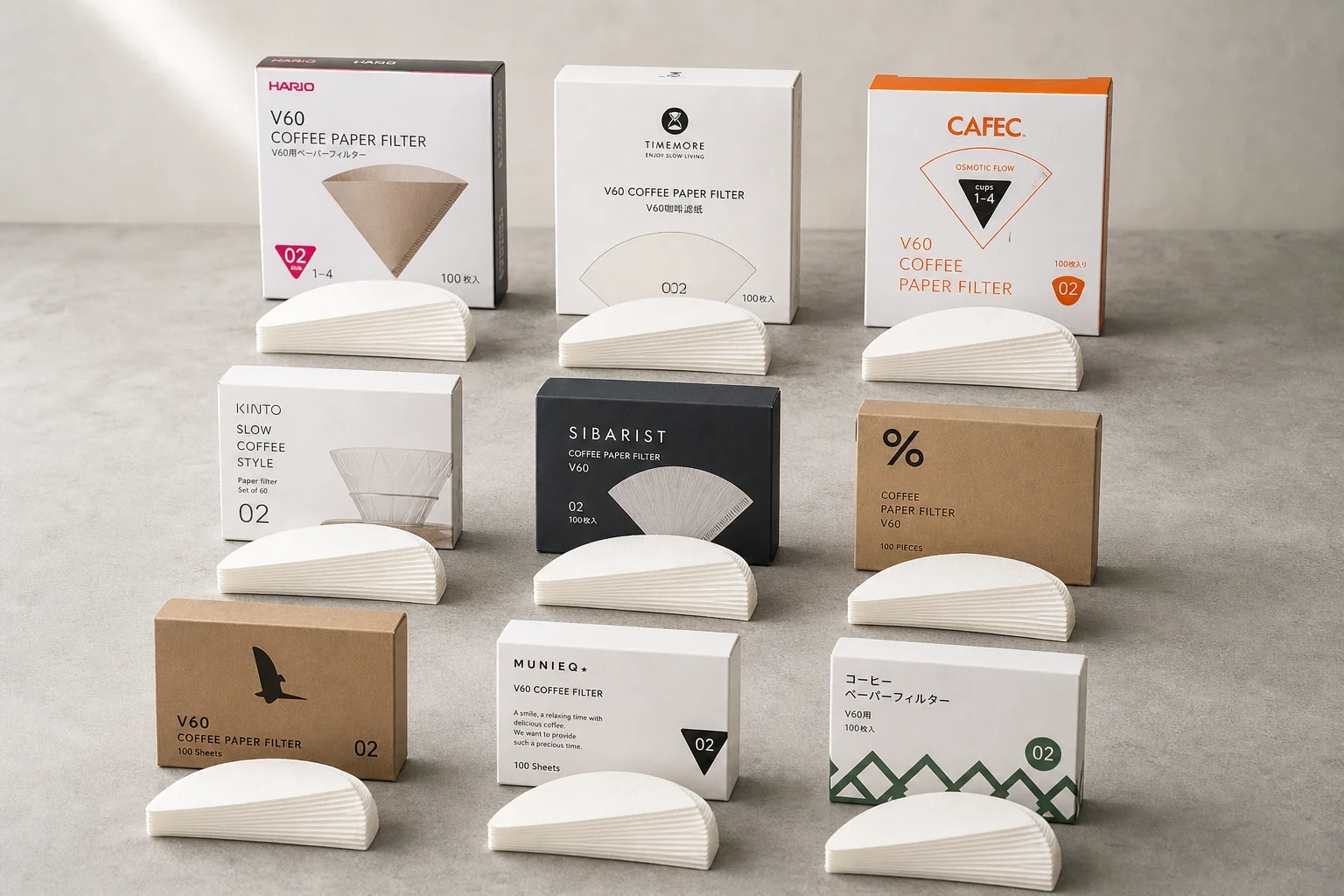
The Papers We Tested
We gathered nine filter papers for this comparison. Hario papers serve as the benchmark since one factory in Japan now manufactures all Hario products regardless of packaging format. Timemore offers compact V60 papers. Kinto’s Slow Coffee Style papers contain cotton in the weave, making them noticeably thicker and heavier than standard options.
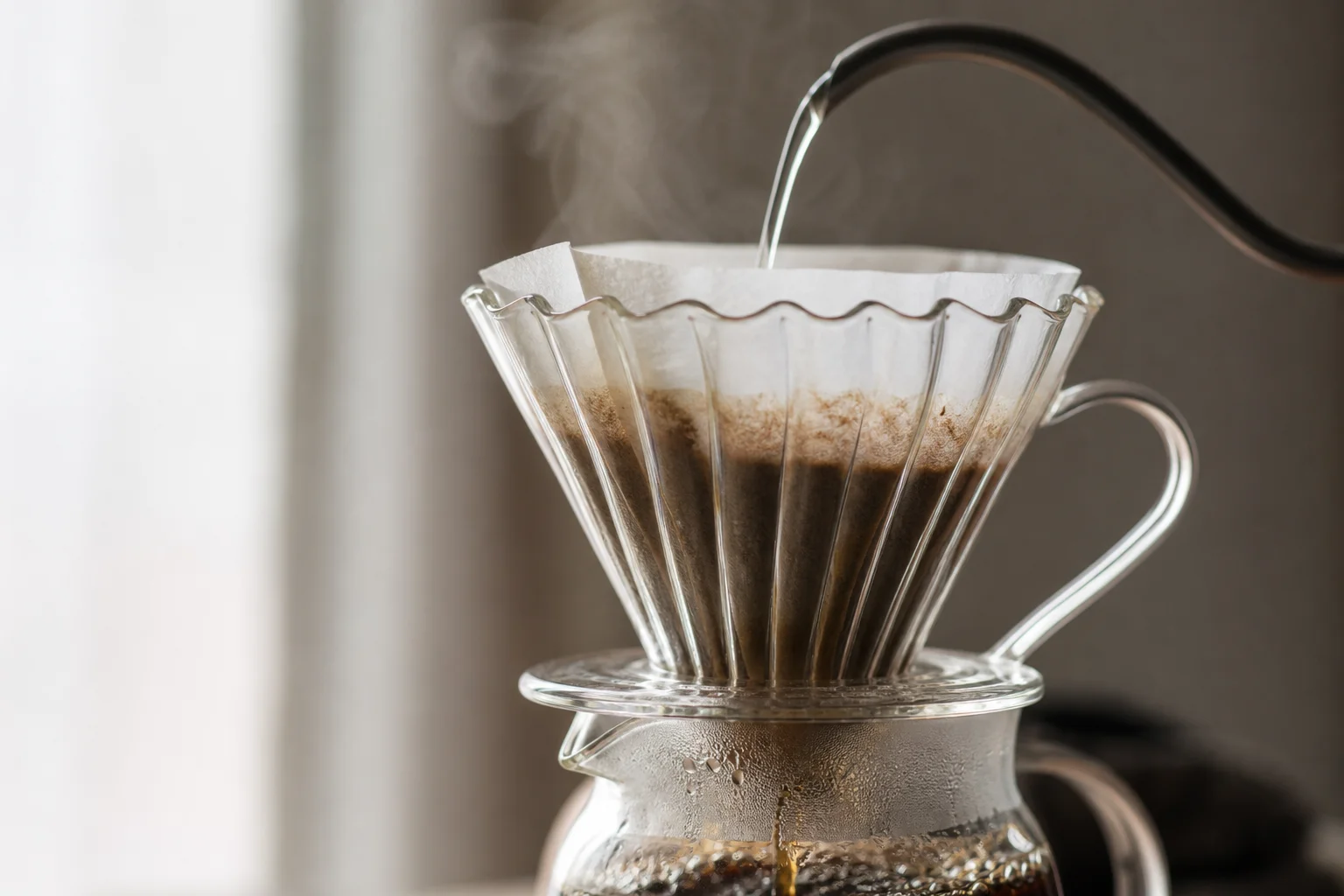
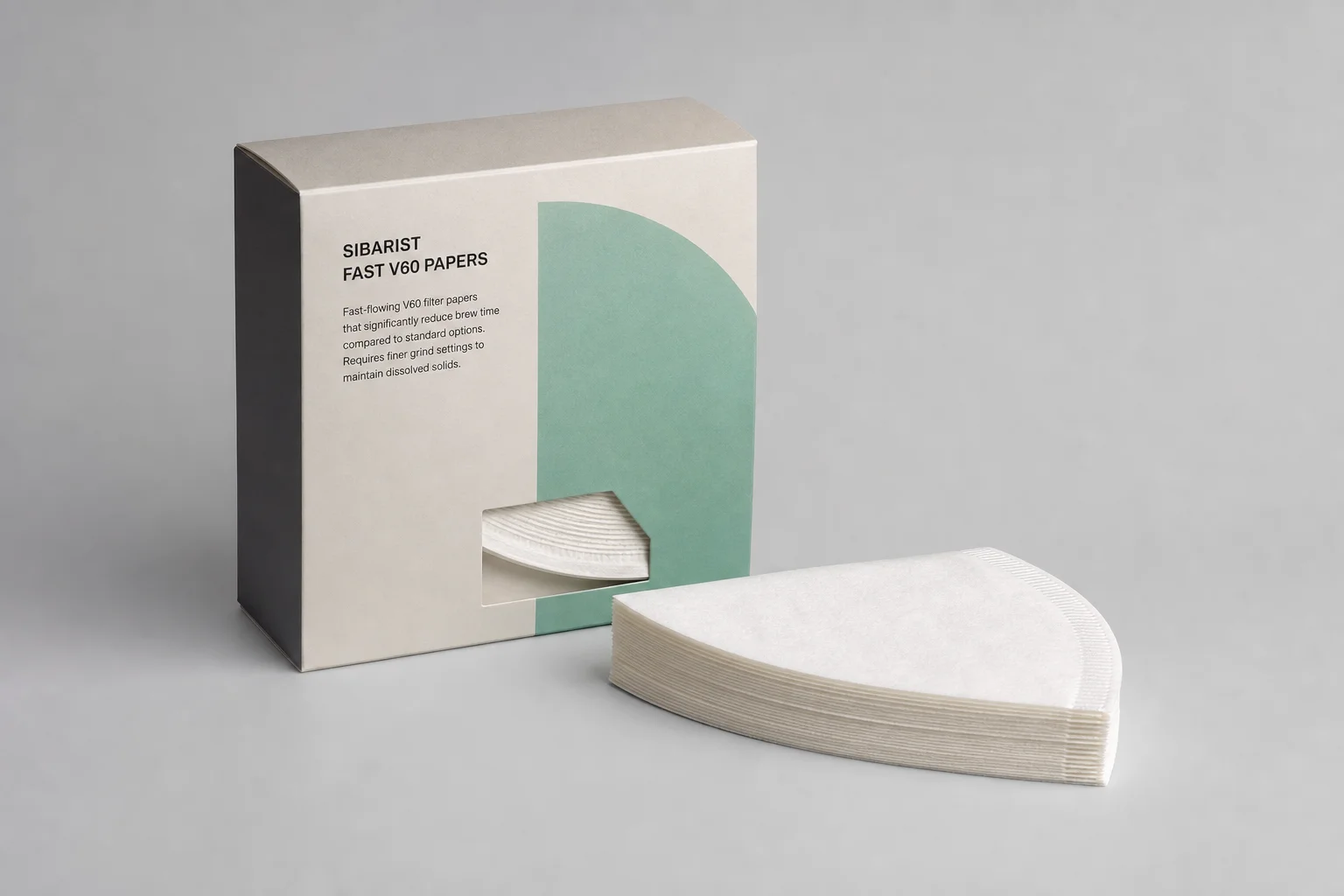
Cafec produces four distinct papers: an Abaca option made from plant-based material, plus three papers designed around specific roast levels and brew temperatures (dark roast at 83°C, medium-dark at 90°C, and light roast at 92°C). Sibarist offers two contrasting options: their Fast papers, which flow significantly quicker than most competitors, and the B3, a more conventional slower-flowing paper.
Does Rinsing Filter Paper Matter?
We conducted a blind taste test comparing rinsed versus unrinsed bleached filter papers. The result was clear: there was no detectable difference in flavor. Modern bleached filter papers no longer impart any noticeable paper taste to brewed coffee. This changes the conventional wisdom about rinsing.
Rinsing papers wastes water and energy without providing a flavor benefit. If you want to preheat your brewer, use a more efficient method such as pouring hot water over the outside of the dripper or preheating with your kettle. The exception is unbleached brown papers, which do benefit from rinsing to remove paper flavor, but these are increasingly uncommon.
Understanding Paper Flow Rates
The fundamental difference between these papers is how quickly water passes through them. Slower papers create longer contact time between water and coffee grounds, which increases the amount of soluble material that dissolves into your cup. Faster papers produce the opposite effect.
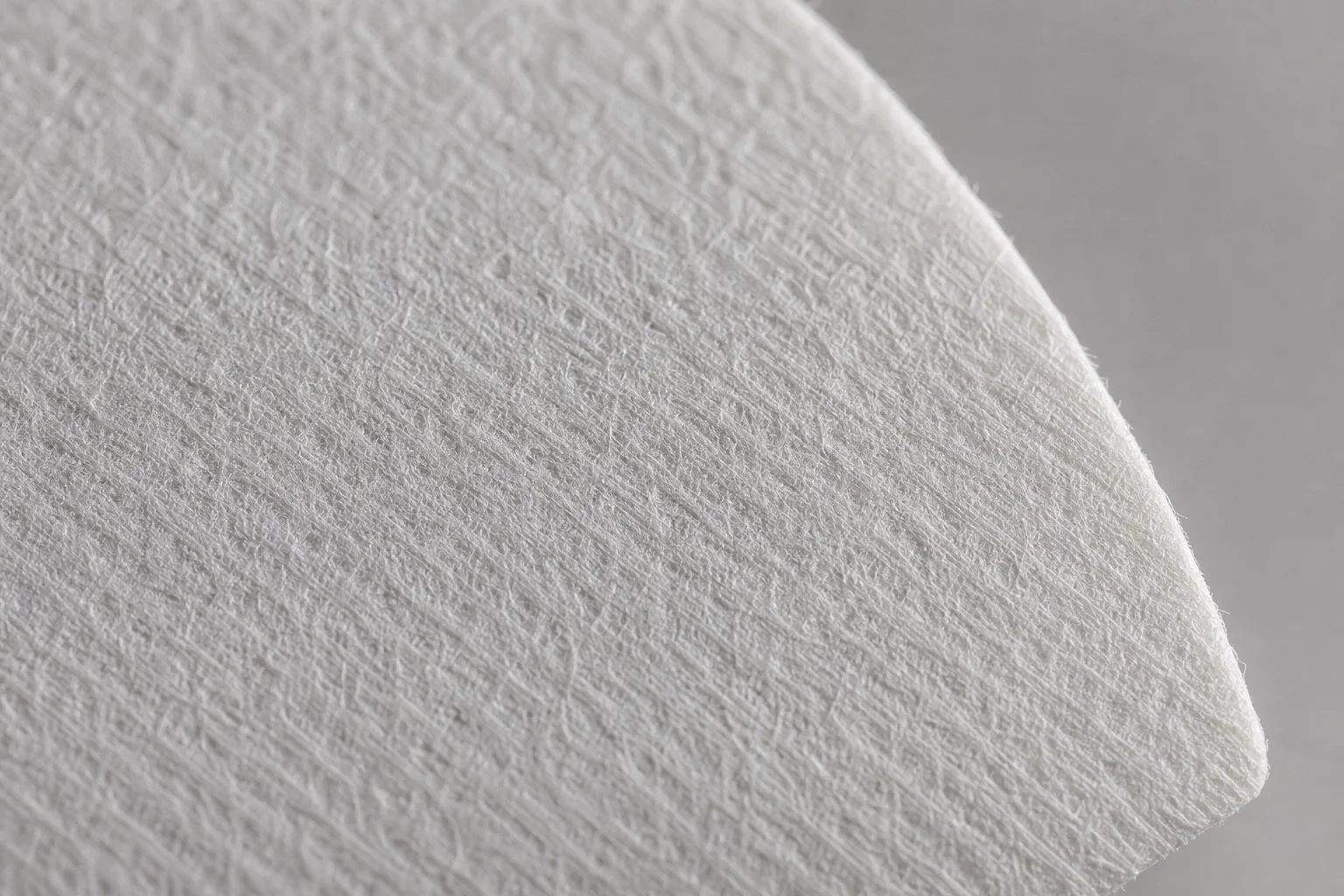
This relationship is straightforward: keep your grind, coffee amount, and recipe identical, and slower papers will yield more dissolved solids in the final cup. The Sibarist Fast papers were the quickest flowing, while the Kinto Slow Coffee Style papers were noticeably the slowest. Paper thickness and weave structure determine flow rate more than any other factor.
Paper Performance with Different Grinders
Our testing revealed a critical insight: paper choice has a larger impact when using lower-quality grinders. We tested with a Hario Slim hand grinder, which produces inconsistent particle sizes with many fine particles. Using the same grind setting across three papers (Sibarist Fast, Hario standard, and Kinto Slow Coffee Style), the slowest paper produced dramatically better results.
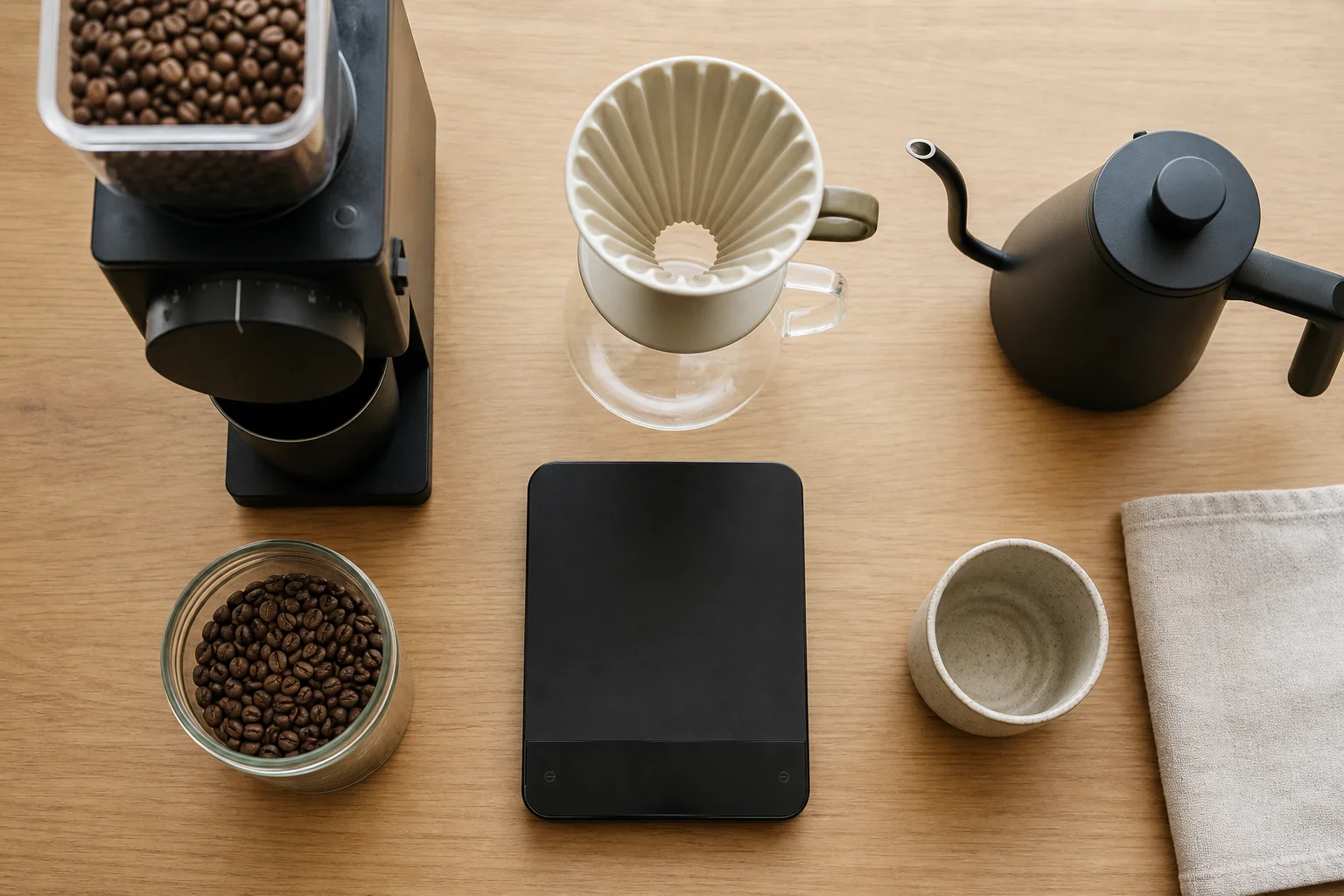
The reason is that slower papers add resistance, which increases contact time. With a grinder that produces many fines, this extended contact time actually improves the overall brew quality by allowing better dissolution and reducing channeling issues. The slower brew tasted noticeably fuller and more balanced than the faster alternatives, even though it took longer to complete.
With a higher-quality grinder such as the Fellow Ode with SSP burrs, the differences were less pronounced. When you can dial in precise grind sizes, all three papers can produce good results. However, the slowest paper still showed potential for slightly higher dissolved solids if you adjusted your grind finer to compensate for the slower flow.
Practical Recommendations for Your Setup
If you have access to an affordable, easily available paper where you live, use it. Paper choice should not require significant effort or cost to acquire. However, if you want to optimize your brewing, consider these guidelines.
For lower-quality or inconsistent grinders, seek out thicker, heavier papers that add more resistance. The Kinto Slow Coffee Style papers performed exceptionally well in this scenario. If you cannot find this specific option, look for other thick papers such as Chemex filters, though these may benefit from rinsing due to their density.
For faster brewing, the Sibarist Fast papers deliver results in significantly less time than standard options. This works well if your grinder can compensate with a finer grind setting to maintain dissolved solids at a desirable level.
The Hario papers remain a solid middle-ground choice. They are widely available, affordable, and produce consistent results across different brewing scenarios. They are not the slowest or fastest option, but they perform reliably without requiring special sourcing.
Do not fear slow draw-down times if they result from using a slower paper. The extended contact time from the paper itself does not produce over-extracted or unpleasant flavors. Conversely, if you prefer faster brews, ensure your grinder can produce a fine enough grind to maintain good dissolved solids without causing channeling.
Conclusion
Filter paper choice matters more than many brewers realize, particularly when working with less consistent grinders. Slower papers can meaningfully improve cup quality without requiring changes to your coffee, water, or technique. Modern bleached papers no longer require rinsing for flavor reasons, making the process wasteful. Test different papers if you have access to them, but do not feel obligated to chase rare options if your current paper is working well for your setup.
Buying link
View Hario V60 Filter Papers on Amazon
This product is mentioned in the review. The link below takes you to Amazon; check the specifications, options, and compatibility before buying.
View Hario V60 Filter Papers on AmazonFurther reading
Related Reviews
Coffee Brewing
AeroPress Clear Review: A Transparent Upgrade With Caveats
The new AeroPress Clear uses Tritan material and costs $50, but doesn't brew better coffee than the original. We tested durability, staining, and what the price increase means for the brand's future.
Coffee Brewing
Moka Pot Variations: Four Interesting Adaptations Worth Exploring
A detailed look at four moka pot variations, from pressure-valve designs to milk-steaming models and automated float systems, with honest assessments of their brewing strengths and practical trade-offs.
Coffee Brewing
No-Bypass Brewing: Tricolate vs Next Level Brewer Compared
Two pour-over brewers designed to eliminate water bypass and deliver stronger, more flavourful coffee. Which suits your brewing style?