3D Printing
Best 3D Printer Filaments for Beginners: PLA and PETG Essentials
Master two core filaments that cover 90% of beginner projects. Learn why PLA and PETG matter, how to store them properly, and which brands deliver real value without the marketing hype.
Introduction
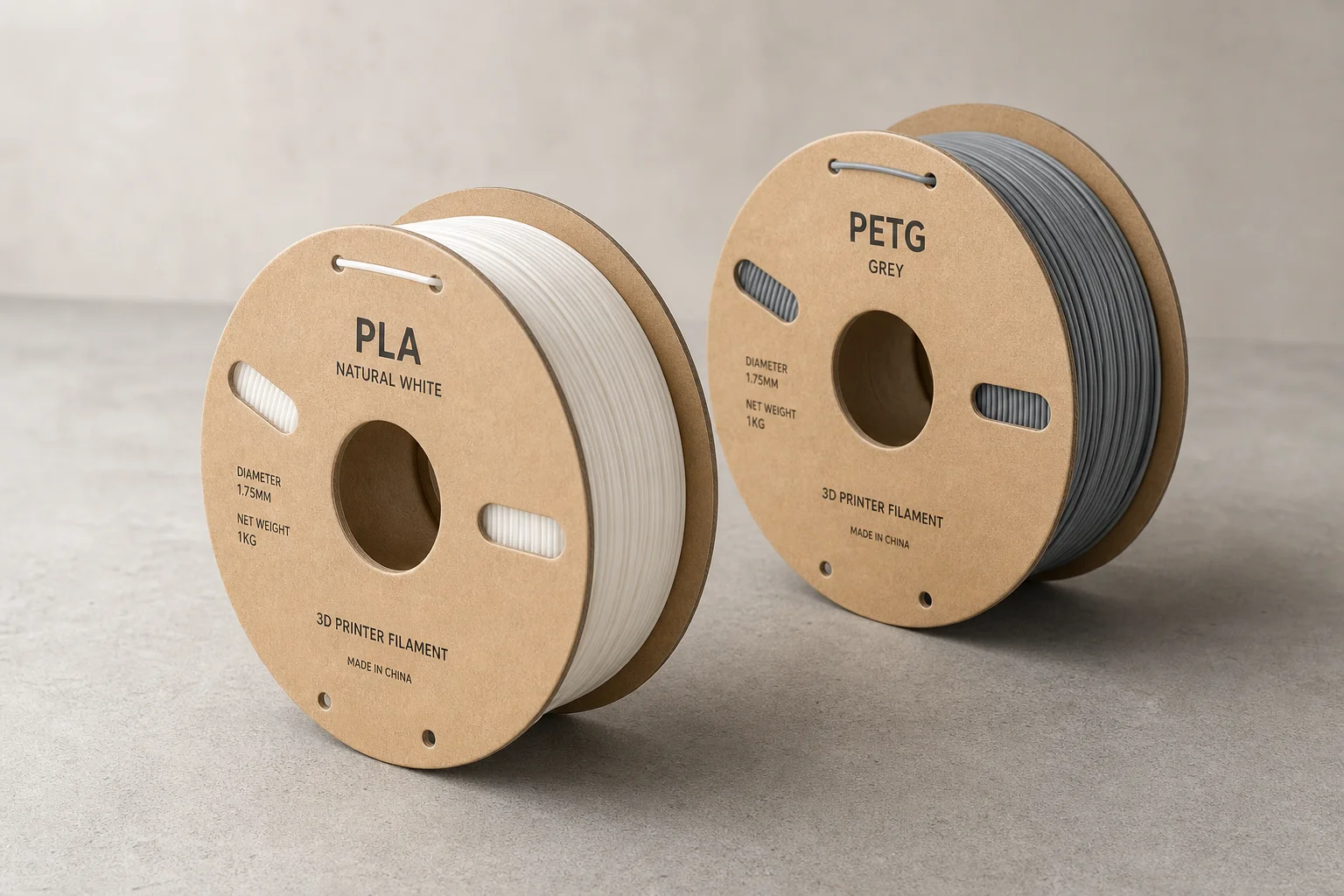
When you first unbox a 3D printer, the filament selection feels overwhelming. PLA, PETG, PCPP, PA, ASA, ABS—each material promises something different, and every brand offers countless variations. High-speed, glass-filled, ultra-tough. The truth is simpler than the marketing suggests: two core filaments cover nearly all beginner projects while saving you hundreds of dollars on unnecessary experimentation.
The real cost of choosing wrong isn’t just wasted money. A poor filament choice leads to warped prints, failed adhesion, nozzle clogs, and hours spent troubleshooting instead of printing. This guide cuts through the noise and shows you exactly which filaments work, why they matter, and which brands deliver genuine value.
Why Start with PLA
PLA is the standard for good reason. Many manufacturers include it as a sample with new printers, and it’s the filament that works reliably on any machine—cheap or expensive—without special nozzles or an enclosure.
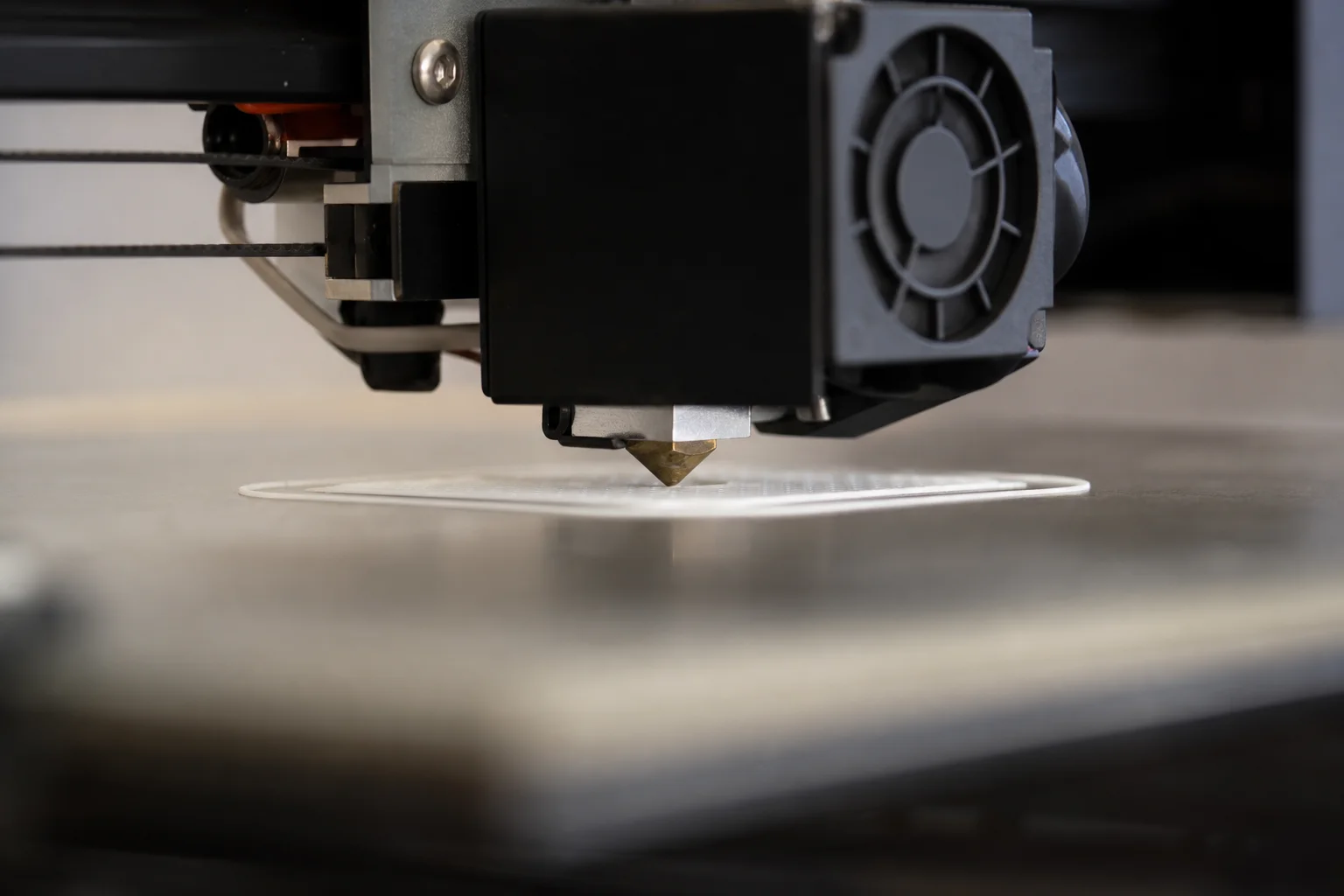
The practical advantages are immediate. PLA barely warps, prints cleanly without adhesion drama if you keep your build plate clean, and produces supports that remove easily without hours of post-processing. You move from idea to finished print faster than with any other material. Instead of spending weeks optimizing profiles, you print a cube, a bracket, or a decorative object and it looks great right away.
Don’t underestimate PLA’s durability either. Its tensile strength can match technical filaments like ABS when you follow three basic rules. First, align loads parallel to the layer direction and use generous radii instead of sharp corners. Second, increase perimeter layers from the standard two to three or four, and boost infill density to at least 30 or 40%. Third, if needed, raise nozzle temperature slightly and slow print speed so layers bond better. Most strength comes from print settings, not material choice.
PLA’s Versatility and Color Range
PLA’s material science is genuinely unique. You won’t find the color and finish variety in any other filament—bright solids, matte finishes, metallic looks, wood-filled, stone-filled, real metal particles, glitter, dual-color silk variants. This flexibility means you can match almost any interior design or aesthetic requirement without compromise.
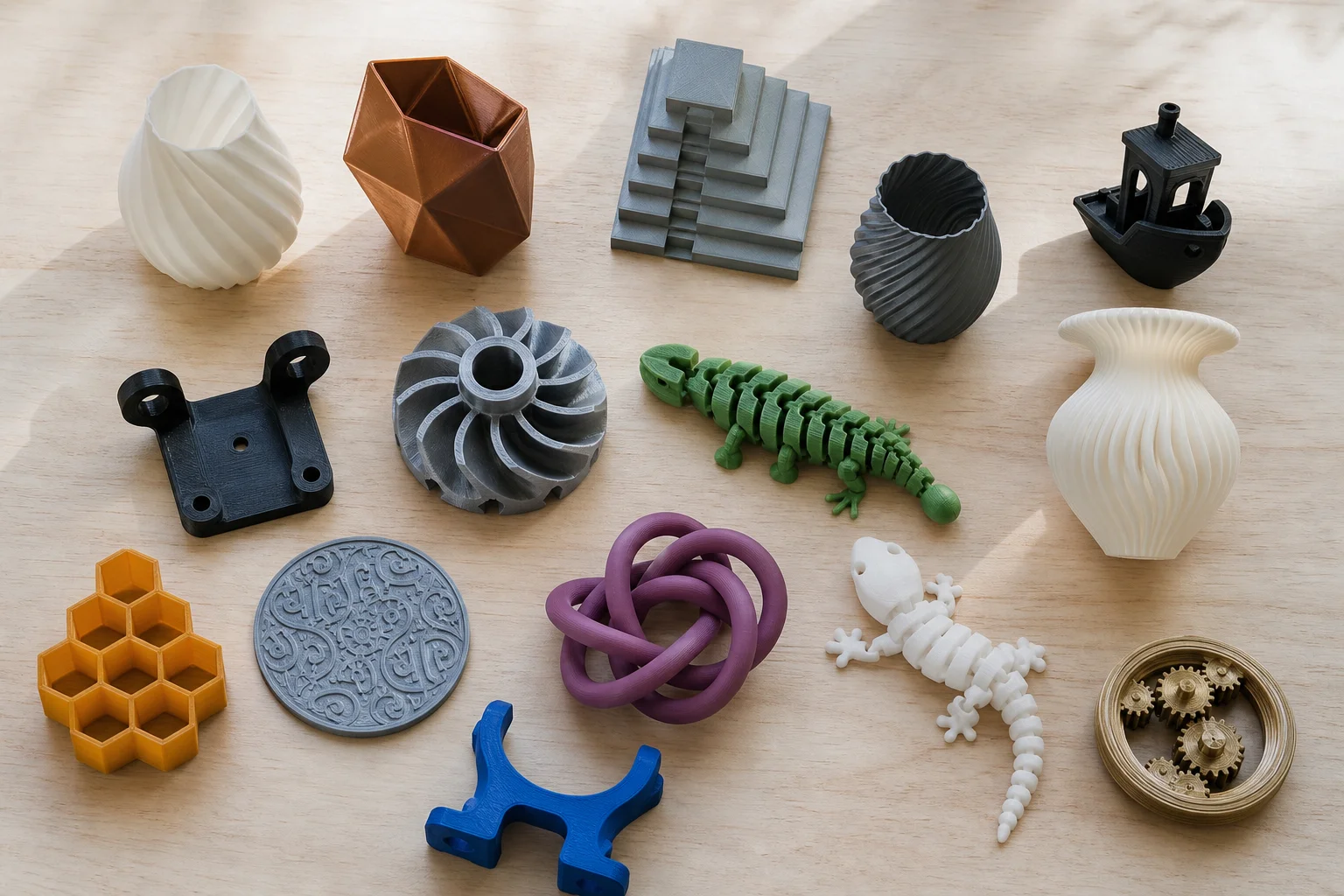
The caveat: some specialty PLAs need larger nozzles and can be tricky to print. Stick with standard PLA until you know your printer better and feel ready to experiment. The foundation matters more than the novelty.
When PLA Isn’t Enough
PLA has a real weakness: temperature sensitivity. It softens around 120 to 140 degrees Fahrenheit—easily reached in direct sun or inside a parked car in summer. UV radiation makes it brittle, and constant moisture or water reduces lifespan. If your print will live outdoors permanently, exposed to sun, heat, or rain, PLA isn’t the answer.
This is where PETG enters the picture.
When to Choose PETG Over PLA
PETG fills the gaps PLA leaves open. It handles temperatures up to about 175 degrees Fahrenheit, making the difference between a print deforming in summer sun or staying stable. Its different chemical structure gives it better UV and moisture resistance, perfect for outdoor functional parts. While it can’t handle quite as much maximum load as PLA, it’s much tougher and handles impact loads better.
With just PLA and PETG, you cover almost all beginner projects without getting lost in a sea of materials.
PETG’s Real-World Quirks
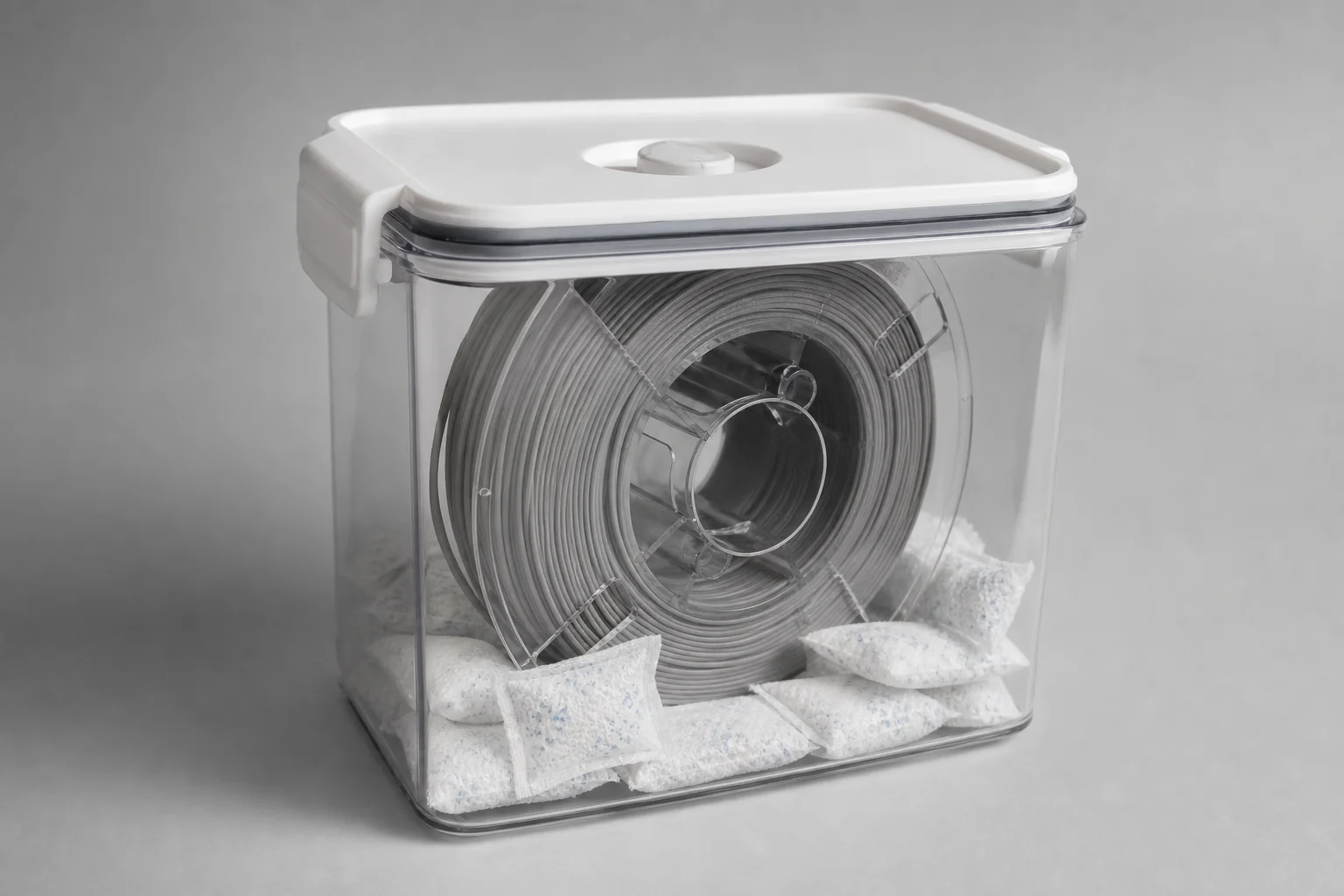
PETG sounds perfect on paper, but printing it reveals quirks that surprise newcomers. If you hear crackling while printing and your model has tons of strings and little bumps, you’ve met PETG’s most annoying characteristic: it absorbs moisture from the air far more than PLA. When heated, that moisture evaporates and print quality visibly suffers.
For PETG, you absolutely need dry storage. Simple gallon-sized cereal containers with desiccant packs work well—you can even recharge the packs in the microwave. PLA benefits from dry storage too, but quality degrades much more slowly with open storage, which is why it’s so forgiving as a standard filament.
PETG prints may also look messier overall if settings aren’t dialed in. Still, it’s far easier to print than ABS or ASA, doesn’t require an enclosed printer like some materials, and produces lower particle emissions than ABS.
Cutting Through Filament Marketing
The filament market is crowded with brands and endless variety. Hyper PLA, PLA+, High-Speed PETG. The question is real: is there genuine value or just marketing tricks to squeeze more money out of you?
High-speed filaments do contain additives that enable higher flow rates through the nozzle. But here’s the catch: your printer’s nozzle is the bottleneck, not the filament. A standard 0.4mm nozzle has a physics-limited maximum volumetric flow rate of about 20 to 25 cubic millimeters per second. Most beginner printers can’t reach the speeds that high-speed filaments advertise, so you’re paying extra for a feature you can’t use.
Many so-called innovations are just new packaging or minimal recipe changes. Specialty and high-speed filaments don’t bring real value when you’re starting out.
Which Brands Actually Deliver
Stick with known brands and look for deals, but don’t try to save every last penny. Brands like Eason, Sunlu, and Polymaker are affordable and reliable. House brands from major suppliers like 3D Jake work well too.
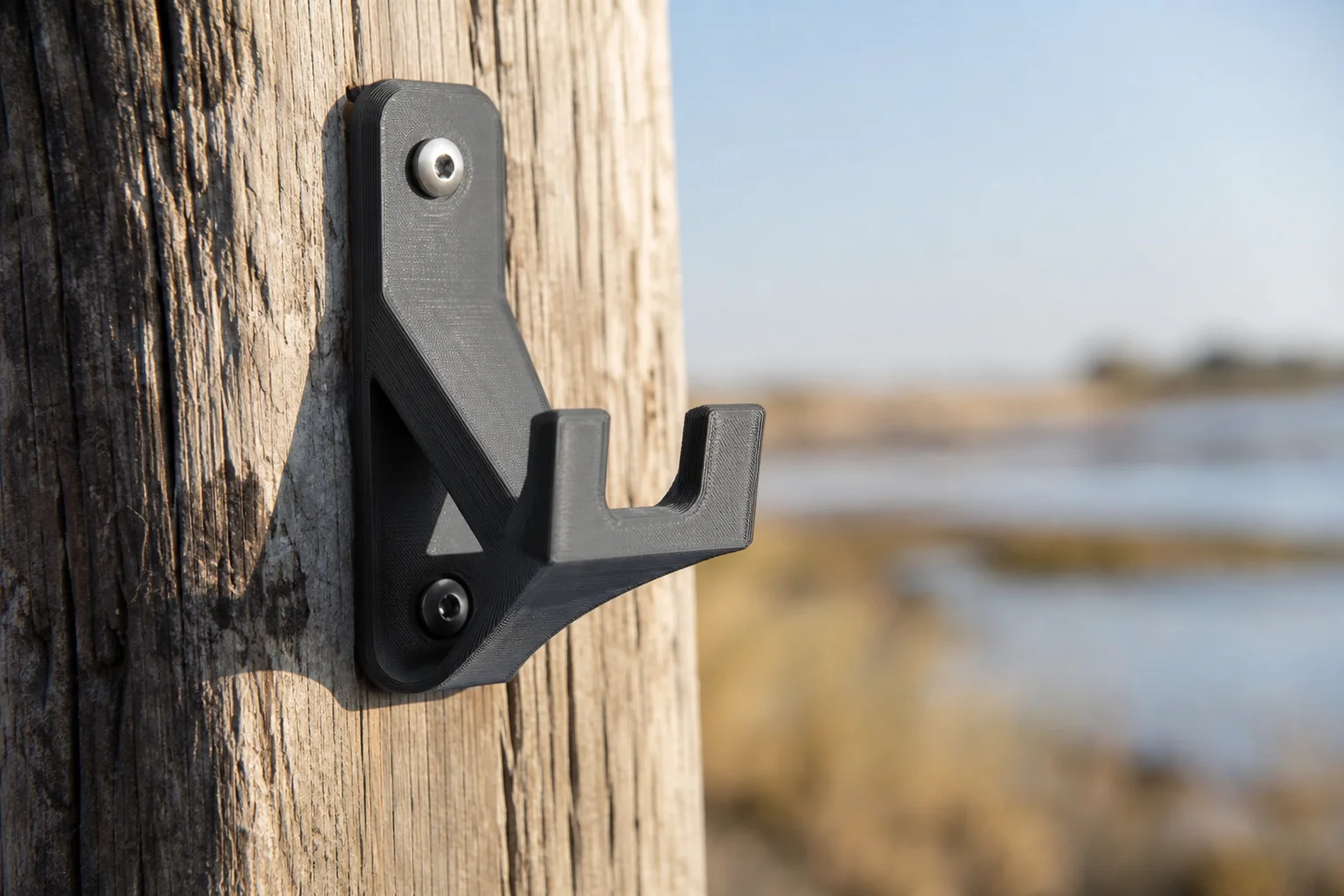
Premium manufacturers usually deliver slightly more consistent quality. The filament is cleanly wound so it doesn’t tangle during printing, and most importantly, it has low residual moisture. With PETG especially, don’t cheap out. Some budget suppliers ship filament with residual moisture from production despite vacuum packaging, leaving you with poor print quality and hours of drying time before you can use it.
For BambuLab printers with AMS or comparable systems, avoid cardboard spools—they create dust that causes problems. Some manufacturers glue spool edges to prevent this. BambuLab’s own filament is worth considering for BambuLab printers since the integrated chip automatically loads print settings.
At the top of the quality ladder is Prusa Prusament. The filament winding is absolutely perfect and quality is consistently excellent. The price is higher and shipping takes longer, but if you print regularly, the reliability pays for itself.
Conclusion
Two filaments—PLA for general projects and PETG for outdoor or impact-resistant parts—cover 90% of what beginners need. Focus on known brands with proven track records rather than chasing marketing terms. Let your actual printing needs guide material choice, not advertising promises. Once you master these two, you’ll have the foundation to explore specialty materials with confidence.
Product link
View more details for BambuLab PETG-HF
This product is mentioned in the review. Check the specifications, options, and compatibility before buying.
View more details for BambuLab PETG-HFFurther reading
Related Reviews
3D Printing
3D Printer Wishlist 2026: Industry Hopes and Manufacturer-Specific Improvements
A comprehensive review of what the 3D printing industry needs in 2026, from universal standards to manufacturer-specific feature requests across leading brands.
3D Printing
3D Printing Trends 2026: Multi-Material Systems, Stronger Filaments, and Desktop Metal Casting
FormNext 2025 revealed the direction of 3D printing in 2026: accessible multi-material printers, high-strength filaments, and innovative software solutions that bring industrial capabilities to the desktop.
3D Printing
Bambu Lab 3D Printer Lineup 2025: Which Model Fits Your Needs
A comprehensive breakdown of Bambu Lab's current printer lineup, from mid-range workhorse models to flagship multifunction machines, with honest trade-offs for each.