Kitchen Appliances
Best Stand Mixers for Bread Baking: KitchenAid, Bosch, and Ankarsrum Compared
Three heavy-duty stand mixers for home bread bakers, each with distinct strengths, motor power, and long-term value. A practical guide to choosing the right mixer for your kitchen.
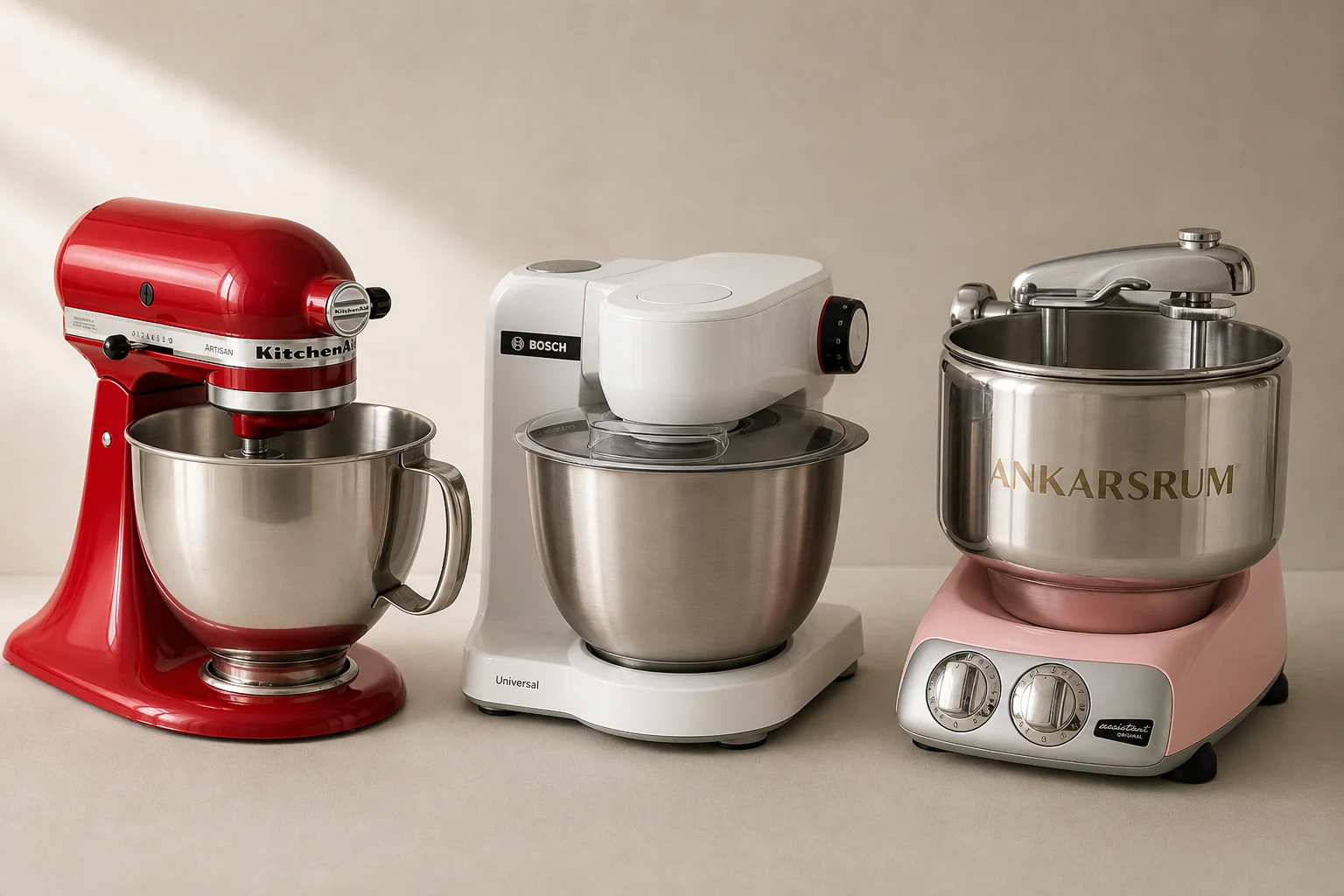
Why a Heavy-Duty Stand Mixer Matters
Making homemade bread for your family is real work. Mixing and kneading heavy doughs by hand demands time and physical effort, especially when baking multiple loaves. A heavy-duty stand mixer lightens that load, turning bread baking from an exhausting task into something more manageable and enjoyable.

While hand-mixing is entirely possible and even recommended as a starting point to develop your baker’s intuition, a quality mixer lets you scale up production without sacrificing quality. For families who bake bread regularly, the right mixer becomes an essential kitchen tool.
KitchenAid Artisan Stand Mixer
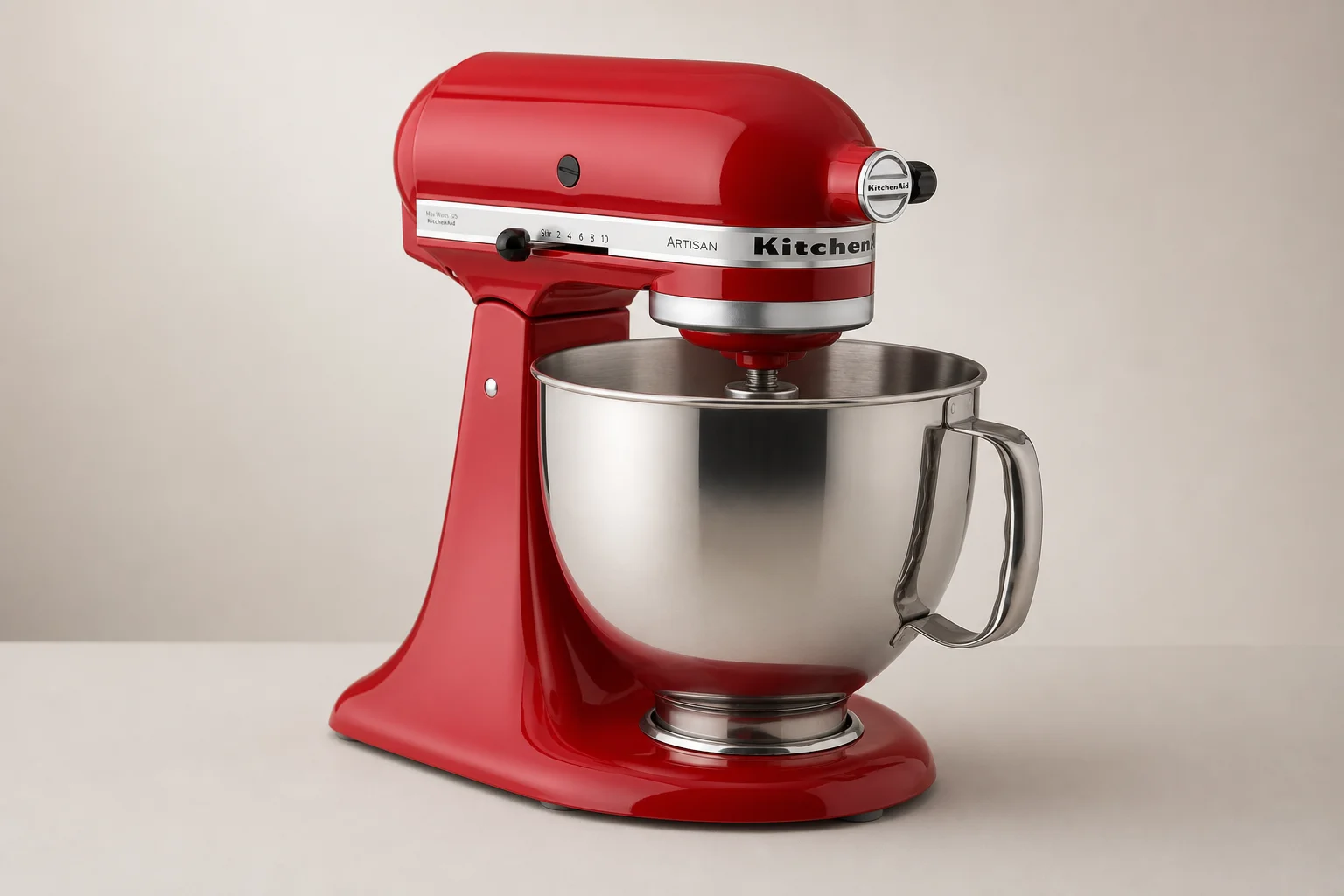
The KitchenAid Artisan has been a kitchen staple since Hobart introduced it in 1919. Today it is owned by Whirlpool and assembled at a factory in Greenville, Ohio, using die-cast parts manufactured globally. The Artisan carries a US price of around $450 and comes in at least 20 colors, making it easy to match your kitchen aesthetic.
The mixer includes a five-and-a-half-quart bowl, a flat beater, a dough hook (both enamel-coated), and a whisk. The bowl holds about nine cups of liquid or a dozen egg whites. For bread baking, thefreshloaf.com recommends not exceeding six cups of whole grain flour per batch to avoid motor stress. If you hear the motor straining or slowing, stop immediately to prevent damage.
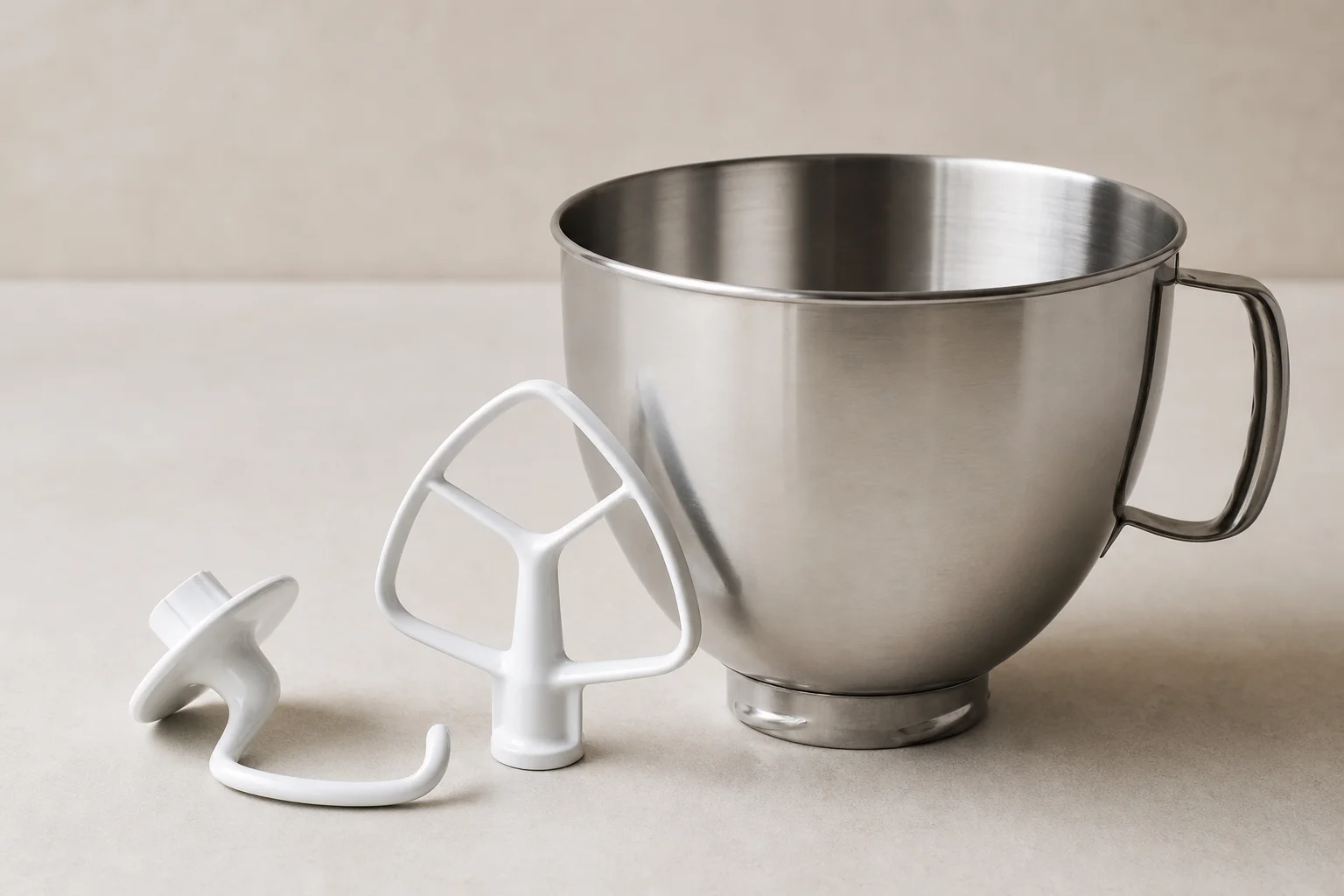
One major advantage of the KitchenAid is recipe compatibility. Most bread recipes published online are written specifically for KitchenAid mixers, so you can adapt recipes from almost any source without modification. The warranty ranges from three months to two years depending on where you purchase, with an expected lifespan of about ten years.
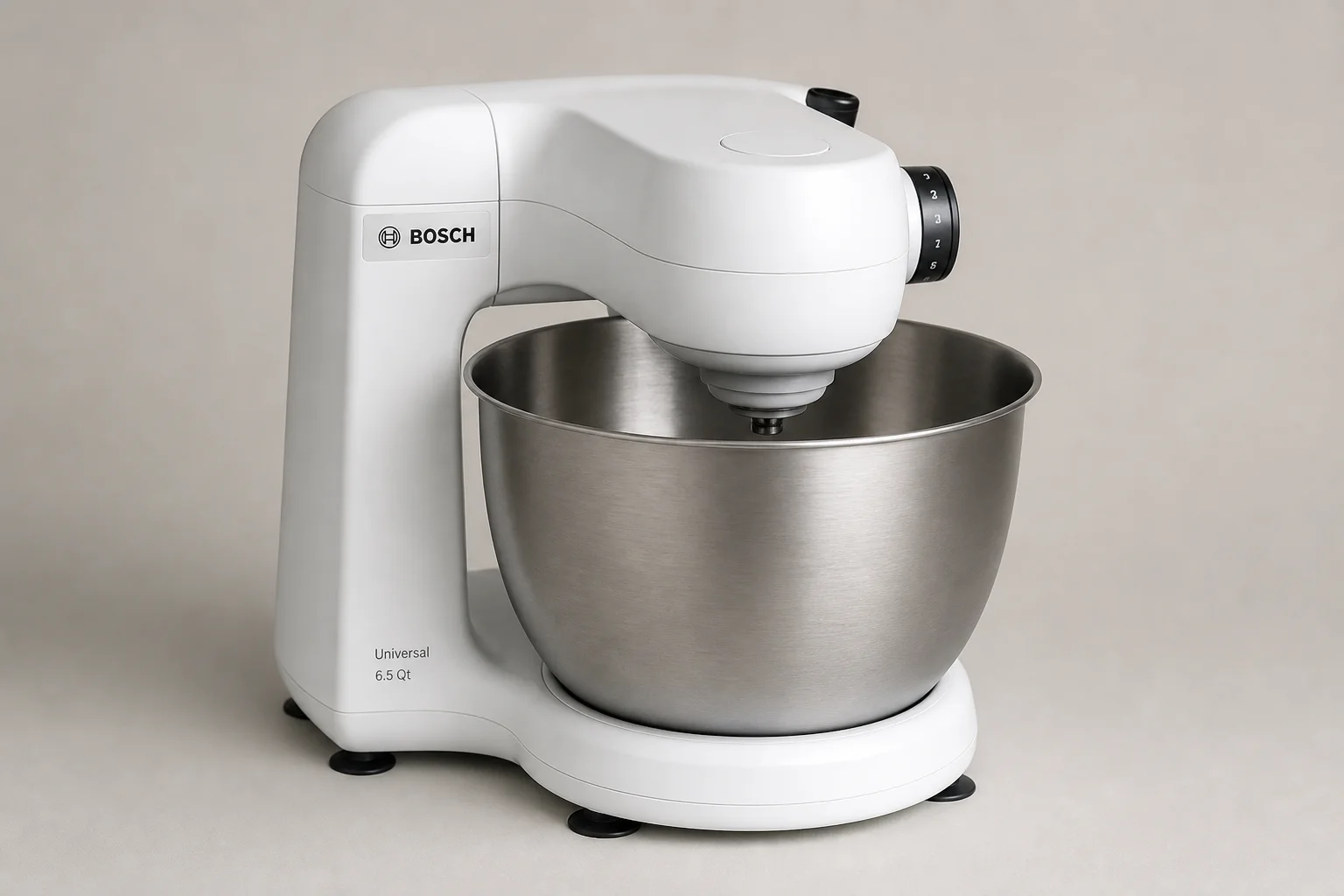
Bosch Universal Stand Mixer
The Bosch was introduced in Germany in 1952 and is now manufactured in Slovenia. It also carries a US price of around $450 and comes in white or black. The Bosch features a six-and-a-half-quart bowl with a smooth, slick finish that makes cleaning easy. It includes a dough hook, scraper, balloon whisks, and a spatula. The two-part lid allows you to add ingredients while mixing.
The mixer uses a 500-watt belt-driven motor located in the base and includes suction cups on the bottom for stability. Because the Bosch is the lightest of the three mixers, these suction cups are essential when handling heavy dough loads. The manufacturer states the bowl can hold up to 18 cups of flour, but practical experience suggests 14 to 15 cups is the realistic limit before dough starts climbing the center column and becomes difficult to clean.
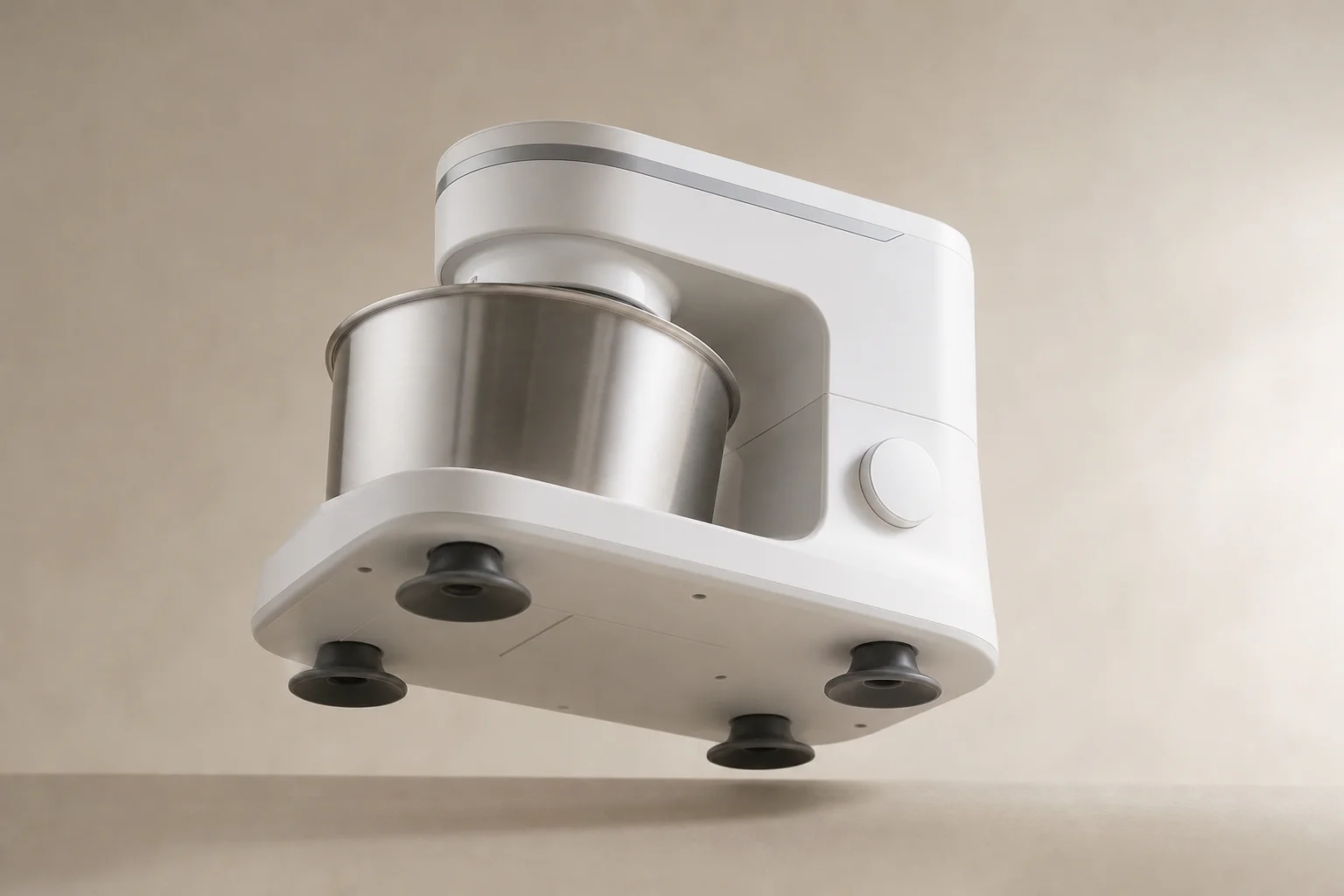
The basic procedure involves dissolving yeast in water at the bottom of the bowl, adding half the flour and mixing, then gradually adding remaining flour until the dough cleans the sides. After a rest period, set the timer for five to eight minutes to knead. You can easily make up to five loaves in one batch. One standout feature is its lightweight design, making it simple to move if you prefer not to keep it permanently on your counter.
Ankarsrum Assistent Stand Mixer
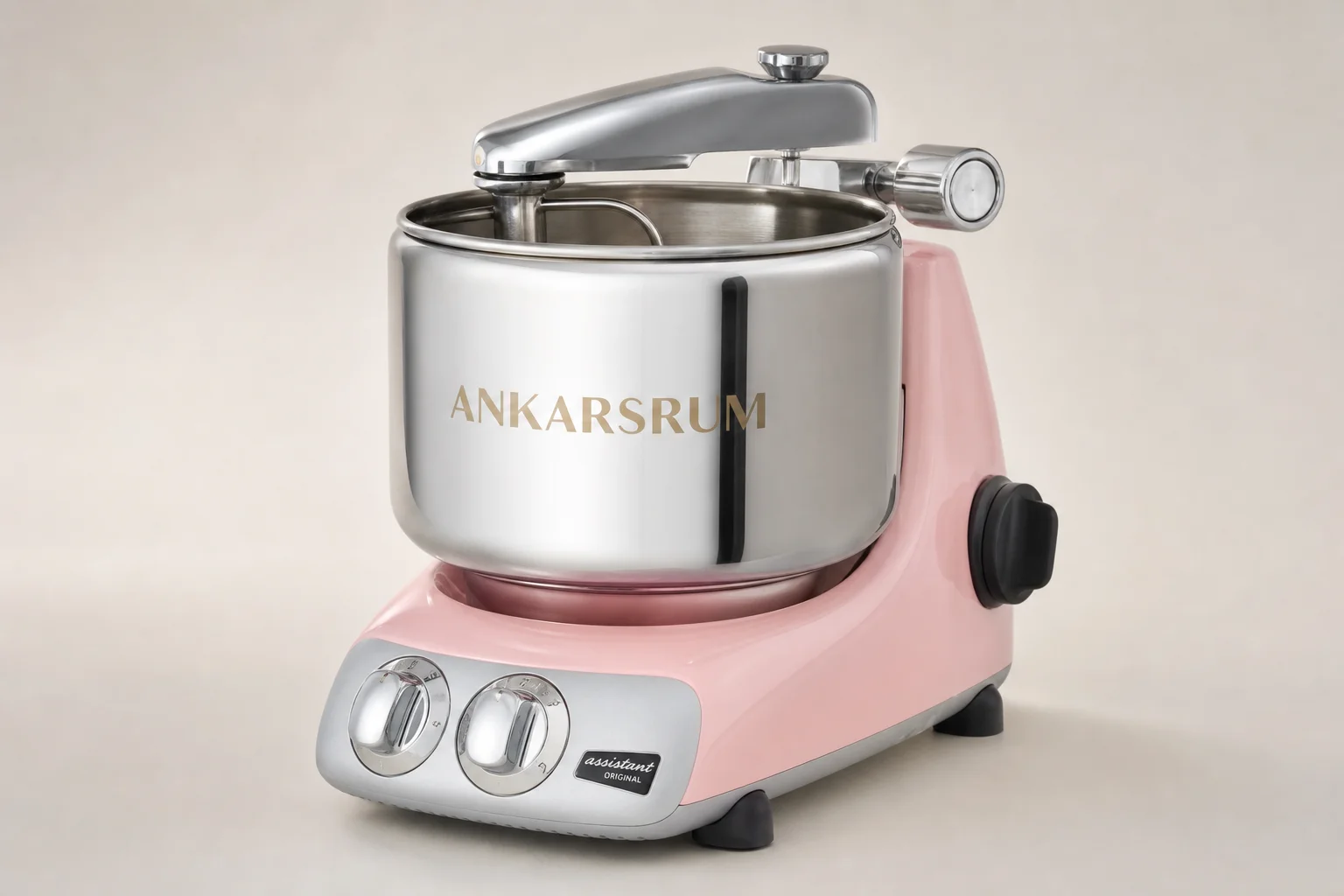
The Ankarsrum has been manufactured in Sweden since 1940 and is hand-assembled at the factory in Ankarsrum. Each base is made from 100 percent recycled materials. The mixer carries a US price of $699 and comes in approximately a dozen colors that rotate annually.
The Ankarsrum includes two work bowls: a seven-and-a-half-quart stainless steel bowl for bread and a smaller 3.7-quart triton co-polyester bowl for smaller tasks like whipped cream or meringue. It comes with balloon whisks, a dough hook, cookie paddles, a reversible lid, and notably, a roller and scraper attachment. The 600-watt motor is located in the base, providing excellent stability; this mixer will not walk across your counter.
The roller and scraper are what set the Ankarsrum apart. These accessories act like a pair of hands inside the bowl: the scraper lifts dough away from the sides while the roller squeezes it to enhance gluten development. This results in soft, fluffy bread and typically requires using one to two cups less flour than other mixers. The mixer has a built-in timer, allowing you to set the speed and timer, then step away to handle other kitchen tasks. It holds 21 cups of flour, enough to make seven standard sandwich loaves in one batch.
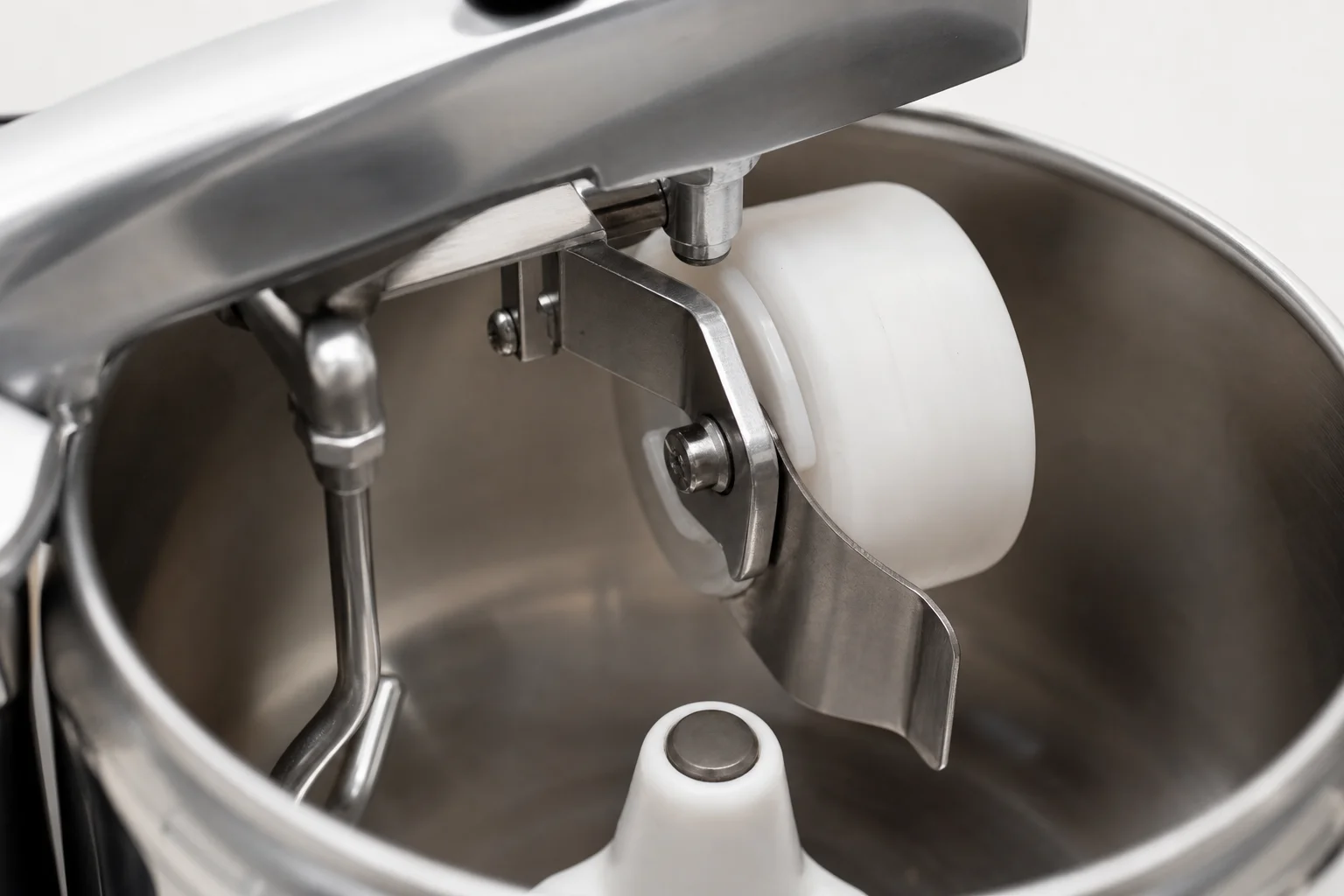
The Ankarsrum carries a seven-year warranty on the motor and one year on parts, with an expected lifespan of a lifetime. The open bowl design makes adding ingredients easy while mixing, though it requires some patience to master if you are accustomed to a KitchenAid. The results, however, are well worth the learning curve. The mixer is quiet, competent, and enjoyable to use, fitting equally well in modern or retro kitchens.
Conclusion
Choosing between these three mixers depends on your budget, bread volume, and kitchen priorities. The KitchenAid Artisan offers recipe compatibility and proven reliability at a mid-range price. The Bosch provides lightweight portability and solid performance at the same price point. The Ankarsrum delivers superior gluten development, a longer warranty, and lifetime durability at a premium price, though it requires a learning curve. All three are capable of handling regular home bread production and will serve your kitchen well for years to come.
Further reading
Related Reviews
Kitchen Appliances
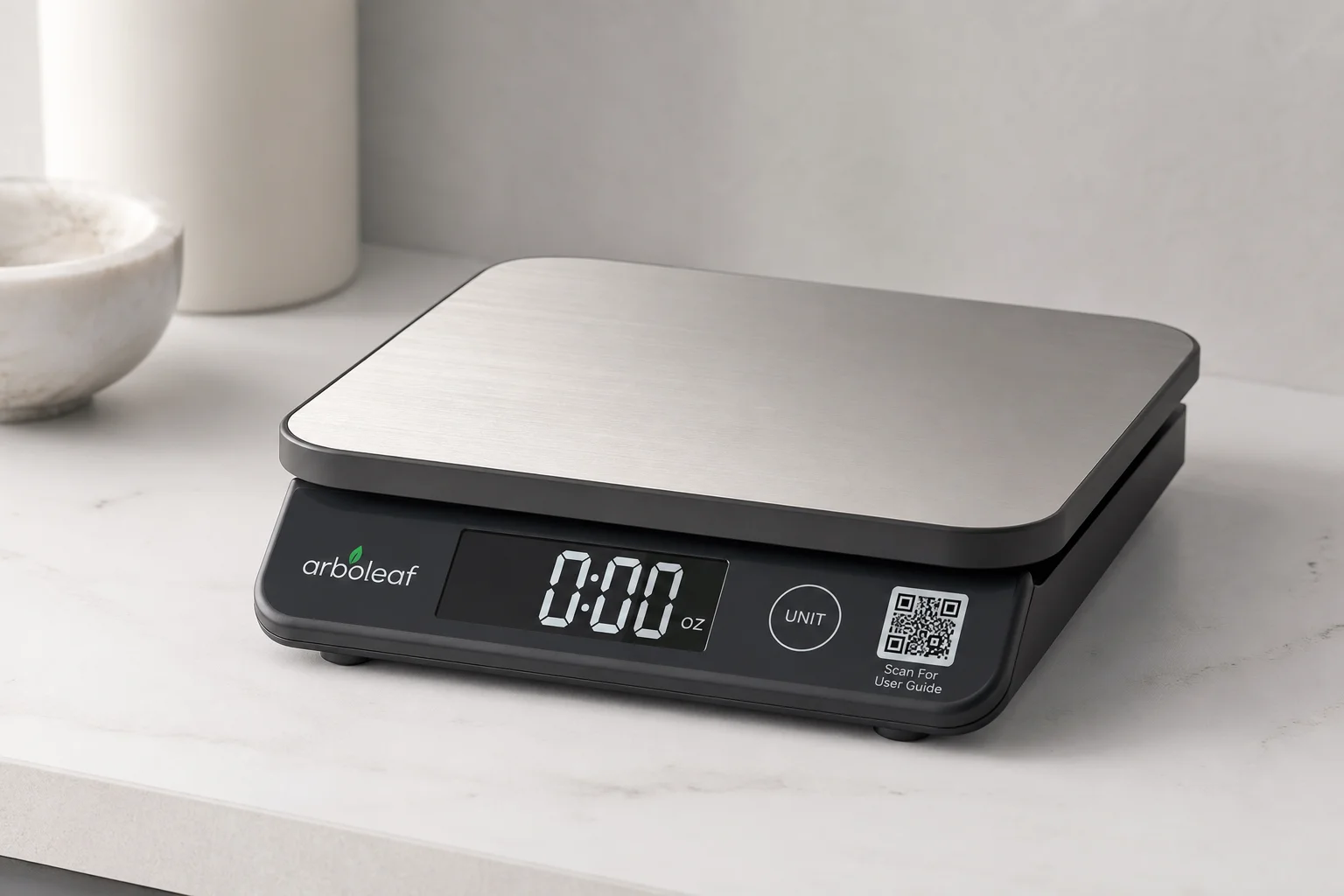
Arboleaf Smart Kitchen Scale Review: Connected Cooking Made Simple
A Bluetooth-enabled kitchen scale that syncs with a nutrition-tracking app, offering real-time weight monitoring and recipe guidance for home cooks.
Kitchen Appliances
Best Air Fryer Toaster Ovens: Three Top Picks for Multi-Function Cooking
Three high-performing air fryer toaster ovens tested for versatility, ease of use, and real-world cooking results. Find the right fit for your kitchen.
Kitchen Appliances
Best Air Fryer Toaster Ovens Under 100: Five Practical Options for Budget-Conscious Kitchens
Five air fryer and toaster oven combinations that deliver real cooking performance without breaking the bank, each with distinct strengths for different kitchen needs.