Aquarium Filtration
Fluval FX6 Canister Filter for Saltwater: A Practical Alternative to DIY Sumps
Why a saltwater aquarist chose the Fluval FX6 over building a custom sump, and how to configure it for mechanical filtration in a 125-gallon reef tank.
Introduction
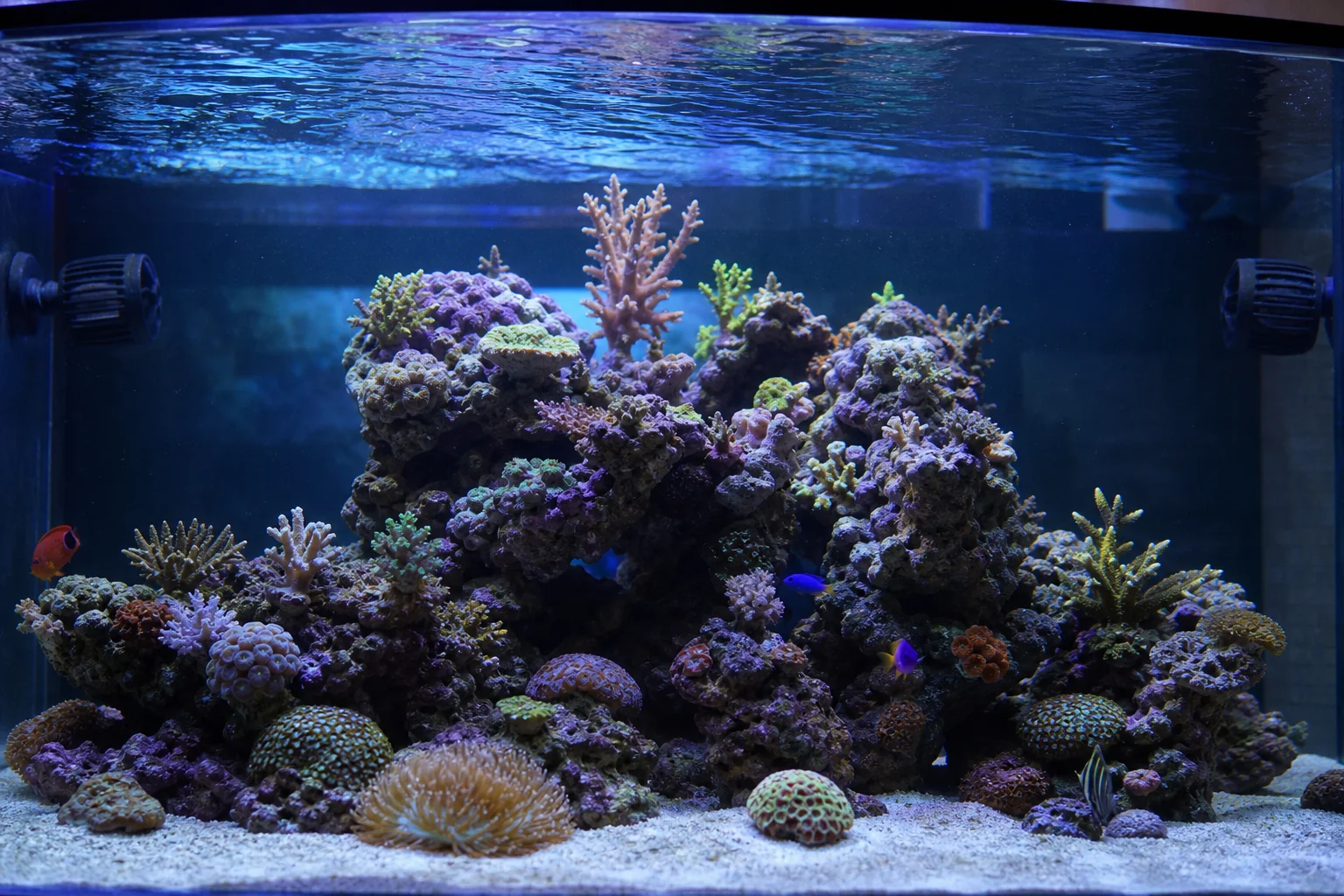
After running a 125-gallon saltwater tank with multiple sumps and DIY containers, one aquarist decided to simplify the system by switching to a canister filter. The Fluval FX6 offered a cleaner alternative to building a custom 20-gallon sump that would not fit under the stand, while keeping the existing protein skimmer setup intact.
Why a Canister Filter Instead of a Sump
The original setup used a single Eshopps sump, then expanded to two sumps connected by a water bridge. The second sump was a makeshift Rubbermaid container that required daily top-offs of 10 to 15 gallons and created excessive splashing. Building a proper 20-gallon DIY sump with acrylic sheets and bulkheads would have cost around $155 for materials, plus $65 for the aquarium itself, but the finished sump would not fit underneath the tank stand without risking structural damage.
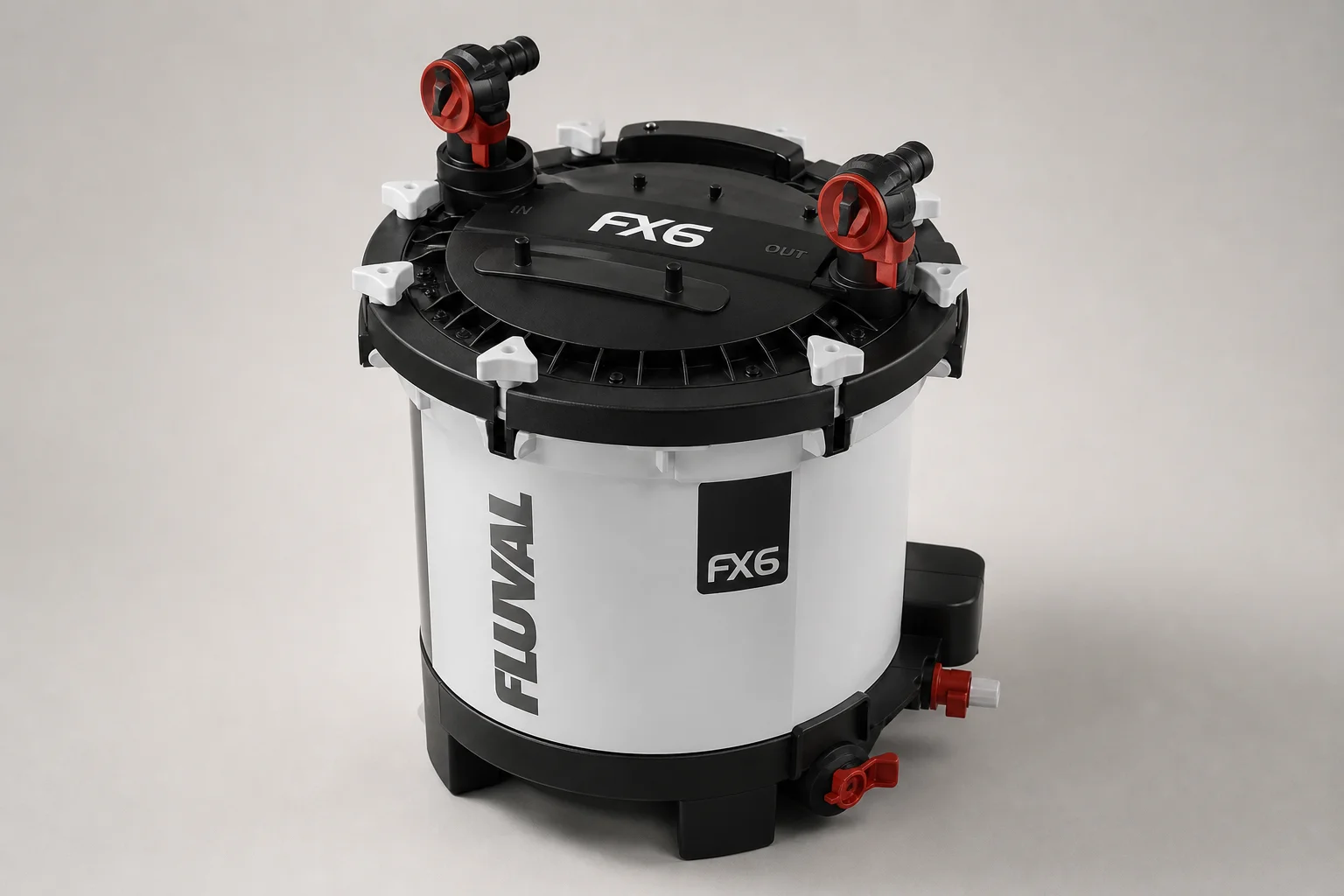
The Fluval FX6 canister filter offered a simpler path forward. At $399.99 (or $359.99 with a member discount), it costs less than a custom sump build and eliminates the daily maintenance burden. The plan is to use the FX6 for mechanical filtration on the left side overflow, while keeping the original Eshopps sump on the right to house the protein skimmer and return pump.
Internal Filtration Media and Chamber Design
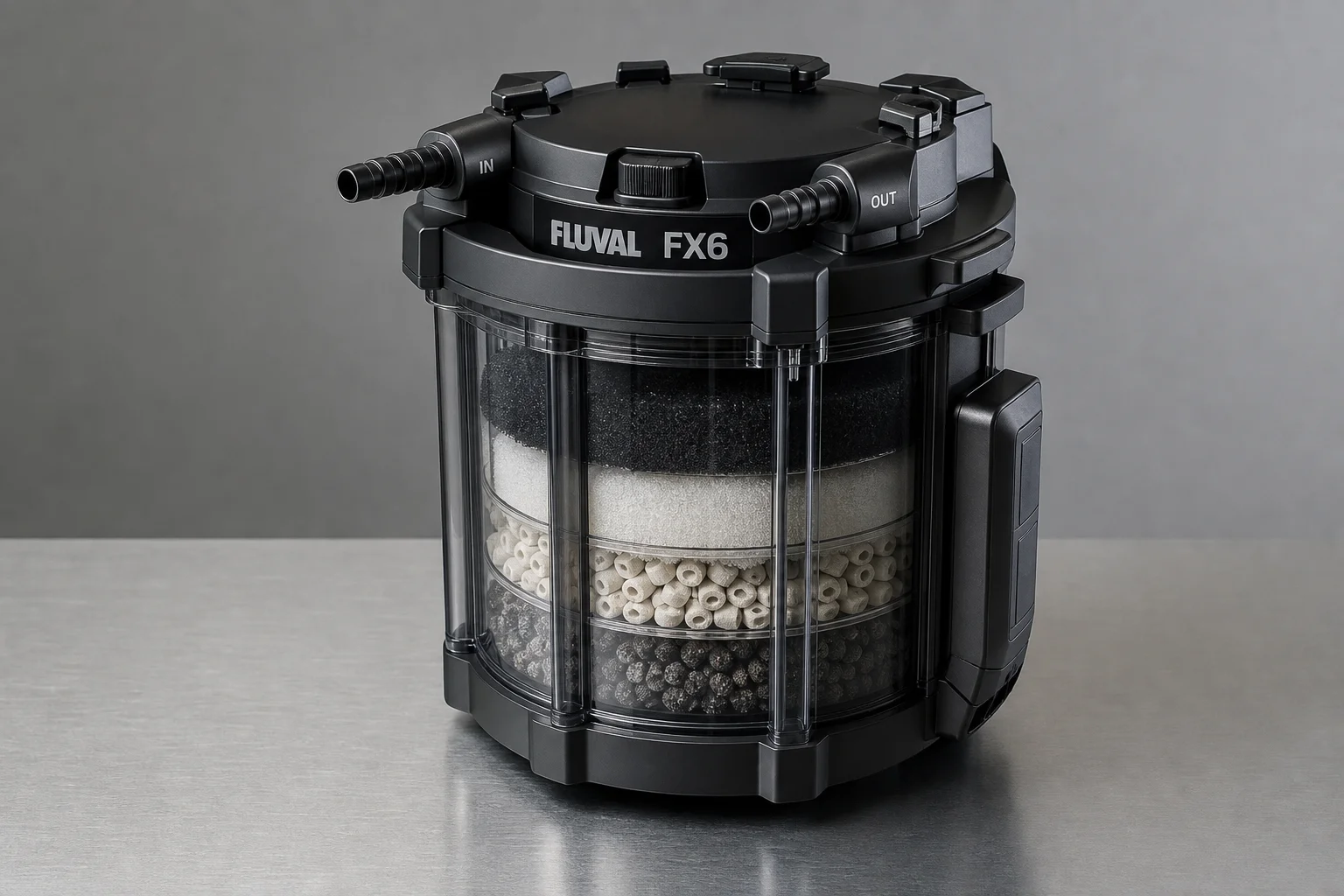
The FX6 contains three distinct filtration stages. Water enters the canister and flows through white foam blocks in the first chamber, spinning around to maximize contact with the media. After passing through the foam, water moves to the second stage, where it filters through two black foam pads for additional mechanical polishing.
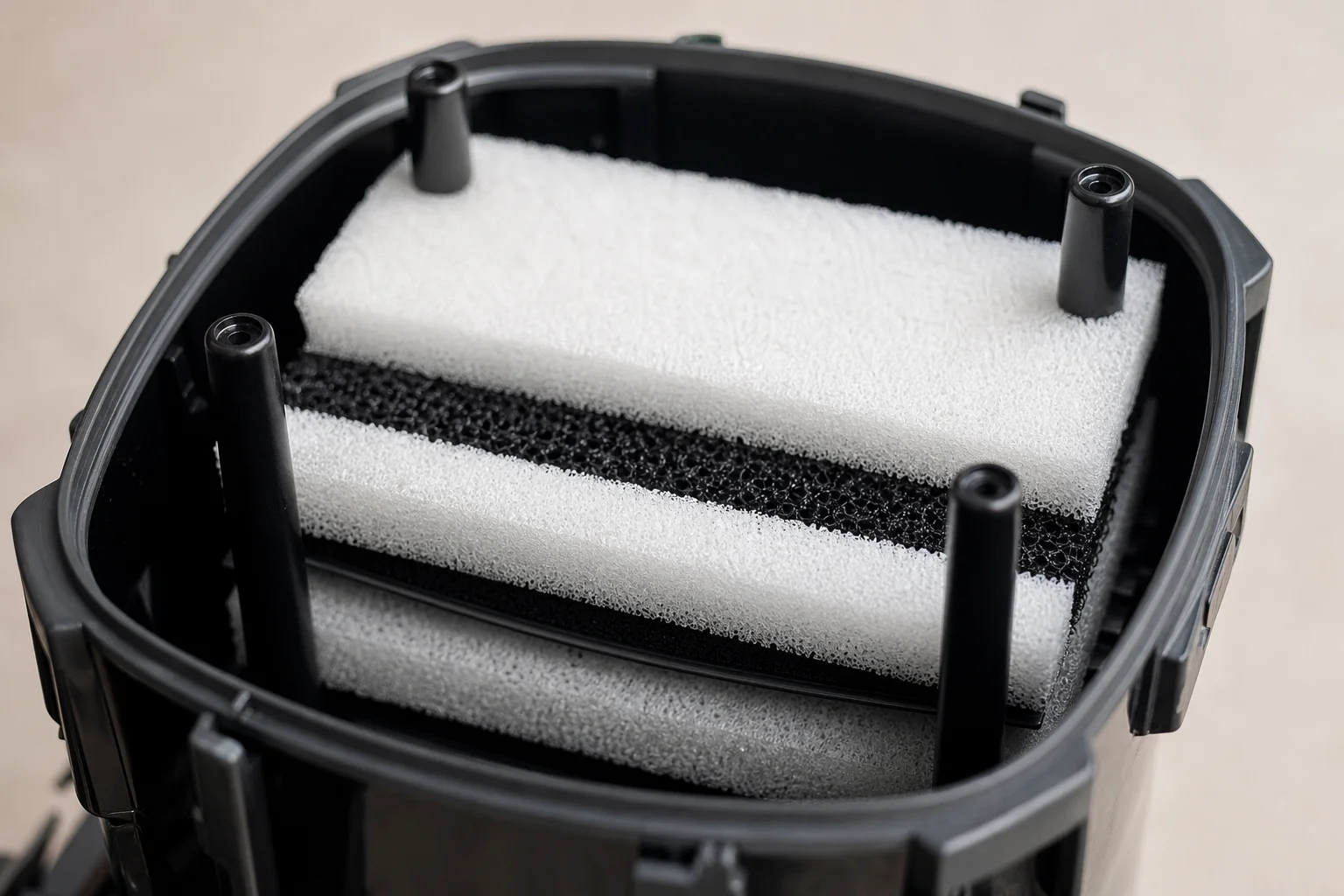
The third chamber is designed for biological media, but in this saltwater setup, biological filtration comes from the live rock and sand in the main tank, so this chamber is repurposed. The bottom of the canister has a dedicated chamber for chemical media like activated carbon or phosphate removers. One aquarist plans to use BRS Bulk Premium ROX 0.8 Carbon in the bottom chamber and a single pouch of Fluval ClearMax phosphate remover above it. Fluval ClearMax treats up to 80 gallons and should be replaced every four weeks; it removes phosphate, nitrite, and nitrate while maintaining water clarity.
Plumbing Configuration and Quick-Release Connectors
The FX6 comes with a return hose designed for freshwater tanks that extends into the aquarium, but in this saltwater application, it will not be used. Instead, the overflow line from the tank connects directly to the canister filter intake, and the return line flows back into the tank using the existing return pump setup.
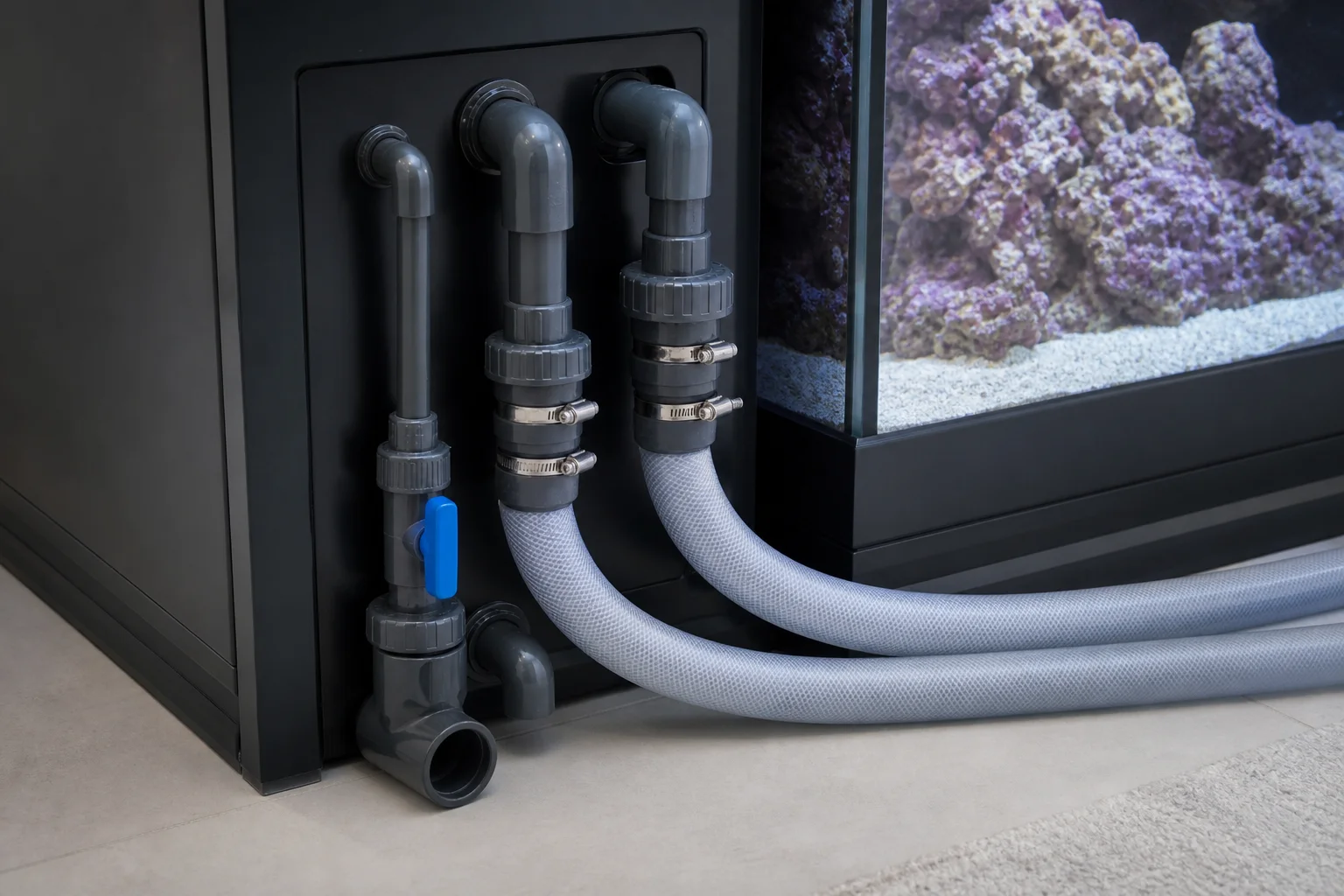
The quick-release connectors are a practical feature. They use rubber seals and snap together with a push motion; pressing a red button releases them. When the red handles are horizontal, water does not flow through the connectors. Rotating them to vertical opens the flow. The hose ends are rubber and secured with small metal clamps to prevent leaks.
Maintenance and Drain System
The FX6 is rated for tanks up to 400 gallons, making it well-suited for a 125-gallon system. Because the bioload is low (only clownfish and one foxface in this tank), the canister will be cleaned once every two months rather than monthly. This infrequent maintenance schedule keeps the filter from becoming a nitrate factory.
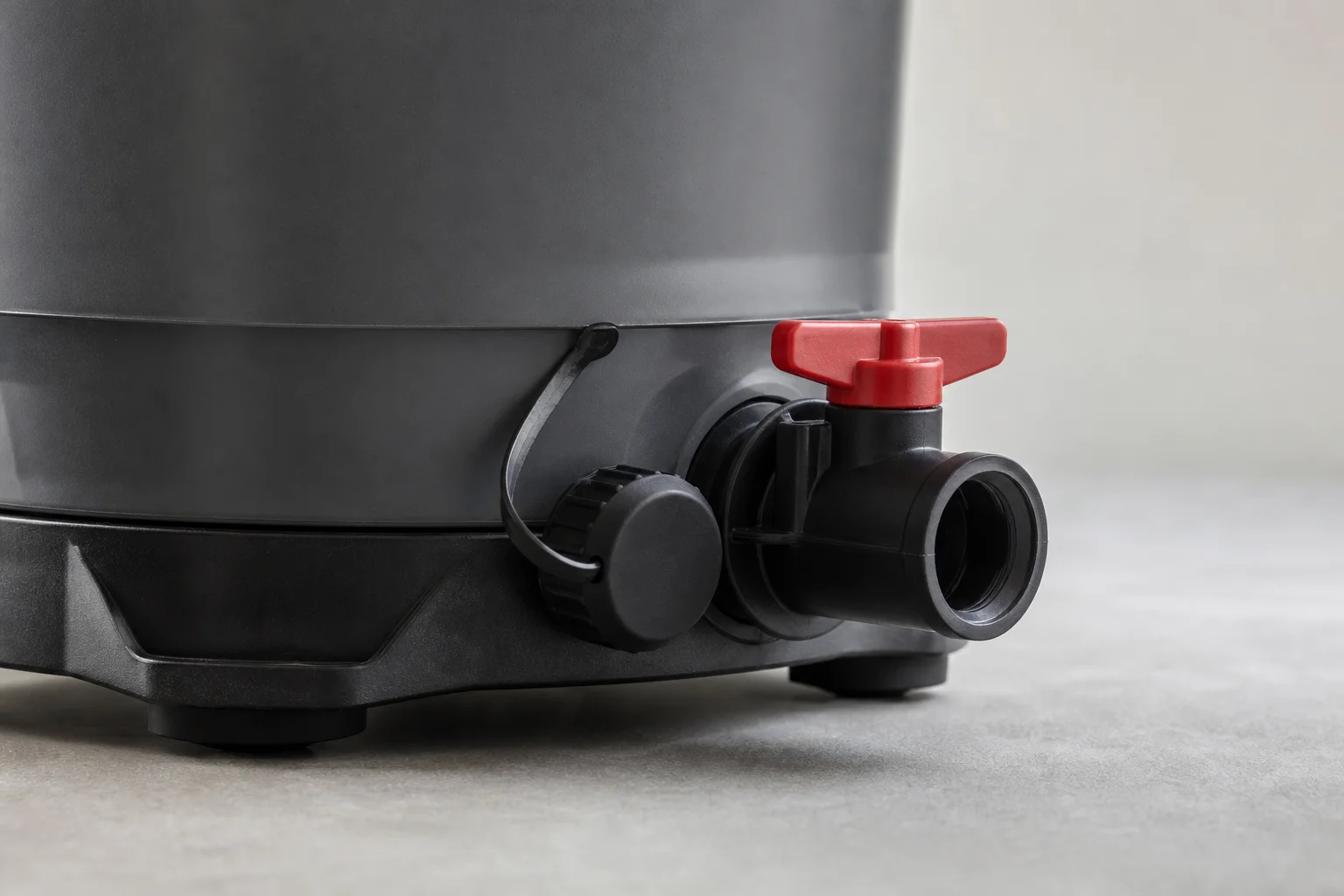
At the base of the canister is a rubber drain plug and a red valve handle. To drain the filter for cleaning, open the red valve and connect a hose to the drain plug. The lid is secured with white knobs that should be tightened until snug; the manual does not specify exact torque values. A service kit is available for $52.99 (on sale for $36.97), which may indicate potential leak points, though proper assembly and maintenance should prevent issues.
Conclusion
The Fluval FX6 simplifies a complex multi-sump setup by consolidating mechanical filtration into a single, easy-to-maintain canister. For saltwater aquarists tired of daily top-offs and DIY container maintenance, it offers a practical middle ground between a full sump system and minimal filtration. The key is using it for mechanical polishing and chemical media while relying on live rock and sand for biological filtration.
Further reading
Related Reviews
Aquarium Filtration
Affordable Aquarium Filter Media: Testing Budget Alternatives to Expensive Biomedia
Can cheap pot scrubbers replace expensive ceramic biomedia in a canister filter? One aquarist tests the theory on a heavily stocked 210-gallon tank.
Aquarium Filtration
Aquarium Filtration Types: A Complete Guide to Sponge, HOB, Canister, and Sump Filters
Explore the four main aquarium filtration systems, their strengths, limitations, and which option suits your tank setup best.
Aquarium Care
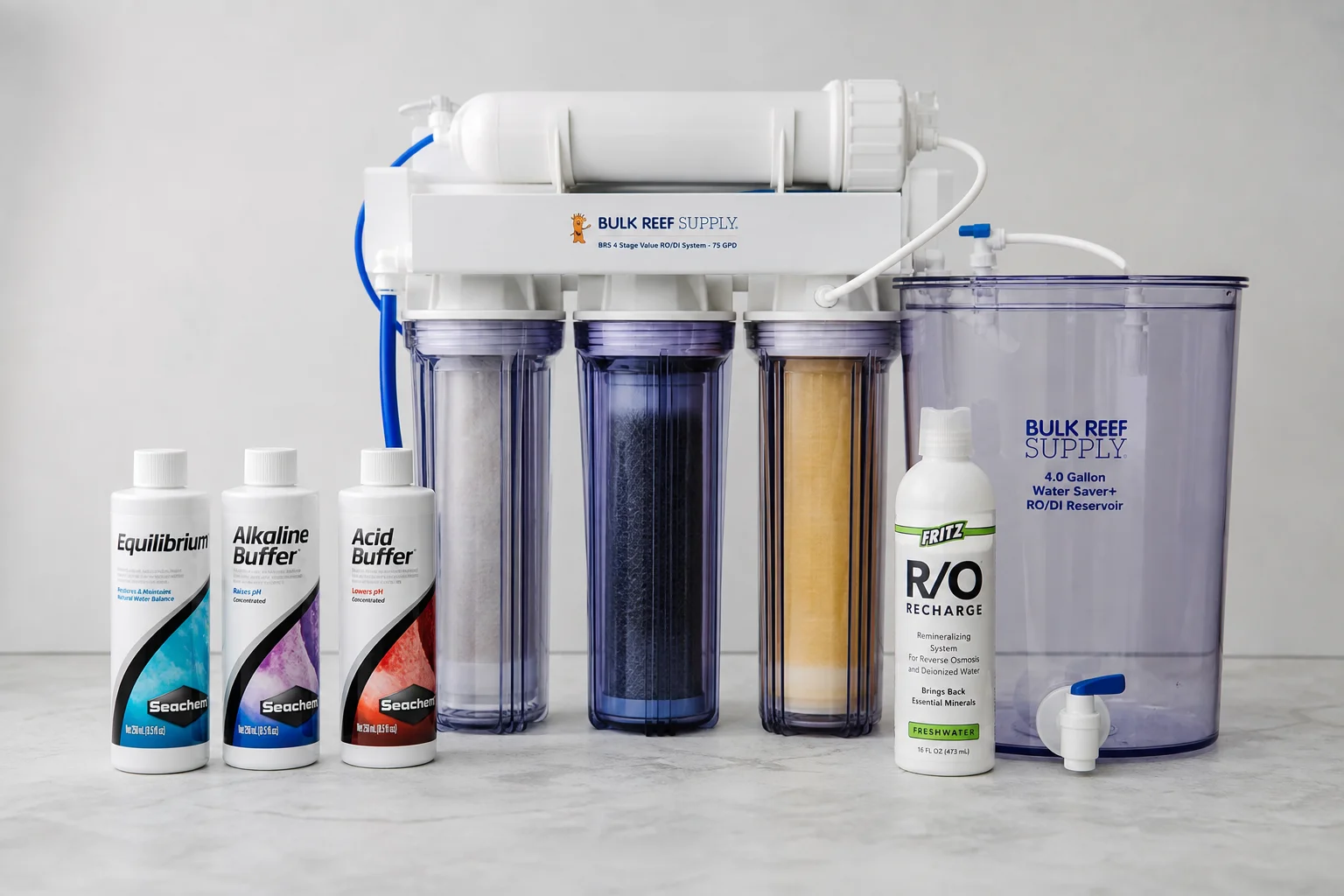
Aquarium Water Treatment: RO/DI Systems and Remineralization Guide
Why tap water harms aquariums, how RO/DI systems work, and the correct way to use pure water for freshwater and saltwater tanks.