Running Watches
GPS Running Watch Accuracy Test: Seven Watches Compared Across Urban, Trail, and Race Conditions
We tested seven popular running watches from major brands in three different environments to find out which delivers the most accurate GPS tracking for distance and pace.
Introduction
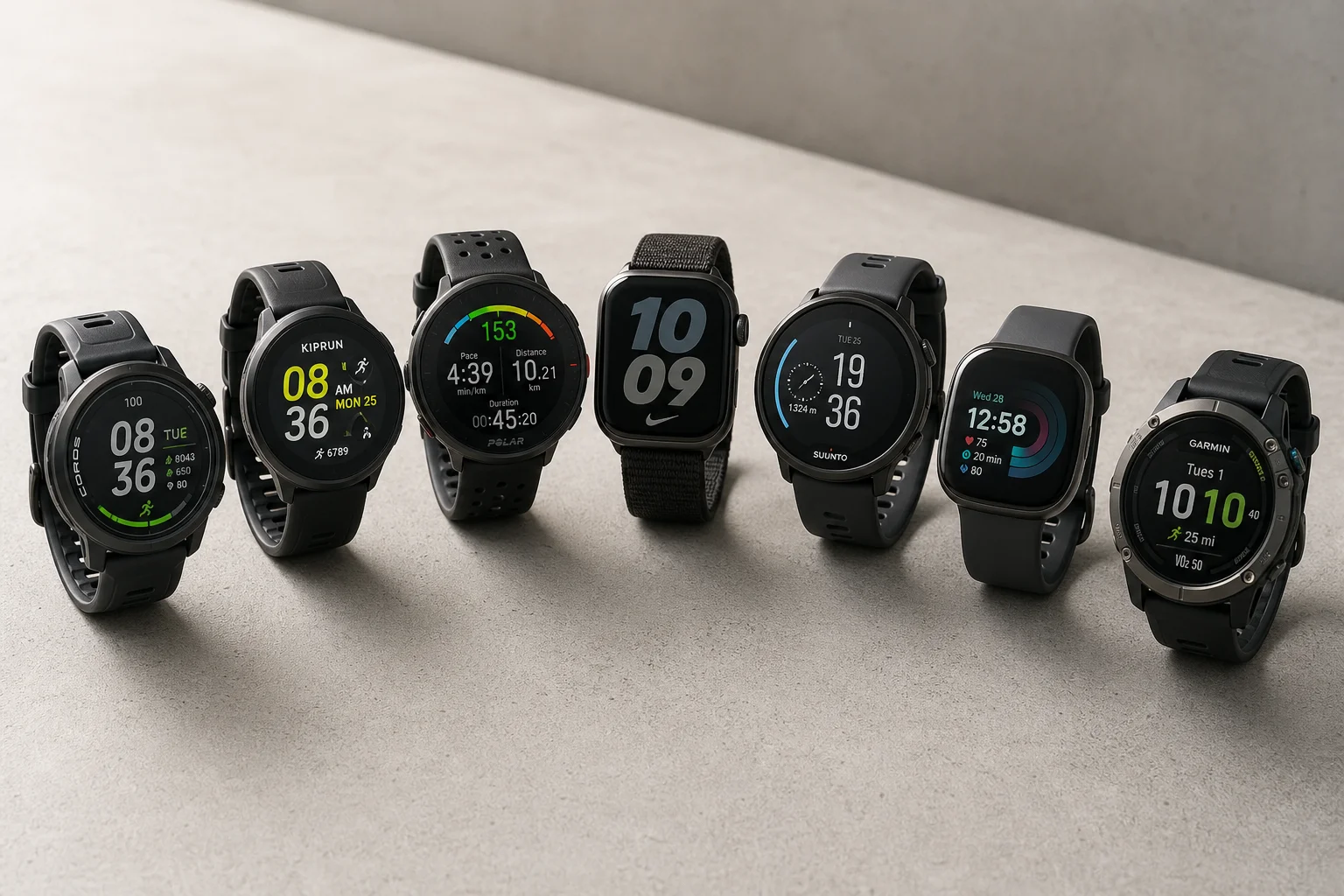
GPS accuracy matters for runners. Whether you are training for a race, tracking personal progress, or simply want to know the true distance of your route, the watch on your wrist needs to deliver reliable data. We tested seven popular running watches from the major brands in three different real-world environments to find out which one tracks distance most accurately.
Understanding GPS Accuracy in Running Watches
GPS stands for Global Positioning System, and it calculates your route, distance, speed, and elevation changes by measuring your distance from four or more satellites orbiting the Earth. Most modern running watches also use additional satellite systems such as GLONASS and Galileo, collectively known as GNSS (Global Navigation Satellite System), for improved accuracy.
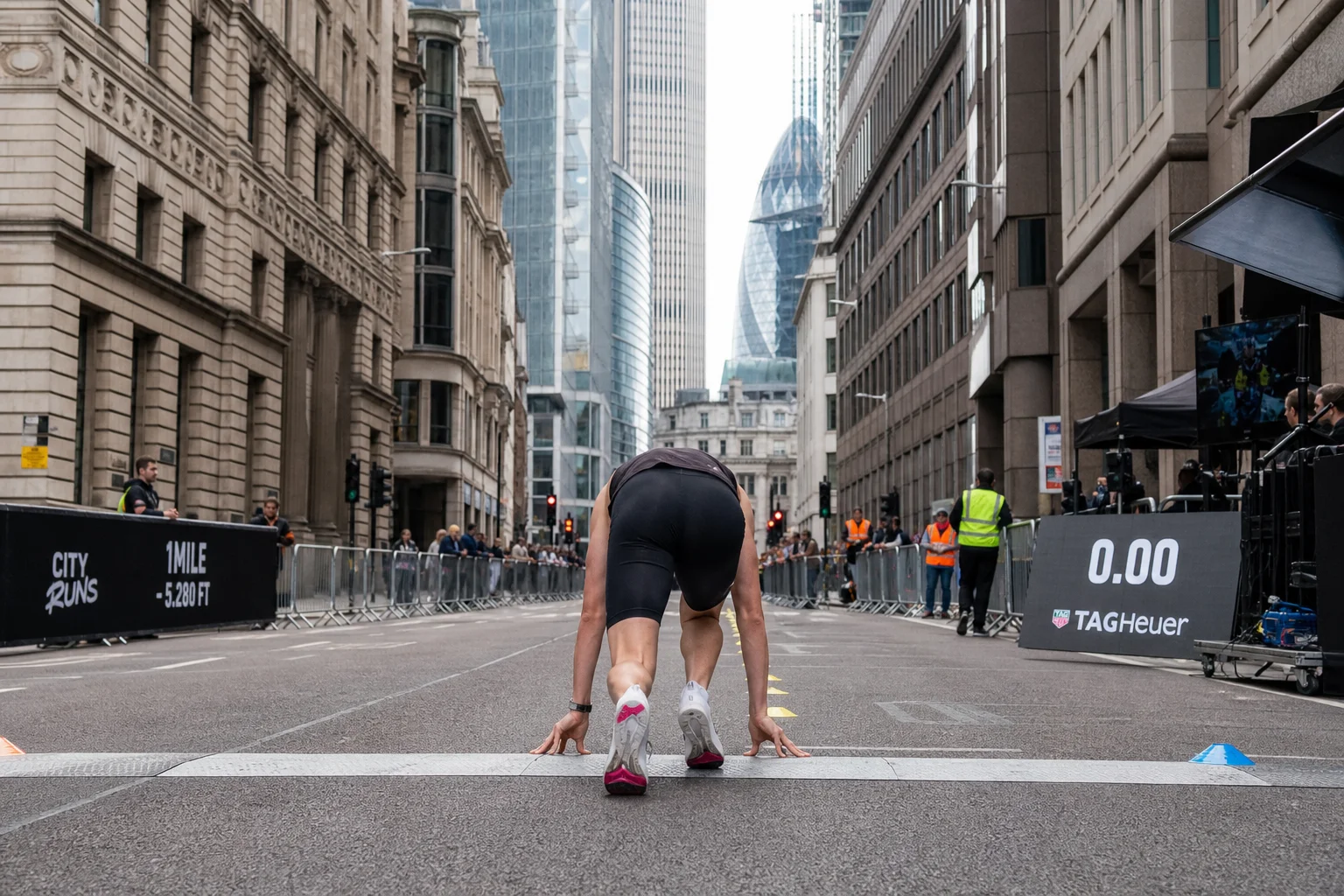
Accuracy can be affected by physical obstructions, atmospheric interference, and artificial signal disruption. This is why we tested the watches in three distinct environments: a busy urban setting with high-rise buildings, a wooded trail with tree coverage, and a competitive 5K race in an urban park. Most watches allow you to choose between auto mode (which selects the best mode for your environment) and dual-frequency mode (which uses multiple frequency bands for higher accuracy at the cost of battery life). We left all watches in auto mode for this test to reflect typical real-world usage.
Urban GPS Accuracy: The Measured Mile Test
We measured out an exact 1-mile course using a trundle wheel on one of London’s busiest streets, surrounded by high-rise buildings. This environment tests how well each watch handles urban canyon effects, where tall buildings can block or reflect GPS signals.

Results:
- Coros Pace 3: 1.00 mile (exact)
- Kiprun GPS 900: 1.00 mile (exact)
- Polar Pacer: 1.01 miles (0.01 mile over)
- Apple Watch Ultra 2: 1.00 mile (exact)
- Suunto Race: 1.01 miles (0.01 mile over)
- Garmin Forerunner 965: 1.00 mile (exact)
- Fitbit Versa 4: 1.12 miles (0.12 mile over)
The Fitbit showed the largest discrepancy. Notably, the Fitbit vibrates whether or not it has an active GPS lock, so it was vibrating throughout the test despite losing GPS signal for approximately 50% of the run. This suggests the Fitbit may perform better when paired with a smartphone for assisted GPS, though for standalone reliability it did not perform as well in this test.
Trail GPS Accuracy: Testing Under Tree Cover
Tree coverage, large rocks, and dense vegetation can block or scatter GPS signals, making trail running a more challenging environment for accuracy. We measured another 1-mile course on a wooded trail and ran it to compare actual distance against watch readings.
Results:
- Apple Watch Ultra 2: 0.98 miles (0.02 mile short)
- Kiprun GPS 900: 0.99 miles (0.01 mile short)
- Coros Pace 3: 0.98 miles (0.02 mile short)
- Polar Pacer: 0.99 miles (0.01 mile short)
- Suunto Race: 1.00 mile (exact)
- Garmin Forerunner 965: 1.00 mile (exact)
- Fitbit Versa 4: 0.97 miles (0.03 mile short)
The Suunto Race and Garmin Forerunner 965 performed best on the trail, both recording the exact measured distance. Most watches showed a slight tendency to underestimate distance on the trail, likely due to GPS signal loss or multipath errors caused by signal bouncing off large rocks and trees. The Fitbit again showed the largest discrepancy.
Race Conditions: The 5K Challenge
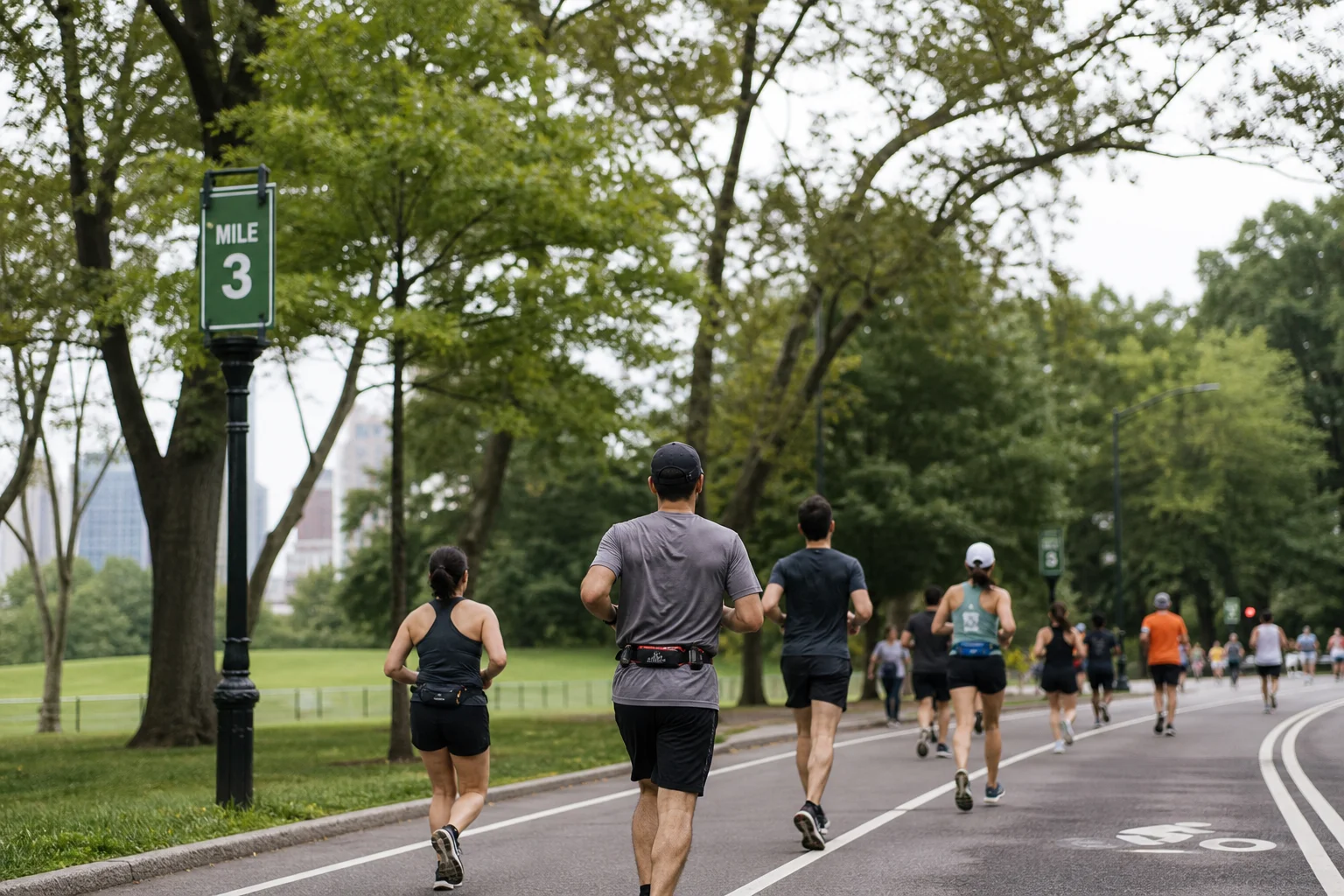
For the final test, we ran a 5K race around one of London’s busiest parks. The measured course was 3.18 miles. In a race environment, runners often weave slightly off the ideal line, which adds distance to the watch reading. However, official race mile markers provide a useful reference point for evaluating accuracy.
Results:
- Fitbit Versa 4: 3.13 miles (0.05 mile short)
- Suunto Race: 3.16 miles (0.02 mile short)
- Garmin Forerunner 965: 3.14 miles (0.04 mile short)
- Coros Pace 3: 3.12 miles (0.06 mile short)
- Apple Watch Ultra 2: 3.11 miles (0.07 mile short)
- Kiprun GPS 900: 2.63 miles (0.55 mile short)
- Polar Pacer: 2.32 miles (0.86 mile short)
The Suunto Race came out on top in this test, with the Garmin Forerunner 965 close behind. The Kiprun GPS 900 and Polar Pacer both showed significant discrepancies in the race environment, which is surprising given their stronger performance in the earlier tests. This highlights how GPS performance can vary unpredictably in complex urban environments with many tall buildings and signal reflections.
Key Takeaways for Choosing a Running Watch
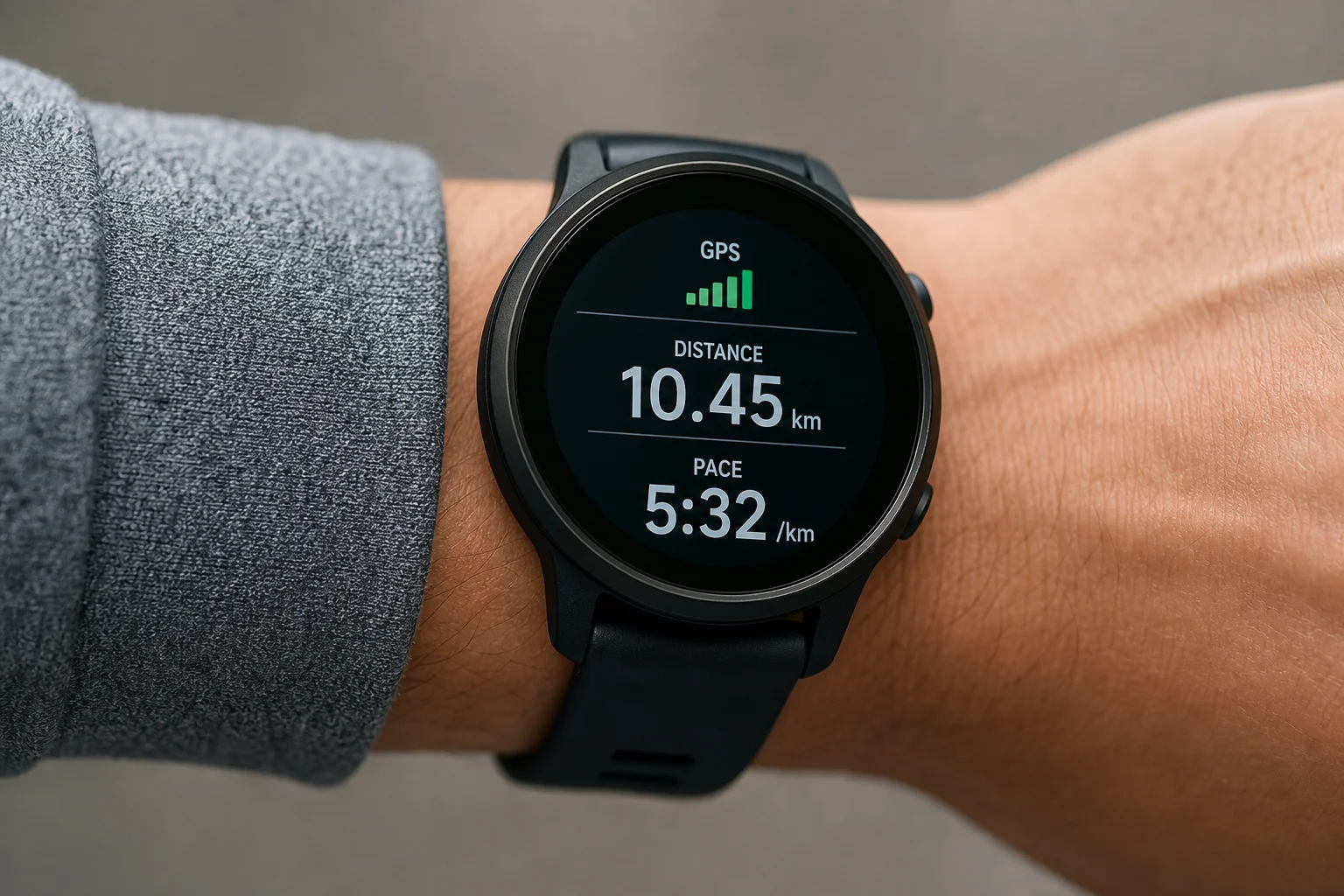
Best Overall Performers: The Suunto Race and Garmin Forerunner 965 tied for the best overall accuracy across all three tests, each winning two out of three environments.
Trail Running: If you run frequently on trails, the Suunto Race and Garmin Forerunner 965 both demonstrated superior accuracy under tree cover. Consider checking whether your watch offers a high-accuracy mode if you prioritize distance precision, though this will reduce battery life.
Budget Option: The Fitbit Versa 4 is the most affordable watch tested and held up reasonably well despite some discrepancies. It may perform better when paired with a smartphone for assisted GPS.
Race Day Advice: In a race, use official mile or kilometer markers as your primary reference rather than relying solely on your watch. Smaller local races may not have precisely positioned markers, so consider using your watch as a secondary reference. The Apple Watch Ultra 2 impressed with its quick GPS acquisition and consistent performance across environments.
Watch Interface Familiarity: Every watch has a different button layout and menu structure. Before a big race or important training run, spend time practicing with your watch on shorter runs to become comfortable with its interface and features.
Conclusion
All seven watches tested are solid options from leading running brands, and most performed within reasonable accuracy margins across the three environments. The Suunto Race and Garmin Forerunner 965 emerged as the most consistently accurate, while the Apple Watch Ultra 2 offered the fastest GPS lock-on and strong overall performance. For trail runners, the Suunto and Garmin showed a clear advantage. Budget-conscious runners will find the Fitbit Versa 4 acceptable, though it may benefit from smartphone pairing. Ultimately, your choice should balance accuracy requirements with your specific running environment, budget, and preference for watch features beyond GPS tracking.
Further reading
Related Reviews
Running Watches
Coros Pace 3 Running Watch Review: Why Software Matters More Than Specs
The Coros Pace 3 prioritizes runner-focused design and intelligent software over expensive hardware. Here's why it outperforms watches that cost twice as much.
Wearables
Apple Watch Ultra 3 vs Garmin: Which Training Watch Wins for Athletes
A practical head-to-head comparison of the Apple Watch Ultra 3 and Garmin for serious training, covering GPS accuracy, data tracking, usability, and recovery metrics.
Wearables
Apple Watch vs Garmin for Running: A Year of Training Compared
After a year training for marathons with both devices, here's what actually matters when choosing a running watch.