Mobile Devices
Light Phone III Review: A Minimalist Smartphone Alternative with Real Trade-offs
The Light Phone III prioritizes intentional living and simplicity over features. Here's what works, what doesn't, and who it's actually for.
Introduction
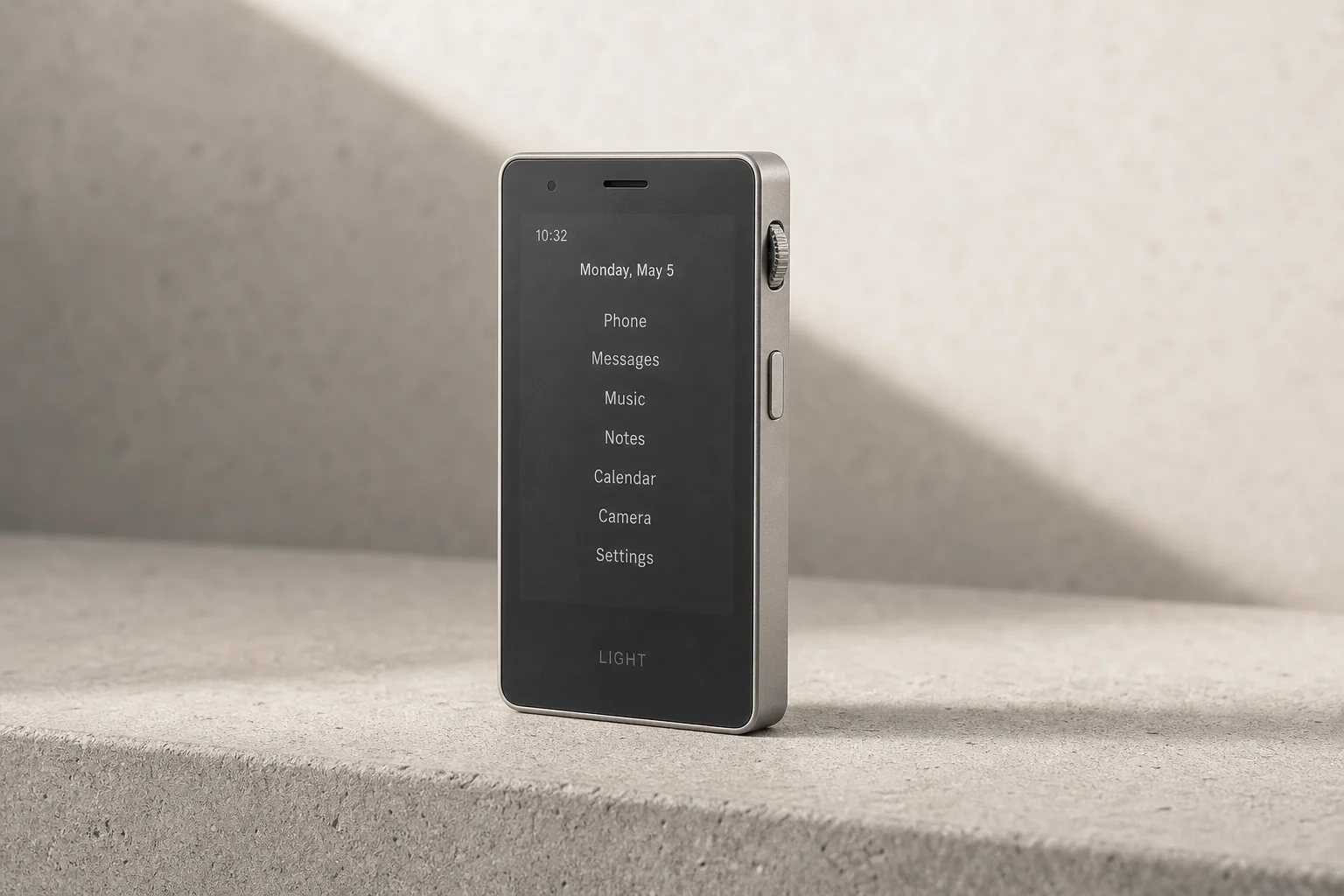
The Light Phone III is a deliberate step away from the smartphone experience. It strips away apps, notifications, and infinite scrolling in favor of a device designed for calls, messages, and basic utilities. The philosophy is clear: intentional living through hardware constraints.
But minimalism on paper and minimalism in daily use are different things. This review covers what the Light Phone III actually delivers, where it falls short, and whether the trade-offs make sense for your life.
Who This Phone Is For
The Light Phone III works best for people who have already decided they want less from their phone. This is not a device that will convince you to use your phone less; it’s a tool for people who have already made that choice.
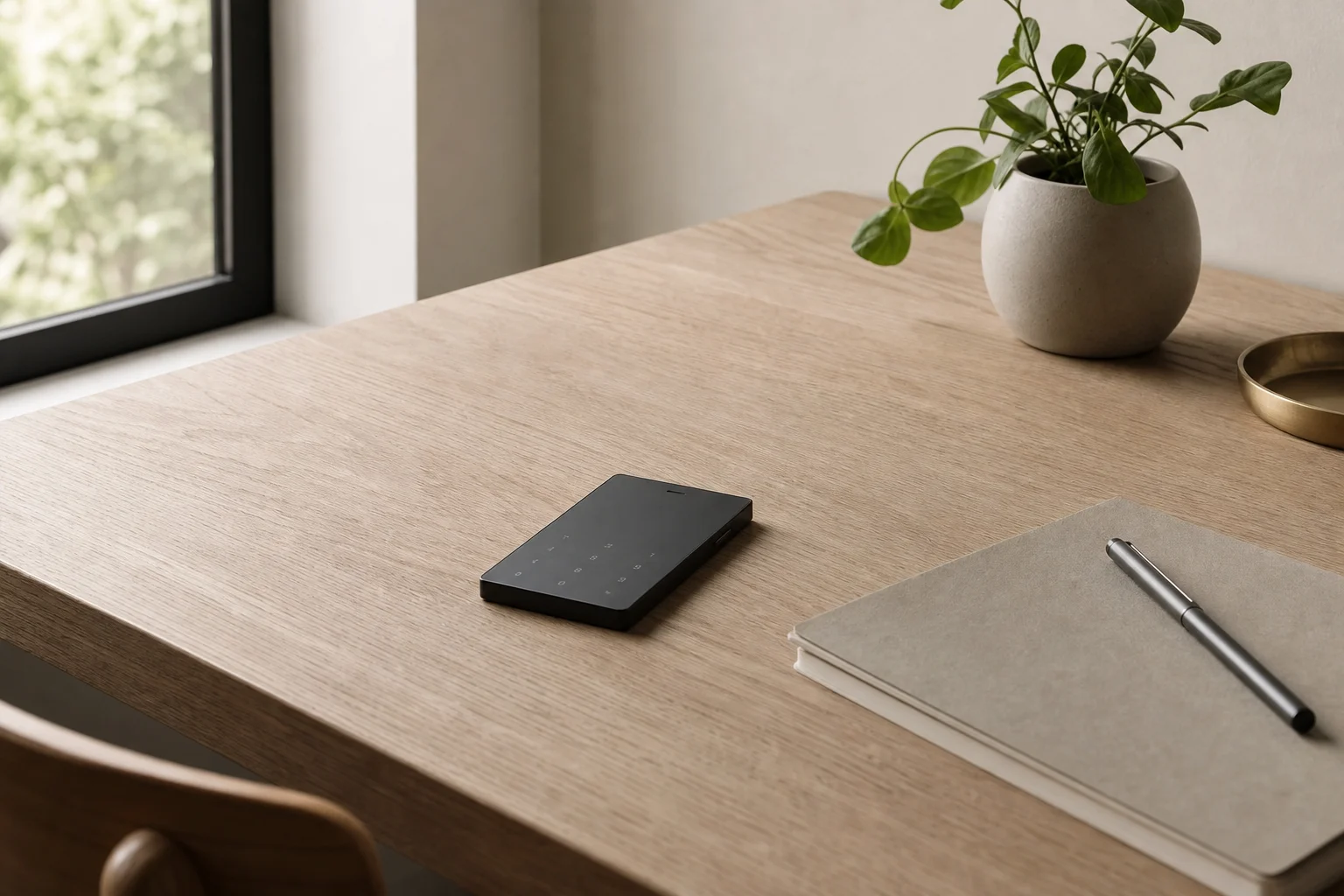
Parents considering a phone for teenagers will find the Light Phone III more modern than traditional flip phones, while still blocking the infinite-scroll trap. The matte screen and minimal interface feel intentional rather than restrictive, which matters psychologically when you’re handing a device to someone else.
It also suits people who already have a smartphone for work but want a separate personal device that doesn’t pull them into notifications and apps during off-hours.
Hardware Design and Physical Controls
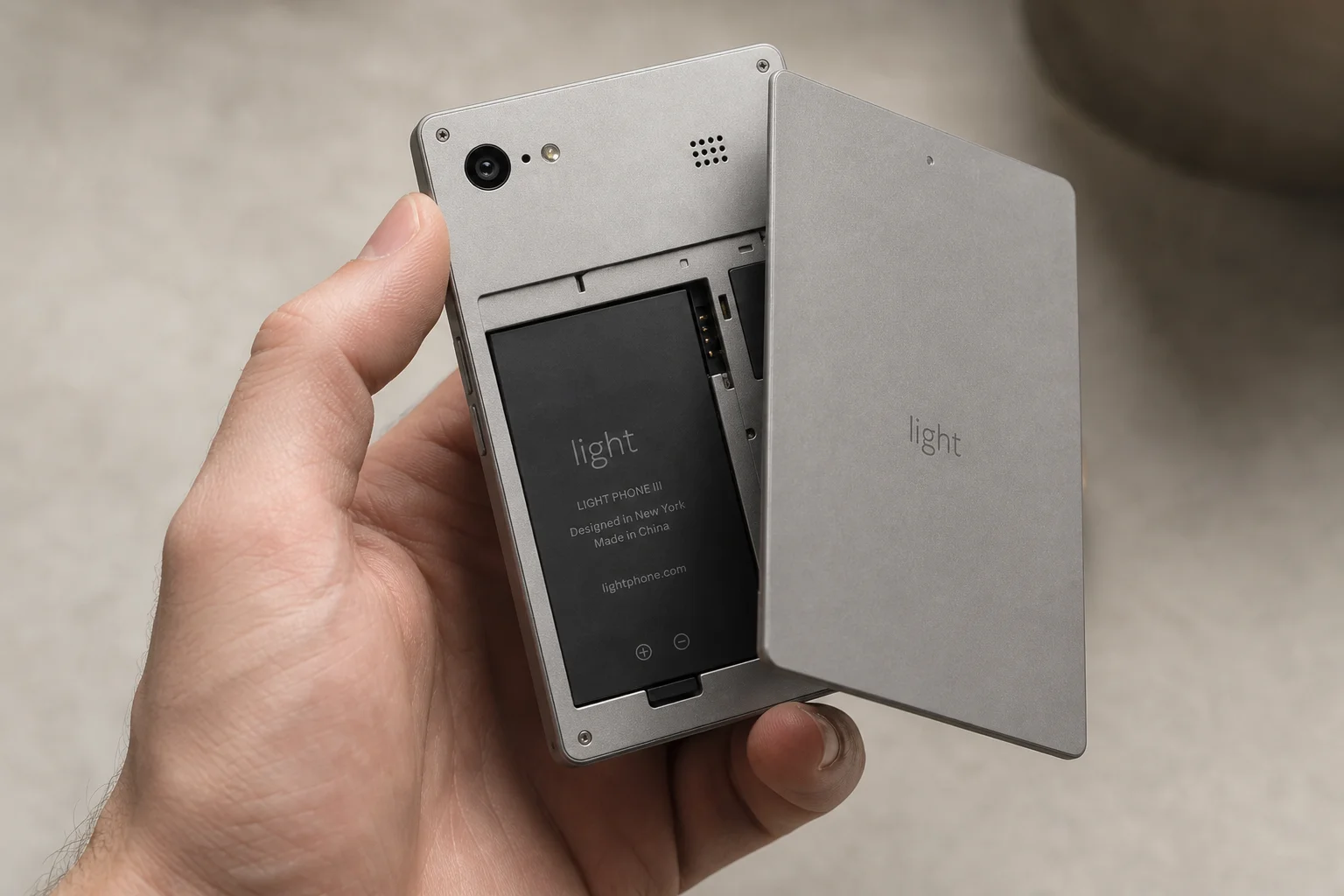
The Light Phone III uses an aluminum body with a glass section at the top for antenna reception. The overall feel is solid and deliberate, though the device is not particularly thin or light despite the name.
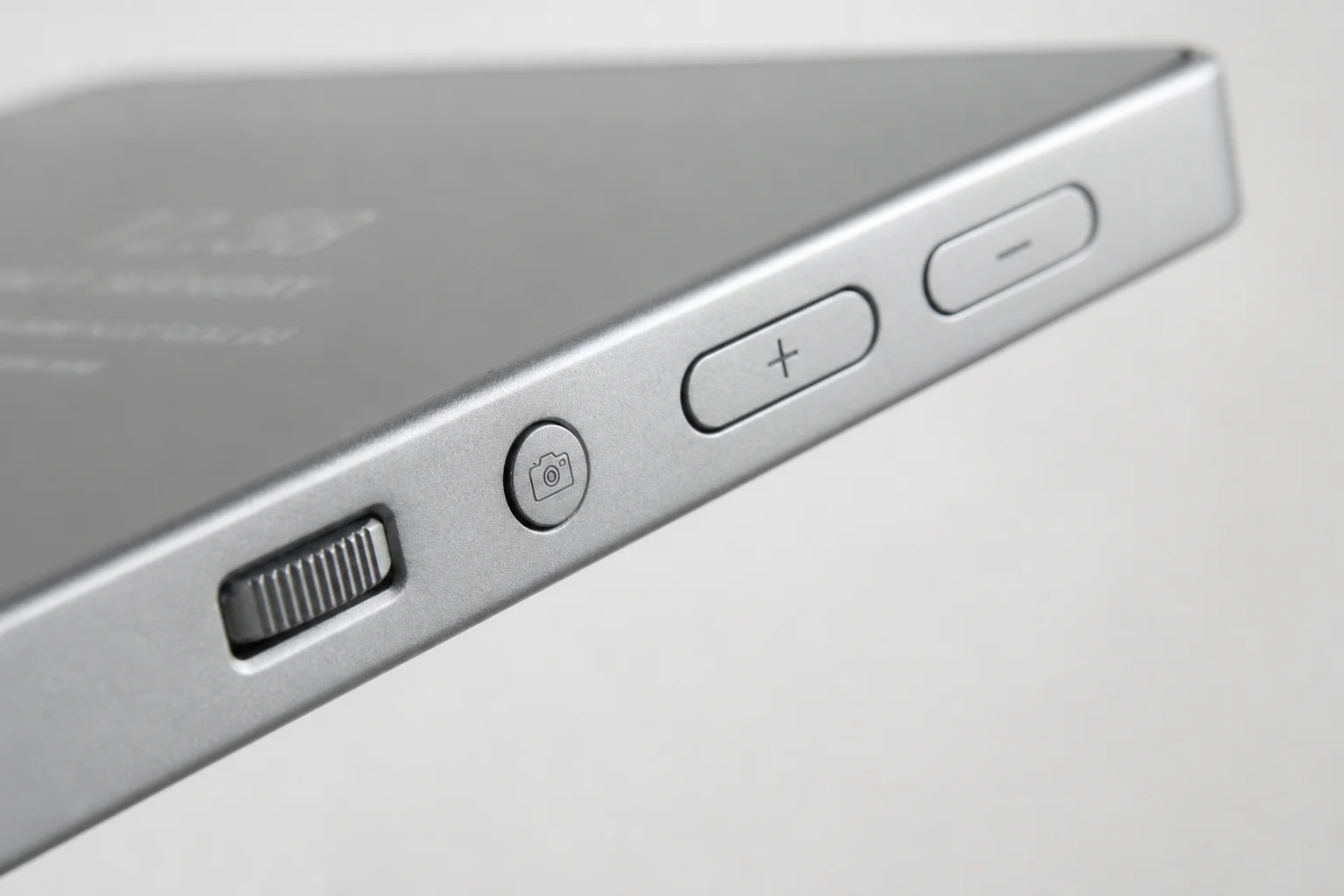
A scroll wheel on the right side controls screen brightness and doubles as a flashlight trigger when clicked. This is one of the most thoughtful design choices: brightness control without diving into settings menus. Volume buttons, a menu button, and a dedicated camera shutter button round out the physical controls. The lock button at the top also functions as a fingerprint reader, though this feature is still being enabled through software updates.
The back panel is removable, allowing you to swap the battery yourself. This is a practical advantage over phones that require a technician for battery replacement.
The device ships in a specialized aluminum case designed with Toyo. The case is stackable and can serve as desktop storage once you remove the phone, which is a nice touch for minimalist aesthetics.
Camera and Imaging
The camera sensor is either 40MP or 50MP (the company has not confirmed the exact specification), but images are scaled down to 24MP. The dedicated shutter button is a two-stop mechanism, giving you tactile feedback for half-press focus and full-press capture.
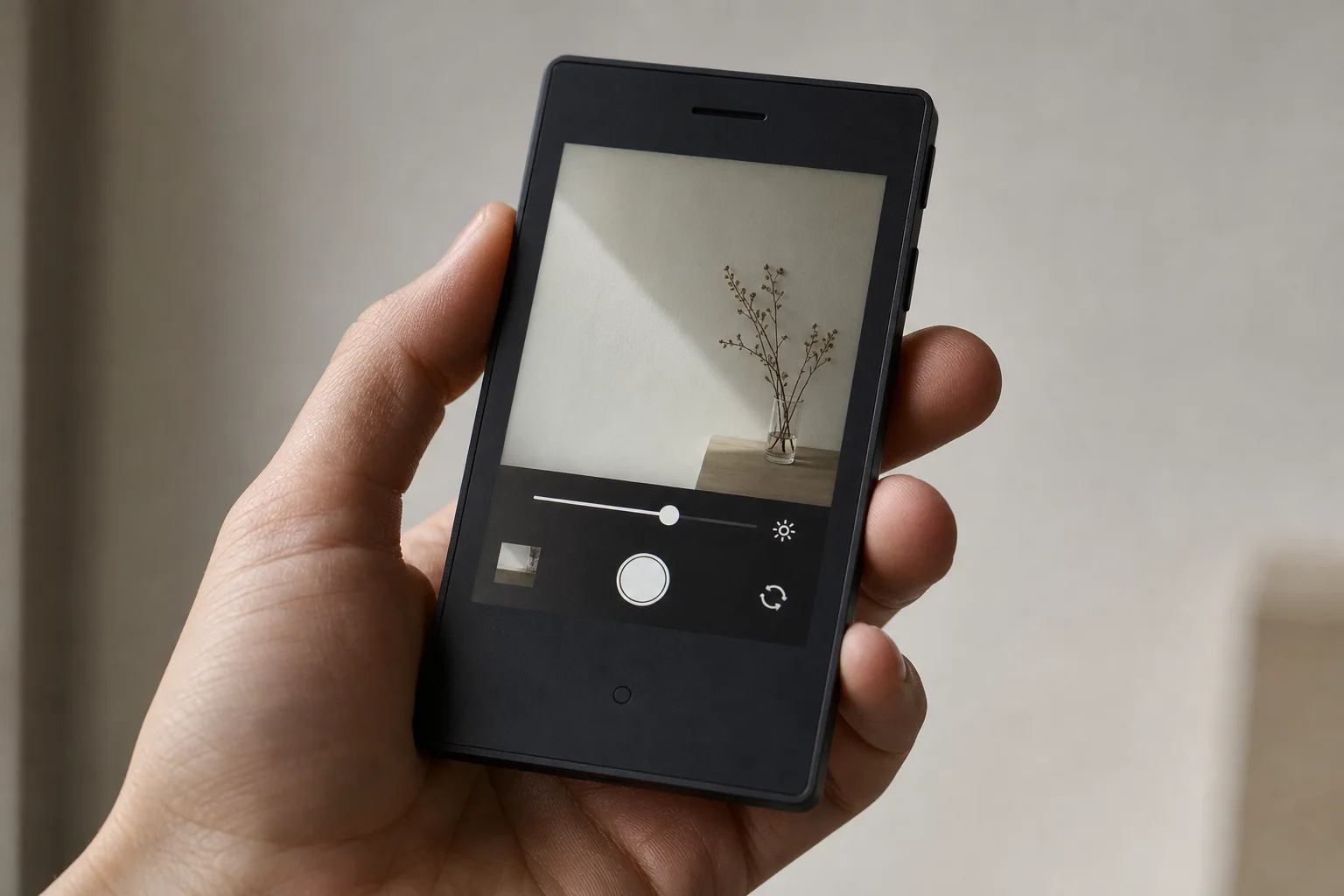
Photos have a distinctive film-like quality, including characteristic light leaks that some users will appreciate and others will find distracting. The camera app includes Photo, Video, and Selfie modes, along with a brightness slider. There is no computational photography, no night mode, and no post-processing filters. What you capture is what you get.
For a minimalist phone, the camera is competent for everyday snapshots and casual documentation. It is not a replacement for a dedicated camera or a smartphone camera system.
Software Experience and Practical Limitations
The Light Phone III runs LightOS, a custom operating system built around simplicity. The home screen shows recent activity, and the menu provides access to Phone, Alarm, Album, Camera, and Settings. There is no app store, no social media, and no games.
The QWERTY keyboard includes haptic feedback, though there is a slight perceived delay between key press and vibration, and no visual animation when keys are pressed. This takes a few minutes to adjust to but becomes natural quickly. Voice-to-text messaging is supported, which is useful for longer messages.
Notifications appear as an asterisk on the lock screen rather than a banner or badge. This is intentional: you check for messages when you choose to, not when the phone demands your attention. Emergency SOS uses GPS and network detection for location sharing, and setup includes optional error log sharing.
The software is still being refined. Features like the touch ID sensor are planned for future updates, which means the phone you buy today may not have all the capabilities the company has announced. This is a risk worth considering if you are paying premium prices for a device that is not yet feature-complete.
The internal speaker produces noticeable vibration felt through the back of the phone, which is useful for alerts but can feel odd during calls.
Buying Advice
The Light Phone III makes sense if you have already committed to using your phone less and you want hardware that enforces that commitment. It is not a budget device, and it is not a phone for people who need a full-featured smartphone.
Shipping delays due to tariff situations have affected pre-orders, so availability may vary by region. The company’s note that software is still being refined suggests you should view this as a device that will improve over time rather than a finished product.
If you are looking for a phone that simply works without distraction, and you can accept the trade-offs in camera quality, app functionality, and feature completeness, the Light Phone III is worth considering. If you need a smartphone that also happens to be less distracting, this is not the right device.
Conclusion
The Light Phone III is a phone for people who have already decided they want less. It delivers on that promise through thoughtful hardware design and a stripped-down operating system. The trade-offs are real: limited camera capabilities, no apps, and software that is still being completed. But for the right person, those constraints are not bugs; they are the entire point.
Product link
View more details for Light Phone III
This product is mentioned in the review. Check the specifications, options, and compatibility before buying.
View more details for Light Phone IIIFurther reading
Related Reviews
Mobile Devices
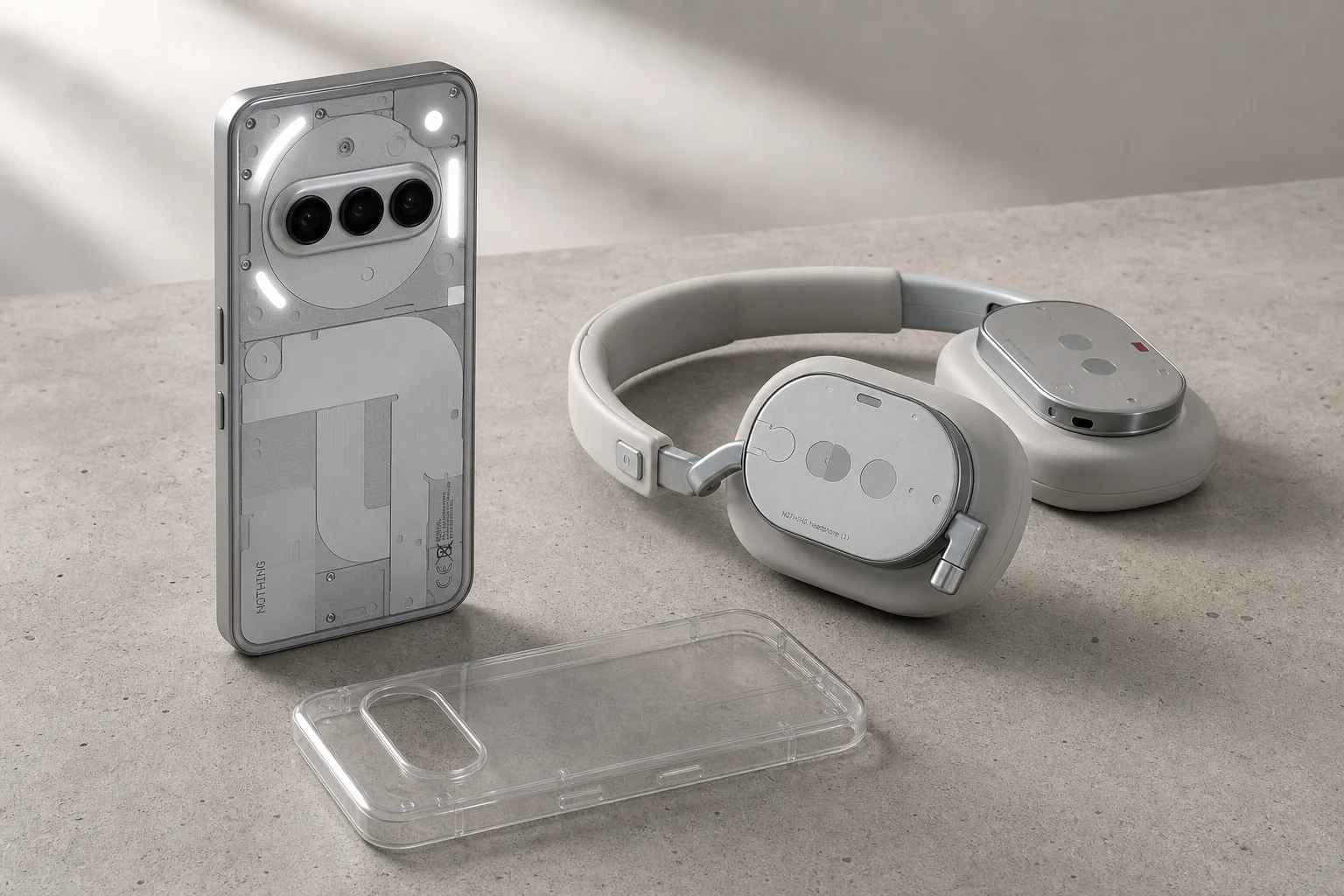
Nothing Phone (4a) Pro, Nothing Headphones (a), and Nothing Phone Case: Three Mid-Range Devices Worth Considering
A detailed look at Nothing's latest mid-range smartphone, wireless headphones, and protective case. Strong design, practical features, and genuine value for the price.
Smartphones
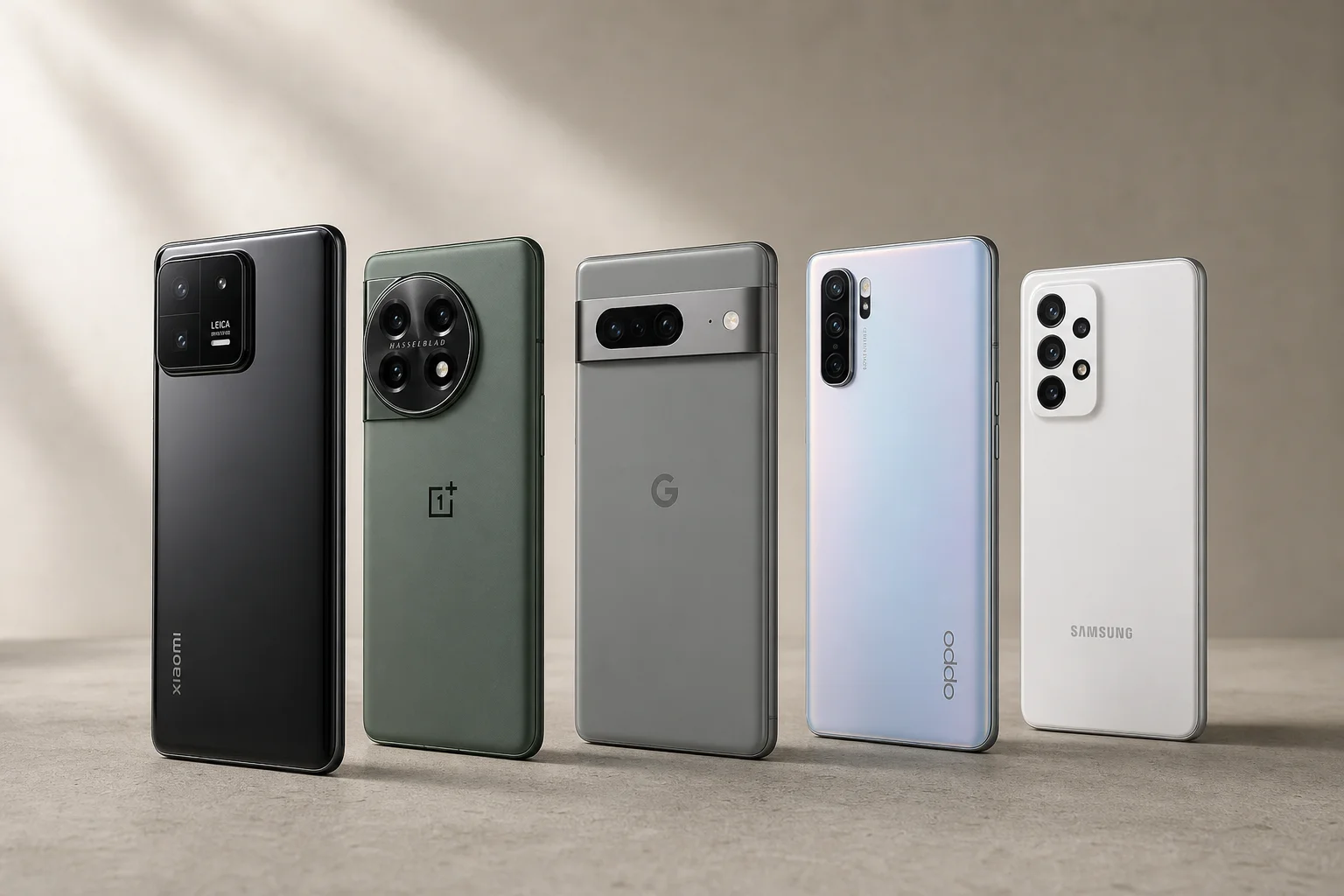
Best Smartphones for Vlogging 2025: Five Budget-Friendly Options for Content Creators
Five affordable smartphones with strong cameras, long battery life, and powerful processors designed for smooth 4K video recording and content creation, ranging from $290 to $700.