Camera Reviews
Panasonic Lumix S1RII: The Most Affordable 8K Full-Frame Mirrorless Camera
A comprehensive look at Panasonic's new 8K full-frame mirrorless camera, its standout features, practical limitations, and whether the upgrade makes sense for video and stills shooters.

Introduction
Panasonic has finally entered the 8K full-frame mirrorless market, and it arrives with a significant advantage: this is the cheapest 8K full-frame mirrorless camera ever released, comparing new launch pricing against current discounted prices of competing models. Beyond the price point, the S1RII brings genuine innovations in video stabilization, a genuinely useful smartphone app, and a thoughtful redesign of the camera body. However, practical limitations in burst buffer capacity and power delivery for external recording temper the headline features.
Burst Performance and Buffer Limitations
The S1RII delivers 40 fps burst shooting at full 44-megapixel resolution in RAW format, with an impressive 1.5-second pre-burst capability. This matches the Canon R1’s RAW burst speed, but the S1RII achieves it at 44 megapixels compared to the R1’s 24 megapixels. The Nikon Z9 can reach 120 fps, but only at 11-megapixel JPEG; its RAW burst tops out at 20 fps.

The critical limitation emerges in buffer capacity. Within two seconds of continuous 40 fps shooting, the buffer fills completely. While capturing 70 shots of 44-megapixel RAW in two seconds is objectively impressive, the practical consequence is significant: you must pause and wait for the buffer to clear before resuming shooting. This becomes problematic during rapid-fire sequences or when taking multiple short bursts in succession. Additionally, the camera offers only two shutter speed options: 40 fps electronic or 10 fps mechanical, with no intermediate settings. This means you cannot dial back to 20 fps to potentially manage buffer constraints more gracefully.
Autofocus improvements are present, with subject recognition covering humans, animals, cars, motorcycles, bikes, trains, and aircraft. The system correctly identifies drones as aircraft, which works reliably in practice. Tracking performance, however, remains characteristically Panasonic in its approach, which some users may find limiting compared to competitors.
Video Stabilization and Lens Correction
Panasonic has long held the advantage in in-body stabilization, and the S1RII continues this tradition with 8-stop stabilization. The new addition is a feature called cropless EIS, which despite its name, does not perform electronic image stabilization in the traditional sense. Instead, it applies electronic perspective correction to counteract lens distortion that can occur during optical stabilization, particularly visible in the corners of the frame. This correction works without cropping the sensor, making it a genuine improvement over previous Panasonic cameras. Users who previously avoided electronic stabilization to preserve full sensor width can now enable this feature to gain distortion correction alongside optical stabilization.
Video Capabilities and Format Options
The S1RII records 8K at 8.1K resolution in 16:9 and 17:9 aspect ratios, with a firmware update planned to add 8.1K open-gate format. Currently, only 6.4K offers open-gate recording. The camera also provides 6.4K and 8.5K ProRes options, addressing a real-world need: most users downscale 8K footage to 4K in post-production, making intermediate formats like 6K valuable for cropping flexibility without the file size and processing burden of full 8K.
ProRes and ProRes RAW support is available, though ProRes recording maxes out at 5.8K rather than full 8K. Any video format above 25 or 30 fps incurs a slight crop from the full sensor width, though Panasonic notes that 4K 120p uses “full area video.” This represents a significant improvement over previous Panasonic models, which applied an APS-C crop at 50p and 60p.
New color science tools include false color, available on a Panasonic mirrorless camera for the first time, and CineLike A2, designed to match the look of cinema cameras. The camera supports external SSD recording via USB, allowing direct recording to fast storage devices like the Lexar SSD option. However, external SSD recording is limited to 4K maximum; higher resolutions require DC coupling via external power or a power grip.

Low-light performance shows the S1RII holding its own against the Sony S5IIx. The S1RII’s high base ISO for V-Log is 1000, giving it a slight advantage at ISO 2000. At ISO 4000, where the S5IIx reaches its high base ISO, both cameras produce visually similar results, with the S1RII operating two stops above its base ISO.
Body Design and Handling
The S1RII is significantly more compact than the original S1R, which was SLR-sized. The new body is approximately 90 percent identical to the S5II, with subtle refinements. The grip is 2-3 millimeters thicker, noticeably improving ergonomics when compared side-by-side with the S5II. The camera is 50 grams heavier, a difference perceptible to users accustomed to the lighter S5II.
A sensor cover, similar to Canon’s implementation, can be toggled on or off in the menu. The cooling fan design, shared with the S5II, includes vents positioned to minimize the camera’s overall footprint despite the active cooling system.
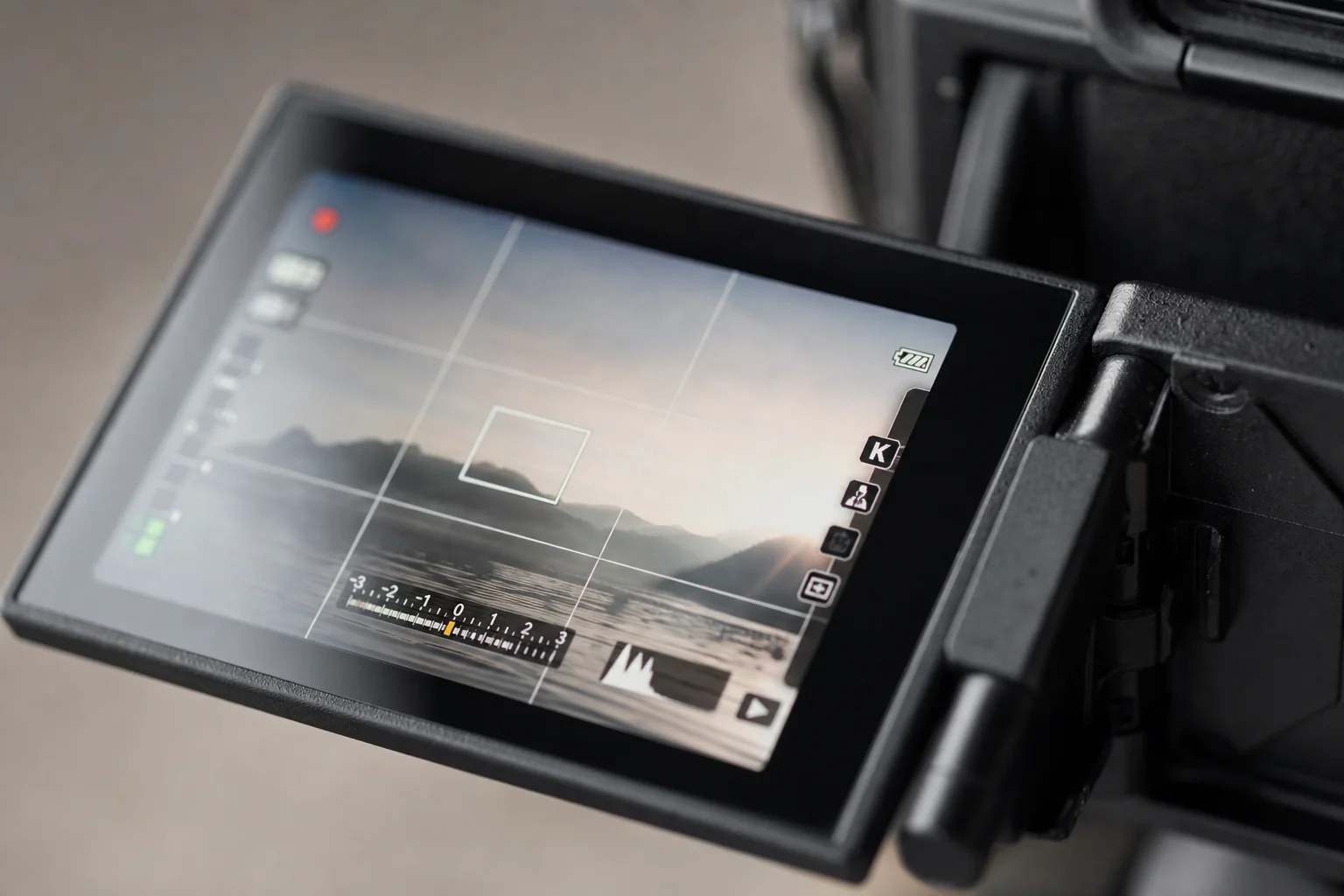
Several operational improvements enhance usability. A dedicated record button joins the existing controls, mirroring the GH7. Tally lights on the front and back provide recording status indication. The articulating screen now flips out and tilts upward, a significant improvement over traditional flip screens that require full extension to achieve upward tilt. This design prevents port obstruction when external power or cables are connected.
Port management has been refined with individual flaps for HDMI, USB, microphone, and headphone connections, allowing users to access a single port without exposing others to dust or moisture. The flaps now include a detent mechanism that holds them open, a feature present on the original S5 but absent on the S5II.
A dedicated still/video and S&Q switch on the body eliminates the need to navigate the mode dial when switching between still and video recording modes, streamlining workflow significantly.
Connectivity and Smart Features
The Lumix Flow smartphone app represents a genuine breakthrough in camera manufacturer software. Connection is straightforward: USB tethering to a smartphone provides a full field monitor with exposure aids, shutter speed, aperture, and ISO controls, plus the ability to start and stop recording remotely. This is the first time a camera manufacturer has delivered genuinely useful smartphone integration.

The S1RII also includes built-in live streaming capability via Wi-Fi or phone tether, enabling broadcast without a computer. This feature was previously available on the S5IIx and continues here.
Card slot configuration presents a practical trade-off. The dual-card setup pairs one CFexpress slot with one SD card slot. This mix is necessary because ProRes recording requires CFexpress, which is significantly more expensive than SD cards. However, this means users cannot record simultaneously to two cards unless they use ProRes or another CFexpress-compatible format. Users who never shoot ProRes must still purchase CFexpress cards to utilize both slots, which many will find unnecessarily expensive.
Pricing and Competitive Position
At launch, the S1RII is the most affordable 8K full-frame mirrorless camera, undercutting the Nikon Z8, Sony A7RV, and Canon R5 Mark II. The only cheaper 8K option is the Fujifilm X-H2, which uses an APS-C sensor rather than full-frame. The four-year-old Canon R5 is less expensive, but comparing a current-generation camera to an older model is not a fair baseline.
Who This Camera Suits
The S1RII makes the strongest case for video-focused professionals and hybrid shooters who value ProRes capability, advanced stabilization, and video-specific features like false color and external SSD recording. The 44-megapixel sensor and high-resolution mode (up to 177 megapixels via multi-shot) appeal to stills photographers who need resolution flexibility.
The burst buffer limitation and lack of intermediate frame rates suggest this is not the ideal choice for sports or wildlife photographers who rely on sustained high-speed shooting. The S5II remains a lighter, more affordable alternative for users who do not require ProRes or the latest video features.
Conclusion
The Panasonic Lumix S1RII is a genuinely capable 8K hybrid camera that delivers on its promise of affordable entry into 8K full-frame mirrorless shooting. The improvements in stabilization, body ergonomics, and video features are meaningful. However, the burst buffer constraint and power limitations for external recording are real-world compromises that warrant consideration before purchase. For video professionals and hybrid shooters who value Panasonic’s video strengths and the new feature set, the S1RII represents solid value. For stills-focused users or those with lighter shooting demands, the S5II may remain the more practical choice.
Product link
View more details for Panasonic Lumix S1RII
This product is mentioned in the review. Check the specifications, options, and compatibility before buying.
View more details for Panasonic Lumix S1RIIFurther reading
Related Reviews
Camera Reviews
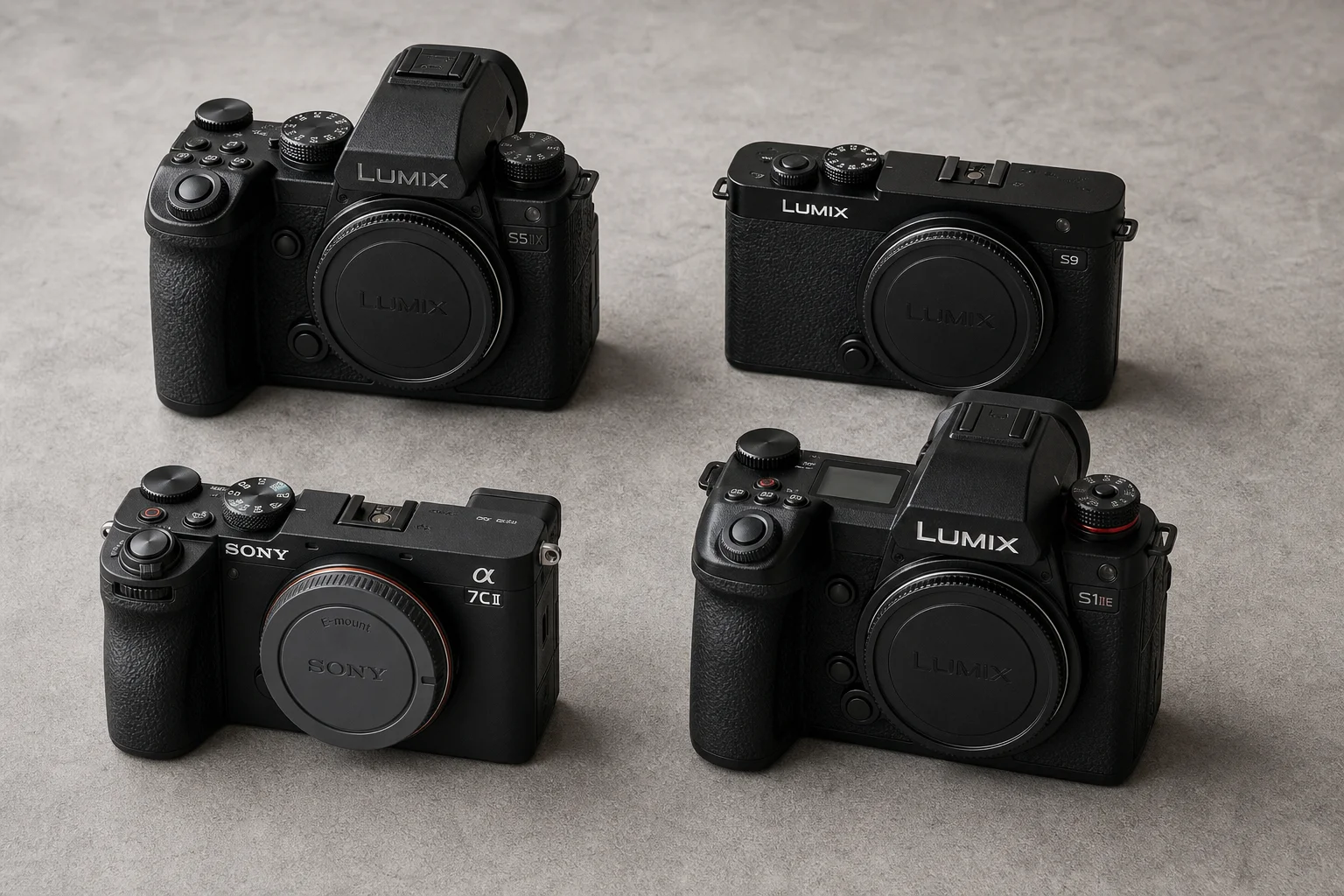
Best Budget Full-Frame Cameras for Video: Four Strong Options Compared
Four full-frame cameras that deliver excellent video capabilities without premium pricing. Lumix leads with unique features, while Sony offers strong autofocus for hybrid shooters.
Camera Reviews
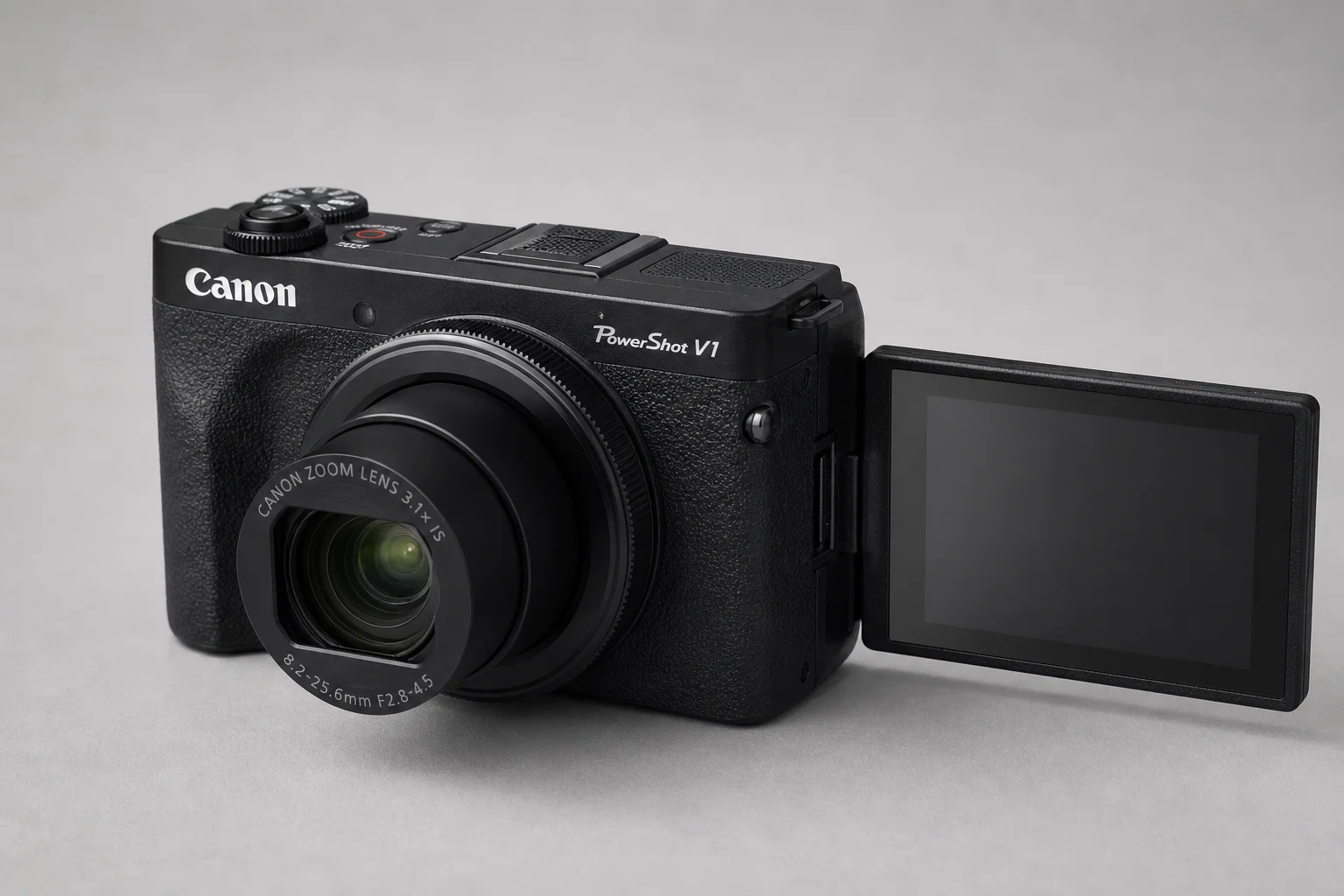
Canon PowerShot V1 Review: A Serious Vlogging Camera with Real Trade-offs
The Canon PowerShot V1 brings a larger sensor and optical stabilization to compact vlogging, but size, battery life, and dynamic range limitations deserve careful consideration.
Camera Reviews
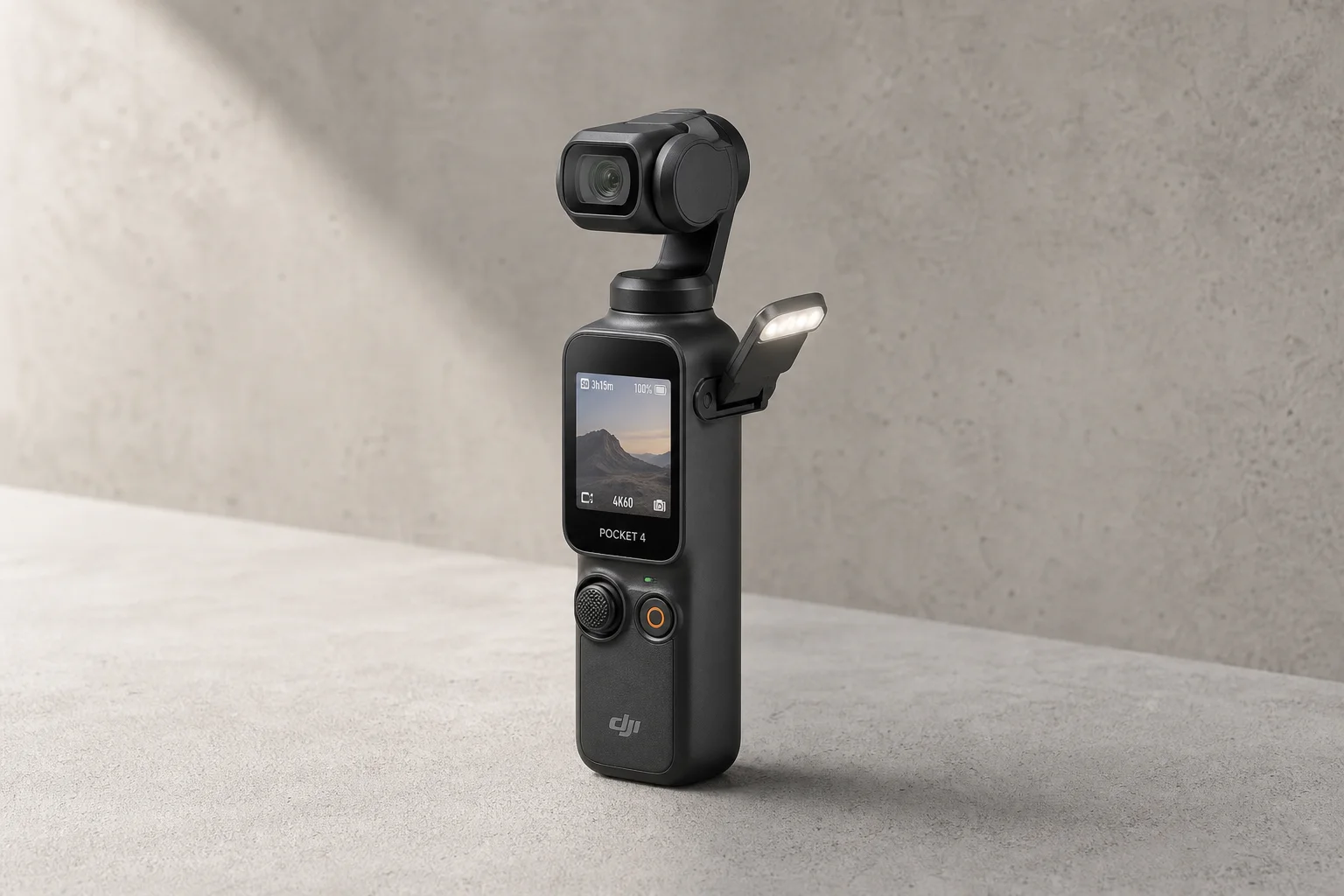
DJI Pocket 4 Review: Compact Gimbal Camera with 1-Inch Sensor and Fill Light
The DJI Pocket 4 brings a 37-megapixel 1-inch sensor, built-in fill light, 4K 240fps video, and 107GB internal storage to a single-handed stabilised camera. A detailed look at what's new and what remains unchanged.