Coffee Gear
Portable Espresso Makers Compared: Four Brewers Tested in Real Conditions
A practical comparison of four portable espresso makers tested on boats, buses, cable cars, and rooftops. Which one delivers the best balance of portability and espresso quality?
Introduction
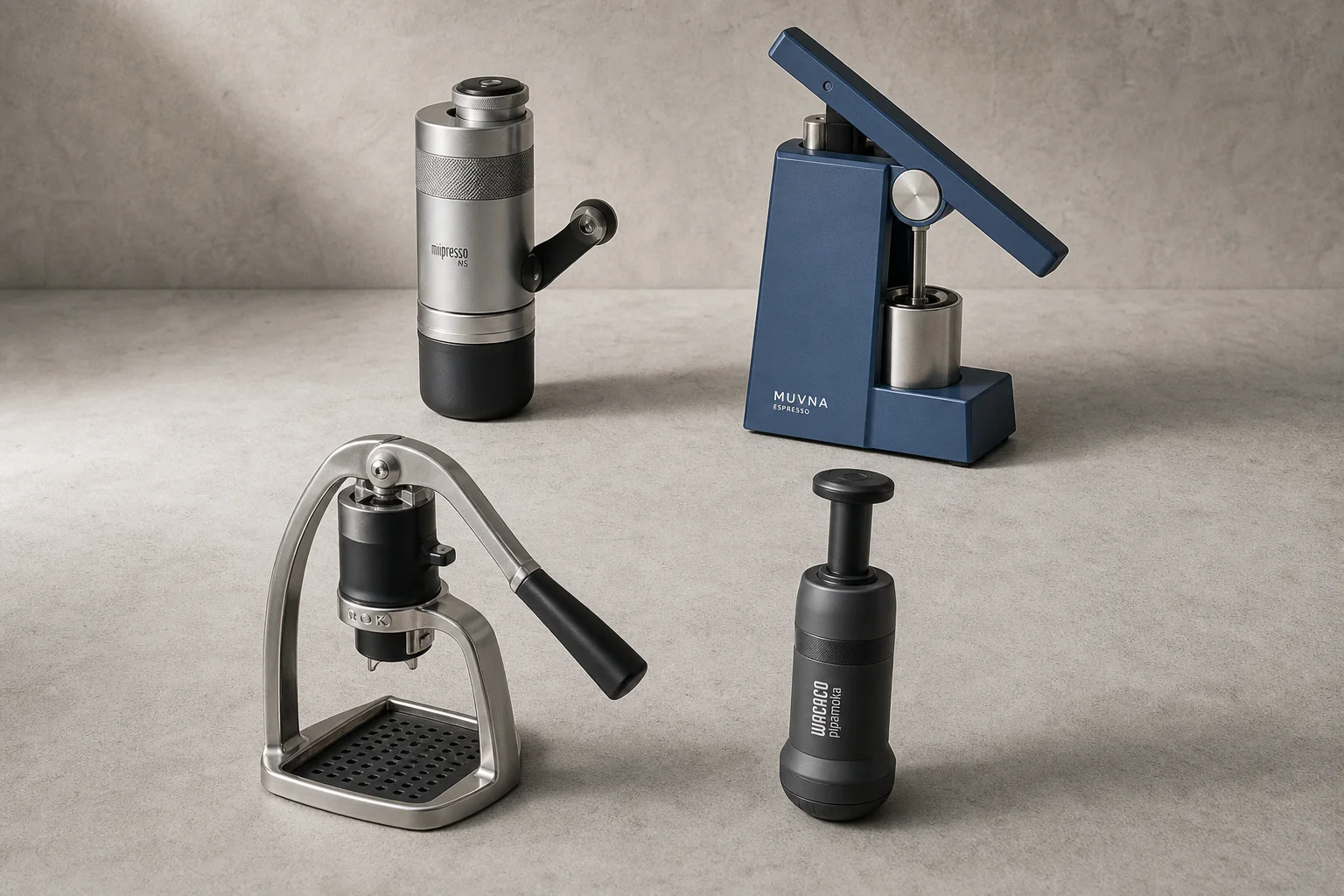
The appeal of portable espresso makers is undeniable: the ability to brew a proper shot anywhere, whether on a mountain, a boat, or a city street. Yet espresso is technically demanding, and making it work outside a kitchen presents real challenges. This comparison tests four popular portable brewers in genuine conditions to help you understand what each one does well and where compromises emerge.
Wacaco Picopresso: Compact and Capable
The Picopresso arrives in a thoughtfully designed travel case containing everything needed except hot water and ground coffee. Inside you’ll find a dosing funnel, tamper, needle distribution tool, basket, and base piece. The brewer uses a manual pump mechanism on the side to build pressure, which is surprisingly effective despite initial skepticism.
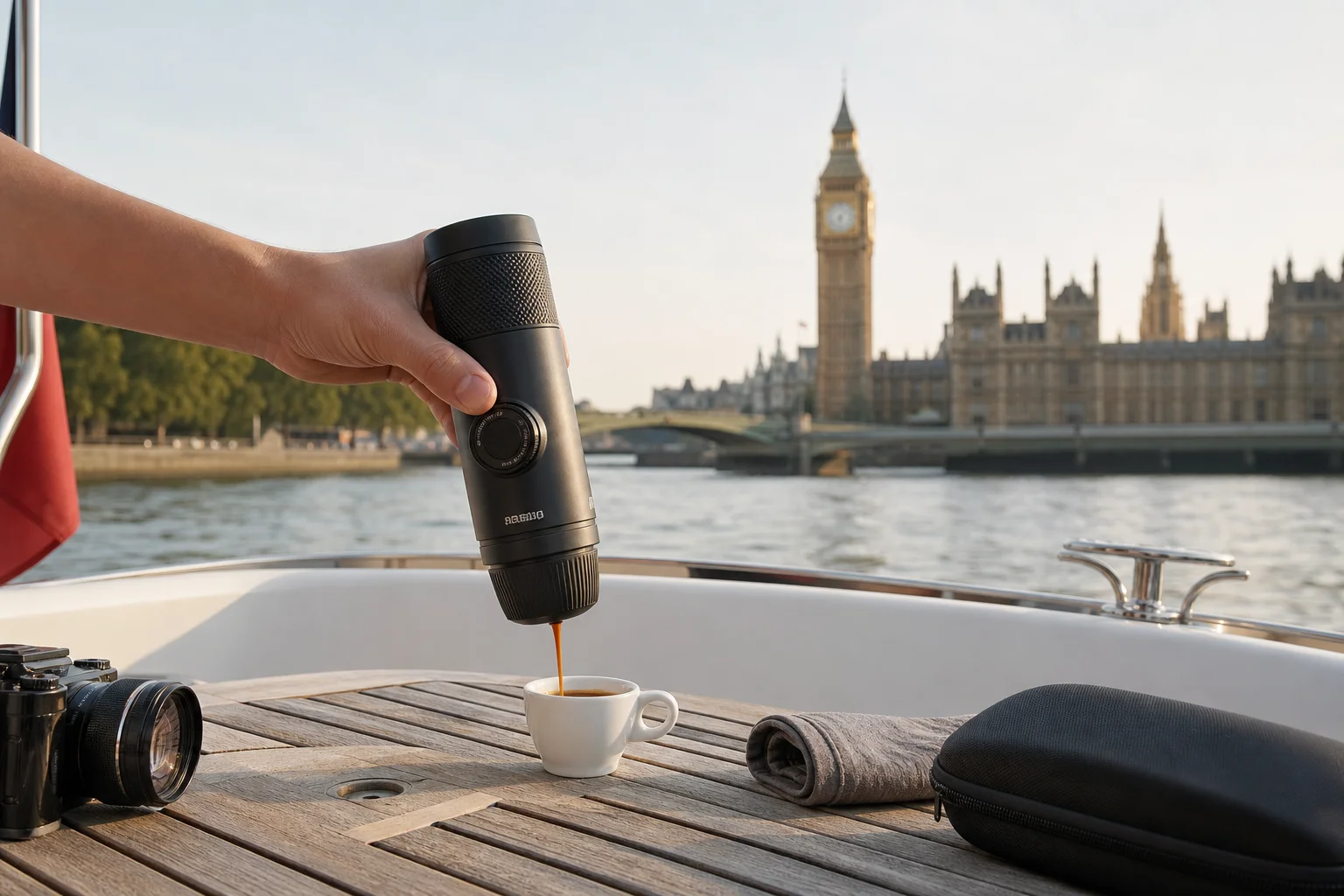
In practice, the Picopresso performs well. A 15-gram dose of freshly ground coffee, distributed with the needle tool and tamped, produces respectable espresso when you pump to build pressure. The naked basket option lets you see the extraction in action, which is visually satisfying. The espresso quality is genuinely good, often better than the compact form factor suggests it should be.
However, there are notable drawbacks. The brewer benefits from preheating, as the first shot can run cool without it. The basket construction feels cheap, with poorly finished holes that many users replace with an aftermarket IMS basket (adding around £130 to the cost). The plastic components raise durability concerns if you regularly transport it in a bag or drop it. There’s also no pressure gauge, so you’re building pressure by feel rather than feedback.
For what it costs and what it delivers, the Picopresso is surprisingly capable. It’s the most portable option here and makes genuinely drinkable espresso.
Handpresso Wild: Budget-Friendly but Compromised
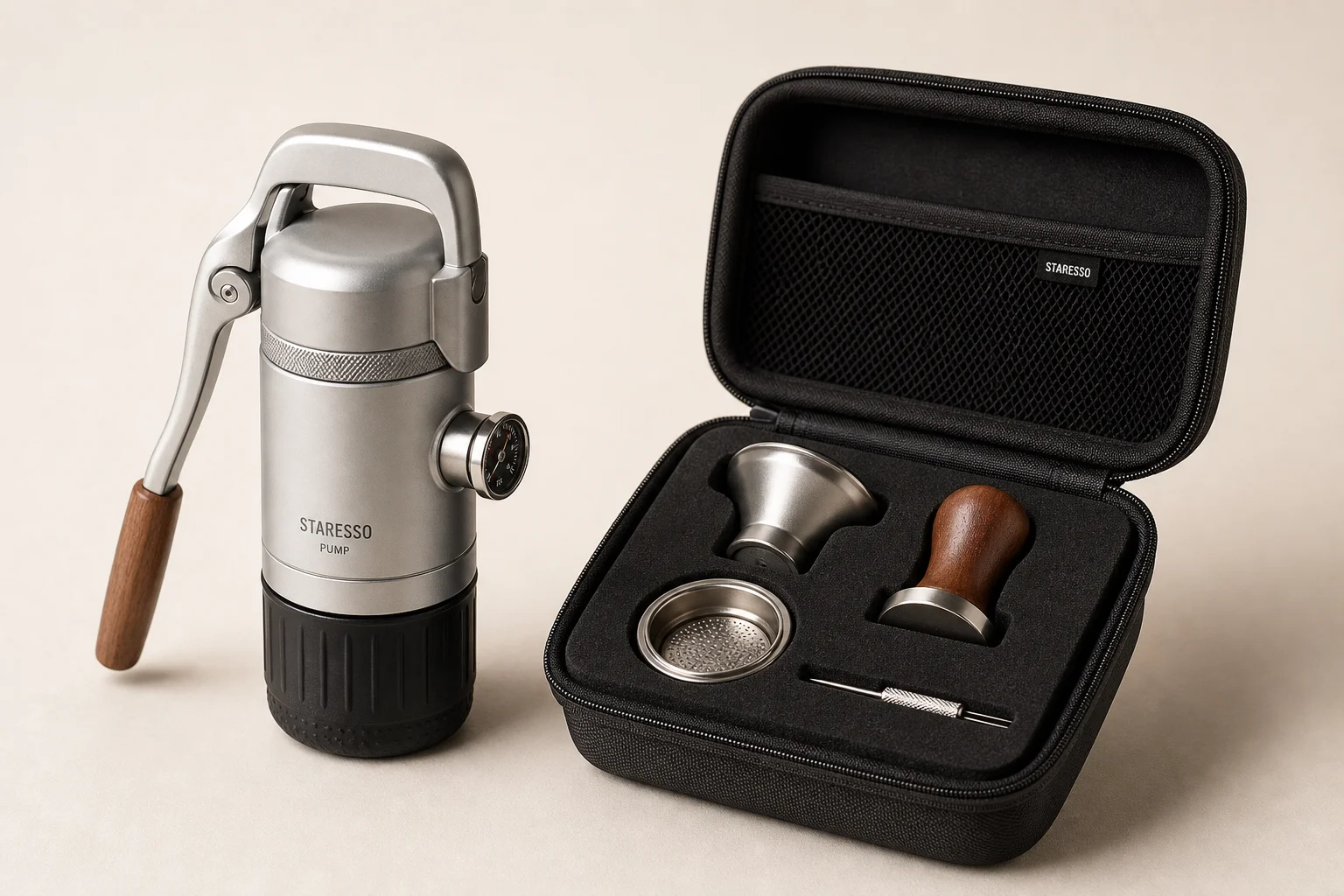
The Handpresso, released in 2008, takes a different approach: it’s essentially a bicycle pump with a coffee attachment. You build pressure by pumping until a gauge shows 15-16 bars, then flip the brewer upside down over a cup to release the shot. At around £60, it’s the cheapest option.
The fundamental problem is the tiny basket, which holds only 5 to 5.5 grams of coffee. This dose is too small to produce satisfying espresso, and the basket design makes it miserable to load grounds into. Without a tamper included, you’re left improvising. The water chamber is small, and the brewing process often channels, blowing the puck apart and producing uneven, weak espresso.
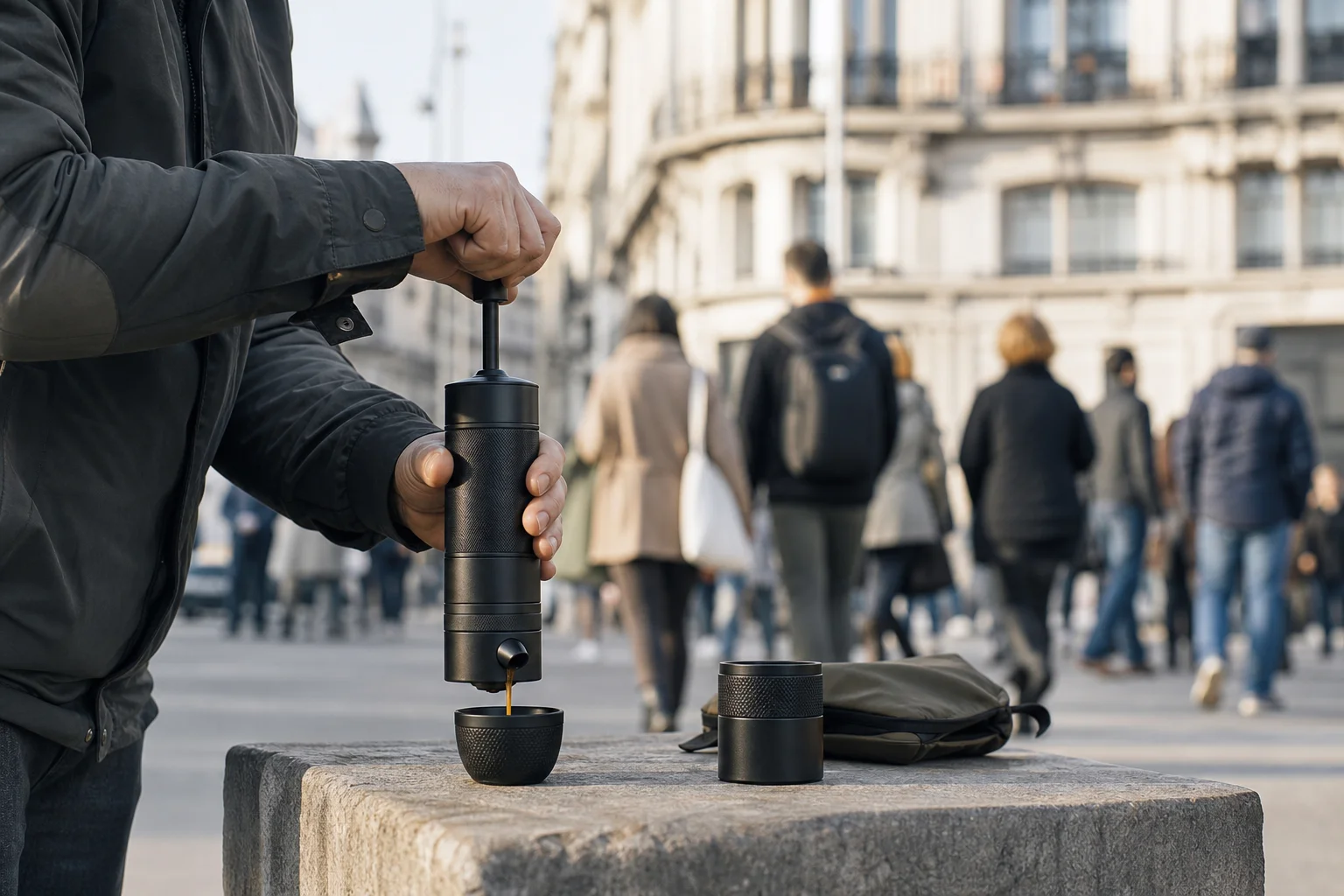
The brewer does come with an adapter for ESE pods (Easy Serve Espresso pods), which are pre-compressed coffee pucks. Using pods improves consistency slightly, but the resulting espresso is still underwhelming: minimal crema, small volume, and mediocre taste despite the effort required.
The Handpresso feels like a relic from 2008 that hasn’t evolved. The effort-to-reward ratio is poor, and the results don’t justify the work. It’s fun as a novelty, but it’s difficult to recommend for serious portable espresso brewing.
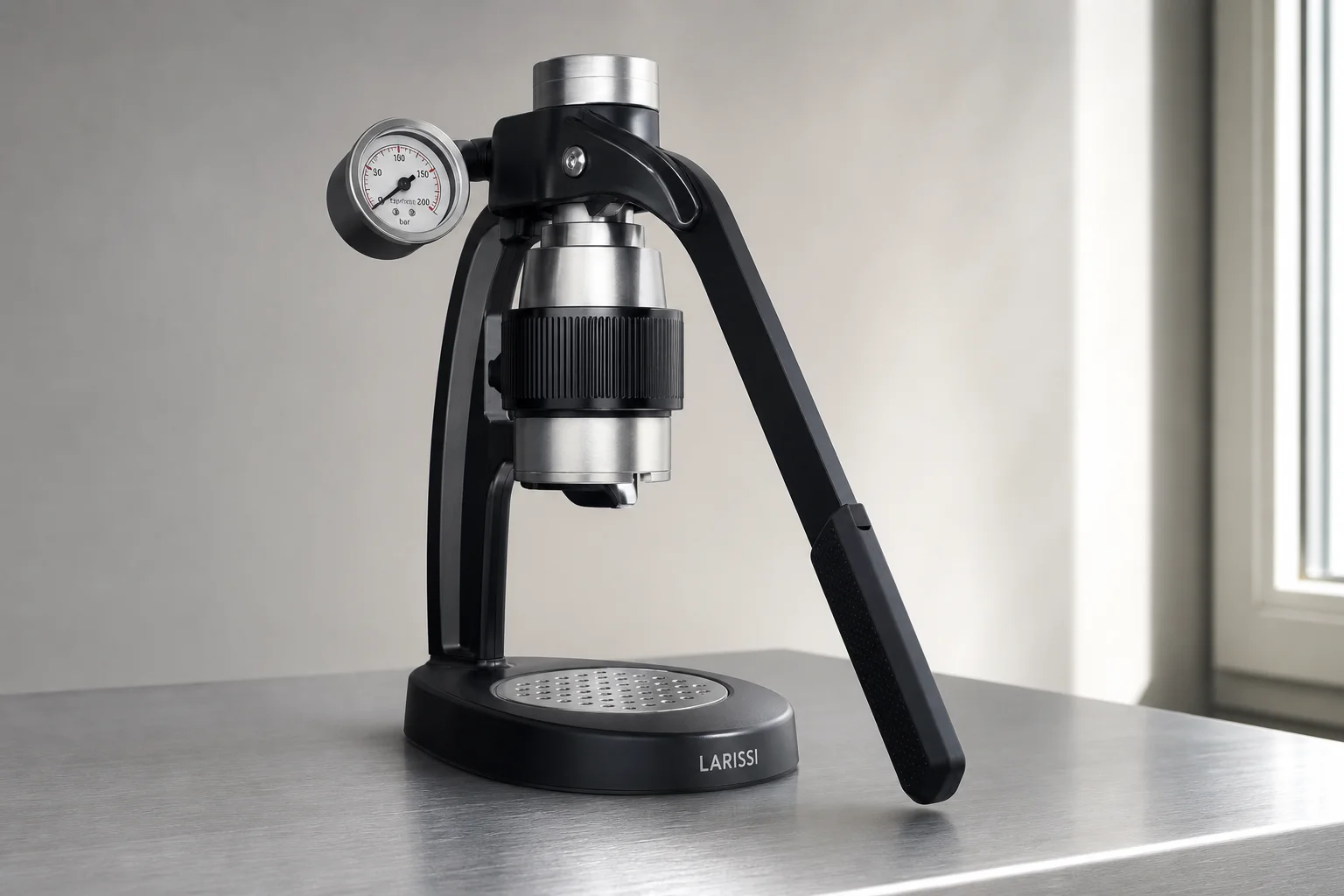
UniTerra Nomad: Flexible and Quirky
The Nomad is a striking angular blue box priced at around $250. Its design is unconventional: a sliding tray serves as the portafilter, a seesaw mechanism on the side pumps water, and a pressure gauge shows when you’re in the ideal 6-10 bar range for crema. The water tank holds 300 mls, which is generous for a portable brewer.
The Nomad includes a True Crema Valve that allows you to use coarser or less-than-ideal coffee and still achieve reasonable results. The seesaw pump mechanism is intuitive and enjoyable to use. The espresso quality is genuinely good, and the flexibility of the larger water tank means you can pull lungo shots or hybrid pour-over styles if you want.
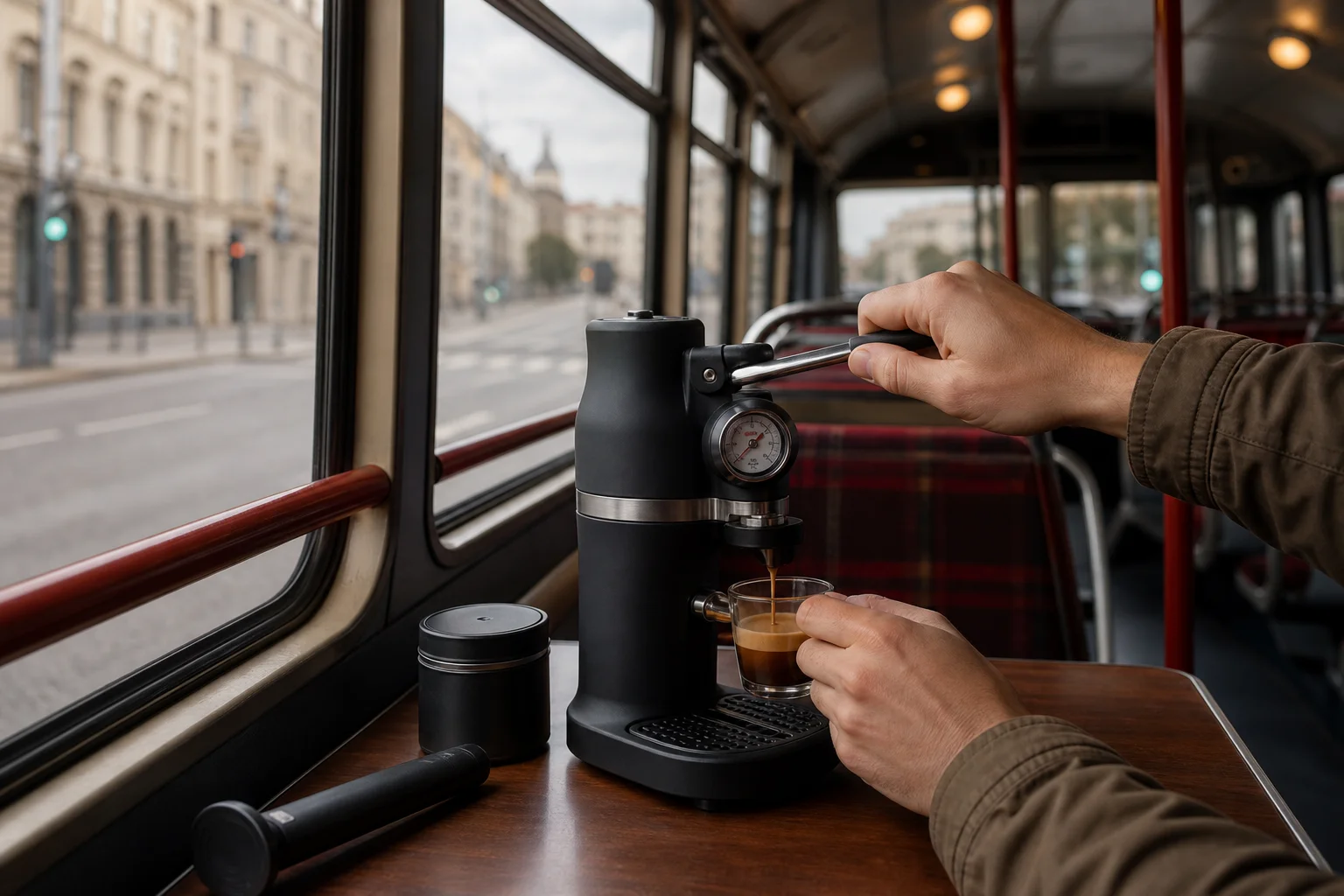
The drawbacks are real. The portafilter design requires cleaning multiple components (basket, underside, tray), which is tedious without a sink. The gap between the spout and a flat surface is small, making it difficult to use a scale. The design itself is polarizing visually. The water tank’s size creates a thermal stability trade-off: more water means better temperature retention, but you’re cooling down rapidly if you only fill it partially.
The Nomad doesn’t quite fit a single use case. It’s too large for true backpacking, yet it needs a flat surface and benefits from access to water. It’s genuinely fun and capable, but its quirks require acceptance.
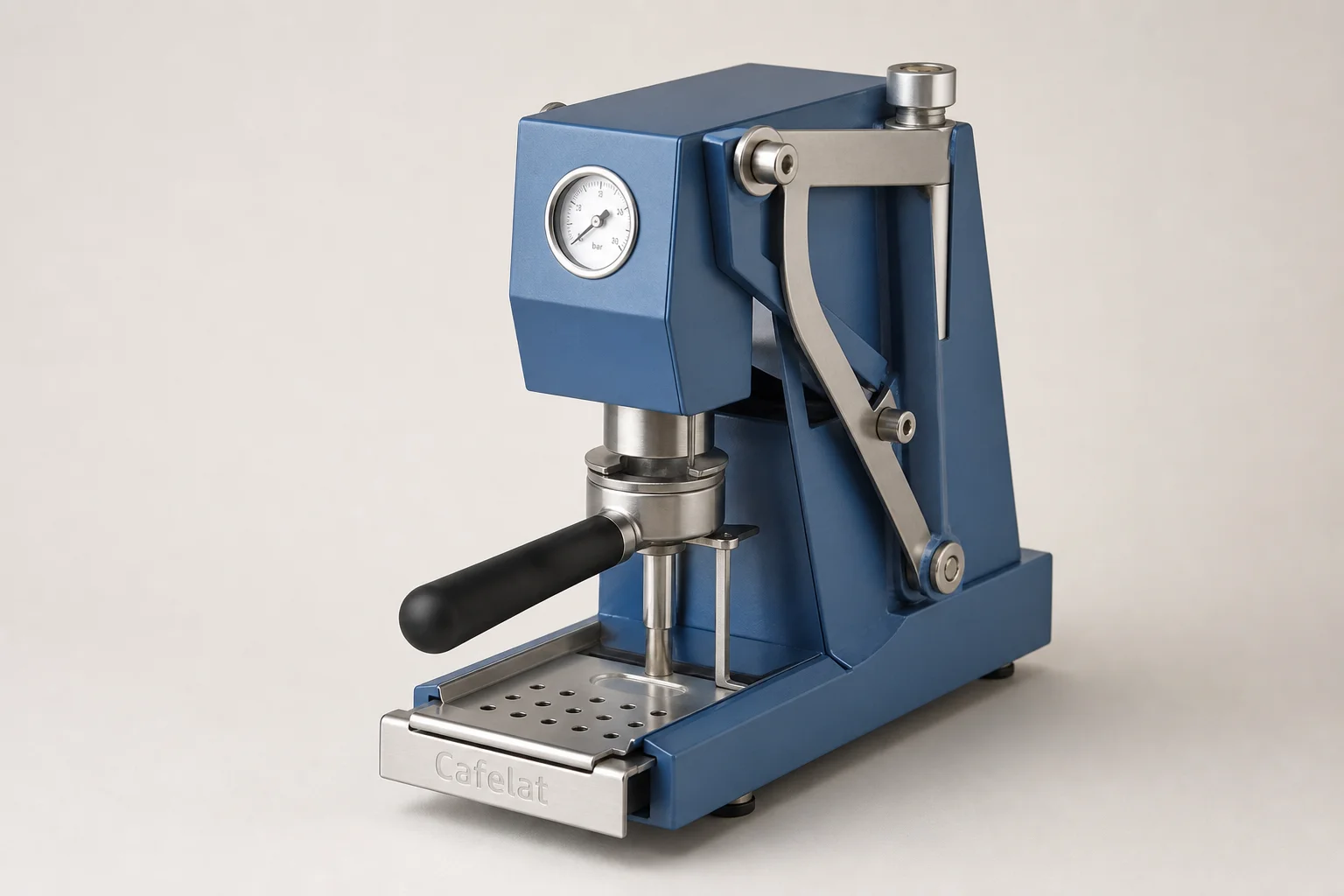
Flair PRO 2: Capable but Less Portable
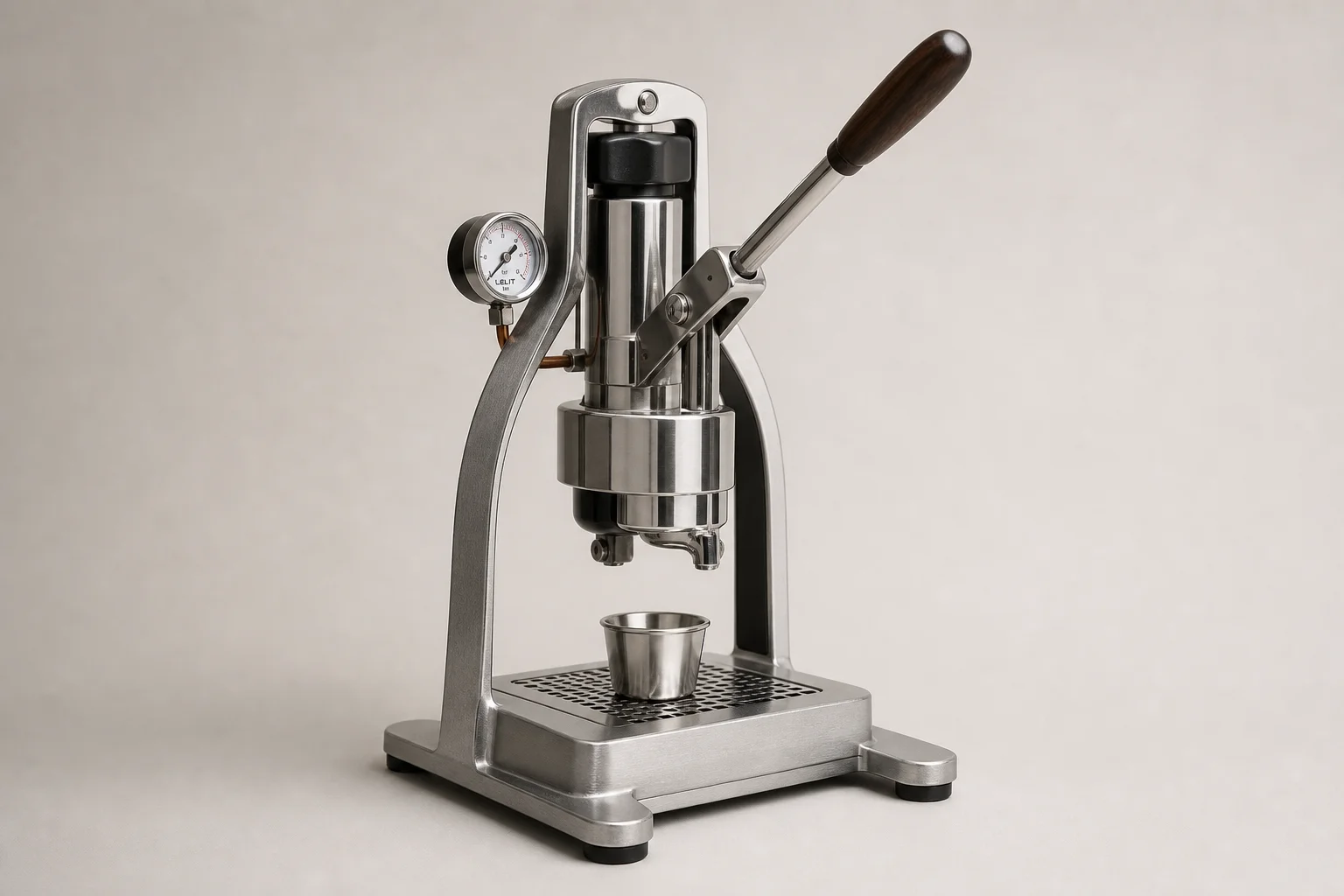
The Flair PRO 2 is a fully manual lever-operated espresso machine with a metal frame, brew chamber, piston, and pressure gauge. It’s well-built, with robust metal components throughout. You can feel the pressure as you pull the lever, giving you direct control over extraction.
The Flair produces excellent espresso when conditions are right. The gauge provides clear feedback, and the lever mechanism is satisfying to operate. The build quality is noticeably superior to the other brewers, with solid metal construction where it matters.
The portability question is where the Flair struggles. While it comes in a carry case, it genuinely needs a flat table to operate safely. Pulling a shot on a boat, bus, or cable car is impractical. It requires a separate heat source (like a Jetboil) to heat water, a grinder, and ideally a scale. In wilderness settings without a table, it’s essentially unusable.
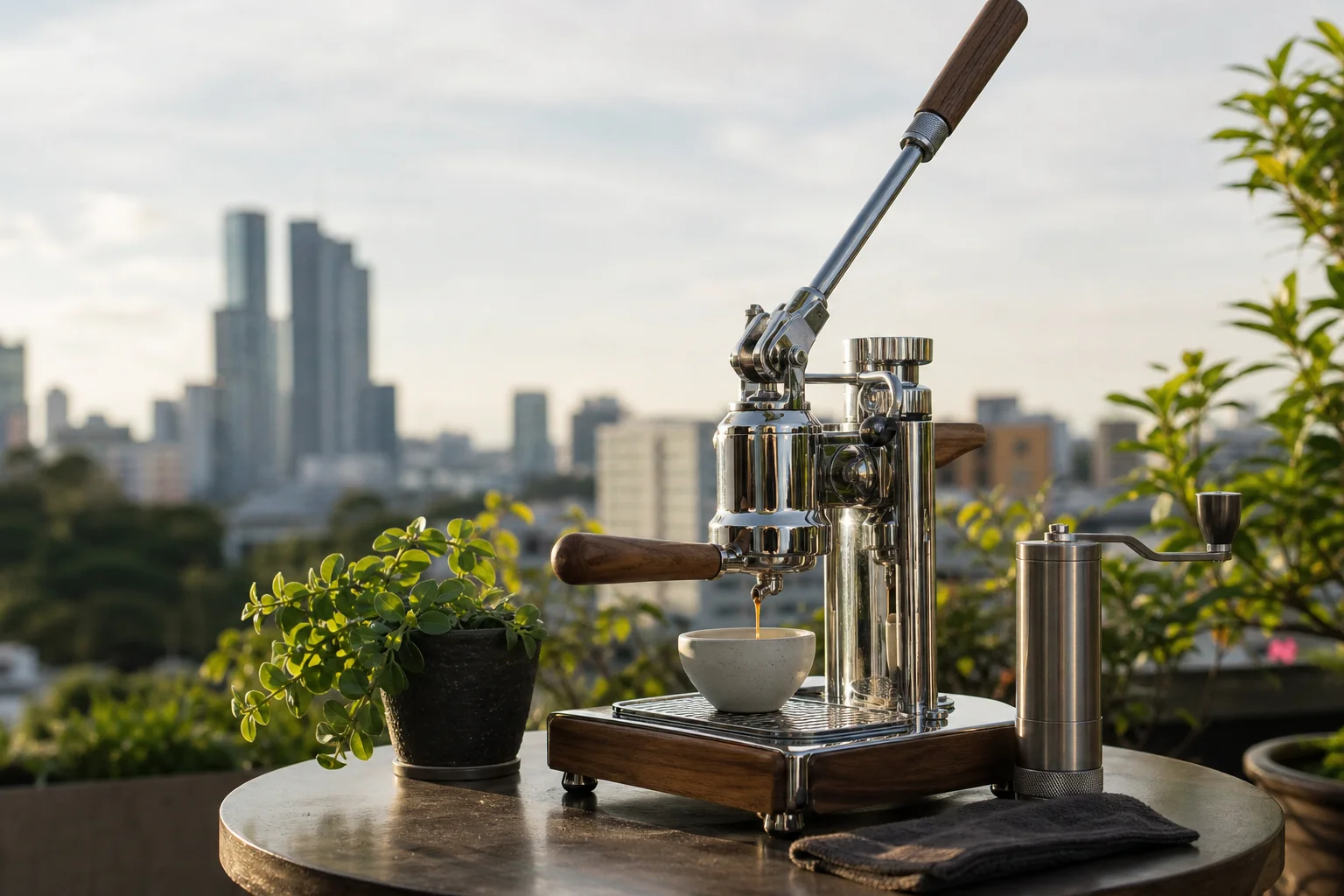
The Flair is a capable, well-made espresso machine that happens to be portable in the sense that you can carry it. But it’s not truly portable in the way the Picopresso or Nomad are. It’s better suited to stationary outdoor use, like a holiday cottage or campsite with a table, rather than genuine on-the-go brewing.
Which One Should You Choose?
The answer depends on your actual use case. If you’re hiking mountains regularly or want the most compact brewer, the Picopresso is the clear choice despite its flaws. Consider upgrading the basket early. If you’re traveling and will have access to a table and hot water, the Nomad offers flexibility and good espresso. The Flair is best for stationary outdoor use where you can set up properly. The Handpresso is difficult to recommend unless you specifically want the cheapest option and accept mediocre results.
There’s something genuinely delightful about brewing espresso in unexpected places. The improbability of pulling a proper shot on a boat, a bus, or a rooftop creates memorable experiences that enhance the coffee itself. If you own one of these brewers, take it somewhere unusual. The weird looks from passersby are worth it.
Conclusion
Portable espresso makers have improved significantly, but each design involves trade-offs between true portability, espresso quality, and ease of use. The Picopresso offers the best balance of portability and capability for most users, while the Nomad suits those who value flexibility and don’t mind its quirks. The Flair excels at espresso quality but requires proper setup. Choose based on where and how you’ll actually brew, not just the appeal of the idea.
Further reading
Related Reviews
Coffee Gear
AliExpress Coffee Gear Review: Five Products Worth Testing
A practical look at five coffee tools from AliExpress, including a sand heater, automatic brewer, latte art printer, espresso machines, and home roaster.
Coffee Gear
Outin Nano Portable Espresso Maker Review: Travel Coffee That Falls Short of Promise
The Outin Nano promises all-in-one espresso brewing with built-in heating, but temperature control issues and inconsistent extraction undermine its appeal as a travel companion.
Coffee Equipment
Bean-to-Cup Espresso Machines Compared: Six Models from £1,000 to £2,500
A detailed comparison of six automatic espresso machines across shot quality, milk frothing, and user experience. Find which offers the best value and performance for home use.