Coffee Equipment
xBloom Coffee Brewer Review: Convenience Meets Complexity
The xBloom combines pod convenience with filter coffee quality, but delivers a mixed experience that requires some calibration work and comes with notable trade-offs.
Introduction
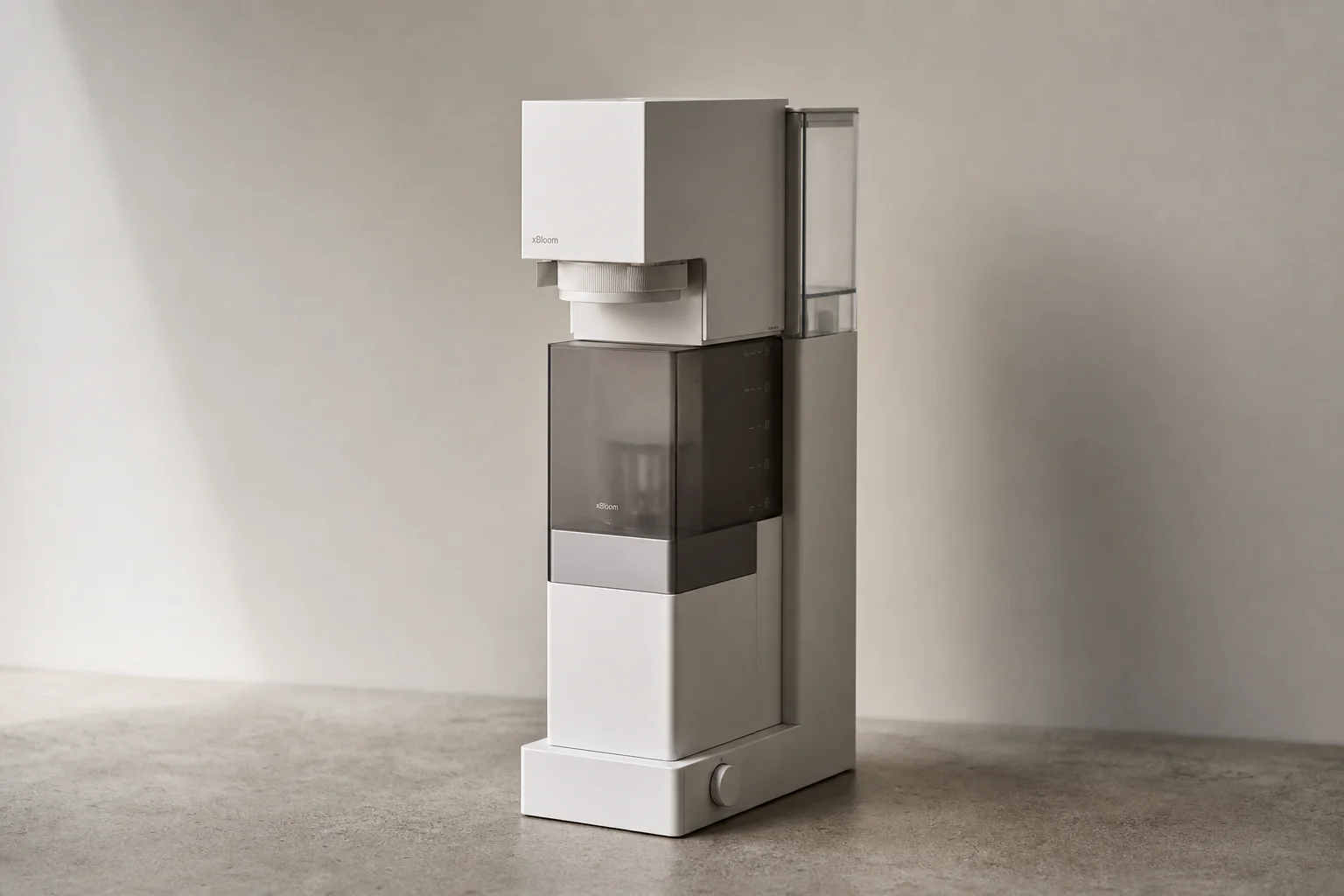
The xBloom coffee brewer arrives with an ambitious promise: take the complexity out of filter coffee brewing while maintaining quality. It combines the convenience of pod machines with the brewing precision of manual pour-over methods, using RFID-enabled pods that communicate brewing recipes directly to the machine. The result is a machine that works well in some respects but reveals meaningful compromises once you start using it regularly.
How the Pod System Works
The xBloom’s core innovation is its pod design. Each pod contains 15 to 16 grams of whole coffee beans nestled inside a folded paper filter, with an RFID chip embedded at the base. When you place the pod on the machine’s top, the chip communicates the coffee’s identity and optimal brewing parameters to the brewer. The display then shows the recommended grind size, brew temperature, and coffee-to-water ratio.
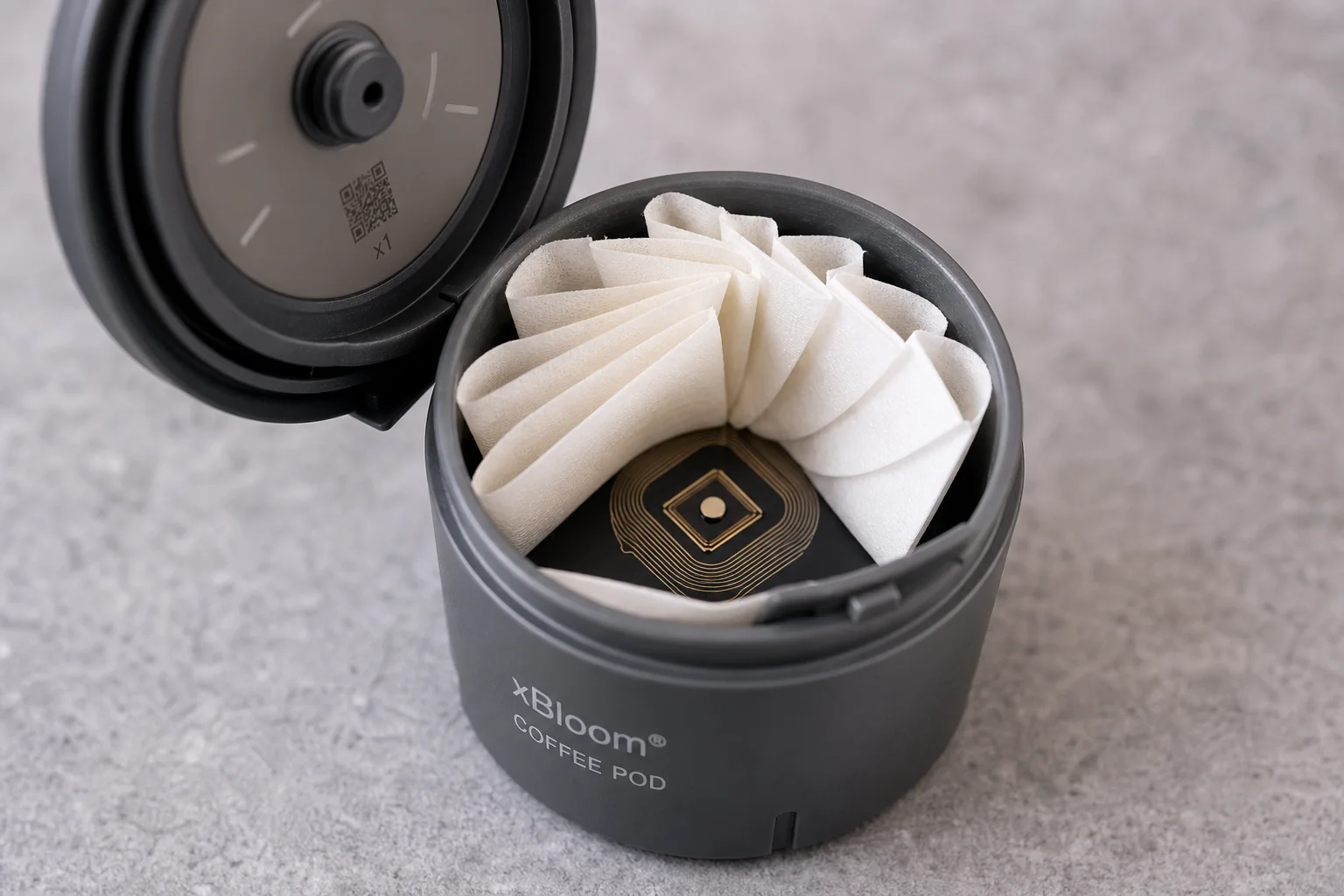
The machine grinds the beans directly into the pod, then brews the coffee using a multi-stage pour sequence. This approach eliminates the need to dial in grind settings or decide on water temperature yourself, which is the core appeal for people who find manual brewing tedious.
Brewing Performance and Water Delivery
The brewing process itself is methodical and relatively slow, taking several minutes rather than seconds. This mirrors traditional pour-over brewing more closely than other pod systems like Nespresso Vertuo or K-Cup machines. The machine uses an unusual electrostatic water-delivery system: four conductors at the spout opening vary electrical charge to move the water stream across the coffee bed without any mechanical rotation.
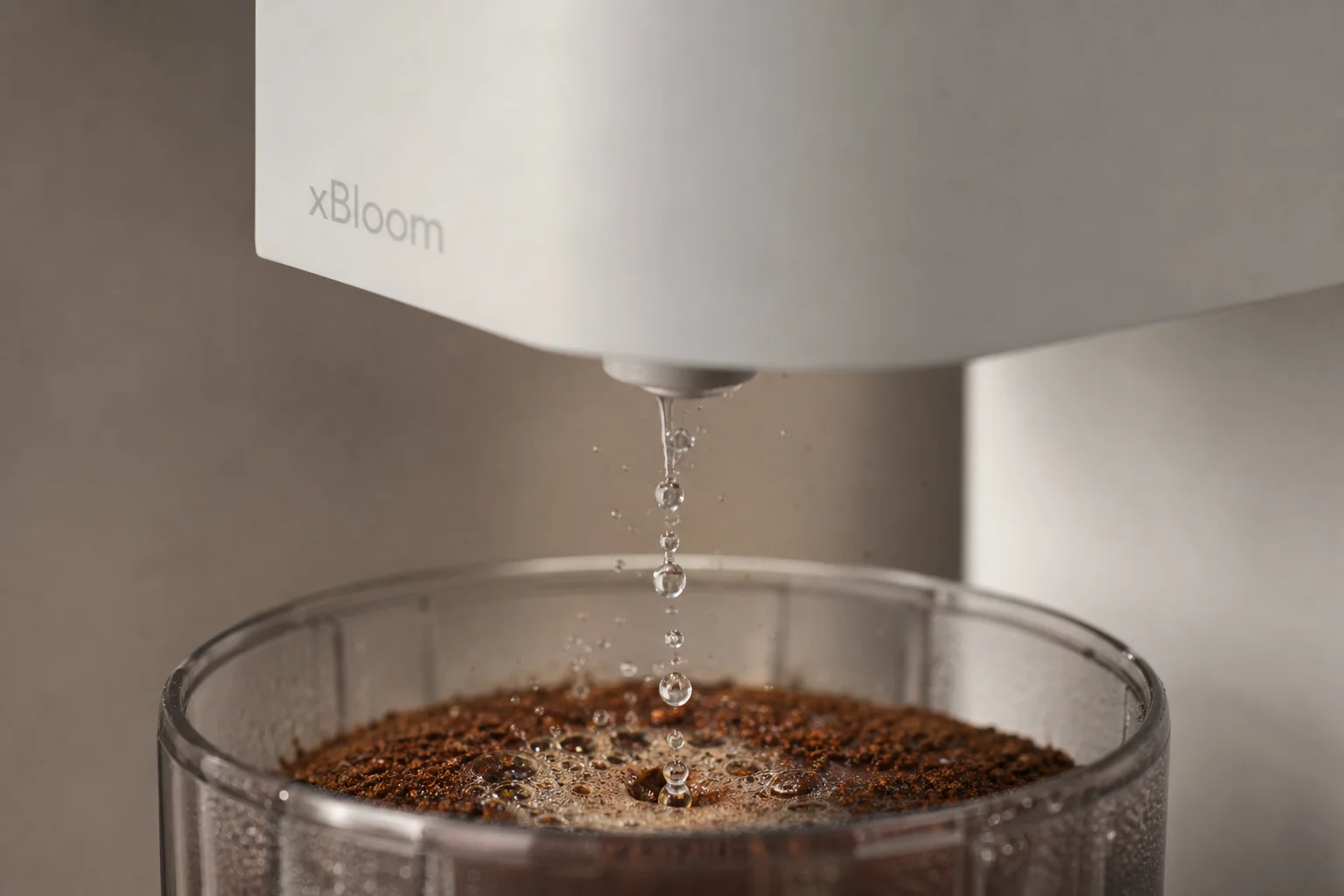
In practice, the water stream breaks into droplets before reaching the coffee grounds. This reduces the agitation and energy transfer compared to a continuous stream from a pouring kettle. Testing the machine’s output against manually brewed coffee using the same grind settings showed a noticeable difference in cup quality, with the manual pour-over consistently producing a slightly sweeter, more balanced result.
The machine also includes a small vibration during the bloom phase, which adds some agitation, but this does not fully compensate for the reduced stream impact.
Grinder Quality and Consistency
The internal conical burr grinder performs well and produces clean, sweet cups. It compares favourably to mid-range grinders, though it may not quite match the performance of premium models like the Baratza Ode Gen 2. A small declumping mechanism at the grinder’s base helps distribute coffee evenly across the four distribution holes that feed into the pod.
Some static buildup occurs around the grinder depending on the coffee, requiring occasional cleaning of the removable plate underneath. This is minor compared to many grinder designs, but it is worth noting if you prefer a completely mess-free experience.
App Control and Recipe Customization
The xBloom app allows you to adjust or create custom brewing recipes without touching the machine itself. You can modify grind size, brew temperature, pour volume, pour timing, and water-dispense pattern for each individual pour in a multi-stage brew sequence. You can also save custom profiles and override the factory recipe for any pod.
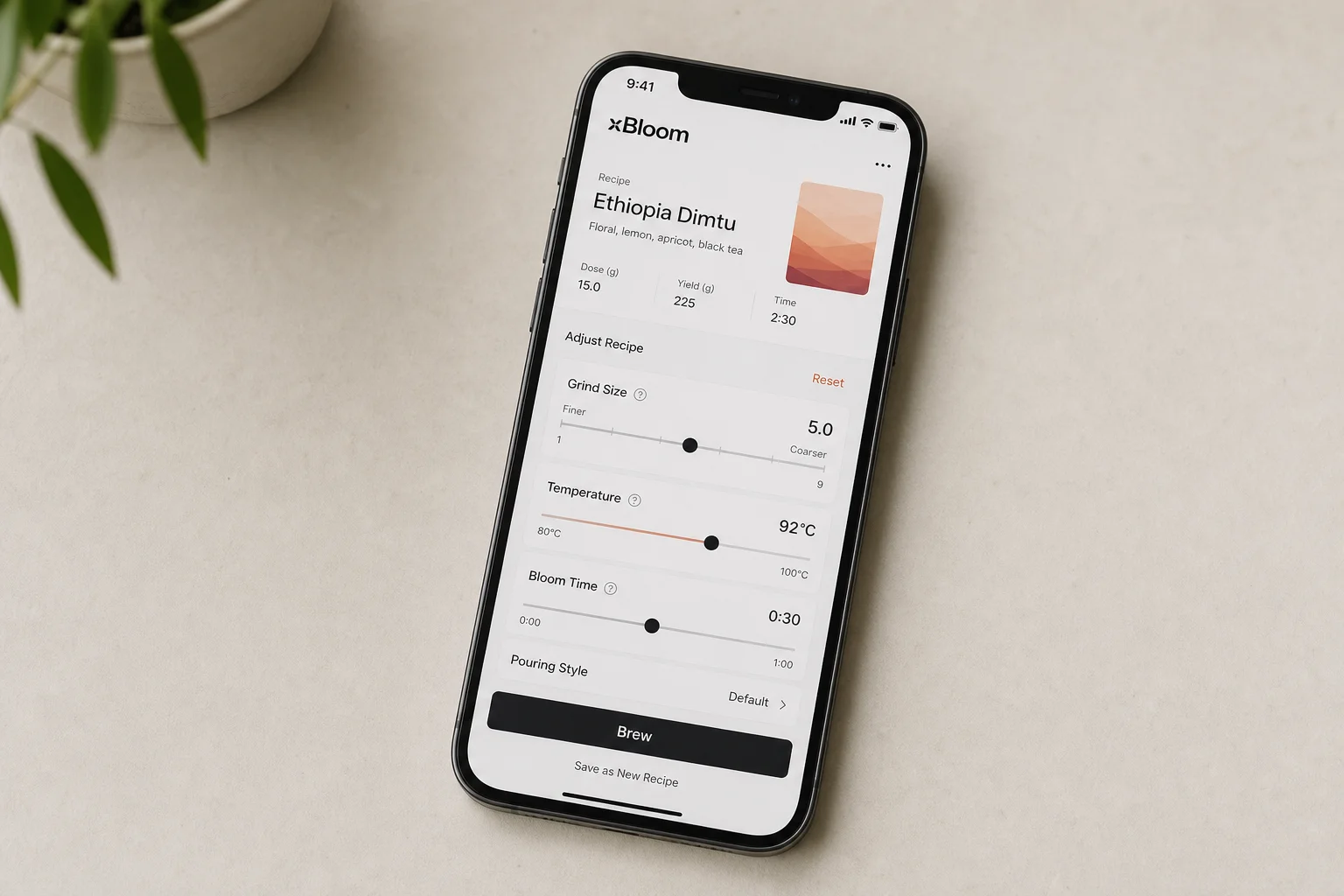
This flexibility is valuable if you want to experiment, but it also highlights a tension in the machine’s design philosophy. The core promise is maximum convenience with zero decision-making. Yet if the factory recipe does not match your taste preferences, you are back to making adjustments and building custom profiles, which defeats much of the convenience argument.
Calibration and Initial Setup
Out of the box, the machine produced noticeably under-brewed coffee with weak, unbalanced flavour. This was traced to a grind calibration issue. Running the app’s auto-calibration function improved results significantly, bringing the brews into a more balanced range. However, even after calibration, there remains some uncertainty about whether the machine is delivering exactly what the roaster intended, or whether it is still grinding slightly coarser than optimal.
This ambiguity is frustrating for anyone who cares about coffee quality. The machine promises to remove guesswork, yet you are left wondering if the result is exactly right or merely good enough.
Pod Pricing and Availability
The xBloom pods are sold directly by the company at approximately £0.80 to £1.20 per pod (depending on order size), which is expensive compared to most specialty coffee pods. However, each pod contains 15 to 16 grams of coffee versus 5 to 6 grams in typical specialty pods, so the cost per gram is more competitive. The pods are fully compostable except for the RFID chip, which must be removed and disposed of separately. In practice, most composting services reject the pods anyway due to inability to distinguish compostable materials from regular packaging.
The machine also includes a reusable pod that accepts standard paper filters, allowing you to brew any coffee you choose. However, this requires building a custom recipe in the app, which largely negates the convenience advantage that makes the machine appealing in the first place.
Water Tank Capacity
The machine’s tall, narrow design results in a water tank capacity of only 700 millilitres. This allows for two typical cups (around 250 ml each) before refilling. For households brewing multiple cups daily or offices with shared machines, this becomes a frequent inconvenience that undermines the overall convenience promise.
Display and Interface Issues
The front-facing display shows a visual representation of the recipe but does not display actual numerical values for grind size, temperature, or ratio. This makes it difficult to read precise information without consulting the app. Additionally, the display shows a brew temperature of 99 degrees Celsius, but the machine can only deliver water at 95 degrees Celsius from the spout. This discrepancy between stated and actual specifications is confusing.
Overall Assessment
The xBloom succeeds at producing good filter coffee with minimal user effort, and it will appeal to people who find manual brewing frustrating or time-consuming. The grinder is capable, the app is well-designed, and the overall build quality is solid. However, the machine does not fully deliver on its promise of complete convenience. Calibration issues require troubleshooting, the water stream design reduces agitation compared to manual pouring, and the small water tank creates frequent refilling tasks.
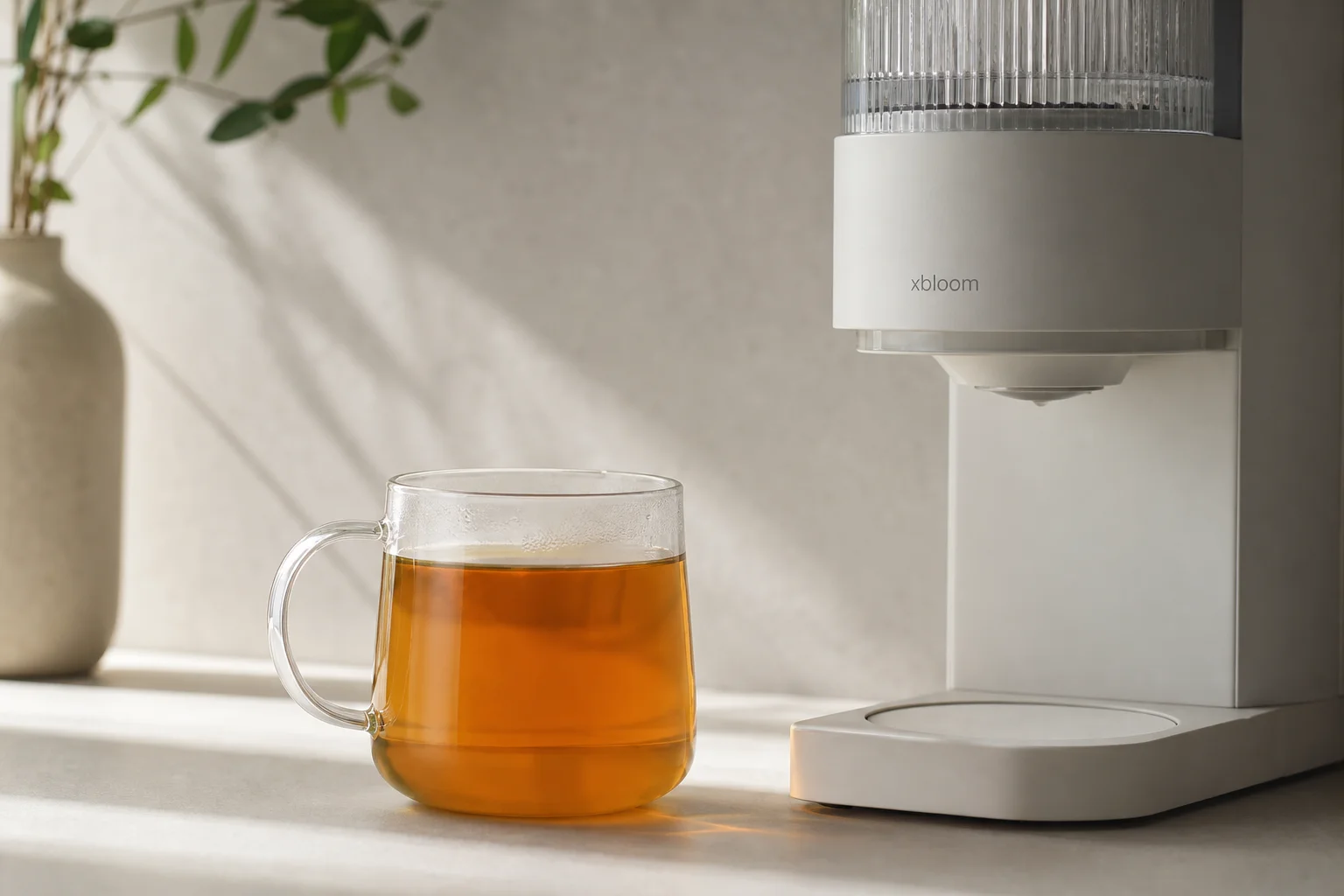
The list price of $800 USD is challenging for what you receive, though the Kickstarter price of $400 offers better value. If you are willing to spend time tweaking recipes and accept that the results may not be exactly what the roaster intended, the xBloom is a capable machine. If you want true set-and-forget convenience, you may find the experience frustrating.
Conclusion
The xBloom represents an interesting attempt to bridge pod convenience and filter coffee quality. It makes good coffee and removes much of the decision-making from brewing, but it introduces its own complications and trade-offs. The RFID chip raises environmental concerns, the water delivery system is less effective than traditional pouring, and the small water tank creates daily inconveniences. For coffee enthusiasts willing to engage with the app and accept some calibration work, it is a capable machine. For those seeking pure convenience, the compromises may outweigh the benefits.
Buying link
View xBloom Coffee Brewer on Amazon
This product is mentioned in the review. The link below takes you to Amazon; check the specifications, options, and compatibility before buying.
View xBloom Coffee Brewer on AmazonFurther reading
Related Reviews
Coffee Equipment
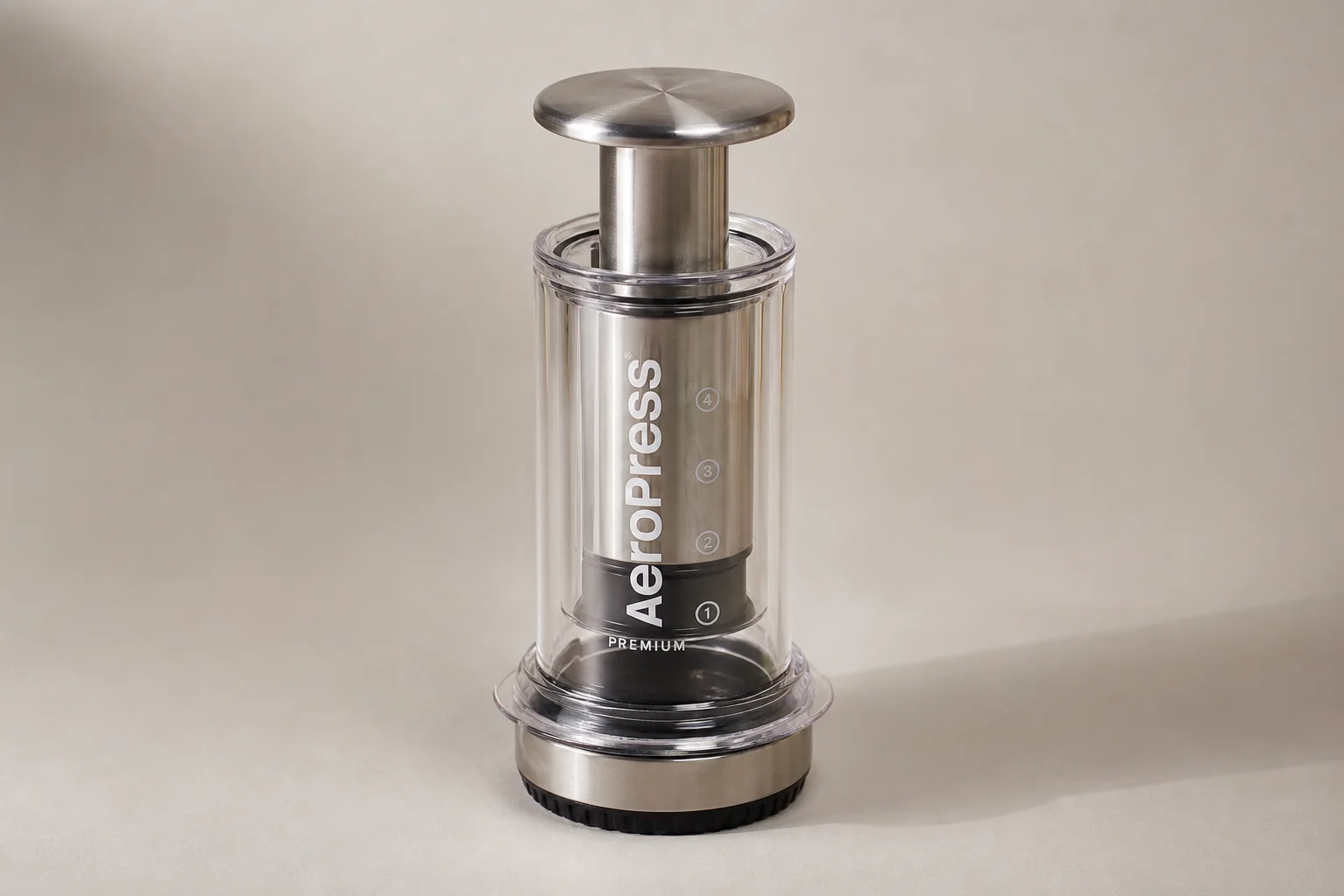
AeroPress Premium Review: Premium Materials, Practical Trade-offs
The AeroPress Premium brings glass and metal construction to a beloved brewer, but trades portability and durability for a more refined feel. Here's what changes in the cup and what matters before you buy.
Coffee Equipment
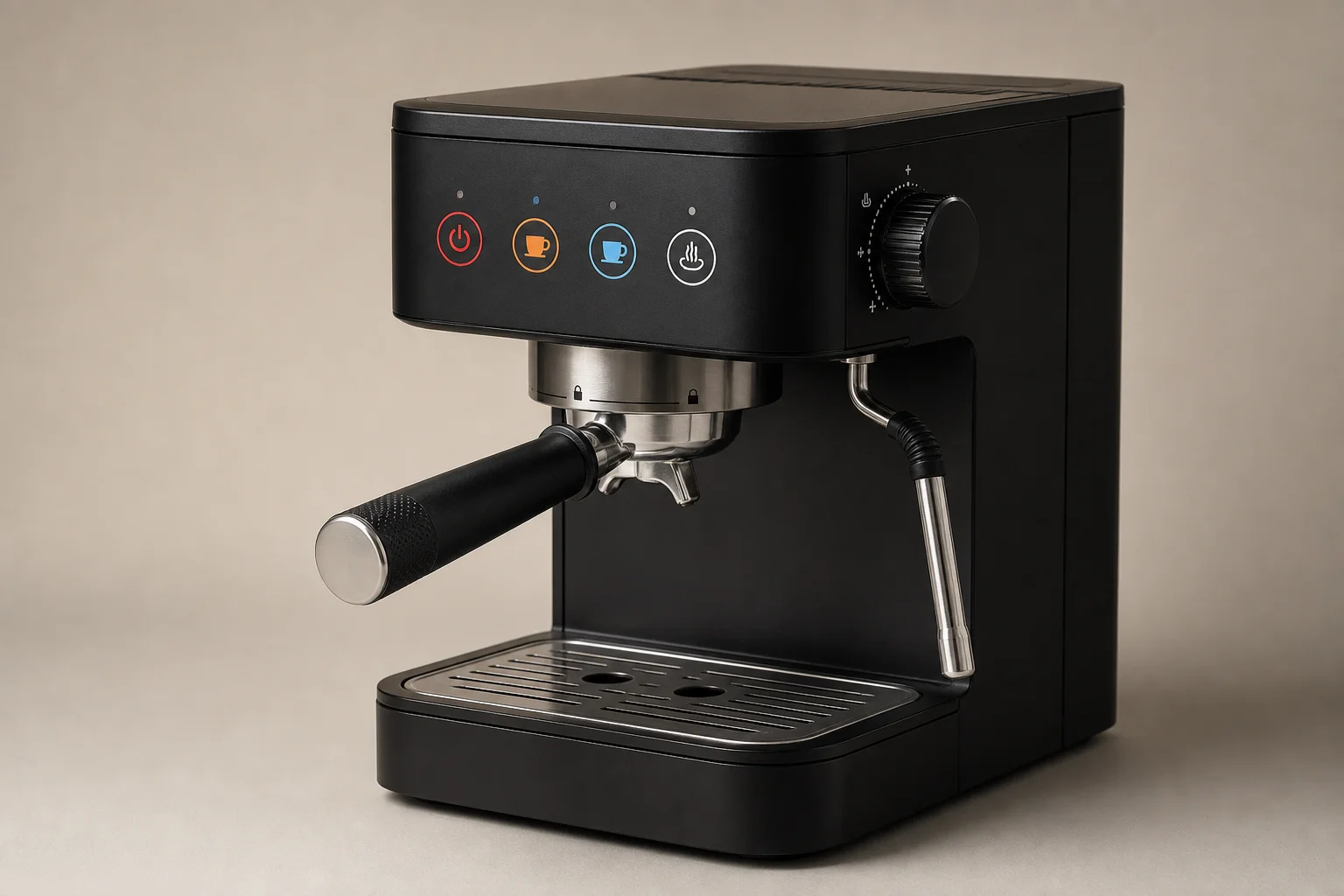
Aldi Manual Espresso Machine Review: Can a £60 Machine Make Good Coffee?
A surprisingly capable budget espresso machine that delivers decent shots with the right technique and grinder, but comes with real trade-offs in durability and user experience.
Coffee Equipment
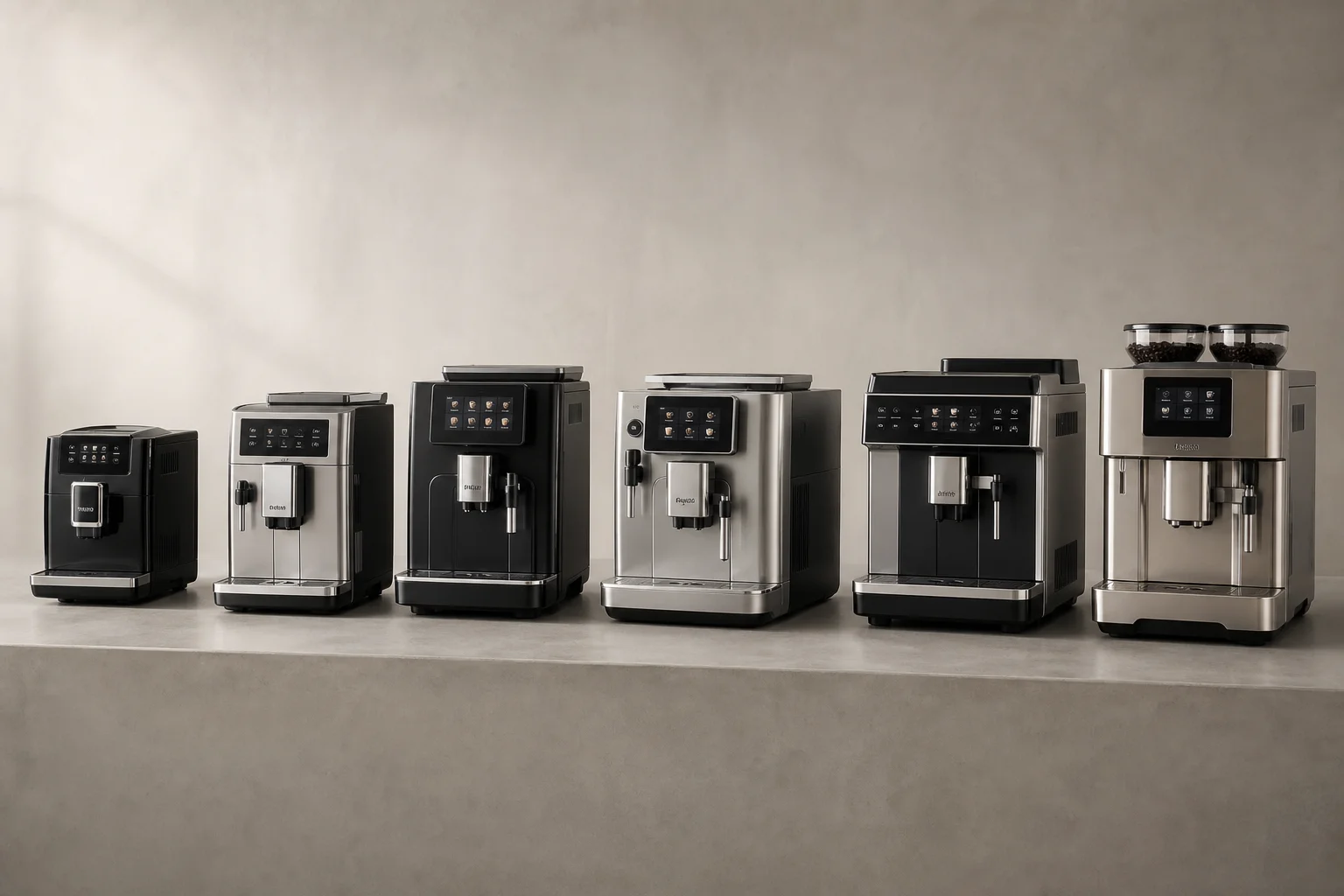
Bean-to-Cup Espresso Machines Compared: Six Models from £1,000 to £2,500
A detailed comparison of six automatic espresso machines across shot quality, milk frothing, and user experience. Find which offers the best value and performance for home use.