Kitchen Knives
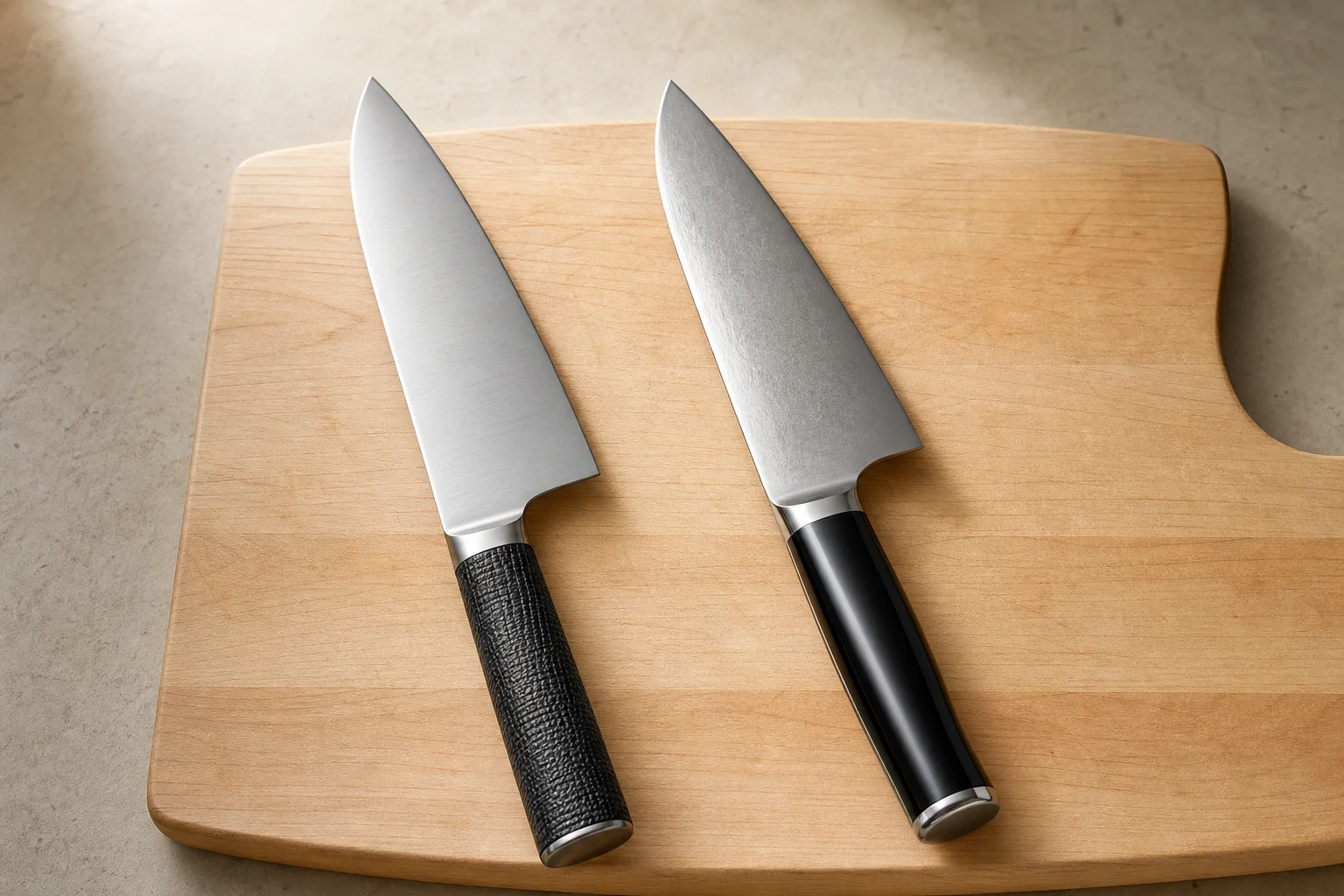
Best Chef's Knives Under $75: Two Tested Recommendations
Two practical 8-inch chef's knives that balance sharpness, comfort, and durability without premium pricing.
Introduction
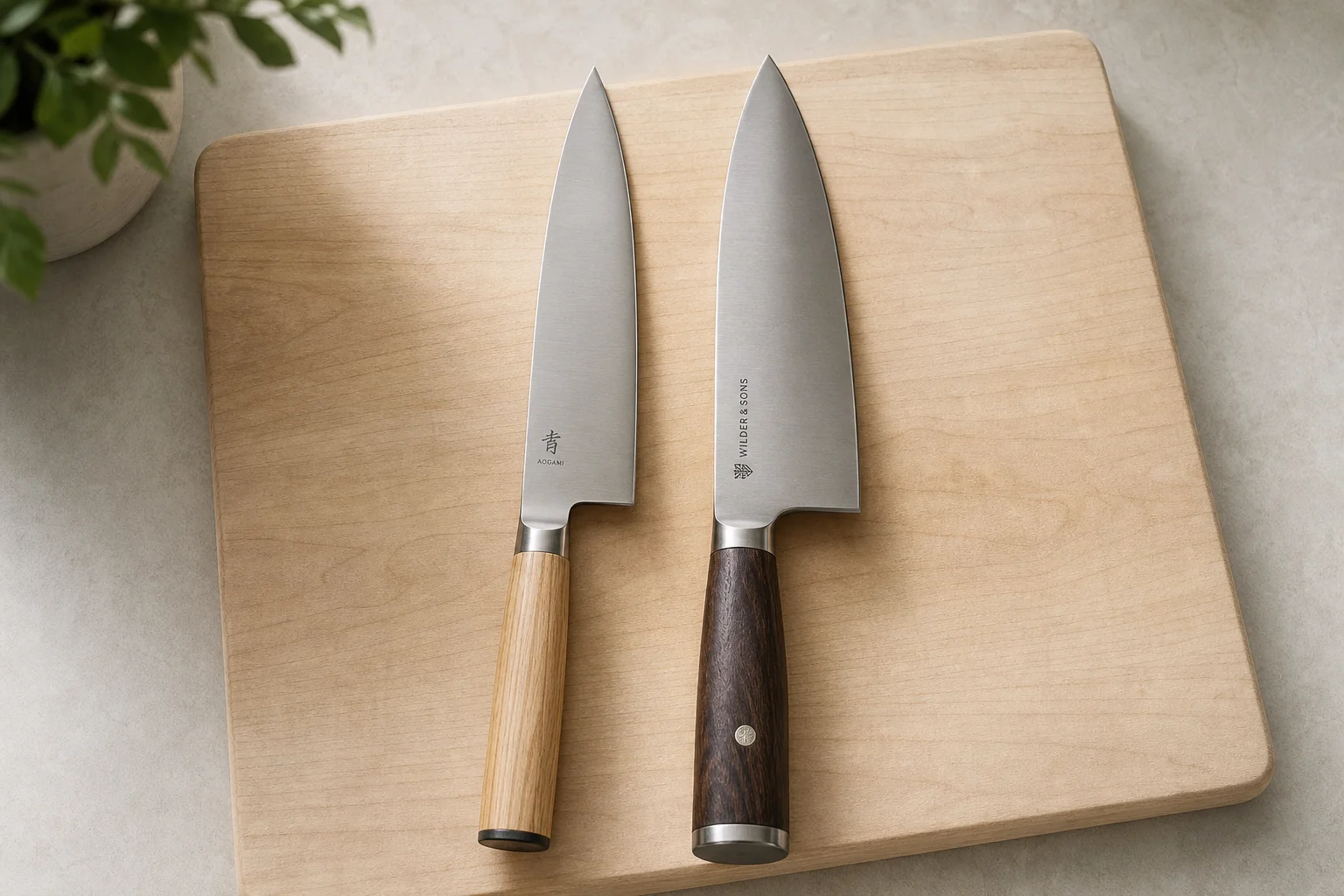
A good chef’s knife should cut through ingredients with ease, have a comfortable handle, and stay sharp without requiring a premium price tag. Testing a lineup of 10 chef’s knives under $75 revealed two standout options that deliver on all three fronts.
What Makes a Good Chef’s Knife
The best chef’s knives balance several design factors that work together to create a tool that feels responsive and stays sharp through regular use.
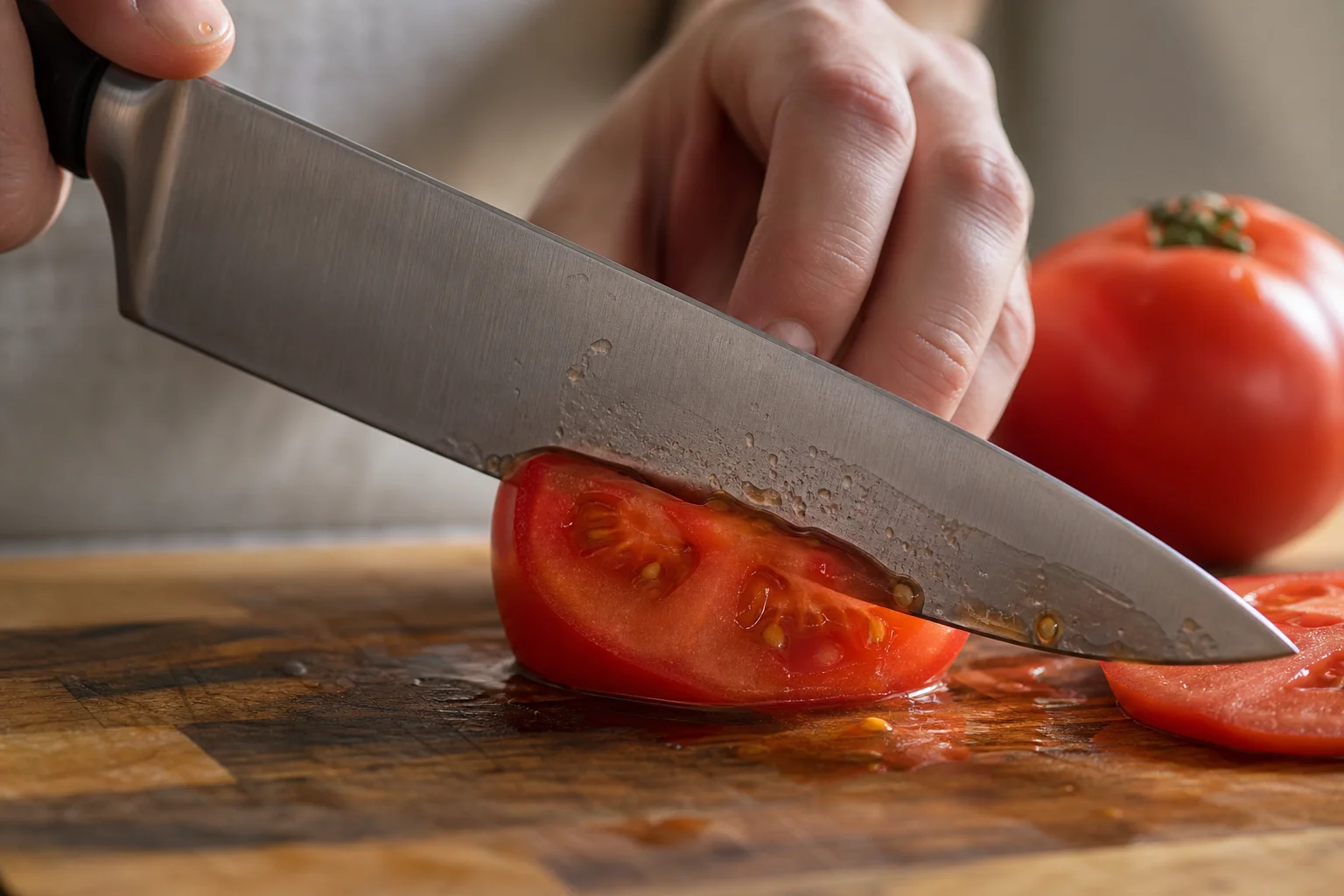
Blade geometry is foundational. The angle at which the blade is ground down to the cutting edge determines how sharp it feels. Narrower angles, such as 12 or 13 degrees, create a sharper sensation, though the tested knives ranged from 13 to 16 degrees. Factory sharpening and honing matter equally; some knives with wider angles felt sharper because they were finished more carefully at the factory, resulting in a smoother, more even cutting edge.
Key Design Features That Matter
Beyond the blade itself, several physical characteristics affect how a knife performs in real kitchen tasks.
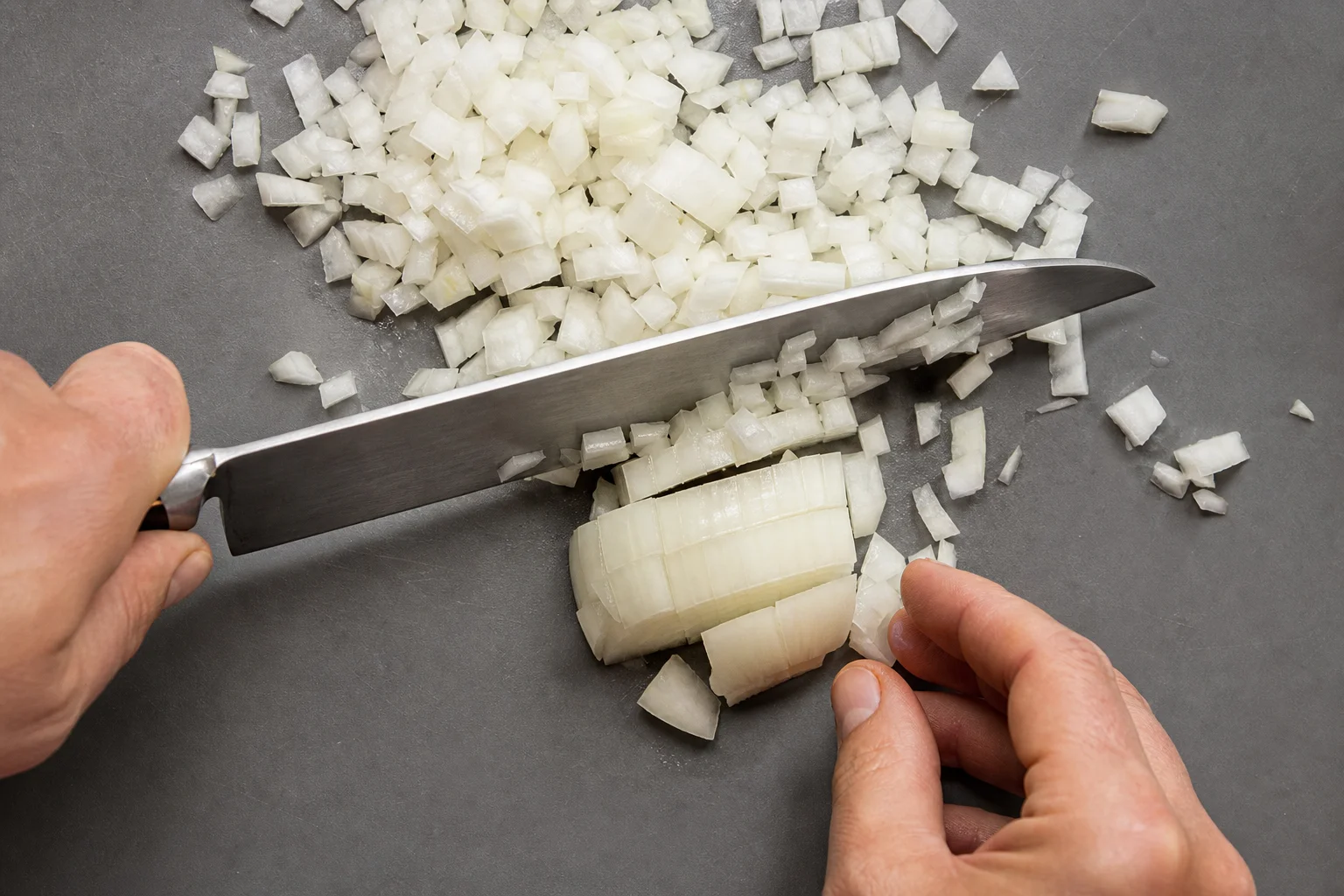
Blade curvature is necessary for the rocking motion used when mincing herbs or garlic. Testers preferred a gentle curve; a more dramatic, sharp curve can feel awkward and unnatural during use. Blade height at the heel, near the handle, is equally important for knuckle clearance. A height of 2 inches prevents knuckles from hitting the cutting board before the blade does.
Blade thickness and taper also shape performance. Thicker blades can feel clumsy in hand. Testers preferred thinner blades that taper from the heel toward the tip, with just enough thickness at the heel to cut through bone without compromising precision at the tip. The spine of the knife should be slightly rounded to provide comfort when gripping the knife tightly, preventing the hand from pressing against a sharp edge.
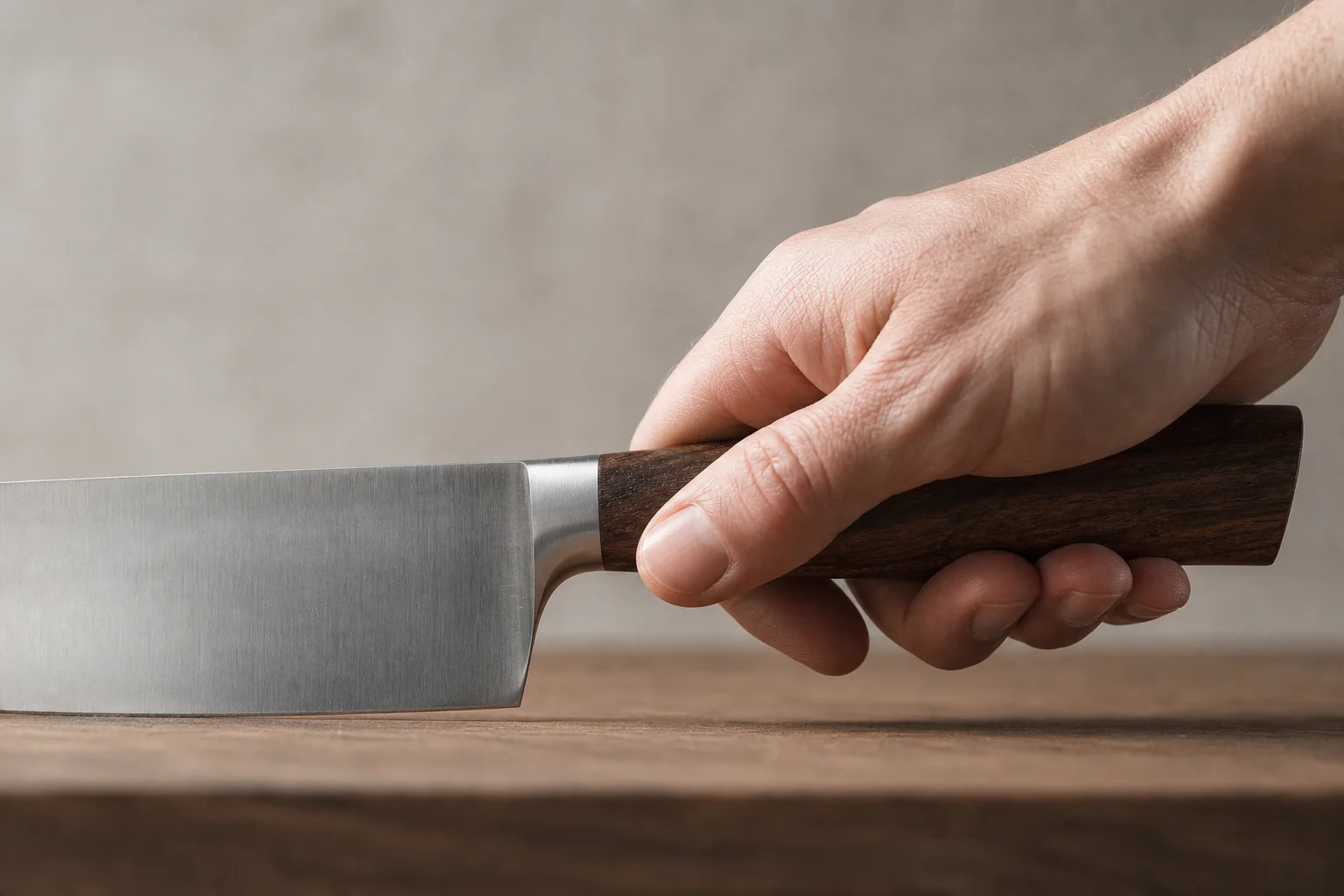
Handle material and shape are vital for both safety and comfort. Soft, rubbery, and grippy materials stay firm in the hand even when wet or slick. Rounded handles should be avoided because they can spin in the hand during use.
The Victorinox Swiss Army Fibrox Pro 8-inch
The Victorinox Swiss Army Fibrox Pro is the top recommendation for most home cooks. It costs approximately $38 and features a well-proportioned blade that stays sharp through regular use. The handle is comfortable for users with varying hand sizes and strengths, and the knife is on the lighter side at about 6 ounces, making it less tiring during extended prep work.
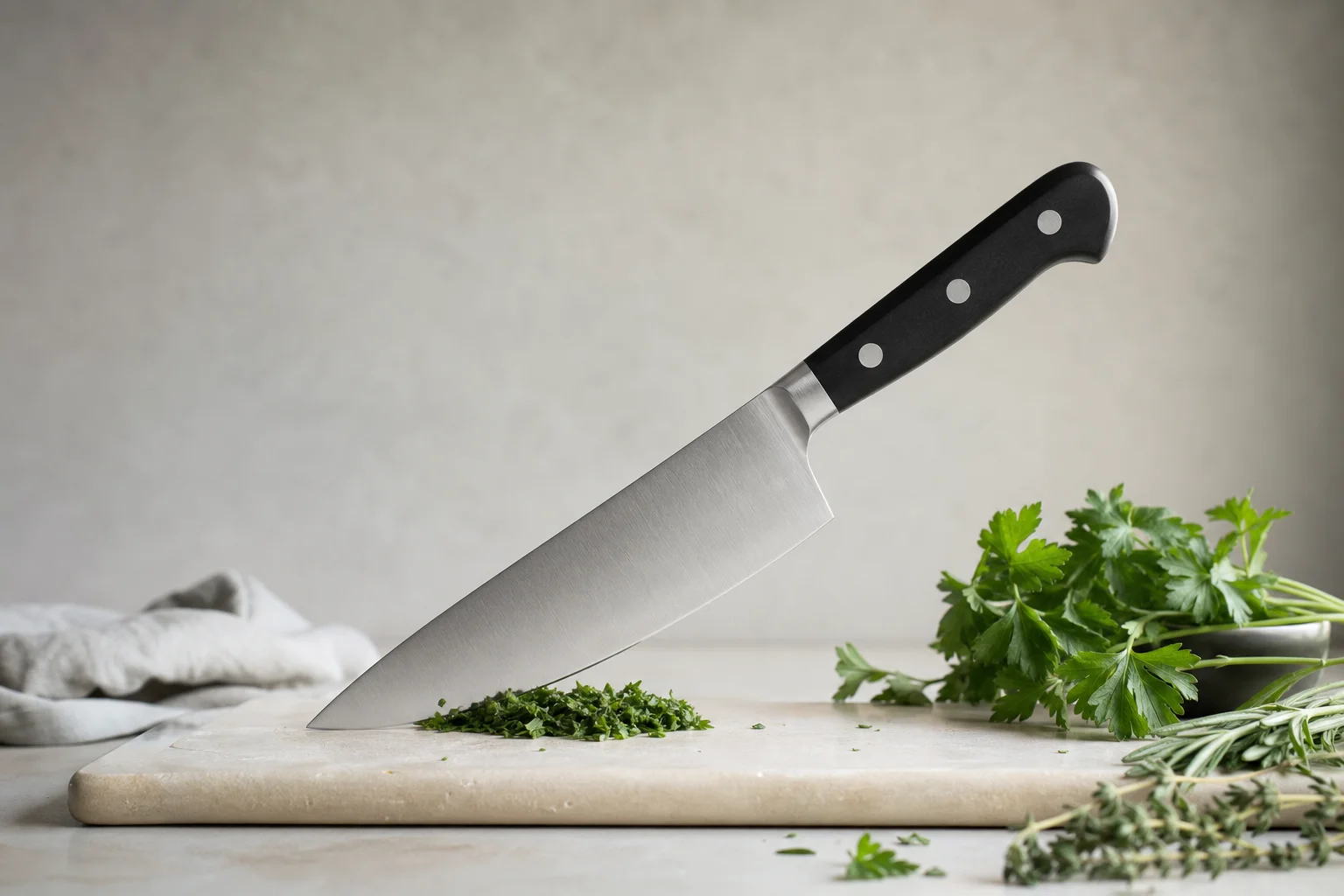
The blade geometry and factory finish combine to create a knife that feels sharper than its price suggests. The Fibrox handle material provides reliable grip even when wet, and the blade height at the heel offers good knuckle clearance for most users.
The Mercer Culinary Renaissance 8-inch
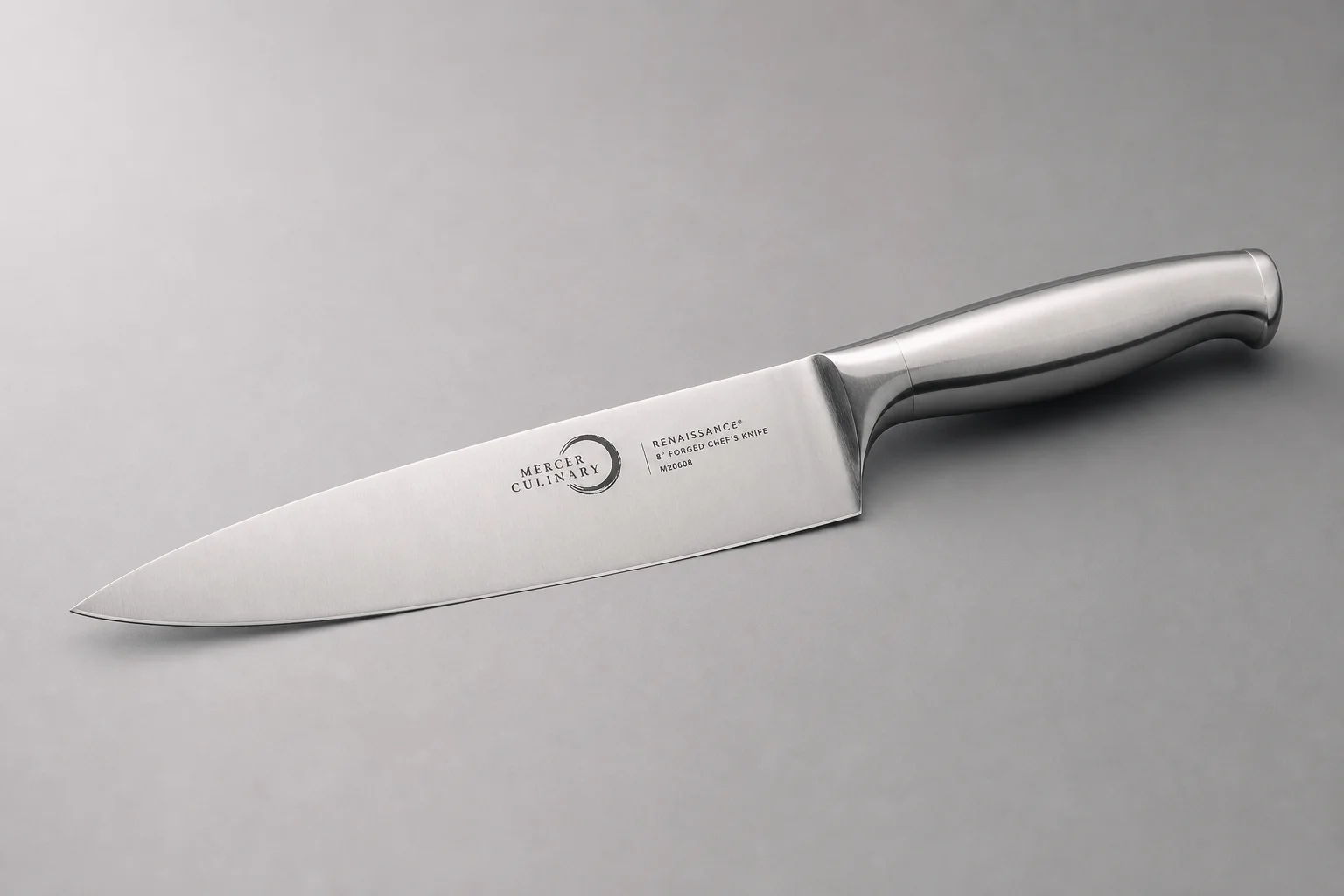
For cooks who prefer a heavier knife, the Mercer Culinary Renaissance 8-inch Forged Chef’s Knife is an excellent alternative. It costs approximately $31 and weighs about 8 ounces, providing more heft while remaining sharp. The extra weight can feel more substantial in the hand and may reduce fatigue for some users who prefer a knife that does more of the cutting work for them.
Conclusion
Both knives deliver sharp, reliable performance at a price that makes sense for home cooks. The choice between them comes down to personal preference: choose the Victorinox for a lighter, versatile option, or the Mercer for a heavier knife with more momentum.
Further reading
Related Reviews
Kitchen Knives
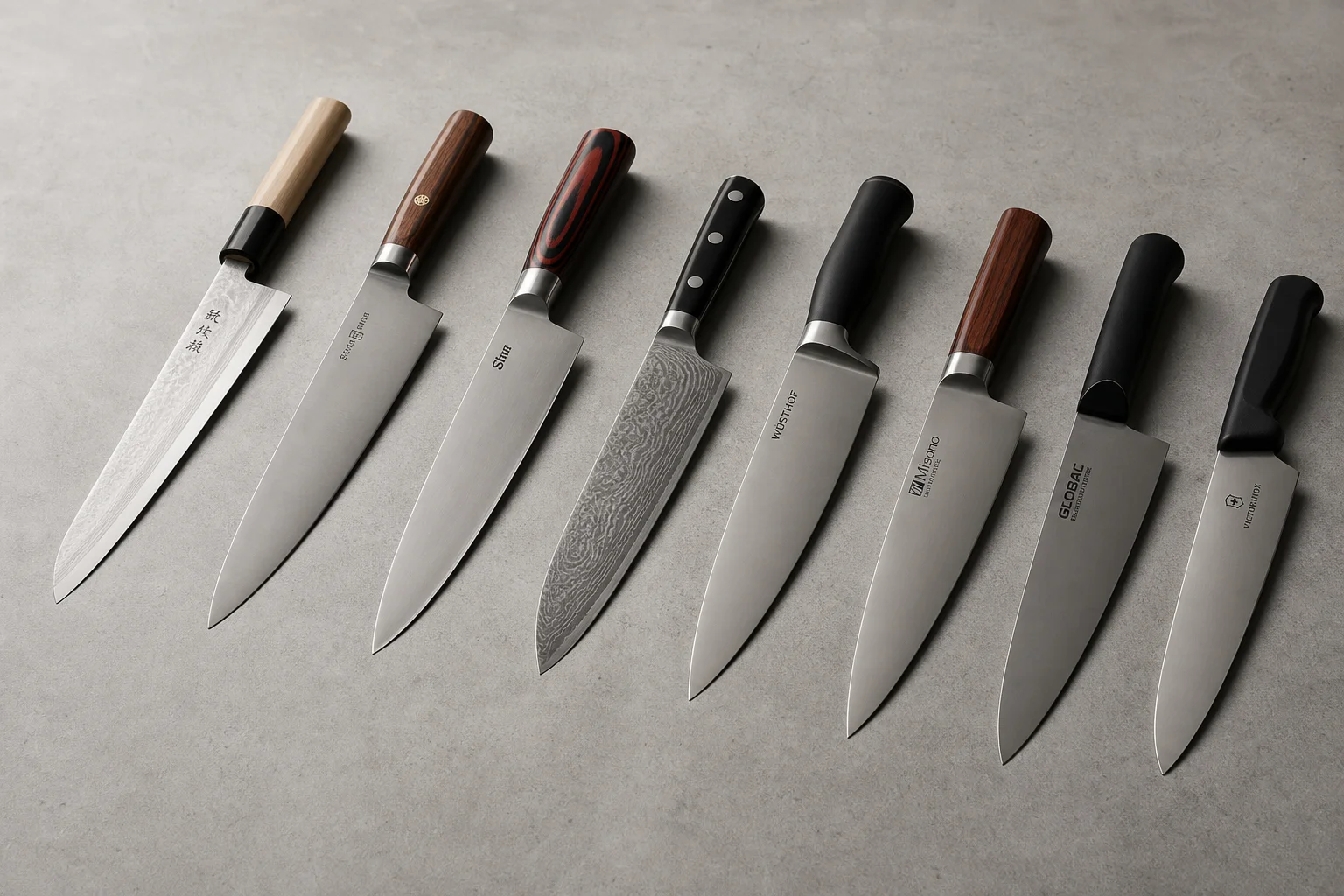
Best Chef's Knives 2026: 27 Popular Options Tested and Ranked
A comprehensive review of 27 chef's knives ranging from $18 to $380, with honest assessments of handle comfort, blade balance, and real-world performance.
Kitchen Knives
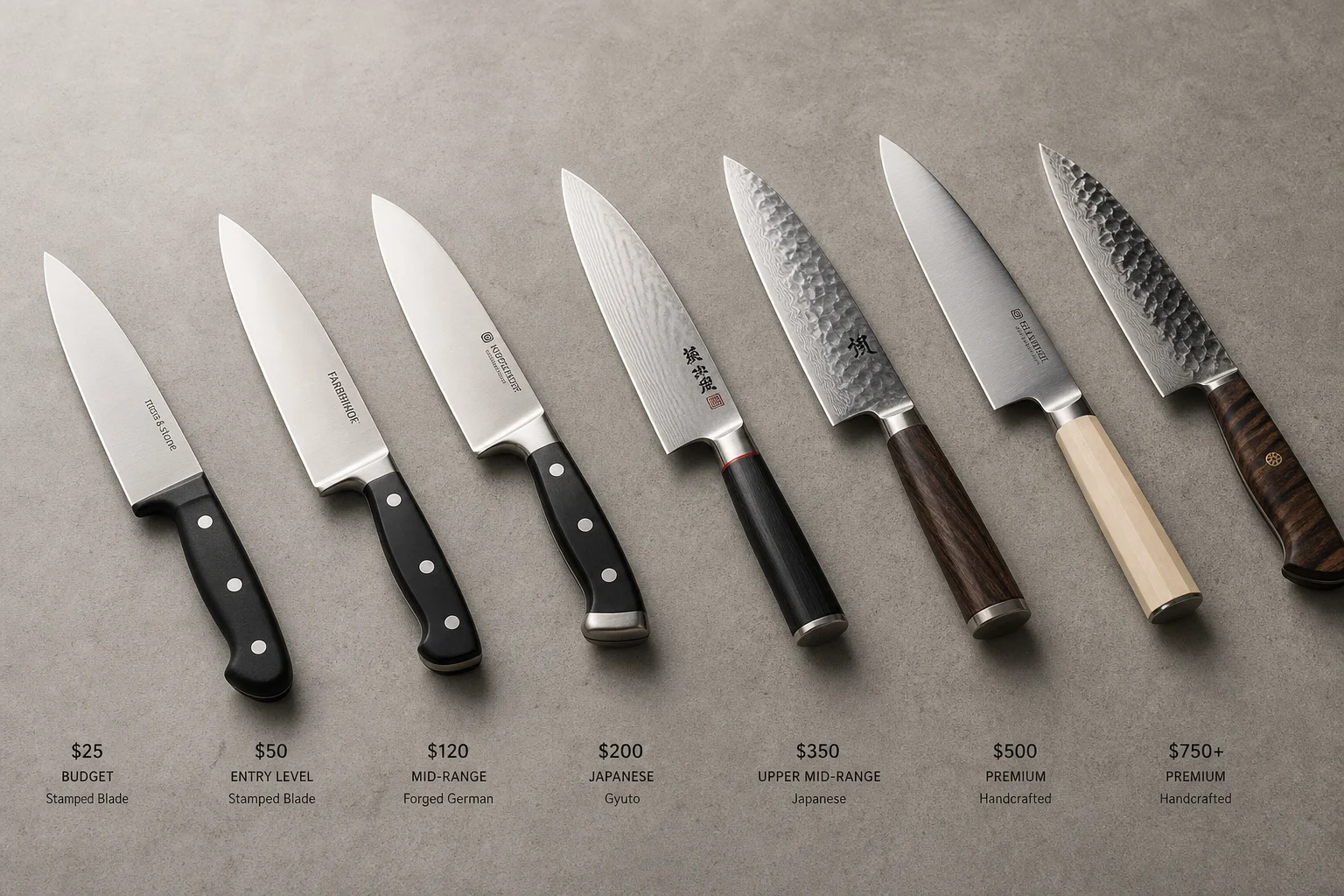
Best Chef's Knives 2026: 27 Options Tested and Ranked
A comprehensive review of 27 chef's knives ranging from $18 to $380, with honest assessments of handle design, balance, blade profile, and real-world performance.
Kitchen Knives
Best Chef's Knives Under $75: Two Reliable Options for Home Cooks
Two sharp, durable chef's knives that handle everyday kitchen tasks with ease. One lighter option and one heavier choice, both tested for real-world performance.