Coffee Equipment
Best Espresso Grinders Under £500: Seven Models Tested and Compared
A detailed comparison of seven espresso grinders under £500, covering dialing in, espresso quality, filter performance, particle size analysis, and real-world usability.
Introduction
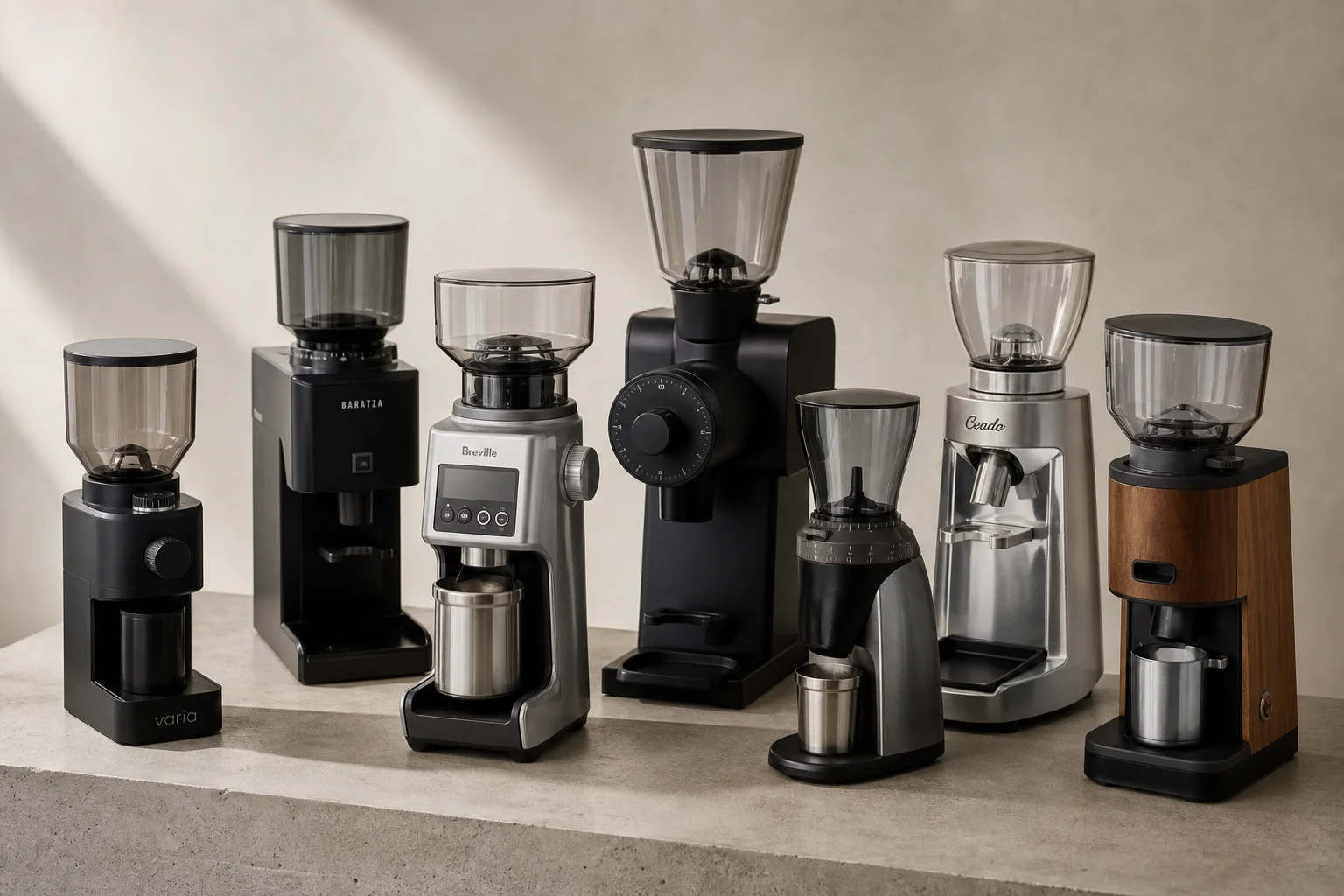
Finding the right espresso grinder under £500 means balancing grind quality, ease of use, build durability, and long-term satisfaction. This comparison covers seven models that represent different approaches to grinding: conical burr designs, flat burr options, compact units, and a hopper-based alternative. Each has distinct strengths and trade-offs worth understanding before you commit.
The quality of espresso from all these grinders is genuinely good. They all produce coffee that matches what you might expect from a cafe. The differences lie in workflow, sound, adjustability, and how well each suits different brewing styles and living situations.
Dialing In and Ease of Use
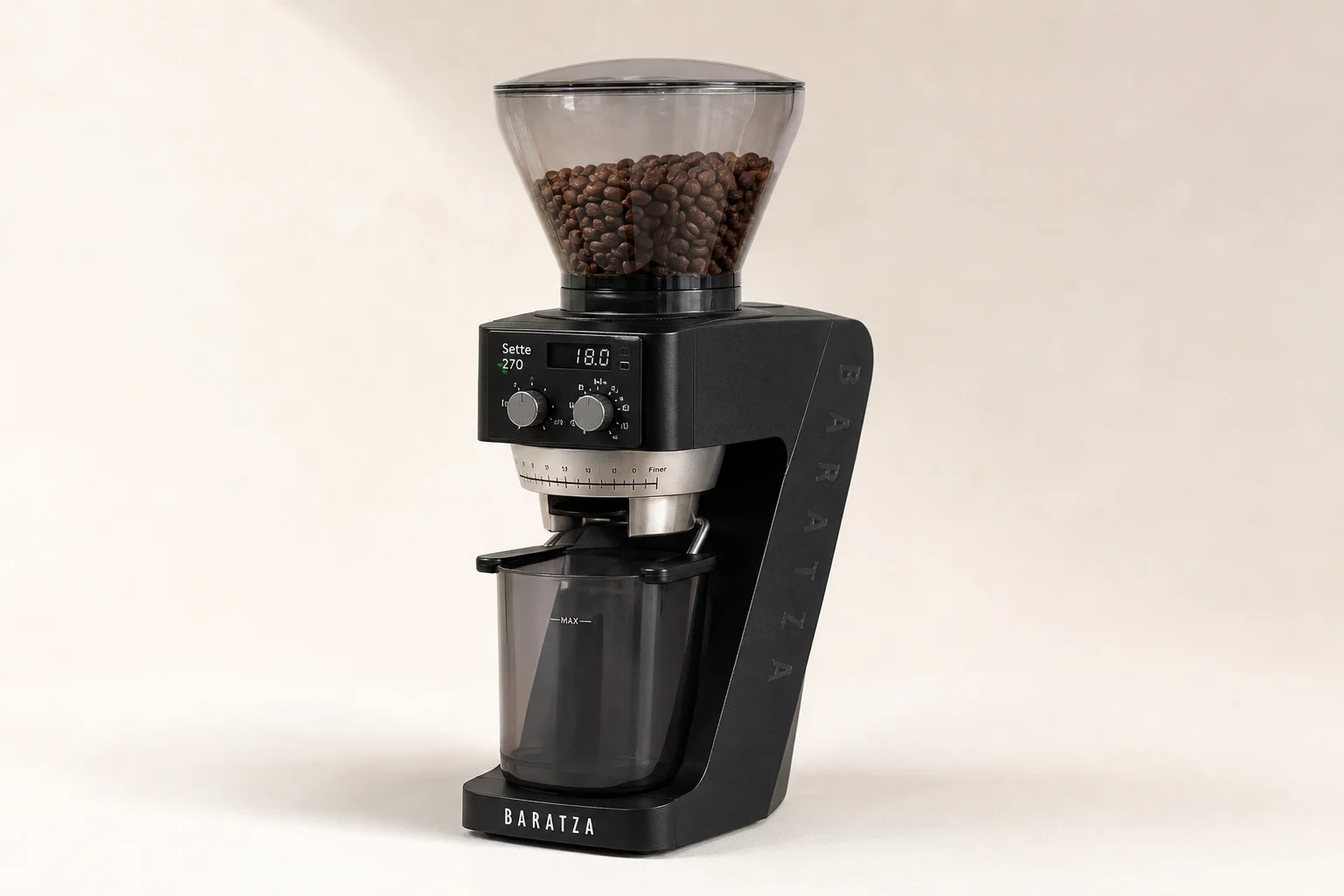
The Baratza Sette 270 uses a conical burr design and comes in at £300, making it one of the more affordable options here. It features both coarse and fine adjustment mechanisms, with the fine adjustments offering stepless control. The catch cup is generous and practical. Hot starting is straightforward thanks to an open-close hopper function. The main drawback is noise level, which is notably high even when running empty.
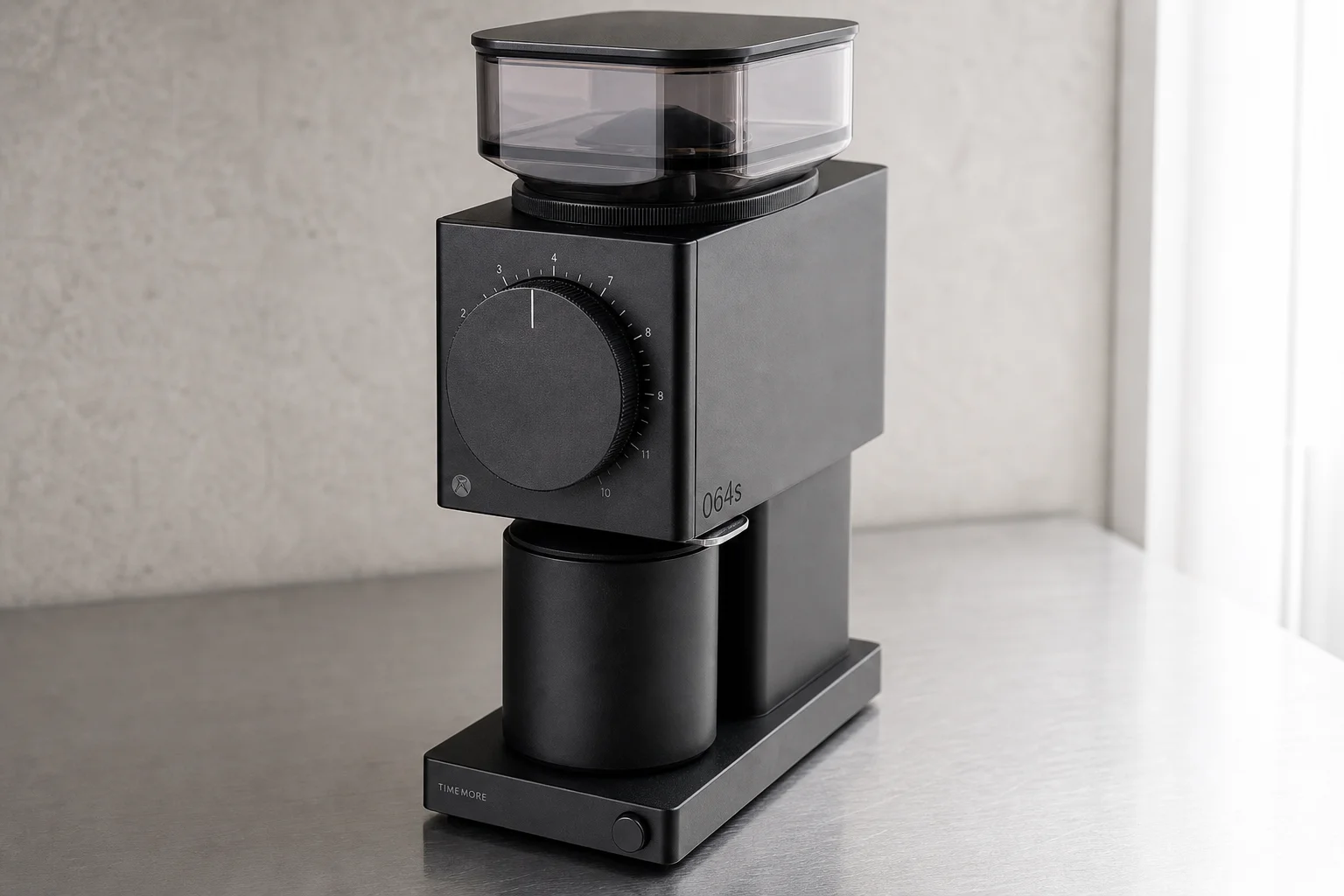
The Timemore 064S is a 64mm flat burr grinder with a large stepless dial on the front. It includes magnetic hopper positions for both closed and half-open states, which is a thoughtful detail. The grind adjustment offers good granularity without excessive stepping. A knocker mechanism helps release retained coffee. The hopper angle could be slightly steeper to prevent bean accumulation, and the variable RPM feature adds complexity without clear guidance on when to use it.
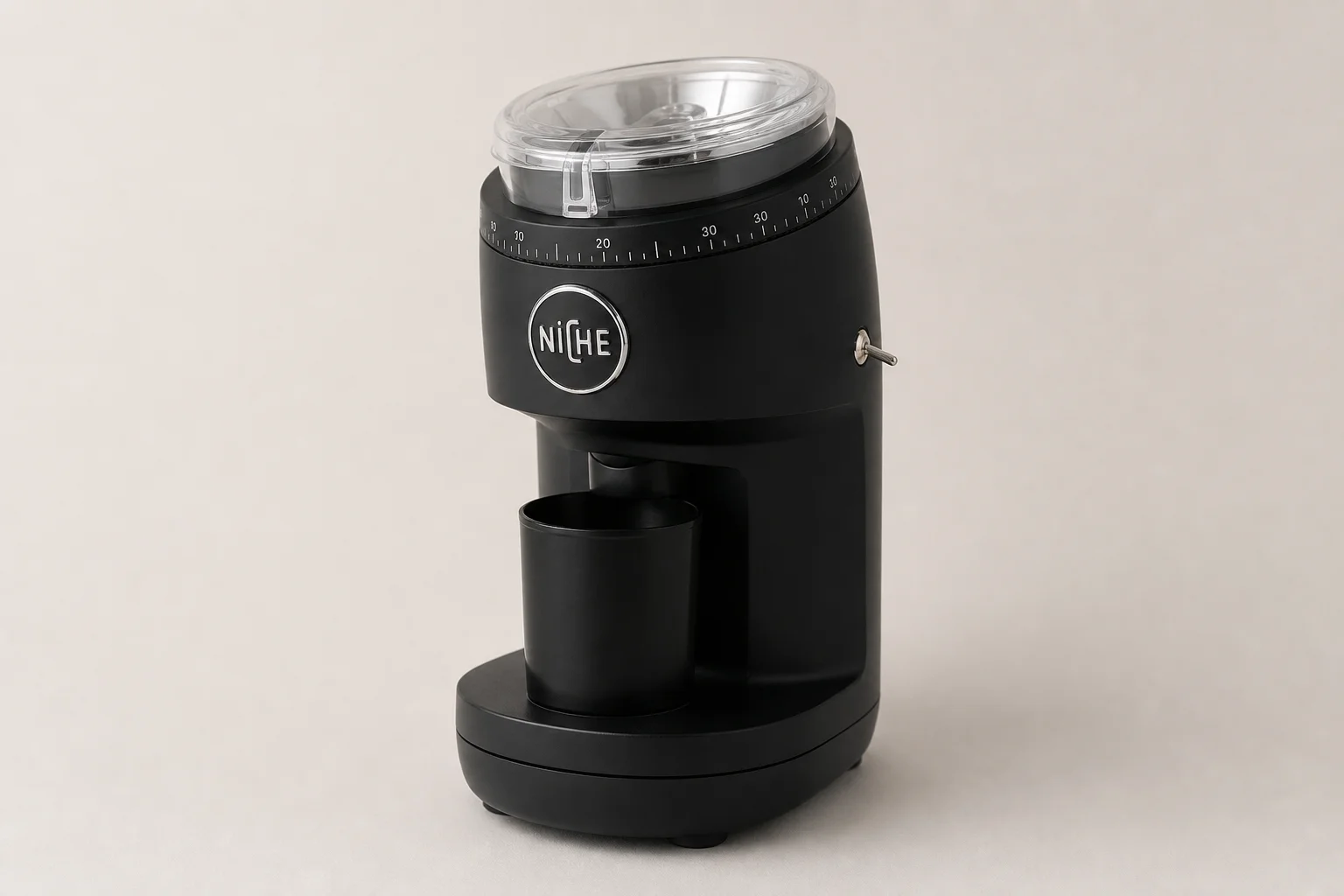
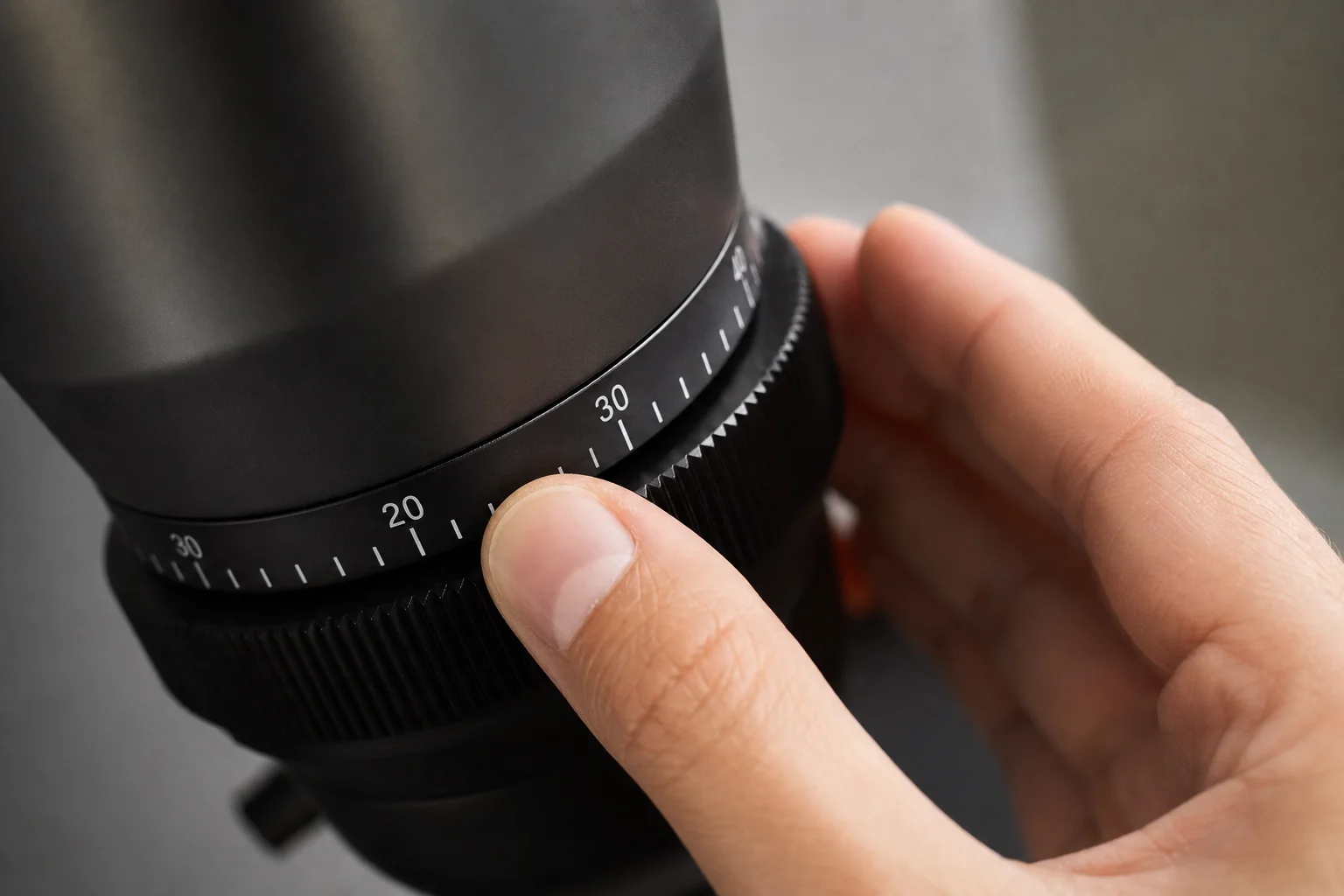
The Niche Zero remains a classic single-dose conical burr grinder. Its adjustment mechanism is intuitive with a numbered dial and clear marker. The catch cup fits neatly into a portafilter for direct distribution. However, a safety switch prevents hot starting, and the filter coffee range extends well beyond the marked dial. Moving between filter and espresso settings requires multiple dial rotations.
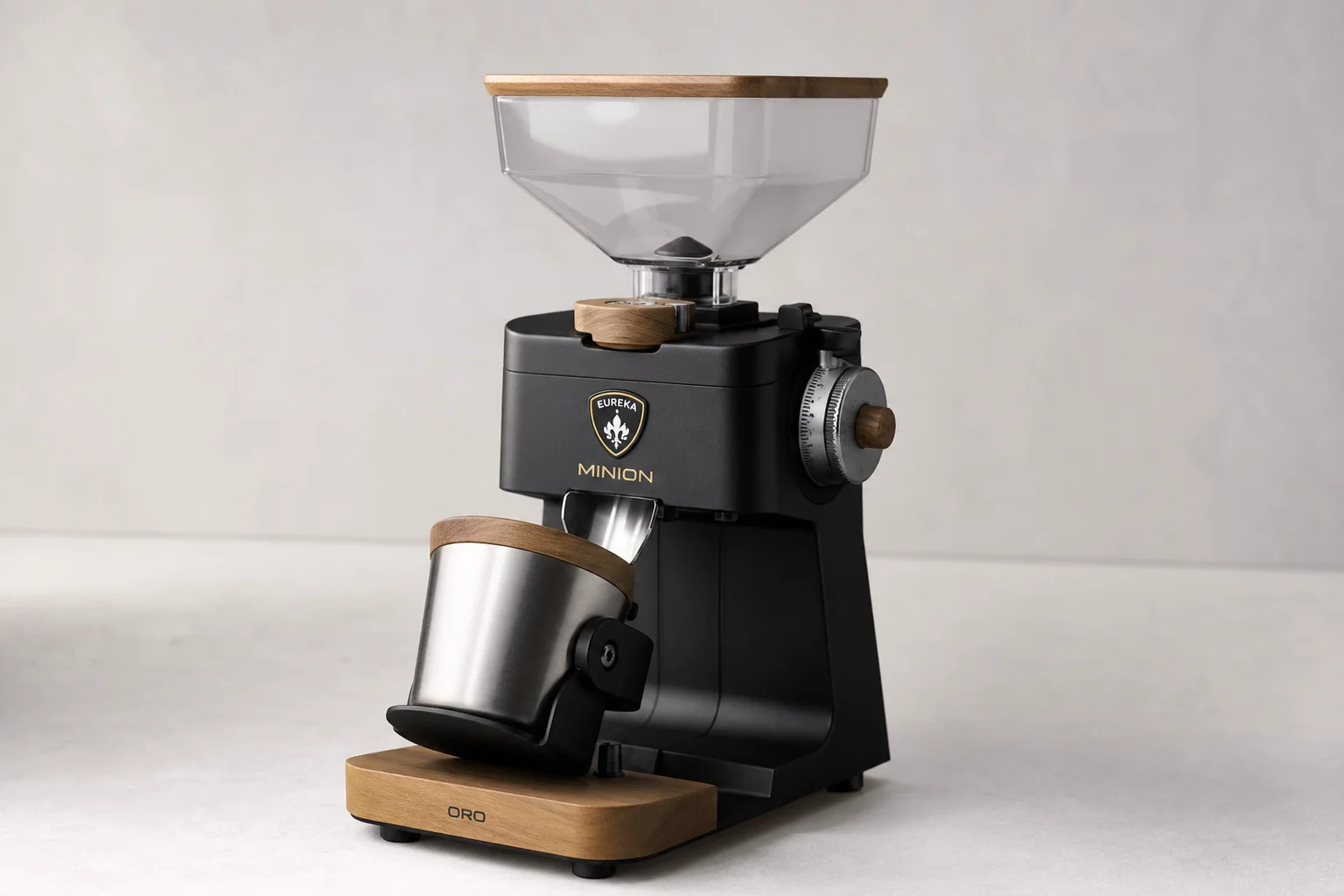
The Eureka Minion Oro takes design cues from the Niche with its tilting catch cup and wood accents. The grind adjustment is a small side wheel with plenty of granularity but poor visibility of your current setting. Bellows are included to reduce retention, though they add an extra step to the workflow. Switching between filter and espresso settings is cumbersome due to the adjustment mechanism’s design.
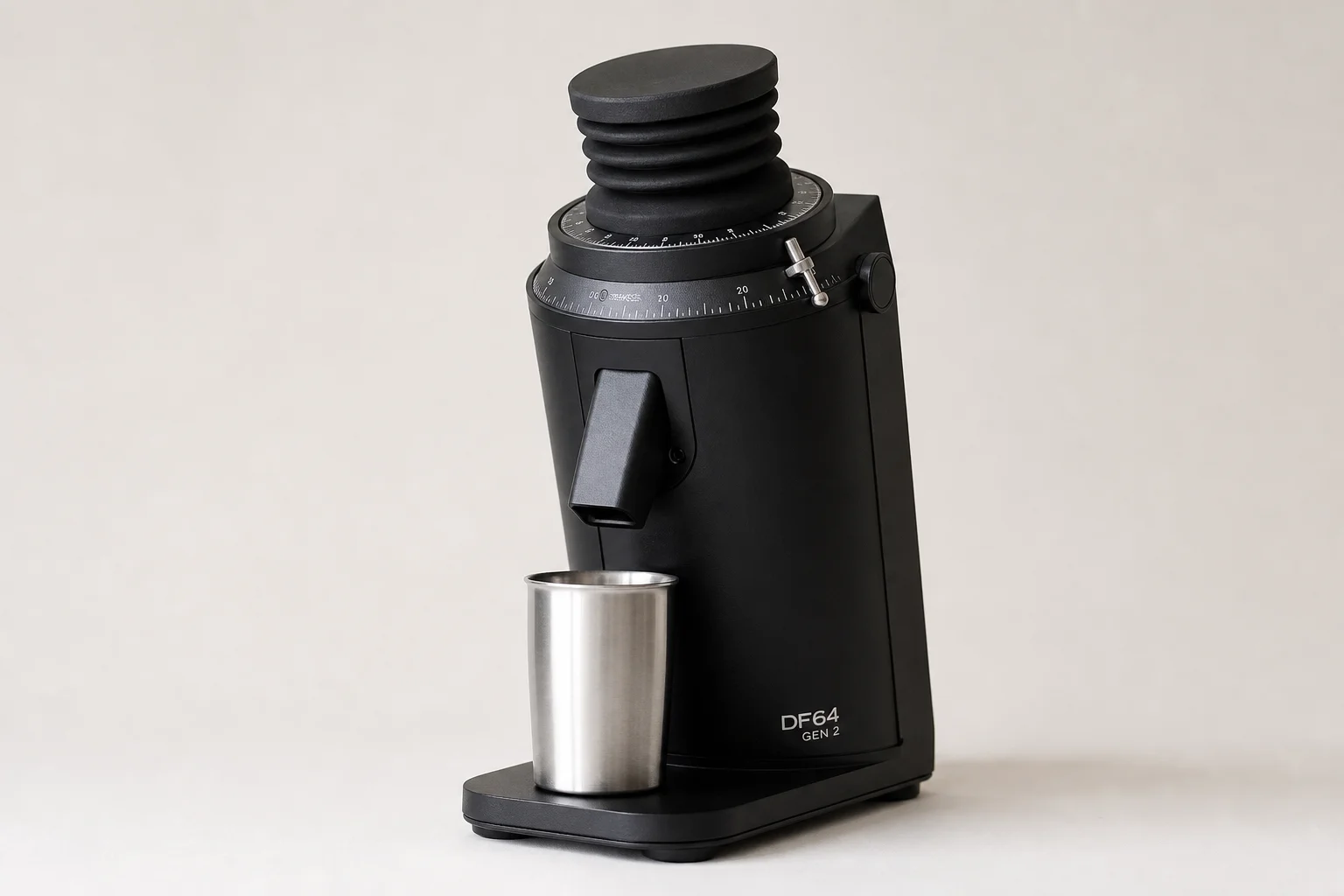
The DF64 Gen 2 represents a significant refinement over its predecessor. The new pointer and improved dial design make it easier to track your grind setting. Adjustment granularity is excellent, though the numbers can be obscured by the pointer when making small changes. The metal catch cup is a nice upgrade. Like the Timemore, it includes bellows, which some users appreciate for reducing mess.
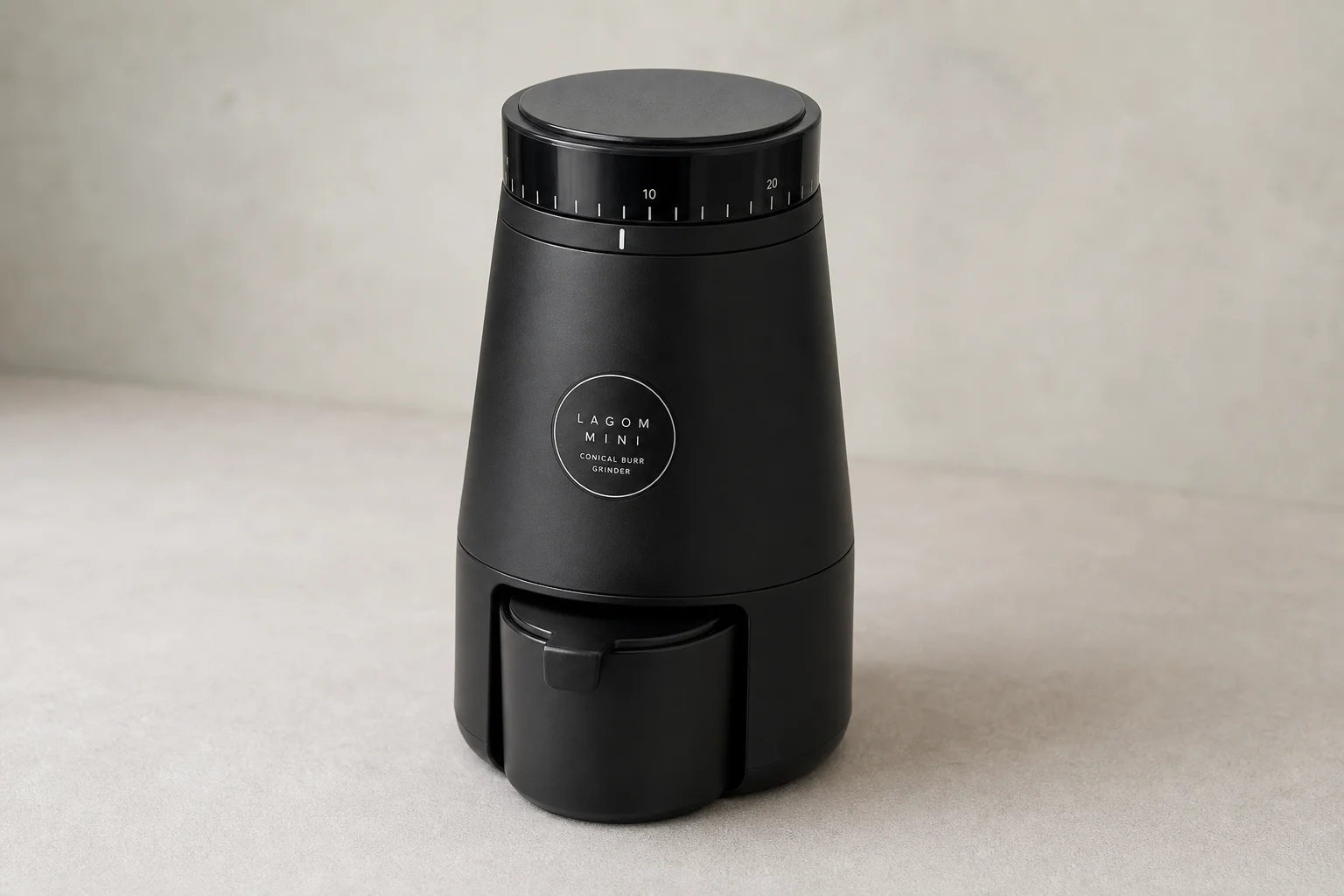
The Lagom Mini is the smallest grinder here and surprisingly capable. It’s a conical burr design marketed primarily as a filter grinder that can handle espresso. The stepless adjustment allows fine control, but the removal of numbered markings from this version is puzzling. The catch cup is tiny but fits any portafilter size. Grinding speed for espresso is slow, and the absence of visual grind setting indicators makes it harder to dial in consistently.
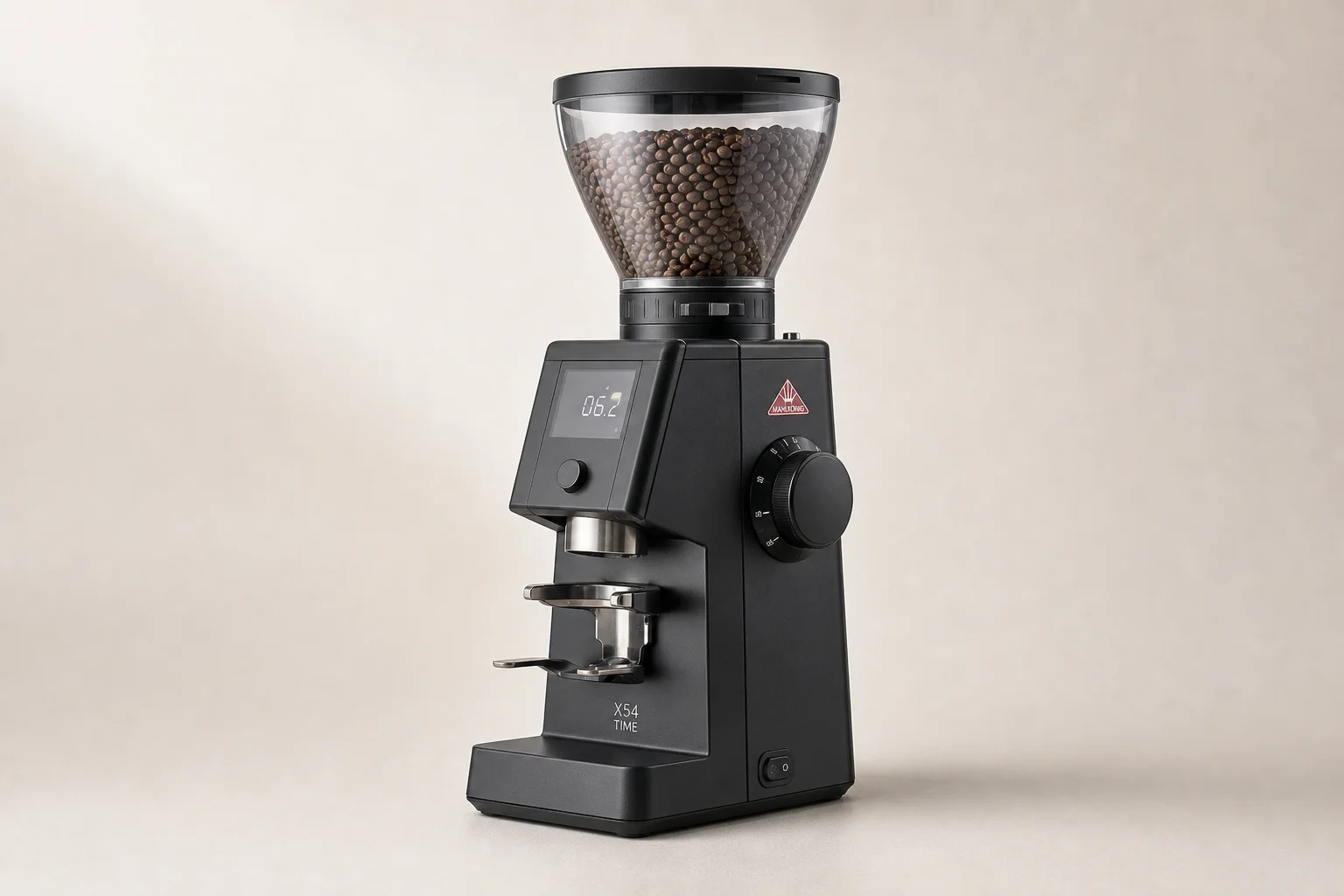
The Mahlkoenig X54 is a time-based hopper grinder designed for convenience rather than single-dosing. It holds a full bag of coffee and dispenses by timer. The adjustment mechanism uses a side wheel that can feel imprecise. Out of the box, it cannot grind fine enough for espresso without modification. This grinder suits workflows where you want to load coffee once and dose repeatedly, but it’s not ideal for single-dose enthusiasts.
Particle Size Analysis
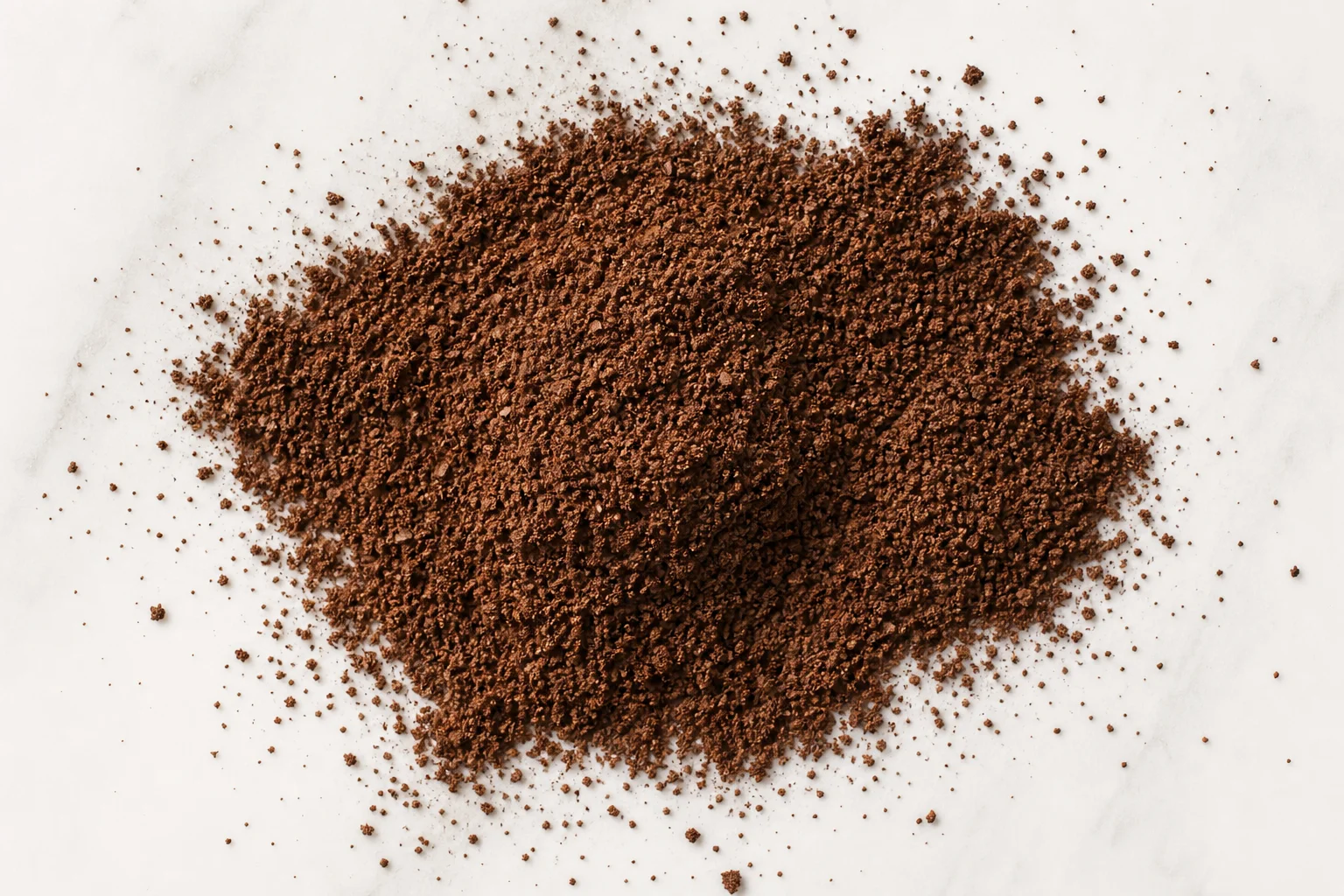
Using high-definition particle analysis, we compared how these grinders produce different particle distributions at matched grind settings. The four flat burr models (Timemore, Eureka, DF64 Gen 2, and Mahlkoenig) showed reasonably similar profiles, with the Timemore producing slightly finer particles overall and fewer fines, while the X54 generated more fines and a coarser peak.
The three conical burr models (Baratza, Niche, and Lagom) also ground very similarly to each other, with the Lagom Mini standing out by producing notably fewer fines than the other conicals. This likely contributes to its strong filter coffee performance.
Comparing flat and conical designs directly shows they are distinctly different categories. Flat burrs tend to produce a more uniform particle distribution, while conicals create a broader range with more texture-oriented fines. Neither approach is objectively superior; they simply suit different taste preferences.
Sound and Workflow Considerations
Sound quality matters more than you might expect when choosing a grinder. The Baratza Sette 270 is notably loud, even when running empty, which could be problematic for early morning grinding. The Timemore and DF64 Gen 2 produce moderate noise levels. The Niche Zero and Lagom Mini are quieter options. The Eureka Minion Oro and Mahlkoenig X54 fall in the middle range.
Grinding time varies significantly. Most grinders take similar time for filter and espresso grinds, but the Lagom Mini takes considerably longer for espresso, and the X54 is designed for timed dispensing rather than speed. If you grind multiple times daily, this becomes a quality-of-life factor.
Electricity consumption is fairly consistent across models, with most drawing close to their rated wattage. The DF64 Gen 2 appears to draw more than its stated rating, though this is likely a labeling issue rather than a concern.
Espresso Quality
In blind tastings, all seven grinders produced genuinely enjoyable espresso. The Timemore 064S delivered clean, sweet shots with good texture and complexity. The Niche Zero produced balanced espresso with pleasant acidity. The Eureka Minion Oro created full-bodied shots with nice texture but slightly sharp acidity. The DF64 Gen 2 made clean, medium-bodied espresso with good sweetness. The Lagom Mini produced lighter, silkier shots with clean finishes. The Baratza Sette 270 made reasonably nice espresso with good acids and sweetness. The Mahlkoenig X54 produced flat burr-style espresso that was clean and sweet.
For filter coffee, the Lagom Mini surprisingly outperformed expectations, delivering clarity and texture that stood out. The Timemore also made very tasty filter coffee. The Baratza, Niche, and X54 performed adequately but weren’t standouts. The Eureka and DF64 made good filter coffee but weren’t exceptional.
Final Thoughts and Recommendations
The Baratza Sette 270 offers solid value at £300 but the noise level is a genuine drawback for many users. If sound isn’t a concern, it’s a cost-effective way to get a reliable grinder with good support.
The Timemore 064S is a strong all-rounder with good espresso quality, pleasant filter performance, and thoughtful design details like magnetic hopper positions. The hopper angle could be improved, and the variable RPM feature adds unnecessary complexity.
The Niche Zero remains likable and simple, but at £538 it’s less competitive than it once was. The inability to hot start and the inaccurate filter markings are frustrations. You’re paying partly for the design and brand reputation.
The Eureka Minion Oro is solid as an espresso-only grinder but frustrating when switching between brewing methods. The lack of burr upgrade options is a significant limitation. The bellows workflow isn’t for everyone.
The DF64 Gen 2 is a major improvement over Gen 1. It’s a versatile platform with 64mm burrs that accept aftermarket options. The bellows remain a point of contention for some users, but the overall refinement and build quality are strong.
The Lagom Mini is exceptional value for filter-first users with limited space and budget. It’s surprisingly capable at espresso despite being marketed as a filter grinder. The removal of numbered markings is an odd design choice.
The Mahlkoenig X54 suits a specific workflow: high-volume, hopper-based dosing. For single-dose enthusiasts, it doesn’t fit as well. It’s an expensive option that feels better suited to small commercial settings.
If you must choose one, the 64mm flat burr grinders offer the most flexibility. Between the Timemore and DF64 Gen 2, the DF64 Gen 2 edges ahead due to its refined design, better build quality, and burr upgrade potential, though the Timemore is slightly cheaper and equally capable at producing great coffee.
Conclusion
All seven grinders produce genuinely good espresso and can serve as long-term endgame options. The choice depends on your priorities: budget, space, noise tolerance, brewing style, and workflow preferences. None of these grinders will hold you back from making excellent coffee. The differences are real but subtle, and any of them will deliver satisfaction for years to come.
Further reading
Related Reviews
Coffee Equipment
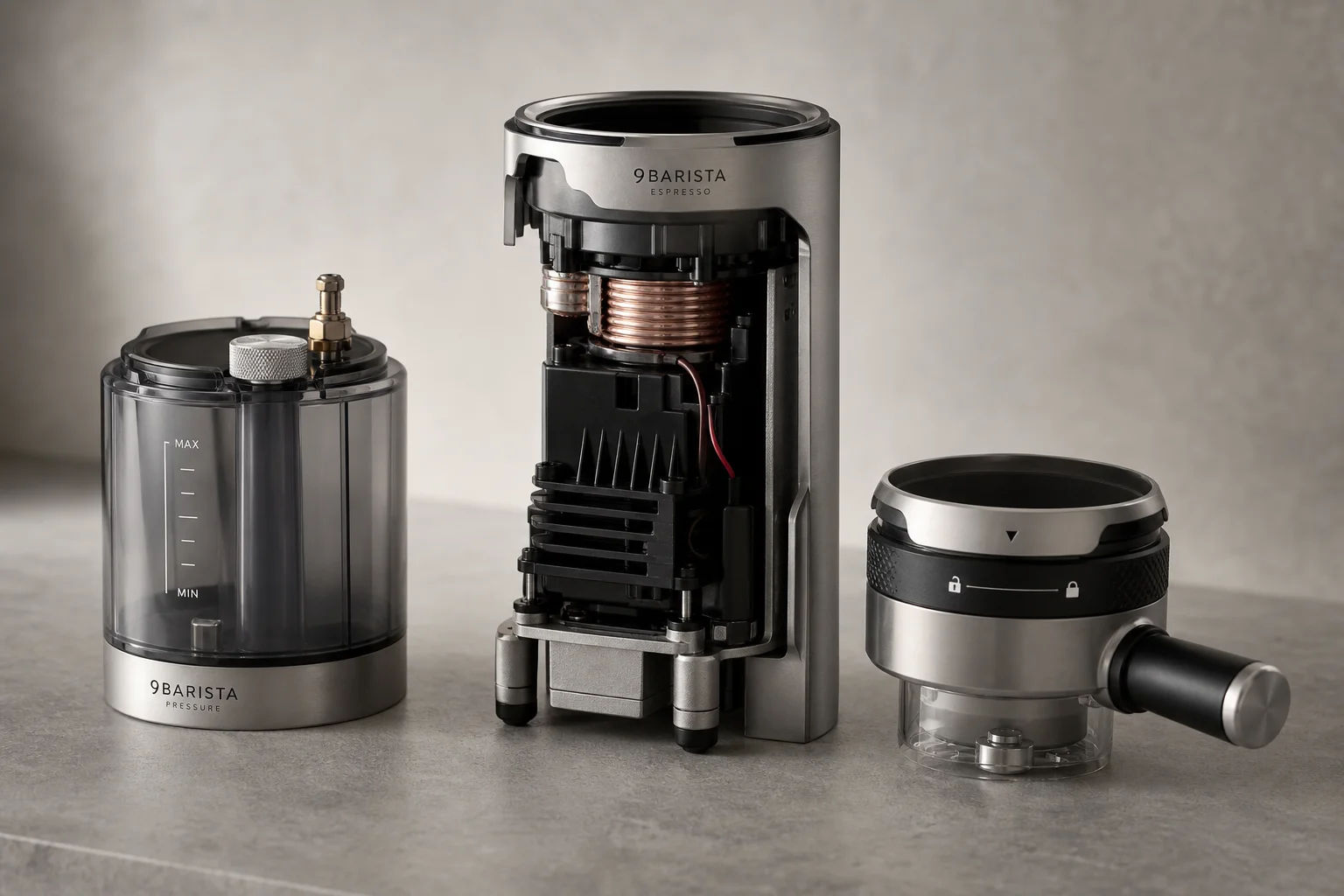
9Barista Espresso Machine Review: Stovetop Espresso for Single-Cup Enthusiasts
A cleverly engineered stovetop espresso maker that generates nine bars of pressure without electricity. Excellent coffee quality, but requires patience and suits solo drinkers only.
Coffee Equipment
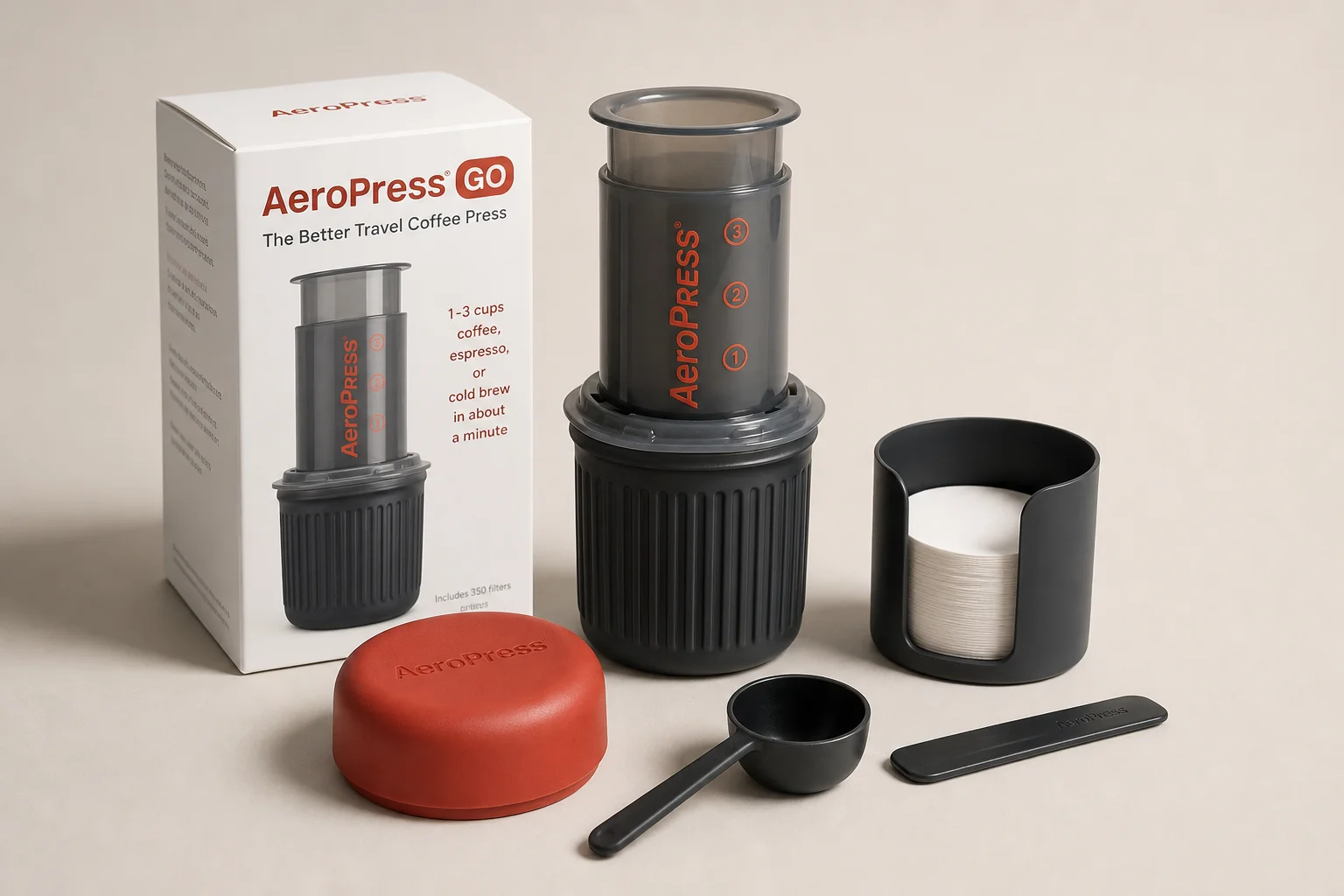
Aeropress Go Review: A Compact Travel Brewer That Solves One Specific Problem
The Aeropress Go shrinks the original design and adds an integrated cup, but it may not address the travel challenges most coffee enthusiasts actually face.
Coffee Equipment
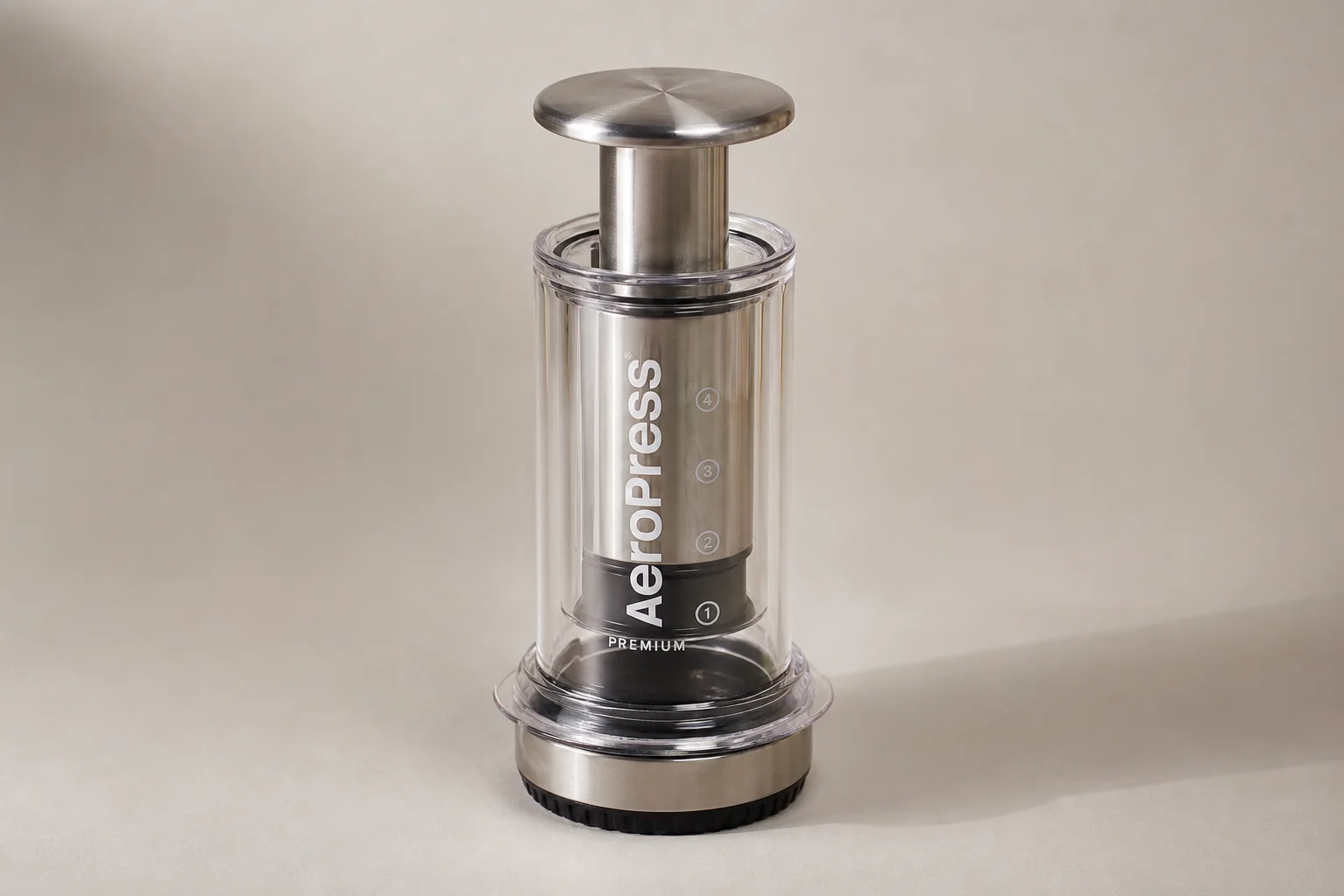
AeroPress Premium Review: Premium Materials, Practical Trade-offs
The AeroPress Premium brings glass and metal construction to a beloved brewer, but trades portability and durability for a more refined feel. Here's what changes in the cup and what matters before you buy.