Saltwater Aquarium Guides
Biological Filtration for Saltwater Aquariums: A Beginner's Guide
Master the fundamentals of biological filtration without expensive shortcuts. Learn which media types work, how to set up your biofilter, and why patience is your best tool.
Introduction
Biological filtration is the foundation of a stable saltwater aquarium. Unlike mechanical or chemical filtration, which require active intervention, a robust biofilter largely maintains itself once established. The key to success is understanding what biological filtration does, how to set it up properly, and resisting the temptation to overcomplicate it with expensive shortcuts.
What Is Biological Filtration?
Biological filtration is the process by which beneficial bacteria break down decaying matter in your tank through the nitrogen cycle. Aerobic and anaerobic bacteria convert ammonia into nitrite, then nitrate, and eventually back to nitrogen gas. This natural process neutralizes toxic compounds that would otherwise harm your livestock.
Any organic matter in your tank—uneaten food, fish waste, or a deceased snail you cannot find—becomes ammonia. A robust biological filter handles these decomposition events without causing toxic spikes that force frequent water changes or endanger your fish and corals.
Why Biological Filtration Matters
A healthy biofilter provides three critical benefits. First, it neutralizes ammonia and nitrite toxicity, keeping your livestock safe. Second, it stabilizes your tank by handling small decomposition events without dramatic swings in water chemistry. Third, it reduces your maintenance burden. Over time, as anaerobic bacteria colonize, your biofilter will even convert nitrate into nitrogen gas, lowering nitrate levels naturally without your intervention.
For beginners, biological filtration is essential in your main display tank. The only exception is a quarantine tank, which typically runs for short periods and does not require an established biofilter.
Setting Up Your Biological Filter
The foundation of biological filtration is surface area. Bacteria need a home to colonize, and the more surface area you provide, the more robust your biofilter becomes.
Providing a Home
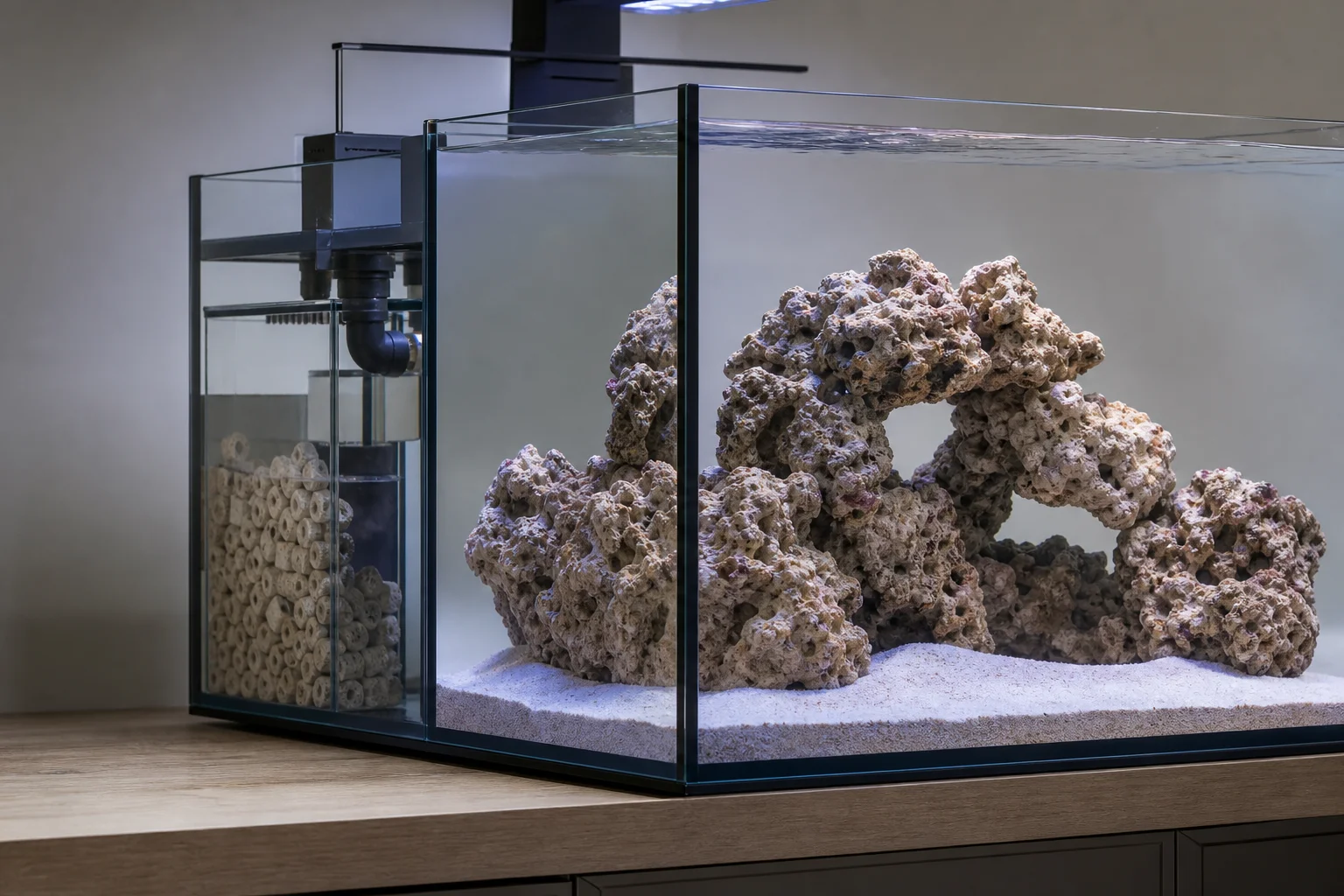
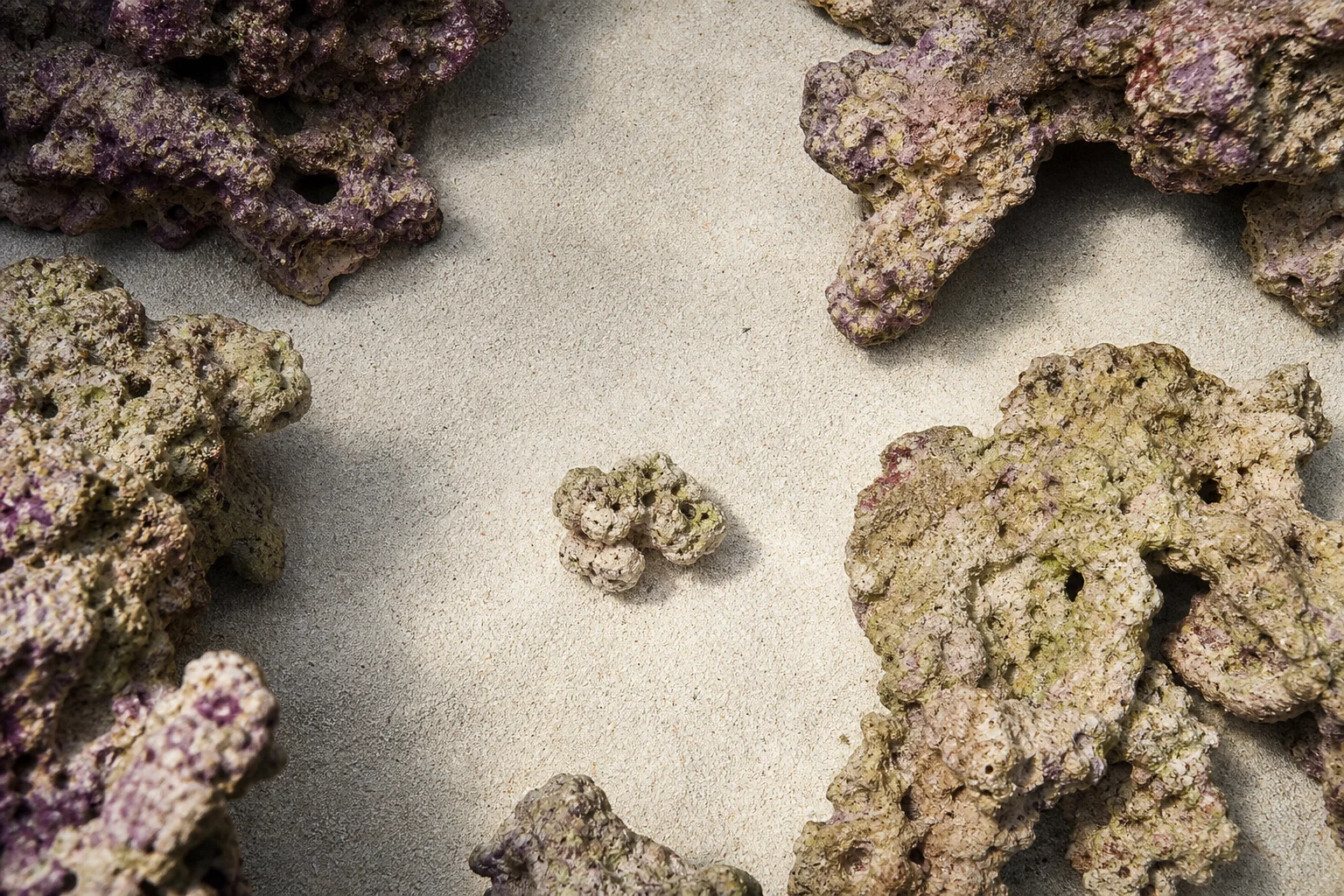
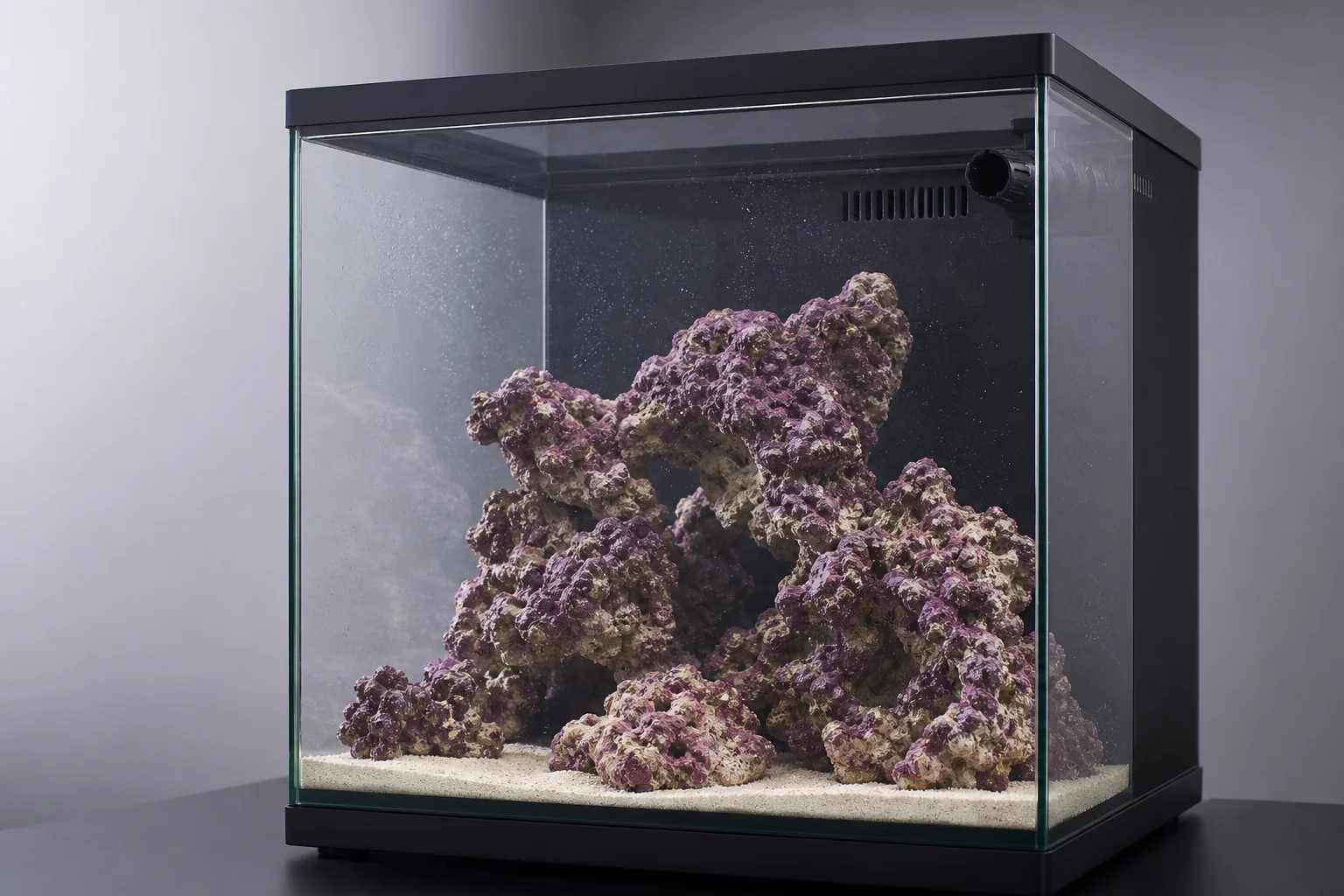
Start with reef sand and reef rock. A shallow sand bed of one to two inches combined with reef rock aquascaping provides ample surface area for bacteria to colonize. This simple setup is sufficient for most beginner tanks.
Cycling Your Tank
Cycling your tank is the process of establishing your biological filter. During cycling, you allow beneficial bacteria to colonize the available surface area while managing ammonia and nitrite levels. For detailed cycling methods, refer to dedicated cycling guides. The key principle is patience: do not overstock your tank with fish all at once, and your biological filtration will establish itself.
Increasing Surface Area
If you want to accelerate biofilter development or support a larger bioload, add more reef rock, more sand, or ceramic media in a sump or rear filtration chamber. Each addition provides more real estate for bacteria to colonize.
Understanding Biological Media Types
Biological filtration media comes in several forms, each with different surface area characteristics.
Reef Rock and Reef Sand
Reef rock and reef sand are the primary biological media in most beginner tanks. They form the aquascape and substrate, providing natural colonization surfaces. Reef sand is especially valuable because its grain structure creates extensive internal surface area for bacteria.
Ceramic Media
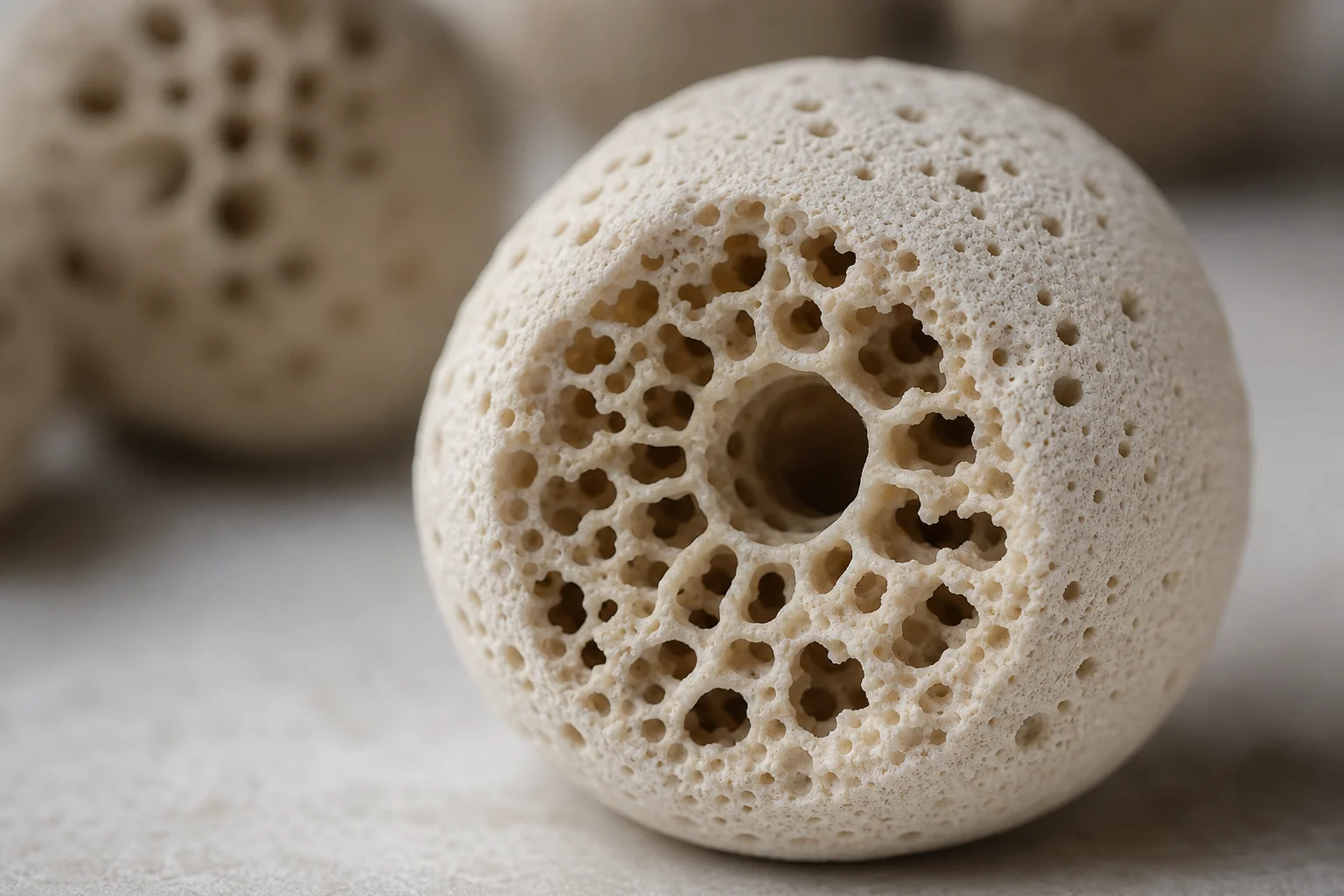
Ceramic bio media is far superior to older plastic bio balls. A single ceramic bio ball contains vastly more internal pore structure than a plastic ball of the same size, offering exponentially more surface area for bacterial colonization. Ceramic media comes in various shapes: bio balls for rear filtration chambers, or bricks and plates that stack neatly in sumps.
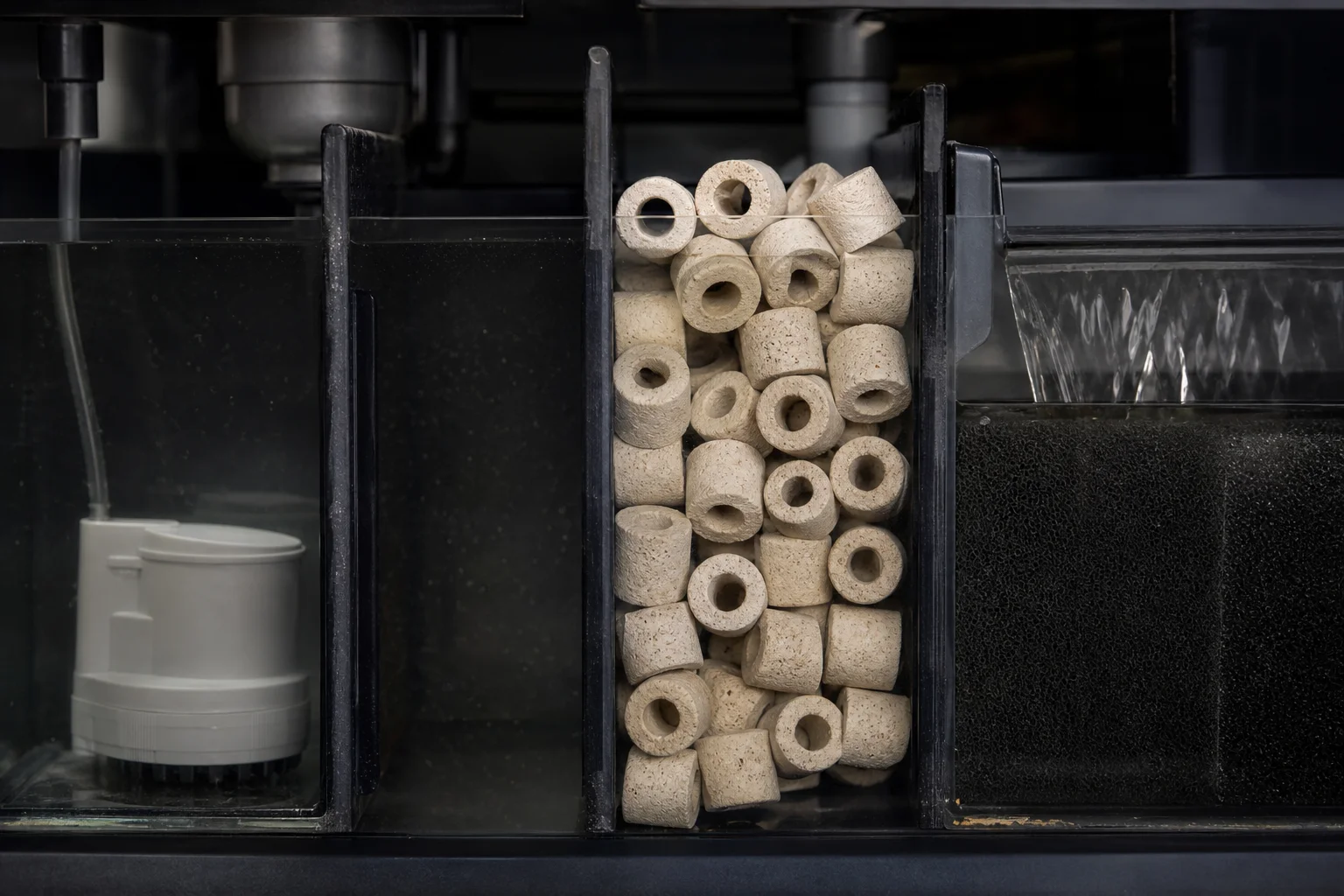
Ceramic media is a practical upgrade if you have sump space and want to increase biofilter capacity without cluttering your display tank.
Avoid These as a Beginner
Biopellet reactors and carbon dosing (sugar dosing or vodka dosing) are advanced techniques that can crash your tank if used incorrectly. Biopellets provide a concentrated food source for bacteria, but improper use can cause dangerous imbalances. Carbon dosing requires daily discipline and carries the same risk. Neither is necessary for a stable beginner setup.
Bacterial Starter Products
Three products can help accelerate biofilter establishment or maintain stability over time:
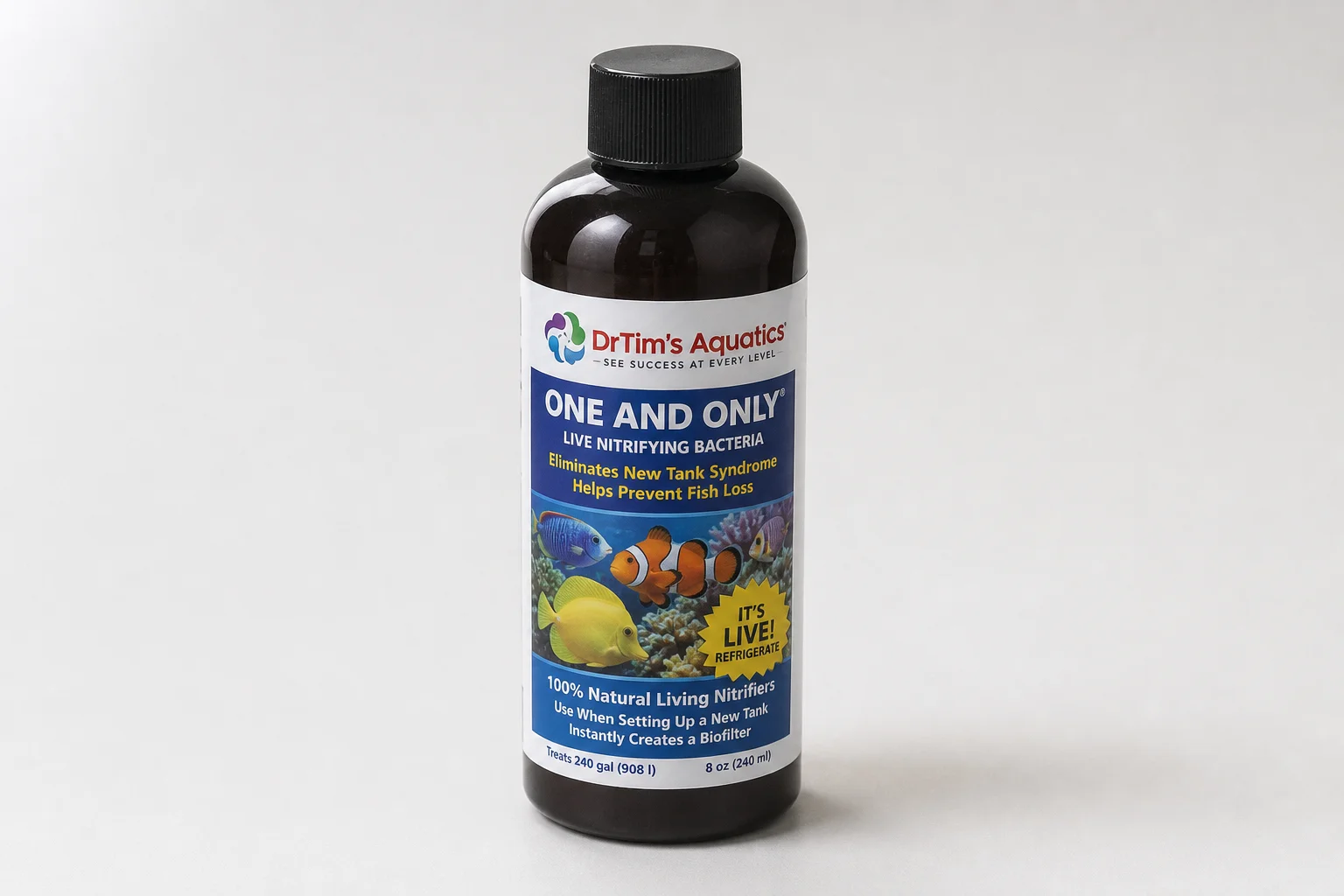
Dr. Tim’s One and Only is a beneficial bacteria product designed to speed up tank cycling and establish a biofilter more quickly.
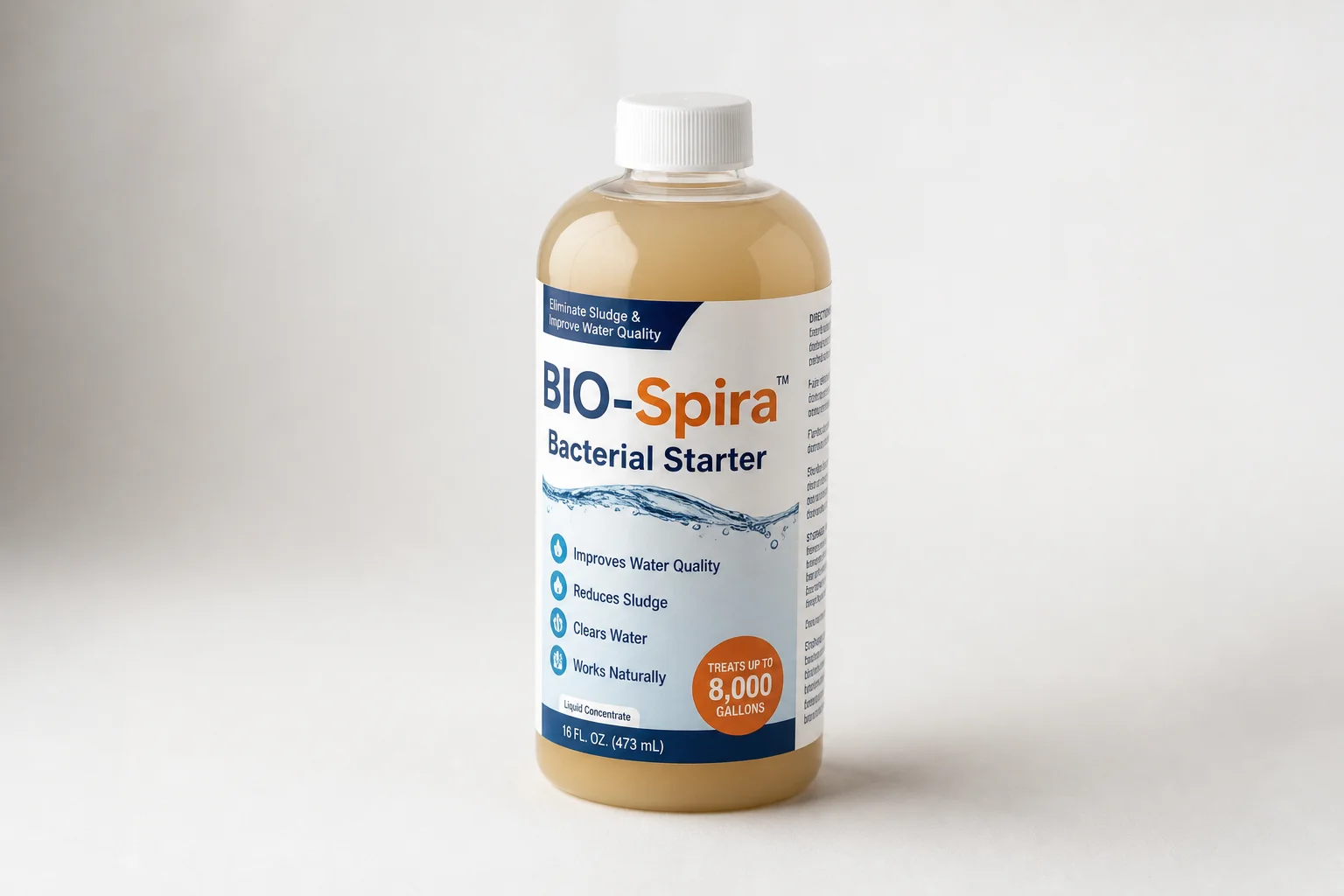
BIO-Spira is another bacterial starter product that introduces beneficial bacteria strains to help establish biological filtration.
Brightwell Aquatics MicroBacter7 is a liquid bacterial culture that can be dosed during cycling or added in small amounts during routine water changes to maintain and support your established biofilter.
These products are optional but can provide peace of mind during cycling or help maintain long-term stability. Some hobbyists dose a small amount with every water change, though the long-term benefit is debatable. They certainly do no harm if used as directed.
Maintaining Your Biological Filter
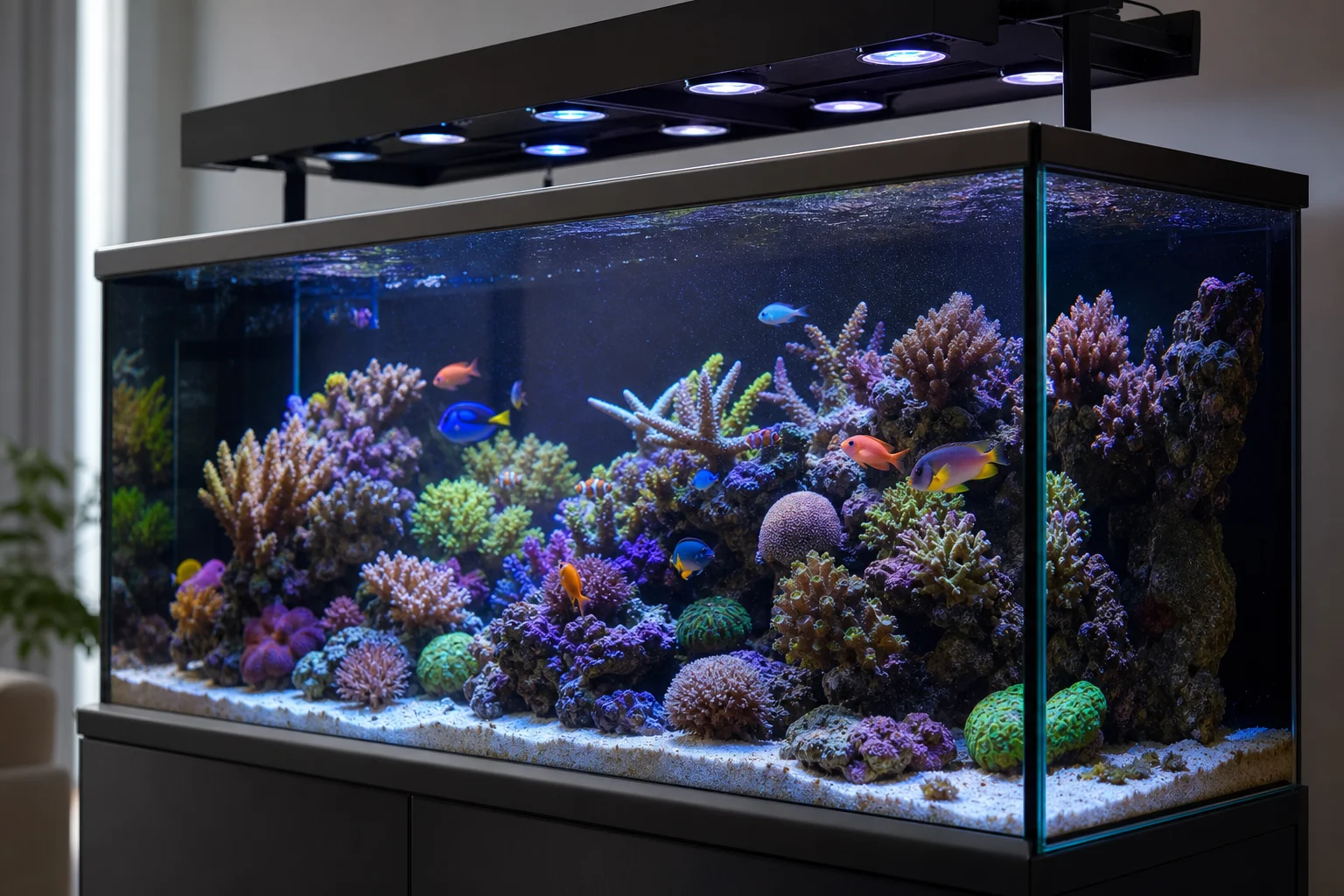
Once established, biological filtration requires minimal maintenance. As long as there is a constant food source—livestock in your tank and regular feeding—your biofilter will maintain itself. Decomposition will continue to feed the nitrogen cycle, and your bacteria will handle it.
Over months and years, anaerobic bacteria will gradually colonize more extensively, especially if you provide anaerobic spaces such as deep sand beds or dense rock structures. This slow colonization is why nitrate levels often decline naturally over time without active intervention.
The only active maintenance step some hobbyists perform is adding a small dose of beneficial bacteria during water changes. Whether this truly helps is unclear, but it carries no downside if done correctly.
Conclusion
Biological filtration is not complicated. Provide surface area through reef rock and sand, cycle your tank properly, and then let time do the work. Avoid biopellets and carbon dosing as a beginner. If you want to accelerate cycling or maintain long-term stability, bacterial starter products are a safe option. The most important thing you can do is be patient and trust the nitrogen cycle to establish itself naturally.
Further reading
Related Reviews

Airsoft Gear
Airsoft Beginner's Essential Gear Guide: What You Actually Need to Start Playing
A practical breakdown of the core equipment required to play airsoft, from eye protection and AEGs to magazines and protective gear, with honest advice on what matters and what you can skip.
Aquarium Care
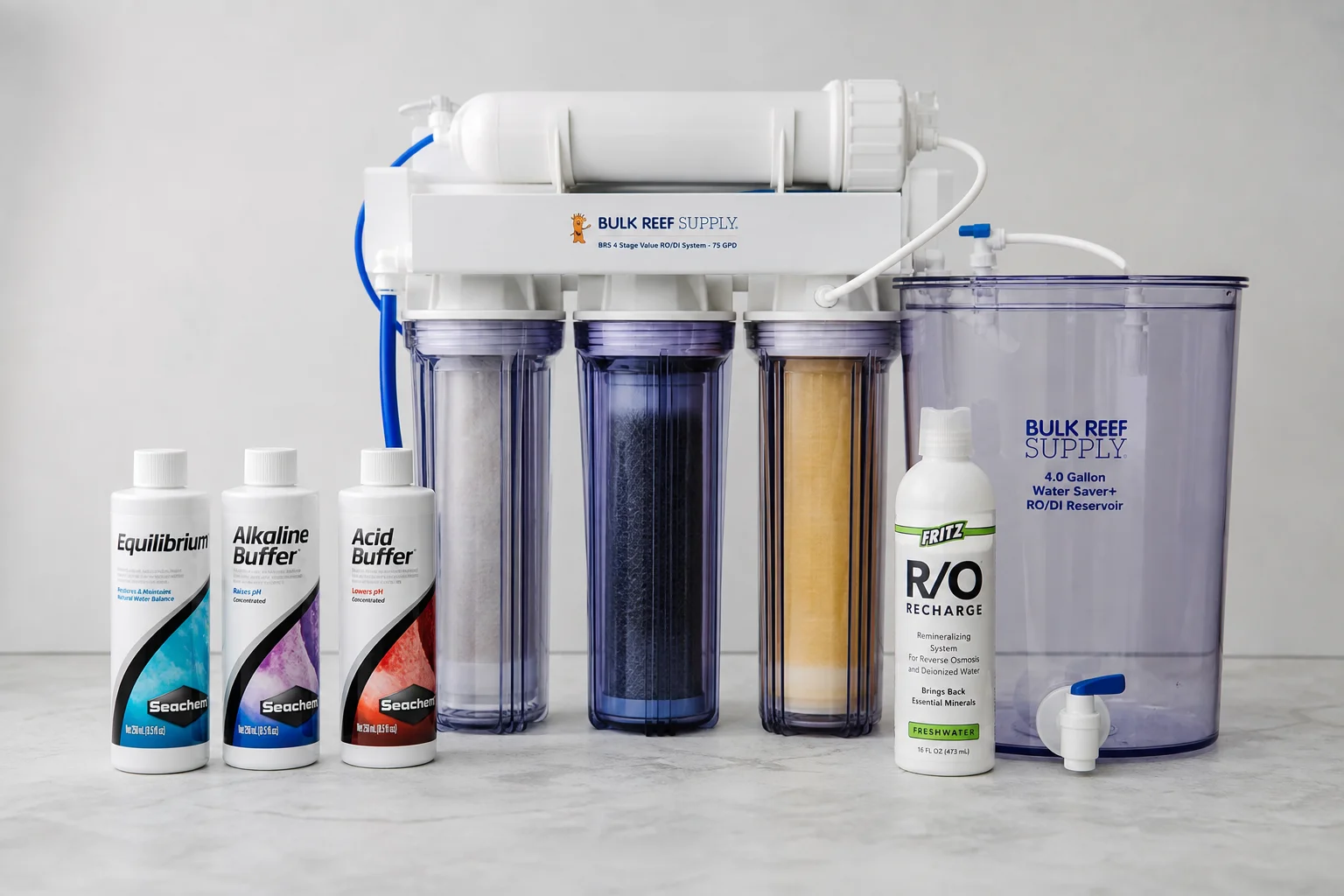
Aquarium Water Treatment: RO/DI Systems and Remineralization Guide
Why tap water harms aquariums, how RO/DI systems work, and the correct way to use pure water for freshwater and saltwater tanks.
3D Printing
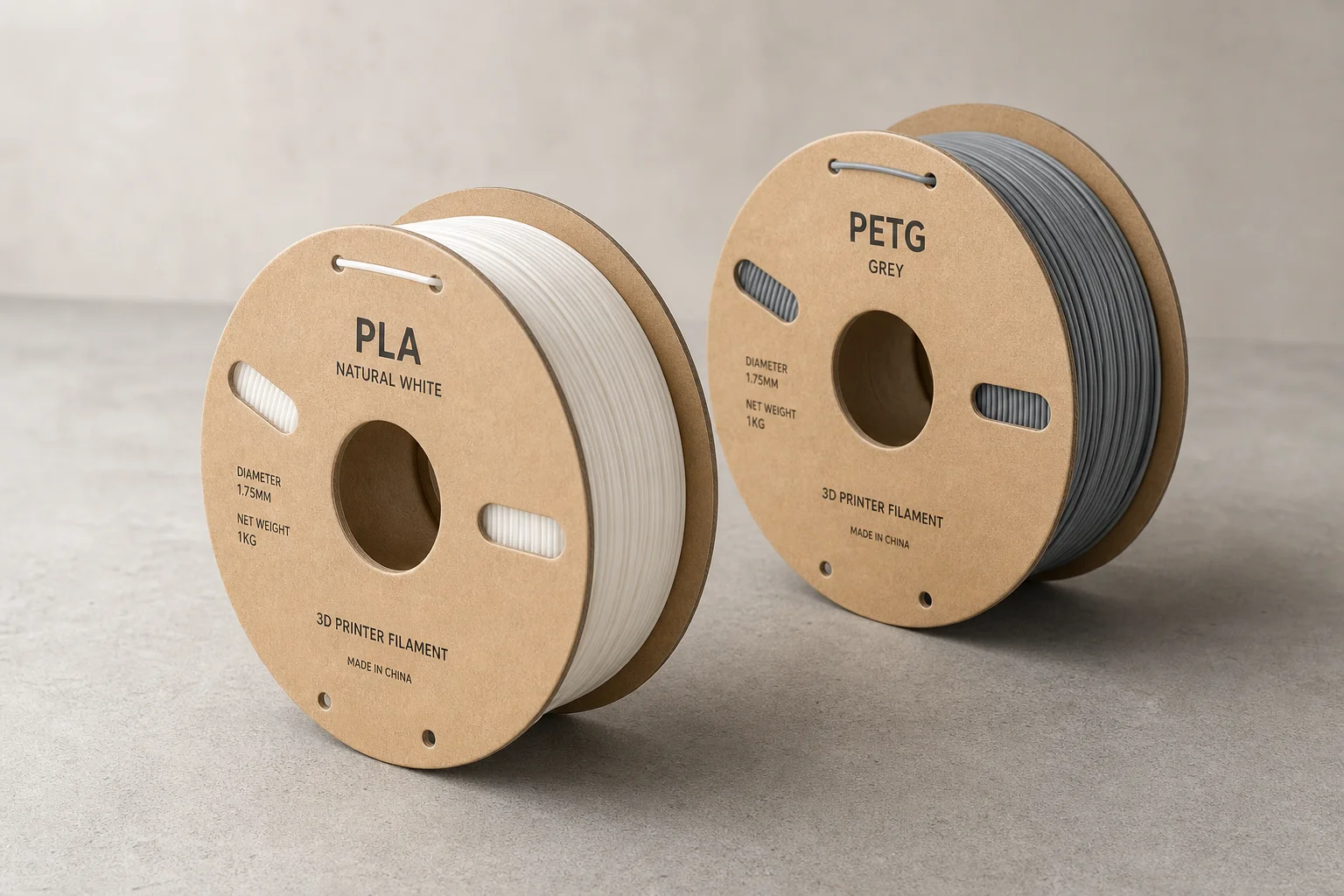
Best 3D Printer Filaments for Beginners: PLA and PETG Essentials
Master two core filaments that cover 90% of beginner projects. Learn why PLA and PETG matter, how to store them properly, and which brands deliver real value without the marketing hype.