Cinema Cameras
Canon EOS C50 Cinema Camera Review: 7K Open Gate Raw Video in a Compact Form
The Canon EOS C50 brings 7K 60fps raw internal recording and open gate capture to a lightweight cinema camera designed for content creators and small production teams.
Introduction
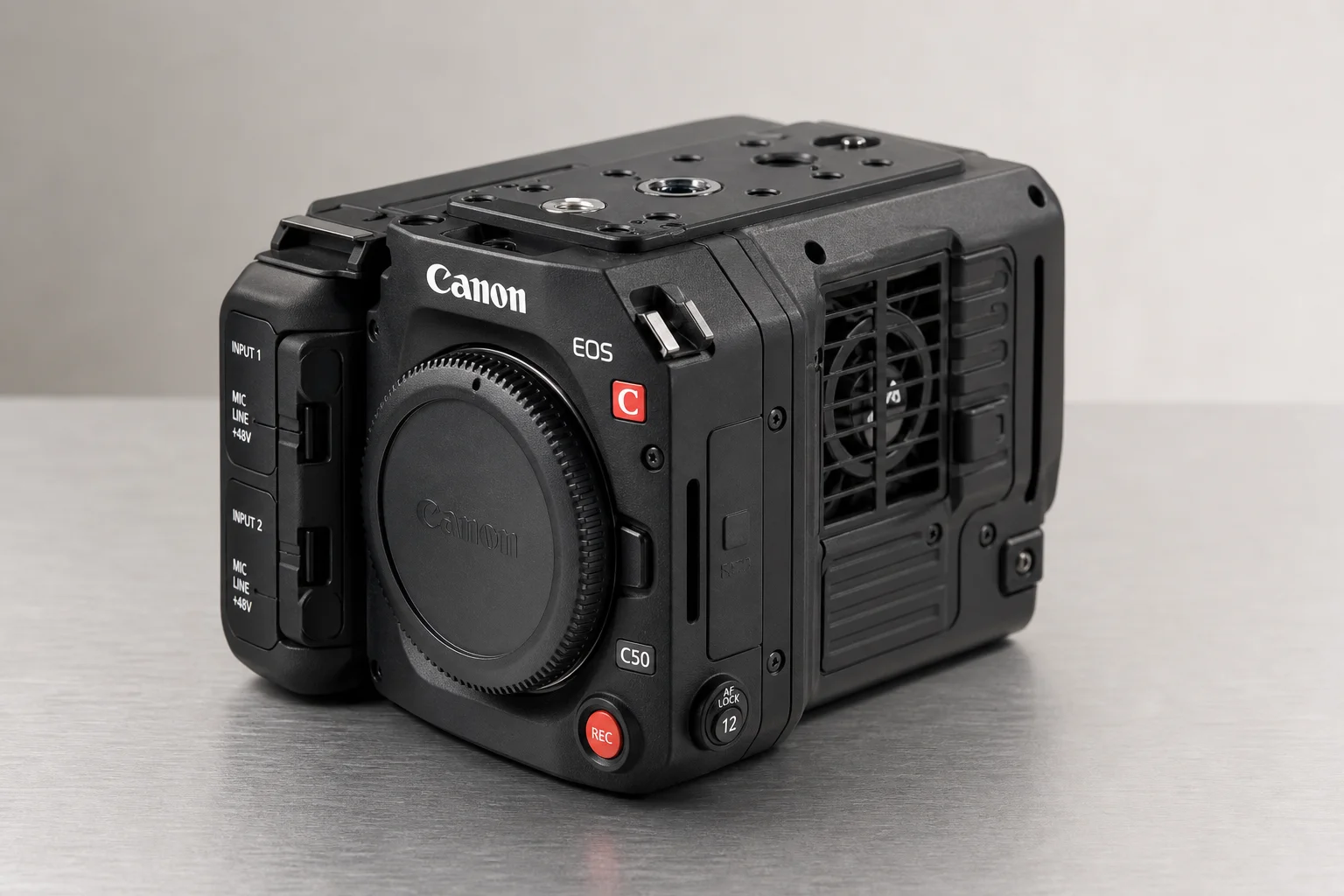
The Canon EOS C50 arrives exactly one year after the C80, bringing a fresh approach to compact cinema cameras. This is a camera built for filmmakers and content creators who want professional raw video capabilities without the bulk of larger cinema bodies. The standout feature is 7K 60fps raw internal recording in an open gate format, a capability that sets it apart in its category.
Design and Build Quality
The C50 shares visual DNA with the R5C, featuring a distinctive flat top design that is relatively rare among Canon cameras. The body has a compact, lightweight form factor without an electronic viewfinder, which keeps weight down compared to traditional cinema cameras. However, the cooling fan housing that protrudes from the rear gives it a less elegant profile than competitors like the Sony FX2 and FX3.
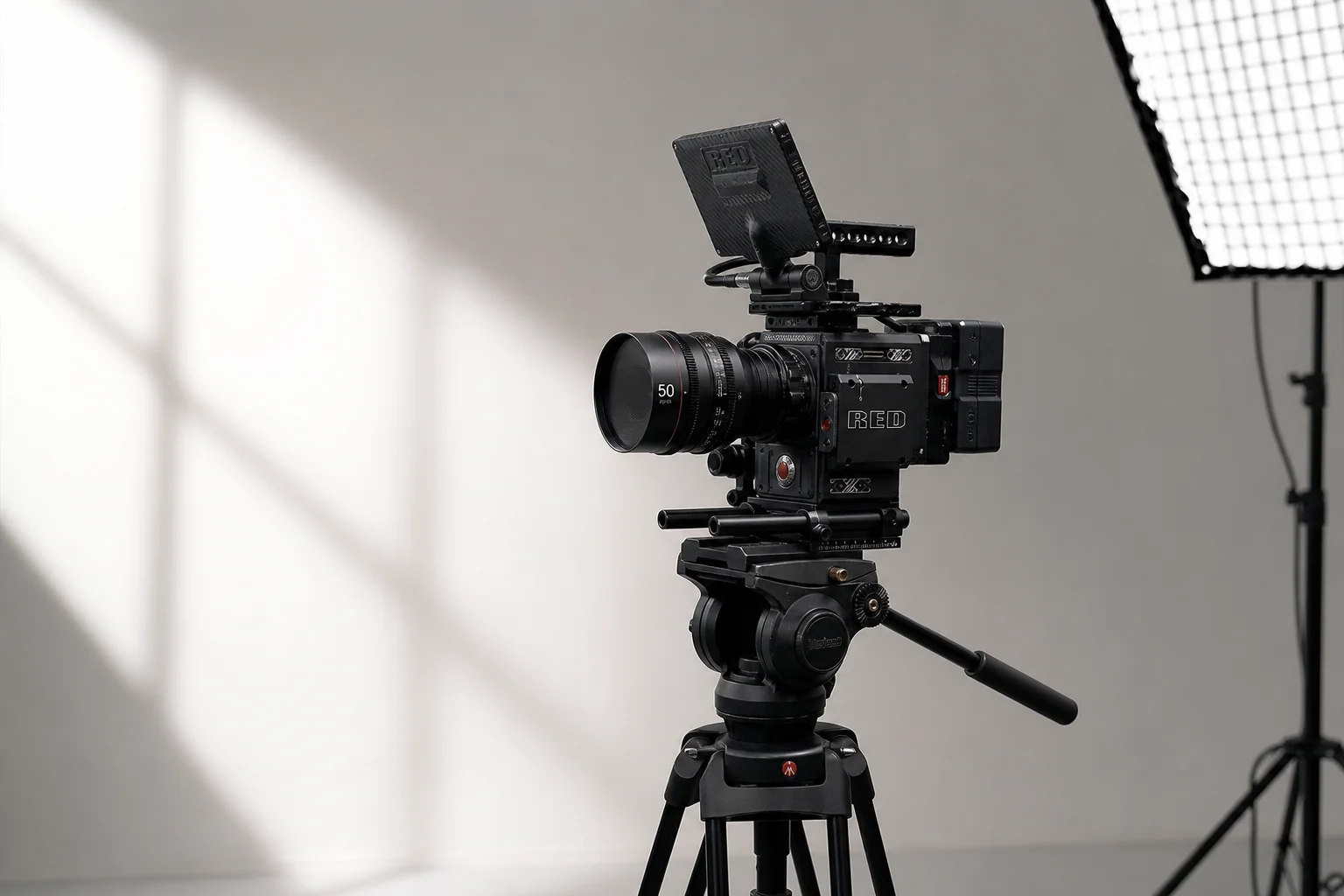
The camera is built with professional cinema credentials in mind. Multiple mounting points on the top and sides, including two threaded mounts for accessories, make it easy to integrate into production rigs. The overall design prioritizes functionality over aesthetic refinement, with a serious, workmanlike appearance that signals its intended use.
Professional Connectivity and Controls
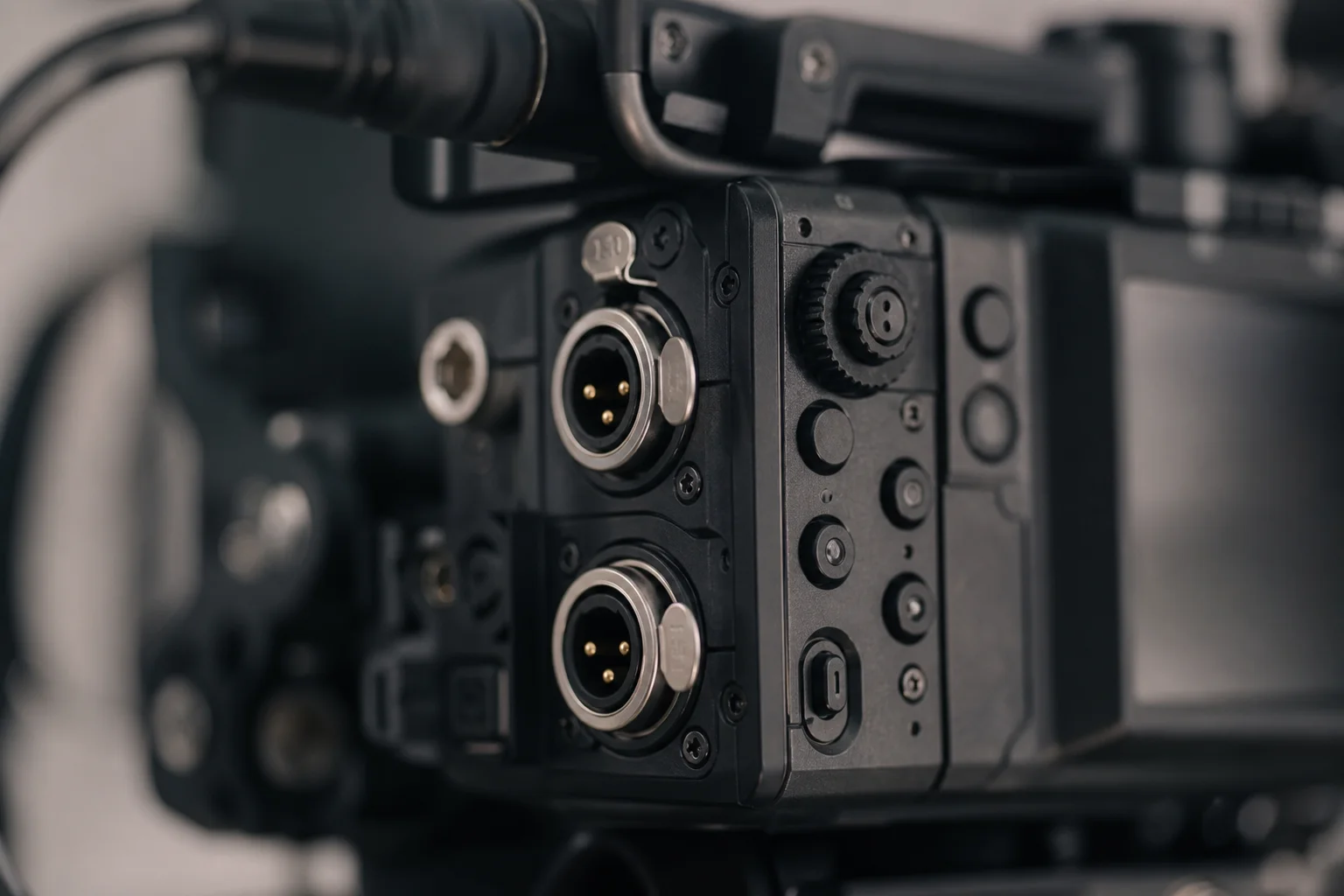
The C50 includes professional-grade XLR audio inputs with proper connectors, a significant advantage for production work where audio quality matters. The control layout features multiple record buttons, a tally light for monitoring recording status, and a power zoom switch for lens control. There is also a timecode sync port for synchronizing with external equipment.
Storage uses a hybrid approach with both CFexpress and SD card slots. However, there is an important limitation: when shooting raw video, the camera cannot write to both cards simultaneously. The SD card can be used for proxy recording or crop format alternatives, but raw recording uses only the CFexpress slot. This is a practical trade-off that users need to understand before purchase.
Video Recording Capabilities
The headline feature is 7K 60fps raw internal recording, which is genuinely impressive for a camera of this size and price. The open gate format is particularly valuable because it captures the full height of the sensor without the vertical crop that occurs when shooting 16:9 video from a 3:2 sensor. This gives filmmakers more flexibility for vertical content or future reframing without losing image quality.
The camera uses a dual boot operating system similar to the R5C. When switched to video mode, the interface transforms into a dedicated cinema camera layout. When switched to camera mode, it reverts to a standard Canon camera interface. This flexibility allows the same body to serve different workflows.
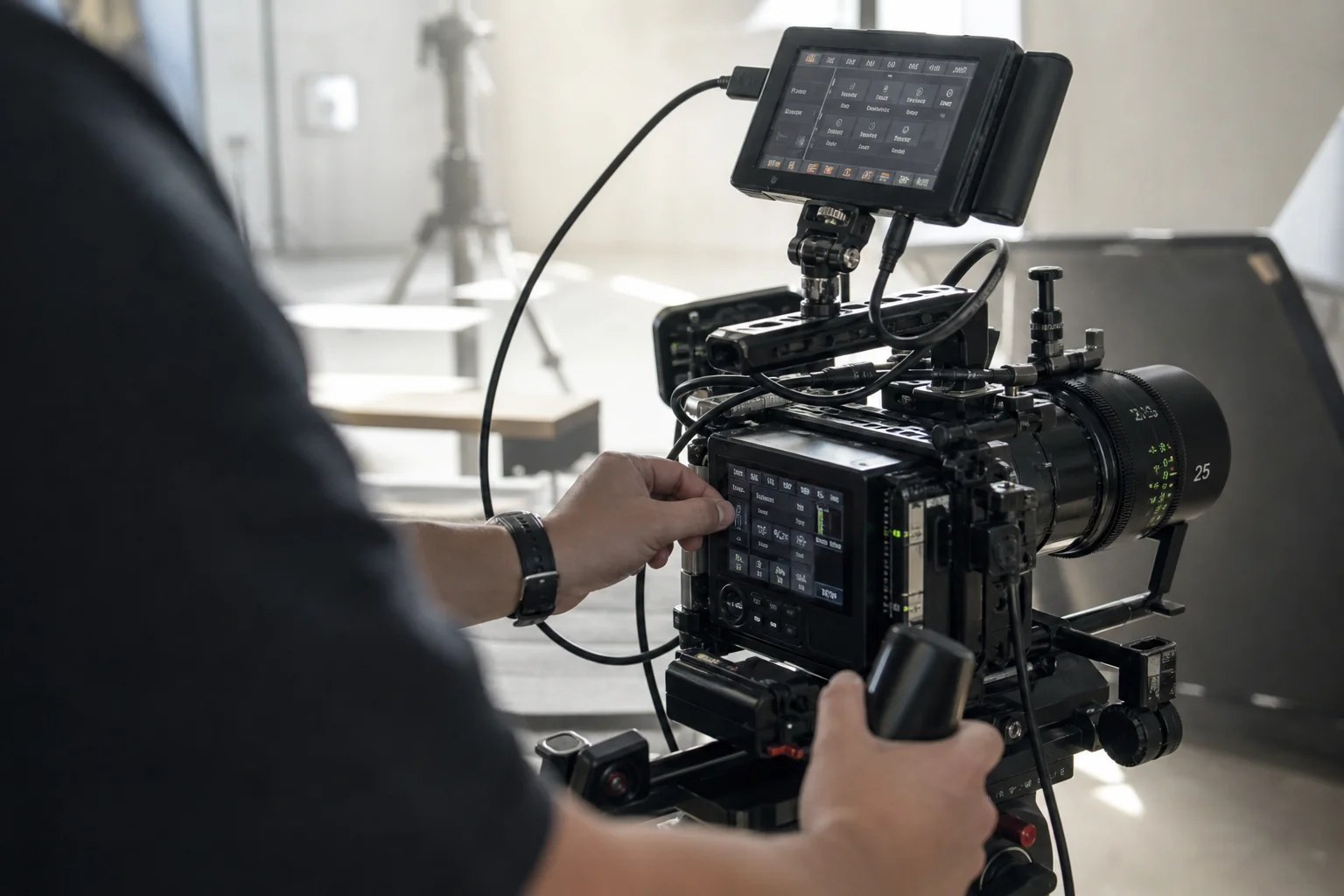
Autofocus performance appears competent, with subject tracking that works reasonably well even when the subject is not directly facing the camera. The camera lacks in-body stabilization, which is a notable omission for a modern cinema camera. However, it does include digital image stabilization, and when paired with Canon lenses that have optical image stabilization, the combination provides acceptable stabilization for many shooting scenarios.
Who This Camera Is For
The C50 is positioned as a bridge between consumer-level cinema cameras and professional broadcast equipment. It is most relevant for independent filmmakers, content creators, and small production teams who need raw video capability without the size and complexity of larger cinema bodies like the C70 or C80.
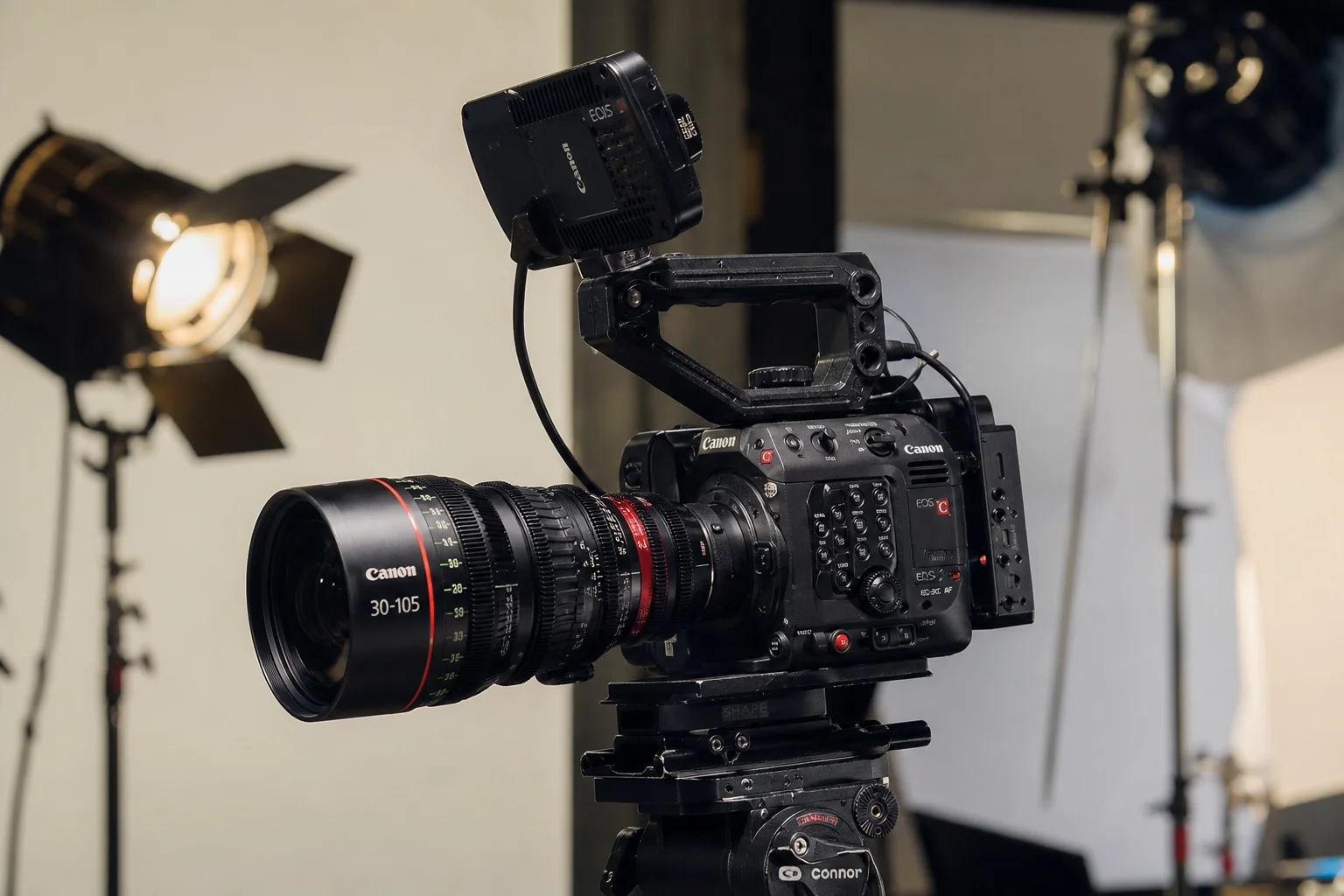
The compact form factor and lightweight design make it suitable for run-and-gun production work, travel-based filmmaking, and situations where portability matters. The 7K open gate recording is particularly appealing to creators who want maximum flexibility in post-production and who appreciate the Panasonic-style open gate approach that Canon has now adopted.
At approximately £3,299, the C50 is reasonably priced relative to the Sony FX3, making it an accessible entry point into professional raw video recording. The main trade-off is the lack of in-body stabilization, which may require additional stabilization equipment or careful lens selection depending on shooting style.
Conclusion
The Canon EOS C50 represents a thoughtful approach to compact cinema cameras. The 7K open gate raw recording is genuinely useful, the professional connectivity is solid, and the lightweight design makes it practical for real-world production work. For filmmakers who have felt that the R5C’s 8K capability was excessive and who want something more capable than standard mirrorless cameras, the C50 fills a meaningful gap. The lack of in-body stabilization is the primary limitation, but for stationary or carefully stabilized work, this camera delivers professional results in a form factor that does not demand a full production crew to operate.
Product link
View more details for Canon EOS C50
This product is mentioned in the review. Check the specifications, options, and compatibility before buying.
View more details for Canon EOS C50Further reading
Related Reviews
Cinema Cameras
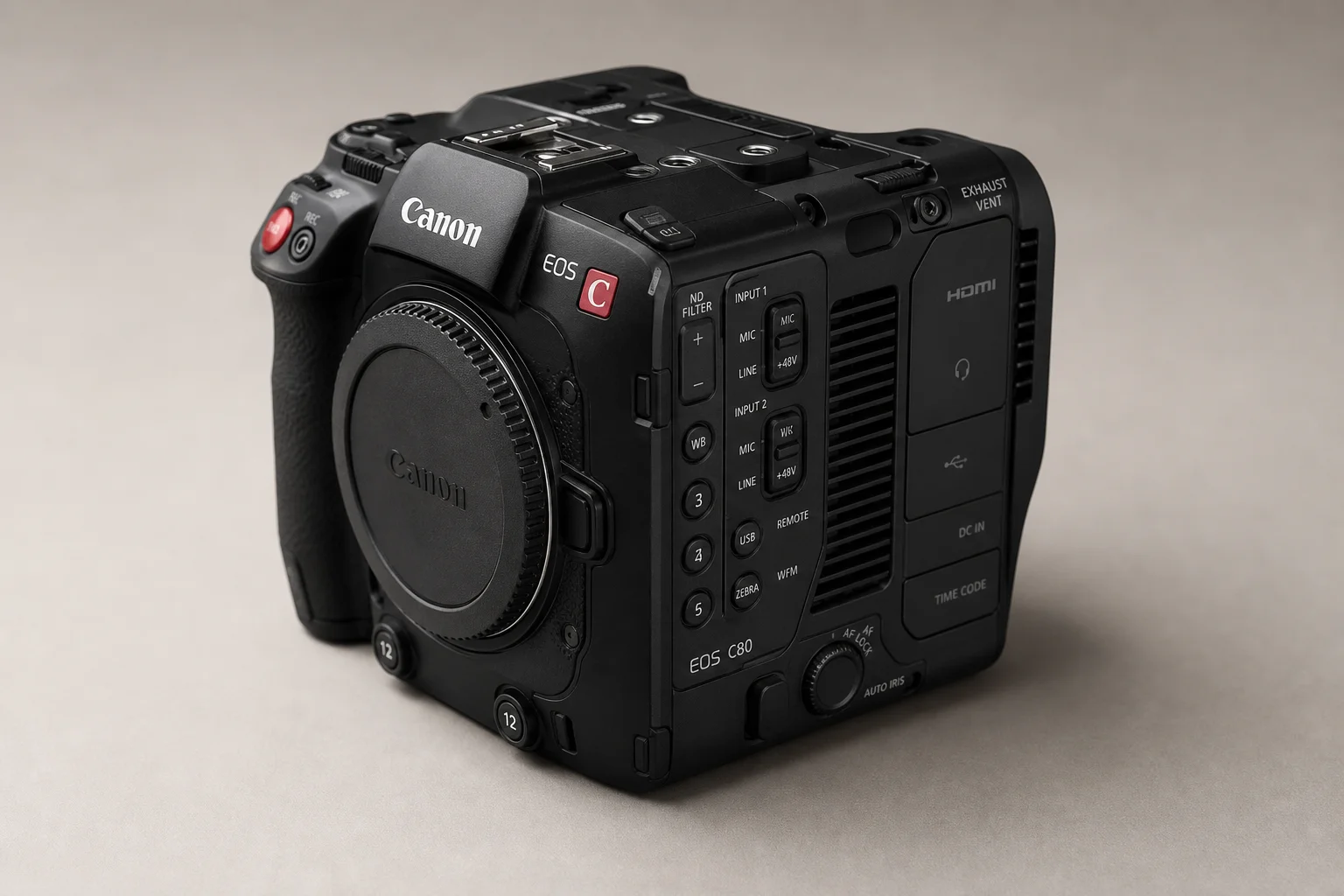
Canon EOS C80 Cinema Camera Review: Full-Frame 6K Workhorse for Professional Video
The Canon EOS C80 brings full-frame 6K cinema capability, built-in ND filters, and dual SD card recording to a compact form factor. A capable alternative to the C70 and junior sibling to the C400.
Action Cameras
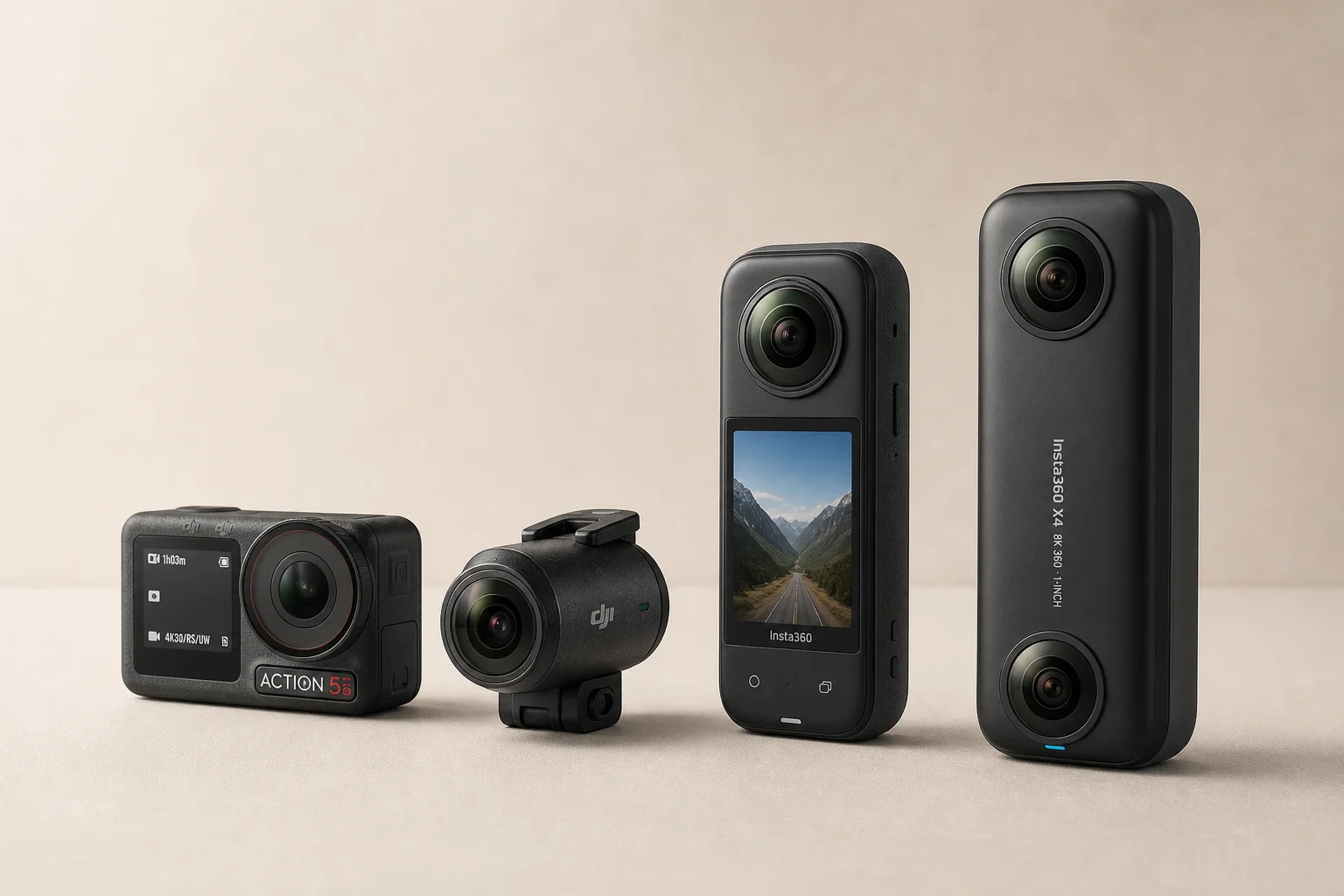
Best Action Cameras: A Practical Guide to Choosing the Right Style for Your Needs
Four key questions to match the right action camera to your specific filming scenario, from social media to professional video work.
Camera Gear
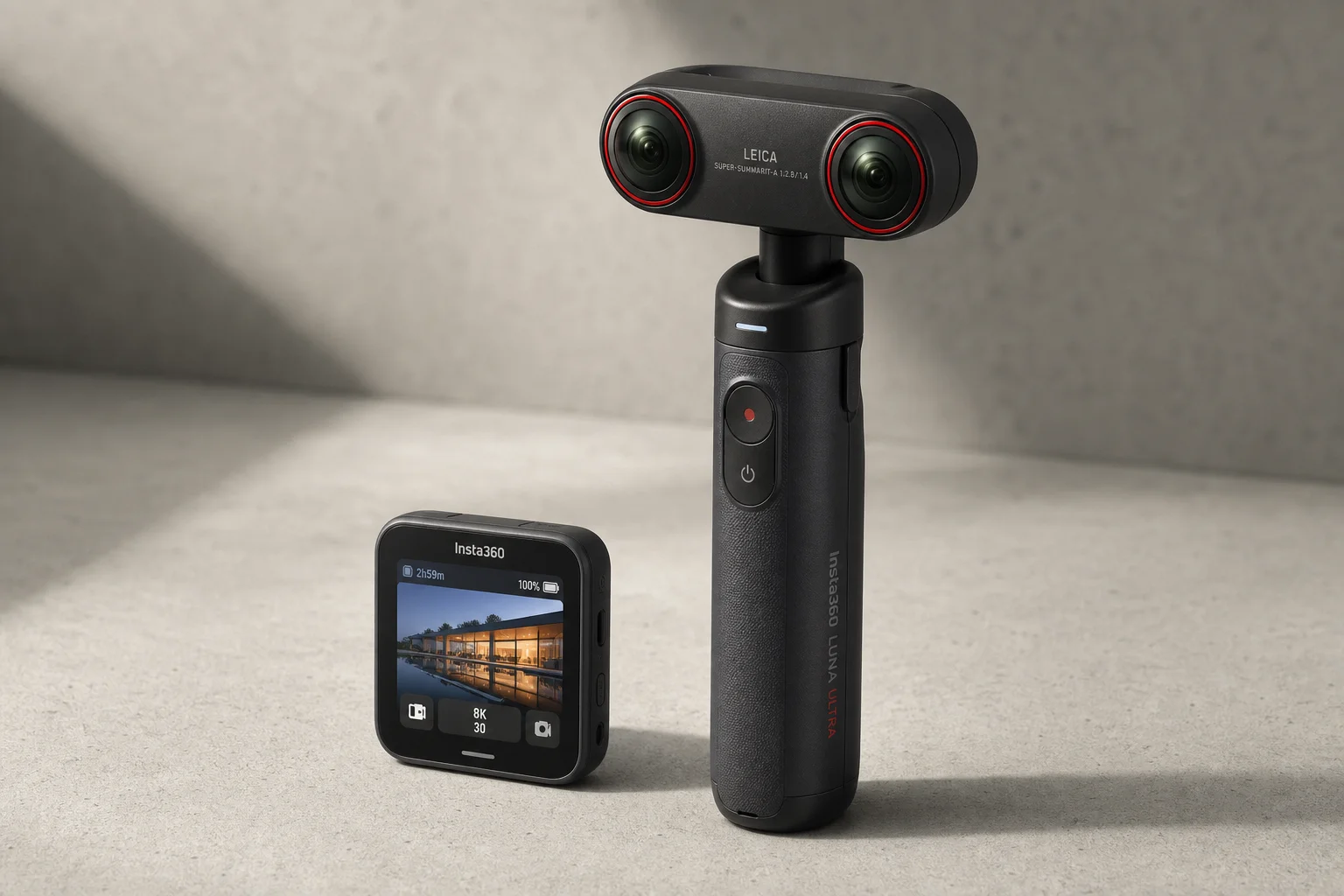
Insta360 Luna Ultra Review: A Dual-Camera Gimbal Camera with Leica Optics
The Insta360 Luna Ultra brings dual cameras, a detachable screen, and Leica-designed optics to handheld gimbal cinematography. A detailed look at its strengths, limitations, and real-world performance.