Coffee Equipment
Coffee Grinder Comparison: Budget vs Mid-Range vs Professional-Grade
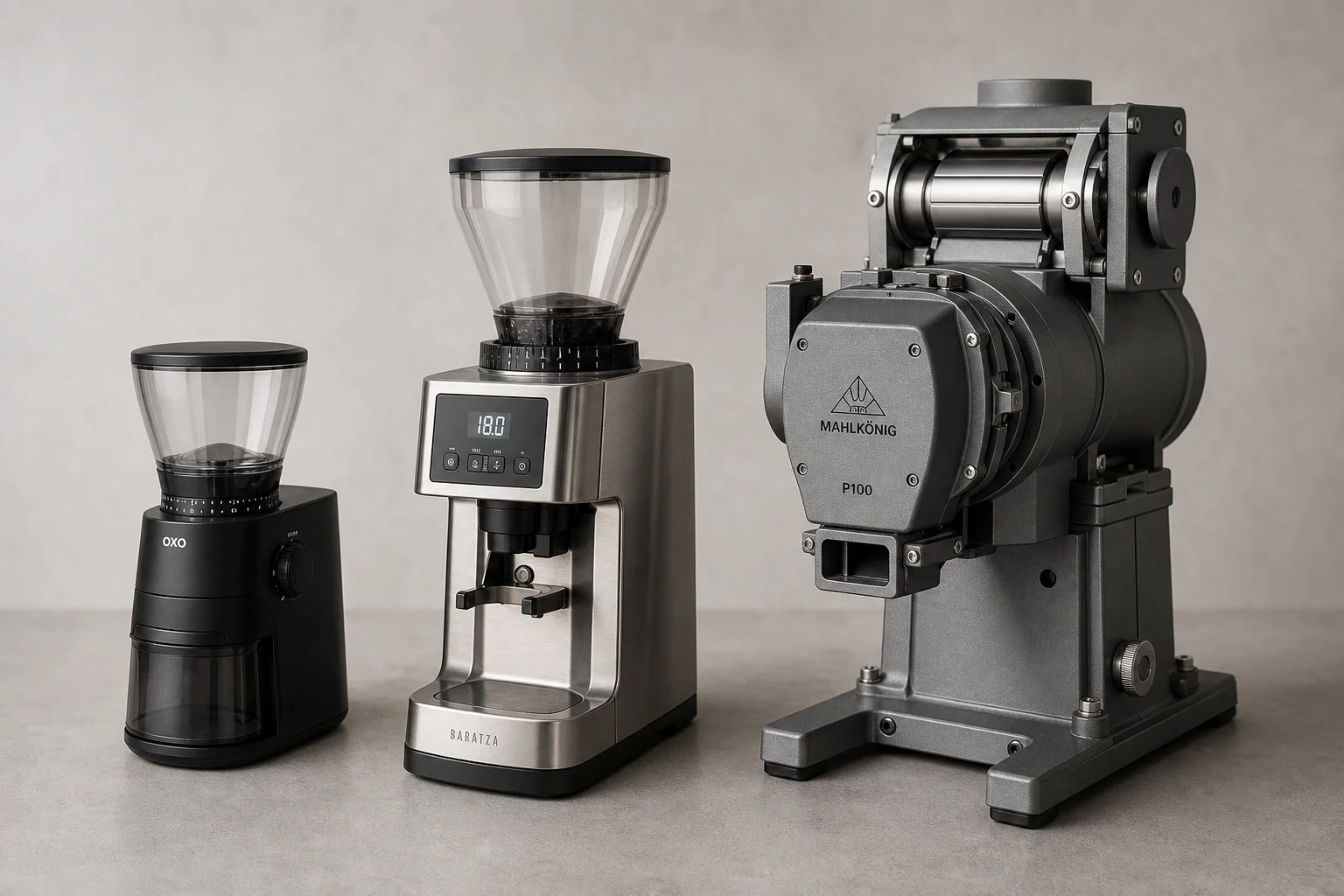
Testing a $50 grinder against a $500 model and a $500,000 commercial roller mill reveals how grind consistency directly impacts cup quality and what diminishing returns really look like.
Introduction
Coffee grinder quality has a direct and measurable impact on cup quality, but the relationship between price and performance follows a clear pattern of diminishing returns. Testing three grinders across a wide price spectrum reveals where the real value lies and where spending more delivers only marginal gains.
Understanding Burr Types
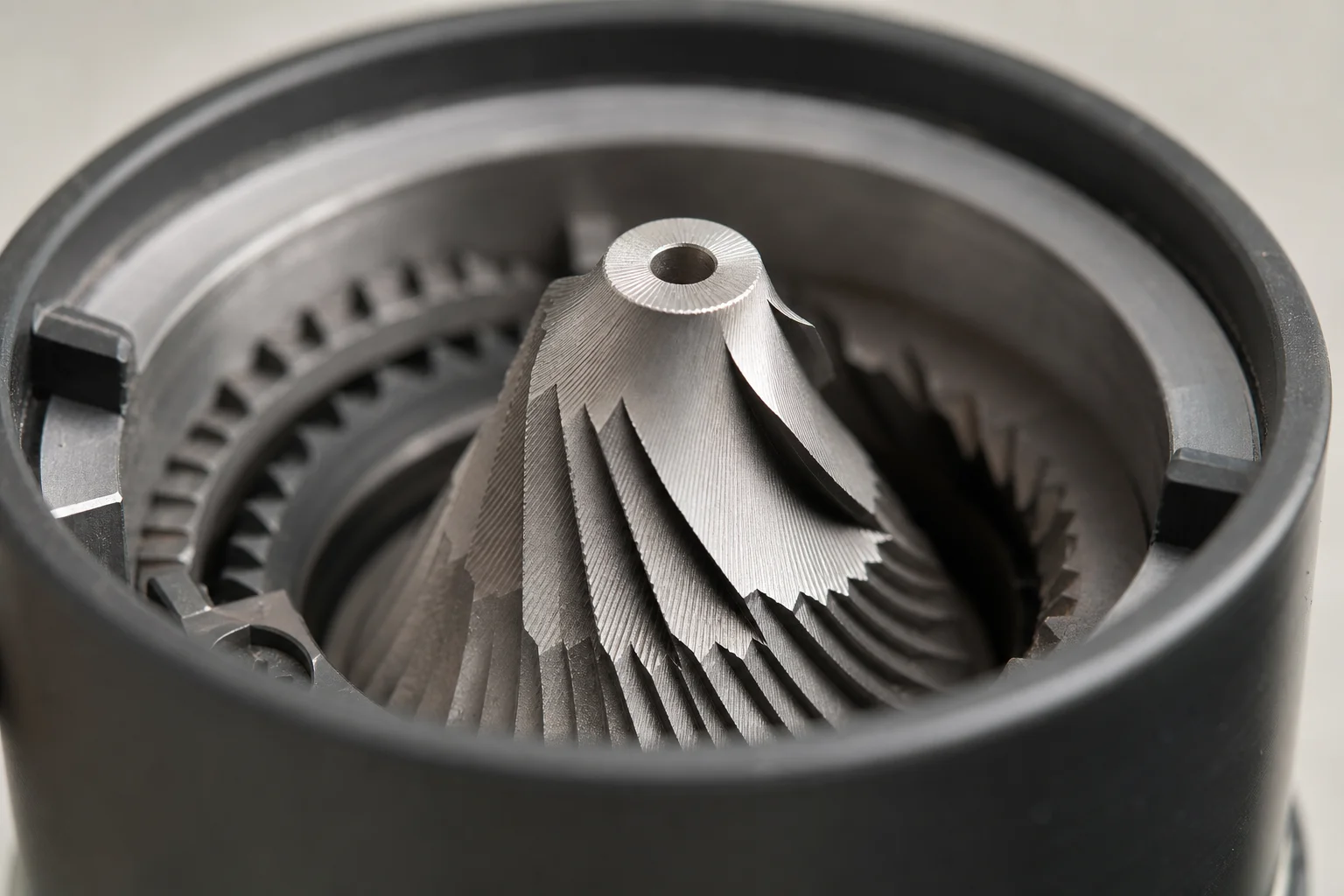
The mechanism inside a grinder determines how consistently it breaks down coffee beans. Budget grinders typically use conical burr sets, where a cone-shaped central burr rotates against a stationary outer burr. This design produces a lot of cutting surface relative to motor power, making it efficient for cheap construction. However, conical burrs generate a wide range of particle sizes, from fine dust to larger chunks, because the cutting action varies depending on where the bean sits in the burr chamber.
Mid-range and professional grinders often favour flat burr sets, which consist of two flat disks with cutting teeth that spin against each other. Beans are fed between the disks and cut as they pass through. Flat burrs produce a more uniform particle size distribution because the cutting action is more consistent across the grinding chamber. Many coffee professionals prefer this approach for its ability to produce a tighter, more predictable grind profile.
The Budget Grinder: Sboly Conical Burr
The Sboly grinder costs around $50 and represents the entry-level option. It features a conical burr set and operates at relatively high RPMs to compensate for the lower cutting efficiency. During testing, the motor audibly struggled under load, producing a concerning burning smell that suggested thermal stress.
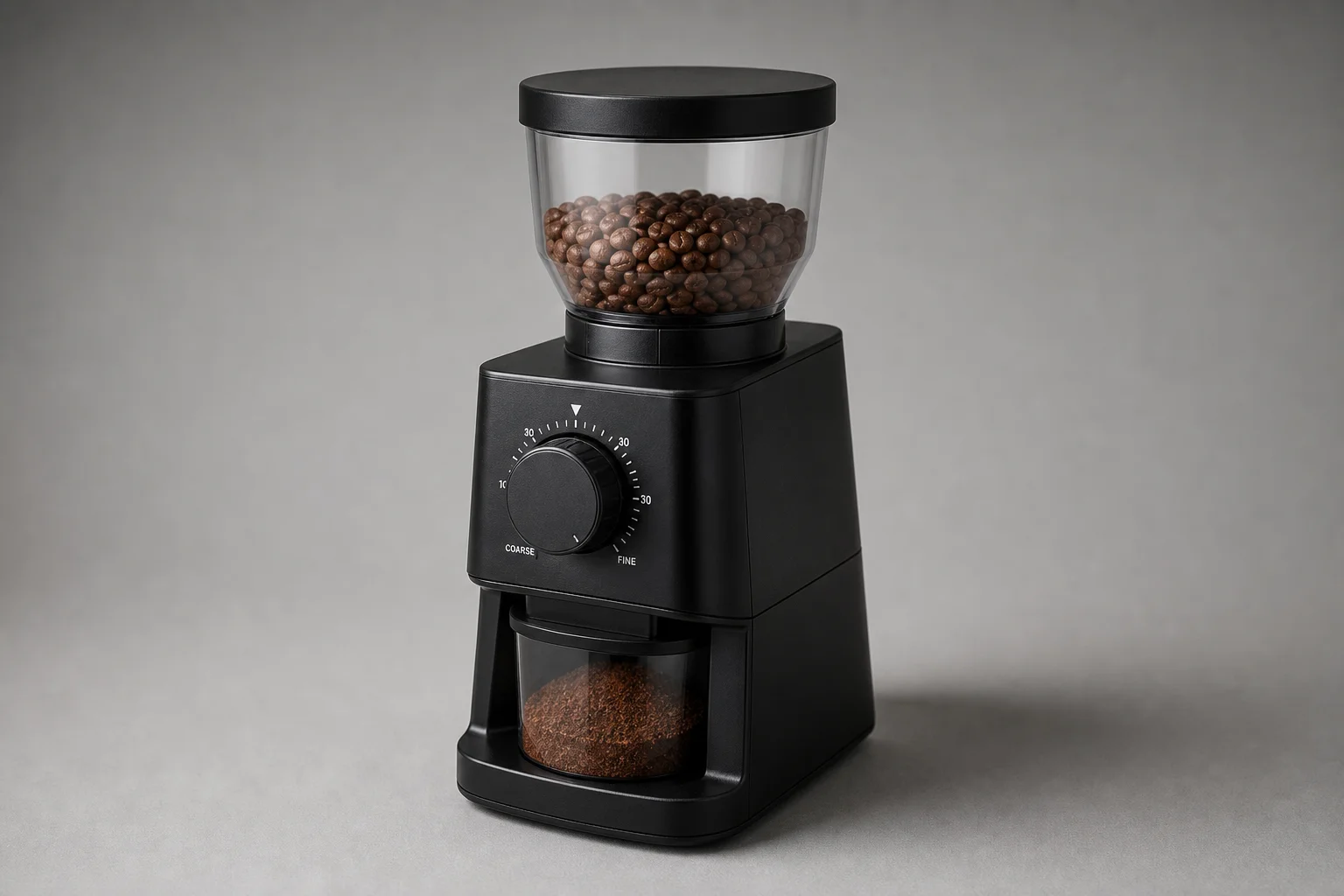
When brewed as a pour-over, coffee from the Sboly produced a harsh, bitter, and astringent cup with minimal sweetness. The flavour profile was unpleasant and left an undesirable finish. This poor taste directly correlates with the grind quality: the conical burrs were producing excessive fines (very small particles) and oversized chunks, both of which extract poorly and create off-flavours.
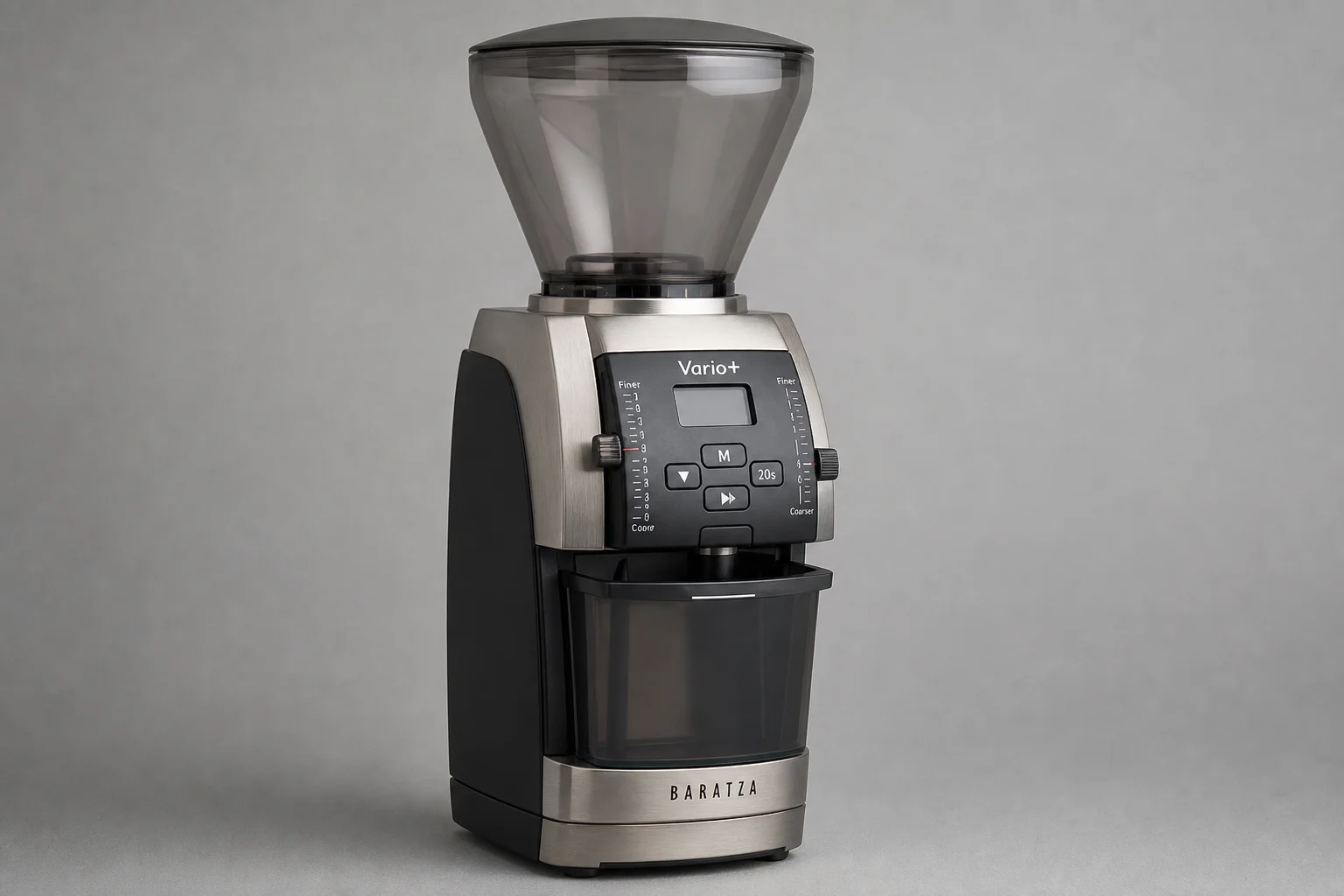
The Mid-Range Advantage: Baratza Vario+
The Baratza Vario+ costs approximately $500 and represents a significant step up. This grinder uses flat burrs and is capable of grinding for both espresso and filter coffee, though it requires a much coarser setting to match the particle size of the budget grinder. The motor runs smoothly and quietly, and the build quality is noticeably superior.
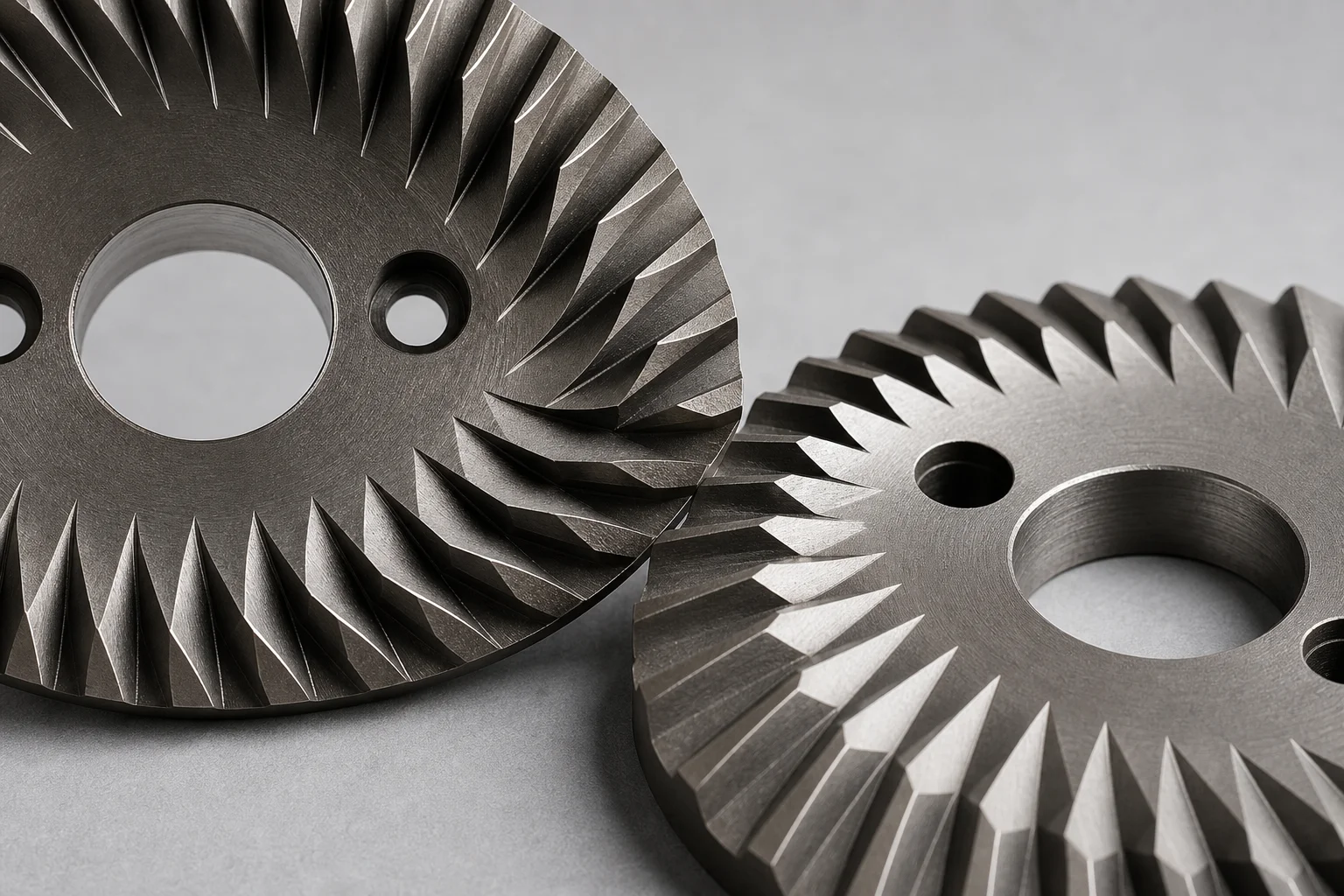
The coffee brewed from the Baratza showed a dramatic improvement in cup quality. The sweetness increased substantially, bitterness decreased, and the overall flavour became significantly more pleasant. This is not a marginal improvement; it is a night-and-day difference that any coffee drinker would immediately notice. The flat burrs produce a more uniform particle size distribution, which means more of the coffee extracts at the intended rate, yielding cleaner, sweeter flavours.
Measuring Grind Distribution
To move beyond subjective taste assessment, a laser particle size analyzer was used to measure the actual distribution of particles produced by each grinder. This device uses lasers to determine how many particles fall into each size category, providing objective data on grind consistency.
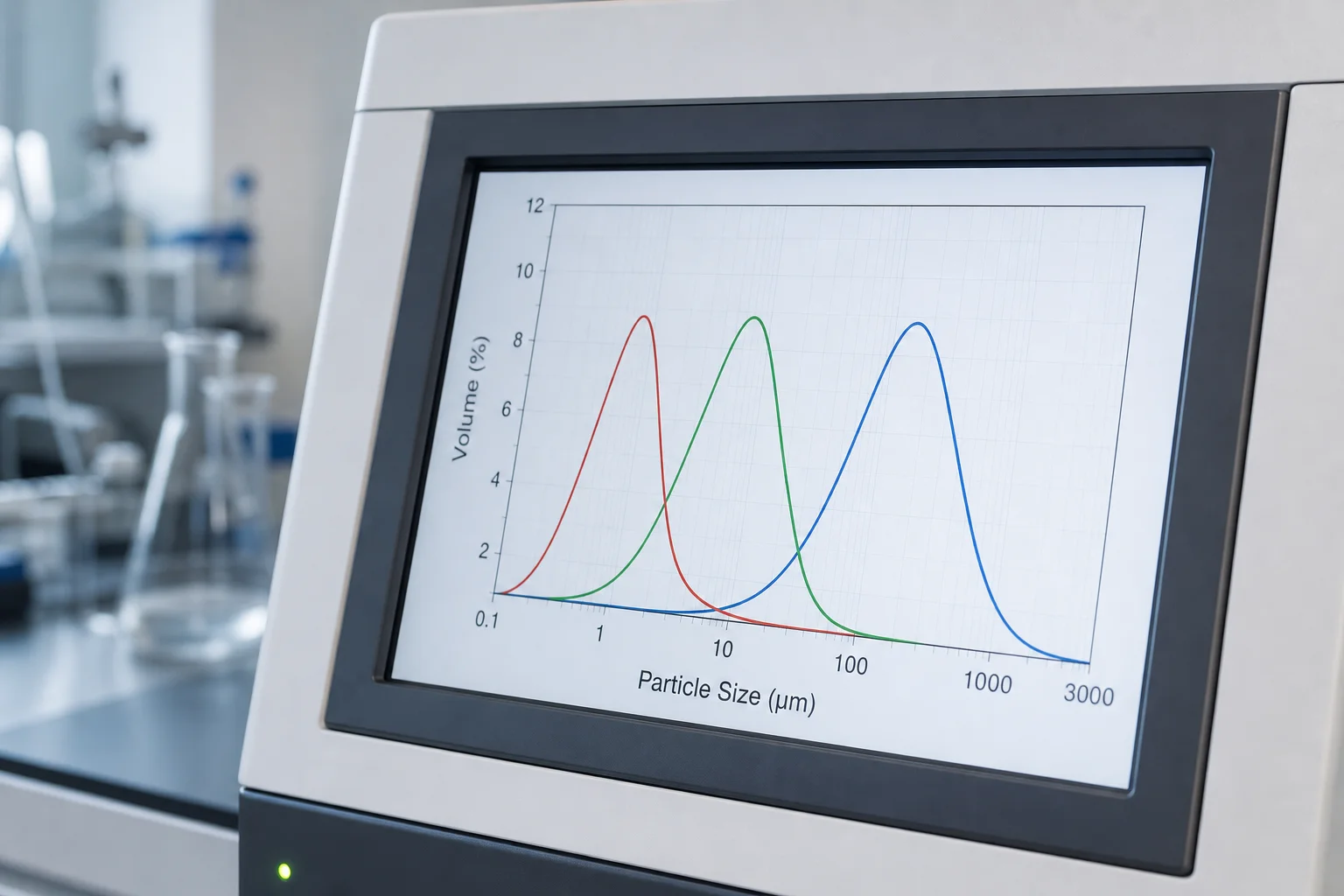
The volume density chart clearly showed that the budget grinder produced a wide, flat distribution with a low peak, meaning particles were scattered across many sizes with few hitting the target size. The Baratza produced a much taller, narrower peak, indicating that most particles clustered around the desired size. The professional grinder produced the sharpest, highest peak, showing the most consistent particle distribution.
The surface area distribution chart revealed an even more striking difference: the budget grinder generated far more fines (very small particles) than either of the other two. These fines over-extract and create harsh, bitter flavours. The Baratza produced significantly fewer fines, while the professional grinder showed the lowest fine content of all three.
Professional-Grade Roller Mills
The Cometeer commercial grinder costs $500,000 and uses roller mills instead of burrs. Rather than rotating burrs cutting against each other, roller mills consist of long cylindrical rollers that rotate toward each other, with coffee fed between them. Multiple stages of rollers allow precise control over the grinding process, and each stage can be adjusted independently.
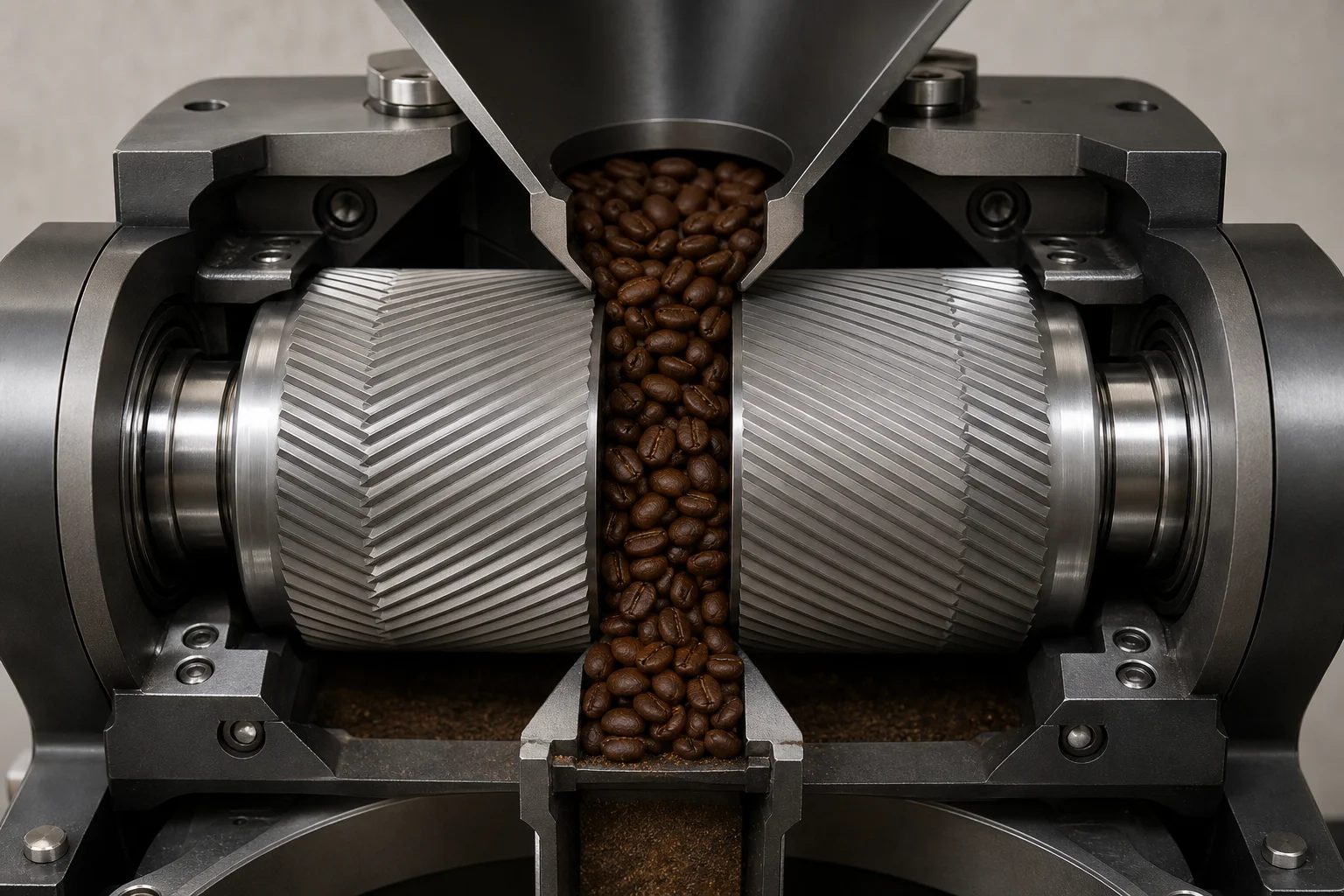
The coffee from the professional grinder tasted noticeably cleaner and sweeter than the Baratza, with a lighter body and no unpleasant finish. The particle distribution was the most uniform of all three, with the sharpest peak and the fewest fines.
The real advantage of a roller mill becomes apparent in throughput and adjustability. The professional grinder can process 30 kilograms of coffee per minute, compared to roughly 90 grams per minute for the budget grinder and 75 grams per minute for the Baratza. More importantly, roller mills allow operators to adjust the shape of the distribution curve itself, not just shift the peak up or down. By adjusting individual roller positions, the grinder can be tuned to produce different particle distributions for different brewing methods or coffee profiles, effectively making one grinder behave like multiple grinders.
The Value Proposition
The data reveals a clear pattern of diminishing returns. Spending $50 on a grinder is better than buying pre-ground coffee, but the cup quality is poor. Jumping to $500 delivers a dramatic improvement in taste and consistency that any coffee drinker would appreciate. The difference between $500 and $500,000 is measurable and real, but it is primarily valuable for commercial operations grinding at scale.
For home brewers, the Baratza Vario+ represents the practical sweet spot. The improvement from $50 to $500 is substantial and worth the investment. Spending significantly more yields only marginal gains in cup quality, and the professional grinder’s advantages in throughput and adjustability are irrelevant for household use.
Conclusion
Grind consistency directly determines cup quality, and this relationship is visible both in taste and in objective particle size data. A budget grinder produces inconsistent particles that extract poorly, while a mid-range flat burr grinder produces a much more uniform distribution that extracts cleanly and sweetly. Professional roller mills offer even greater precision and adjustability, but for home brewing, the value proposition strongly favours the mid-range option.
Further reading
Related Reviews
Coffee Equipment
9Barista Espresso Machine Review: Stovetop Espresso for Single-Cup Enthusiasts
A cleverly engineered stovetop espresso maker that generates nine bars of pressure without electricity. Excellent coffee quality, but requires patience and suits solo drinkers only.
Coffee Equipment
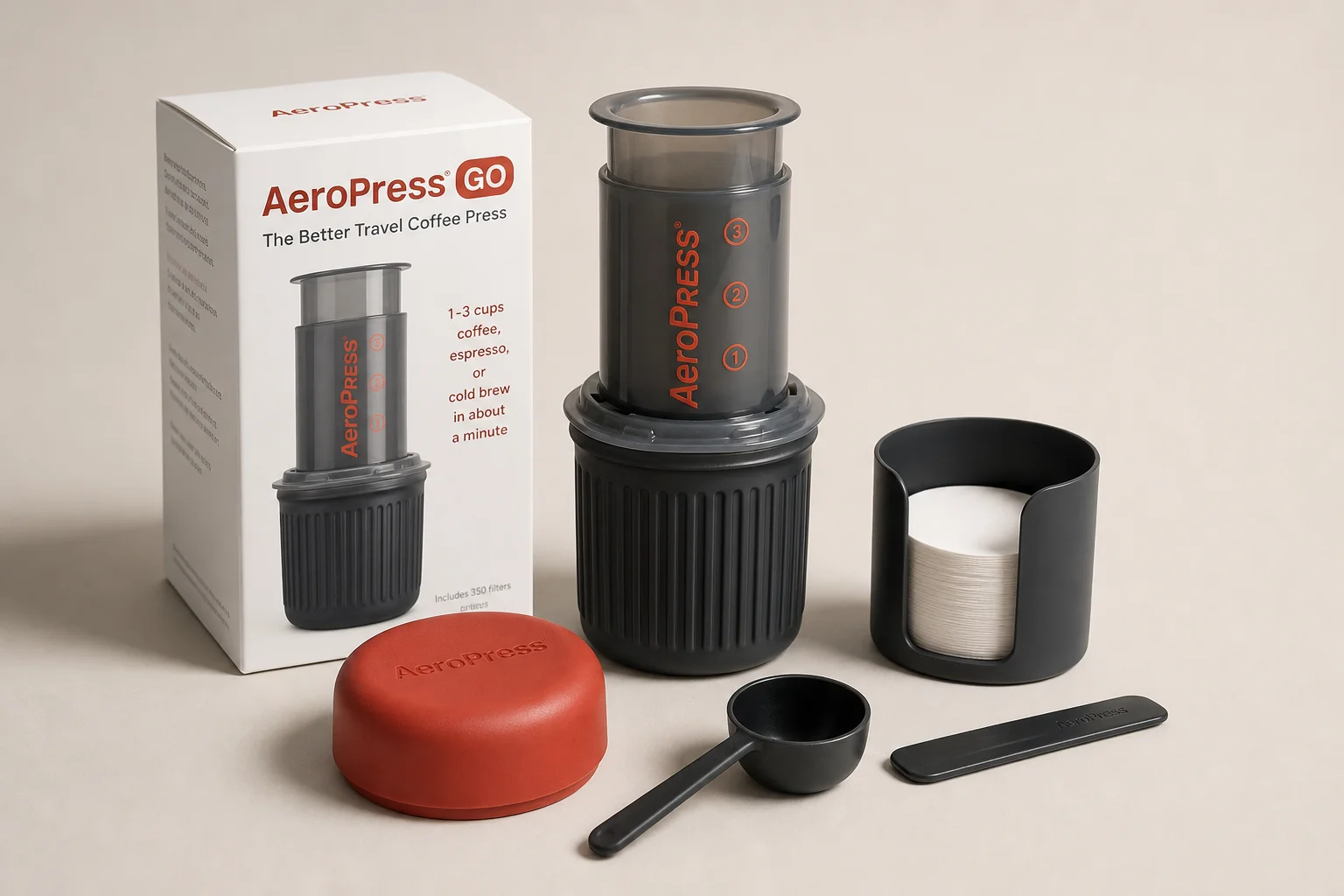
Aeropress Go Review: A Compact Travel Brewer That Solves One Specific Problem
The Aeropress Go shrinks the original design and adds an integrated cup, but it may not address the travel challenges most coffee enthusiasts actually face.
Coffee Equipment
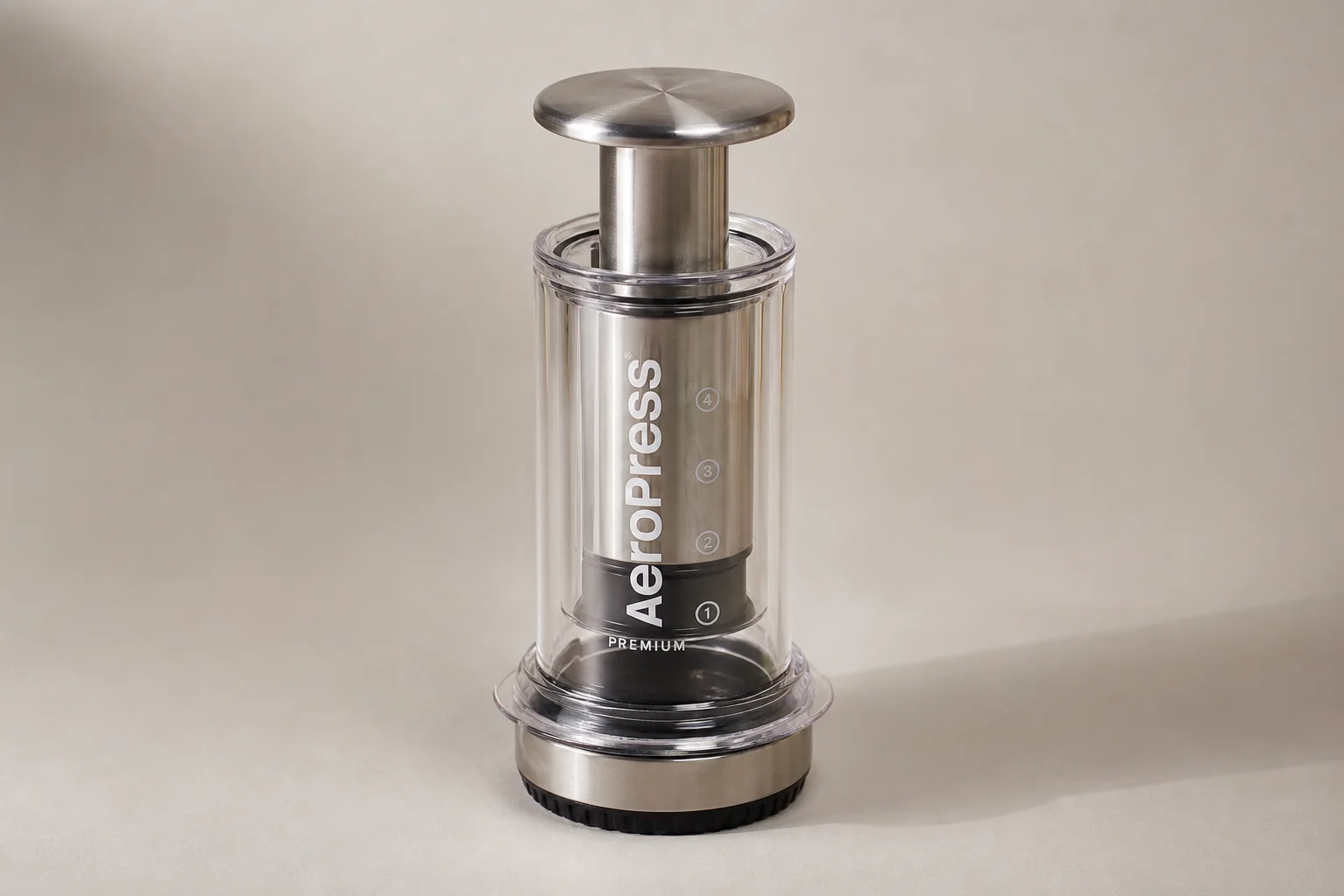
AeroPress Premium Review: Premium Materials, Practical Trade-offs
The AeroPress Premium brings glass and metal construction to a beloved brewer, but trades portability and durability for a more refined feel. Here's what changes in the cup and what matters before you buy.