Coffee Equipment
Coffee Scales Explained: What You Actually Need to Know
A practical guide to coffee scales across all price points, from budget models to premium options. Learn what features matter, what doesn't, and whether expensive scales are worth the investment.
Introduction
Coffee scales have become a category unto themselves. What was once a simple tool has exploded into a market with dozens of manufacturers, price points ranging from budget to premium, and a bewildering array of features. The question isn’t whether scales exist—it’s whether the expensive ones justify their cost, and whether you actually need to upgrade from what you already own.
This guide walks through what matters in coffee scales, what doesn’t, and how to think about value across the full price spectrum.
How Coffee Scales Work
Every coffee scale, regardless of price, works on the same fundamental principle. Inside is a load cell—a piece of metal with attached wires that deforms under weight. A voltage passes across this metal, and as it distorts, the electrical resistance changes. By correlating that resistance change to a specific weight, the scale’s electronics calculate what you’re weighing.
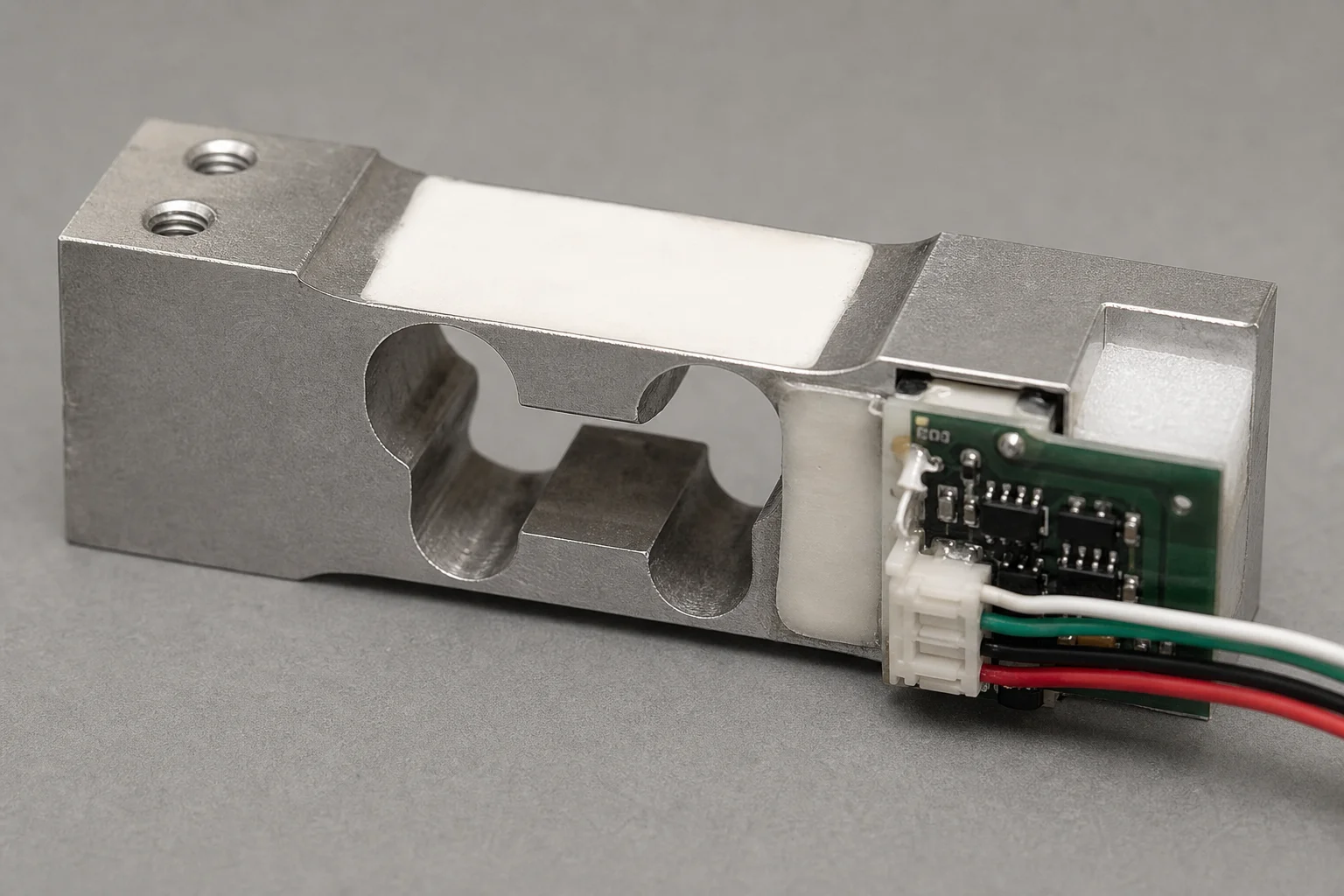
The technology is identical between a £15 scale and a £250 one. What differs is how well the load cell is mounted, isolated from variables like temperature fluctuations, and how the electronics process the signal. Better scales may use superior thermal insulation or more sophisticated mounting to reduce noise in the measurement, but the core mechanism is the same.
Temperature affects all load cells. This is why many coffee scales include rubber mats—to insulate the cell from heat. If a scale gets too hot, it will give different readings for the same weight, which is why proper isolation matters in a coffee environment.
Accuracy: What the Numbers Really Tell You
Testing 15 different scales with a 100-gram calibration weight revealed that roughly half reported exactly 100.0 grams every single time. The others occasionally varied by 0.1 grams, which is within the manufacturer’s stated tolerance for most models.
One notable exception was the Fellow Tally Pro, which consistently read 100.2 or 100.3 grams even after calibration. Fellow sent a replacement unit, but it exhibited the same behaviour. The cause remains unexplained, but the practical impact is negligible—such small variations don’t meaningfully affect how coffee brews.
The key difference is that cheaper scales often lack a calibration function at all. Everything else in this price range includes one, allowing you to use a calibration weight to ensure accuracy. If accuracy matters to you, this is a basic feature to verify.
Build Quality and Design Choices
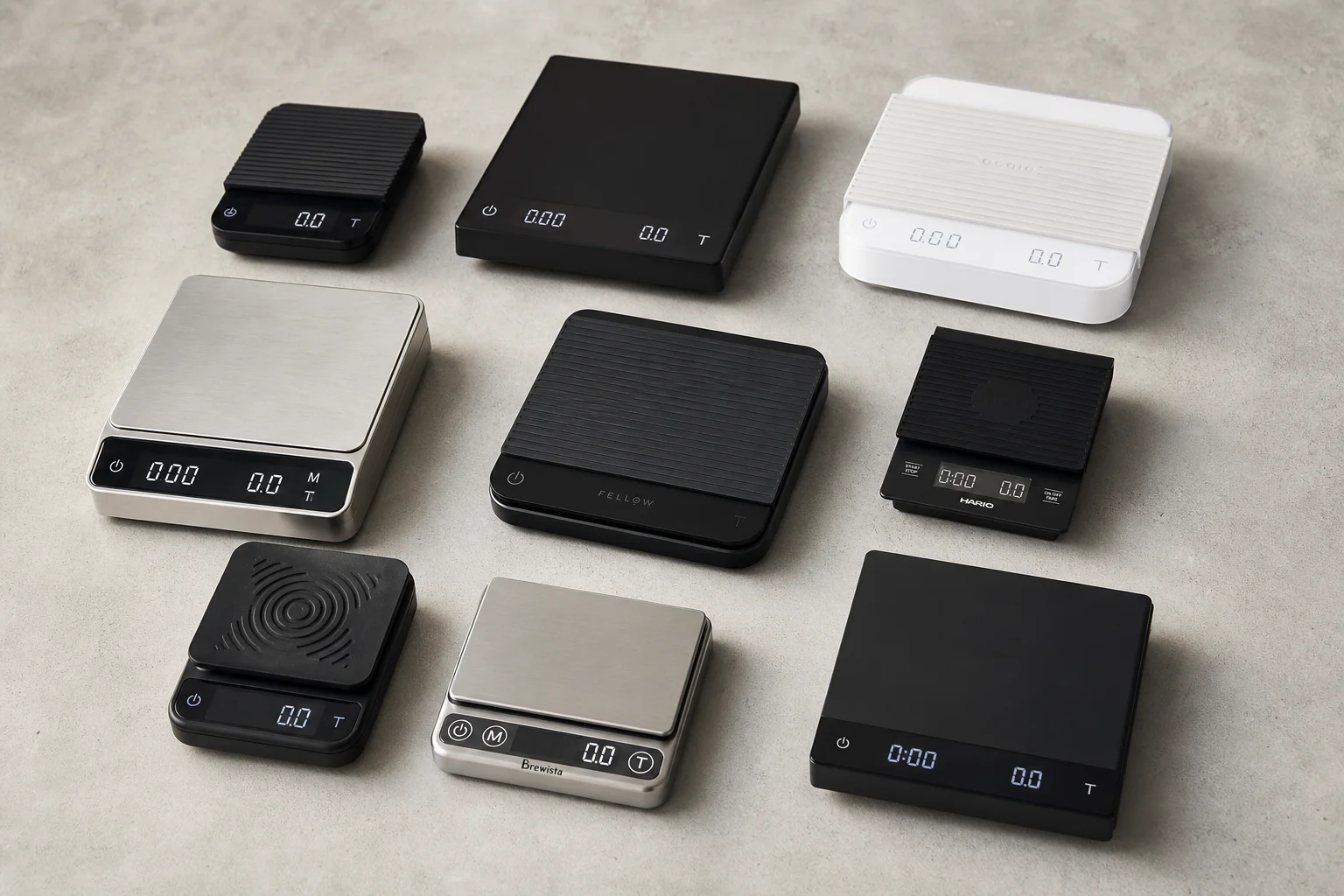
Build quality is surprisingly consistent across price points. A £15 scale feels cheap—large, plasticky buttons, minimal refinement. But jump to £40, and you find scales like the Maestri House that feel substantially nicer: heavier, better-finished, more premium in hand.
The Brewista scales, at £45, undercut this value proposition. For only £5 more than the Maestri, they feel noticeably cheaper—wonky weigh plates, poor button feel, and overall assembly quality that doesn’t match the price. This is a rare misstep in the category.
Weight varies significantly. The Maestri House and Acaia Lunar both feel appropriately weighted for a coffee scale—around 280-290 grams. The Bookoo Themis Ultra, by contrast, weighs 430 grams, which feels unnecessarily heavy every time you pick it up. Whether that’s satisfying or just odd depends on personal preference.
Most scales use capacitive touch buttons, which can be triggered by liquid spray from a naked portafilter. A few, like the Bookoo, offer an “ignore accidental presses” function, though accessing it requires an app—a downside in itself. Physical buttons exist on only three models, and two of them feel cheap. The Fellow is the exception, with tactile buttons that feel genuinely nice to use.
Responsiveness and Real-World Performance
Responsiveness involves two factors: how quickly the display refreshes and how fast it settles on an accurate reading.
Using a high-speed camera at 120 frames per second, we measured the time from the last coffee bean landing until the scale displayed the final weight. Most scales performed well, with one clear outlier: the Sage Breville had a very slow refresh rate and took noticeably longer to calculate and display numbers.
The Acaia and Varia scales, which display to 0.01 grams, took longer to settle than 0.1-gram scales. This is expected—higher accuracy requires filtering out more noise from the signal. A proper lab balance at this accuracy level uses shields and sliding doors to prevent air movement from affecting readings. These scales simply tune the noise digitally, which takes time.
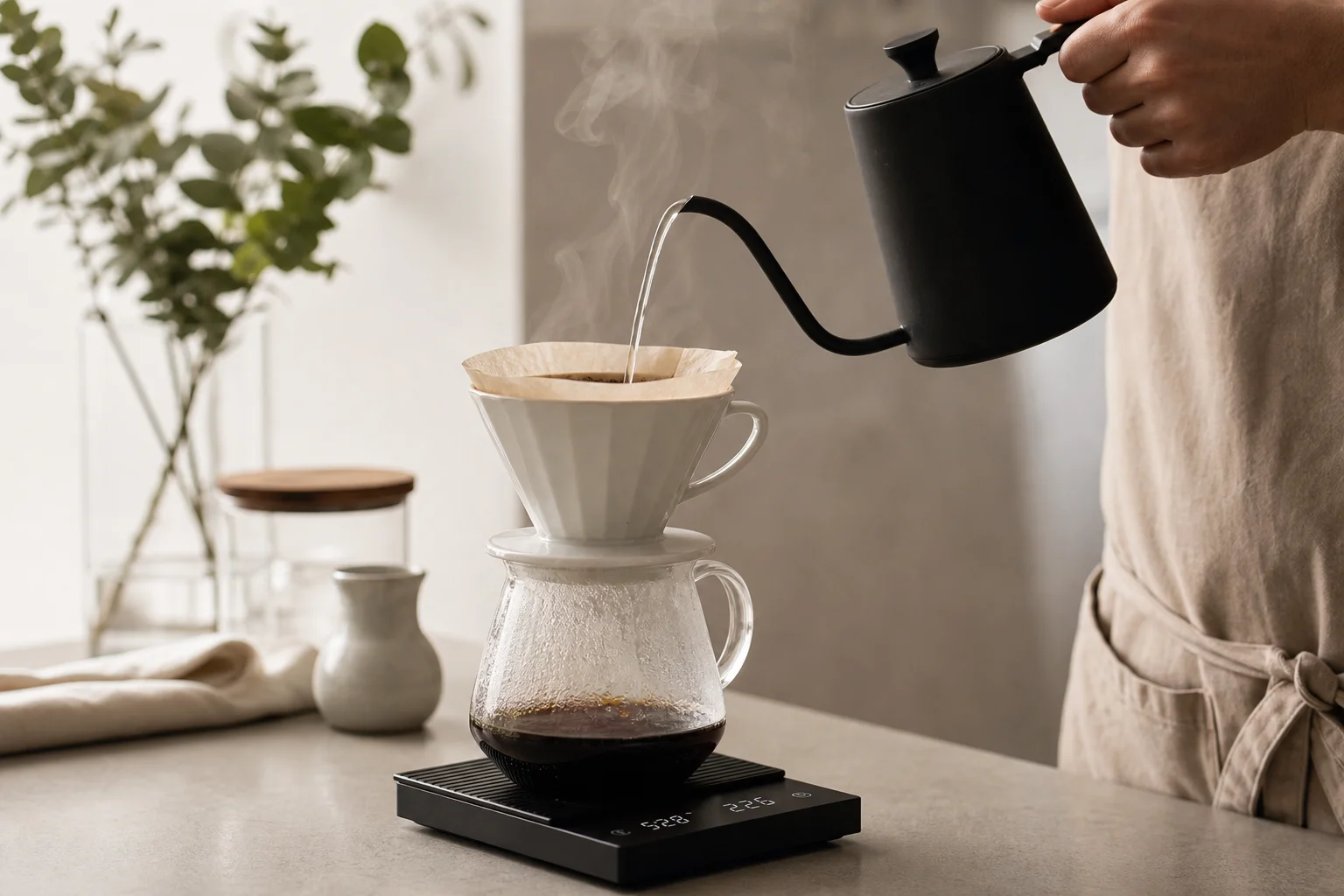
In a more practical test, we poured 100 grams of water onto each scale as accurately as possible, mimicking pour-over brewing. The average across all scales was 101.47 grams, showing that with practice, accurate pouring is achievable.
The Sage Breville again struggled, making it difficult to hit the target weight. The Fellow and Varia, with very high refresh rates, created an almost dizzying experience—too many numbers changing too quickly. Everything else was intuitive enough that after one slightly-off pour, compensation was straightforward.
For most people, responsiveness is not a meaningful differentiator. The exception is the Sage Breville, which genuinely lags behind the rest.
User Interface and Feature Creep
Coffee scales have accumulated features that most users don’t need. Smart modes attempt to automate tasks—starting timers when weight is detected, auto-taring, calculating water ratios. These sound useful but often create more friction than value. If you’re timing an espresso shot, you probably want to start the timer when water contacts coffee, not when the scale detects weight. If you’re brewing pour-over, you likely use a recipe from your roaster or online source, not the scale’s built-in calculator.
The real frustration is that accessing basic functions sometimes requires cycling through modes you never use. Accidentally pressing a button can trap you in a menu, forcing you to cycle back to the simple weight-and-time display you actually want.
Bluetooth connectivity exists on some models and is genuinely useful if you own a Bluetooth-enabled espresso machine that can stop your shot based on scale input. For pour-over or manual espresso, it adds cost without benefit.
One quirk affects seven scales: they have both a physical on-off switch and a capacitive on button. The idea is to prevent accidental activation in a bag while traveling. In practice, this creates confusion. You press the button to turn it on, nothing happens, and you have to remember to flip the physical switch first. It’s a frustrating experience if you share scales with others.
Standardization is sorely lacking. Most scales use the on button to tare, but not all. Some use T for tare, others use T for time. Turning off a scale isn’t always intuitive—sometimes it’s a long press, sometimes a double tap. Reading the manual shouldn’t be necessary for basic operation.
Single-Use vs. Multi-Use Scales
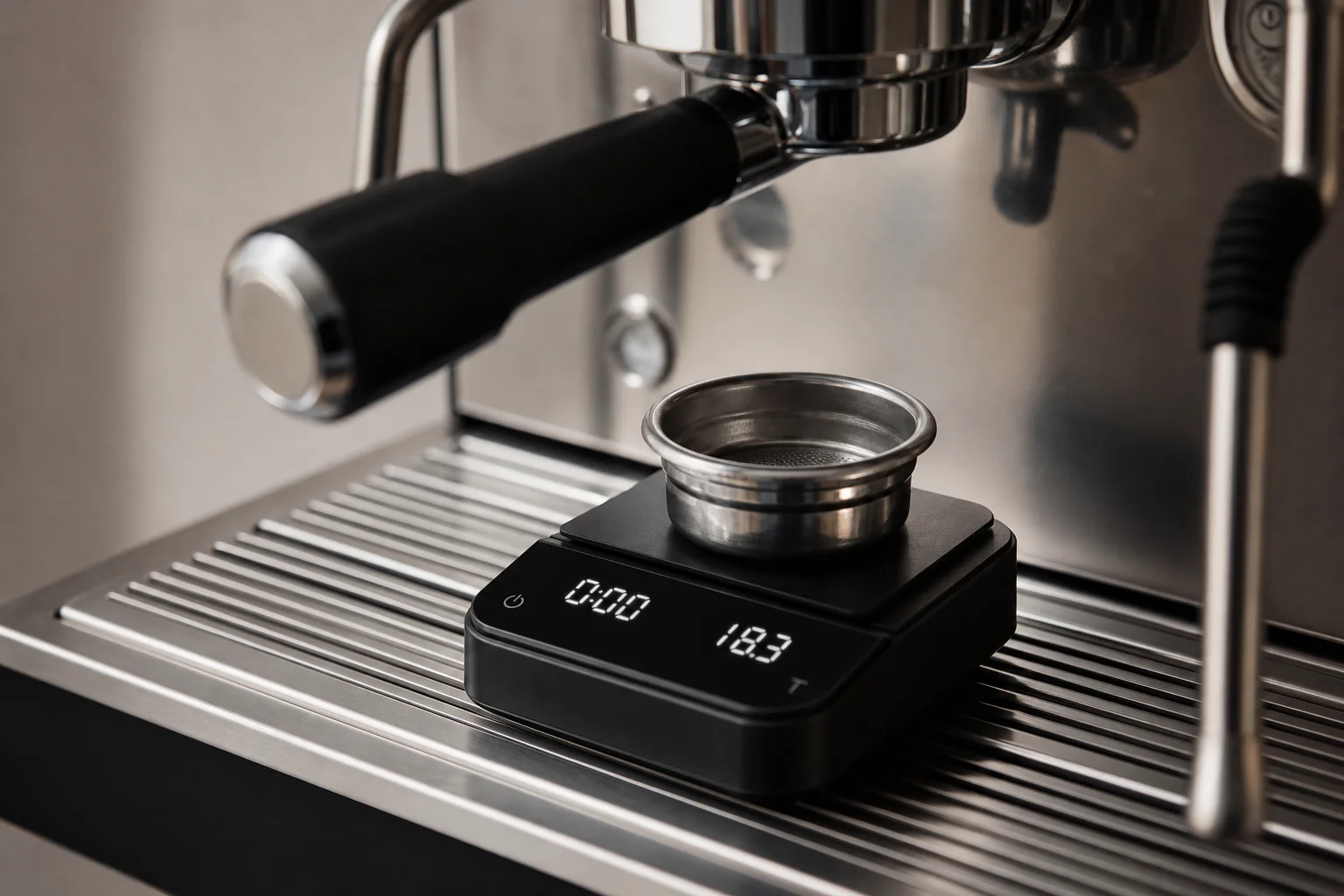
Some scales are designed specifically for espresso, others for pour-over. The Maestri House and Timemore work well for both. The Fellow Tally Pro is too large for an espresso machine’s drip tray. The Acaia is compact enough for espresso but overkill for pour-over.
If you brew multiple ways, you might end up with two scales. The LayBird MagAttach attempts to solve this with a removable tray—remove it for espresso, add it for pour-over. The concept is sound, but the tray detaches too easily, and it doesn’t always align perfectly. A twist-lock mechanism would be better.
The Beep Question
Ten of the 15 scales tested include beeps for button presses. Since most use capacitive buttons, you can’t feel tactile feedback, so a beep confirms your input. The problem is that beep quality varies wildly, and many are unpleasant—shrill, tinny, or muffled. Some scales let you adjust beep volume in an app, which is itself a red flag. For a £40+ device, the beep should be pleasant by default.
Final Recommendations and Value
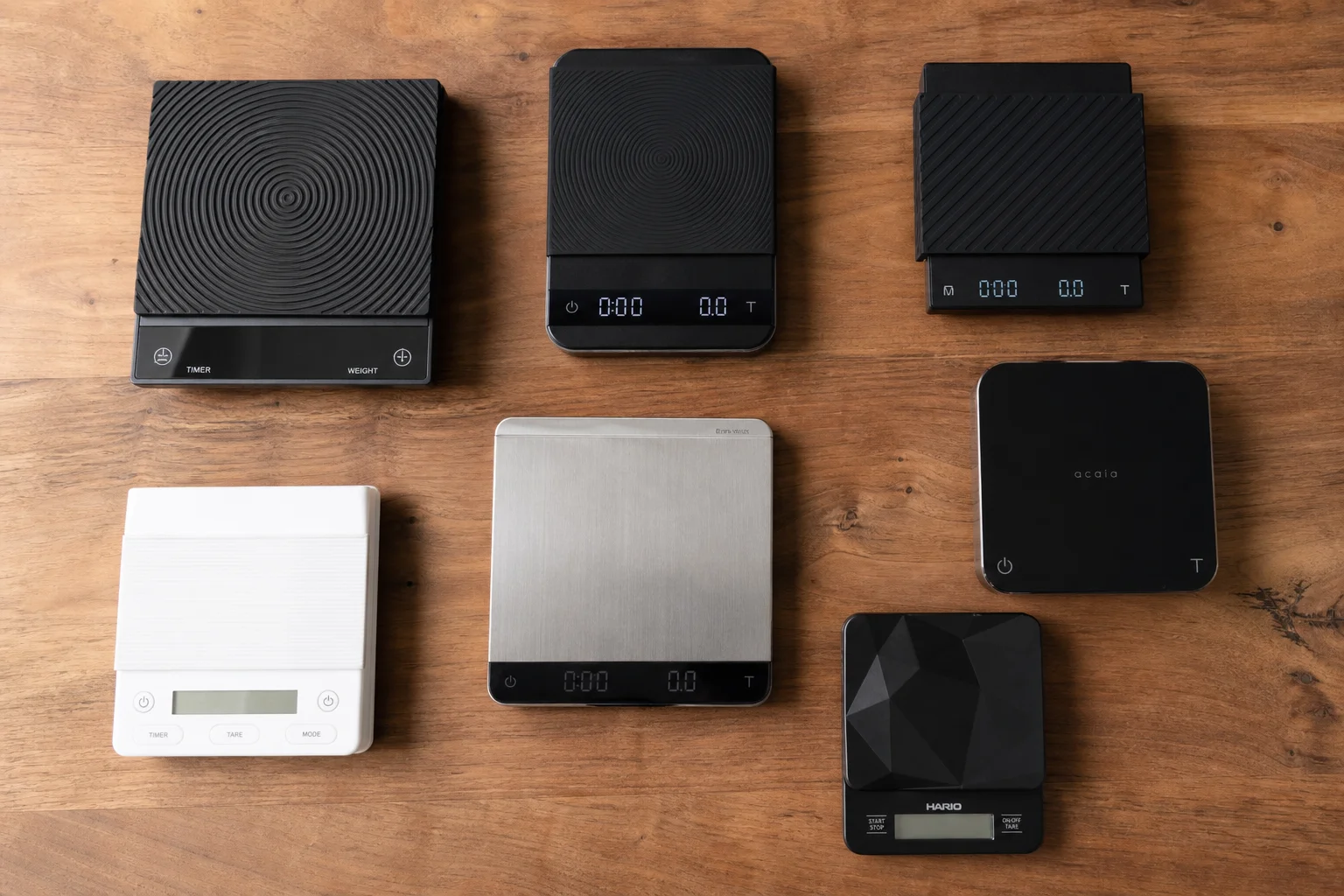
In the £35-£100 range, the decision comes down to intended use. For espresso-only brewing, prioritize a compact scale that fits your machine’s drip tray, feels robust, and has good manufacturer support. Accuracy and features are not meaningful differentiators at this price.
The Maestri House (£40) and Timemore Black Mirror Nano (£87) are both excellent. The MH-3Bomber and Wacaco Exagram Pro are solid choices. The Normcore Pocket scales and Hario Polaris are reliable. You can confidently brew on any of these without feeling like you’re missing out.
The Sage Breville (£15) is the only scale we’d hesitate to recommend. It’s slow, lacks calibration, and doesn’t offer the value of slightly pricier alternatives.
At the high end, the conversation changes. The Acaia Lunar at $250 costs as much as a good espresso grinder or a functional entry-level espresso machine. Unless $250 is genuinely inconsequential to your budget, it’s hard to justify. The performance is excellent, but the price-to-value ratio is extreme.
The Fellow Tally Pro at $200 is similarly expensive for a single-use scale. If you bake or cook with precision and want a fancy kitchen scale that happens to work for coffee, it’s the closest thing here to a multi-purpose device. But you’re paying for aesthetics and build quality, not essential function.
The honest truth is this: you are not missing out if you don’t spend significant money on a scale. A £40 scale will brew coffee just as well as a £250 one. The expensive models offer refinement, better build quality, and sometimes useful features like Bluetooth. But refinement doesn’t make better coffee. Reliability does, and that exists at every price point.
If you’re happy with your current scale, upgrade only if a specific feature genuinely solves a problem you have. Otherwise, invest that money in better coffee beans or a grinder upgrade. You’ll notice the difference far more.
Conclusion
The coffee scale market has matured into a category with real choice. Innovation is happening, and manufacturers are experimenting with new approaches. But not all innovation translates to value. More modes, more automation, and higher prices don’t necessarily mean better coffee.
The reassurance is simple: if you’re not spending crazy money on scales, you’re not missing out. A reliable, accurate scale at any reasonable price point will serve you well for years. Choose based on your brewing style, prefer models with good build quality and intuitive controls, and don’t feel pressured by premium pricing. Your coffee will thank you far more for fresh beans and a good grinder than for an expensive scale.
Product link
View more details for Maestri House Scales
This product is mentioned in the review. Check the specifications, options, and compatibility before buying.
View more details for Maestri House ScalesFurther reading
Related Reviews
Coffee Equipment
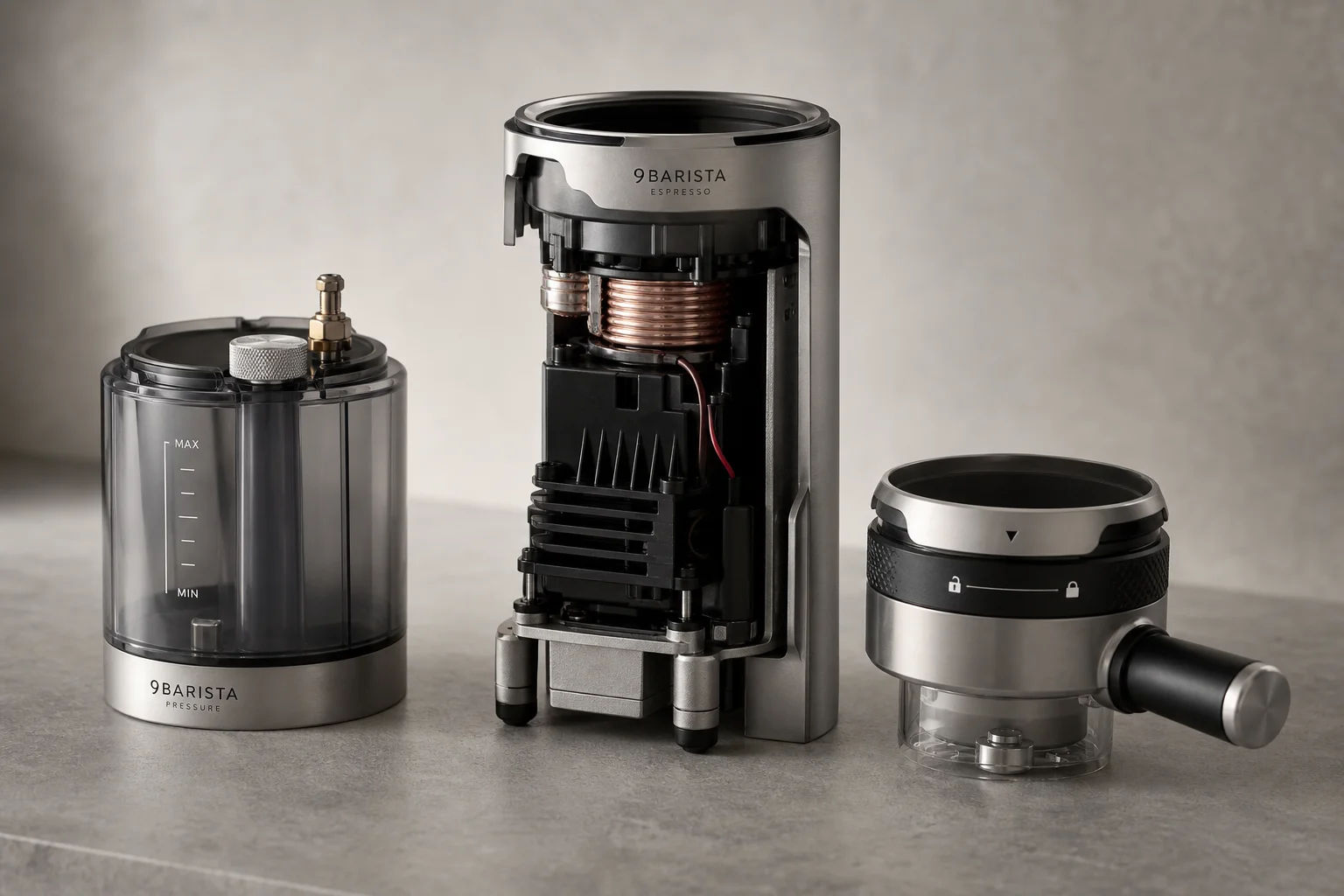
9Barista Espresso Machine Review: Stovetop Espresso for Single-Cup Enthusiasts
A cleverly engineered stovetop espresso maker that generates nine bars of pressure without electricity. Excellent coffee quality, but requires patience and suits solo drinkers only.
Coffee Equipment
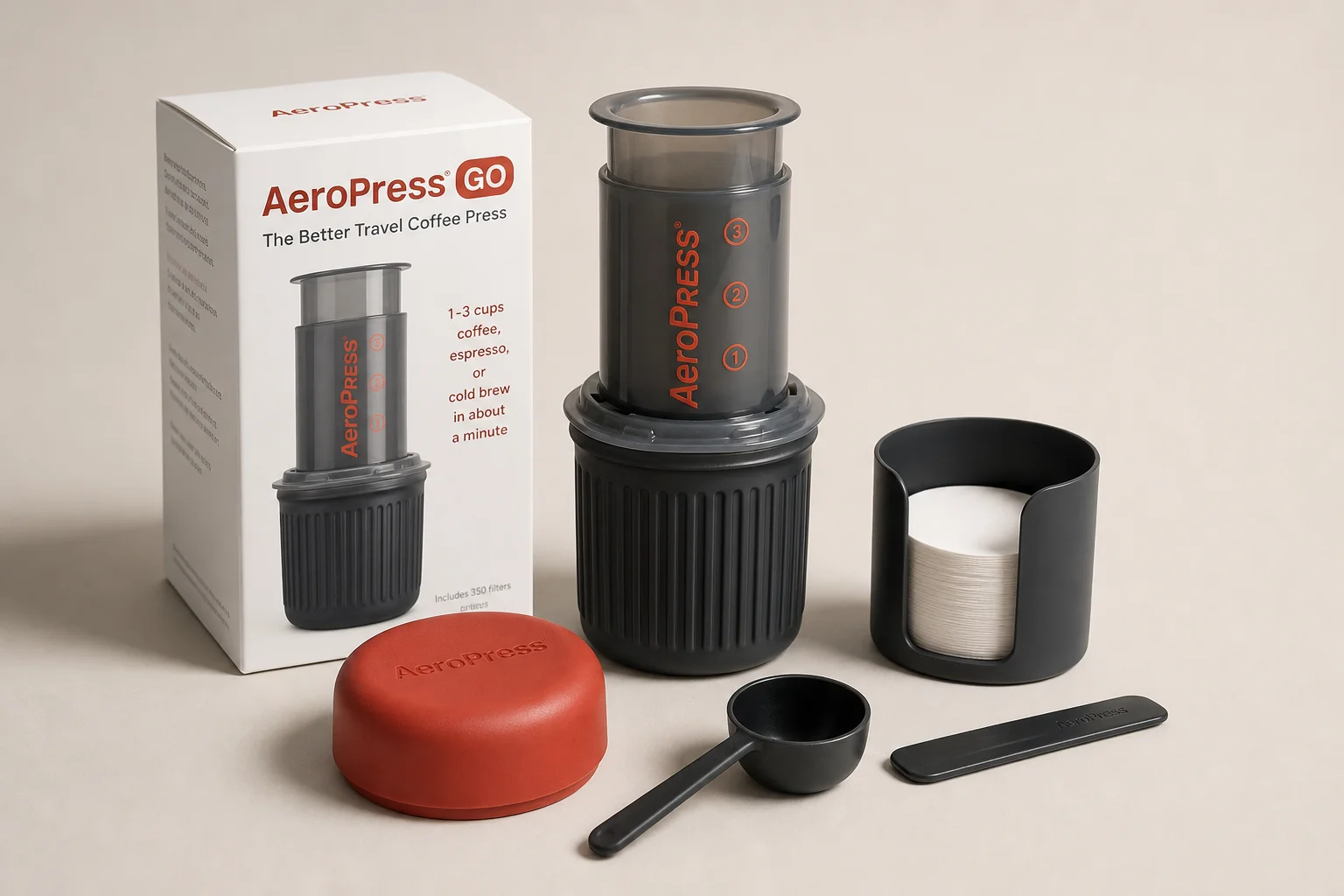
Aeropress Go Review: A Compact Travel Brewer That Solves One Specific Problem
The Aeropress Go shrinks the original design and adds an integrated cup, but it may not address the travel challenges most coffee enthusiasts actually face.
Coffee Equipment
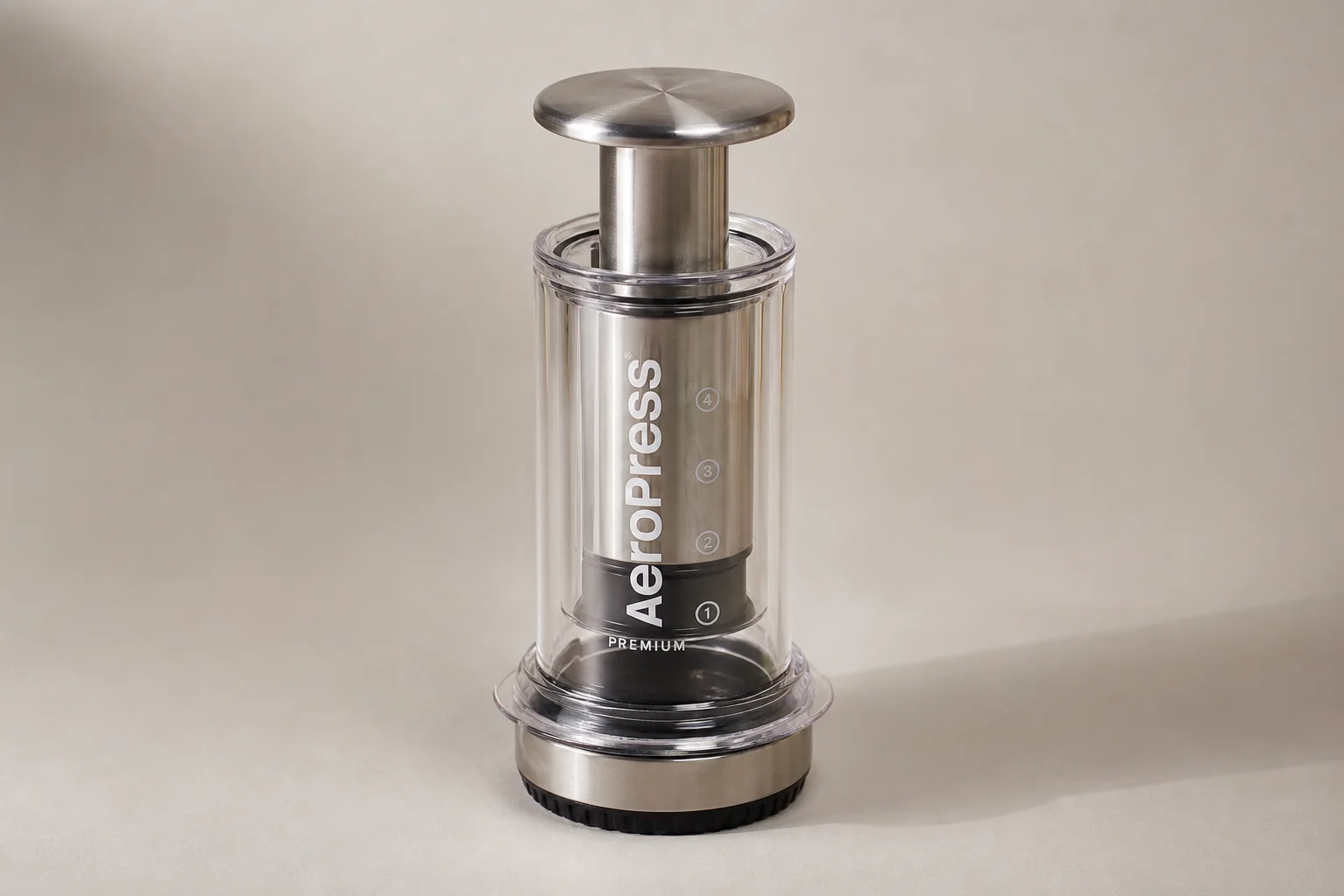
AeroPress Premium Review: Premium Materials, Practical Trade-offs
The AeroPress Premium brings glass and metal construction to a beloved brewer, but trades portability and durability for a more refined feel. Here's what changes in the cup and what matters before you buy.