Kitchen Equipment
KitchenAid Seven Quart vs Ankarsrum Original 6230: Stand Mixer Comparison for Serious Bakers
Two heavyweight stand mixers tested side by side. The KitchenAid is the American standard, but the Swedish Ankarsrum brings European engineering and surprising versatility to the home bakery.
Introduction
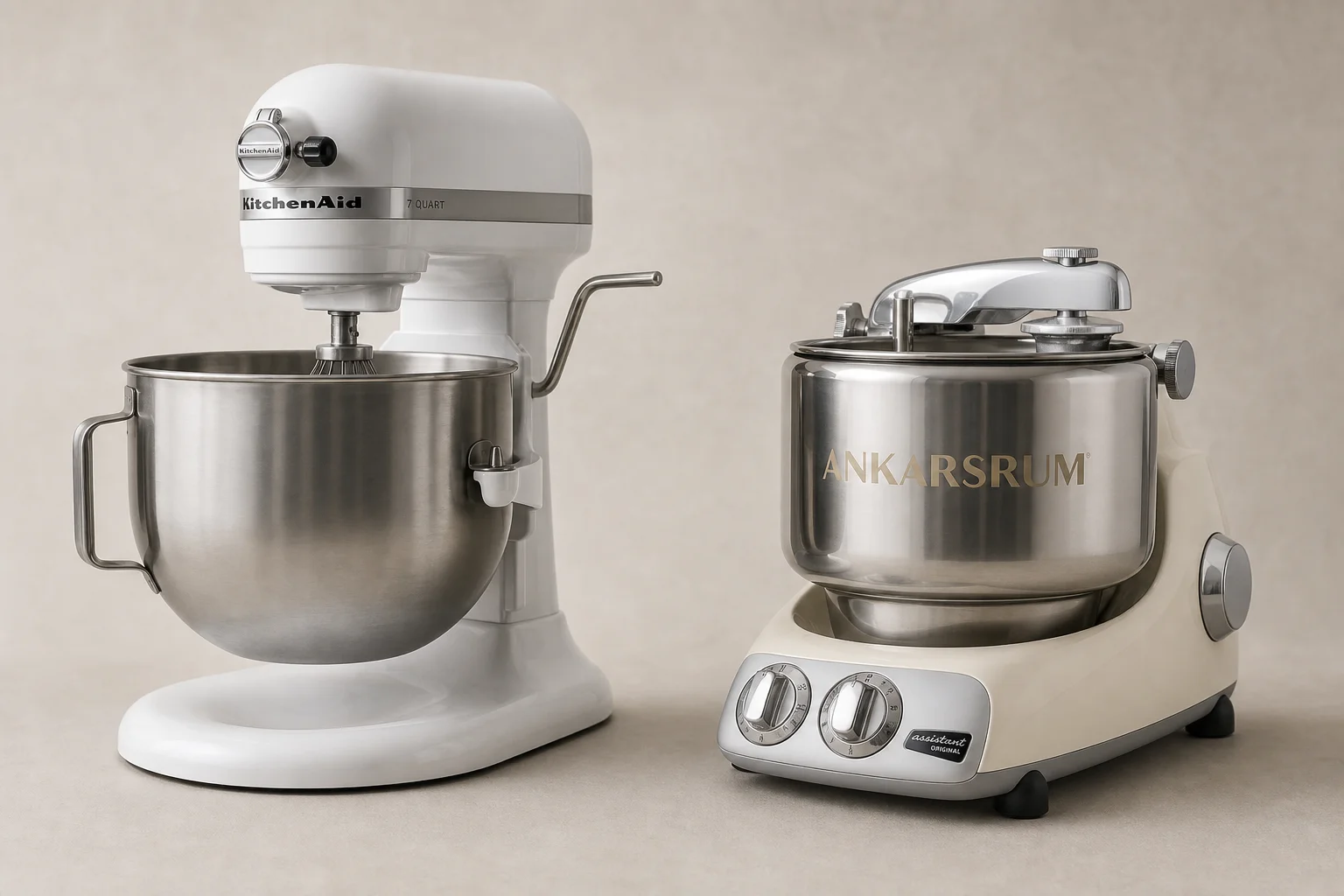
Two stand mixers have entered the testing kitchen: the KitchenAid Seven Quart Bowl Lift Stand Mixer, the familiar American workhorse at $650, and the Ankarsrum Original 6230, the Swedish equivalent at $750. Both are marketed to serious home bakers tackling heavy-duty bread projects. Both carry premium price tags. But only one emerged as the clear winner after rigorous testing.
Testing Methodology and Power
The testing protocol covered every task a home baker would perform: whipping egg whites and heavy cream to stiff peaks, creaming butter and sugar for cookies, reverse creaming for cake batters, and kneading multiple dough types. The doughs included a high-hydration sticky pizza dough and a stiff bagel dough, tested in double batches to stress the motors.
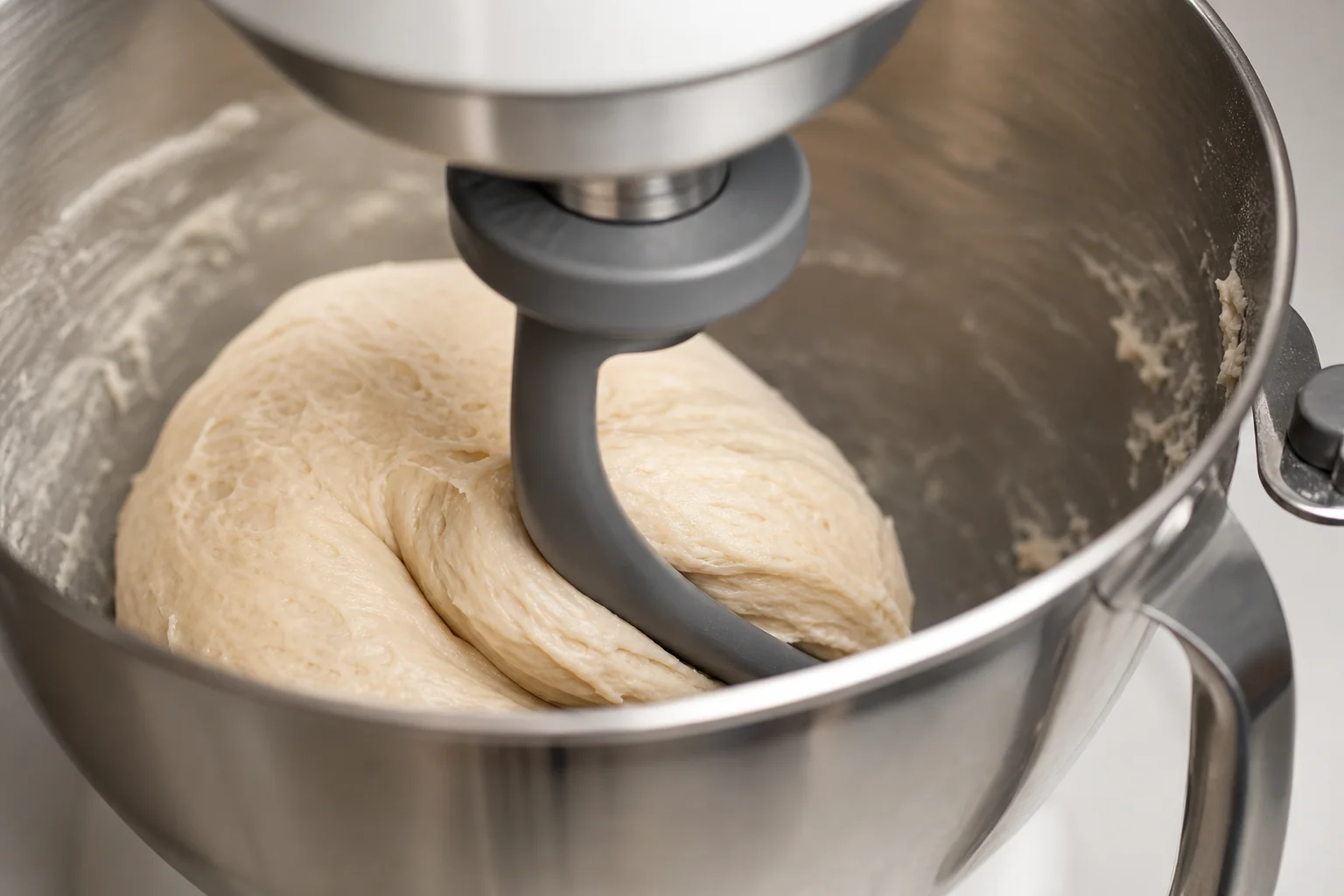
The key metric examined was torque, the rotational force the motor generates to push material through the bowl. While manufacturers typically advertise wattage (power drawn from the outlet), torque is what actually does the mixing and kneading work. Industry experts confirmed that insufficient torque becomes obvious under load: the mixer stumbles, struggles, overheats, and risks failure. Both machines demonstrated strong torque performance during testing.
KitchenAid Seven Quart: American Standard with New Features
The KitchenAid performed without issues, showing plenty of power and torque throughout all tests. The redesigned model includes stainless steel attachments, a new silicone-finned paddle that scrapes the bowl sides as it works, additional speed settings, and a half-speed option for folding delicate ingredients.

The machine weighs over 25 pounds, which provides excellent stability. The bowl features a large vertical handle that makes it easy to lift, tip, and pour. The bowl-lift design is familiar to American home bakers: a handle cranks the bowl up and down beneath the top-mounted motor.
However, testers noted that bowl access is not ideal. Adding ingredients neatly requires lowering the bowl, removing the attachment, and disengaging the bowl entirely to gain unimpeded access. Additionally, a significant consideration emerged after testing: KitchenAid has placed time and speed restrictions on this model. Dough kneading is limited to speed two, with a maximum of two minutes per session and four to six minutes total per batch. While creaming and whipping have no restrictions, these limitations are important for serious bakers planning frequent dough work.
Ankarsrum Original 6230: European Powerhouse with Adjustability
The Ankarsrum has been in production since 1940 and is the European equivalent of the KitchenAid. The design is fundamentally different: the motor sits in the base, and the bowl rotates on top. American testers initially found this unfamiliar, but the learning curve proved minimal once they reviewed instructional videos.
The machine is straightforward to operate. Two knobs control all functions: one turns the unit on and sets a timer up to 12 minutes, the other adjusts speed. The Ankarsrum proved remarkably powerful, kneading both test doughs with almost no effort.
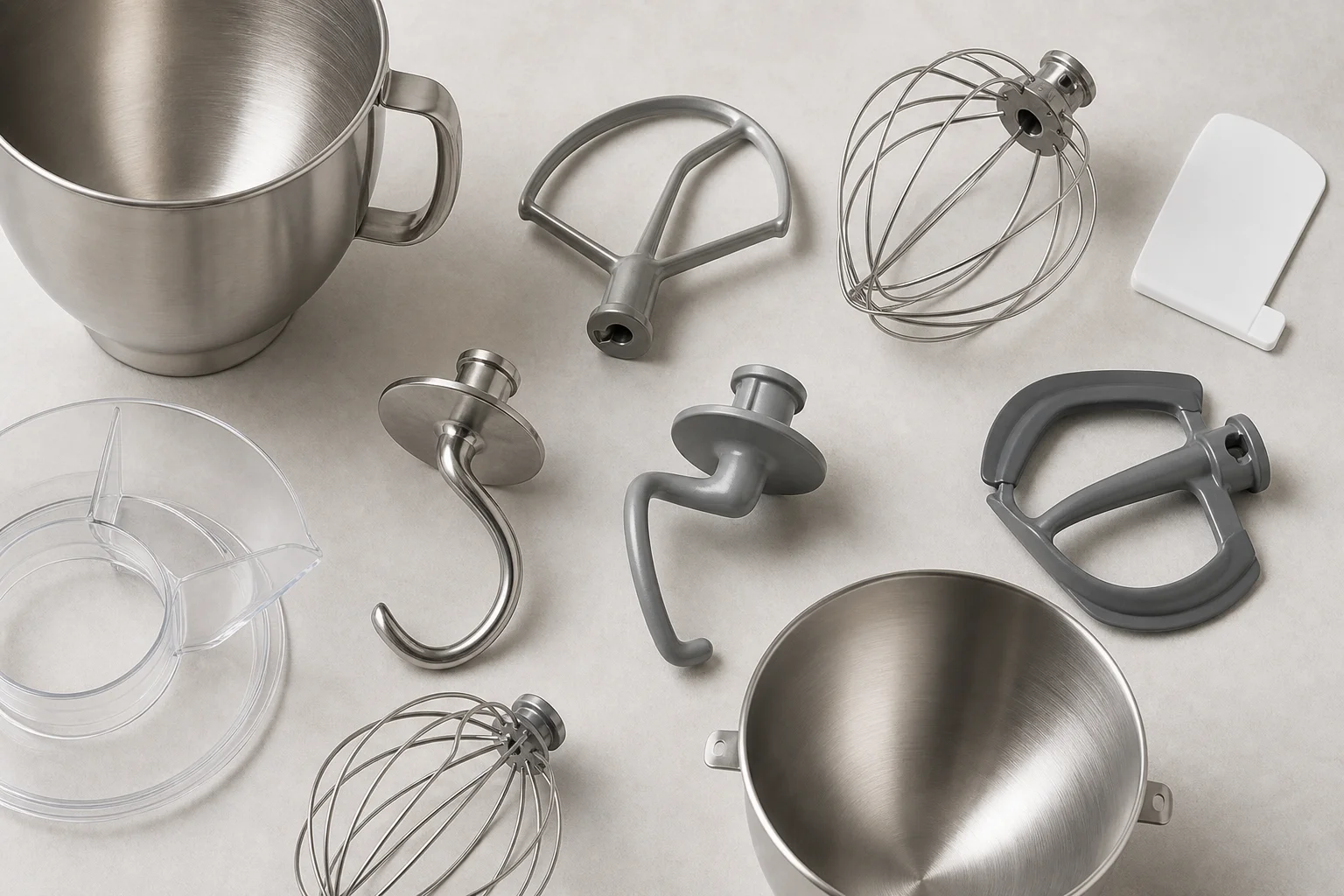
Testers appreciated the open-top bowl design, which allows easy ingredient addition and clear visibility into the mixing process. The machine offers significant adjustability for different dough types. A dough hook works well for softer, stickier, high-hydration doughs, while a roller attachment suits stiff doughs. The arm position within the bowl and the roller tension are both adjustable, allowing fine-tuning for specific dough characteristics.
This adjustability split testers: some valued the customization options for serious baking, while others preferred the KitchenAid’s simpler one-attachment-fits-all approach. For expert bakers seeking precise control, the Ankarsrum’s flexibility is a genuine advantage.
The trade-off is storage. The Ankarsrum includes numerous components: a seven-liter stainless steel bowl, dough roller, dough scraper, plastic Triton bowl for whipping and creaming, covers for both bowls, dough hook, whipping whisks, creaming whisks, and a center post. Additional attachments like pasta rollers, sausage makers, and grain flakers are available separately. Significant storage space is required.
Design Philosophy and Ease of Use
The KitchenAid represents the familiar American approach: a single, straightforward design that handles most tasks adequately. The Ankarsrum embodies European engineering philosophy: a more complex machine with greater adjustability and specialized components for different tasks.
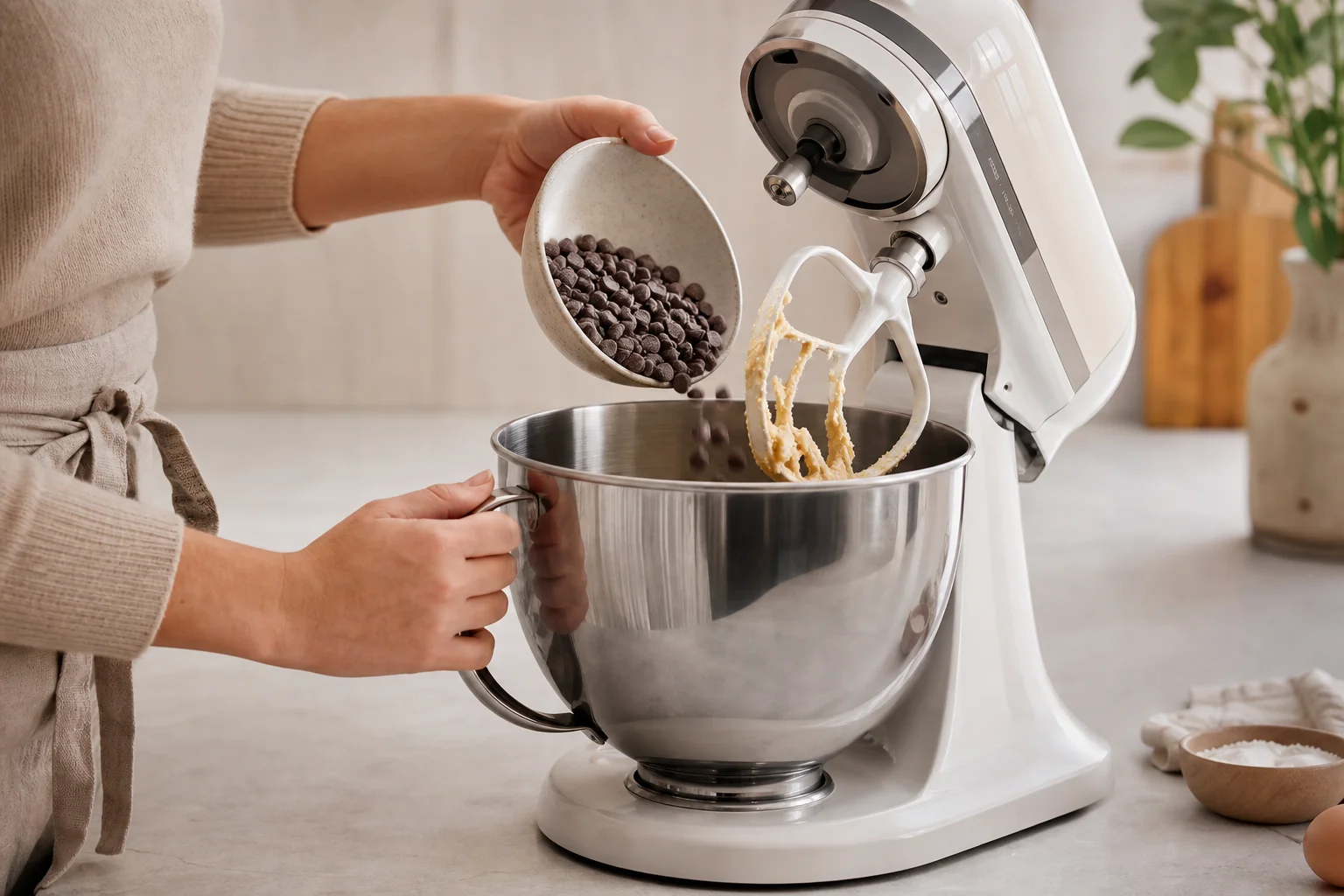
Once past the initial learning curve, the Ankarsrum proves convenient and capable. Its open-top design and adjustable components make it well-suited to bakers who work with varied dough types and want precise control. The KitchenAid’s simplicity and stability appeal to bakers who prefer a no-fuss, familiar interface, though its usage restrictions on dough kneading are a meaningful limitation for frequent bread makers.
Conclusion
Both machines are capable workhorses suitable for serious home bakers. The KitchenAid Seven Quart remains a solid choice for bakers who value simplicity and the familiar bowl-lift design, though the dough-kneading time and speed restrictions warrant careful consideration if you plan frequent bread work.
The Ankarsrum Original 6230 emerges as the overall winner. Despite its steeper initial learning curve and greater component complexity, it offers superior adjustability, no usage restrictions, and impressive power. For serious bakers willing to invest in mastering its design and storage requirements, the Ankarsrum delivers exceptional capability and versatility that justifies its $750 price tag.
Product link
View more details for KitchenAid Seven Quart Bowl Lift Stand Mixer
This product is mentioned in the review. Check the specifications, options, and compatibility before buying.
View more details for KitchenAid Seven Quart Bowl Lift Stand MixerFurther reading
Related Reviews
Kitchen Equipment
Best Pasta Makers for Home Kitchens: Five Machines Compared
Five pasta makers from manual hand-crank models to powered attachments, each with distinct strengths for different cooking styles and kitchen setups.
Kitchen Equipment
Best Sheet Pans Tested: Which Brands Resist Warping and Cook Evenly
Six popular sheet pans tested for warping resistance, roasting performance, and ease of cleaning. Find out which offers the best value and which to avoid.
Kitchen Equipment
Best Stand Mixers for Home Bakers: Four Tested Models for Every Budget
Four stand mixers tested across whipping, creaming, and heavy-duty dough kneading. Find the right mixer for your baking needs and budget.