Coffee Equipment
Six Pour Over Brewers Compared: Design, Extraction, and Real-World Use
A detailed comparison of six pour over brewers examining bed geometry, material, bypass, and brew results to help you choose the right dripper for your coffee routine.
Introduction
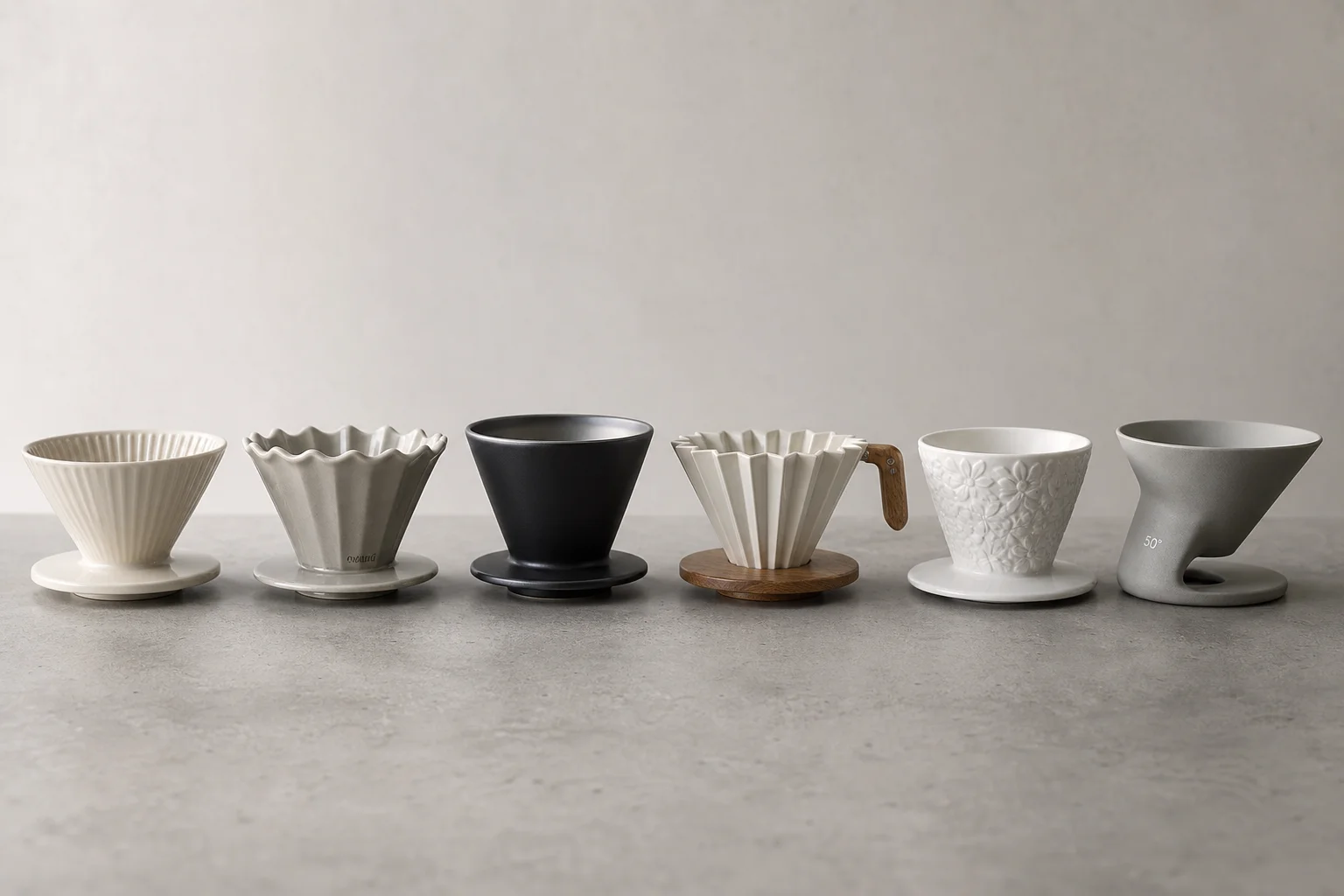
Comparing six different pour over brewers reveals more complexity than it might first appear. Each brewer uses different materials, bed geometries, and design philosophies, making a straightforward comparison challenging but worthwhile. This guide examines the Espro Bloom, April Pour Over, Fellow Stagg X, Origami Dripper, Cafec Flower Dripper, and Hsiao Coffee 50 Degree Dripper to help you understand what makes each one distinct and how to choose the right one for your brewing style.
Understanding Pour Over Brewer Design
Pour over brewers vary across four key design dimensions that affect how they brew coffee.
Material and thermal properties determine how well a brewer retains heat. The Fellow Stagg X features vacuum-insulated walls designed to maintain temperature throughout the brew, while ceramic brewers like the April and Cafec absorb and release heat differently. The Espro Bloom’s ceramic construction offers a hand-thrown aesthetic with moderate heat retention.
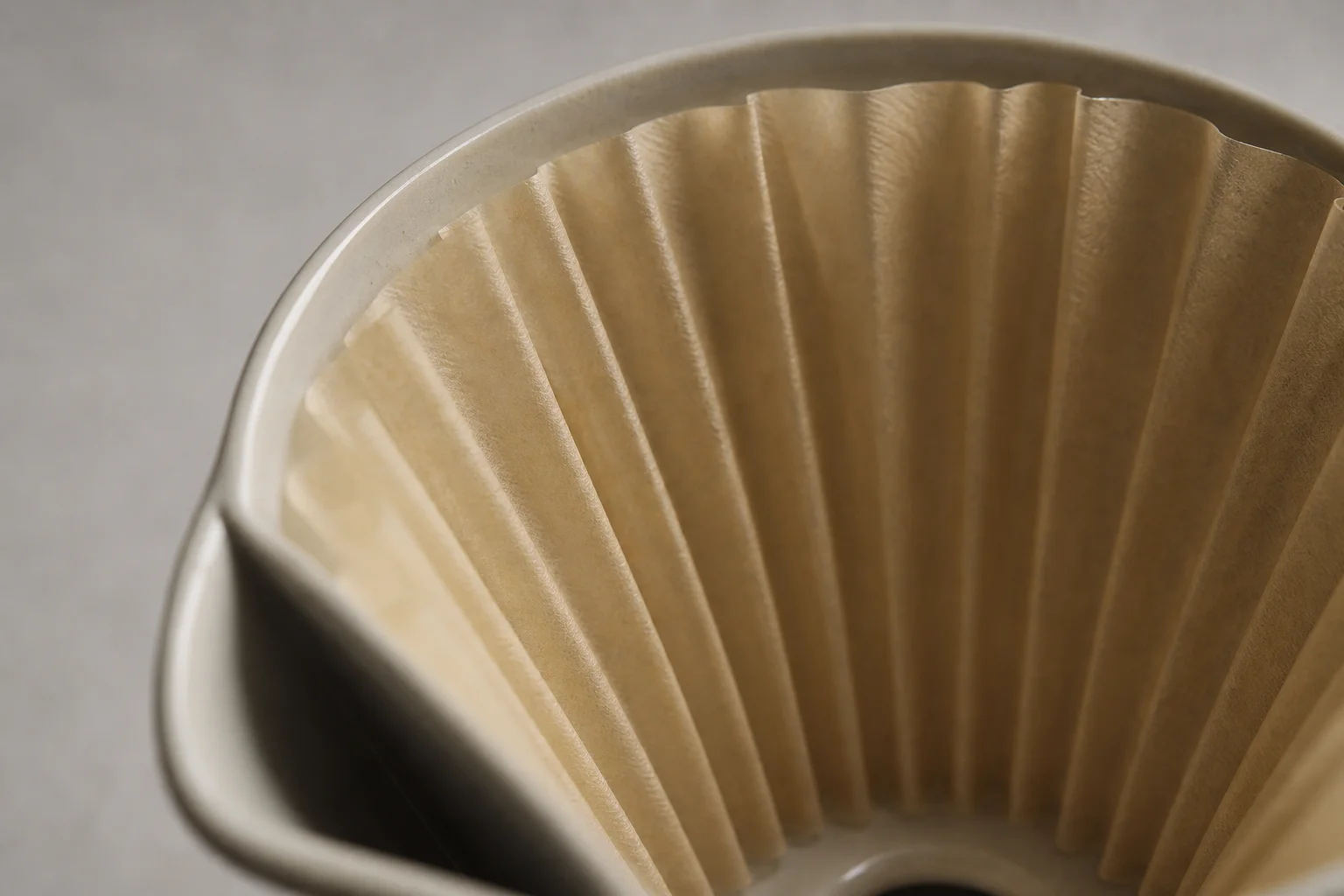
Bed geometry shapes how water flows through the coffee. Flat-bottomed brewers like the Espro Bloom and April require even water distribution to avoid channeling. Cone-shaped brewers such as the Origami, Cafec, and Hsiao use gravity to guide water through the coffee bed, though the angle and rib design vary significantly.
Brewer resistance refers to how much the dripper restricts water flow. Traditional brewers like the Kalita use small holes to slow drainage and increase contact time. The Fellow Stagg X has moderately restricted flow compared to the open design of the Hsiao Coffee dripper, which has minimal resistance.
Bypass occurs when water reaches the cup without passing through the coffee grounds. Wave-style filters and ribs in cone brewers are designed to keep paper away from the brewer walls, reducing bypass. The Espro Bloom’s smooth interior means less bypass when using paper filters, though it can brew without them entirely. Understanding bypass helps explain why different brewers produce varying extraction levels even with identical recipes.
First Brewing Round: Standard Technique
To establish a baseline, all six brewers were tested using the same recipe: 18 grams of coffee, 300 grams of water, and consistent pouring technique. Filter papers varied slightly due to brewer design requirements, but the brewing approach remained uniform.
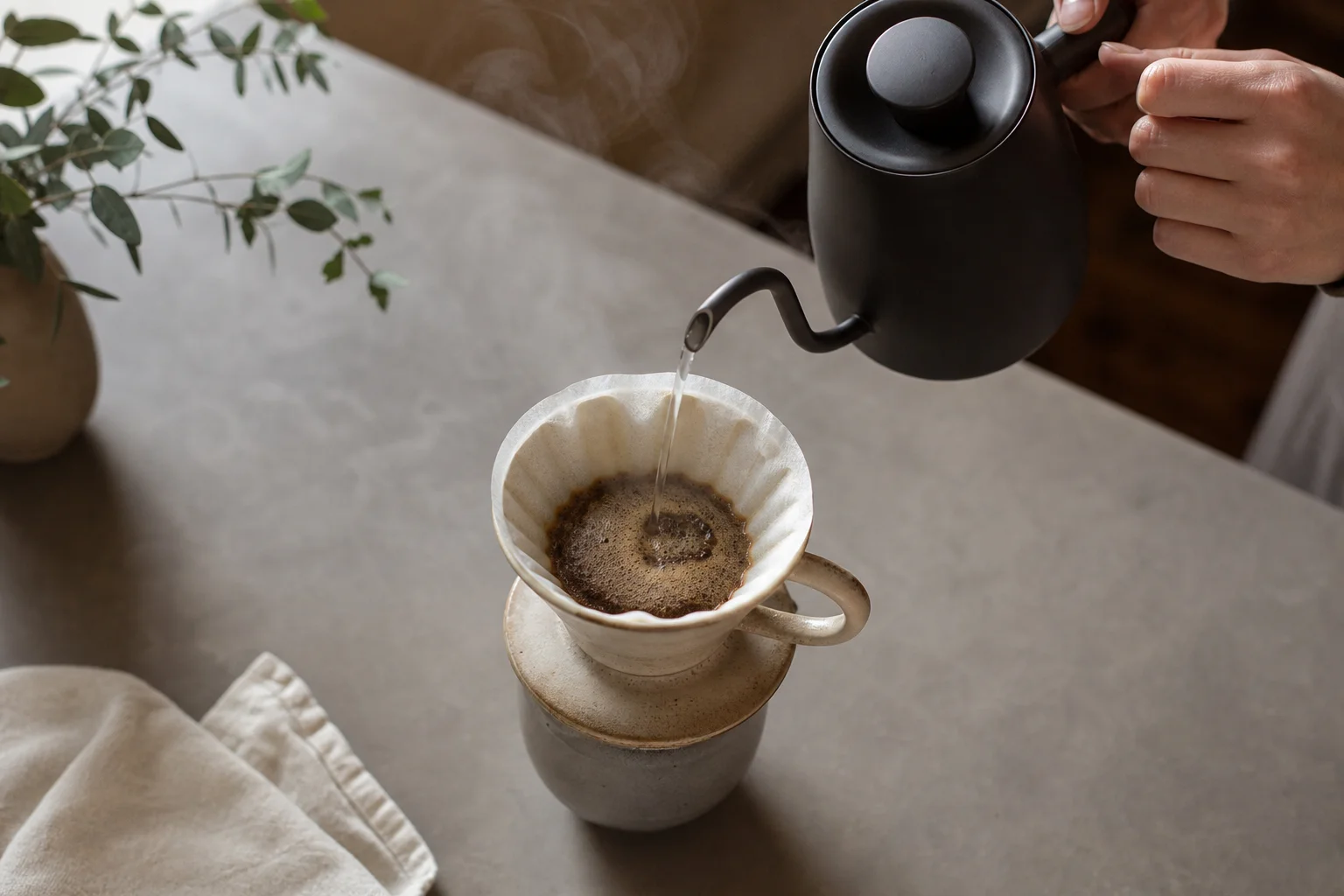
The Espro Bloom brewed quickly with a large open area disguised as multiple small holes. Its ability to brew with or without paper filters is genuinely interesting, though some users modify it with tea strainers to improve paper positioning. The ceramic construction feels hand-thrown and inspired by teaware, with thoughtful details like the design at the base to prevent paper clogging. One practical drawback: the included cup has thin walls and limited capacity, becoming uncomfortably hot immediately after brewing.
The April Pour Over comes as a complete set with cup, lid, and saucer. The ceramic quality and tea-set aesthetic show careful consideration in every detail. The brewer itself performed well, though the cup’s small capacity limits brew size for those wanting more than a single serving.
The Fellow Stagg X includes multiple accessories: a dosing funnel and a bean-dosing tin that doubles as a drip cup. The brewer requires careful seating to ensure it sits completely flat, as any angle affects evenness. It has the most restricted flow of the group, though this did not dramatically impact brew time in testing.
The Origami Dripper’s flexibility with both V60 and Kalita filter papers is appealing, but the wooden base makes achieving a perfectly level position difficult, especially if you want to swirl during brewing. Its undeniable beauty and available colors make it visually striking, though this comes at the cost of practical stability.
The Cafec Flower Dripper’s interior pattern is visually pleasing, and the design shows thoughtful engineering. However, its brew characteristics closely resemble a V60, raising the question of whether the aesthetic differences justify a separate purchase for most users.
The Hsiao Coffee 50 Degree Dripper takes a different approach with its angled design. It requires a paper folder to create the correct cone angle, and its smooth interior produces noticeably slower brew times with minimal bypass. The sculpted top edge subtly encourages proper kettle positioning without explicit instruction.
Tasting and Extraction Results
After cooling to room temperature, the brews revealed varying extraction levels despite identical recipes. Flat-bottomed brewers showed higher average extractions than cone-shaped brewers. The Hsiao Coffee dripper, with its minimal bypass, produced notably higher extraction than expected, validating its design approach.
The Espro Bloom exhibited a slight astringency in this round, though previous brews had not shown this issue. The April brewed pleasantly with good balance and sweetness. The Fellow Stagg X produced an enjoyable cup with moderate intensity. The Origami and Cafec both tasted slightly less extracted than the flat-bottomed brewers, consistent with their cone geometry. The Hsiao Coffee delivered one of the most tasty brews, with excellent balance despite its slower brew time.
The key finding: differences between brewers exist but are subtle. The same coffee, grind, and water produced varying results primarily due to extraction differences, not fundamental flavor changes from the brewer itself. Once you understand how each brewer’s design affects extraction, you can adjust your grind to achieve your preferred strength.
Second Brewing Round: Manufacturer Techniques
To test whether recommended brewing techniques improved results, each brewer was brewed again using the designer’s or manufacturer’s suggested method. Links to these techniques are provided in the resources below.
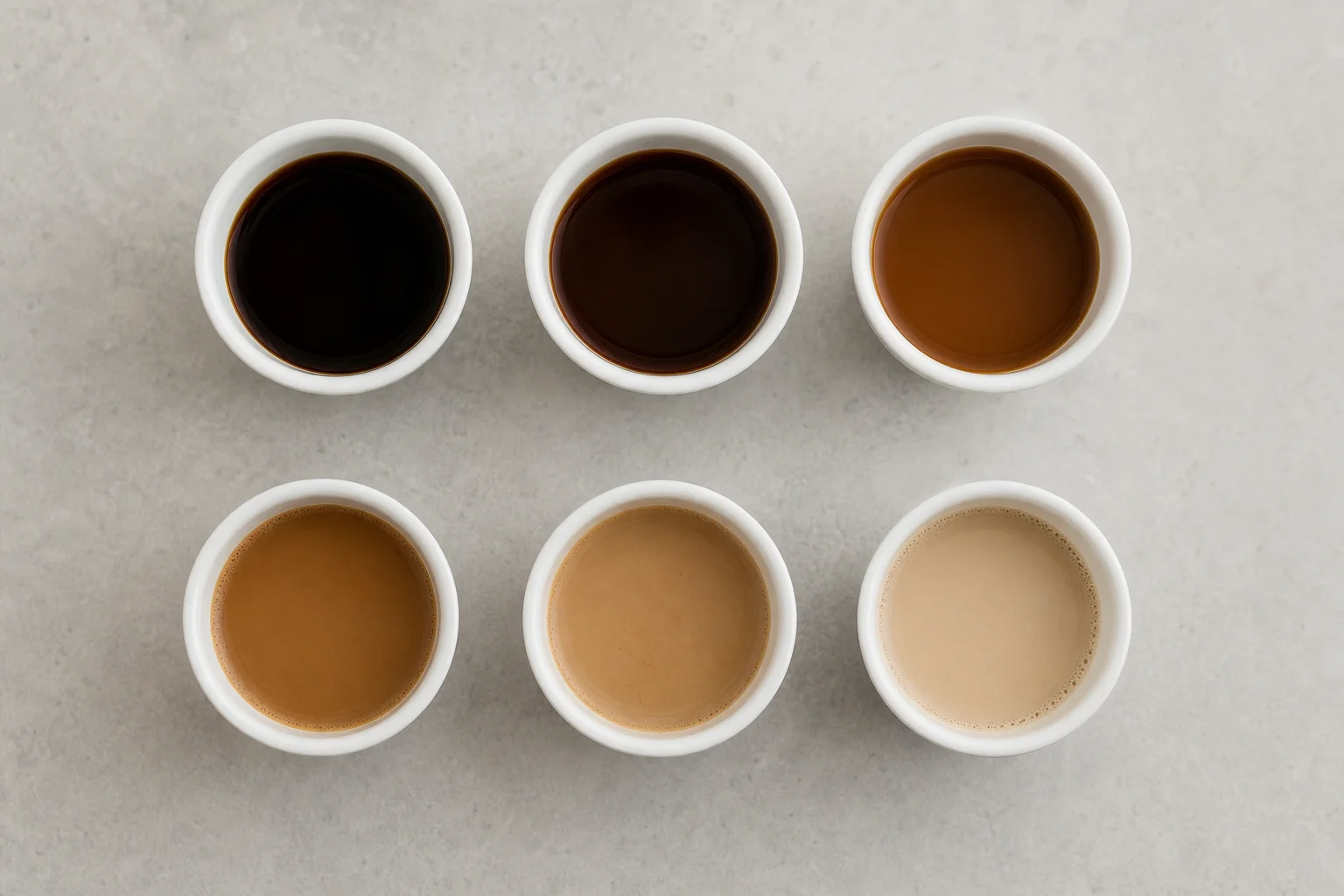
The Espro Bloom brewed much faster with the manufacturer’s technique, and extraction dropped noticeably, confirming that this brewer benefits from a finer grind to reach optimal extraction. The April’s recommended routine by designer Patrik Rolf yielded excellent results with increased extraction, demonstrating that he understands his brewer’s capabilities well. The Fellow Stagg X’s technique slowed the brew slightly and increased extraction, producing a more refined cup. The Origami showed a small extraction bump when switched from V60 to Kalita papers, suggesting that paper choice affects bypass more than initially apparent. The Cafec’s technique proved difficult to execute consistently, likely because the method works better with darker roasts and coarser grinds than the light roast used in testing. The Hsiao Coffee remained consistent across both rounds, brewing slightly slower the second time but maintaining excellent cup quality.
Final Recommendations and Verdict
No single brewer emerges as objectively superior. All six are capable of producing excellent coffee when used according to their design. The choice depends on your priorities.
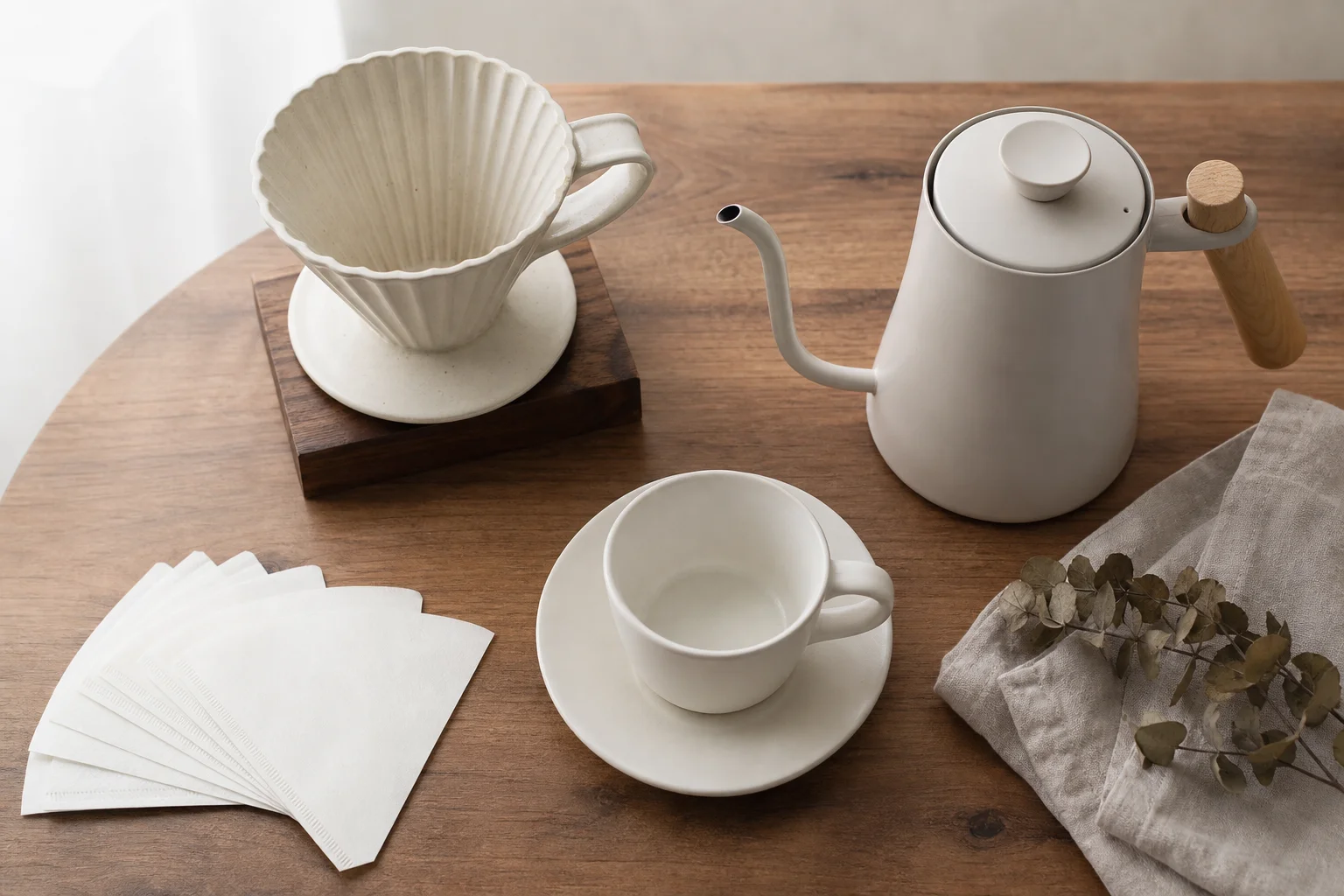
The Espro Bloom works best for those interested in flexibility. The option to brew with or without paper filters is genuinely useful, and the ceramic aesthetic appeals to those who value design. Expect to dial in a fine grind to achieve optimal extraction. The small cup capacity is a practical limitation if you want to brew larger servings.
The April Pour Over suits those who view brewing as a ritualistic experience and appreciate the complete tea-set aesthetic. Designer Patrik Rolf’s guidance and techniques are excellent resources. The brewer itself is capable, though the cup size limits flexibility.
The Fellow Stagg X appeals to those who want a well-engineered brewer with thoughtful accessories. The vacuum-insulated design maintains temperature effectively, and the included drip cup is genuinely useful. It requires attention to seating but rewards careful technique.
The Origami Dripper is best for those who prioritize visual appeal and don’t mind the slight instability of the wooden base. It brews excellent coffee and offers paper flexibility, but the V60 remains a more practical alternative for most users.
The Cafec Flower Dripper works well for those curious about Cafec’s approach but already own a V60. The interior pattern is beautiful, but the brewing characteristics are too similar to justify a purchase purely for performance reasons. Consider Cafec filter papers as a lower-cost way to explore their design philosophy.
The Hsiao Coffee 50 Degree Dripper suits those interested in experimenting with less common designs and appreciate the subtle design cues that encourage proper technique. The lack of bypass produces clean, well-extracted coffee, though you must keep the paper folder to maintain the correct angle.
If you own one of these brewers, there is no compelling reason to replace it with another. Each produces excellent coffee when used correctly. If you are building a collection, the Espro Bloom, April, and Hsiao Coffee offer the most distinct approaches and would provide interesting variety. The Stagg X and Origami are excellent choices if their specific features align with your brewing style.
Conclusion
Pour over brewer selection ultimately depends on your budget, kitchen aesthetic, and brewing philosophy rather than raw performance differences. Understanding how bed geometry, bypass, material, and resistance affect extraction allows you to optimize any brewer you choose. The best brewer is the one you will use consistently and enjoy both in use and as an object in your kitchen.
Product link
View more details for Espro Bloom
This product is mentioned in the review. Check the specifications, options, and compatibility before buying.
View more details for Espro BloomFurther reading
Related Reviews
Coffee Equipment
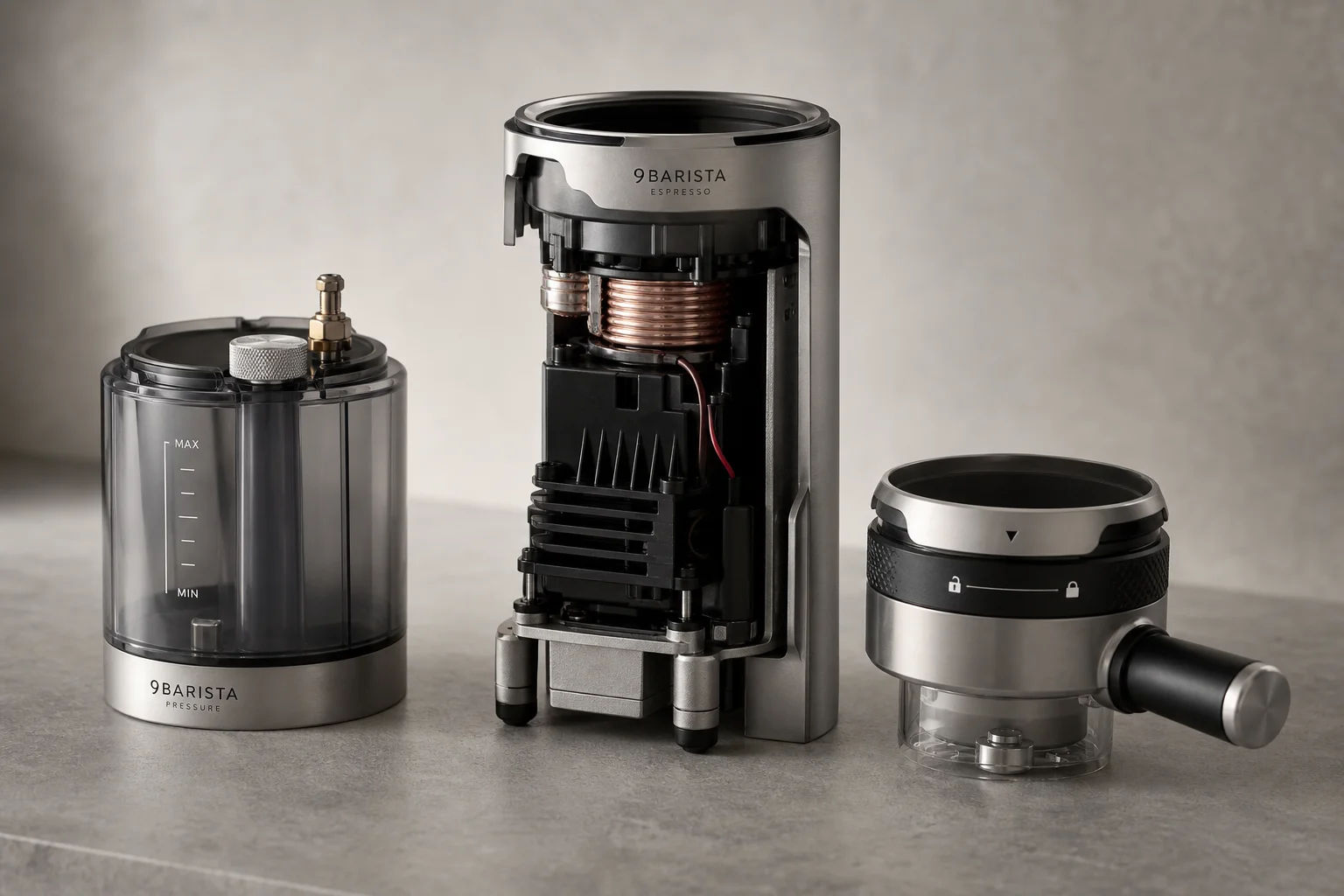
9Barista Espresso Machine Review: Stovetop Espresso for Single-Cup Enthusiasts
A cleverly engineered stovetop espresso maker that generates nine bars of pressure without electricity. Excellent coffee quality, but requires patience and suits solo drinkers only.
Coffee Equipment
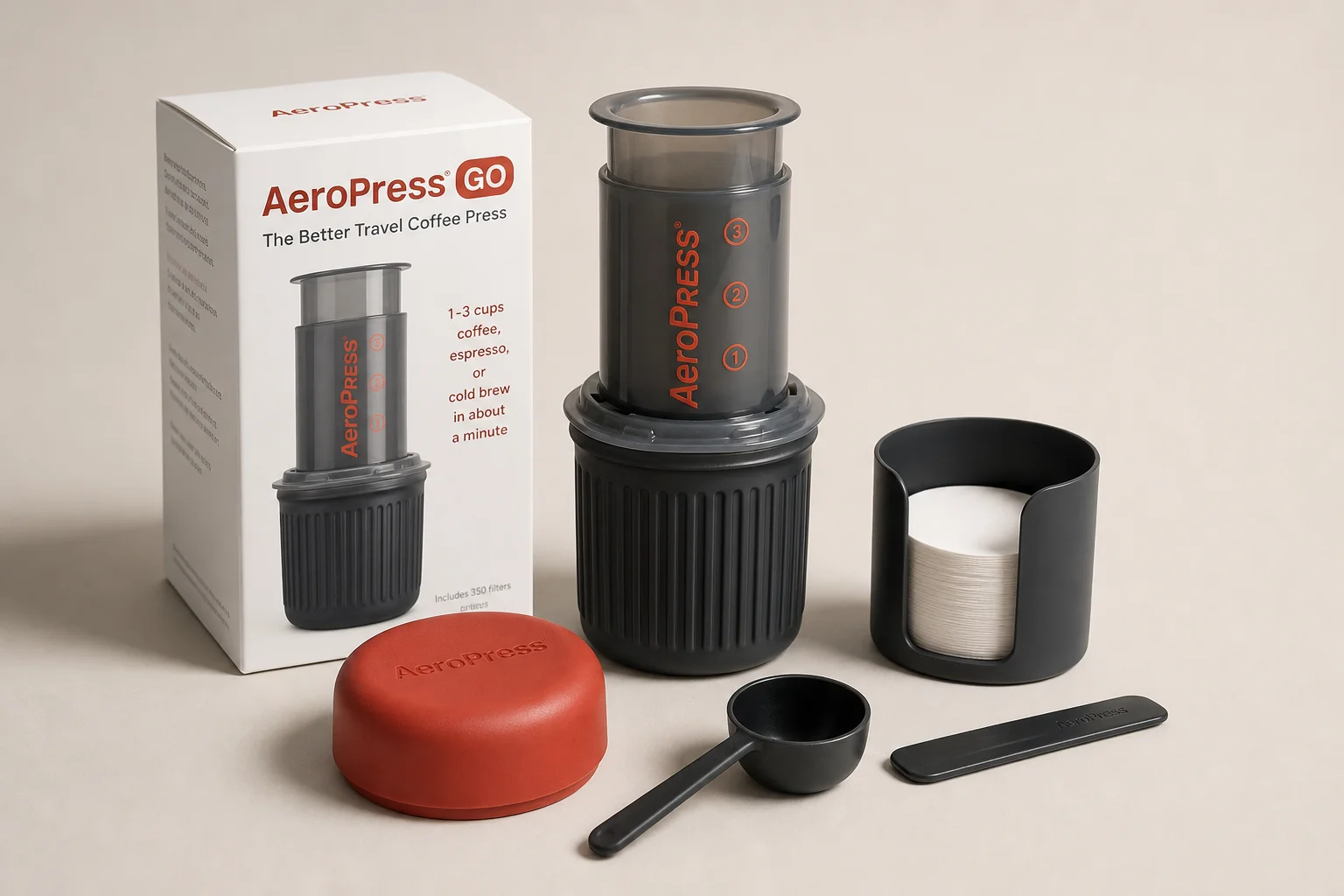
Aeropress Go Review: A Compact Travel Brewer That Solves One Specific Problem
The Aeropress Go shrinks the original design and adds an integrated cup, but it may not address the travel challenges most coffee enthusiasts actually face.
Coffee Equipment
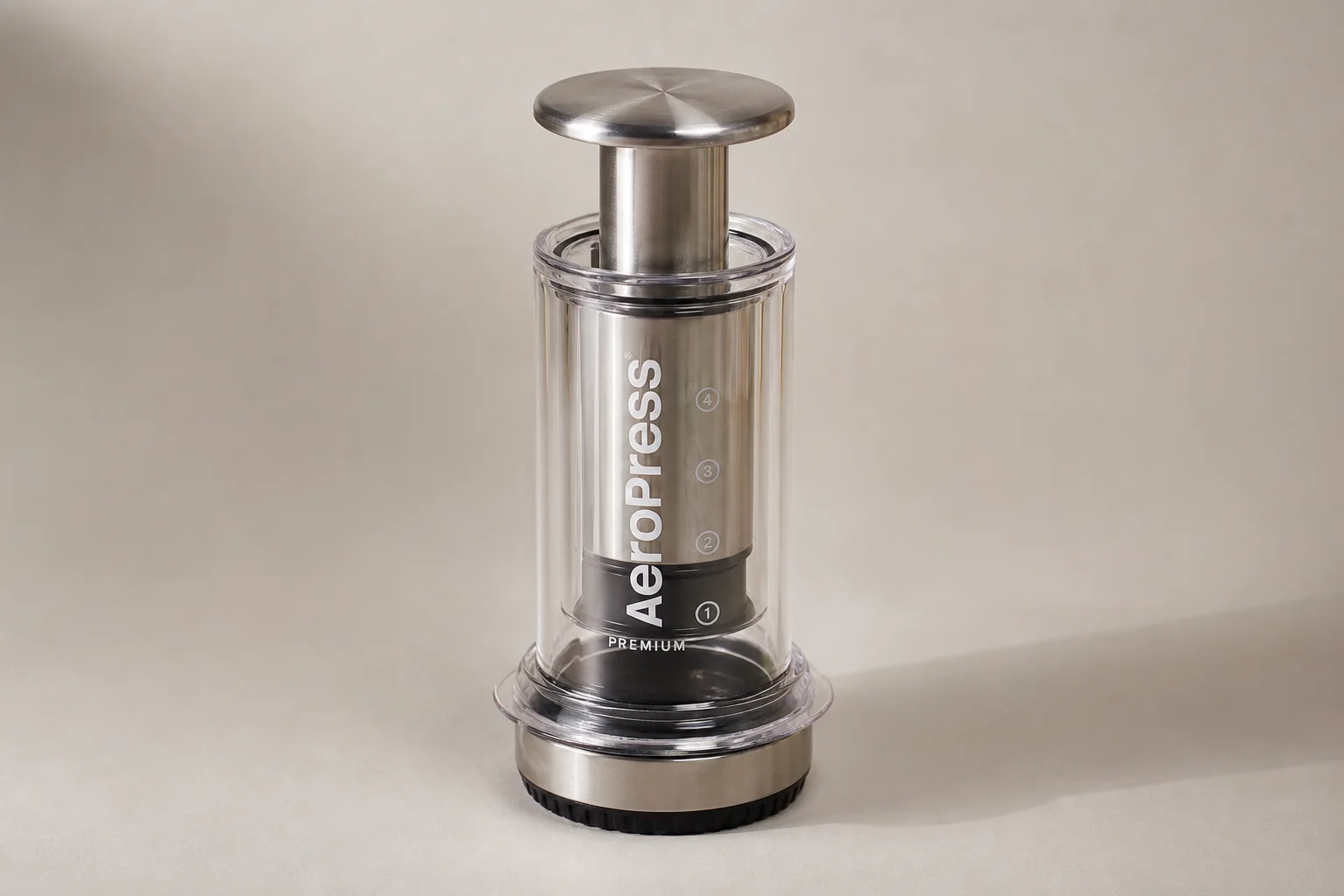
AeroPress Premium Review: Premium Materials, Practical Trade-offs
The AeroPress Premium brings glass and metal construction to a beloved brewer, but trades portability and durability for a more refined feel. Here's what changes in the cup and what matters before you buy.