Coffee Equipment
Best Espresso Grinders Under £250: Five Practical Options Tested
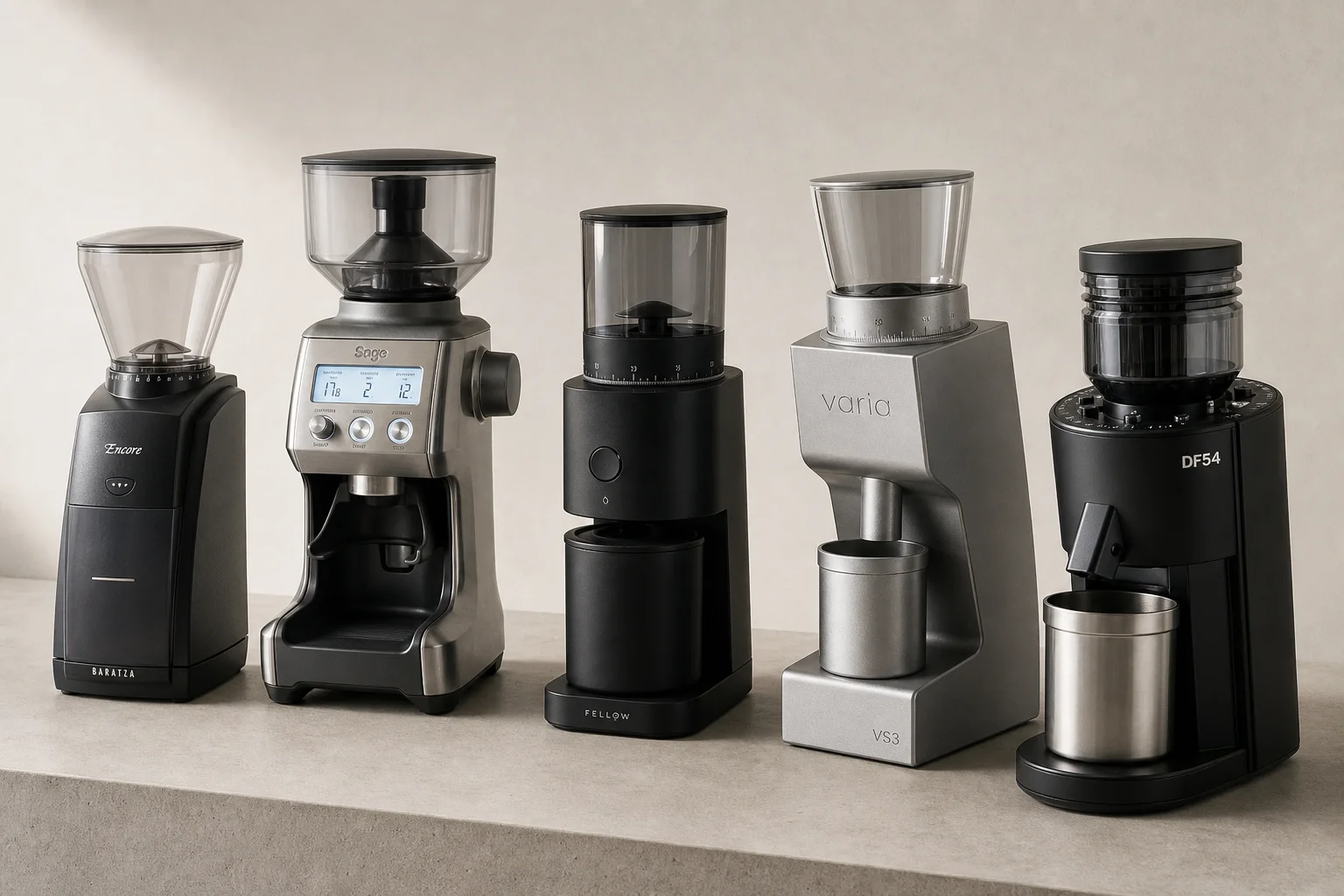
Five espresso grinders tested across workflow, taste, particle size, retention, and sound. Clear strengths and trade-offs for each, from budget conical to affordable flat burr.
Introduction
The espresso grinder market has shifted dramatically in recent years. Where once a serious grinder demanded a serious budget, prices have compressed while quality has improved. This test examines five grinders under £250, each offering a distinct approach to grinding for espresso and filter coffee. We tested workflow, taste, particle distribution, retention, sound, and build quality to help you find the right fit.
Workflow and Usability
Baratza Encore ESP
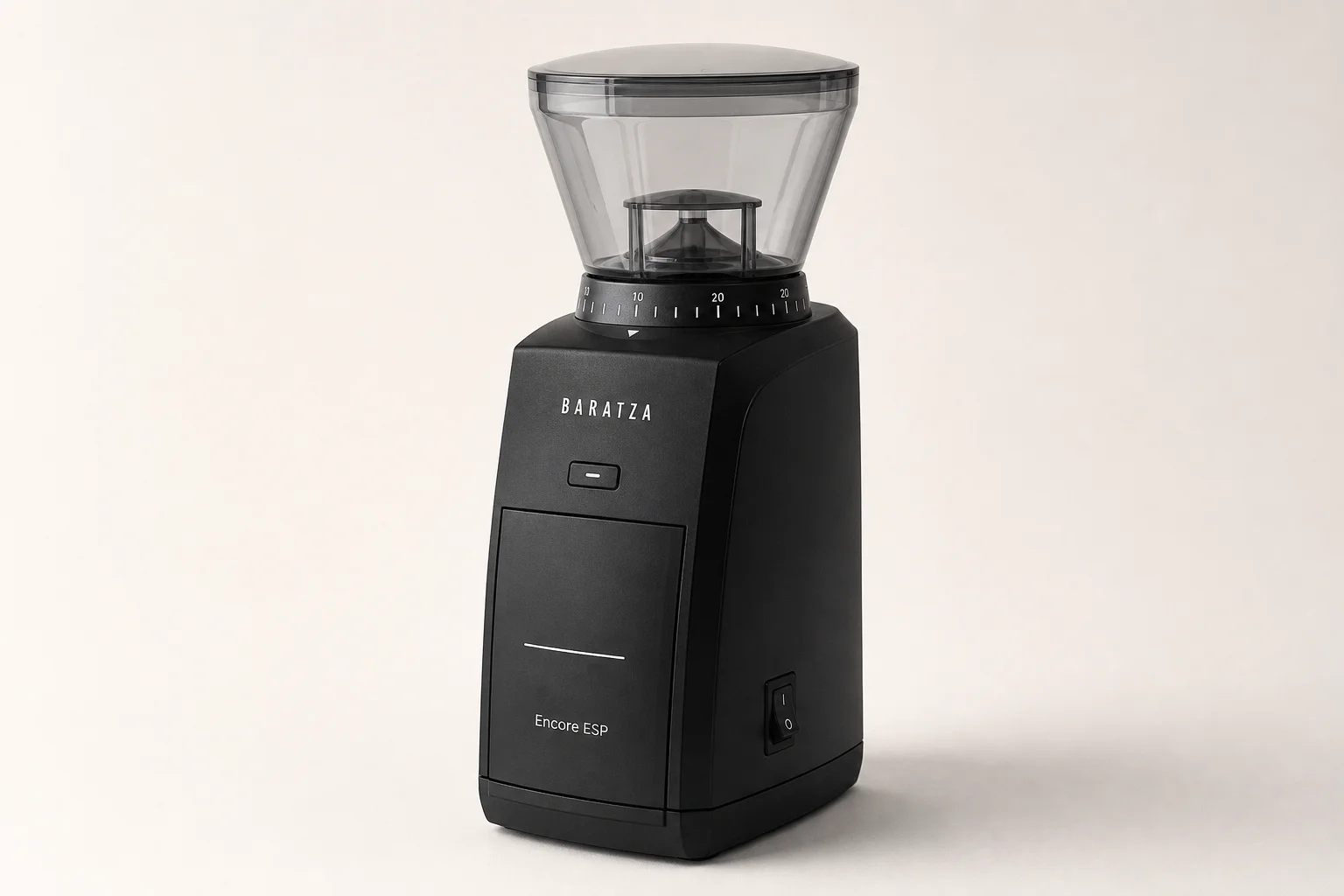
The Encore ESP is the most affordable option here at approximately £160. It shares the body of the popular Encore filter grinder but adds a finer adjustment range for espresso. The key technical achievement is the stepped burr adjustment: each click in the espresso range represents a smaller movement than clicks at coarser settings, giving you more control where it matters.
The hopper is reasonably sized and works well for single-dosing. Grinding is straightforward: push the front button or use the side switch. A small dosing cup comes included. Each adjustment step represents roughly four to five seconds of brew time change for a standard recipe.
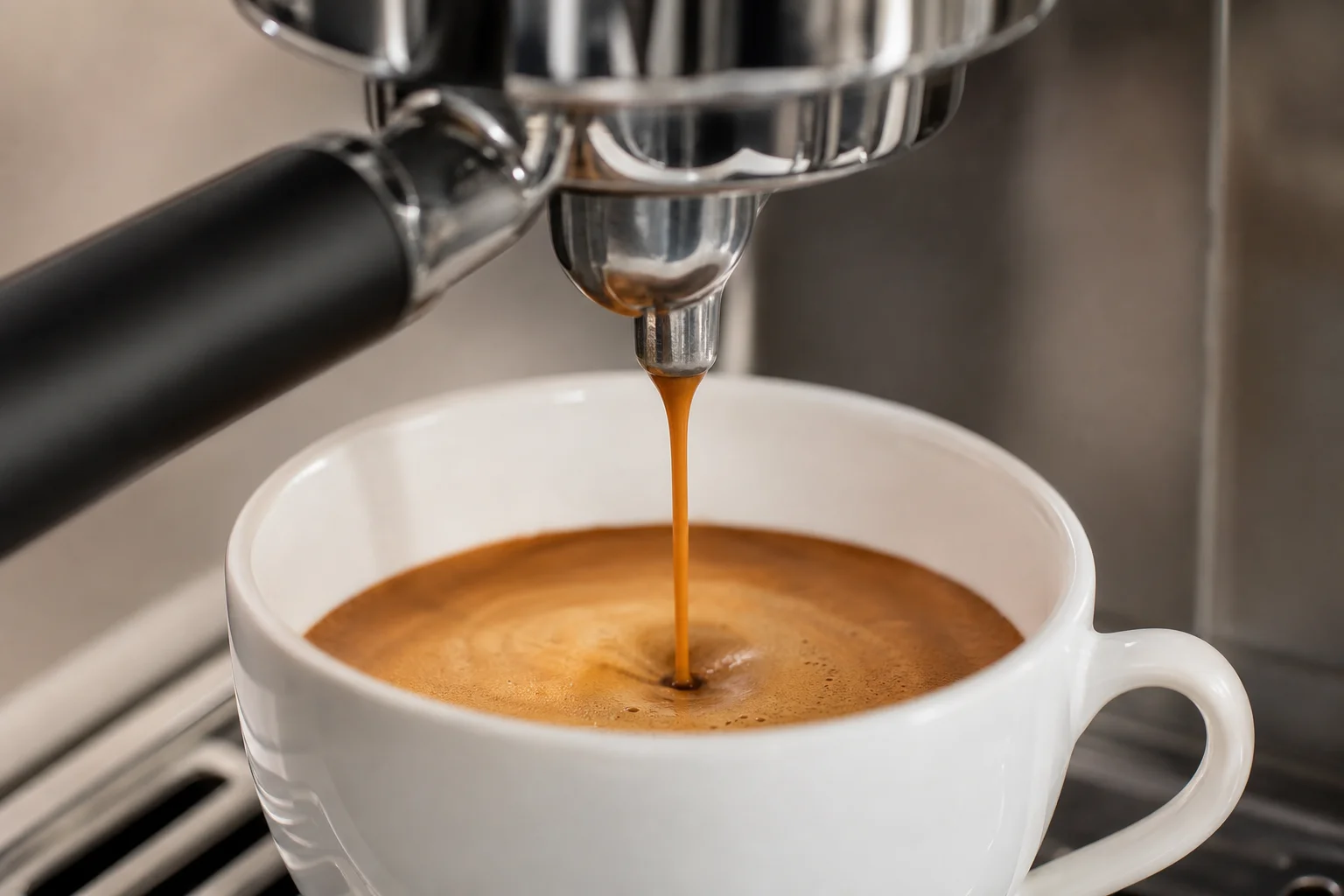
The workflow is simple and direct, though the grinder is noticeably loud during operation.
Sage Smart Grinder Pro
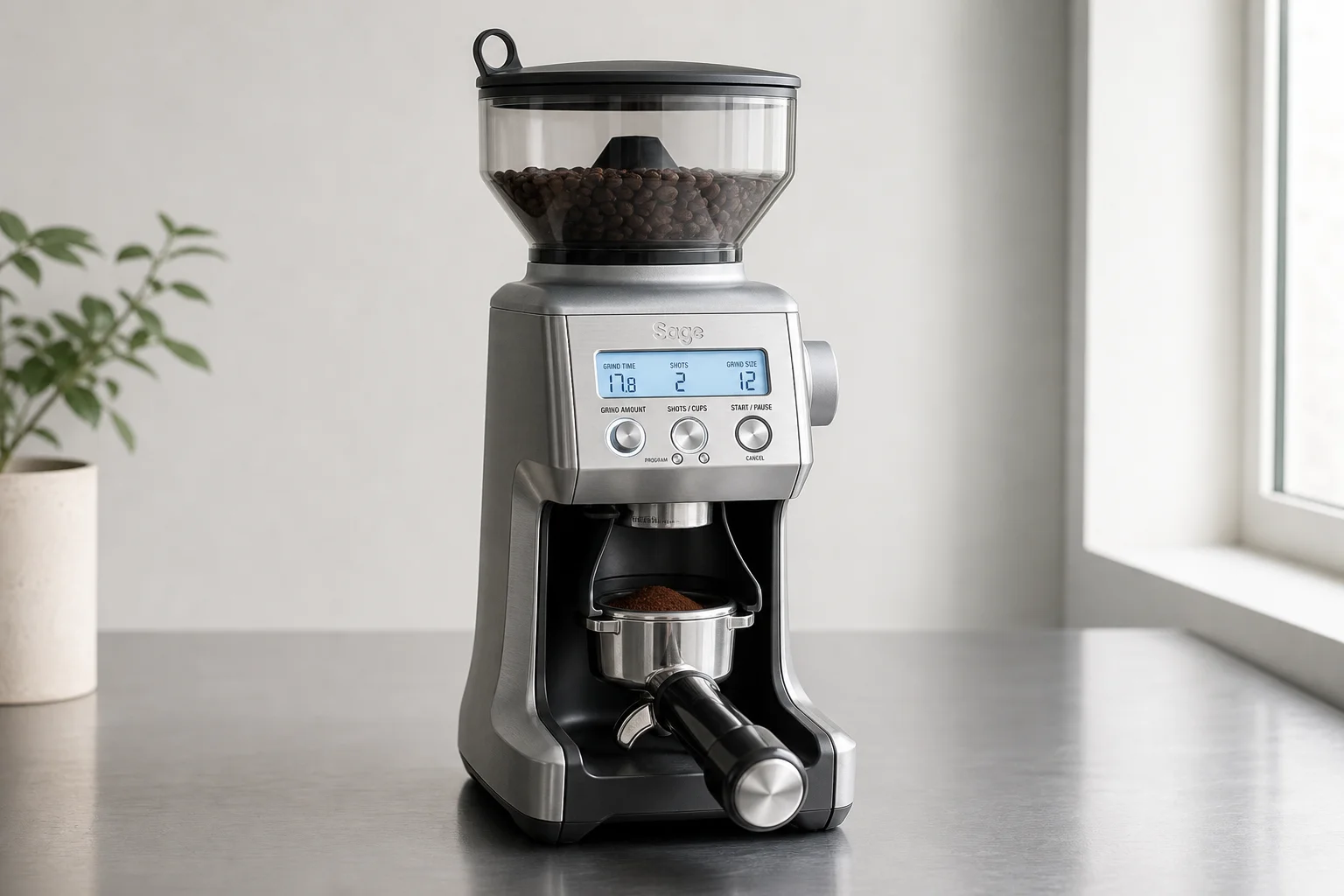
The Sage (or Breville, depending on region) Smart Grinder Pro has been in the market for a decade. It represents an older design philosophy: fill the hopper and draw down doses as needed, more like a commercial grinder in miniature. The digital display and buttons allow you to set grind time, which determines dose by duration.
Modern users typically single-dose this grinder instead, weighing beans beforehand. The display intelligently adjusts grind time estimates as you move between settings, recognising that coarser grinds flow faster. It includes two portafilter holders and a catch cup. The stepped adjustment offers roughly four seconds of brew time change per step.
The grinder feels dated compared to newer options, with a large hopper and less intuitive single-dose workflow.
Fellow Opus
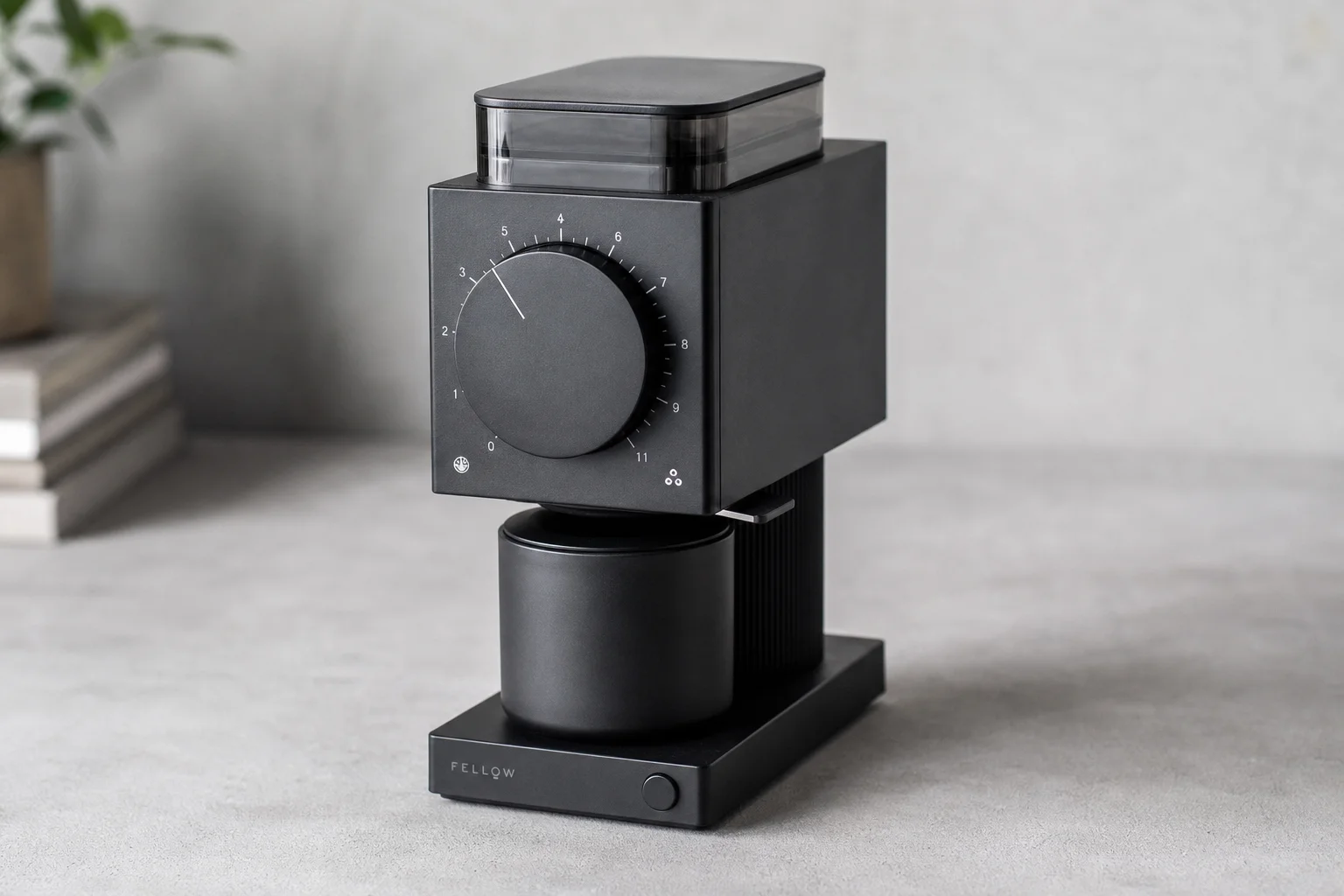
The Opus is a single-dose grinder with a snug-fitting hopper lid. The design is compact and visually refined. Grind adjustment uses a two-step system: coarse clicks on the outside dial, and a micro-adjustment inside the hopper for fine control. This approach gives precision at espresso settings but requires removing the hopper to make fine adjustments.
The dosing cup is larger than ideal for espresso, but includes a removable inner ring to reduce capacity. A magnet holds the cup in place. Operation is simple: tap the button once for 30 seconds, twice for 60, three times for 90, or hold for 120 seconds. The snug hopper lid doubles as a bellows to help extract grounds.
Retention is higher than some competitors, requiring active use of the bellows to fully empty the grinder.
Varia VS3 Gen 2
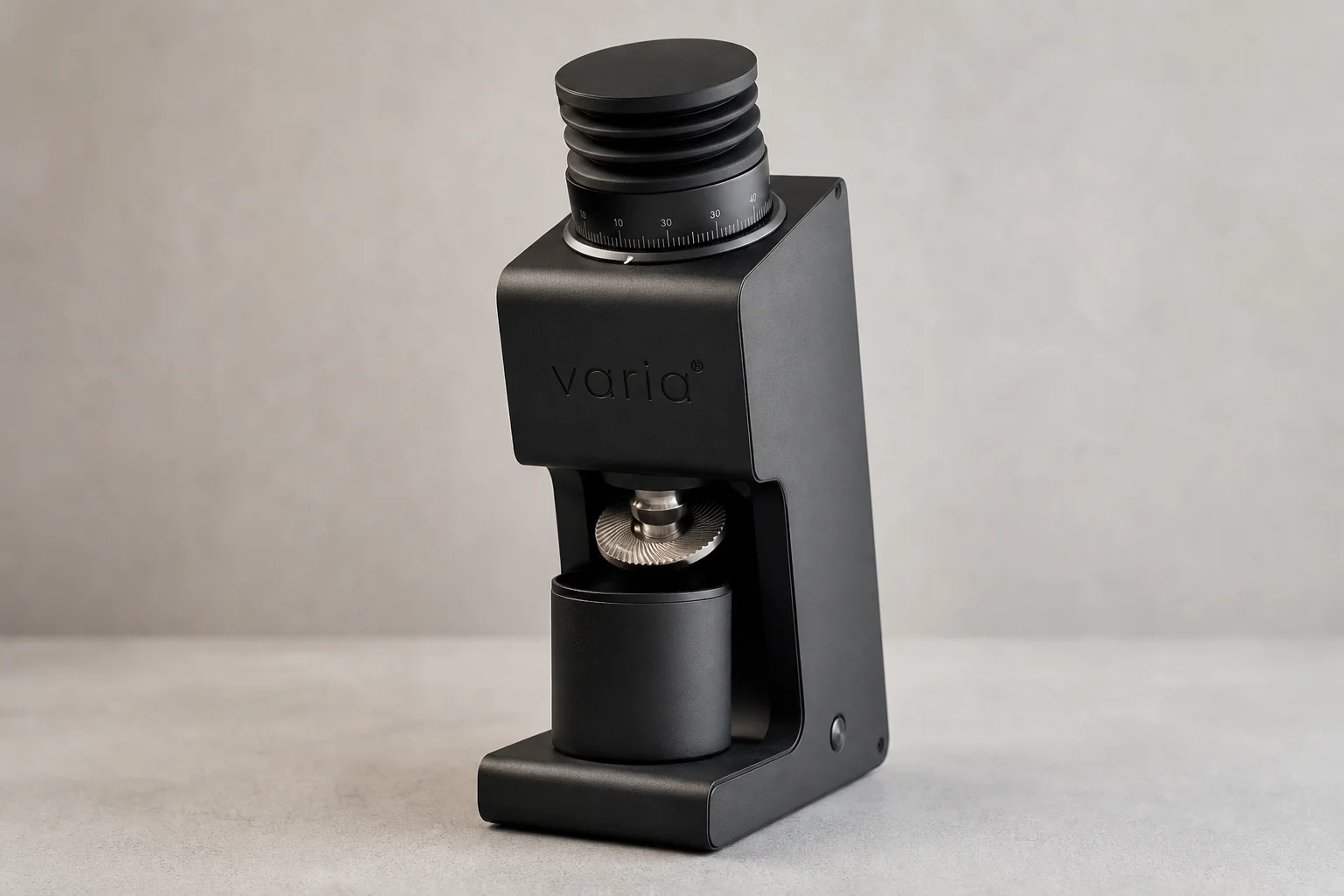
The Varia is a substantial, all-metal grinder with a weighty build. It is designed exclusively for single-dosing. Grind adjustment is stepless, controlled by twisting the funnel-like adjustment ring. An indicator ring shows your setting. The grinder includes a small spray bottle for the Ross Droplet Technique, which adds moisture to beans before grinding to reduce static.
The catch cup is small and held by magnet. Bellows are integrated into the lid. The grinder is notably slow, with the lowest RPM of the group, which contributes to its quietest operation.
The build quality is impressive, but the grinder has a significant flaw: the grind setting drifts during grinding due to friction between burrs. This is a known issue among users and makes consistent dialling-in frustrating.
DF54
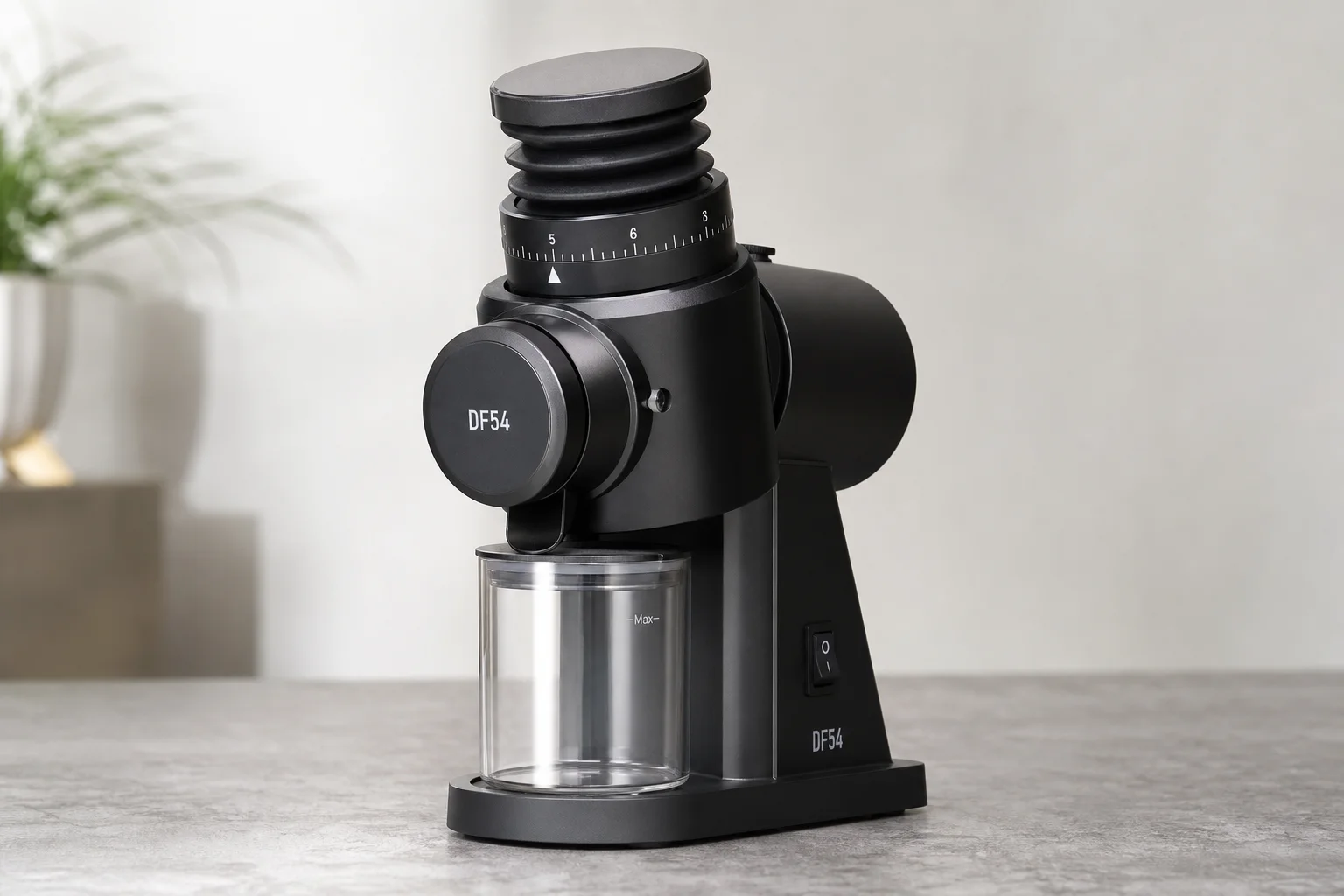
The DF54 stands apart as the only flat-burr grinder in this group, using 54mm burrs instead of the 38-40mm conical sets found in the others. Flat burrs typically require more powerful motors and cost more, making this price point unusual. The grinder is solid and weighty, the heaviest in the test.
Grind adjustment is stepless via a simple ring at the top. The build is minimal: an on-off switch, no electronics. An all-metal anti-popcorning disc prevents beans from escaping during grinding. The catch cup is clear plastic, designed to flip onto a portafilter. A bellows and lid system completes the workflow.
The grinder includes a de-ionising system to reduce static at the output. Grinding is surprisingly slow for espresso despite fast filter-coffee grinding.
Espresso Taste
All five grinders produced drinkable espresso, but with distinct profiles. The Baratza Encore ESP and Fellow Opus, despite being conical-burr grinders, produced shots with clarity and sweetness more typical of flat-burr machines. Both showed nice texture and brightness without excessive muddiness.
The Sage Smart Grinder Pro produced muddier, heavier shots with less clarity. Chocolatey notes emerged that might not appear with other grinders, and acidity was reasonable but the overall cup lacked refinement.
The Varia VS3 delivered a classic conical-burr profile: heavy, bassier, thick, and rich. The texture was good, but clarity suffered compared to the others. If you prefer chocolatey, textured espresso, this suits that preference. For those seeking brightness and explicit sweetness, it fell short.
The DF54 produced the most classically flat-burr shots: medium body, excellent sweetness, and notably high clarity. Acidity was sometimes elevated but never unpleasant. Among this group, it offered the most refined cup, though the Opus and Baratza came close.
Particle Size Analysis
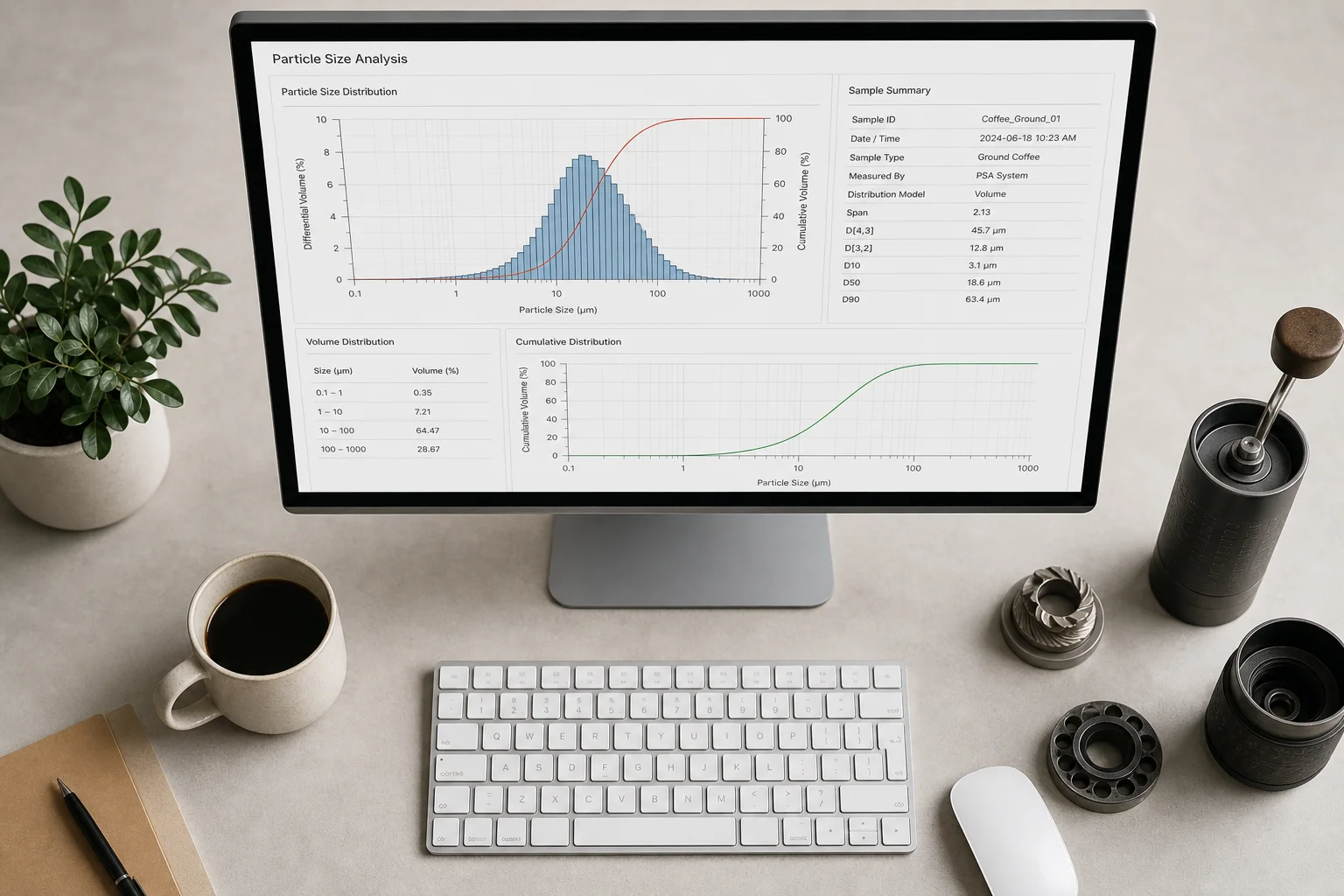
Particle size analysis reveals how each grinder distributes ground coffee across the size spectrum. The conical grinders (Baratza, Sage, Fellow, Varia) produced broadly similar distributions, with a wider range from fine to coarse. The DF54’s flat burrs created a distinctly different profile with a finer peak and potentially fewer ultra-fine particles.
The Varia showed unusual spikes at finer sizes, suggesting greater inconsistency in grind distribution. This may explain some of the muddiness observed in the cup.
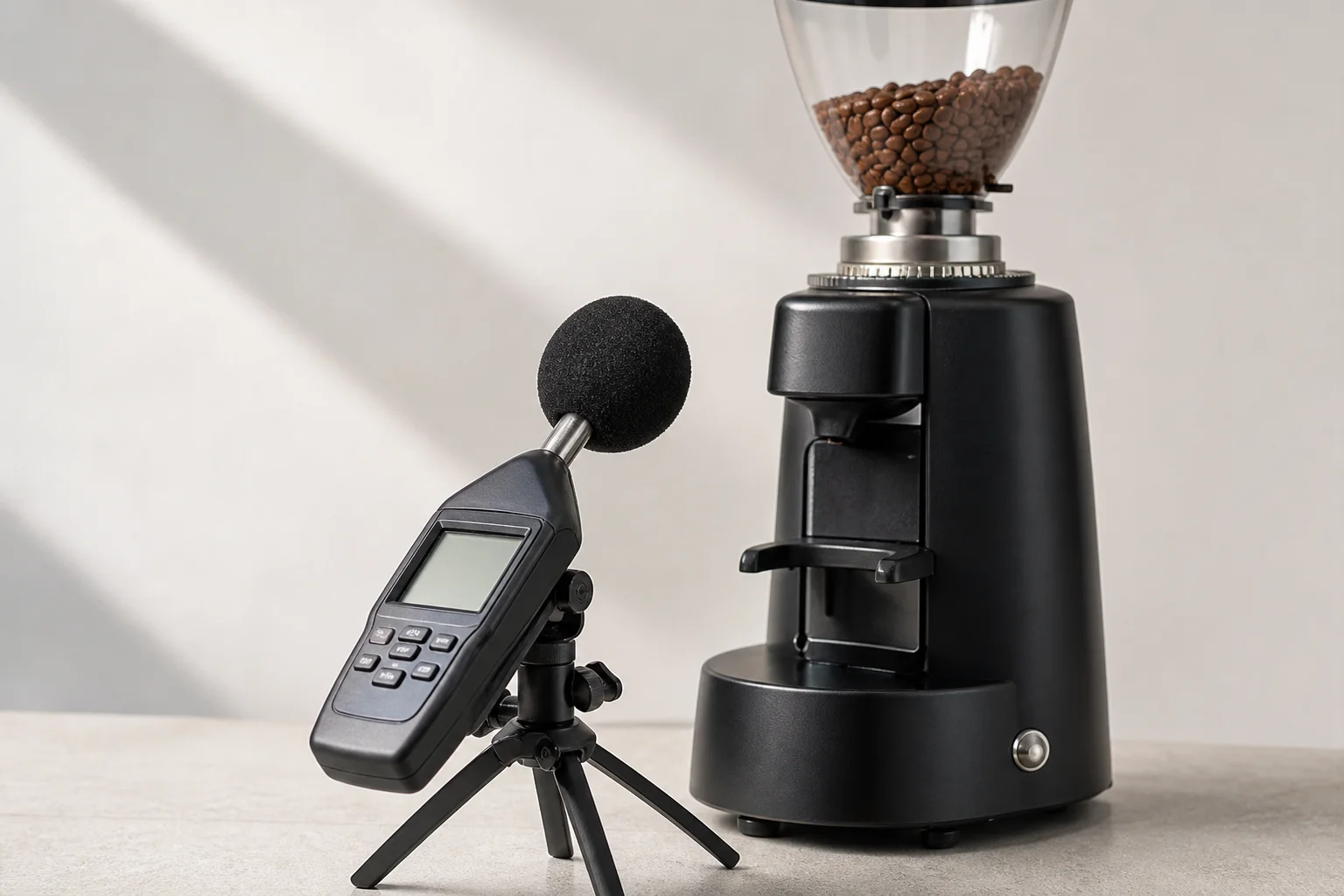
For filter coffee, all grinders produced coarser distributions, and meaningful differences became harder to discern from particle size alone. The data underscores that particle analysis is a useful comparative tool but not a complete picture of grinder performance.
Retention and Consistency
Retention testing measured how much coffee remains in the grinder after grinding. The DF54 was most consistent, followed closely by the Baratza Encore ESP. The Fellow Opus showed higher retention, requiring aggressive bellows work to fully empty. The Sage Smart Grinder Pro, not designed for single-dosing, was less consistent. The Varia performed reasonably well.
A second retention test involved grinding very coarse coffee to displace any fine particles, then returning to espresso settings. Most grinders showed minimal impact on extraction. Only the DF54 and Baratza showed slight extraction drops, suggesting slightly higher retained-and-exchanged coffee. Overall, real-world retention was acceptable across the group.
Sound and Power Consumption
Sound quality varies significantly. The Baratza Encore ESP is notably loud and shrill, a deal-breaker for many users. The Sage is moderate. The Fellow Opus is reasonably quiet. The Varia is the quietest, thanks to its low RPM and small burr set, though grinding takes nearly twice as long as faster models.
The DF54 is moderately loud but not offensive.
Power consumption testing revealed discrepancies between rated and actual wattage. The Baratza was rated at 70W but drew over 130W. The DF54, rated at 150W, drew 170W. The Sage, rated at 165W, drew 188W. The Varia stayed close to its 96W rating. The Opus performed as expected. These differences matter if you’re calculating total socket load.
Filter Coffee Performance
Filter coffee tasting, including blind tastings, revealed further differences. The DF54 produced excellent filter coffee but required slightly finer settings to achieve optimal extraction. The Fellow Opus performed impressively across filter brews. The Baratza also made good filter coffee.
The Sage Smart Grinder Pro was better than expected but did not compete with the others. The Varia VS3 struggled most, lacking the clarity and sweetness other grinders achieved. Even the Sage outperformed it in filter testing.
Nitpicks and Considerations
The Baratza Encore ESP is excellent value but the noise is genuinely problematic for daily use. The stepped adjustment, while functional, lacks the precision of stepless alternatives.
The Sage Smart Grinder Pro feels dated. Its large hopper and catch cup are awkwardly sized. Retention is an issue if you single-dose. The coarse range is limited without a secondary adjustment.
The Fellow Opus makes excellent coffee but the two-step grind adjustment is unintuitive and frustrating. Retention requires constant bellows work. The dosing cup is uncomfortable to hold and poorly designed for espresso. The hopper lid shows wear from bellows use, raising questions about durability.
The Varia VS3 has a critical flaw: the grind setting drifts during grinding, making consistent dialling-in nearly impossible. The anti-popcorning disc is ineffective. The large power brick is inconvenient. The white finish shows dirt quickly. On the positive side, it is the quietest grinder and the build quality is impressive.
The DF54 is messy without pre-wetting beans, though cleaning the ionizer improves performance. The adjustment dial is stiff and difficult to turn, requiring two hands even for small changes. The bellows are necessary but annoying. These are minor compromises for a flat-burr grinder at this price.
Conclusion
The espresso grinder market under £250 now offers genuine quality. The Baratza Encore ESP delivers exceptional value despite its noise. The Sage Smart Grinder Pro pioneered this category and remains functional, though dated. The Fellow Opus makes excellent coffee but has usability frustrations. The Varia VS3 offers solid build and quiet operation but the drifting grind setting is unacceptable. The DF54 is an impressive flat-burr option that punches well above its price point.
Your choice depends on priorities. For budget and simplicity, the Baratza. For proven reliability, the Sage. For excellent espresso and filter coffee with some workflow compromises, the Opus. For quiet operation and build quality, the Varia, if you can tolerate the grind-setting drift. For flat-burr performance and cup quality, the DF54 is hard to beat.
Consider your local support and warranty options, as these vary by region and may influence your decision. All five are worth serious consideration at this price point.
Further reading
Related Reviews
Coffee Equipment
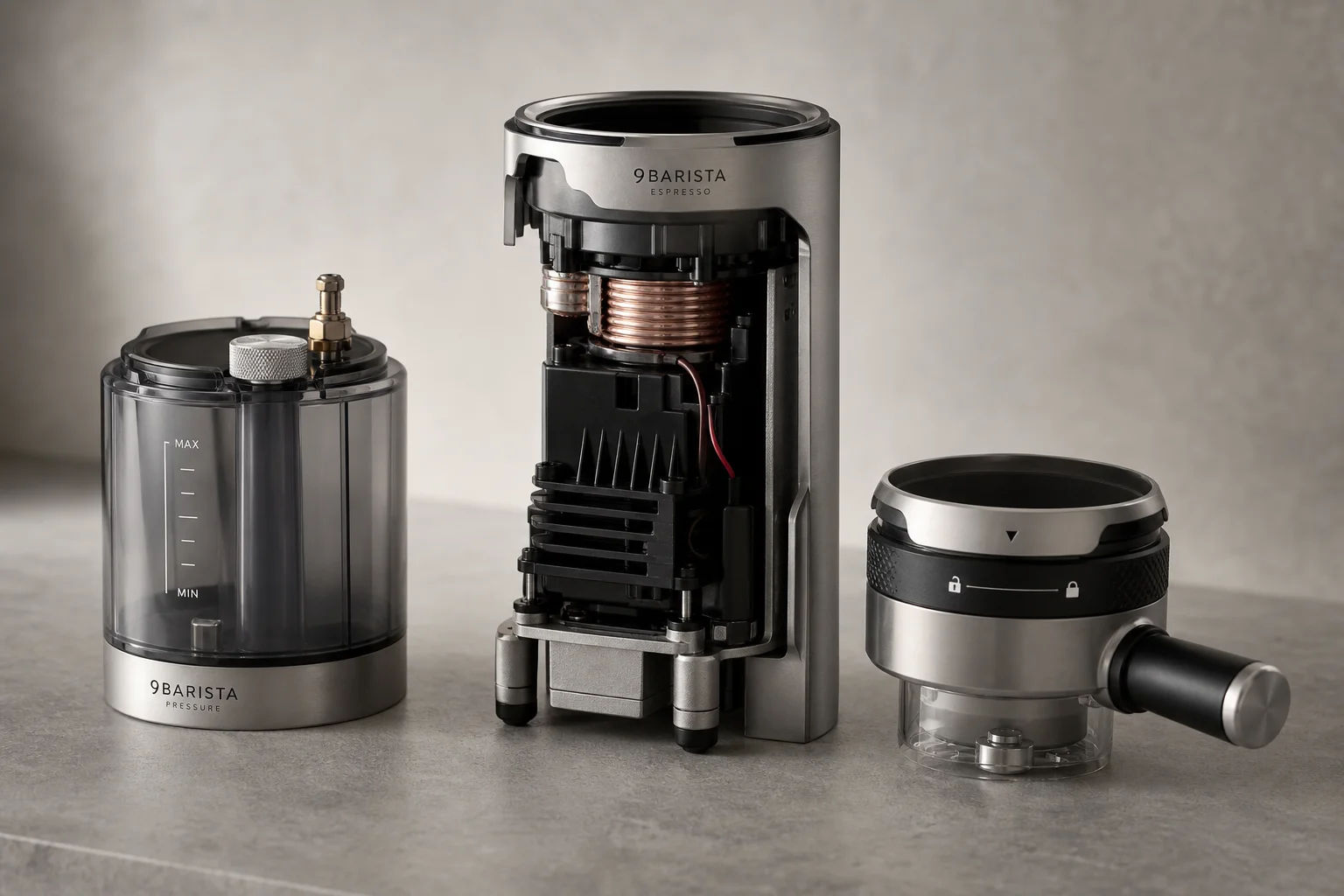
9Barista Espresso Machine Review: Stovetop Espresso for Single-Cup Enthusiasts
A cleverly engineered stovetop espresso maker that generates nine bars of pressure without electricity. Excellent coffee quality, but requires patience and suits solo drinkers only.
Coffee Equipment
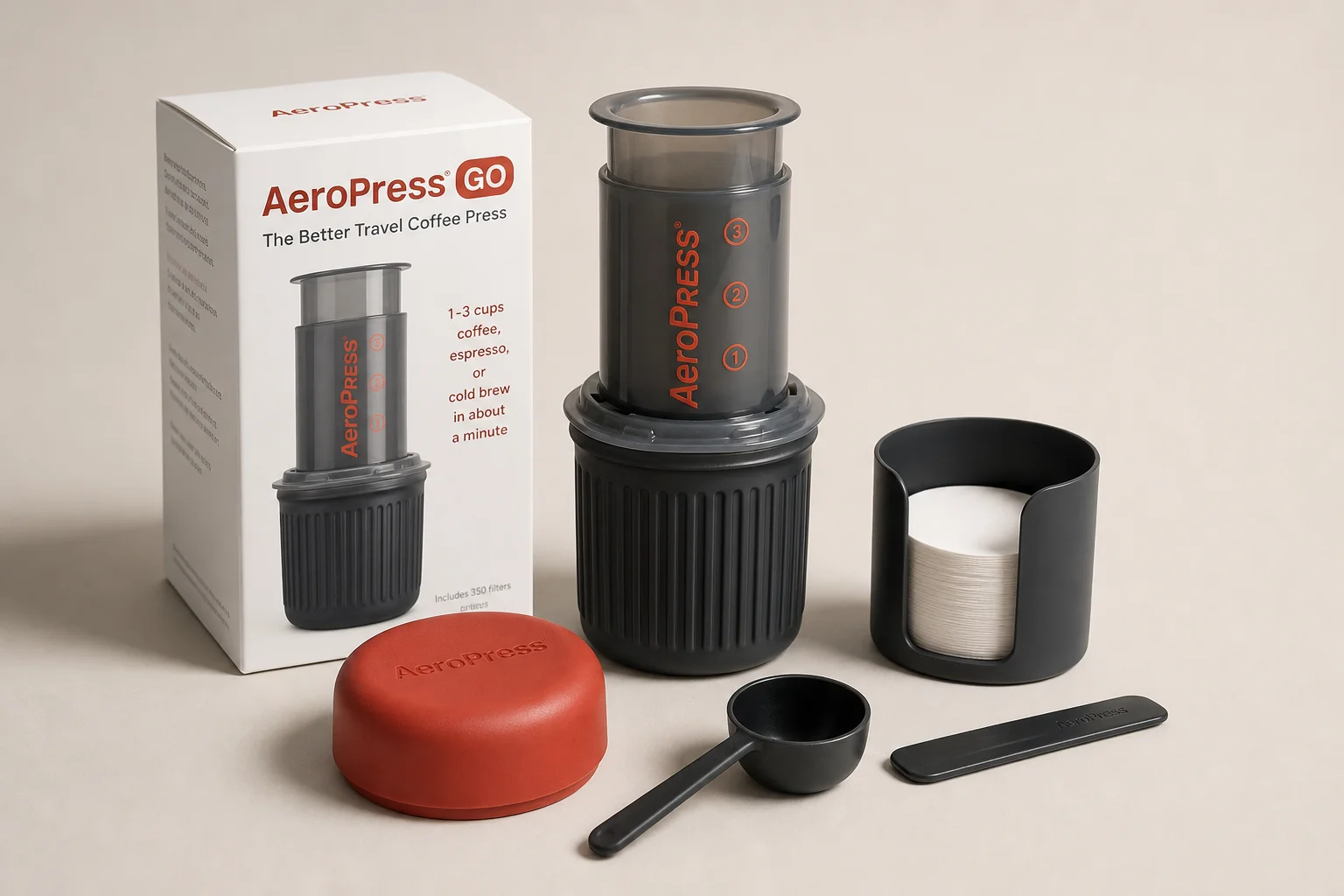
Aeropress Go Review: A Compact Travel Brewer That Solves One Specific Problem
The Aeropress Go shrinks the original design and adds an integrated cup, but it may not address the travel challenges most coffee enthusiasts actually face.
Coffee Equipment
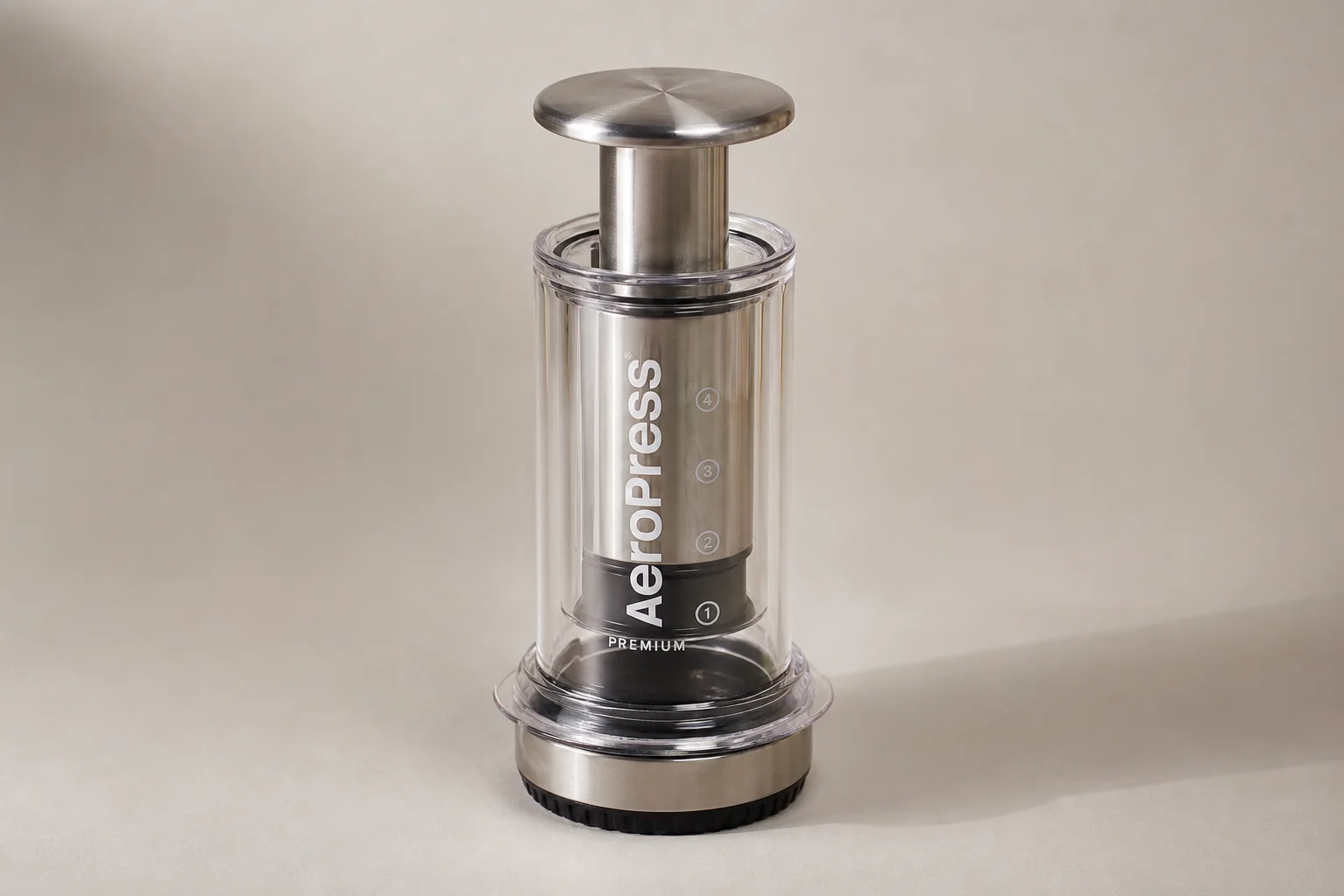
AeroPress Premium Review: Premium Materials, Practical Trade-offs
The AeroPress Premium brings glass and metal construction to a beloved brewer, but trades portability and durability for a more refined feel. Here's what changes in the cup and what matters before you buy.