Coffee Equipment
Best Home Coffee Roasters: Five Machines for Different Roasting Goals
A detailed guide to five home coffee roasters, from simple automatic machines to advanced drum roasters, with real roasting demonstrations and practical buying advice.
Introduction
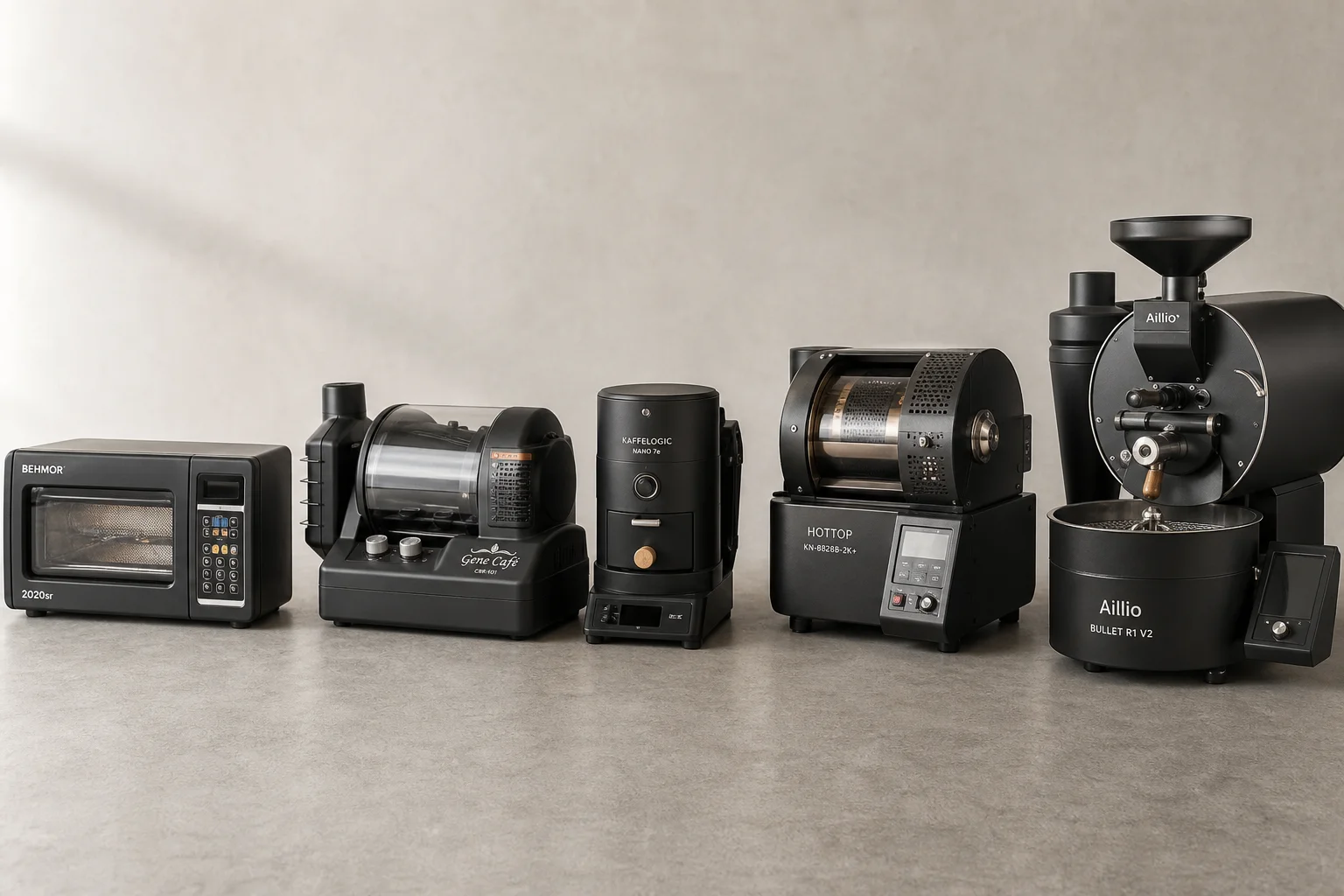
Choosing a home coffee roaster depends on what you want from the roasting experience. Some people want simplicity and good results with minimal effort. Others want to dive deep into roasting profiles, temperature curves, and precision control. This guide covers five machines that represent the main categories: two home roasters designed for ease of use, one sample roaster built for consistency and repeatability, and two drum roasters for those who want to learn and experiment.
All five machines roast batches up to one kilogram and work on standard household electrical circuits. The key differences lie in capacity, heat transfer method, temperature measurement, and how much control you have during a roast.
Home Roasters: BEHMOR 2020sr and Gene Café CBR-101
The BEHMOR 2020sr and Gene Café CBR-101 are the entry point for home roasting. Both have been in the market for many years, both have large communities of users sharing tips and profiles, and both produce genuinely good coffee without requiring you to understand roasting thermodynamics.
BEHMOR 2020sr
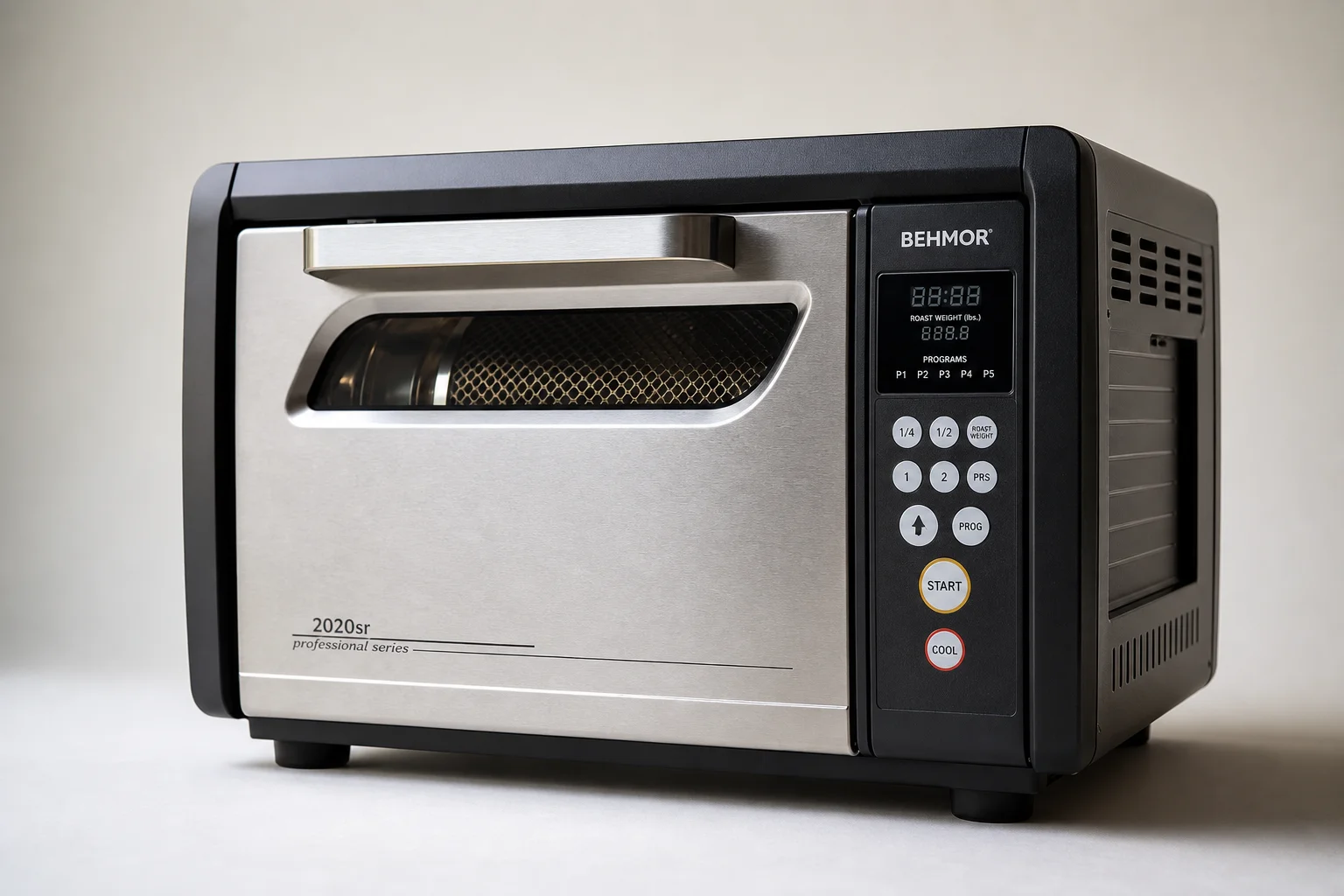
The BEHMOR looks more like a microwave than a traditional roaster. It holds up to 450 grams of green beans, though 250 grams produces better results because longer roasts can compromise quality. The machine uses infrared heating elements to roast the beans, with some conduction and convection as well.
What you control on the BEHMOR is the power level of the heating elements (0, 25, 50, 75, or 100 percent) and the drum speed. You can roast manually by adjusting these settings during the roast, or you can use one of five pre-programmed profiles. The machine measures drum temperature and exhaust temperature, not bean temperature. An afterburner reduces smoke, which is helpful if you roast indoors. Internal cooling exists but is slow, so most users cool beans outside.
The control panel has many buttons with dual functions depending on whether you are in manual or automatic mode. It takes a roast or two to feel comfortable with it, but it is not overly complicated. The machine has been in the market since 2007, so there is extensive documentation and community knowledge available.
Gene Café CBR-101
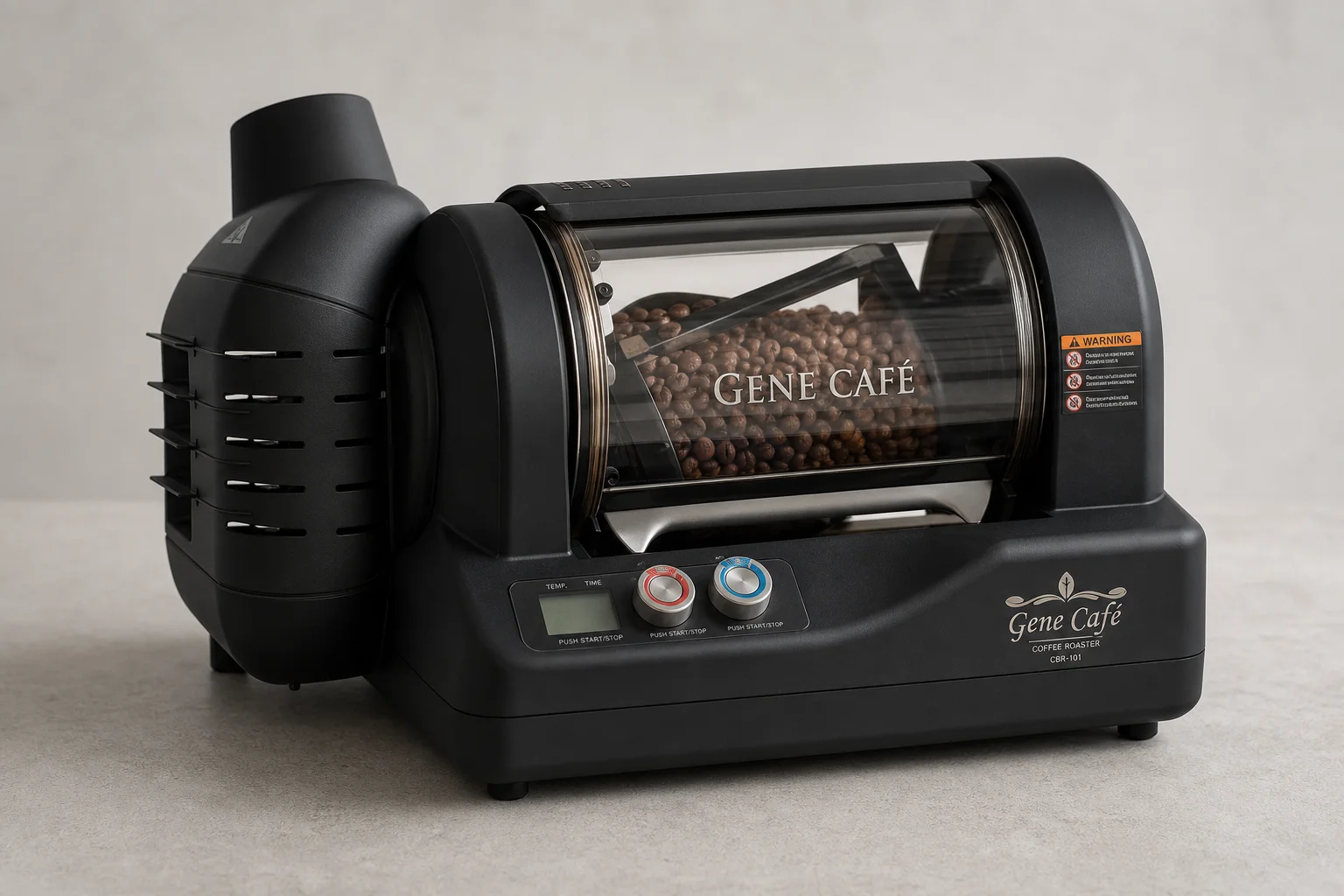
The Gene Café is simpler in design. It has a glass roasting drum so you can watch the beans throughout the roast. The capacity is 250 grams. Heat transfer is primarily by convection, with hot air flowing through the chamber. The machine measures exhaust temperature, not bean temperature.
You control the machine with two knobs. You set a target temperature, and the machine heats itself to that temperature and holds it. You can create different roast profiles by setting different target temperatures at different times, but there are no pre-programmed profiles and no software connection. Roasting is entirely manual, though the machine does the heavy lifting once you set the temperature.
The Gene Café is built simply and solidly. Many users have owned one for ten years or more. Maintenance is minimal: empty the chaff collector regularly and keep the roast chamber clean with a dry towel. Like the BEHMOR, it has internal cooling but benefits from external cooling.
Both machines produce high-quality roasts and are genuinely easy to use. The trade-off is that you have less precision and fewer factors to influence compared to more advanced machines. You cannot measure bean temperature, you cannot record roasts, and you cannot connect to software. But for someone starting out or roasting for personal use, both deliver excellent coffee at a reasonable price.
Sample and Profile Roasting: Kaffelogic Nano 7e
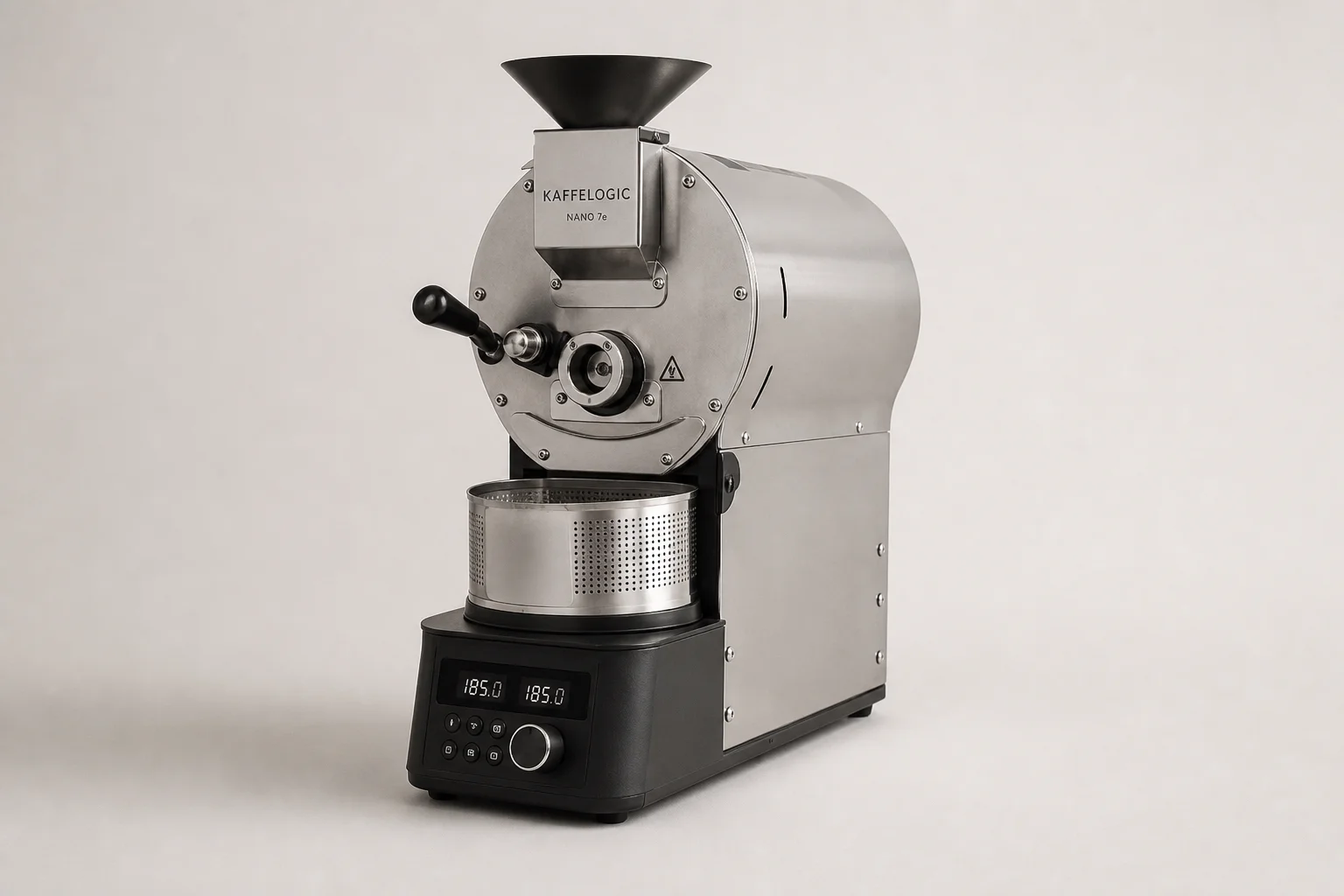
The Kaffelogic Nano 7e is designed as a sample roaster. Sample roasting has two purposes: choosing green beans for your assortment by roasting and cupping multiple samples, and developing roast profiles by gathering detailed information about how specific beans behave.
For the first purpose, specialty coffee protocols call for about 100 grams of roasted coffee per sample, which requires roasting about 115 to 120 grams of green beans. For the second purpose, you want a sample roaster that roasts at a similar speed and temperature profile to your production roaster, so the information you gather is actually useful when you scale up.
The Kaffelogic Nano 7e roasts 120 grams of green beans (with an upgrade kit available by year-end that allows up to 200 grams). It measures bean temperature with a naked sensor for faster response. Heat transfer is by convection. The machine uses PID control, meaning you draw a temperature curve on a computer and the machine follows it automatically.
You choose a roast profile from the twelve pre-loaded profiles or from community boards, select your desired roast color, and press play. The machine handles the rest. You can roast manually if you want, adjusting airflow and temperature during the roast, but automatic roasting is the typical workflow. The machine cools beans quickly and includes a chaff collector. Maintenance is minimal.
The Kaffelogic is also an excellent home roaster for people who want simplicity but appreciate having a bean temperature sensor and automatic roasting. The small size means it fits anywhere, and the pre-loaded profiles work well out of the box.
Drum Roasters: Hottop and Aillio Bullet
Drum roasters are the choice for people who want to learn roasting deeply, work with roast profiles and curves, and have precise control over every phase of the roast. These machines are similar in concept to commercial production roasters, just much smaller. They measure bean temperature, allow you to adjust heat and airflow independently, and can connect to roasting software like Artisan or RoasTime for recording and automating roasts.
Hottop KN-8828B-2K+
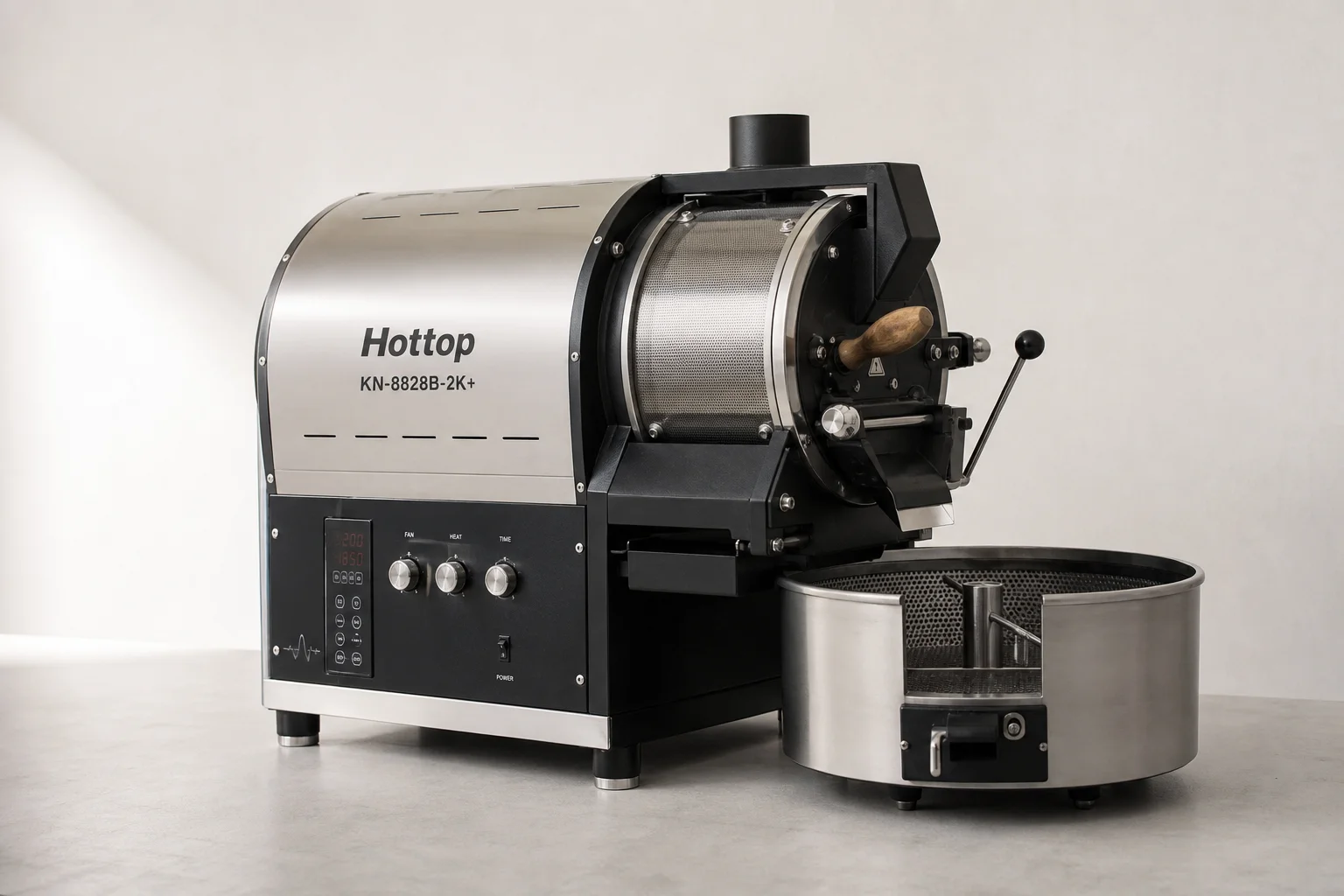
The Hottop is a compact drum roaster with a 300-gram capacity. It uses 750 watts maximum, making it the most energy-efficient machine in this group. A heating element heats the drum, and an airflow passes through the machine, so you get both conductive and convective heat transfer.
You control the heating element power (in 100 steps) and the fan speed (in 10 steps) using knobs on the machine. A bean temperature probe measures the actual temperature of the beans, and an environmental sensor measures air temperature inside the roaster. You can roast manually by adjusting these settings in real time, or you can connect the machine to Artisan software and program automatic roasts using alarms (for example, “when bean temperature reaches 160 degrees, set heat to 60 and fan to 3”).
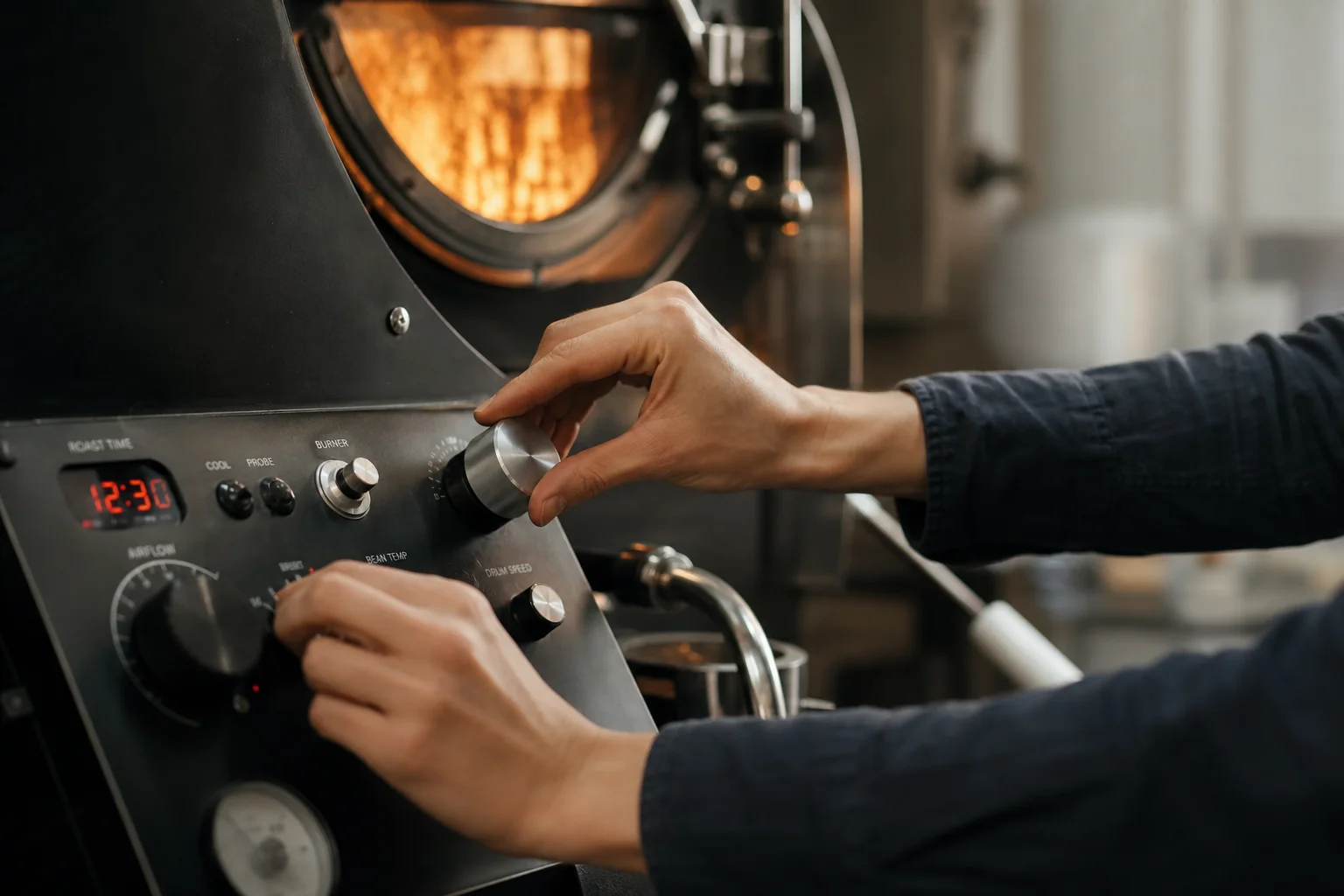
The Hottop has a good cooling tray, a chaff tray that empties easily, and filters that need changing periodically depending on roast frequency. The machine is excellent for people who want to understand roasting in detail, learn how to read roast curves, and develop their own profiles. What you learn on a Hottop translates directly to larger commercial roasters.
Aillio Bullet R1 V2
The Aillio Bullet is larger and more powerful than the Hottop, with a one-kilogram capacity. Despite this, it uses only 1500 watts maximum because it uses induction heating for the drum, making it remarkably energy-efficient. The machine is compact and works on a standard household outlet.
You control the heating element power, fan speed, and drum speed, each in nine steps. You can also control cooling fan speed in nine steps. Like the Hottop, you can adjust these settings directly on the machine or through software. You can connect to Artisan or to RoasTime, which is Aillio’s own software and includes a community platform for sharing roast recipes.
The Aillio Bullet has excellent cooling, allowing back-to-back roasts. It includes a chaff collector and requires minimal maintenance. The one-kilogram capacity makes it popular with home roasters who want a commercial roaster experience, with people learning the craft, and with small-scale commercial roasters starting out or roasting nanolots.
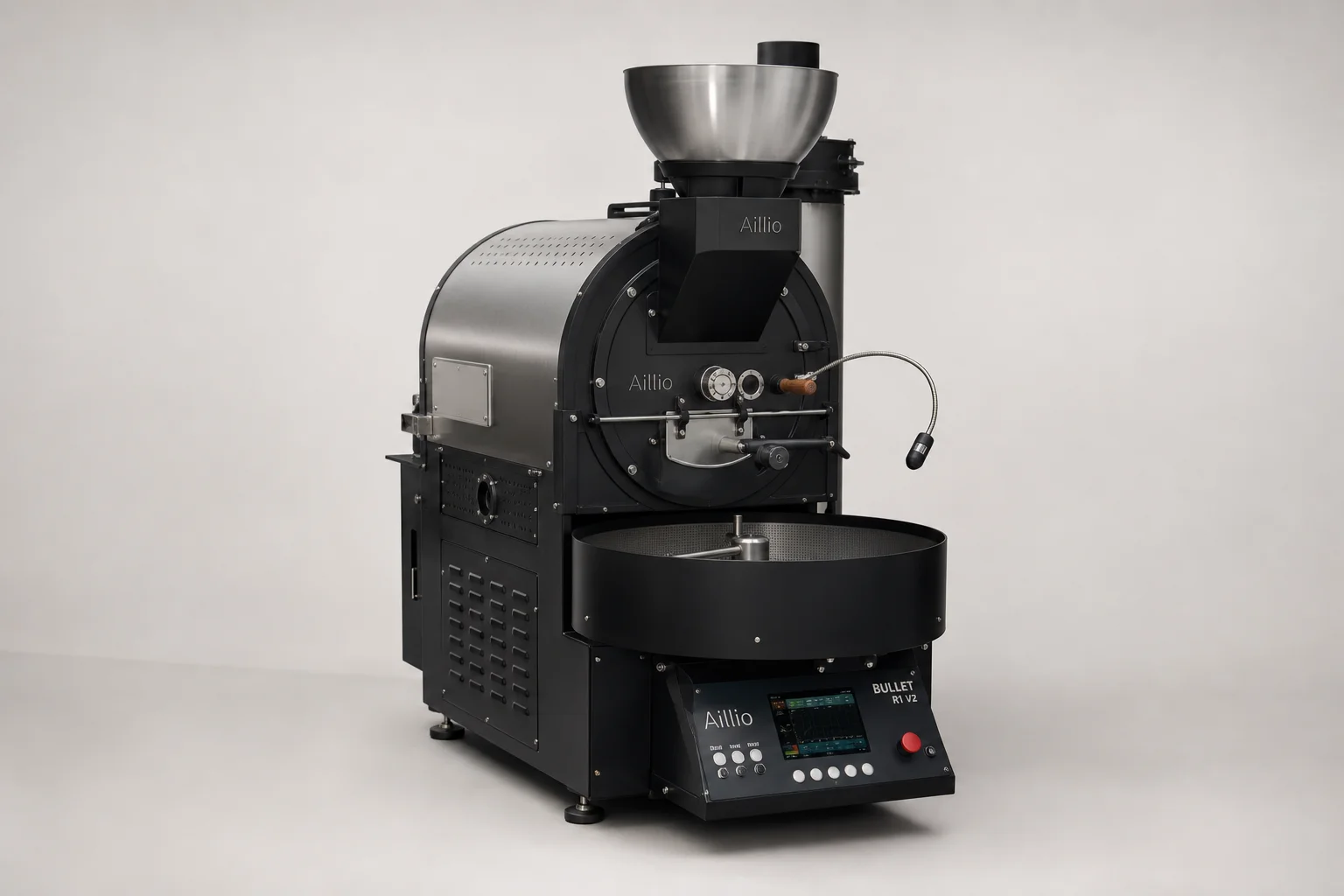
Both drum roasters require more active management during a roast than the home roasters or the Kaffelogic. You make adjustments based on what you observe: bean color, sound of first crack, rate of rise in temperature. But this hands-on approach is also what makes these machines educational and flexible. You can experiment, learn, and develop your own roasting style.
Roasting Demonstrations and Results
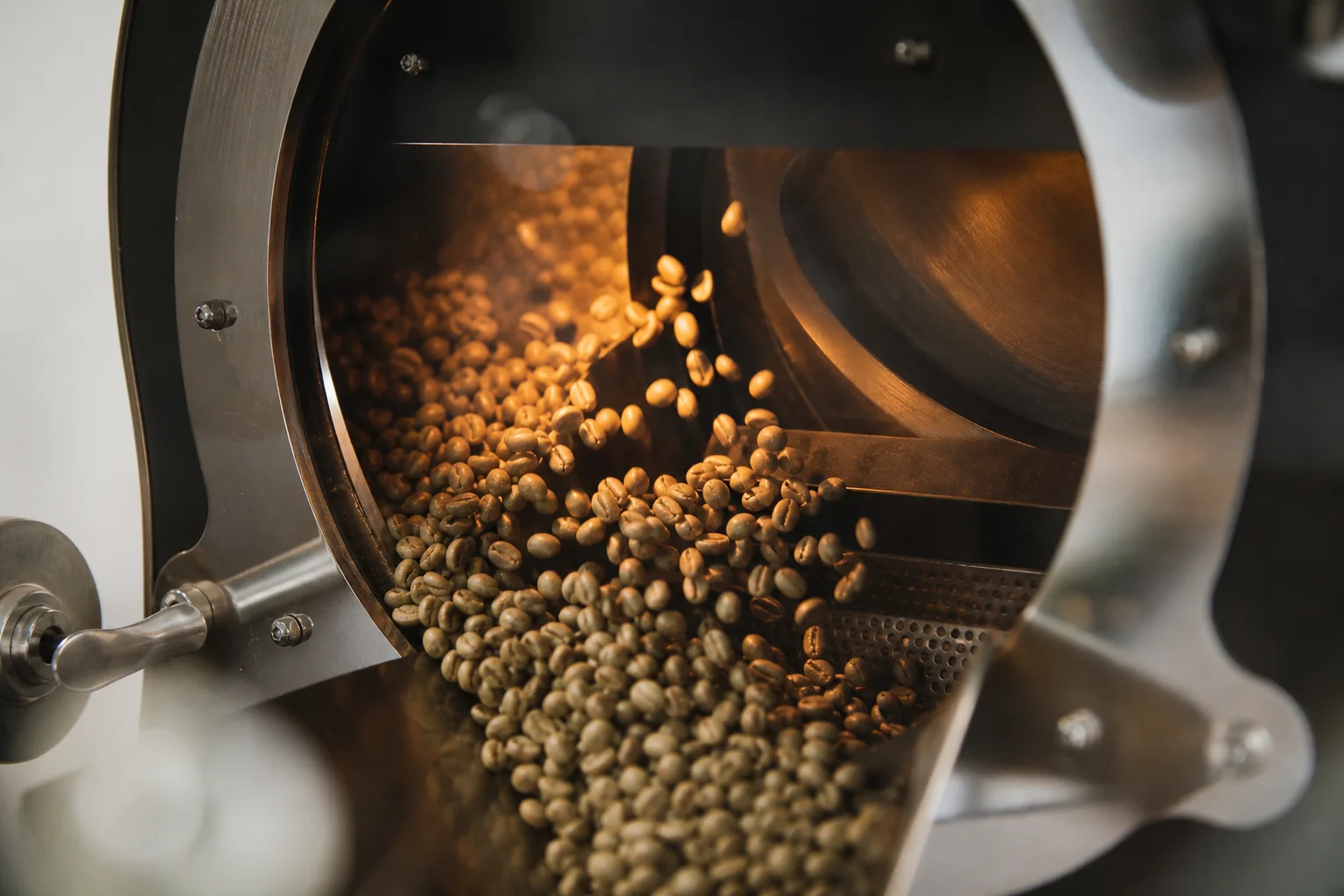
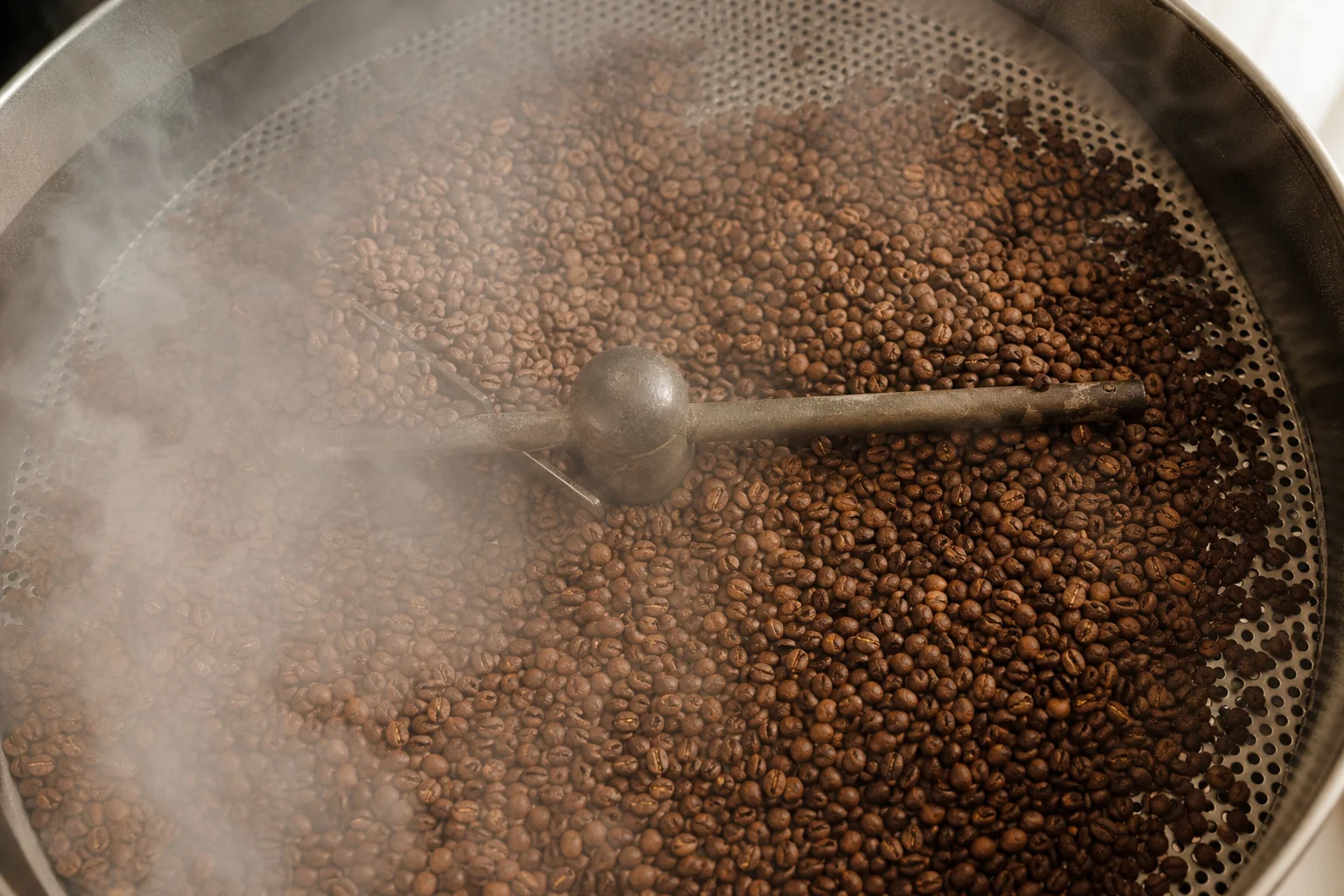
All five machines produce genuinely good coffee. A natural Brazilian bean roasted to city-plus on each machine shows consistent results: even color, no defects, and the roast degree right on target. The BEHMOR and Gene Café achieve this with minimal intervention. The Kaffelogic does it automatically once you select a profile and color. The Hottop and Aillio Bullet require you to make a few adjustments, but the process is straightforward once you understand the basics.
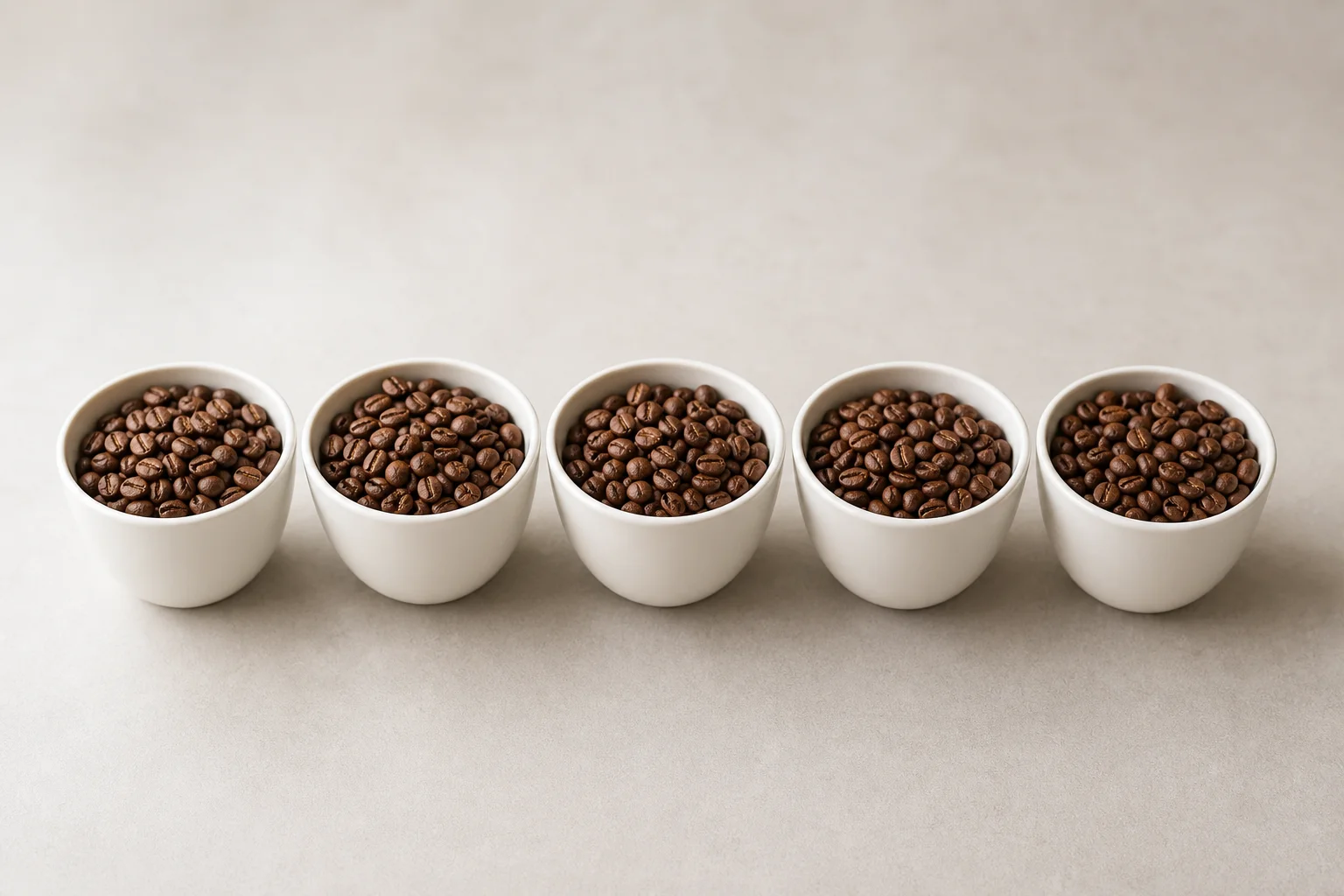
The key difference is the experience and the information you get. With the home roasters, you roast good coffee and move on. With the sample roaster, you get repeatability and bean temperature data. With the drum roasters, you get detailed control, learning opportunities, and the ability to develop and share roast profiles with a community.
Conclusion
Your choice depends on what you want from roasting. If you want good coffee with minimal fuss, the BEHMOR or Gene Café are reliable, affordable, and proven. If you want a small machine that roasts consistently and automatically, the Kaffelogic Nano 7e is hard to beat. If you want to learn roasting in depth, experiment with profiles, and eventually scale to a commercial roaster, either the Hottop or the Aillio Bullet will serve you well. All five machines are well-built, have active communities, and produce excellent results.
Further reading
Related Reviews
Coffee Equipment
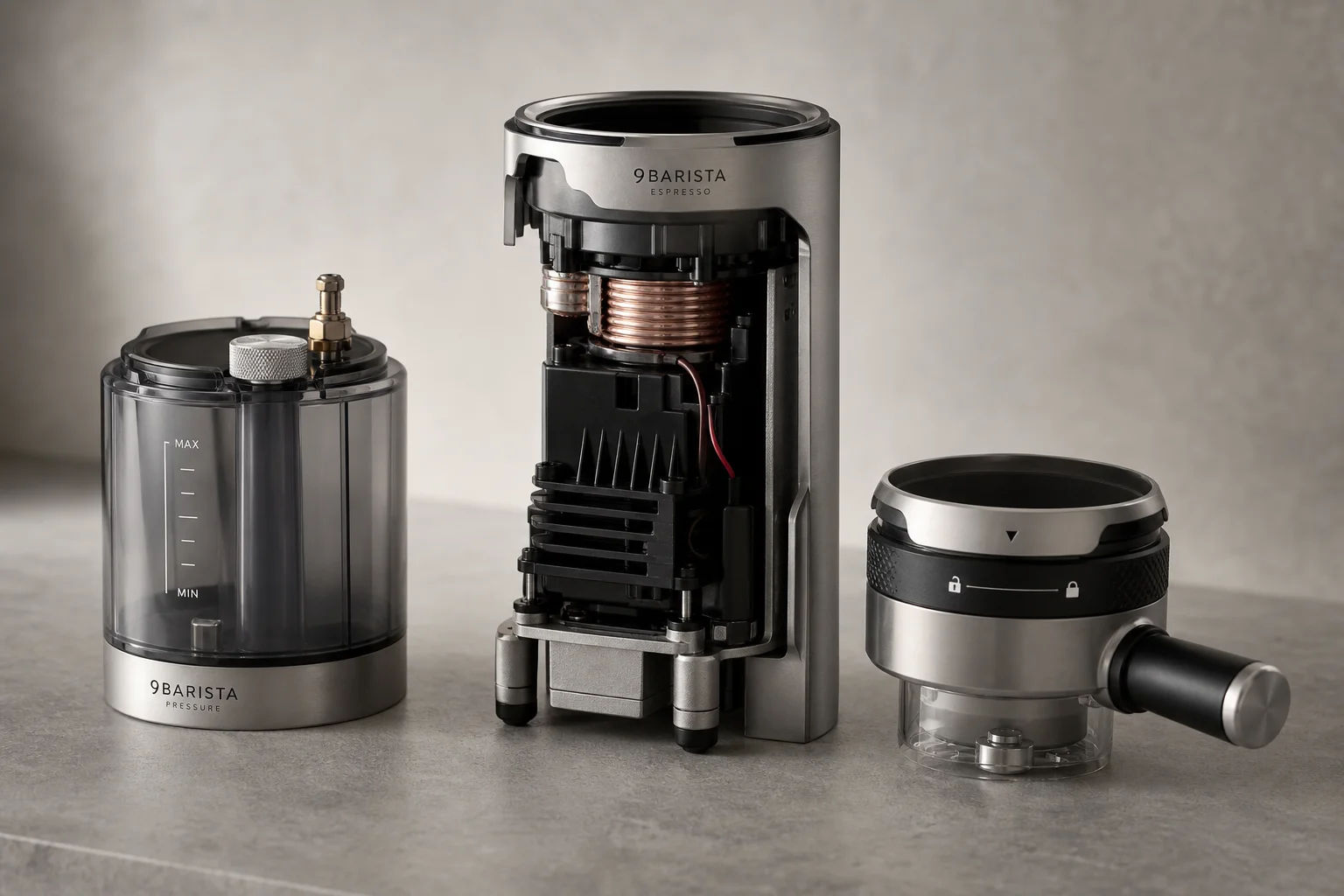
9Barista Espresso Machine Review: Stovetop Espresso for Single-Cup Enthusiasts
A cleverly engineered stovetop espresso maker that generates nine bars of pressure without electricity. Excellent coffee quality, but requires patience and suits solo drinkers only.
Coffee Equipment
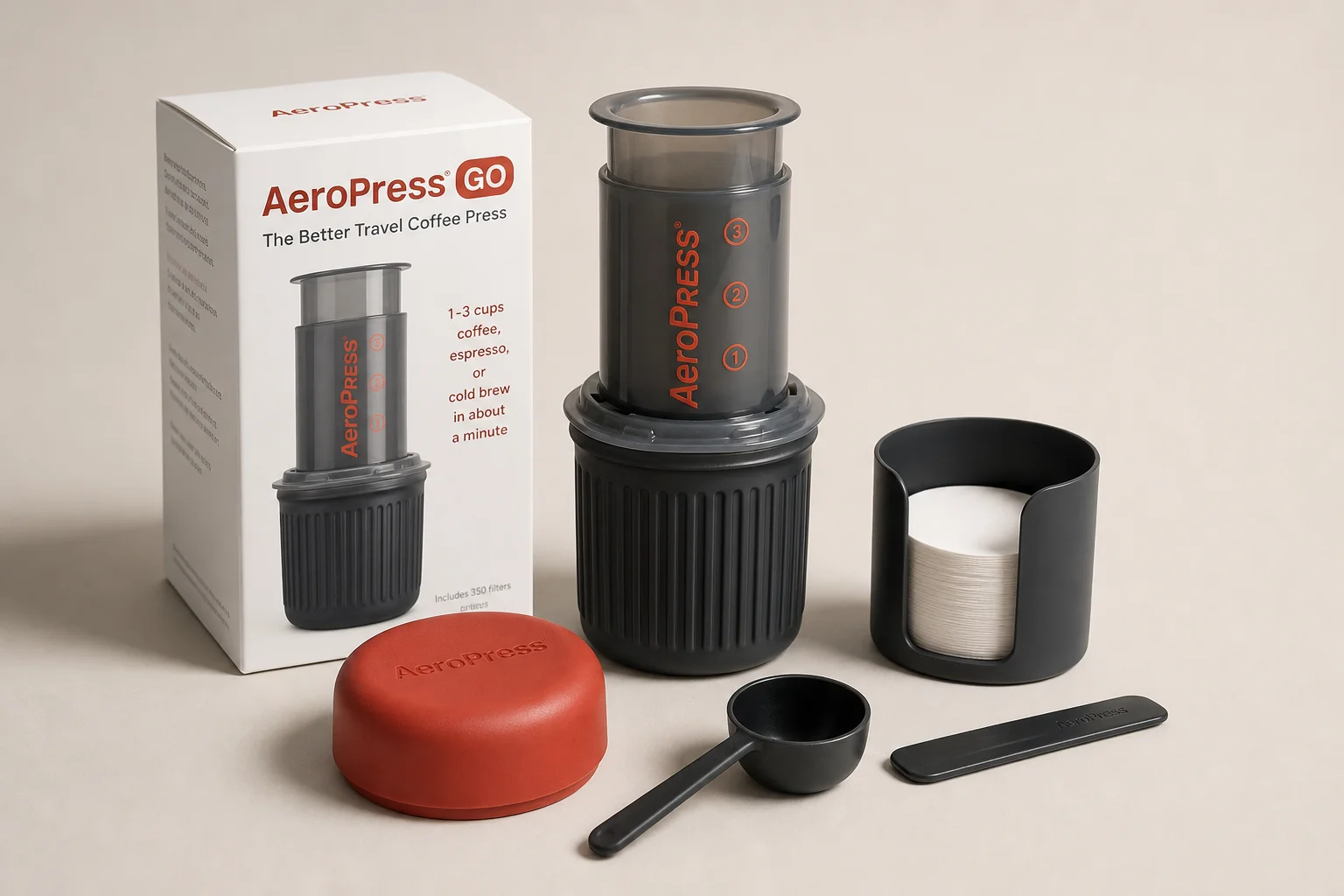
Aeropress Go Review: A Compact Travel Brewer That Solves One Specific Problem
The Aeropress Go shrinks the original design and adds an integrated cup, but it may not address the travel challenges most coffee enthusiasts actually face.
Coffee Equipment
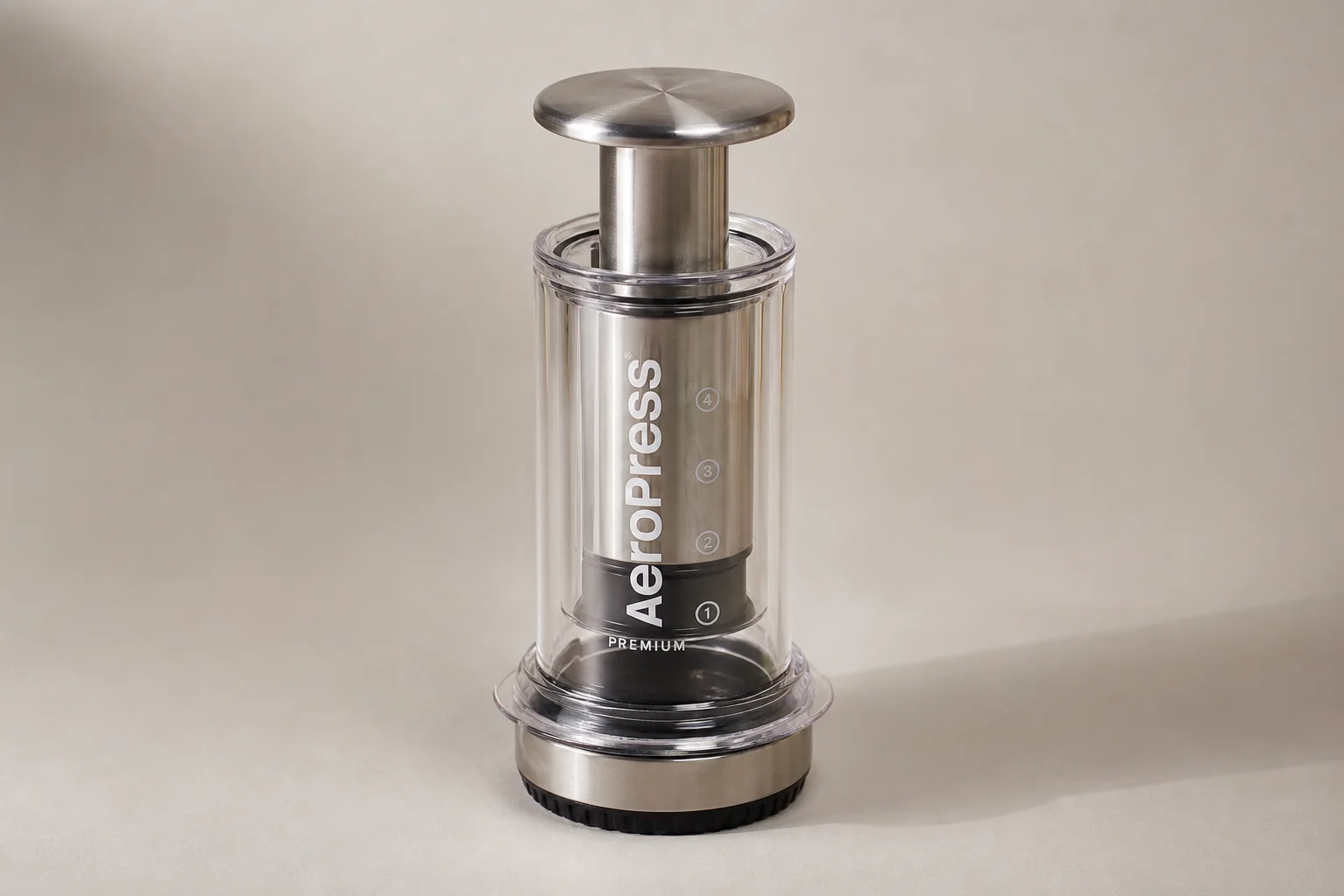
AeroPress Premium Review: Premium Materials, Practical Trade-offs
The AeroPress Premium brings glass and metal construction to a beloved brewer, but trades portability and durability for a more refined feel. Here's what changes in the cup and what matters before you buy.