Coffee Equipment
Cafelat Robot Barista Model Review: A Manual Lever Espresso Machine Worth Considering
The Cafelat Robot Barista Model is a well-made manual espresso machine that delivers excellent shots with a straightforward workflow. Here's what to expect from this $370 brewer.
Introduction
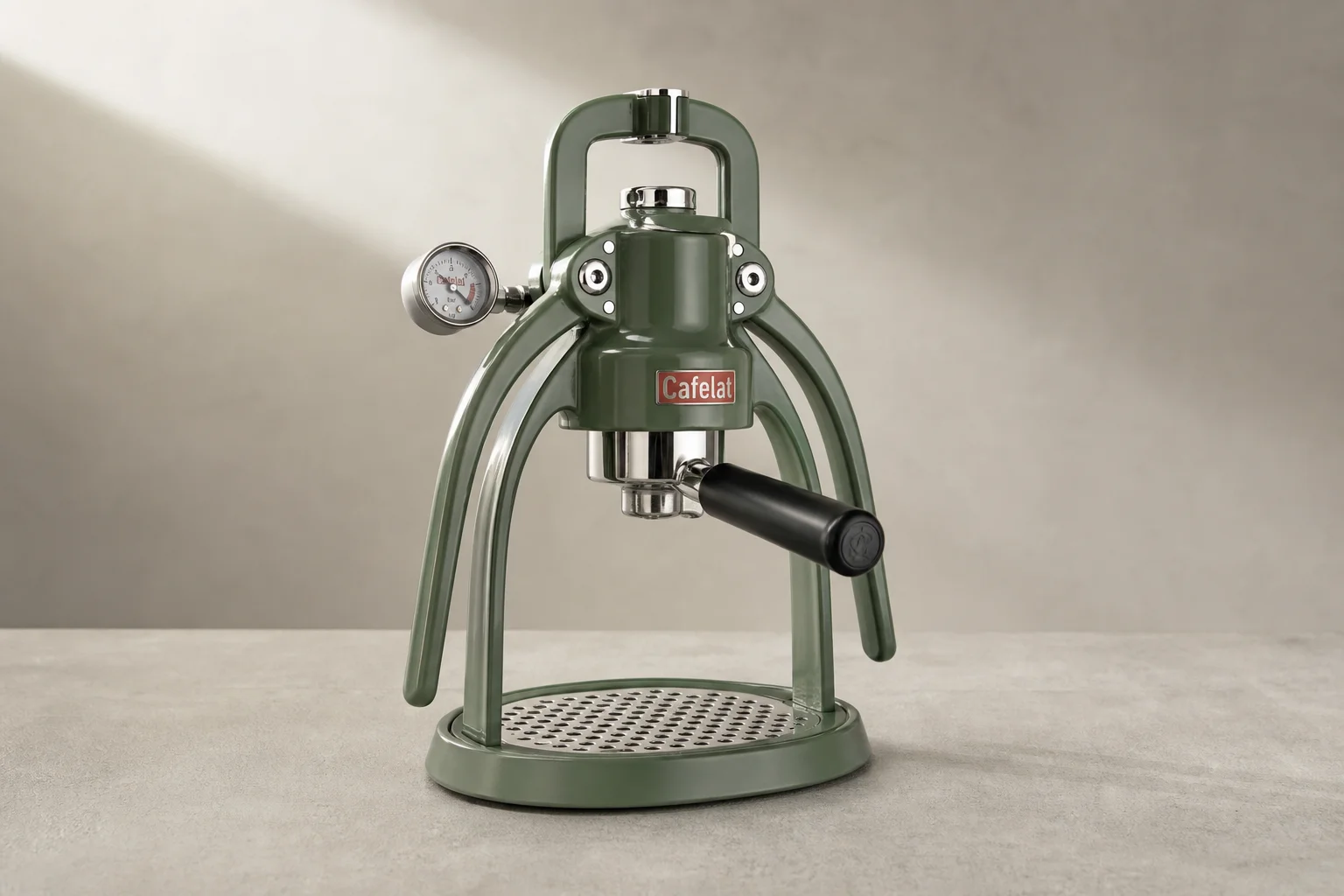
The Cafelat Robot Barista Model is a manual lever espresso machine that stands out for its thoughtful design and solid build quality. At $370, it offers a different approach to home espresso brewing, combining mechanical simplicity with the ability to produce genuinely good shots. This review covers the key strengths, practical considerations, and what the actual brewing experience feels like.
Key Components and Setup
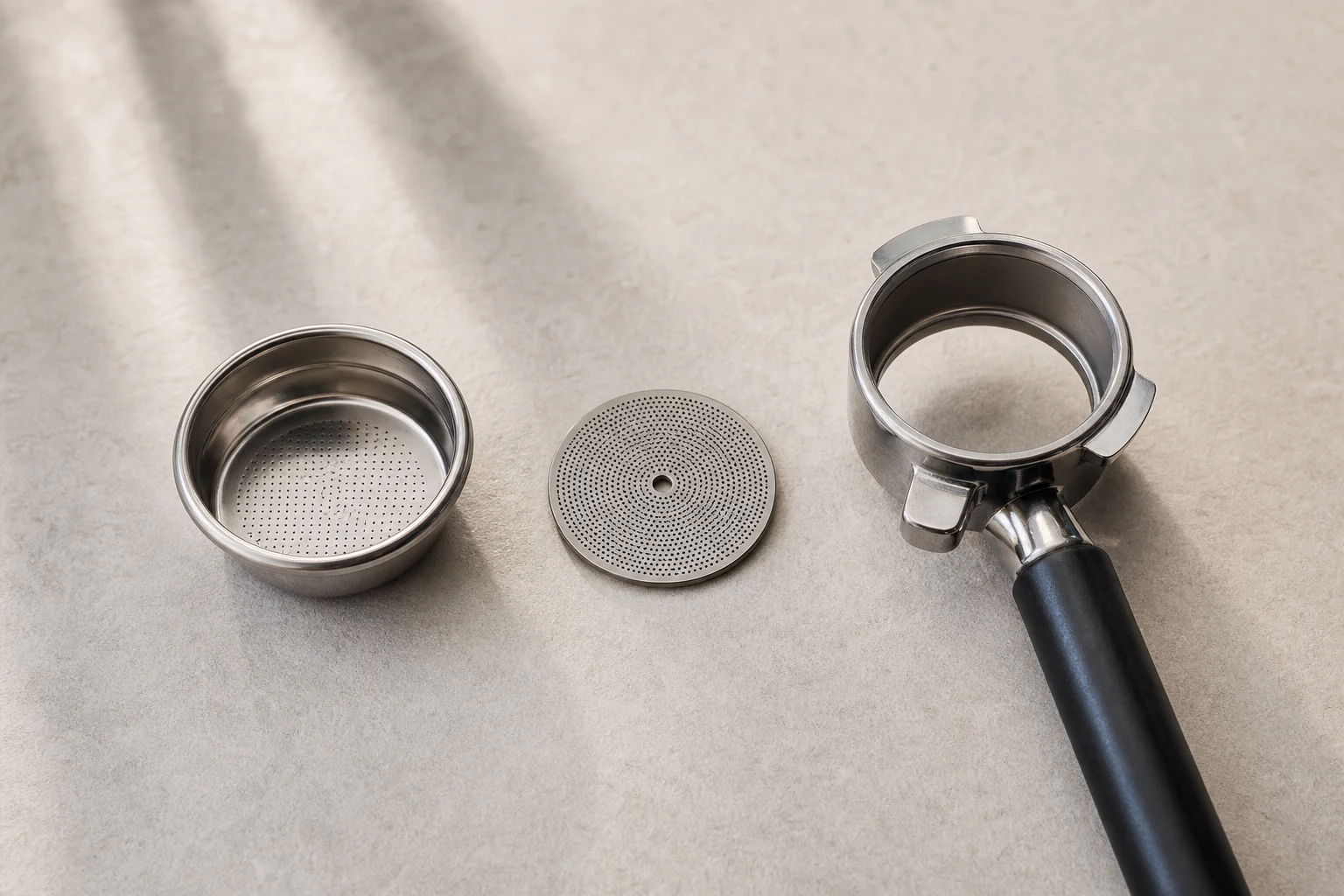
The Cafelat Robot’s design centers on a unique brew chamber system. The portafilter basket has unusually tall walls because it doubles as your brew chamber. You add ground coffee to the basket, tamp it down, then place a dispersion screen on top. The machine then accepts hot water poured directly into this assembly, which you then lock into the machine.
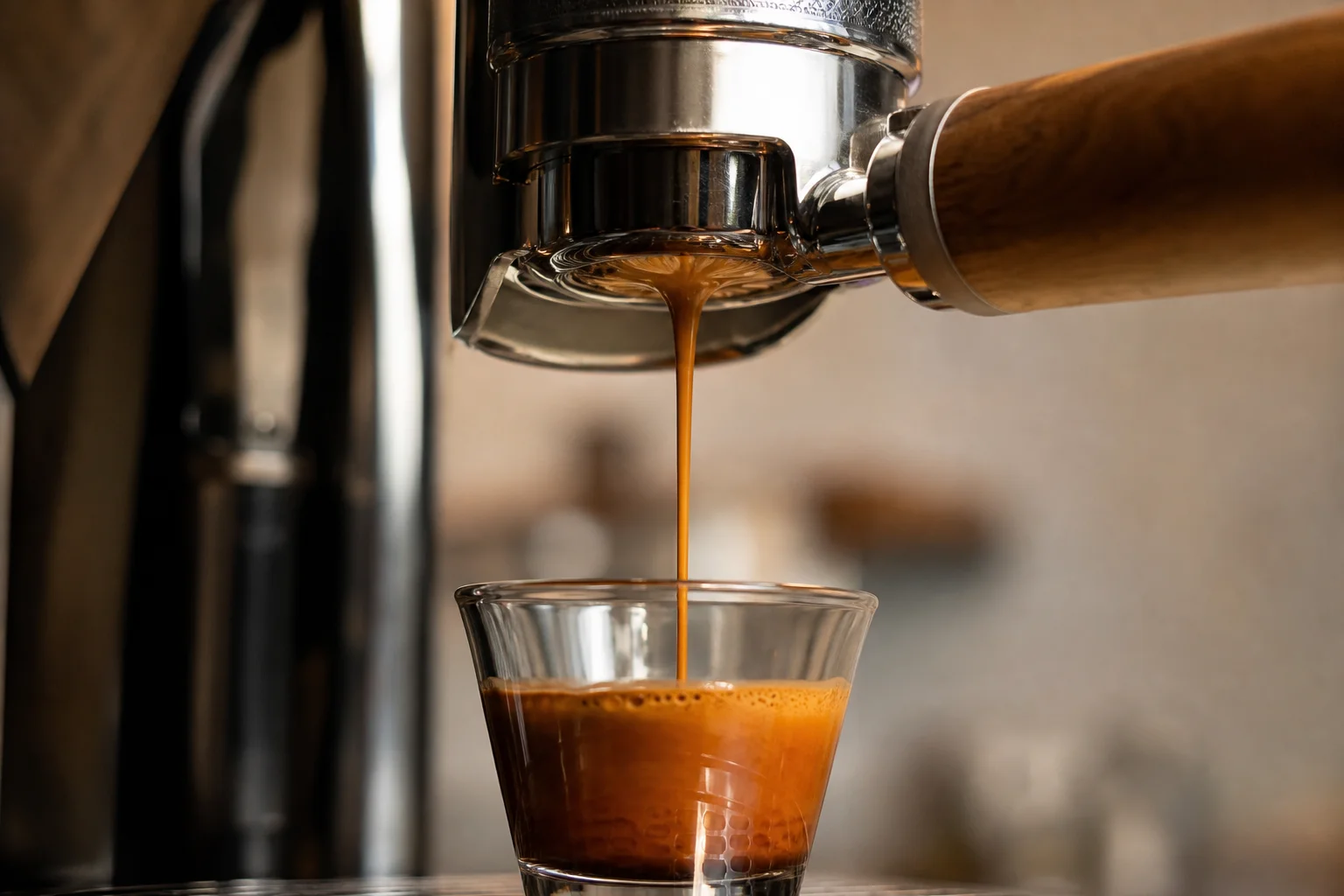
The included pressure gauge lets you monitor the force you’re applying in real time, which is helpful for consistency. The machine comes with a tamper designed specifically for the basket, and you also get optional spouts that attach to the bottom of the brew chamber. Most users prefer naked extractions without these spouts, as they add thermal mass and can cool your shot on its way to the cup.
A pressurized portafilter basket is also included, designed for pre-ground supermarket coffee. If you have a quality grinder, you won’t need this, but it’s a useful addition for convenience brewing.
Brewing Workflow and Performance
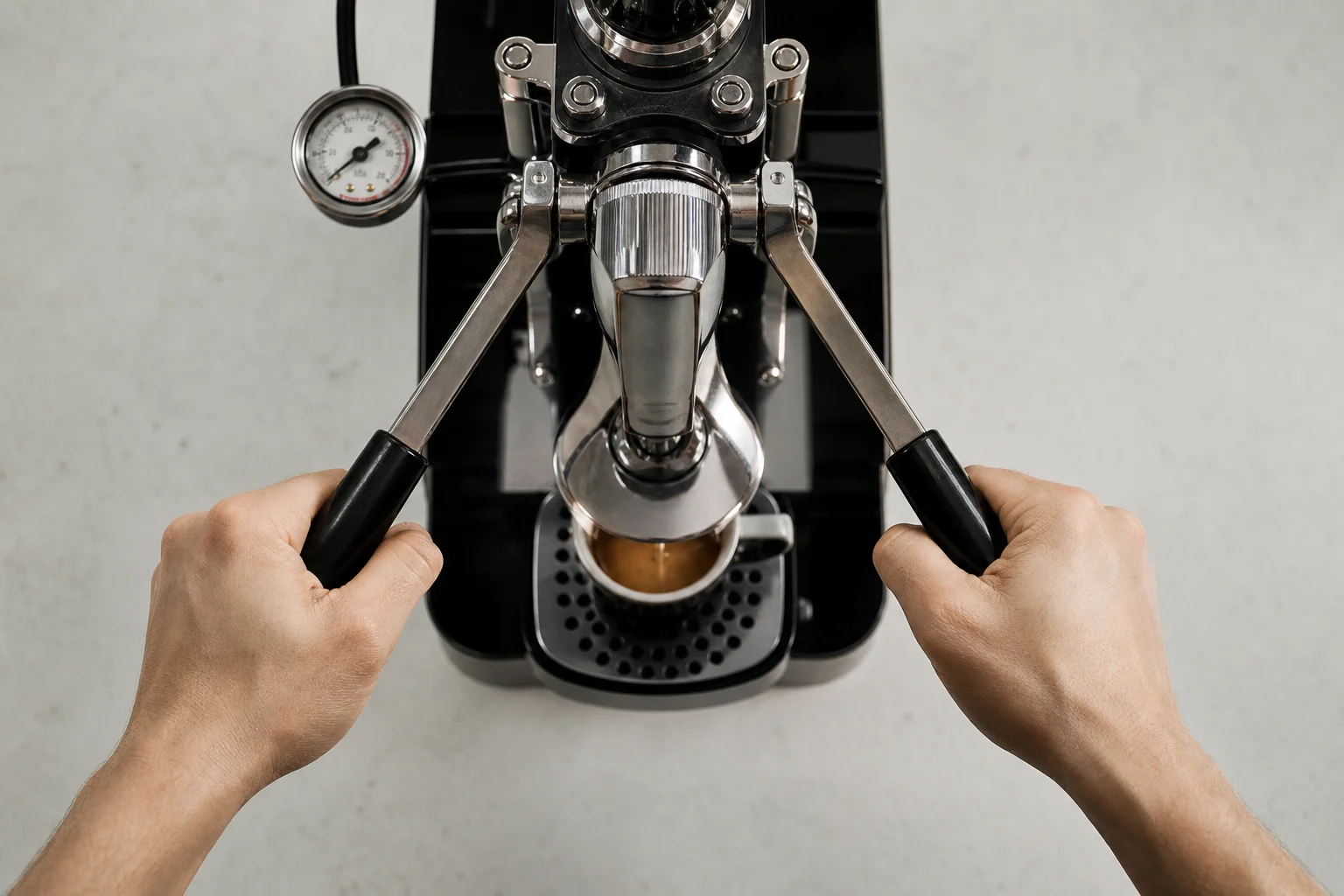
The workflow is straightforward once you understand the sequence. Weigh your coffee (the basket handles roughly 10 to 20 grams, though 20 grams is physically demanding), tamp it, add your dispersion screen, pour hot water just off the boil into the basket, lock the assembly into the machine, then use the lever arms to push water through the grounds.
The machine’s thermal management is less problematic than many manual espresso makers because the liquid passes directly through the bottom of the basket to the cup, minimizing thermal loss. Adding near-boiling water to the relatively lightweight basket heats it quickly, and you end up brewing at a reasonable espresso temperature.
For dosing, a typical approach is 17 grams of coffee with about 60 grams of water, yielding roughly 38 grams of espresso. This slightly longer ratio (about 1:2.2) works well with the machine’s characteristics. The shots produced are genuinely good: sweet, well-extracted, and with the textural quality that many people appreciate from lever machines.
Design and Build Quality
The Cafelat Robot feels solid and well-made. The green finish (a silver version is also available) looks refined, and the overall construction inspires confidence. The dual lever arms are a nice length and allow you to exert the necessary pressure, though reaching nine bars of pressure does require noticeable physical effort.
One minor frustration is the pressure gauge angle. Depending on your height and how you’re positioned, getting a clear view of the gauge while pushing down can be awkward. It’s not a dealbreaker, but it’s worth noting. The handle piece sits fairly close to the lever, which some users might find slightly inconvenient, though it’s not a significant issue.
The machine’s appearance is genuinely appealing, and it has the kind of mechanical charm that appeals to people who enjoy hands-on brewing.
Maintenance and Cleanup
Cleanup is straightforward. The piston at the bottom requires a wipe, but very little coffee contacts it because the dispersion screen blocks most debris. The screen itself needs a rinse at the sink, and the basket can be tapped out or wiped clean with a towel. If you’re brewing multiple shots in succession, a quick towel wipe is sufficient; if you’re taking a break, a rinse in the sink is ideal.
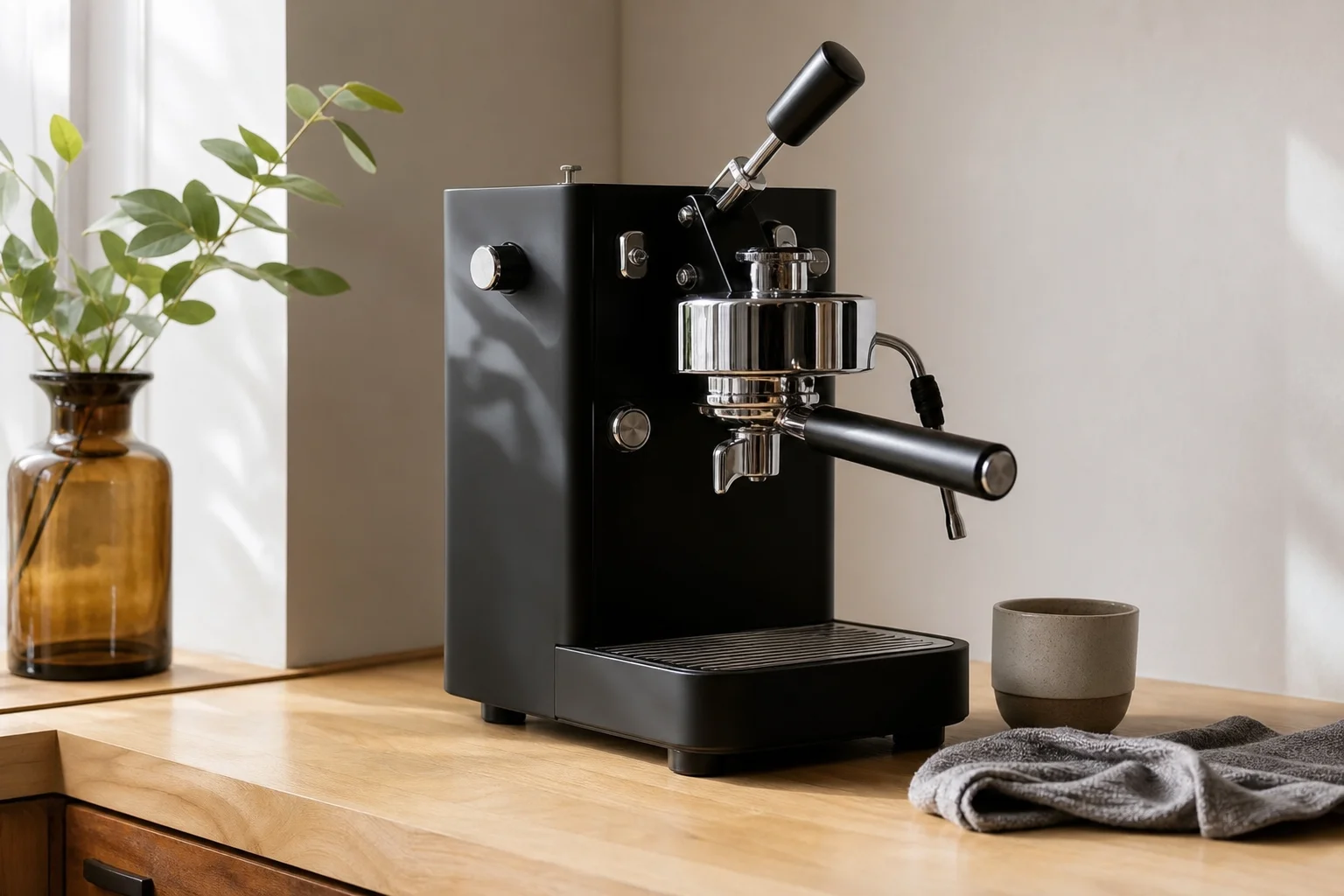
The base of the machine will get messy and needs a wipe, but overall the cleanup process is simple and quick. There’s no complex disassembly required, and the machine is easy to maintain with basic care.
Things to Consider Before Buying
The main practical limitation is weighing your output. Most kitchen scales are too wide to fit under the machine, making it difficult to stop your shot based on liquid weight. You’ll need to estimate water volume and work through trial and error to dial in your desired output ratio.
The spouts, while well-made, are heavy and have significant thermal mass. If they’re not preheated, they’ll cool your espresso on its way to the cup, adding an extra step if you want to use them. Most users skip them entirely for naked extractions.
The pressure gauge, while useful, isn’t always easy to read depending on your angle and height. It works, but it’s not perfectly positioned for all users.
Conclusion
The Cafelat Robot Barista Model is an excellent manual espresso machine that delivers on its promise of producing quality shots with a straightforward, if unconventional, workflow. The build quality is solid, the design is thoughtful, and the actual coffee is genuinely good. At $370, it represents fair value for a well-made manual brewer. If you’re interested in hands-on espresso brewing and don’t mind the slightly different workflow, this machine is absolutely worth considering.
Product link
View more details for Cafelat Robot Barista Model
This product is mentioned in the review. Check the specifications, options, and compatibility before buying.
View more details for Cafelat Robot Barista ModelFurther reading
Related Reviews
Coffee Equipment
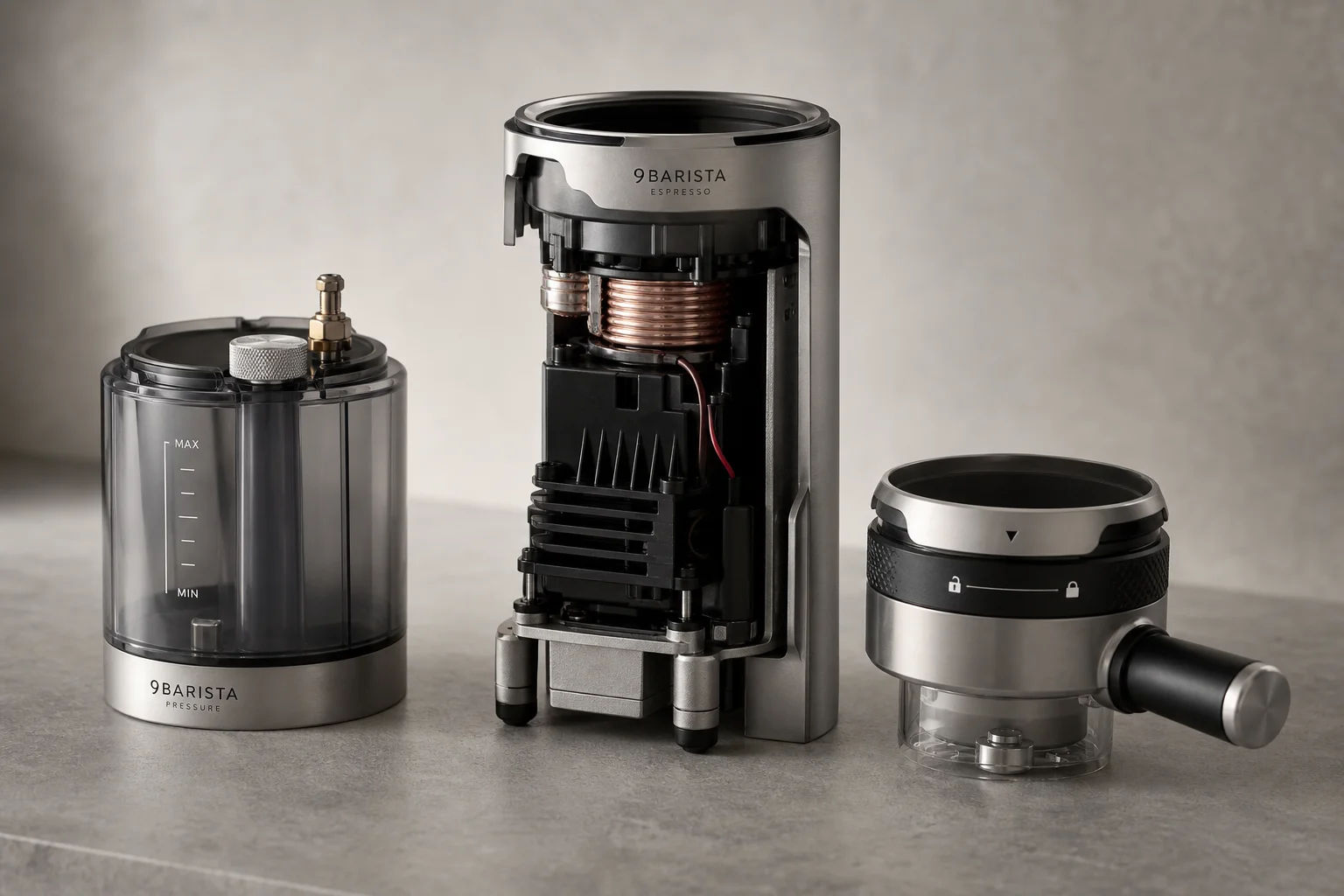
9Barista Espresso Machine Review: Stovetop Espresso for Single-Cup Enthusiasts
A cleverly engineered stovetop espresso maker that generates nine bars of pressure without electricity. Excellent coffee quality, but requires patience and suits solo drinkers only.
Coffee Equipment
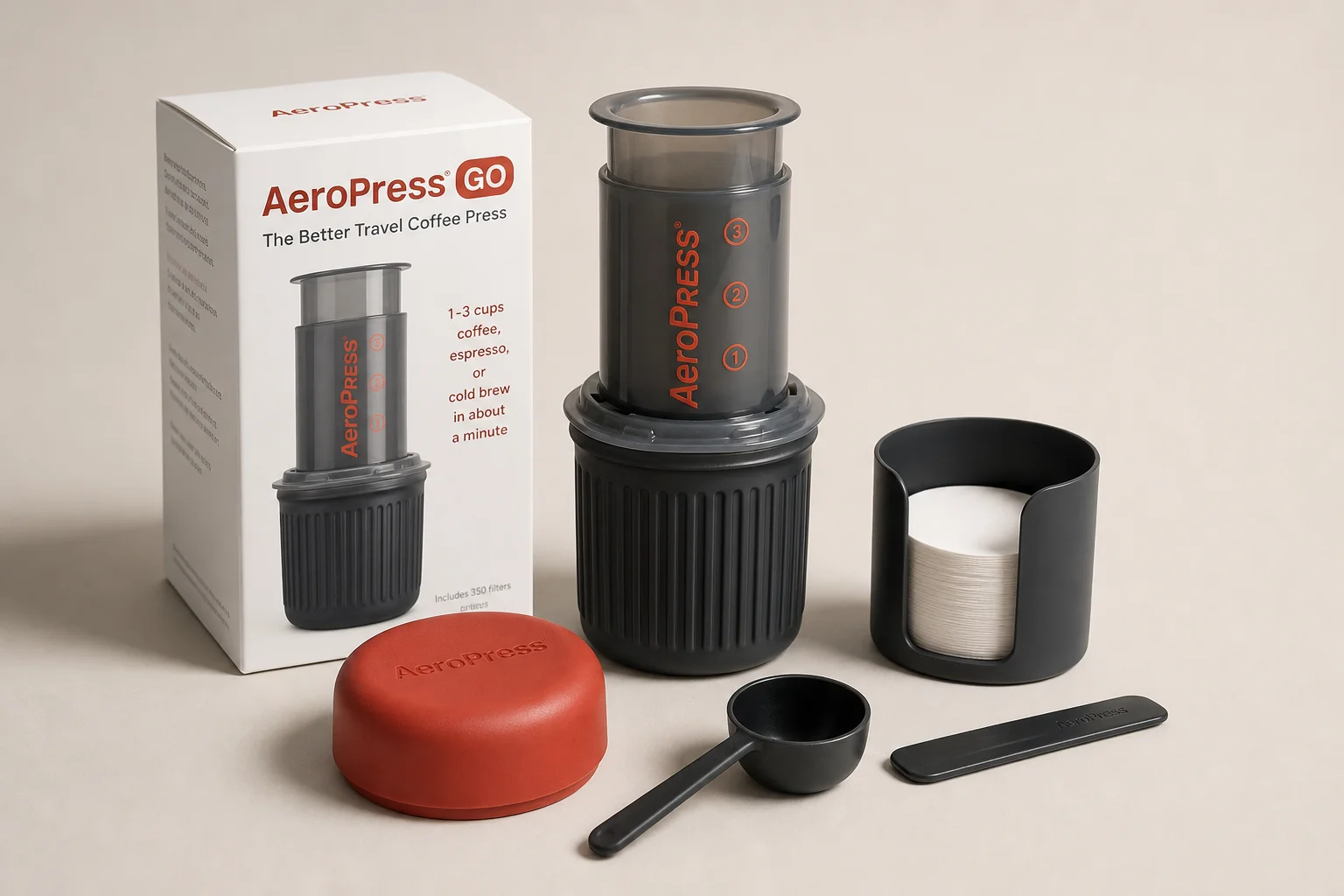
Aeropress Go Review: A Compact Travel Brewer That Solves One Specific Problem
The Aeropress Go shrinks the original design and adds an integrated cup, but it may not address the travel challenges most coffee enthusiasts actually face.
Coffee Equipment
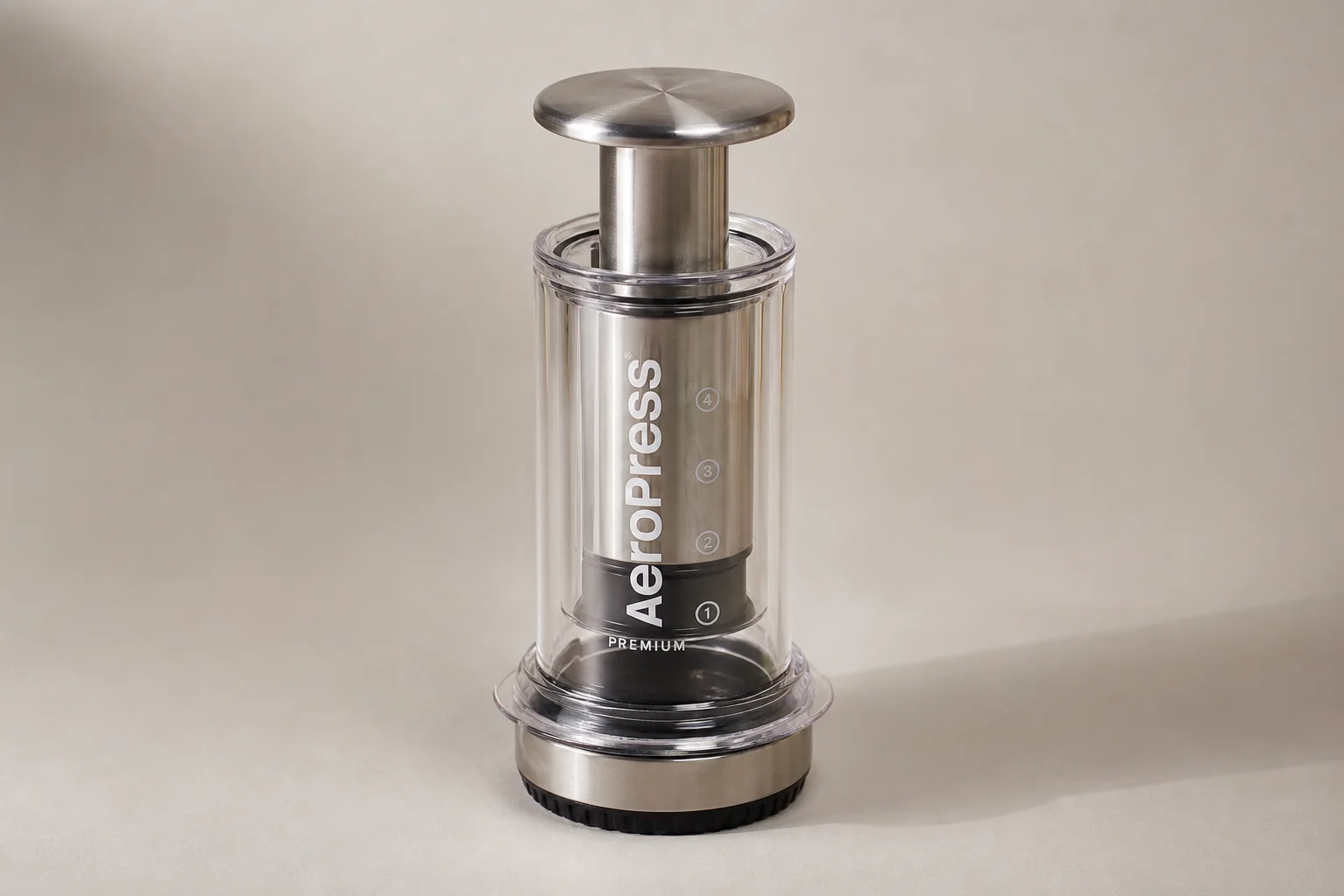
AeroPress Premium Review: Premium Materials, Practical Trade-offs
The AeroPress Premium brings glass and metal construction to a beloved brewer, but trades portability and durability for a more refined feel. Here's what changes in the cup and what matters before you buy.