Coffee Equipment
Fellow Aiden Coffee Maker Review: Technically Excellent, Frustratingly Designed
The Fellow Aiden delivers consistent, quality coffee across batch and single-cup brewing. But its circular interface and carafe design create real friction in daily use.
Introduction
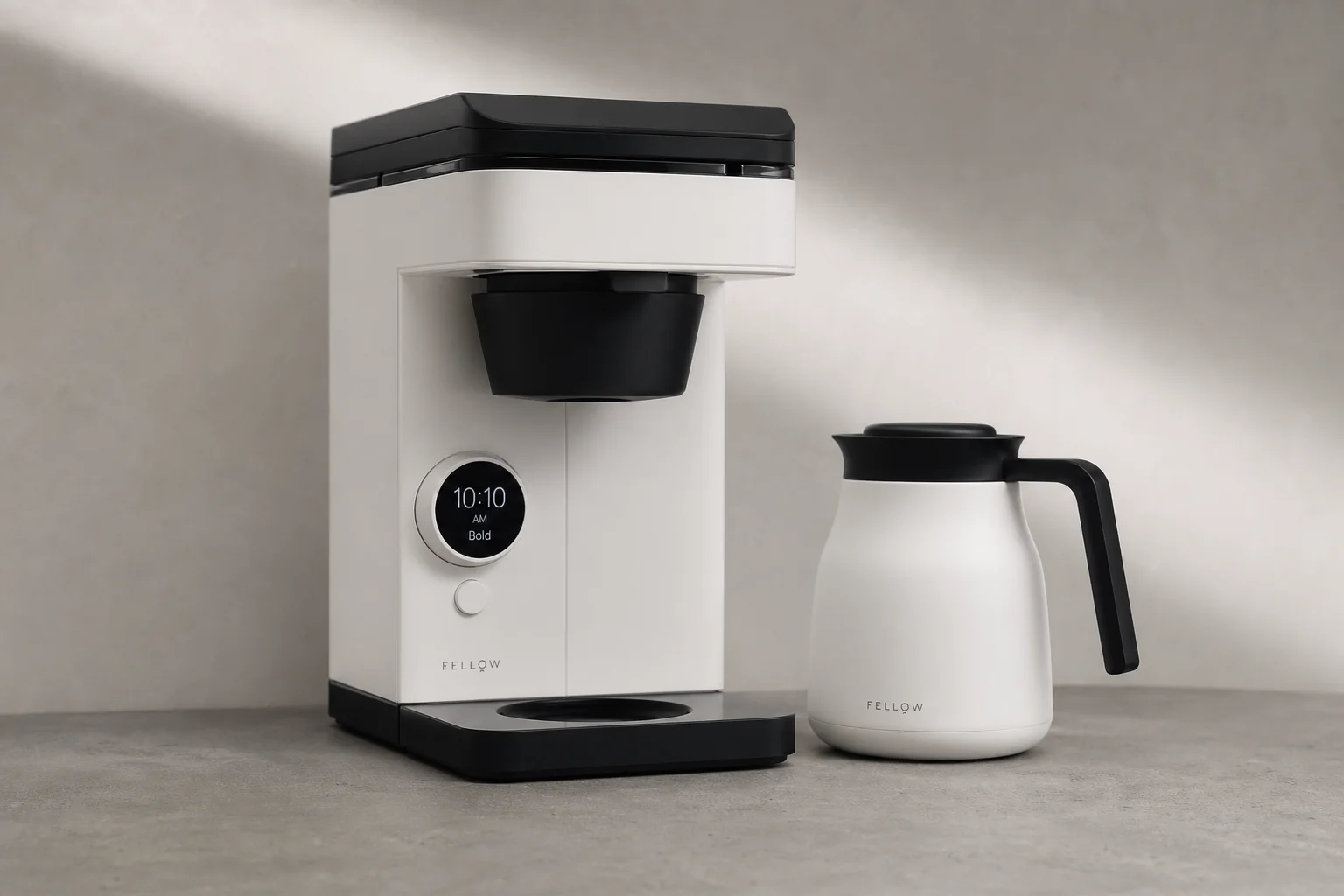
The Fellow Aiden arrived with significant pre-release momentum. It promised flexibility across batch and single-cup brewing, programmable temperature profiles, and the ability to dial in recipes supplied by specialty roasters. On paper, it addresses a genuine gap: a machine that bridges the precision of manual pour-over with the convenience of automated batch brewing.
After extensive testing, the technical promise largely holds. The Aiden delivers consistent extractions, reliable temperature control, and coffee quality that rivals manual methods. Yet between the machine and the cup sits a layer of friction that undermines the experience. A circular display that fights its own software, a click wheel that demands patience, and a carafe that stratifies strength across five cups of coffee. These aren’t minor quibbles. They shape how you interact with this machine every single day.
Technical Performance and Extraction
The Aiden’s core job is straightforward: heat water to a set temperature, distribute it evenly over coffee, and repeat in programmed pulses. Testing with temperature probes showed it delivers the temperature you request with sufficient accuracy for any home brewing scenario. Bloom pulses are consistent, brew volumes land within acceptable variance, and if you ask for 500 millilitres, you’ll get close to 500 millilitres.

More importantly, extractions remain consistent. Run the same coffee at the same grind setting through the same profile twice, and you’ll get very similar results. That consistency is the foundation of everything else.
But consistency doesn’t mean the Aiden brews identically to a pour-over. Testing across multiple grind settings revealed that the Aiden extracts slightly more than manual pour-over at equivalent grind sizes. This isn’t unique to the Aiden; any brewer with a shower head that disperses water evenly tends to extract more. The difference becomes apparent only in side-by-side comparison. For a single cup, you’d struggle to identify the brewing method.
The reason lies in thermal environment. In a pour-over, water cools gradually as it sits in the kettle and passes through the grounds. The Aiden’s enclosed chamber traps heat. For a fixed input temperature, the coffee slurry stays hotter throughout the brew. To match pour-over results, you need a slightly coarser grind and ideally a declining temperature profile that cools the water as the brew progresses. When dialed in correctly, the coffee tastes nearly indistinguishable from manual brewing. When not, cups can taste slightly harsh.
Interface and User Experience Frustrations
Here’s where the promise fractures. The Aiden’s circular display, a signature Fellow design element, looks elegant but fights the software. Text gets cut off. Interface elements disappear at the edges. Once you start programming, you realize everything flows through a single click wheel: scroll up, click, scroll down, click. Want to go back? Scroll all the way up or down to find the back option. It’s exhausting.
The click wheel itself has a mechanical quirk that compounds the frustration. It has distinct steps you can feel, but it doesn’t always register them. Scroll up five times and nothing happens. Scroll down and it might skip. Try to navigate quickly and the wheel seems to interpret rapid clicks as a single slow input, refusing to move where you’re clearly trying to go. A simple back button would solve much of this. A rectangular screen would eliminate the cut-off text. These are small hardware changes that would meaningfully improve daily use.
The saving grace is the iOS app. It’s genuinely well-designed. Programming recipes, uploading profiles, adjusting settings—all of it flows naturally on a phone. But here’s the problem: the app is a better experience than using the machine itself. That’s a fundamental flaw in hardware design. If you need to pull out your phone to have a good time, something went wrong in the user interface.
Software bugs exist too, though Fellow has been responsive with firmware updates. Since software can be fixed, I won’t dwell on specific issues. The hardware constraints, though, are permanent.
The Carafe Problem
Brew a full litre and you’ll discover the Aiden’s most frustrating design choice. The thermal carafe is adequate for heat retention but unremarkable. The real problem is the lid.
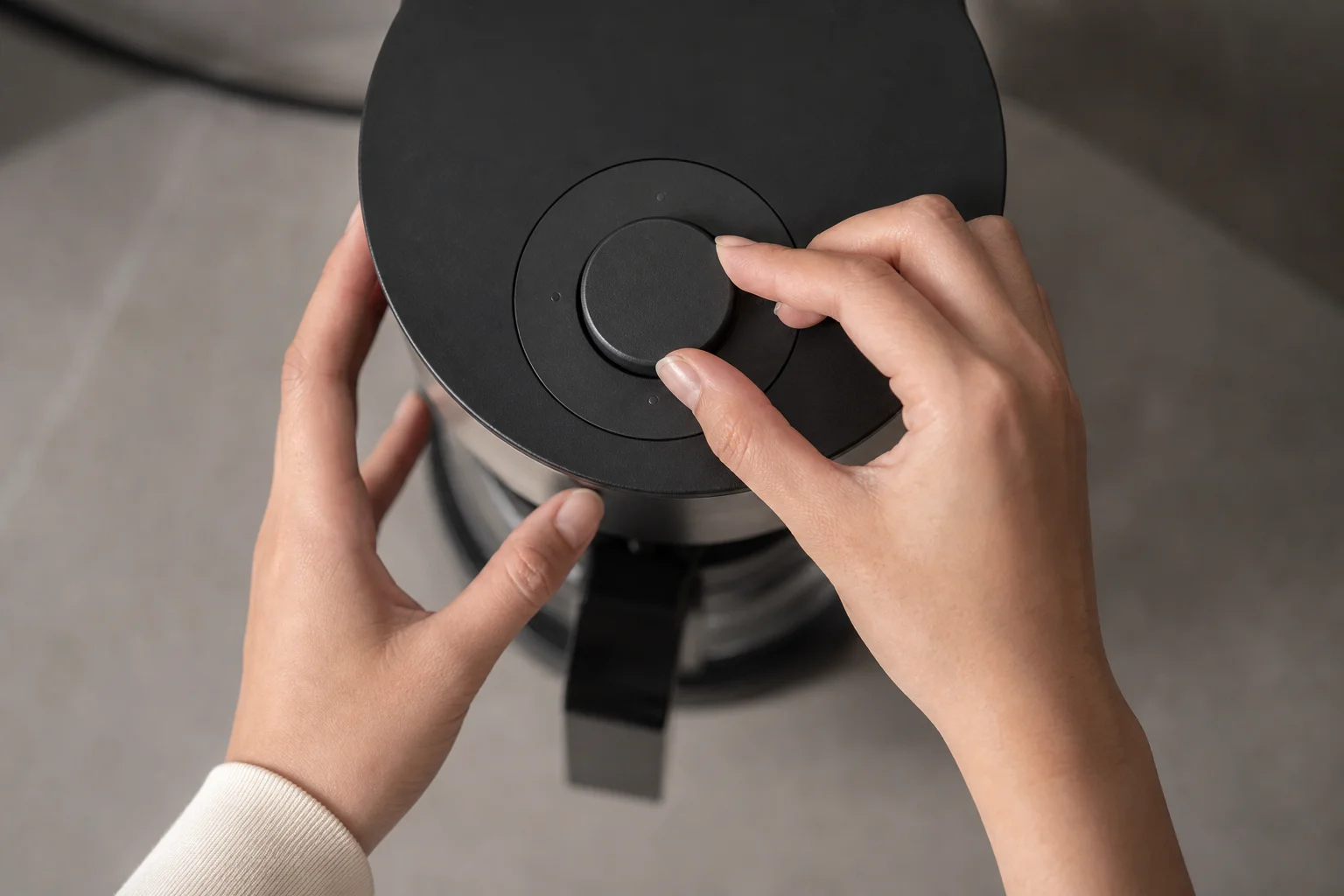
When coffee first drips into the carafe, it’s extremely concentrated. That first liquid is dense with dissolved solids. In the Aiden, it pools at the bottom. As more coffee flows in, you get a gradient: weak coffee at the top, strong coffee at the bottom. Significantly stronger. This is a solved problem. Competing brewers like the Moccamaster and Wilfa use a simple funnel in the lid that forces incoming liquid to the bottom, mixing it with what’s already there. The result is even strength throughout.
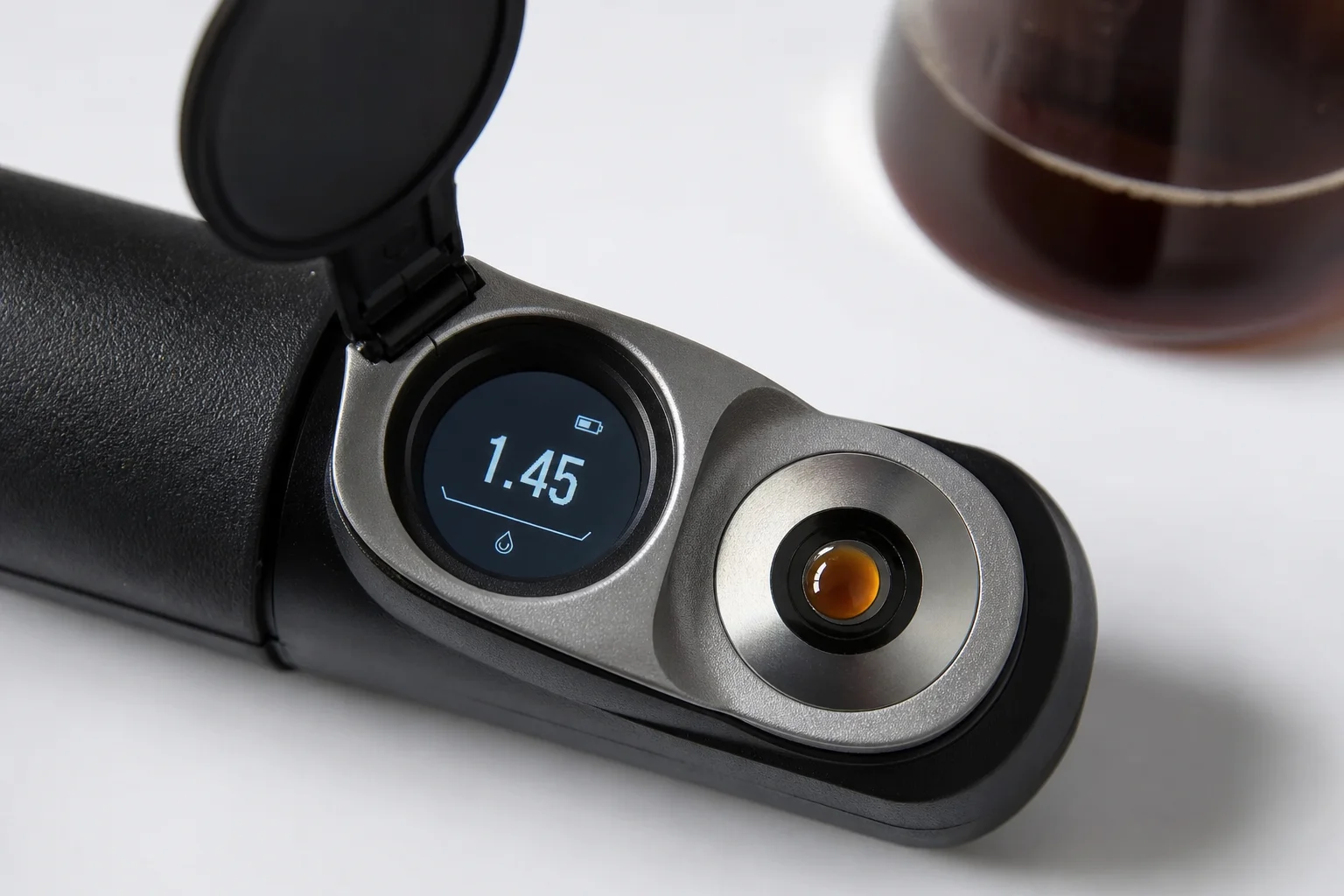
Testing with a refractometer showed the problem clearly. Coffee from the top measured 1.31% strength. Coffee from the bottom measured 2.3%—nearly twice as strong. The first cup poured tastes hollow and thin. The fifth cup tastes harsh and over-extracted. The middle cups are acceptable. If you mixed all five together, you’d have five good cups. As poured, you have two bad ones and three mediocre ones.
The solution is simple: stir the carafe before pouring. But you shouldn’t have to. Fellow knows this problem exists elsewhere in the market. They chose not to solve it here. That’s maddening.
Build Quality and Materials
At $365, the all-plastic construction disappointed some. The panels have visible gaps. There’s flex if you press on it. But I don’t think this reflects cost-cutting for profit margins. The Aiden is full of electronics and temperature control systems. Using plastic instead of metal kept the price down. The alternative—a metal or glass version—would likely cost $565 or more. For a machine that just heats and distributes water, I’m not sure the materials justify the extra cost.
The hinge that controls the brew arm carries water and is a critical mechanism. It feels adequately robust. The two-year warranty suggests Fellow is confident in durability. Any issues are more likely to stem from design than materials.
Who This Machine Is For
If you want a batch brewer that you’ll set to instant brew every morning, the Aiden is overkill but excellent. Pick a profile, pick a coffee, hit the button. It will execute as well as any brewer on the market. The frustrations with the interface won’t touch you.

If you want to experiment with profiles, adjust temperatures, or dial in different roasts, the UX/UI will frustrate you. The app helps, but relying on your phone for a good experience is a compromise.
If you love the ritual and refinement of manual pour-over, the Aiden won’t replace it. It makes good coffee, but the brewing experience is automated, not meditative. And the interface friction undermines any joy in customization.
The Aiden has real competition. The Sage Breville Precision Brewer offers similar features at around £250, though with less granular control. The Moccamaster is simpler and more beautiful, but technologically basic. There’s no other machine quite like the Aiden in terms of programmability and flexibility.
Conclusion
The Fellow Aiden is technically impressive. It delivers consistent, quality coffee across batch and single-cup modes. The temperature control is reliable, the extractions are repeatable, and once dialed in, it makes coffee as good as manual brewing.
But the circular display, the single-point click wheel interface, and the carafe’s strength gradient create real friction in daily use. These aren’t software issues that firmware updates can fix. They’re design choices that need hardware revision.
For a future version, I’d hope for at least one additional button, a rectangular screen, and a funnel in the carafe lid. Small changes, but they’d transform this from a frustrating machine into a genuinely enjoyable one. The Aiden shows enough promise that I’d be excited to see an evolved version. For now, it’s a machine that makes excellent coffee despite itself.
Product link
View more details for Fellow Aiden Coffee Maker
This product is mentioned in the review. Check the specifications, options, and compatibility before buying.
View more details for Fellow Aiden Coffee MakerFurther reading
Related Reviews
Coffee Equipment
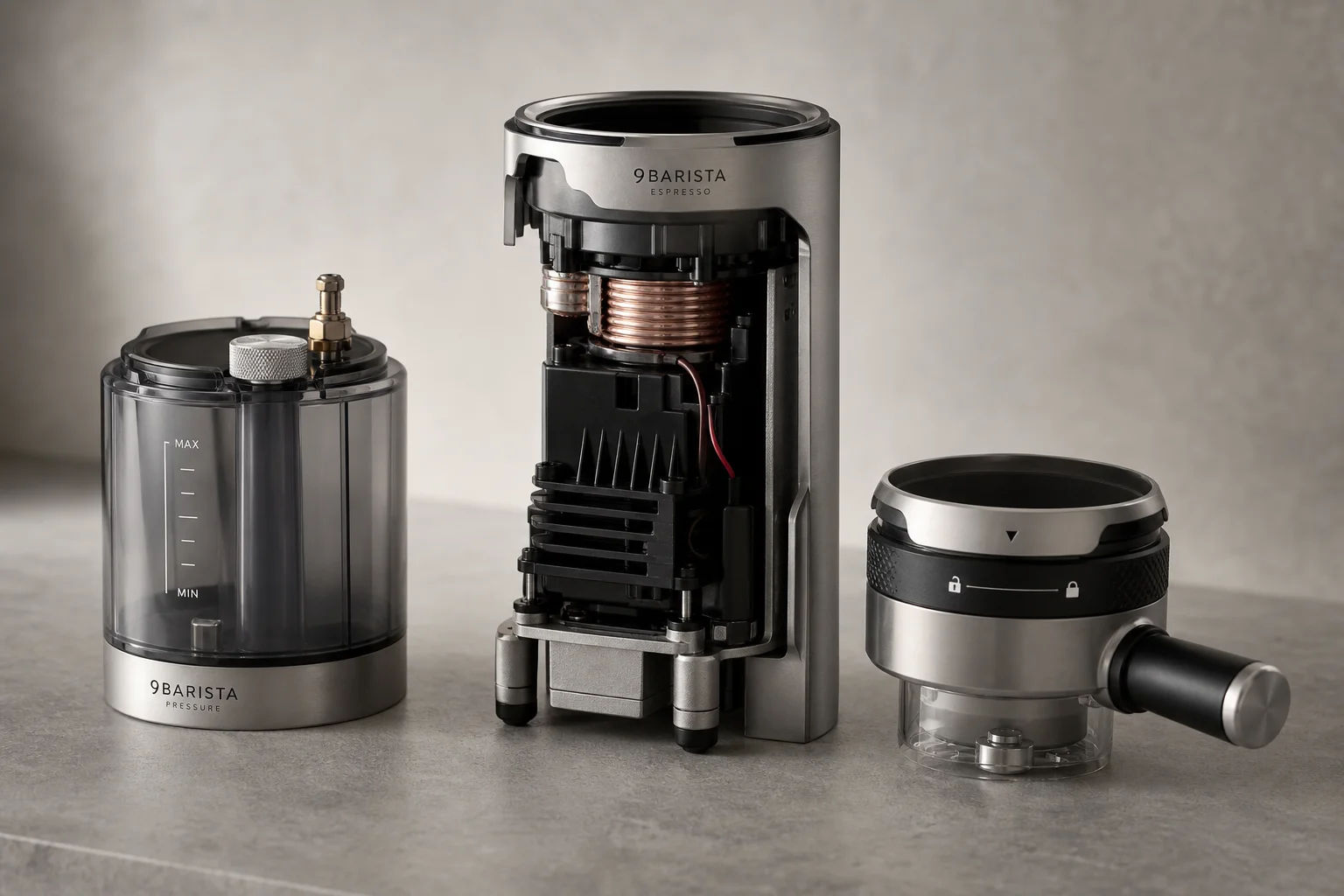
9Barista Espresso Machine Review: Stovetop Espresso for Single-Cup Enthusiasts
A cleverly engineered stovetop espresso maker that generates nine bars of pressure without electricity. Excellent coffee quality, but requires patience and suits solo drinkers only.
Coffee Equipment
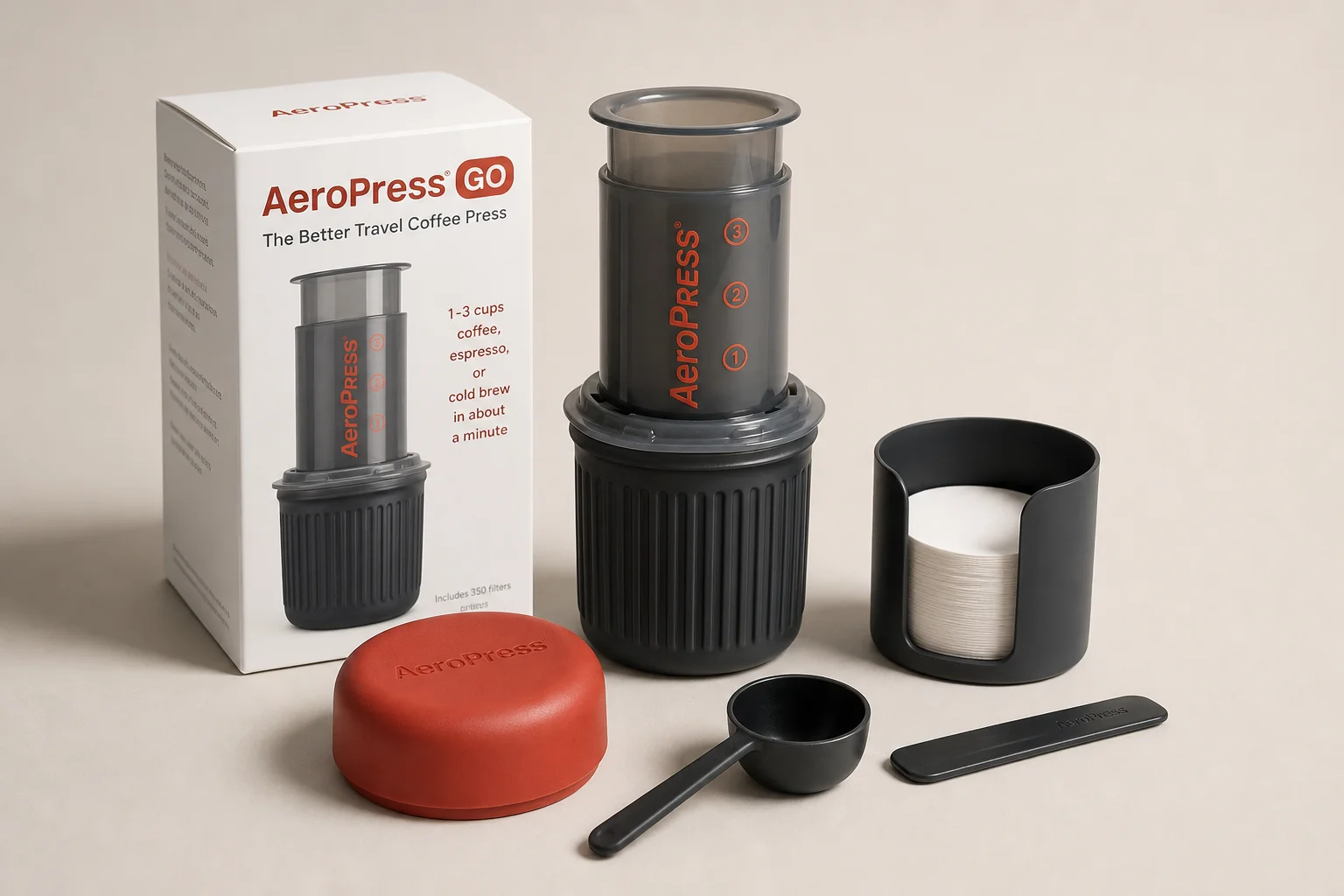
Aeropress Go Review: A Compact Travel Brewer That Solves One Specific Problem
The Aeropress Go shrinks the original design and adds an integrated cup, but it may not address the travel challenges most coffee enthusiasts actually face.
Coffee Equipment
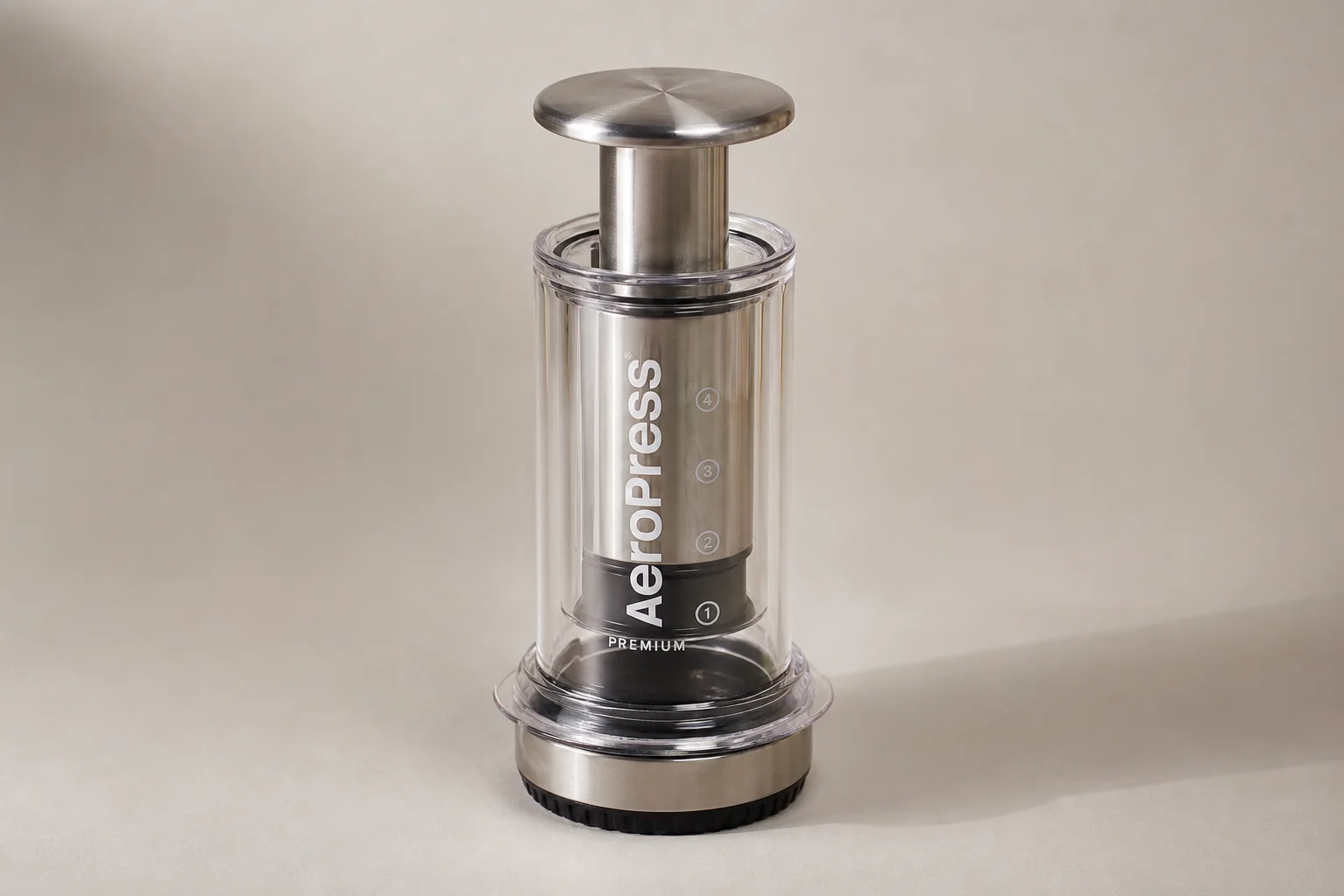
AeroPress Premium Review: Premium Materials, Practical Trade-offs
The AeroPress Premium brings glass and metal construction to a beloved brewer, but trades portability and durability for a more refined feel. Here's what changes in the cup and what matters before you buy.