Coffee Equipment
Flair 58 Manual Espresso Machine Review: Strong Espresso, Frustrating Execution
The Flair 58 delivers excellent espresso and genuine thermal management improvements, but its heating system design undermines an otherwise capable lever machine.
Introduction
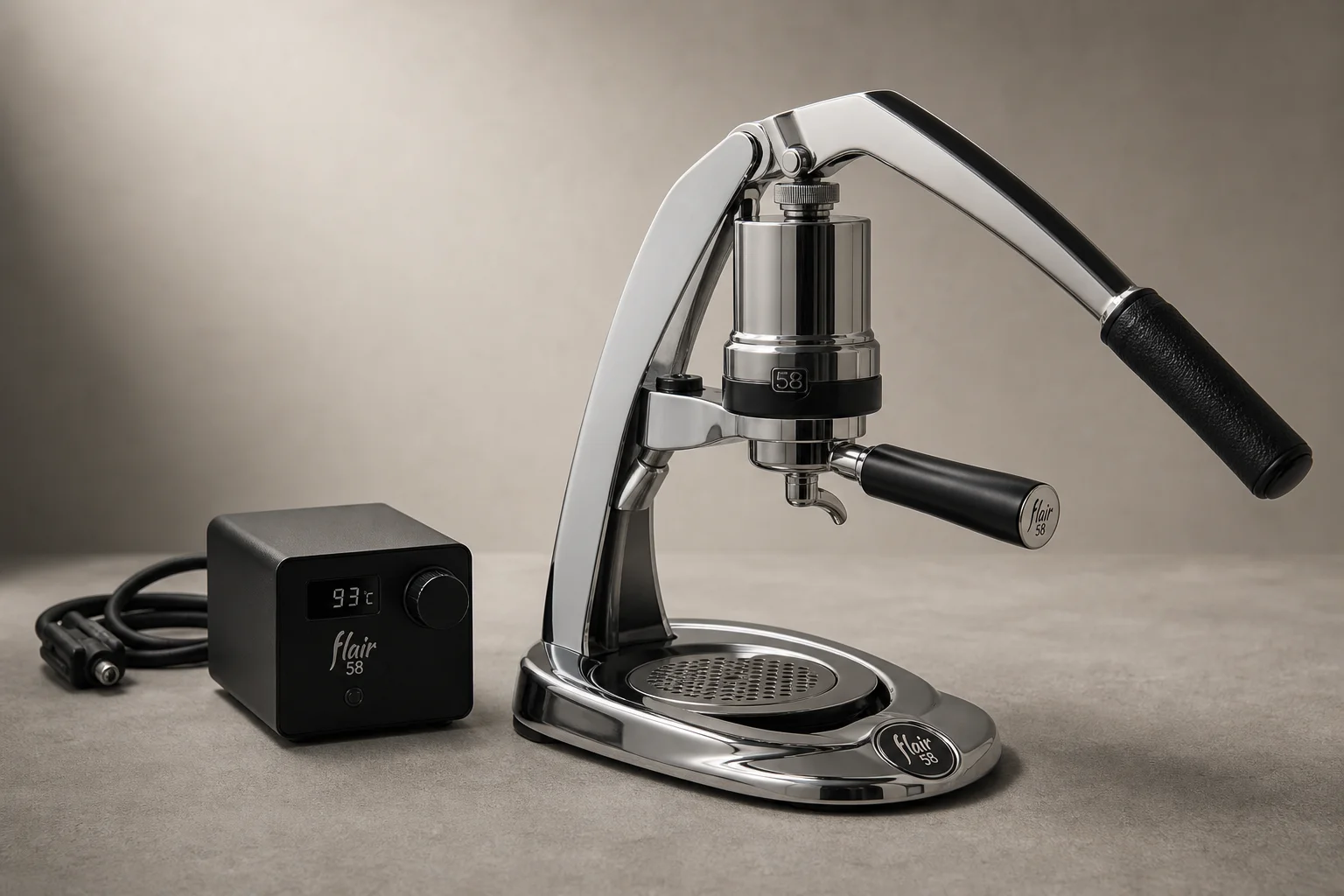
The Flair 58 represents a significant step forward from Flair’s earlier Pro model. It adopts the industry-standard 58 millimetre portafilter, adds active thermal management via a heating element, and ships with a puck screen as standard. These three features make it worth examining closely if you’re considering a manual lever espresso machine. However, the execution of the heating system reveals a gap between good engineering and thoughtful user experience design.
What Makes the Flair 58 Different
The jump from the Flair Pro to the 58 is defined by three key changes. First, the larger 58mm portafilter basket aligns the machine with the most common commercial espresso standard. This means any 58mm tamper, VST basket, or compatible accessory from another espresso machine will work here. For collectors or those who already own espresso equipment, this compatibility is genuinely useful.
The larger basket does require a longer lever to generate the same pressure across the greater surface area. The result is a noticeably bigger machine with a longer handle, but the mechanical advantage means the extra work is manageable. The included pressure gauge lets you monitor live brewing pressure in real time, showing both the pressure being applied and what’s escaping from the basket.
Puck Screen Technology
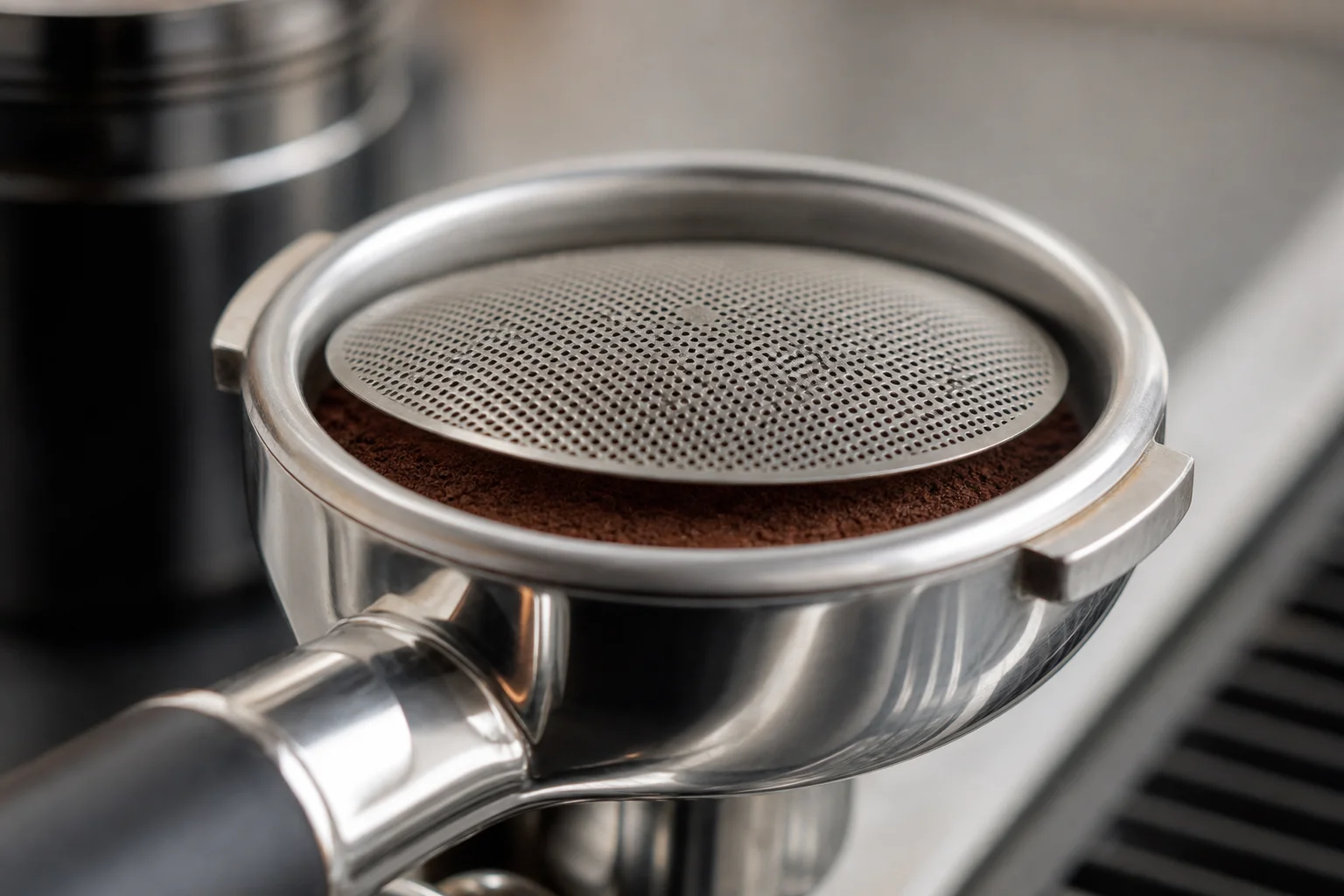
The second notable feature is the puck screen, a thin perforated metal disc that sits on top of your tamped coffee. It distributes water more evenly across the puck and creates a space for pre-infusion water to accumulate without allowing excessive puck expansion. This containment appears to improve shot consistency and evenness, a principle that applies to most espresso machines regardless of type.
Flair has made the puck screen standard on the 58, replacing the fixed dispersion screen found on earlier models. The newer versions ship without the fixed screen entirely, relying solely on the puck screen. This is an interesting design choice that suggests Flair sees real value in the approach.
Thermal Management and Heating System
The third feature is the active heating element, which addresses one of the biggest challenges in manual lever espresso: thermal management. Without preheating, you must work very quickly to hit target brew temperatures before the brew chamber cools. The heating element solves this by maintaining the chamber at a higher baseline temperature.

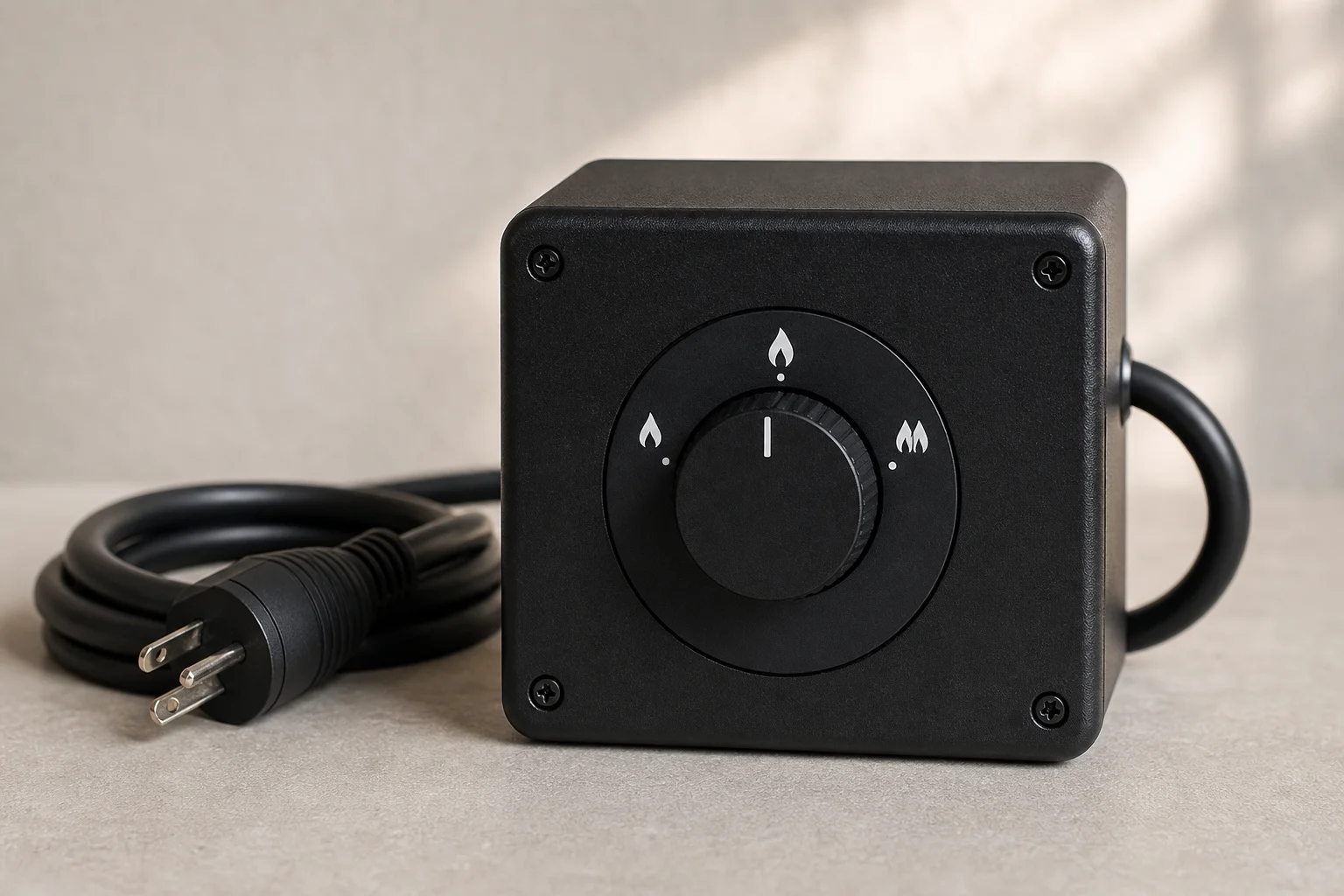
The system consists of a heating element wrapped around the brew chamber, a control box with three settings (low, medium, high), and a power supply. Flair specifies these as approximately 85, 90, and 95 degrees Celsius respectively, though these are chamber temperatures, not brew temperatures. In testing with a Scace device, actual brew temperatures peaked at just above 93 degrees Celsius under ideal conditions (multiple shots pulled back to back, boiling water added immediately). Lower and medium settings produced mid-eighties and around 90 degrees respectively.
The heating element draws about 85 watts and must remain plugged into mains power during use. This is not a battery-powered feature; it requires a power outlet.
Pulling Shots and Brew Temperature
In practice, the heating element does reduce the thermal management burden. You can use hot water from a kettle and move more deliberately through your workflow without losing temperature as rapidly. However, you still need to manage temperature actively. The water temperature you add from your kettle remains the primary driver of your final brew temperature. If you’re chasing the upper end of the range, you’ll still need to work quickly and use boiling water.
One subtle issue emerged during testing: the heating appears concentrated at the top of the brew chamber. As a result, there is a slight upward temperature profile during the shot, with the final portion of the espresso slightly hotter than the initial pour. Most brewers would consider this a minor effect, though it does contradict the declining temperature profile common in many lever machines.
The included tamper is ergonomically awkward, particularly for larger hands. Using a standard 58mm tamper from another machine is straightforward and recommended.
Maintenance and Cleaning
The puck screen requires regular cleaning. Visually clean is not truly clean; Flair recommends soaking the screen in espresso machine cleaner and hot water after use, especially after multiple shots. Hard-to-access residue can accumulate and eventually degrade espresso quality.
Removing the spent puck is slightly awkward. Placing a cleaning towel under the basket and gently tapping it usually works, though occasionally the puck can be difficult to dislodge. The drip tray appears to be designed with the Acaia Lunar scale in mind, which is a curious choice given the cost of that scale. Spillage is manageable if you follow Flair’s purge process afterward.
The Heating System’s Design Problem
This is where the Flair 58 stumbles. The heating system is conceptually sound but executed in a way that prioritises engineering convenience over user experience. The system requires three separate pieces: the heating element around the brew chamber, a control box, and a power supply. This creates multiple cable connections and a bulky external control unit that feels cheap and inelegant.
More problematically, Flair specifies a particular disconnection sequence for the cables. You must disconnect the cable closest to the mains first, then the one closer to the brew head. This suggests an internal capacitance issue or similar concern, but from a user perspective, it means you must remember an unplugging order. The diagram Flair provided labelled these in reverse order (calling the first disconnect “number two”), which is confusing and unhelpful.
An ideal implementation would integrate the heating controls directly into the machine body with a single power cable. Low, medium, and high settings could be built into the unit itself, eliminating the external control box entirely. This would be simpler, more elegant, and far less frustrating to use.
Espresso Quality and Value
The Flair 58 produces genuinely good espresso. All the principles of sound espresso brewing are present: grind quality, water quality, and appropriate pressure application all matter. The machine is capable and versatile, supporting both flat and declining pressure profiles depending on your lever technique.
At $575 (or $485 for the 58X without the heating element), it is well-built and makes espresso comparable to machines at the same price point. Compared to other high-end manual lever competitors like The Robot, it is strongly competitive, and the reduced thermal management burden is a genuine advantage.
However, the frustration lies in the gap between what the machine does and how it feels to use it. The espresso is excellent. Most of the user experience is pleasant. But the heating system’s design undermines the overall experience in small, persistent ways that accumulate into genuine annoyance.
Conclusion
The Flair 58 is worth considering if you want a pure manual lever espresso experience without the thermal management headaches of earlier designs. The 58mm portafilter compatibility is genuinely useful, and the puck screen is an interesting addition that may become standard across home espresso machines. The espresso quality is very good.
But the heating system’s execution is a missed opportunity. Flair has solved a real problem, but the solution feels like it was designed for engineering convenience rather than user delight. If you can overlook the awkward control box and cable management, the machine delivers solid espresso and a mostly enjoyable workflow. If you value elegant, integrated design, the compromises may frustrate you as they do here.
Product link
View more details for Flair 58
This product is mentioned in the review. Check the specifications, options, and compatibility before buying.
View more details for Flair 58Further reading
Related Reviews
Coffee Equipment
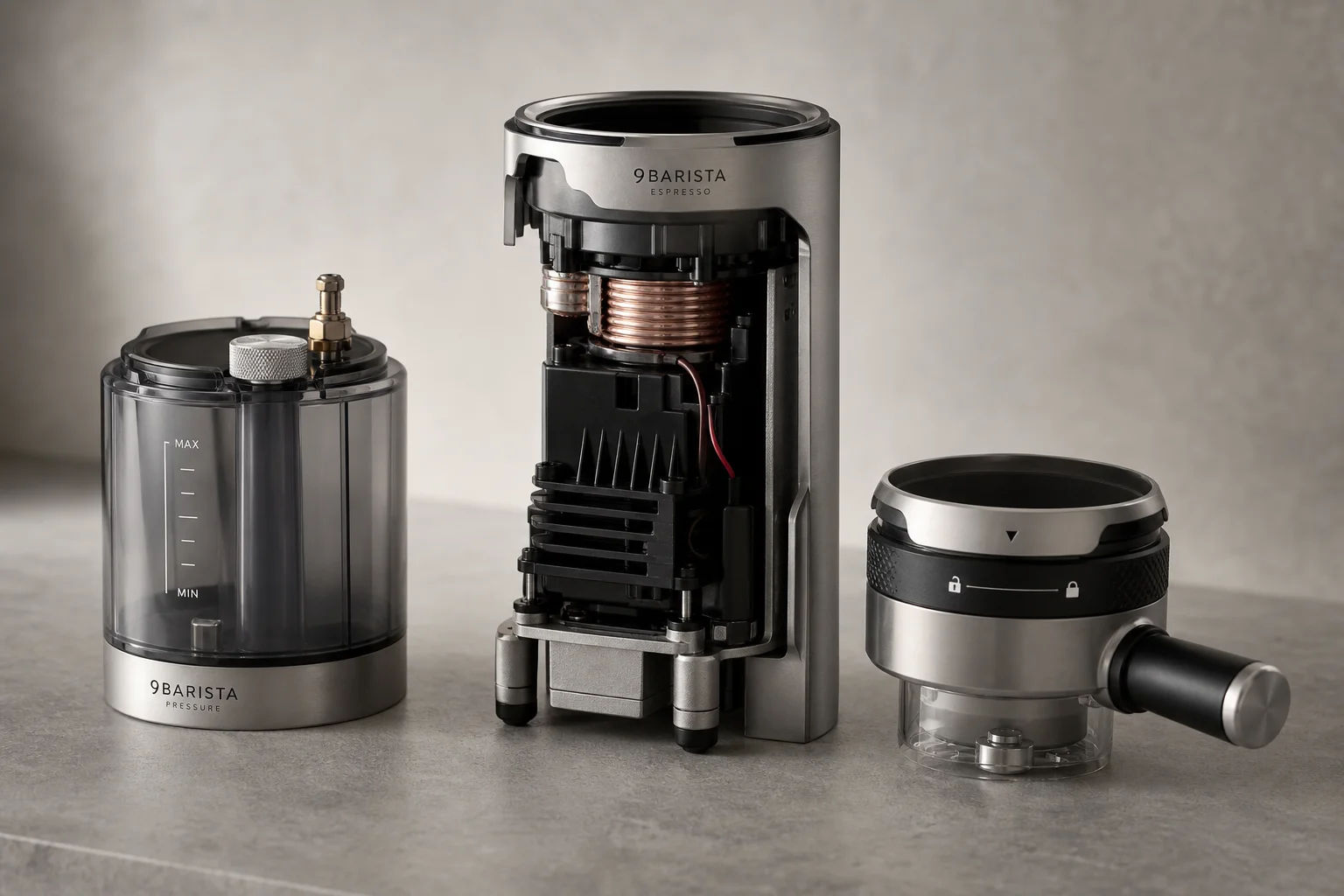
9Barista Espresso Machine Review: Stovetop Espresso for Single-Cup Enthusiasts
A cleverly engineered stovetop espresso maker that generates nine bars of pressure without electricity. Excellent coffee quality, but requires patience and suits solo drinkers only.
Coffee Equipment
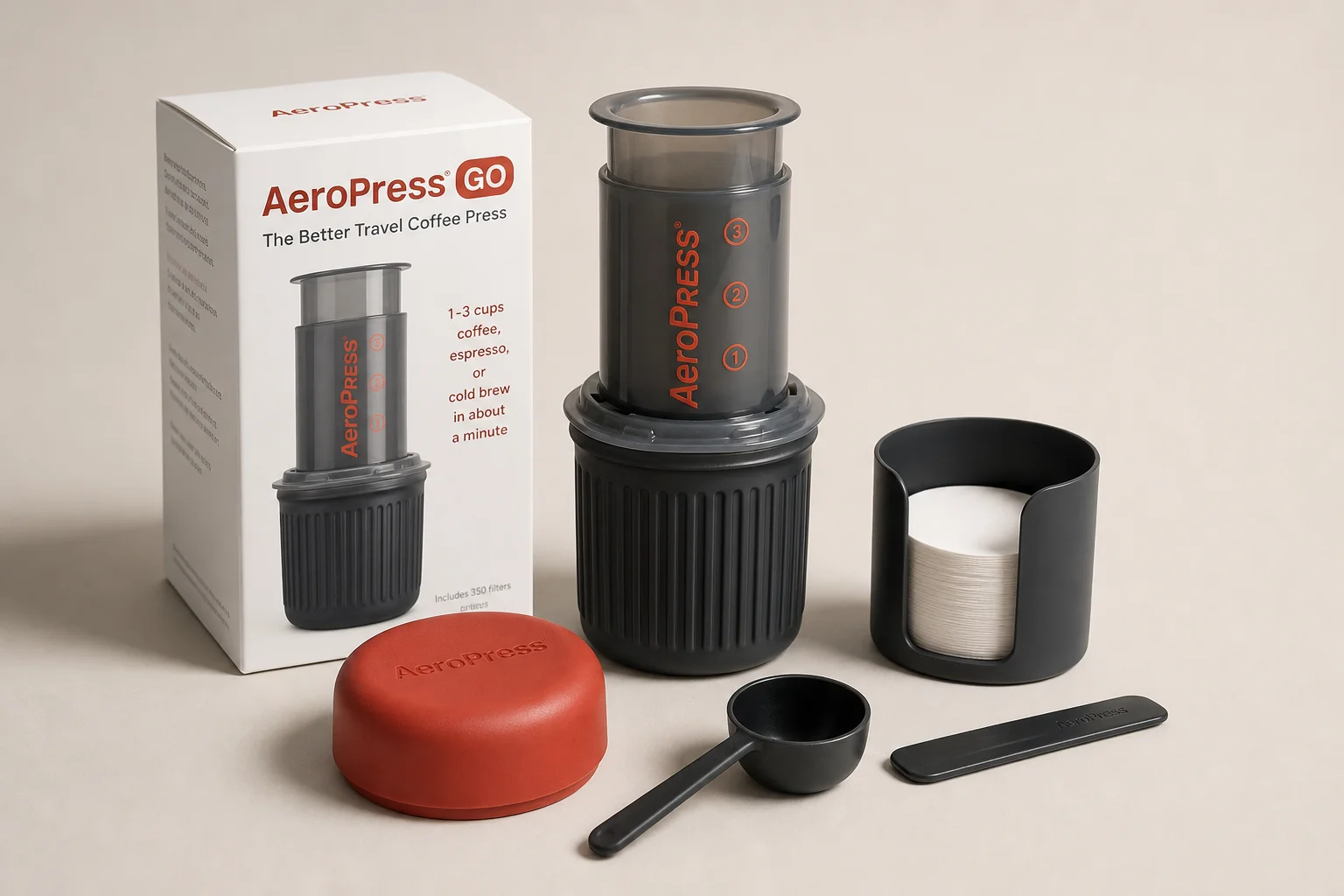
Aeropress Go Review: A Compact Travel Brewer That Solves One Specific Problem
The Aeropress Go shrinks the original design and adds an integrated cup, but it may not address the travel challenges most coffee enthusiasts actually face.
Coffee Equipment
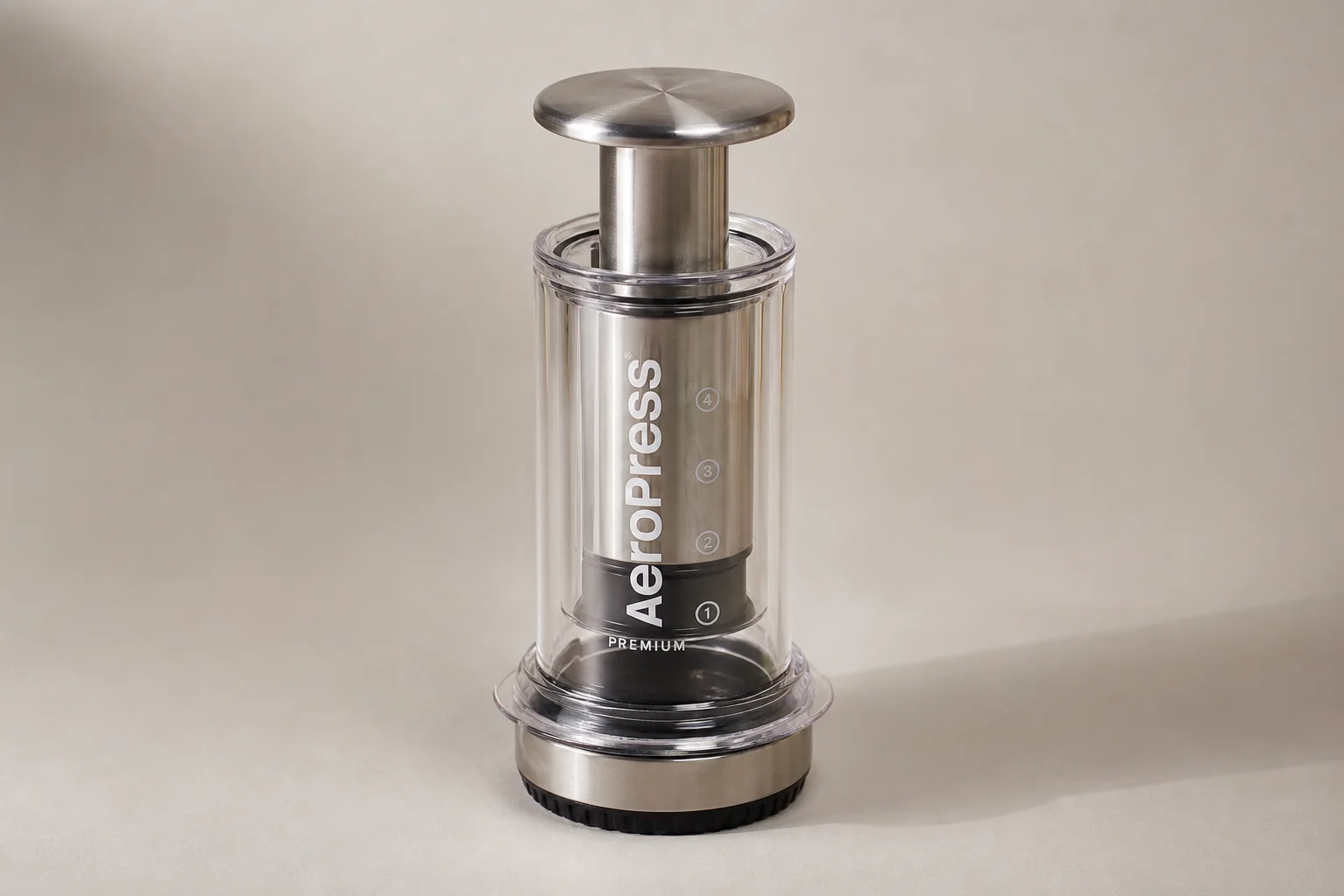
AeroPress Premium Review: Premium Materials, Practical Trade-offs
The AeroPress Premium brings glass and metal construction to a beloved brewer, but trades portability and durability for a more refined feel. Here's what changes in the cup and what matters before you buy.