RC Aircraft
Heinemann RESilience Glider Review: A High-Performing Thermal Soarer
The RESilience is a competition-capable F3L/F5L thermal glider that delivers impressive climb rates, excellent handling, and relaxing flight characteristics for both competitive and recreational pilots.
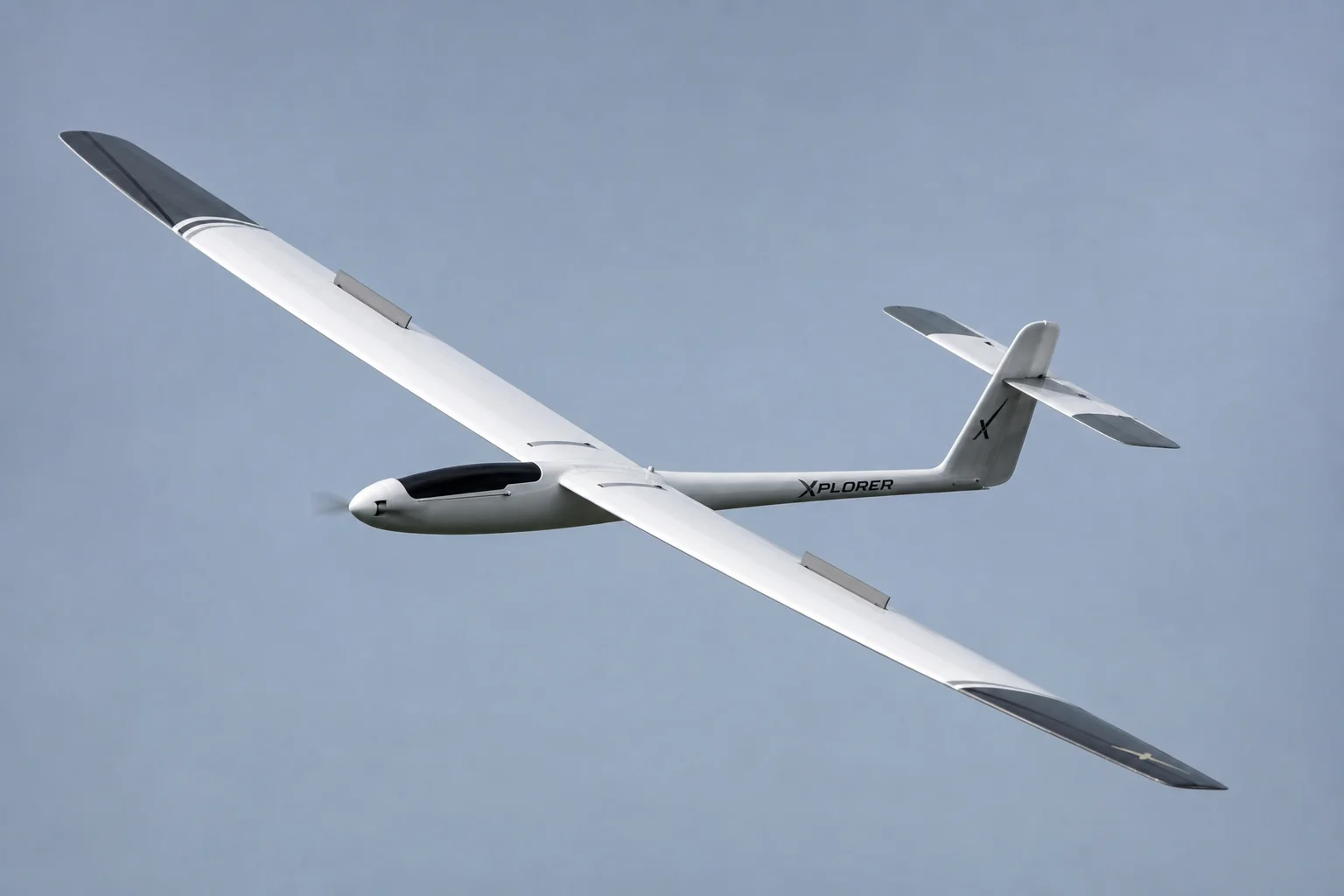
Introduction
The Heinemann RESilience is a purpose-built thermal soaring glider designed for the F3L and F5L competition classes, also known as R.E.S. (Rudder, Elevator, and Spoiler). Even if you are not competing, the RESilience offers an excellent platform for relaxing thermal hunting flights with impressive performance and straightforward handling.
Flight Performance and Climb Rate
The RESilience delivers a climb rate of approximately 8 m/s immediately after launch, thanks to the combination of a Hacker motor paired with a gearbox and an Aeronaut 12x10 inch folding propeller. The 450 mAh 3S battery provides a maximum of 2 minutes of motor run time, which is sufficient to establish altitude and locate thermals.
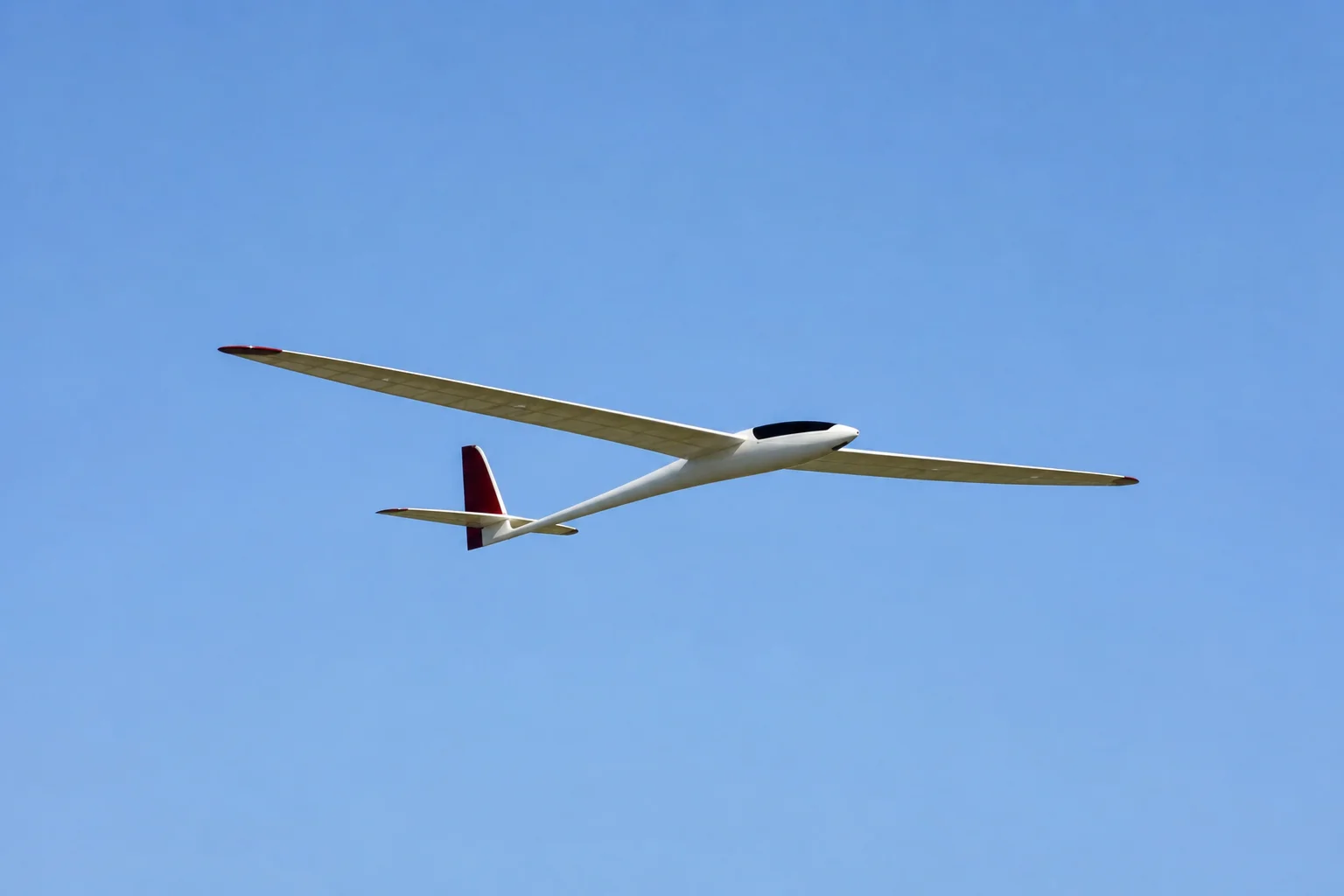
The thermal performance is genuinely impressive. In medium thermal conditions during early March, the RESilience achieved a 50-minute flight with an average speed of just 25 km/h, demonstrating its exceptional efficiency in rising air. The glider circles smoothly even in small thermals, making it forgiving for pilots who are still developing their thermal-hunting skills. Despite its slow-speed focus, the RESilience can move quickly out of downwind areas when needed, though it is not designed for high-speed maneuvers or strong wind conditions.
Assembly and Setup
Field assembly is straightforward. The three wing panels connect via wing joiners and are secured with short strips of clear tape over the wing joints, held in place by two M5 nylon screws. The GPS logger stows next to the ESC, and the 450 mAh 3S battery sits directly behind. Once the battery is connected, the glider is ready to fly.
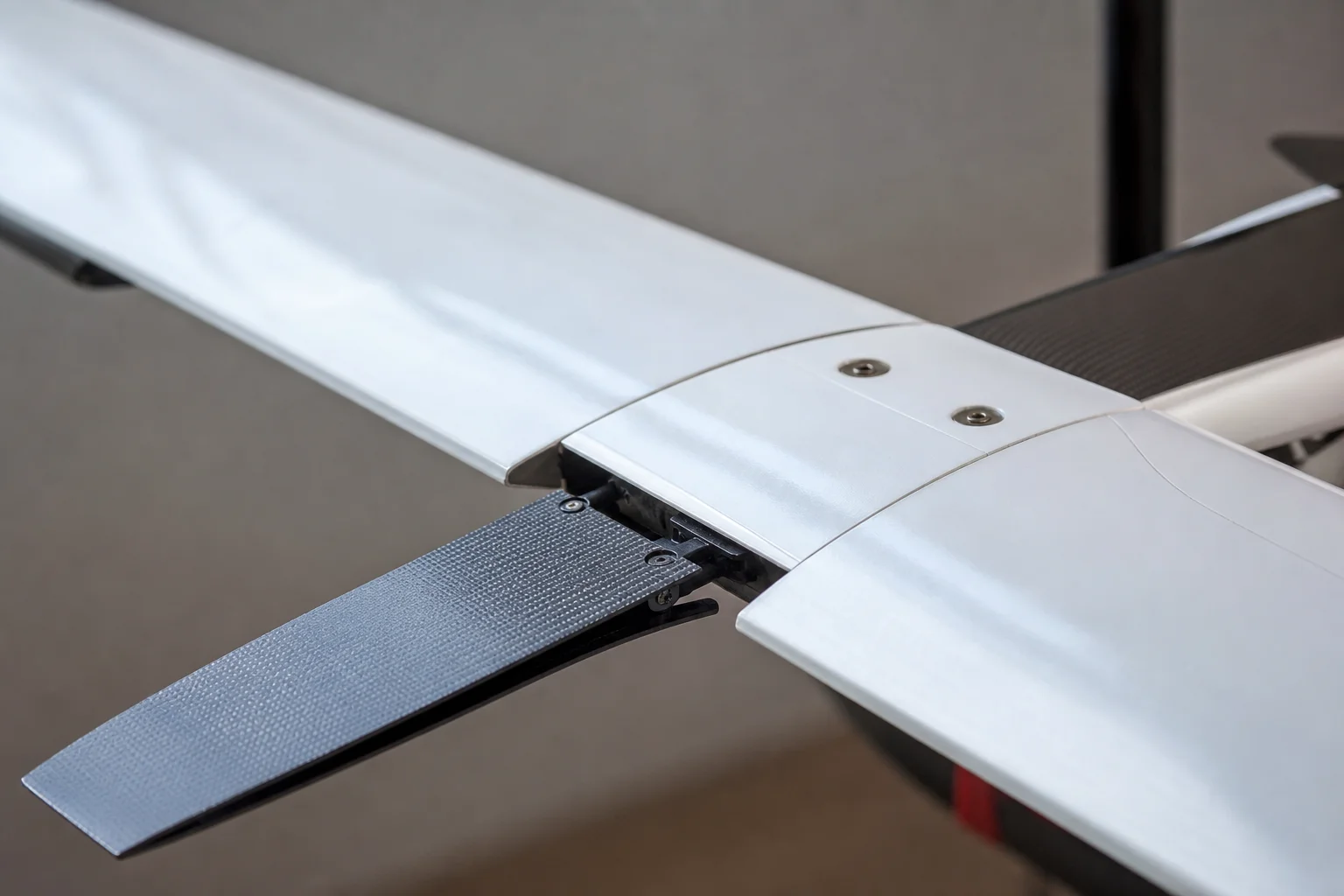
The RESilience benefits from dedicated wing covers designed by Heinemann Flugmodellbau, which are ideal for transporting the three wing panels safely. With a center of gravity positioned at 72-73 mm behind the leading edge, the glider flies well balanced without requiring extensive trimming adjustments.
Control Settings and Tuning
For control throws, following the manufacturer’s recommendations provides a solid baseline. The elevator benefits from 50% exponential, while the rudder works well with 35% exponential. During powered flight, the RESilience has a slight tendency to climb steeply, so adding a down-elevator mix to the throttle helps maintain a more controlled ascent profile.
The spoilers extend to 90 degrees and require some up-elevator mix to maintain pitch stability when deployed. This combination allows for very precise landing approaches, as the spoilers provide excellent control authority without inducing unwanted pitch changes.
Handling and Control Response
The RESilience is genuinely easy to fly. The spoiler system enables precise landings, and the glider responds predictably to control inputs across its entire speed range. The slow average speed during thermal flight makes it forgiving for pilots who are learning to read lift and position themselves efficiently.
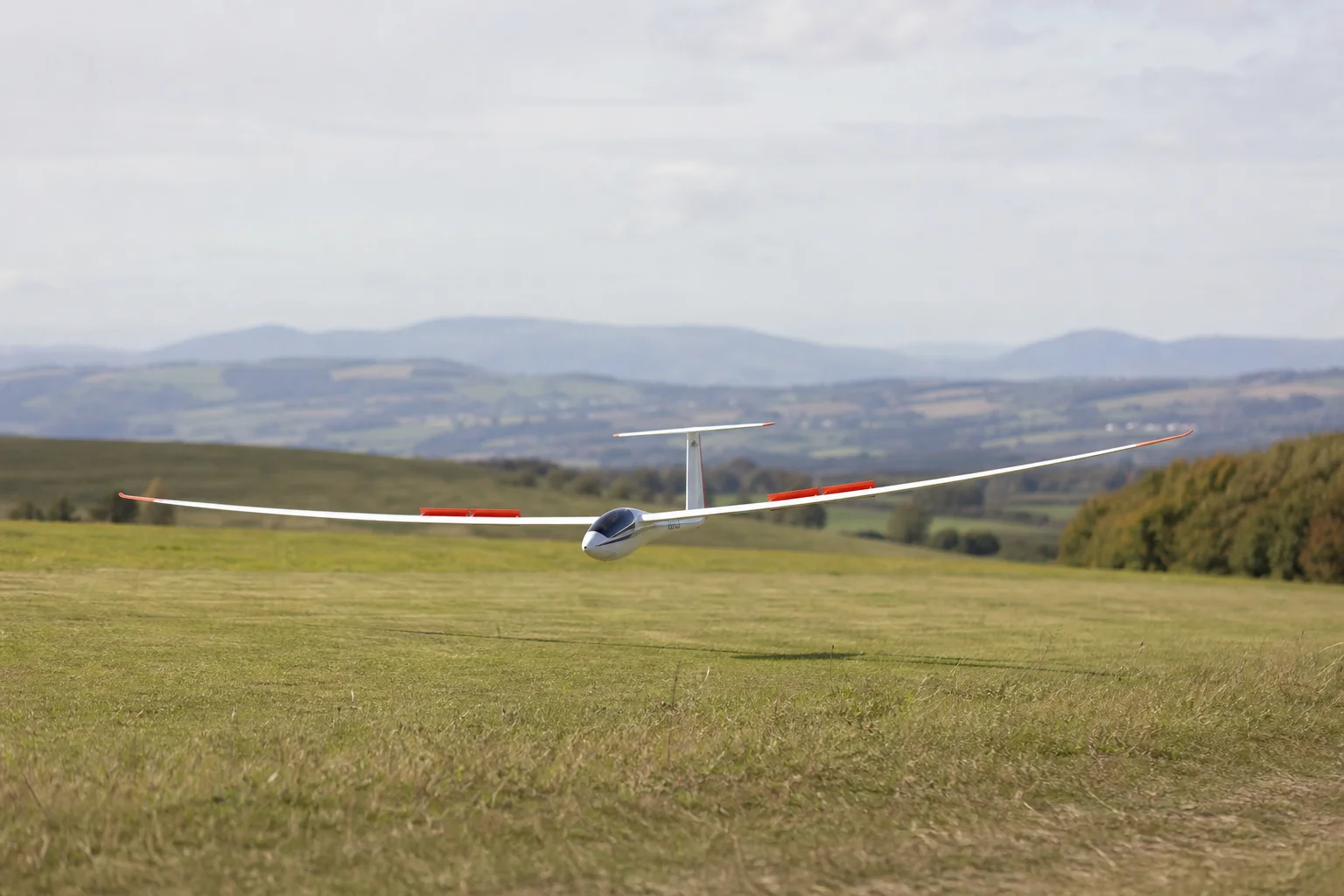
The all-up weight, including a GPS logger, is 554 grams, resulting in a wing loading of approximately 15 g/dm2. This low wing loading contributes directly to the glider’s ability to stay aloft in weak thermals and its relaxed handling characteristics.
Camera Integration and Weight Management
For pilots interested in onboard video, the RESilience accommodates action cameras such as the Insta360 Go2. A 3D-printed center mount using a 1/4-inch screw adapter attaches via the M5 wing attachment screws. An additional 3D-printed rib with a mounting tab can be inserted between the center and outer wing panels to hold a second camera using the Go2 Easy Clip Mount and tape.
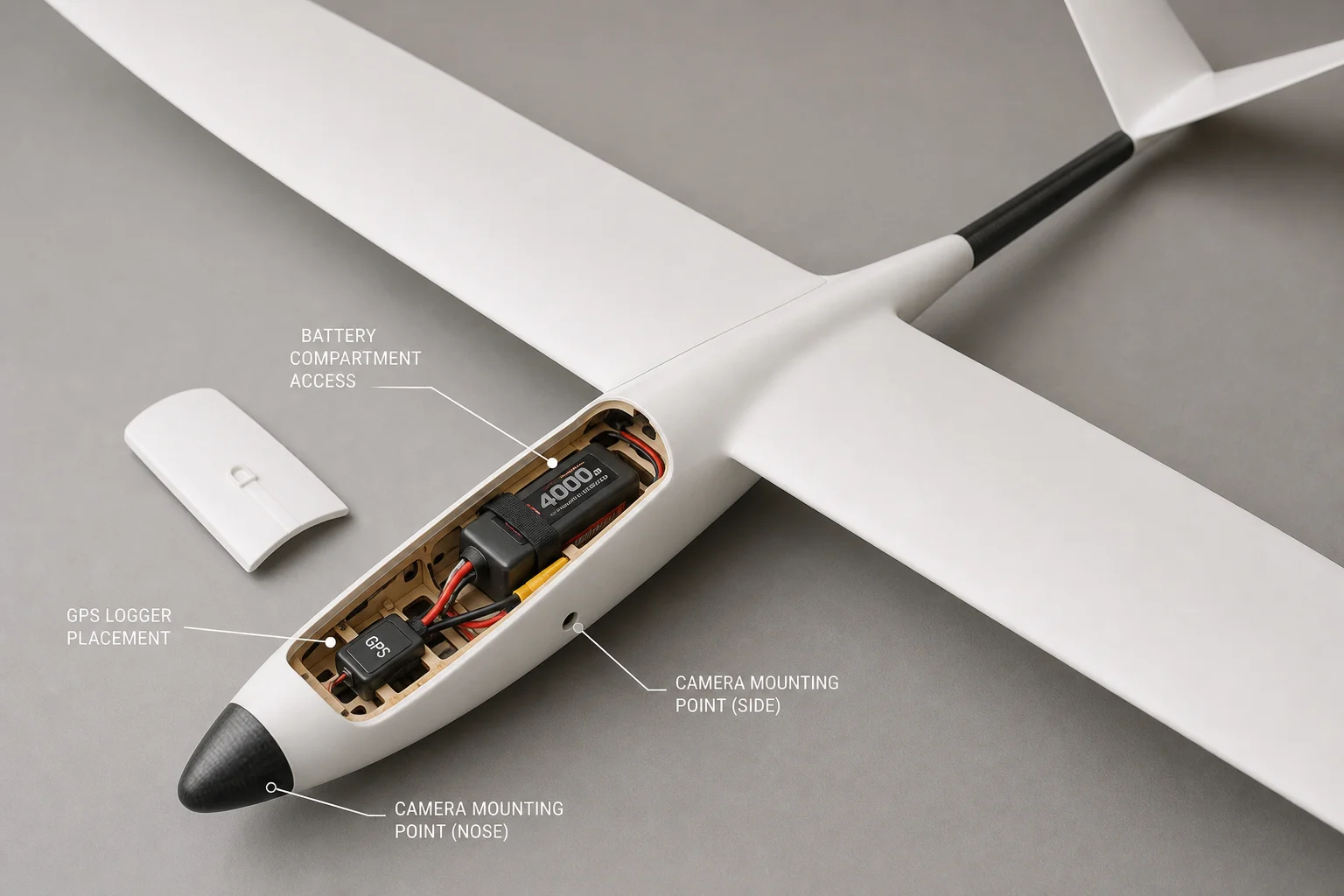
To counterbalance camera weight, a 3D-printed rib with a balance weight can be attached to the opposite wing panel using zip ties. This approach maintains the glider’s balance while allowing flexible camera placement for different filming perspectives.
Technical Considerations
During testing, two technical issues emerged, though neither was related to the RESilience’s design. A Hitec HS-40 servo controlling one spoiler became unresponsive in cold temperatures but resumed normal operation as it warmed up during flight. This is a servo-specific behavior rather than a glider fault, and the issue will not recur during warmer flying seasons.
The second issue involved folding propeller clearance. After landing on wet grass and hitting a molehill, dirt accumulated between the propeller and adapter, preventing the prop from folding. The clearance between the propeller blade root and adapter was slightly too tight, requiring minor material removal. Ensuring adequate clearance and avoiding over-tightening the bolts prevents this problem. Thorough cleaning of all components before reassembly is essential when flying in muddy conditions.
Conclusion
The RESilience is an excellent thermal soaring platform that combines competition-class capability with relaxing, accessible flight characteristics. Its impressive climb rate, efficient thermal performance, and precise spoiler control make it equally suitable for competitive F3L/F5L flying or recreational thermal hunting. The straightforward assembly, predictable handling, and superb performance across a wide range of conditions earn the RESilience a clear recommendation for pilots seeking a high-quality thermal glider.
Product link
View more details for Heinemann RESilience
This product is mentioned in the review. Check the specifications, options, and compatibility before buying.
View more details for Heinemann RESilienceFurther reading
Related Reviews
RC Aircraft
Arrows RC Sky Cruiser Review: A Capable Beginner-Friendly Scale Trainer
The Arrows RC Sky Cruiser delivers stable, predictable flying with useful features like flaps and lights, making it a solid choice for pilots stepping up to their first scale aircraft.
RC Aircraft
Best Beginner RC Planes: Five Reliable Models for Learning to Fly
Five beginner-friendly RC planes that combine stability, durability, and ease of control for new pilots learning the fundamentals of radio-controlled flight.
RC Aircraft
E-flite Habu XS 80mm EDF Review: A Capable Sport Jet for Intermediate Pilots
The E-flite Habu XS 80mm EDF combines smooth handling, impressive speed, and stable flight characteristics that make it accessible to pilots beyond pure beginners.