Coffee Equipment
Neapolitan Coffee Brewer: A Classic Worth Understanding
The Neapolitan brewer is an iconic flip-style coffee maker with deep roots in Italian culture. Here's what you need to know about brewing with one.
Introduction
The Neapolitan coffee brewer is one of the most distinctive brewing devices in coffee history. This flip-style brewer, invented in Paris but beloved in Naples, represents a fascinating chapter in how coffee culture evolved across Europe. Unlike the espresso machines that dominate modern Italian kitchens, the Neapolitan brewer was the standard way Italians made coffee for over a century. Understanding how it works and where it came from reveals why this humble aluminum pot earned such a celebrated place in Italian cinema and daily life.
Origins: From Paris to Naples
The story of the Neapolitan brewer begins not in Italy, but in Paris. A French tinsmith and lamp maker named Morize invented this brewer by refining an earlier design called the De Belloy pot, which emerged in the early 1800s. The De Belloy was itself revolutionary, introducing the concept of a three-chamber pour-over system: an upper chamber for hot water, a middle section holding ground coffee, and a lower chamber for the brewed result.
Morize’s innovation was elegantly simple: he added a flip mechanism. Instead of pouring water from above, you could now heat water inside the brewer itself, then invert the entire device so the hot water filtered down through the coffee into the collection chamber below. This small change made the brewer far more practical and efficient.
By the early 1800s, coffee culture had taken hold in Naples, and the Morize pot gradually became associated with the city. Historical records show references to the brewer by the mid-1800s, and by the early 20th century it was deeply embedded in Neapolitan life. The unification of Italy in the 1860s likely helped, as it created a more coherent domestic market that allowed products to be sold across the entire country rather than just to isolated pockets of cities.
The brewer acquired two names in Italian: the Napoletana (or Neapolitan), by which outsiders knew it, and the Cuccumella, a diminutive meaning “little copper pot,” even though modern versions are made of aluminum rather than copper. The shift to aluminum was crucial to its success, making the brewer affordable for everyday households. Today, a Neapolitan brewer costs less than £20, a price point that helped it become ubiquitous in Italian homes.
How the Neapolitan Brewer Works
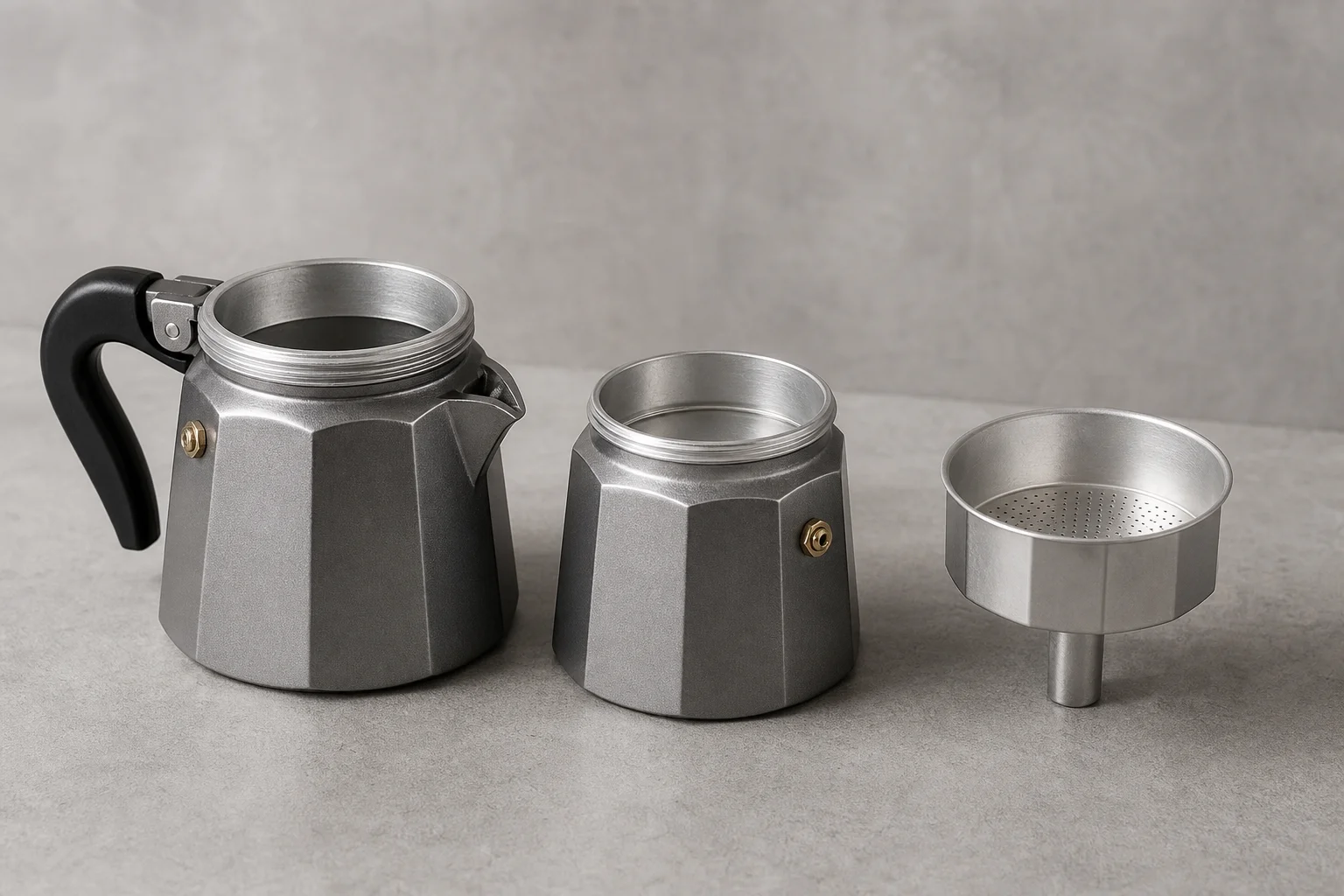
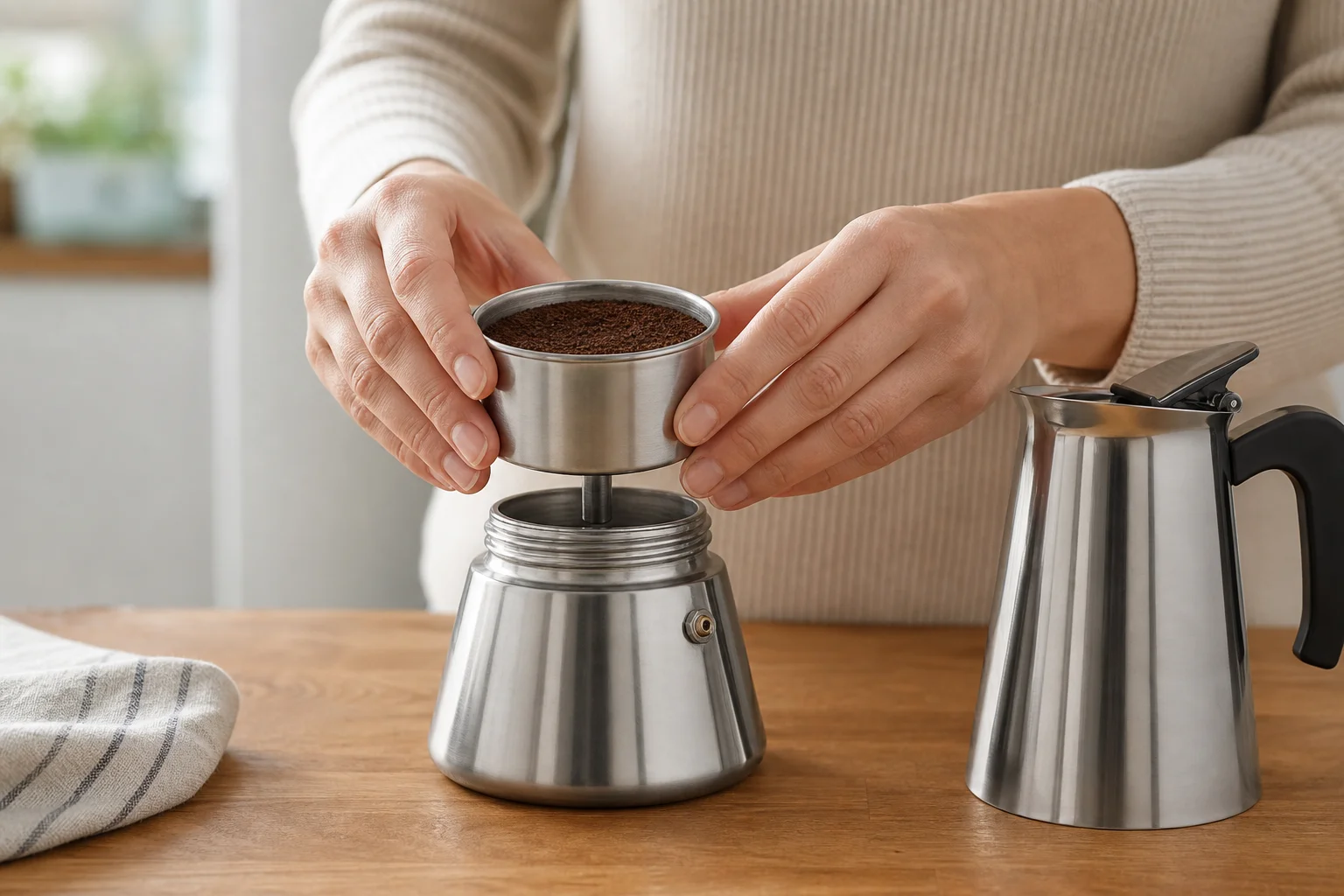
The Neapolitan brewer consists of three main pieces. The bottom chamber is the collection carafe, complete with a handle and spout for pouring. The middle section is the water tank, which sits inside the bottom chamber and holds the water you’ll heat. The top piece is the coffee basket, which holds your ground coffee and sits upside down during brewing.
The water tank has a clever design: it’s a hollow chamber that sits in the water you pour into the bottom chamber. As the water boils, steam builds up inside this tank. When you flip the entire brewer upside down, the hot water inside the tank pours through the coffee grounds in the basket above, filtering down into what is now the top chamber (which was originally the bottom).
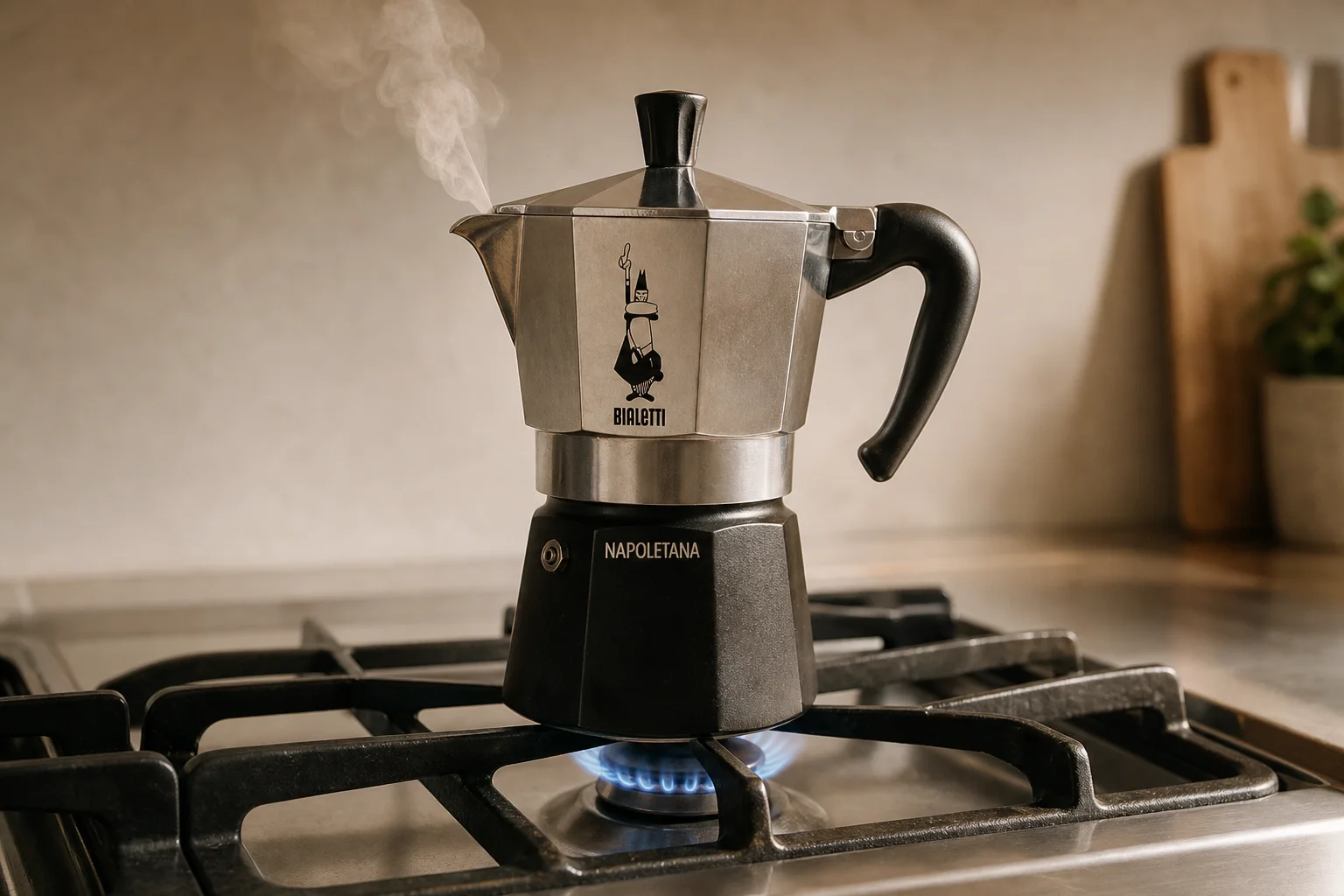
To brew, fill the bottom chamber with water up to the fill line, which has a small hole to prevent the brewer from becoming a pressurized vessel. This hole also serves as a visual indicator that you’ve reached boiling point, as steam will escape through it. Insert the coffee basket gently into the water tank, being careful not to push all the water back out. Then place the entire assembly on a gentle flame.
Most recipes work well at a ratio of around 90 grams of coffee per liter of water. For a typical small brewer, this means about 22.5 grams of coffee to 250 grams of water. Fill the basket without compacting the grounds, then assemble and heat.
The brewing process requires patience. Once you see water escaping from the small hole and steam rising, you know the water is boiling. At this point, remove the brewer from heat, take a breath, and flip it over. This is the moment that takes nerve, but it’s straightforward once you’ve done it once. After flipping, the hot water begins filtering through the coffee. The entire brew can take up to seven minutes, so this is a good time to pause and wait.
The Cuppetiello and Italian Coffee Culture
One of the most charming aspects of the Neapolitan brewer is the cuppetiello, a small paper cone that sits on the spout. This detail appears prominently in the 1967 Italian film “Questi Fantasmi,” where the actress Sophia Loren spends nearly two uninterrupted minutes explaining how to brew a Neapolitan properly. The film was based on a play by Eduardo de Filippo, a celebrated Italian author and playwright, and his inclusion of such detailed coffee-brewing instruction speaks to how seriously Italian culture took this device.
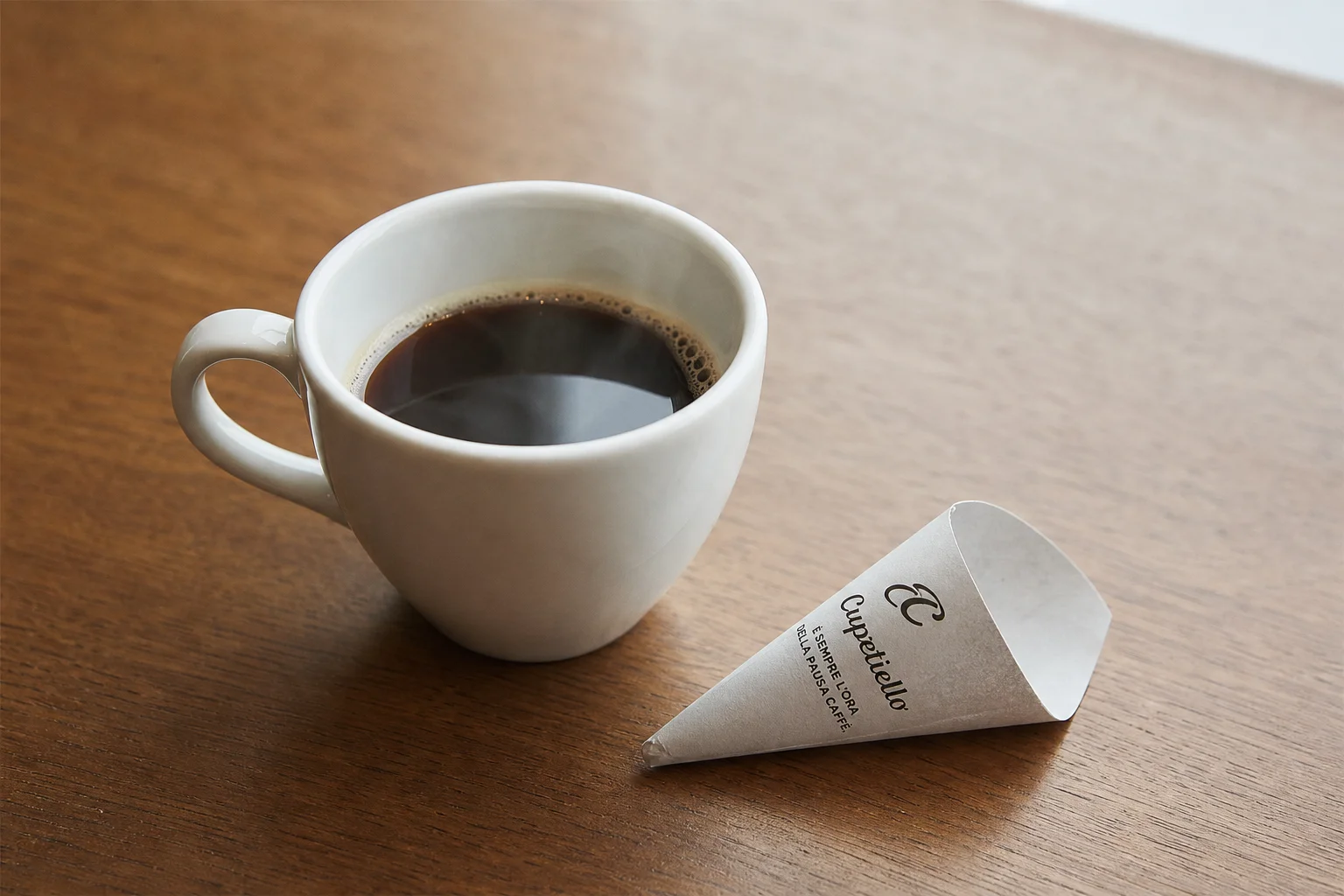
The cuppetiello serves a poetic purpose: the first liquid to drip through is considered the strongest, and the cone is meant to capture those precious volatile aromas rather than letting them escape through the spout. Whether this actually improves the coffee in a blind tasting is debatable, but the idea reflects the care Neapolitans took with their brewing ritual.
Interestingly, Neapolitans themselves called the brewer the Cuccumella or a’ macchinetta, which simply means “the machine.” It wasn’t “the coffee machine”—it was just “the machine,” suggesting how central it was to daily life. The name “Neapolitan” came from outsiders associating the brewer so strongly with Naples that they named it after the city.
Brewing Specialty Coffee with a Neapolitan
If you enjoy specialty coffee, the Neapolitan brewer presents some challenges. The coffee basket has relatively large holes in its filtering bed, which means finely ground coffee can fall through, especially when you flip the brewer upside down. To compensate, you need to grind finer than you might expect, which works better with darker roasted coffees than with lighter, more delicate specialty roasts.
The resulting coffee is similar in character to Moka pot coffee: strong, concentrated, and closer in style to espresso than to a typical pour-over. Some people prefer the Moka pot because it brews faster and produces hotter coffee, but the Neapolitan offers a gentler, more meditative brewing experience.
If you experiment with this brewer, grind slightly finer than you think you need, and be very gentle with the heat. Aggressive heating can cause pressure to build beyond what the small relief hole can handle. Paper filters inserted on both sides of the coffee don’t seem to offer meaningful improvement, so skip that step.
Should You Buy a Neapolitan Brewer
The Neapolitan brewer is worth owning if you appreciate coffee history and enjoy a slower, more intentional brewing ritual. It’s affordable, durable, and still manufactured today in designs nearly identical to those made over a century ago. If you come across one in a relative’s cupboard or at a flea market, it’s absolutely worth experimenting with.
However, if you’re primarily interested in specialty coffee, you’ll find more forgiving brewers. The Neapolitan demands care, patience, and a willingness to work around its quirks. It’s not the fastest brewer, and it’s not the most versatile. What it is, though, is a direct connection to a rich tradition of coffee culture that deserves celebration.
Conclusion
The Neapolitan brewer represents a moment in coffee history when Italy embraced a simple, elegant brewing device so completely that the city of Naples became forever associated with it. Its appearance in classic Italian cinema, the poetic rituals surrounding its use, and its enduring affordability all speak to its cultural significance. Whether you brew with one regularly or simply appreciate its place in coffee heritage, the Neapolitan brewer remains a classic worth understanding.
Product link
View more details for Neapolitan Coffee Brewer
This product is mentioned in the review. Check the specifications, options, and compatibility before buying.
View more details for Neapolitan Coffee BrewerFurther reading
Related Reviews
Coffee Equipment
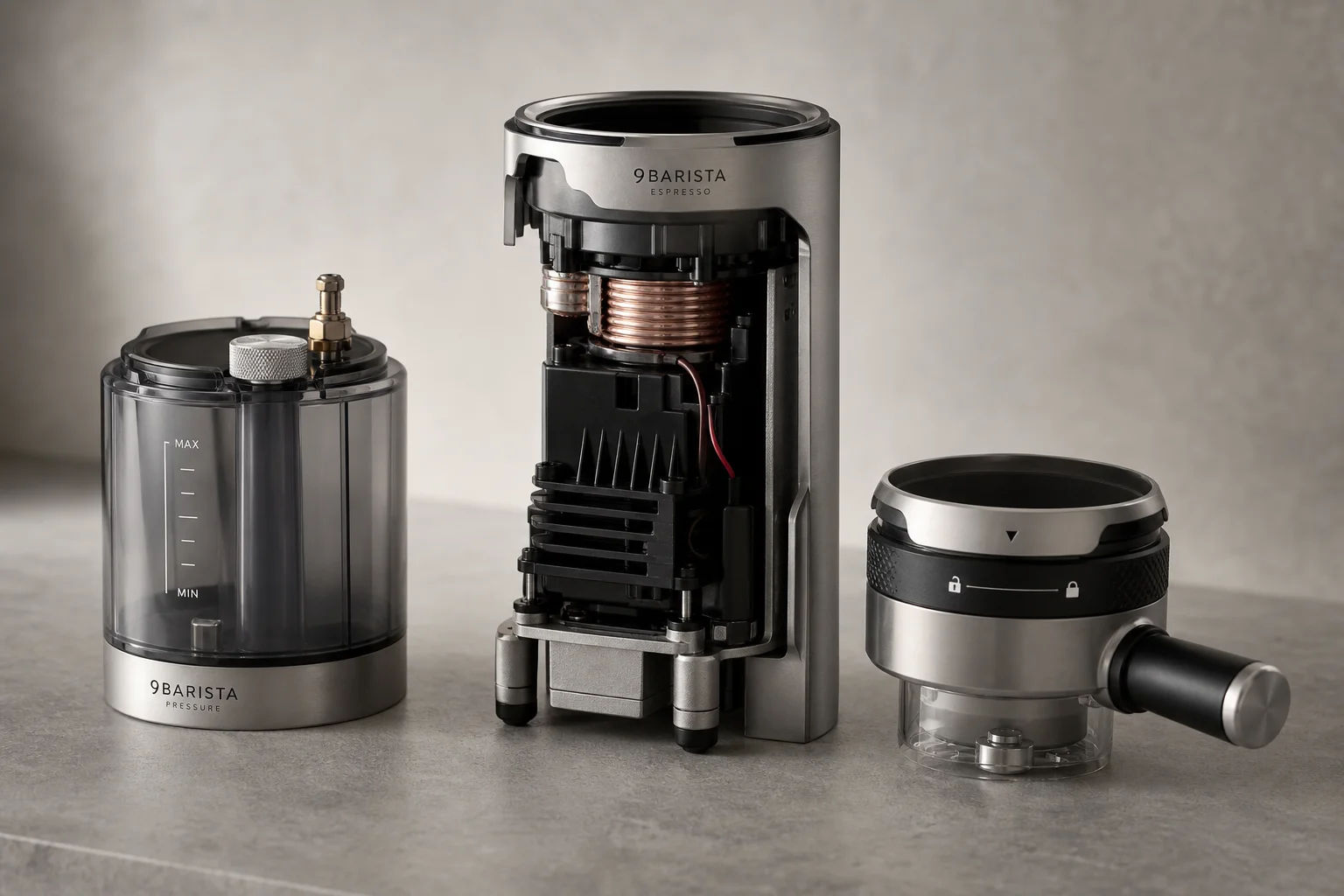
9Barista Espresso Machine Review: Stovetop Espresso for Single-Cup Enthusiasts
A cleverly engineered stovetop espresso maker that generates nine bars of pressure without electricity. Excellent coffee quality, but requires patience and suits solo drinkers only.
Coffee Equipment
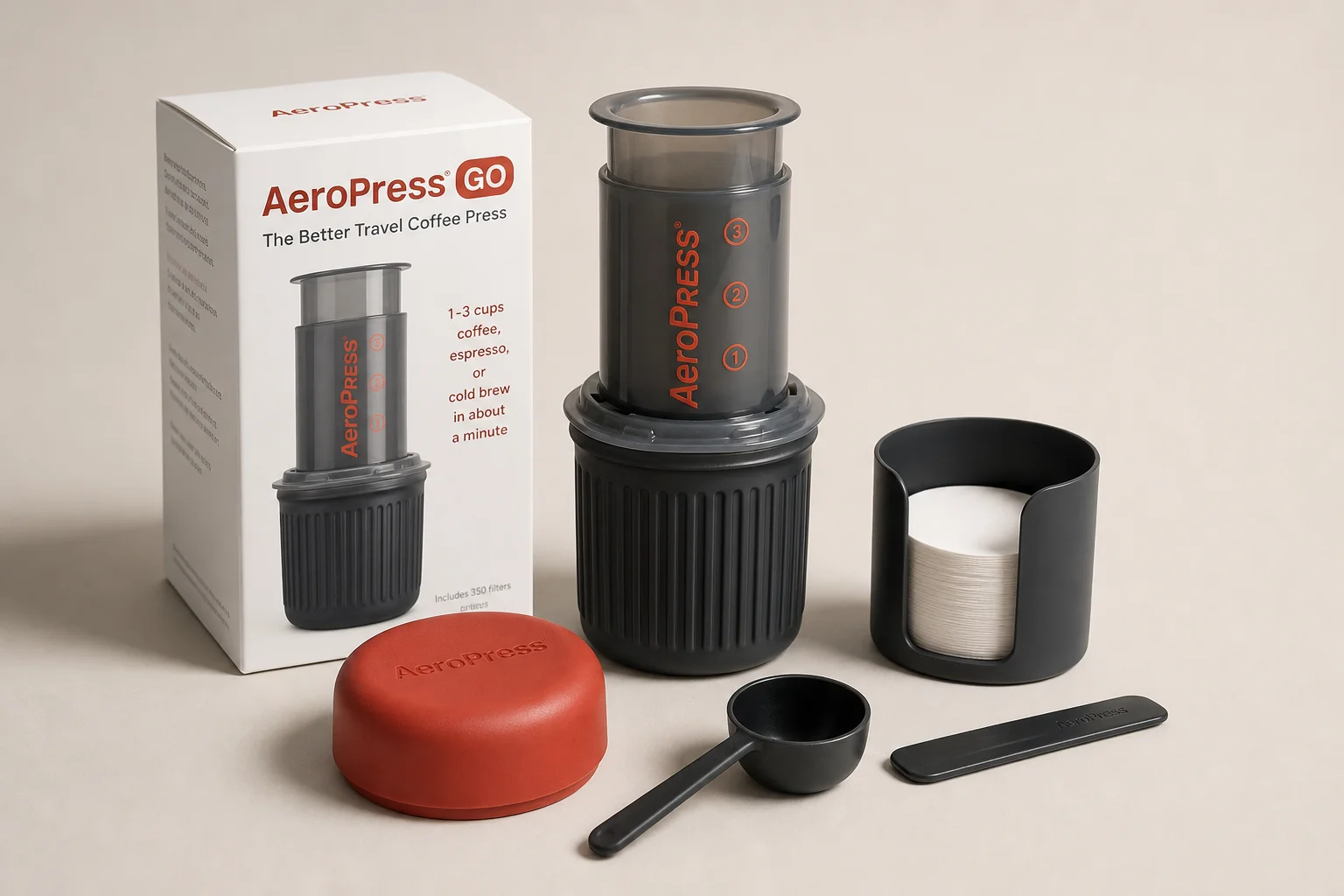
Aeropress Go Review: A Compact Travel Brewer That Solves One Specific Problem
The Aeropress Go shrinks the original design and adds an integrated cup, but it may not address the travel challenges most coffee enthusiasts actually face.
Coffee Equipment
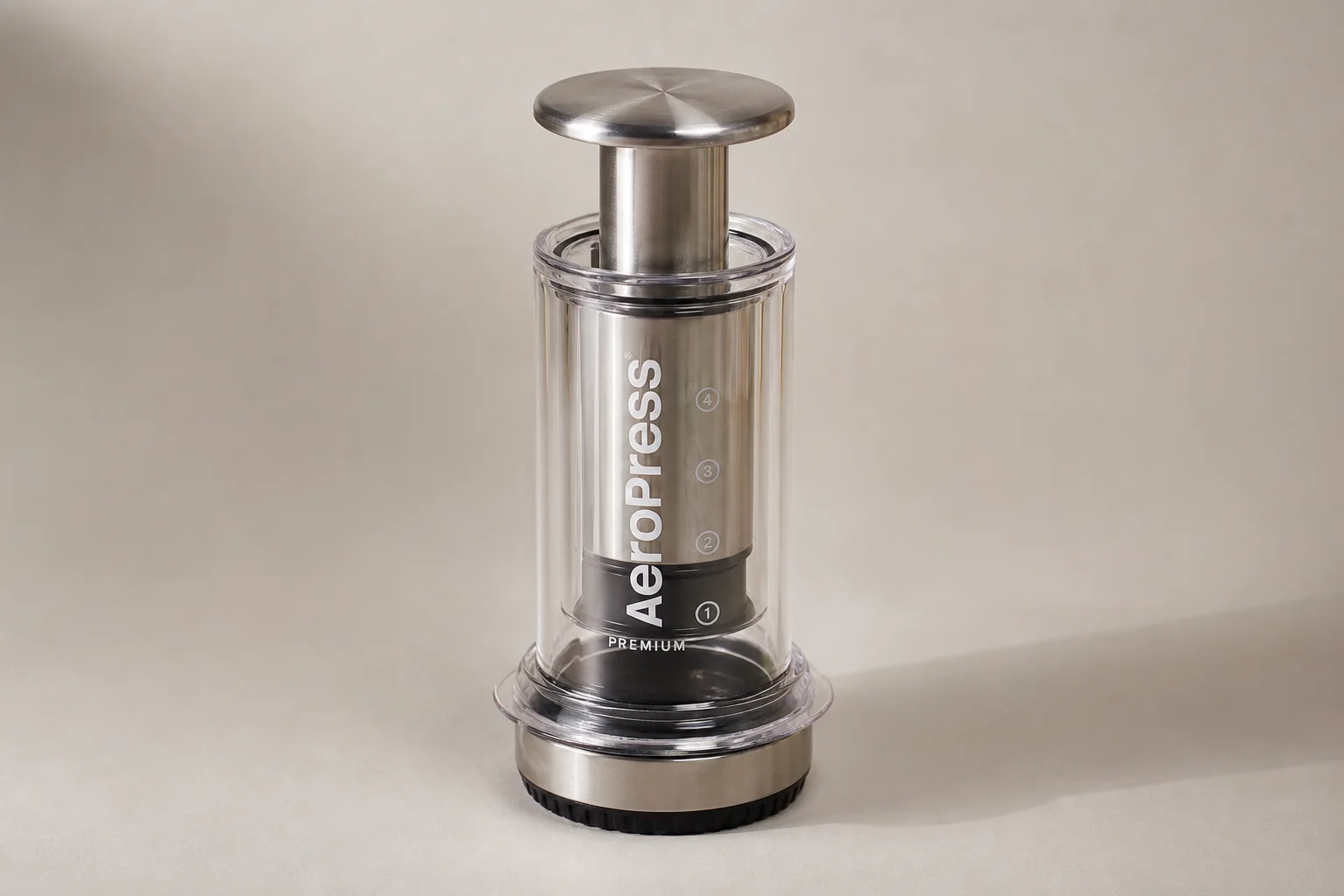
AeroPress Premium Review: Premium Materials, Practical Trade-offs
The AeroPress Premium brings glass and metal construction to a beloved brewer, but trades portability and durability for a more refined feel. Here's what changes in the cup and what matters before you buy.