Cookware
Nonstick Carbon Steel Pans Compared: Misen vs Anolon EverLast N2
Three coating-free pans promise durability and nonstick performance. We tested them against metal utensils, acidic foods, and heat stress to find the best everyday option.
Introduction
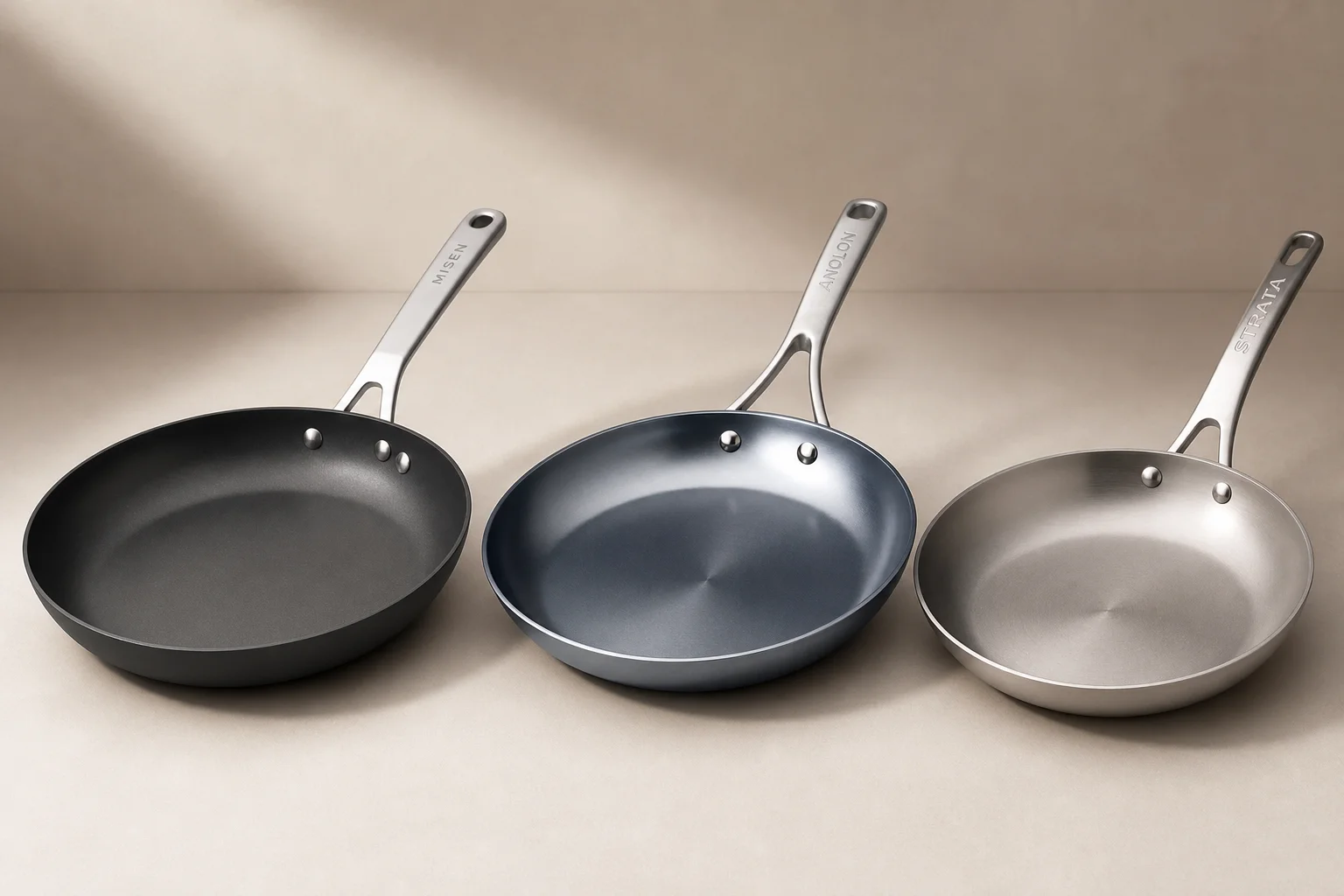
Three pans have emerged as serious alternatives to traditional nonstick cookware: Misen Carbon Nonstick Pan, Anolon EverLast N2, and Strata Carbon Steel Pan. All three promise durable, long-lasting nonstick performance without Teflon or ceramic coatings. Misen’s bold claims generated $2 million in preorders, but the other two deliver similar results with different trade-offs. To find the best option, we tested durability, heat distribution, rust resistance, and real-world cooking performance across months of use.
How These Pans Are Made
Understanding the construction reveals why performance differs. Misen uses three layers: an aluminum core sandwiched between nitrided carbon steel on the top and bottom. Nitriding hardens the steel surface through nitrogen-rich heat treatment, improving rust resistance and food release without seasoning.
Anolon EverLast N2 is a single layer of nitrided carbon steel with no aluminum core. This simpler construction makes it lighter in some sizes but more prone to warping under extreme heat.
Strata uses regular carbon steel for the cooking surface, an aluminum core for heat distribution, and stainless steel on the exterior. Unlike the other two, it requires seasoning and maintenance to prevent rust.
Durability and Metal Utensil Safety
All three pans claim you can use metal utensils without damaging the surface. To test this, we attached a 5 lb weight to a metal ladle and scraped each pan 50 times, then repeated the test with a metal spatula. We also ran a whisk in constant contact with each surface for two minutes.
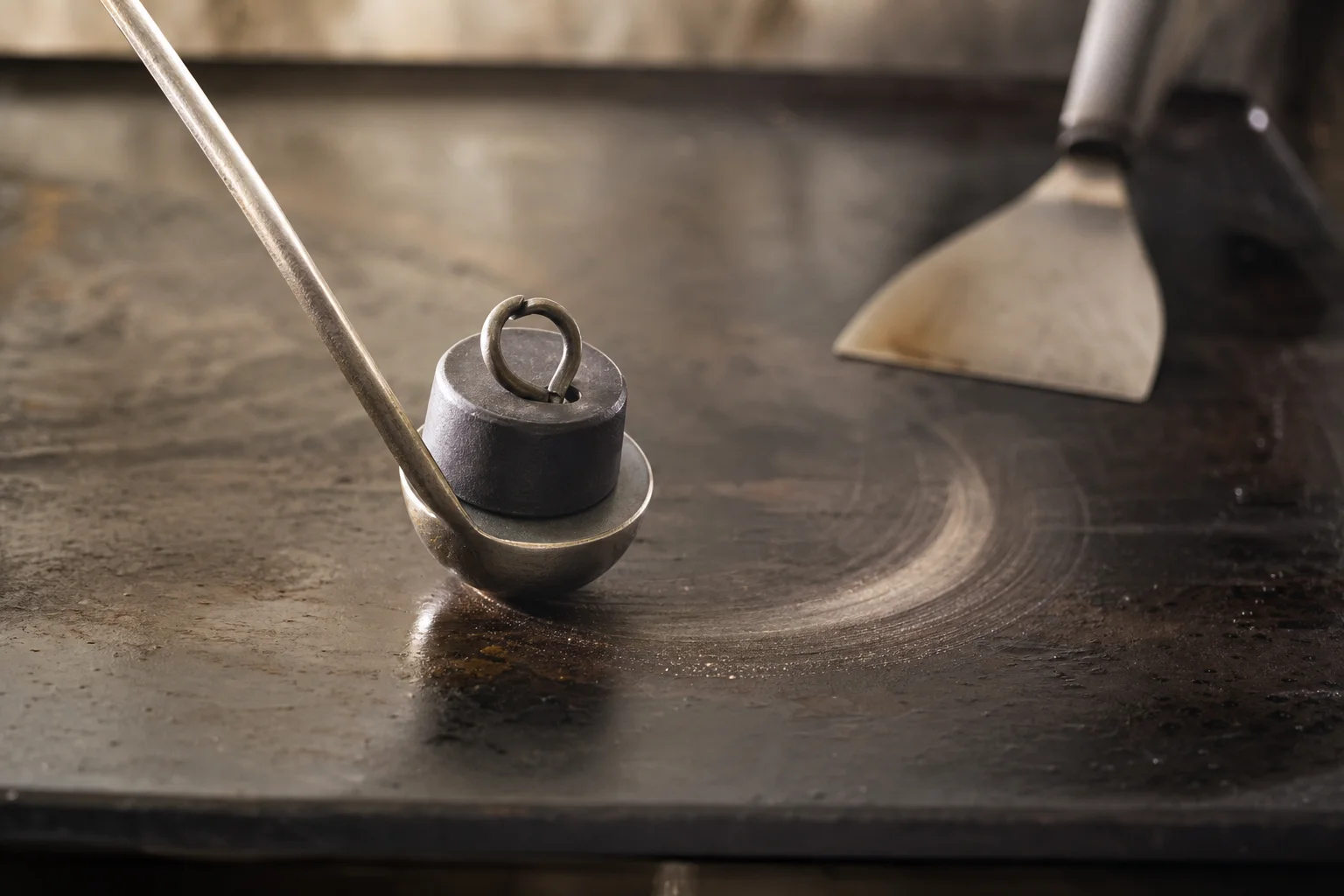
All three showed light scuff marks but no deep scratches or real damage. For comparison, traditional Teflon-coated, ceramic nonstick, and HexClad pans all showed visible scratches or coating damage under the same tests. This is a genuine advantage of coating-free construction: the surface itself is the nonstick layer, so minor marks don’t compromise performance.
Warping Under Heat Stress
Carbon steel pans can warp on induction cooktops, which heat extremely fast. When different parts of the pan expand at different rates, stress builds and the metal warps. Anolon’s single-layer construction makes it more vulnerable to this issue. Misen and Strata both have aluminum cores, which theoretically distribute heat more evenly and reduce stress.
We measured how flat each pan was, then heated them to 425°F on induction for 2 minutes. All three started slightly concave (manufacturers build in a curve to allow for expansion), and none showed visible change after heating. For context, other carbon steel pans tested have not held their shape under the same conditions.
Seasoning, Rust, and Acidic Foods
The biggest maintenance difference is seasoning. Misen and Anolon claim you don’t need to season them because of their nitrided surfaces. Strata requires seasoning and ongoing maintenance.
We tested this by leaving all three pans wet overnight. None showed rust. Next, we simmered crushed tomatoes in each pan for 15 minutes. Acidic foods break down seasoning, and that’s exactly what happened with Strata. Its surface went from dark and seasoned to light and patchy. Misen and Anolon remained unchanged.
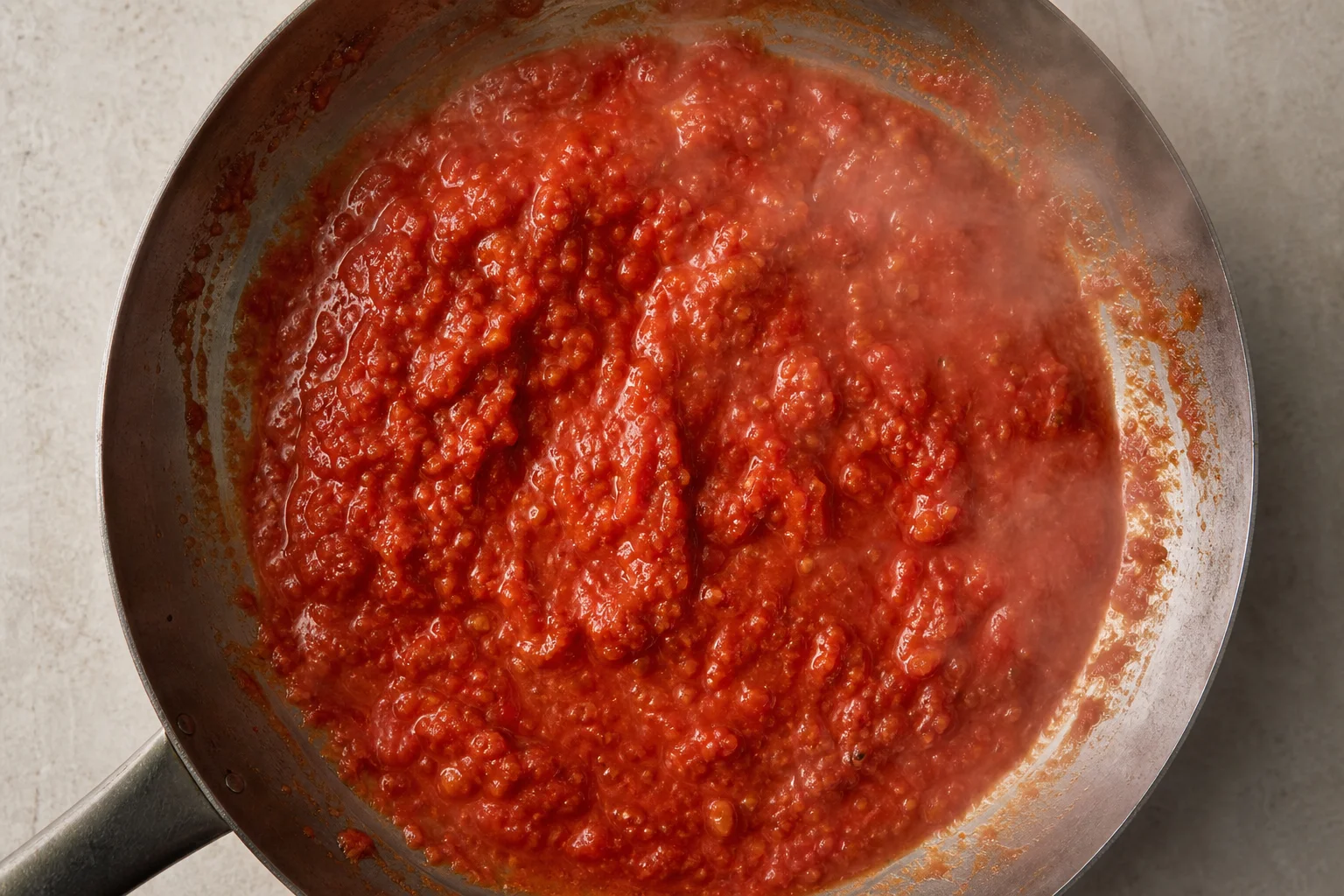
We repeated the overnight water test. Misen showed no rust, but Strata, now stripped of its seasoning layer, came back rusty. The key point: Misen and Anolon are truly low-maintenance. With Strata, you must season it to prevent rust, and acidic foods can break down that seasoning.
To further test this, we poured clean filtered water into each pan, boiled it for 10 minutes, and poured the water back into glasses. Water from Misen and Anolon came out completely clear. Water from Strata was cloudy with a yellow tint, indicating bits of seasoning were leaching into the liquid. This is normal for seasoned carbon steel, but it highlights another advantage of nitrided surfaces.
Heat Distribution and Retention
How fast and evenly these pans heat matters for everyday cooking. We heated each on medium and measured surface temperature at the center and edge after 2 minutes.
Anolon was by far the fastest to heat, which means it’s also very easy to overheat. During testing, we had to stop, open a window, and start over several times because the pan started smoking before we could add food.
Strata didn’t heat as quickly but was the most even. After 2 minutes, there was only a 3-degree difference between center and edge. In real-world cooking, that evenness held up. When we cooked a full pan of chicken, pieces around the edge browned just as evenly as those in the center, which isn’t always the case with traditional carbon steel.
For heat retention, we heated each pan to exactly 400°F, removed it from the burner, and measured surface temperature after 5 minutes. These pans are designed to be lightweight and easy to use, not optimized for heat retention like thicker carbon steel or cast iron. Within this group, Strata held its temperature best by about 10 degrees.
Nonstick Performance and Food Release
The most important factor is how well these pans release food and whether their nonstick properties change over time. Strata and Anolon claim their surfaces become naturally nonstick over time as seasoning builds. Misen claims it’s nonstick right out of the box and only improves with use.
We cooked a variety of foods with each pan for several months: eggs, pancakes, fish, vegetables, and meats. After months of use and durability testing, we ran four controlled tests.
First, we preheated each pan to 325°F, added exactly one teaspoon of oil and 5 grams of butter, and cooked an egg. All three passed. Eggs slid around with no sticking. The only issue was Anolon on the first try. Because it heats so quickly, the pan got too hot and the egg stuck. When we preheated it slower, it worked fine.
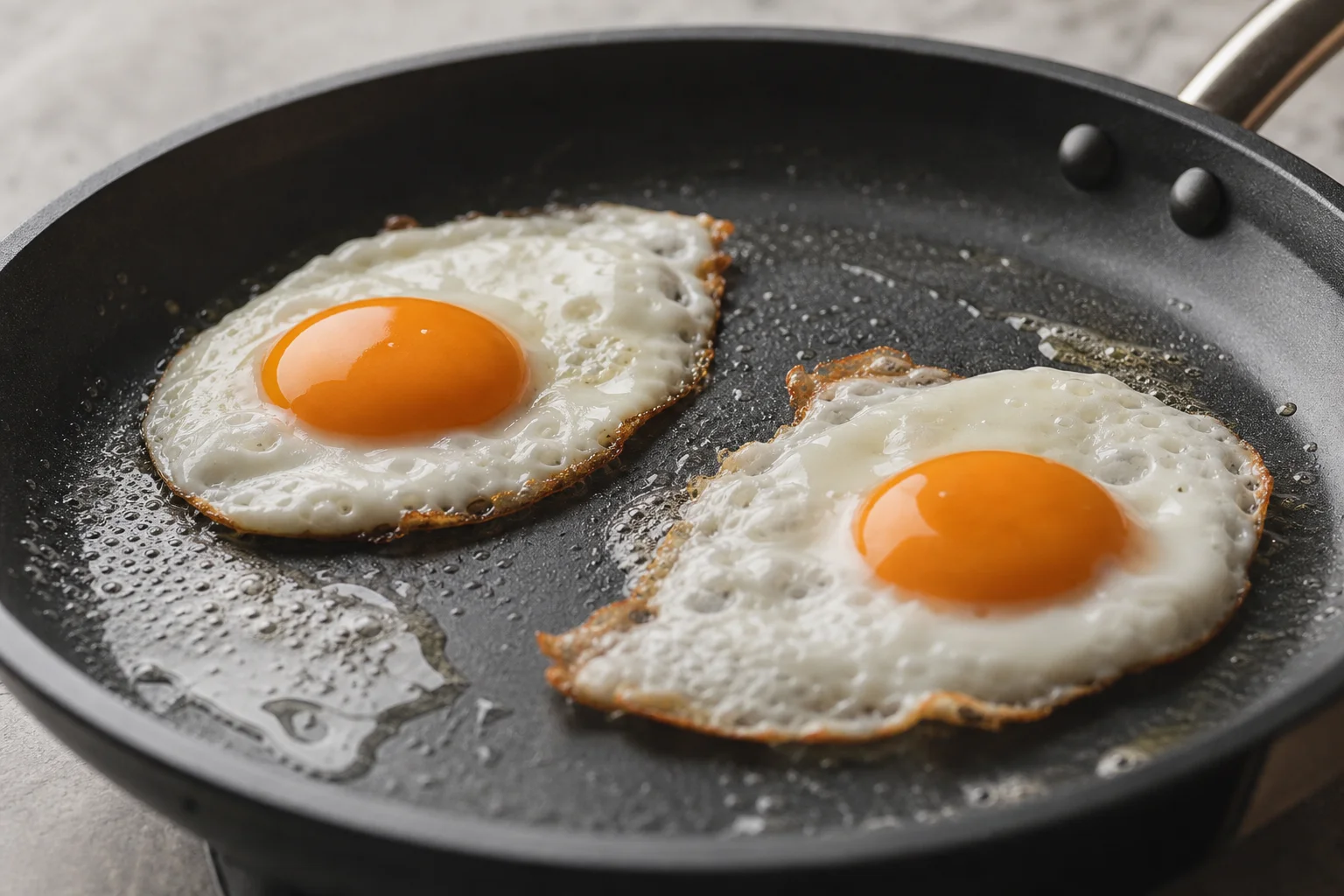
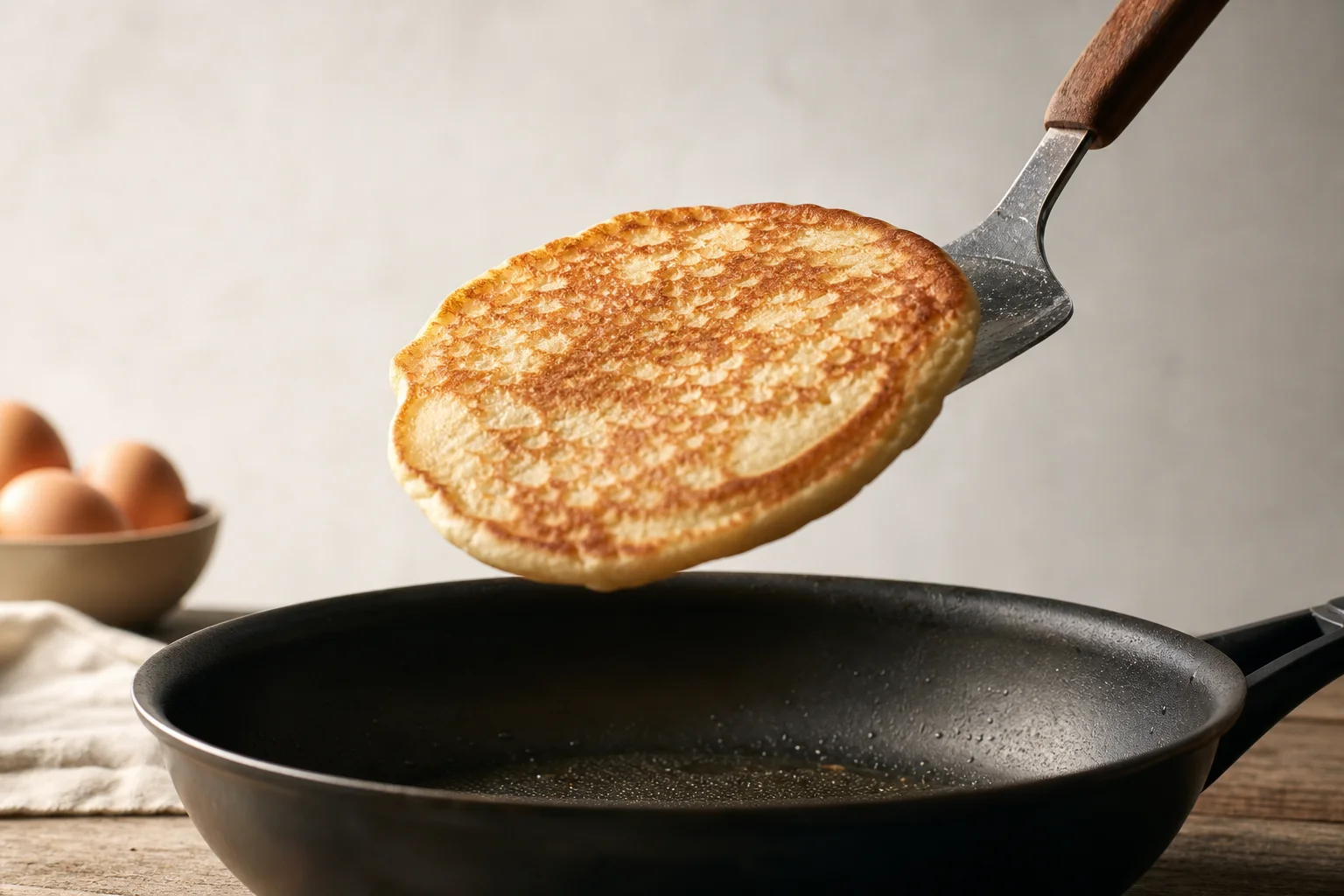
Next, we cut the fat in half, using just a half teaspoon of oil and 2 grams of butter. All three handled it without sticking. Then we tested pancakes with a light layer of butter. Misen and Anolon released cleanly, but Strata had some slight sticking. We had to work the spatula under it, but it still came out in one piece.
Finally, we cooked pancakes with no fat at all. Anolon had just a little sticking but flipped without breaking. Misen stuck badly. A thin layer of pancake stayed glued to the surface and tore when we tried to flip it. Strata had the same issue.
In day-to-day, non-controlled cooking, we haven’t noticed a real difference in food release between these three pans. Misen and Anolon were both impressively nonstick right out of the box and have stayed that way for months. They’re not as slick as a brand-new Teflon pan, but if you don’t overheat them and use a little oil or butter, food won’t stick. We haven’t noticed any decline in their performance. The only times we’ve had issues were when we overheated them.
Strata’s performance is similar. As long as you use some fat and manage the heat, eggs, fish, and other foods release fine. The main challenge is seasoning. If you apply too much oil or don’t spread it evenly before seasoning in the oven, the surface can turn tacky and cause sticking. You can always scrub it down and reseason, but you need to season it correctly to get the same results as Misen and Anolon.
Design and Handle Differences
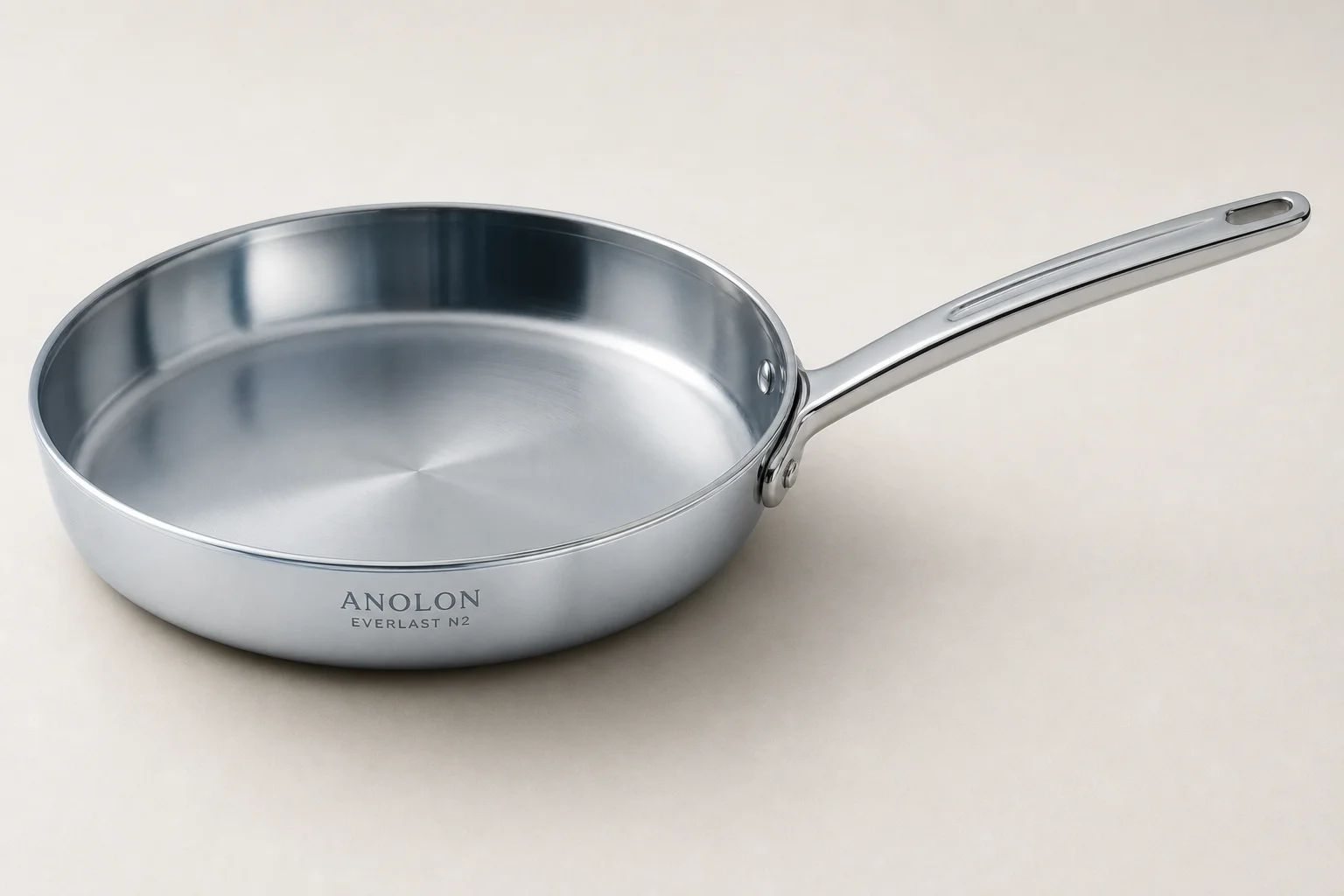
Beyond performance, design matters. Misen’s handle is comfortable but rounded, which can get slippery, especially with oven mitts or soapy hands. Anolon’s handle is flatter with a shallow groove on top, giving your thumb a place to rest and making it feel more secure, though we wish it wasn’t so thin.
Strata’s handle is the best design of the three. It’s thicker and more substantial than Anolon, flat on top with a slight groove so it won’t rotate in your hand. We also prefer the round hanging loop instead of the usual oval.
The finishes differ too. Misen has a dark matte surface that fades slightly with use. Anolon is shiny with a bluish tint that develops a patina. Strata starts silvery like stainless steel but turns golden brown as seasoning builds and gets darker over time.
In the 10-inch size, all three are under three pounds and easy to maneuver. Misen has the widest cooking surface and the lowest walls. The difference is minor. In the 12-inch size, differences are more noticeable. Strata and Misen both weigh about 3 pounds, while Anolon jumps to 4.3 pounds. Some of that extra weight comes from a helper handle, but Anolon also has taller walls. At that size, Anolon’s walls are just under 2.25 inches, Strata’s are just under 2 inches, and Misen’s stay at 1.75 inches.
Which Pan Should You Buy?
This was one of the toughest comparisons because all three pans perform really well and are priced similarly. The first decision is whether you want to deal with seasoning. If not, Anolon and Misen are your options. Both don’t need seasoning, won’t rust, handle acidic foods, and start nonstick and stay that way.
Between those two, we’d go with Misen. It’s the closest replacement to a traditional Teflon-coated aluminum pan. It’s light, easy to handle, and perfect for the kind of quick, everyday cooking most people use nonstick pans for, especially eggs.
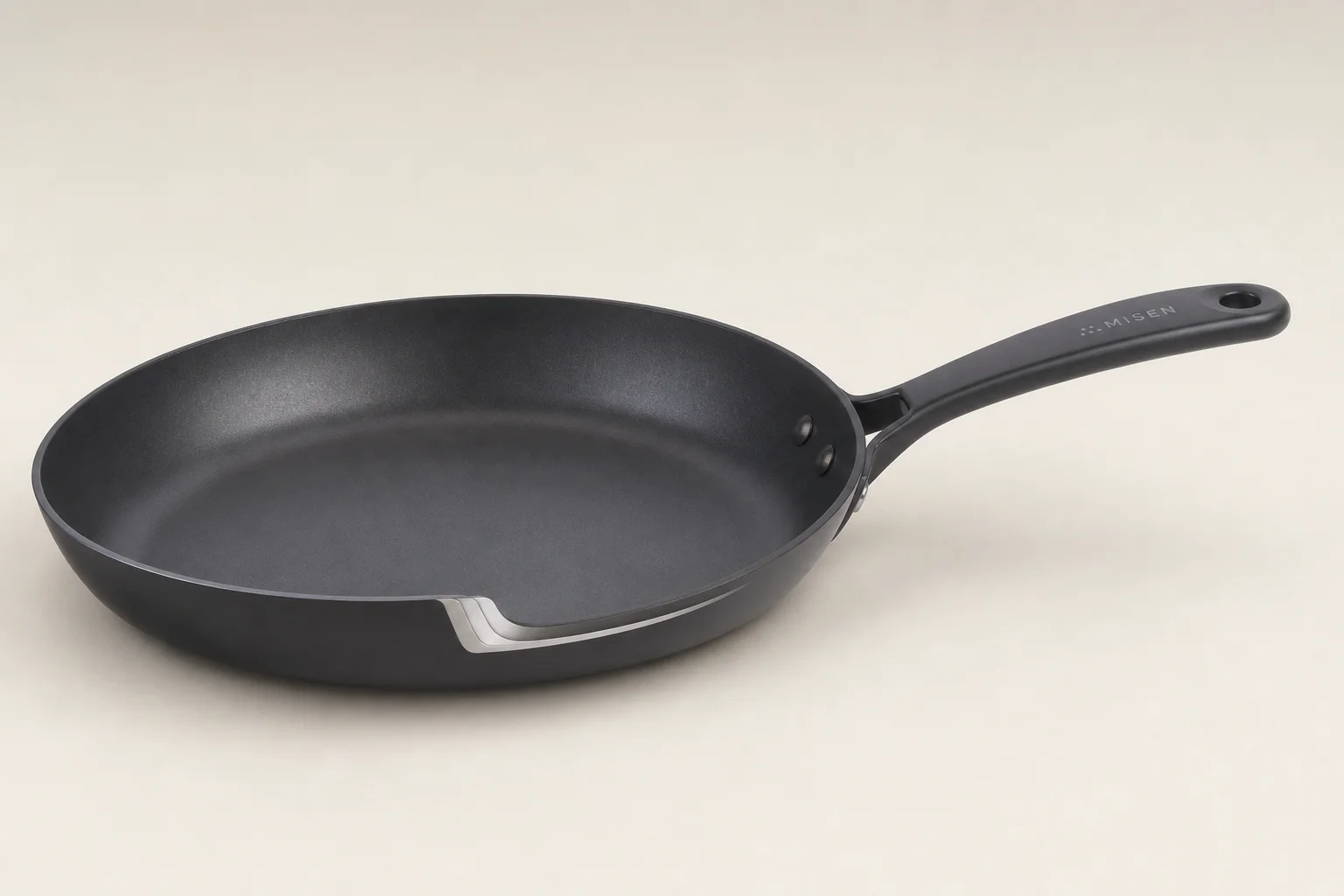
Anolon is a nicer, more elegant-looking pan with its polished finish and curved handle. But when you pick it up, it feels more like a classic carbon steel pan because it’s heavier with taller walls. If that’s what you want, it’s an excellent alternative to brands like de Buyer and Matfer.
Strata is a fantastic pan too. It heats more evenly than the others, is lightweight, and has the best handle design of the three. But because it needs seasoning and that seasoning can break down with acidic foods, it requires more maintenance than Misen and Anolon.
Conclusion
If you want the simplest, most low-maintenance option, go with Misen. If you like the idea of building seasoning yourself and don’t mind the extra care, Strata is an excellent choice. Anolon is solid all around, but be aware that it’s noticeably heavier, especially in larger sizes. Truly, you cannot go wrong with any of these three pans.
Further reading
Related Reviews
Cookware
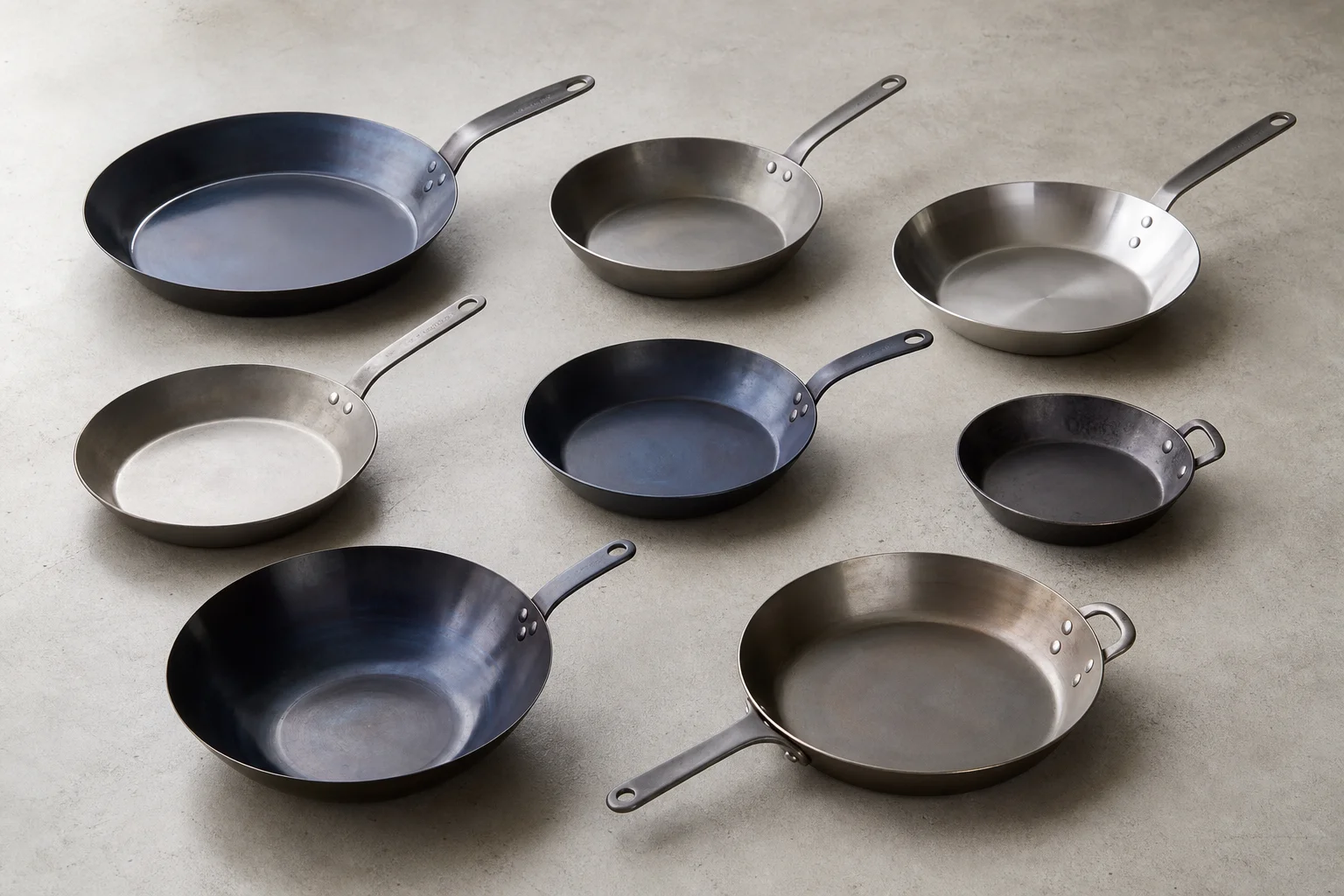
Best Carbon Steel Pans Tested: Which Brands Deliver Real Value
We tested eight popular carbon steel pans with controlled durability, heat, and cooking tests. Here's which ones perform best and which to avoid.
Cookware
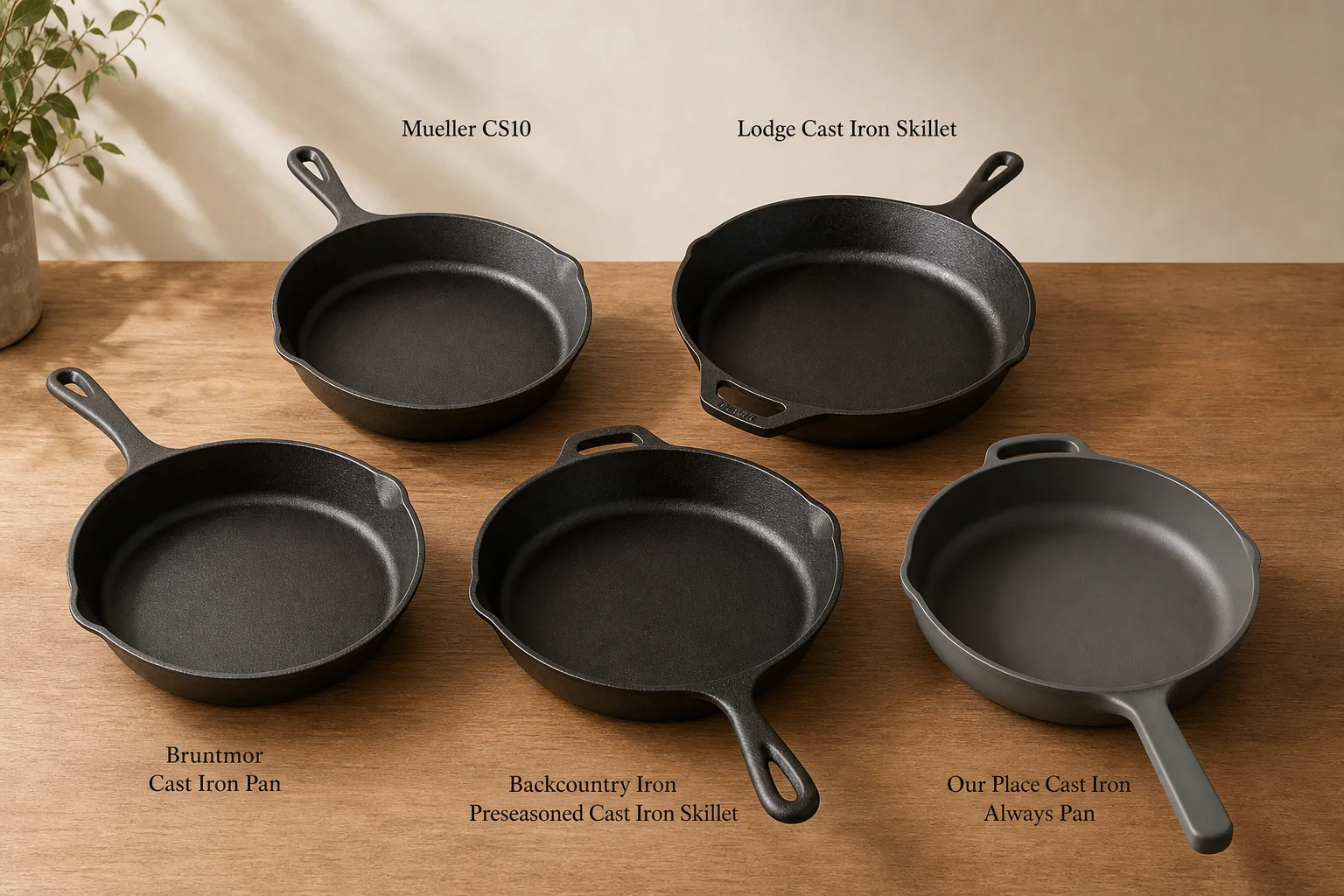
Best Cast Iron Pans 2026: Five Options from Budget to Premium
A practical breakdown of five cast iron skillets, from affordable Mueller to premium Our Place, with clear strengths and trade-offs for different cooking needs.
Cookware
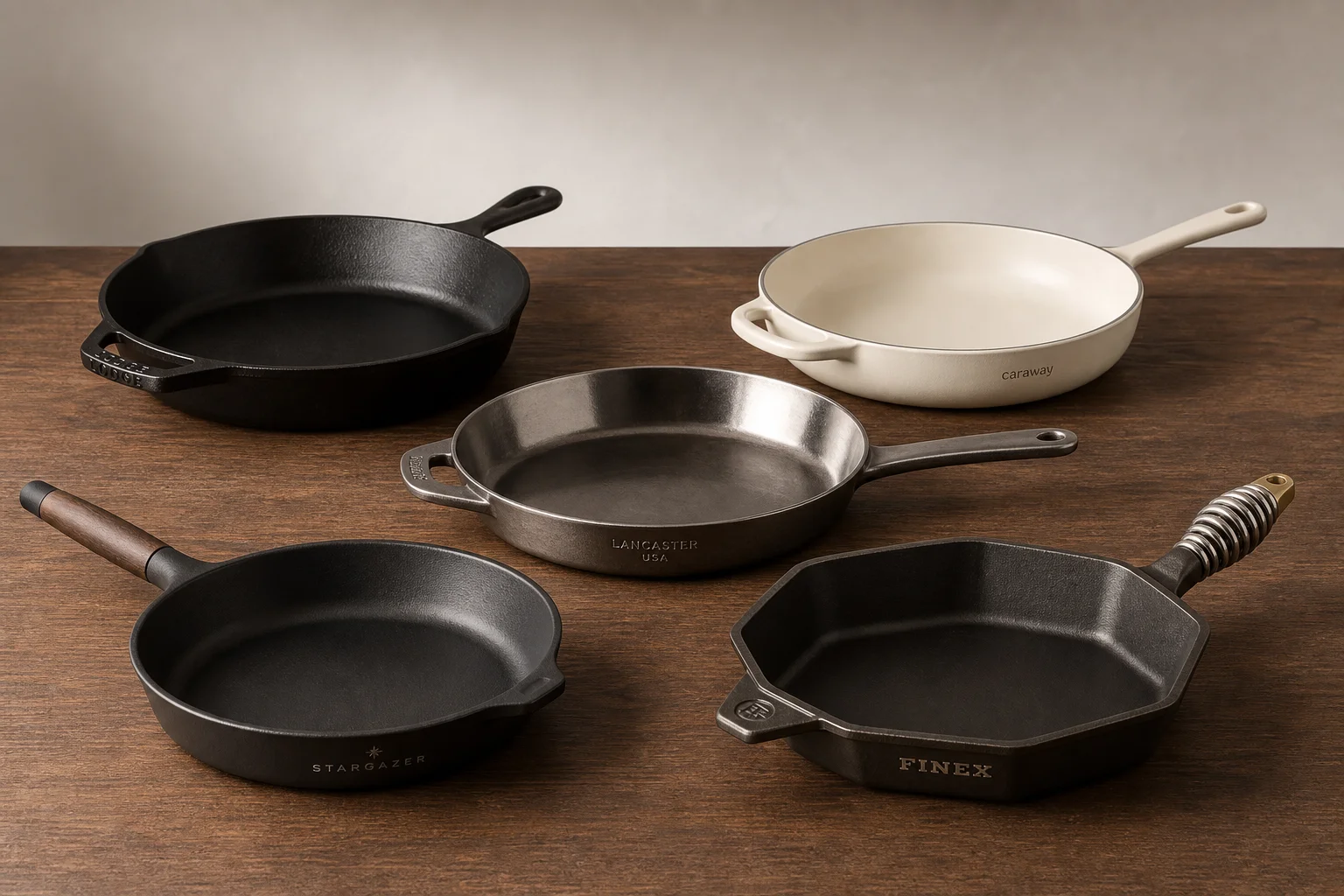
Best Cast Iron Skillets: Five Options for Every Kitchen
A comprehensive guide to five cast iron skillets, from budget-friendly classics to premium handcrafted options, each with distinct strengths and use cases.